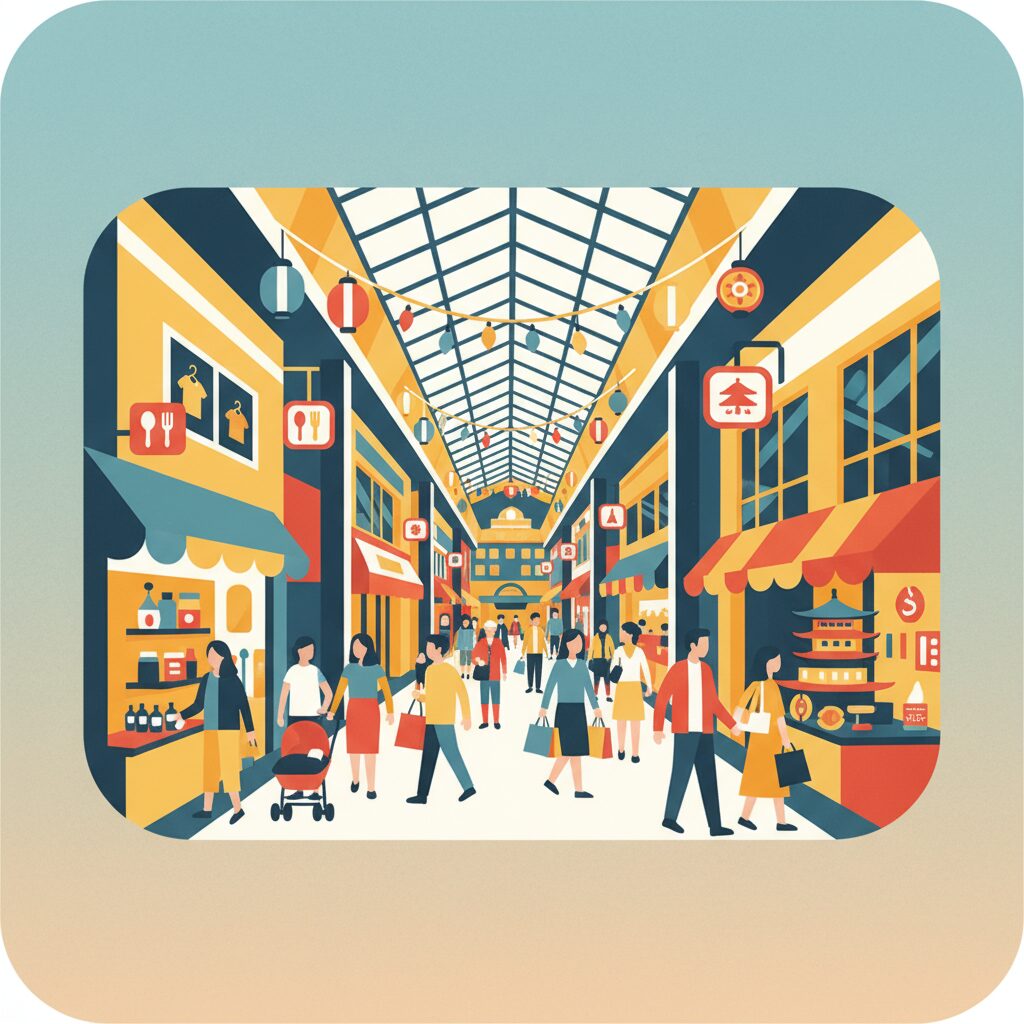
The alarm doesn’t shriek anymore. It hums. The frantic dash for the 7:42 AM express to Umeda, a sardine-can ride pressed against a stranger’s damp trench coat, has been replaced by the gentle whir of a laptop fan and the slow drip of the coffee maker. Before, my day was a straight line—a commute from my quiet neighborhood station to the concrete canyons of the city center, a hurried lunch from a fluorescent-lit convenience store, and the same journey in reverse, bookended by exhaustion. My neighborhood was just a place to sleep, a launching pad for a life lived elsewhere. The pandemic, and the remote work revolution it sparked, didn’t just change my job; it shattered that straight line into a thousand tiny, local possibilities.
Suddenly, the hours once sacrificed to the Hankyu line were mine again. Lunch wasn’t a problem to be solved in five minutes but an hour to be savored. The geography of my life collapsed from a city-wide map to a five-block radius. And in the center of that new, smaller world was a place I’d often walked through but rarely truly seen: the local shōtengai, the covered shopping arcade that felt like a relic from a bygone era. It turns out, it wasn’t a relic. It was the future of my daily life, and I suspect I’m not the only one in Osaka making this discovery. The great un-commuting hasn’t just given us back our time; it’s giving us back our neighborhoods, one freshly fried croquette at a time.
This newfound appreciation for local connections has extended into the realm of after-work drinking in Osaka, where shared moments over a drink are forging even tighter bonds among neighbors.
The Great Un-Commute and the Lunchtime Dilemma
Remember the rhythm of the office? The Pavlovian chime at 11:55 AM, sparking a mass exodus to the nearest conbini or ramen shop. Lunch was a mission carried out with military precision. You’d grab a plastic-wrapped onigiri, a forlorn sandwich, or a microwaveable bento, and be back at your desk before your colleague’s last slurp of instant miso soup had faded. It was fuel, not food. The atmosphere was sterile, the transaction anonymous, and the objective calorie intake with minimal time spent. Your neighborhood—the place you actually paid rent—had no role in this midday ritual. From 9 to 5, it was a ghost town, inhabited only by retirees and stay-at-home parents.
Now, the quiet of the home office is interrupted around noon by a new sound: a genuine, biological stomach grumble. The conbini remains an option, of course, but the urgency is gone. There’s no train to catch or meeting to rush back to. Only the blinking cursor on your screen and an hour of freedom remain. This freedom brings a dilemma, and in Osaka, a city passionate about good, affordable food, it’s a dilemma that calls for a better solution than a plastic bento. You need a break. You need to stretch your legs. You need to see different walls. You need, it turns out, to walk two blocks to the shōtengai.
This is the turning point. The shift from a centralized work life to a decentralized one has revitalized the daytime economy of residential neighborhoods. The shōtengai, once the exclusive realm of grandmothers doing daily shopping, now hosts a new demographic: remote workers in sweatpants, blinking in the unfamiliar midday sun, searching for something—anything—better than another day of instant noodles. This isn’t a nostalgic quest for authenticity; it’s a practical response to a fundamental change in our daily routine. We’re home, we’re hungry, and the arcade is right there.
Beyond the Vending Machine: The Shōtengai’s Human Algorithm
Entering a supermarket is a cold, calculated process. You navigate a grid of aisles, guided by overhead signs and promotional displays. You select your items, scan them at a self-checkout machine, and then leave. It’s efficient, clean, and utterly soulless. The shōtengai stands in stark contrast. It’s a chaotic, organic, human-driven system. It’s less like a database and more like a conversation.
Your first stop might be the yao-ya, the greengrocer. Gleaming eggplants and knobby ginger spill out from styrofoam boxes. An elderly woman with a perm, the proprietor, notices you eyeing the tomatoes. “For a salad? Or a sauce?” she asks. It’s not casual chit-chat. Your answer determines which tomatoes she selects—the firm, bright ones for slicing, or the softer, riper ones that will break down beautifully in a pan. This is a level of service Amazon’s algorithm can only dream of. It’s expertise, born from decades of handling produce.
Next, the niku-ya, the butcher. Instead of vacuum-sealed trays of meat, you see whole cuts displayed behind a glass counter. You don’t just ask for “pork.” You describe what you’re making. “Something for tonkatsu,” you might say. The butcher, a man with forearms like tree trunks, selects a thick loin chop, scores it, and then offers a piece of advice: “Fry it a minute less than you think you need. It’ll be juicier.” He might then gesture to the corner of his shop, where his wife is frying korokke (croquettes) and menchi-katsu (minced meat cutlets). “One for your lunch?” he asks with a grin. You’re not just a customer; you’re part of a food-centered ecosystem.
At the sakana-ya (fishmonger), the choices depend on what the fisherman caught that morning. The owner explains exactly how to prepare the shimmering horse mackerel he recommends. At the tofu shop, you bring your own container to be filled with freshly made silken tofu, still warm. At the sozai-ya (deli), you can assemble an entire meal from dozens of small-batch dishes, from simmered pumpkin to savory egg custard. Each interaction is a mini consultation. This isn’t mere “friendly” service, the cliché often applied to Osaka. It’s deeply practical. Osakans are merchants at heart. They know that building a relationship, offering genuine value and expertise, is the best way to ensure you return tomorrow. It’s a human algorithm, refined over generations, that guarantees a better dinner than you’d get on your own.
Osaka vs. Tokyo: The Arcade as a Living Room
It’s a common comparison, the tale of two cities. In Tokyo, shopping streets can feel like curated galleries. Aoyama, Omotesando, even some of the more “local” areas like Yanaka Ginza, often have a polished presentation. The shops are beautiful, the products artfully arranged, and there’s an air of detached cool. It’s perfect for a weekend stroll, but it can feel like a performance.
An Osaka shōtengai is not a performance. It’s the city’s messy, vibrant, and incredibly functional living room. It’s a thrilling assault on the senses. The air is thick with competing smells of grilled eel, frying tempura, fresh daikon, and brewing tea. The sounds form a cacophony of shopkeepers hawking their wares in the gravelly Osaka-ben dialect, tinny jingles of store theme songs, the rumble of delivery bikes, and neighbors chatting. You might see a woman in house slippers and an apron cycling by, a basket of groceries wobbling on the front. Kids chase each other with plastic swords. Old men sit on plastic crates, debating the world’s problems.
There’s no pretense here. The shōtengai is fundamentally a place of utility. Its purpose is to feed, clothe, and supply the neighborhood in the most efficient and affordable way possible. Aesthetics come second to function. This reflects the Osaka mindset directly. Tokyo builds for image; Osaka builds for purpose. A Tokyoite might see the dangling wires, faded awnings, and mismatched storefronts of an Osaka shōtengai and think urban blight. An Osakan sees a highly efficient, community-run marketplace. They see home. The arcade isn’t a destination to dress up for; it’s an extension of your kitchen pantry, a place to pop into on your way everywhere else. It’s deeply woven into the fabric of daily, unglamorous life—and that’s where its true strength lies.
The Economics of Local: “Mōkattemakka?” in the Digital Age
The quintessential Osaka greeting isn’t “How are you?” but rather “Mōkattemakka?”—literally meaning, “Are you making a profit?” To an outsider, it might come across as shockingly blunt, an invasive inquiry into personal finances. Yet in Osaka, the city of merchants, it signifies camaraderie. It acknowledges that everyone is engaged in the same hustle, that business is the community’s heartbeat. It’s a way of asking, “How’s life going?” through the lens of commerce.
For decades, many shōtengai shops answered, “Not so great.” The rise of massive Aeon malls in the suburbs and the ruthless efficiency of online retailers eroded their customer base. Sustained largely by an aging population, their business models seemed frozen in the Shōwa era. However, the remote work boom is reshaping the local economic landscape. The daytime population in residential neighborhoods has swelled, bringing with it a new source of revenue.
Suddenly, the butcher who primarily sold meat for family dinners is now selling hundreds of 200-yen menchi-katsu to remote workers for lunch. The small kissaten (old-style coffee shop), once empty between the morning rush and the afternoon tea-time for ladies, now enjoys a steady flow of customers seeking a caffeine boost and a break from their apartments. The bento shop that used to close at 2 PM now stays open later, catering to those finishing their workday who want to pick up a ready-made dinner.
This isn’t a simple revival story. It’s a period of adaptation. Some older shopkeepers are overwhelmed by the new pace. Others struggle to accommodate younger customers who expect digital payment options. But many are rising to the occasion, seizing the opportunity. They’re offering daily lunch specials, advertised on simple chalkboards outside. They’re engaging with new faces and building new relationships. The “Mōkattemakka?” question is now asked with renewed optimism. This influx of daytime customers isn’t just a welcome bonus; for many small, family-run businesses, it’s a lifeline—a chance to prove that their brand of personal, high-touch commerce still has a place in the digital age.
Unspoken Rules of the Arcade Aisle
For a foreigner, stepping into the lively chaos of a shōtengai can feel intimidating. It resembles a private club with a secret handshake. But the rules are simple, unspoken, and grounded in mutual respect. Mastering them is key to unlocking the arcade’s true value.
First, the greeting is the price of admission. A cheerful “Konnichiwa” upon entering a shop and a clear “Arigatō gozaimashita” or “Gochisōsama deshita” (if you bought food) when leaving are essential. They acknowledge the shopkeeper’s presence and transform an anonymous transaction into a human interaction.
Second, although times are changing, many of the smallest, oldest shops remain cash-only. Fumbling for a credit card can create awkward moments. The expectation is that you’ll have cash—preferably smaller bills and coins—ready. Think of it not as an inconvenience but as part of the analog charm. Supporting these businesses means meeting them on their terms.
Third, trust the experts. Unlike a supermarket where you handle every item yourself, in a traditional shōtengai shop, you point. You tell the greengrocer you want two onions, and she picks the best two for you. You tell the fishmonger you want sashimi, and he selects and slices the perfect block of tuna. Touching the produce yourself is a minor faux pas—it implies a lack of trust in their judgment, which is their entire value proposition.
Finally, small talk is a form of currency. You don’t need to pour your heart out, but a simple comment on the weather (“It’s hot today, isn’t it?”) or asking what’s good that day opens the door. Over time, the shopkeeper will start to remember you. They’ll recall you have a child who loves strawberries or that you prefer leaner pork cuts. This is when the magic happens. You might receive a little extra in your bag—a practice called omake. It’s not a discount; it’s a gesture, a tangible expression of the relationship you’ve built. This is the reason behind Osaka’s friendliness. It’s not random; it’s earned through polite, consistent participation in the community’s commercial life.
What Foreigners (and Even Some Japanese) Misunderstand
There’s a common narrative that the shōtengai is a dying breed, a nostalgic but ultimately irrelevant feature of the urban landscape. Tourists might stroll through Tenjinbashisuji, Japan’s longest arcade, snapping photos as if it were a museum. Even many younger Japanese people, accustomed to the convenience of 24-hour stores and online shopping, perceive the arcades as places for their grandparents. They notice the peeling paint and the shuttered storefronts of shops whose owners have retired, interpreting it as decline.
This viewpoint misses the point entirely. The value of a shōtengai goes beyond commerce; it’s social. It’s a “third place,” a term coined by sociologist Ray Oldenburg to describe spaces outside the home and workplace where informal public life occurs. These environments foster a sense of community, enabling casual, unplanned interactions among people from different walks of life. In an increasingly isolated and digital world, these physical places for connection are more crucial than ever.
For foreigners, the barriers can feel daunting: the language, the cash-only signs, and the sense that you’re intruding on a local scene. It’s easy to stick to the brightly lit, English-friendly supermarket. But doing so means missing out on a core aspect of life in Osaka. The shōtengai isn’t a performance for tourists; it’s a living, breathing part of the city’s fabric. The initial effort to learn a few phrases, have cash on hand, and engage with a shopkeeper pays off many times over. It’s how you stop being a temporary resident and become a neighbor. It’s how you move from observing Osaka to truly participating in it. The arcades aren’t dying; they’re simply waiting for a new generation, including remote workers, to recognize their profound and lasting significance.
Weaving a New Daily Tapestry
My daily routine is no longer linear. It’s a tapestry, woven from threads that all trace back to the shōtengai. The day might begin with a 10-minute break from a tedious spreadsheet—a quick stroll to the tofu maker. I hand over my plastic container, he fills it with fresh, jiggly tofu, and we exchange a few words about the humidity. That brief walk, that short human interaction, is enough to reset my mind for the next hour of work.
Lunchtime is the highlight. Instead of reheating leftovers from the day before, I wander down the arcade to see what catches my eye. Maybe it’s a bento box from the fishmonger with a perfectly grilled piece of mackerel as the centerpiece. Or perhaps it’s two or three items from the sozai-ya—some hijiki seaweed salad, a portion of simmered daikon radish, and a crispy fried chicken wing. I eat it at home, but it feels like dining out, a taste of the community’s shared kitchen.
In the late afternoon, when my energy wanes, I retreat to the local kissaten. The coffee is dark and strong, the chair upholstery cracked vinyl, and the air thick with the ghosts of countless cigarettes. It’s a time capsule—a perfect spot to read a book or simply watch people pass by, a welcomed break from the glare of a computer screen.
When the workday ends, a final trip to the arcade begins. I pick up the vegetables I need for dinner, getting recommendations from the yao-ya owner on the best greens of the day. I stop by the butcher for some freshly ground pork. Each stop is a familiar anchor, a reminder that I belong to this place.
This isn’t a romanticized nostalgia for the past. It’s a new, hybrid lifestyle, enabled by technology but enriched by a return to analog, human-scale community. Remote work could have confined us to our apartments, turning neighborhoods into anonymous dormitories. Instead, in Osaka, it seems to be doing the opposite. It has rooted us in our local communities, compelling us to connect with the people and places just outside our doors. The shōtengai was always there, waiting—it just took a global pandemic to slow us down enough to notice it.