Walk down any residential street in Osaka, away from the neon glow of Dotonbori, and you might see it. A classic temple-style roof, a modest curtain fluttering in the doorway, maybe a tall, slender chimney standing quiet sentinel. This is the neighborhood sentō, the public bath. Your first thought might be, why? In a country where nearly every apartment has a sophisticated bathing unit, why would anyone schlep down the street with a plastic basket of soap and a towel to bathe with strangers? In Tokyo, a sentō can feel like a nostalgic novelty, a quiet retreat. In Osaka, it’s something else entirely. It’s the neighborhood’s living room, its social switchboard, its cultural bedrock. Forget the polite distance you find in other cities. The Osaka sentō isn’t a place for quiet contemplation. It’s a place for loud opinions on the Hanshin Tigers, for unsolicited but well-meaning advice on your shampoo, for a kind of raw, unfiltered community you won’t find anywhere else. To understand the sentō is to understand the pragmatic, people-centric, and wonderfully direct heart of Osaka. It’s where the city washes away its pretensions and shows you its true, unvarnished self.
Amid the vibrant community spirit of Osaka’s sentō culture, understanding the nuances of building a good relationship with your Osaka landlord can further reveal the practical charm that defines local life.
More Than Just Water: The Sentō as Osaka’s Social Hub
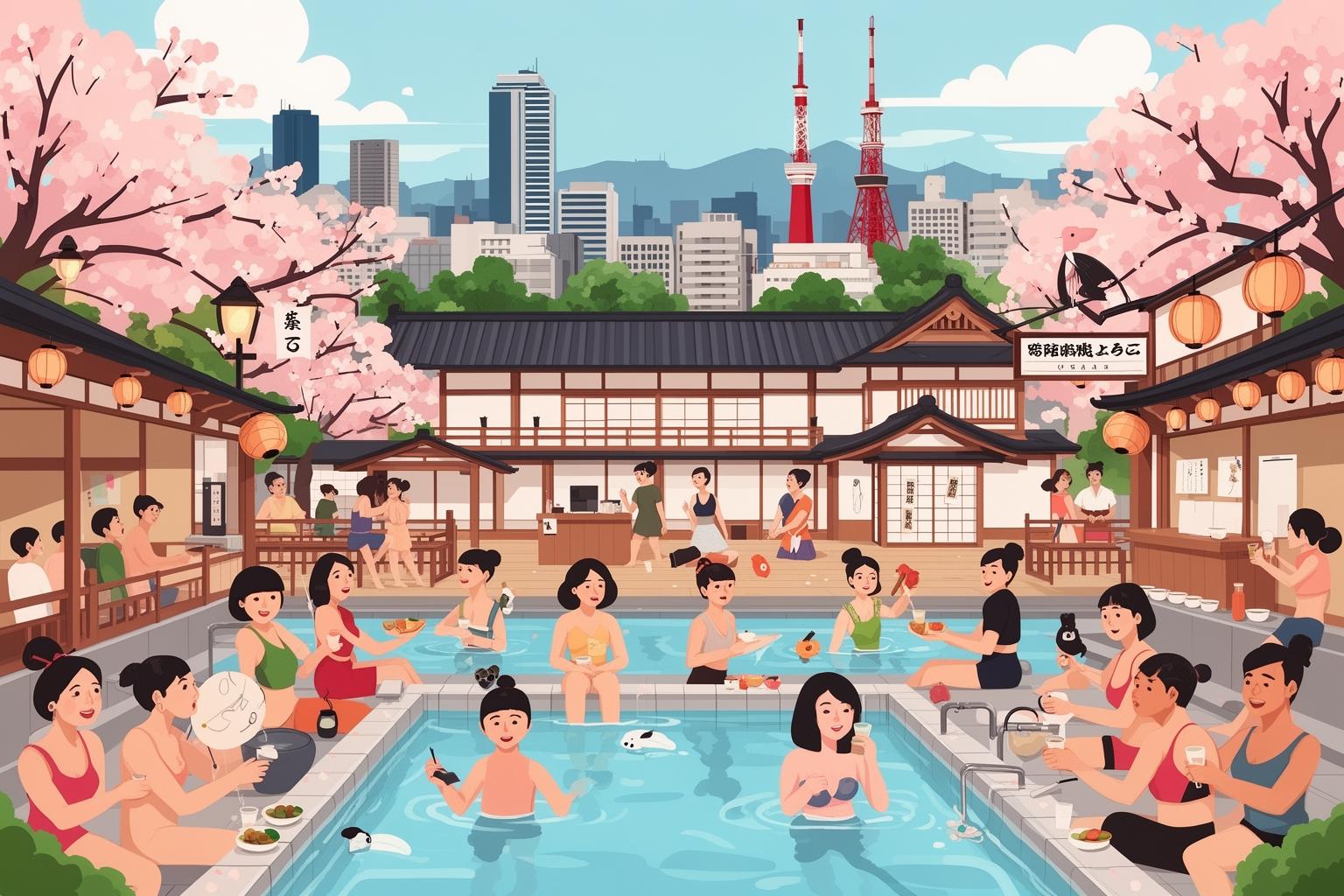
In most of Japan, the idea of a public bath carries a strong sense of tradition and quiet respect. In Osaka, however, that respect is expressed through lively, cheerful interaction. The central concept remains the same everywhere—`hadaka no tsukiai`, or “naked communication.” The belief is that by shedding your clothes, you also shed social status, titles, and inhibitions, enabling a more genuine connection. But Osaka takes this idea and turns the volume way up. It’s not just about silent, mutual understanding; it’s about active, direct conversation. The sentō is where the city’s social fabric is woven, thread by thread, amid the steam and humidity.
The “Hadaka no Tsukiai” Mindset, Osaka-Style
Walk into a Tokyo sentō, and you might encounter serene quiet, with only the sound of splashing water and occasional sighs of relaxation. People tend to keep to themselves, preserving a polite, invisible bubble of personal space. Now, step into an Osaka sentō. An elderly woman might turn to you at the washing station and say, “That shampoo smells nice, where’d ya get it?” A man soaking in the jet bath might ask where you’re from—not with the formal stiffness of an English lesson, but with the sincere, casual curiosity of someone who sees you as a new part of his everyday scene. Silence here isn’t golden; it’s a missed opportunity. This chattiness isn’t an intrusion; it’s an invitation. It’s the city’s way of saying, “You’re here, I’m here, let’s acknowledge our shared space.” It reflects Osaka’s practical nature. Why be lonely and quiet when you can be communal and connected? The bath is hot, the water soothing, and a good chat makes the time go by faster. It’s just basic, human logic.
Why the Bath, Not the Bar?
For many, the sentō functions as a “third place,” an essential social anchor outside home and work. But unlike a bar or café, it’s uniquely multi-generational and egalitarian. The entry fee is set by the prefecture, currently around 500 yen, making it accessible to all. You’ll spot a grandfather patiently teaching his grandson how to wash properly before entering the tub. You’ll overhear the local butcher grumbling about fish prices to the corner stationery shop owner. Students, salarymen, retirees—they all sit on the same small plastic stools, soak in the same hot water, and watch the same baseball game on the TV in the changing room. This setting fosters a kind of low-stakes, high-frequency social interaction that fuels Osaka’s tight-knit neighborhoods. Relationships aren’t formed through business cards or social media profiles; they grow from shared complaints about the weather and a mutual love for the perfect hot bath. It’s community in its purest form.
The Unspoken Rules of the Neighborhood Sentō
While the social atmosphere is relaxed, the bathing process itself is governed by a set of firm, unspoken rules. Following them isn’t about being Japanese; it’s about being considerate. In Osaka, where people value directness, being a good neighbor in the bathhouse reflects your character. Making a mistake isn’t a crime, but doing it right earns you quiet, immediate respect. This is your practical guide to fitting in effortlessly.
Before You Even Get Wet: The Prep Work
What to Bring
Like a seasoned regular, you’ll want your own kit. This isn’t a hotel spa. The essentials include a small towel for washing and a large towel for drying. Bring your preferred soap, shampoo, and conditioner. Most people carry these in a small waterproof basket or a simple plastic bag. While you can usually buy or rent these items at the front desk, bringing your own shows you’re not a tourist; you’re here for the bath, just like everyone else. It’s a small detail that marks you as part of the local rhythm.
The Getabako (Shoe Locker)
Your first stop is the wall of tiny shoe lockers at the entrance. Slide your shoes in and lock them with the wooden or plastic key, the `kagi-fuda`. This key is your passport for the next hour. Attach it to your wrist or ankle; losing it is a major hassle. This simple act of securing your shoes is the first step in leaving the outside world behind and entering the unique realm of the sentō.
Paying the Bandai (Front Desk)
Next, head to the reception. In older sentō, you’ll see the traditional `bandai`, an elevated platform where an attendant, often an elderly woman, oversees both the men’s and women’s changing rooms. It might feel a bit unusual at first, but it’s a classic feature. In more modern establishments, it’s just a standard front counter. You’ll pay a flat fee and might buy a small ticket from a vending machine. This transaction is quick and efficient. This isn’t a luxury service; think of it more like paying for public transport—you pay your fare to access a shared, essential city utility.
Inside the Changing Room (Datsuijo)
Locker Etiquette
Once inside the changing room, separated by a `noren` curtain by gender, find a locker for your clothes. The locker key will have an elastic band so you can wear it on your wrist. The key to fitting in here is confidence. Undress without fuss. Everyone is there for the same purpose, and no one is paying attention to you. Trying awkwardly to hide behind a towel only draws more attention. Place your large towel neatly in your locker or on a nearby shelf. It stays dry and waiting for you. Your small towel and toiletries are all you take with you into the bathing area.
The Towel Conundrum
This is perhaps the most important piece of sentō etiquette. You have one small, thin towel. This towel serves multiple purposes: you can use it to scrub your body (though many prefer a nylon cloth for that), and you can use it for some modesty as you walk from the changing room to the washing area. But the most critical rule is what you don’t do with it. Under no circumstances should this towel touch the bathtub water. It’s considered unclean. When soaking in the tubs, the proper place for your towel is either folded neatly on your head—the classic sentō look—or placed on the edge of the tub, well away from the water. Following this rule instantly shows you understand and respect the culture.
The Main Event: The Bathing Area (Yokujō)
Kakeyu: The First Rinse
The biggest mistake a newcomer can make is walking straight to the main tubs. Before soaking, you must wash thoroughly. Find a washing station, or `arai-ba`. Near the entrance to the bathing area, you’ll find large barrels of hot water. Use a basin to scoop water and splash it over your body (`kakeyu`). This initial rinse warms your body and washes off surface sweat and grime. It’s a fundamental sign of respect for the shared water you are about to enter.
Claiming Your Spot
The washing stations line the walls. Each has a small plastic stool and a bucket or basin. Take a seat. This is your space. Be mindful of your neighbors; control your shower spray so you don’t splash the person next to you. This is where real cleaning happens. Lather up and scrub thoroughly. When finished, the unspoken rule is to rinse your stool and bucket with hot water and leave them clean for the next person. This simple act of consideration is peak Osaka practicality. You clean up after yourself because it’s efficient and makes things better for everyone. No fuss, just common sense.
Soaking, Not Swimming
Now, you can finally enter the tubs. The water is often hotter than you might be used to, typically between 40-44°C (104-111°F). Ease in slowly. The tubs are for quiet soaking and relaxation, not swimming or horseplay. Keep your head above water. You’ll likely find a variety of baths: a simple large tub, a jet bath (`jetto-buro`) for massaging your back, and perhaps the infamous `denki-buro`, or electric bath. This uniquely Japanese invention sends low-voltage electric currents between two plates in the water, creating a tingling, muscle-relaxing sensation. It’s an acquired taste but a quintessential part of the local sentō experience. Approach with caution, but give it a try.
What Makes an Osaka Sentō Osakan?
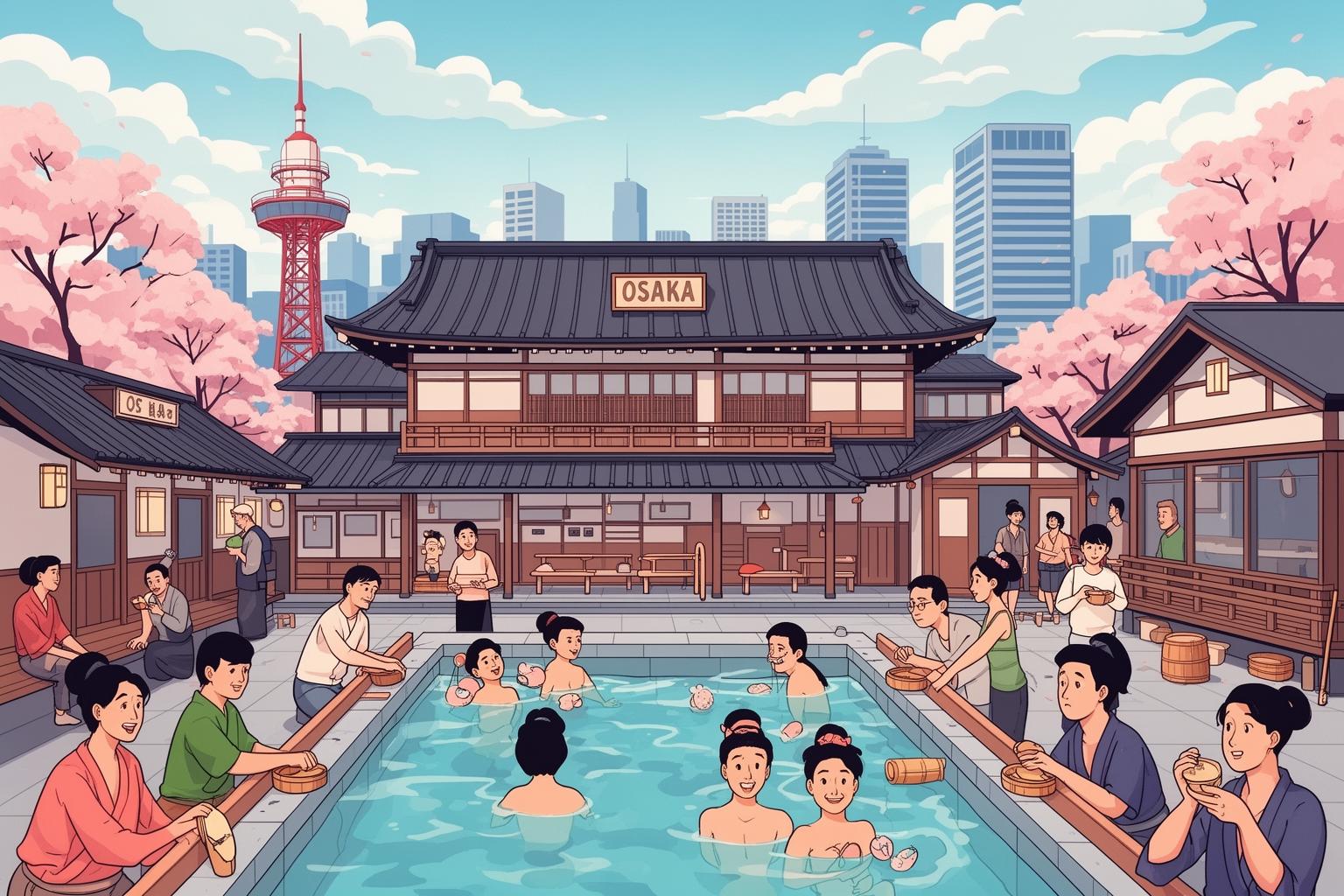
Sentō can be found throughout Japan, but the experience in Osaka is shaped by the city’s unique character. It’s louder, more straightforward, and strongly communal. While the architecture may be similar, the atmosphere is entirely different. It’s less about Zen and more about lively, human connection.
The Art of the Conversation
As noted, the quietness of a Tokyo bath can feel overwhelming to someone familiar with Osaka’s style. Conversations flow as freely as the water. They aren’t deep or philosophical, but centered on everyday life. People speak in the casual, familiar Osaka dialect, which immediately breaks down barriers. A phrase like “Ee yu desu na?” (“Nice hot water, eh?”) invites anyone nearby to join in. This blunt, friendly openness can seem intrusive or pushy to outsiders. Someone from Tokyo might think, “Why is this stranger talking to me?” Meanwhile, an Osaka local wonders, “Why wouldn’t this stranger talk to me? We’re both right here!” It reflects a mindset shift from valuing privacy to embracing shared experience.
The Post-Bath Ritual: The Soul of the Sentō
The experience continues after you leave the water. The changing room plays a vital second role. After drying off completely before re-entering the changing area (an important rule—don’t drip on the floor), people linger. They sit on benches, cool off in front of a fan, and watch the communal television, which almost always shows a Hanshin Tigers baseball game. The collective cheers and groans build a sense of camaraderie that extends beyond the stadium and into the city’s fabric.
The Vending Machine Trinity
No visit to the sentō is complete without a post-bath drink. There’s a revered trio of beverages, usually dispensed from a vintage vending machine with glass bottles. The favorites are fruit milk (`furutsu gyunyu`), a sweet and fruity drink; coffee milk (`kohi gyunyu`), its caffeinated counterpart; and a small bottle of beer. The proper way is to place a hand on your hip and drink it down in a few gulps. This ritual serves as a shared cultural punctuation mark at the end of the bathing experience. This simple pleasure, enjoyed among neighbors, captures the spirit of the sentō.
The Community Bulletin Board
Look around the changing room walls, which act as the neighborhood’s analog social network. You’ll find posters for local festivals, ads for the nearby noodle shop, and notices from the community association. The sentō is more than a place to clean up; it’s the information hub and social nucleus of the community. It reminds visitors that they’re not in an anonymous city, but in a neighborhood with its own distinctive identity and rhythm.
Common Misunderstandings and How to Fit In
For a foreigner, the sentō can feel intimidating. It’s a close-knit environment governed by many unspoken rules. However, understanding the local perspective can ease much of that anxiety. The key is to view it not as a challenge to your cultural knowledge, but as an invitation to experience a local’s everyday routine.
It’s Not a Spa, It’s a Utility
Many foreigners imagine Japanese baths as luxurious `onsen` resorts often showcased in travel magazines. A neighborhood sentō is quite different. It serves as a public utility and often appears that way. The facilities may be outdated, with chipped tiles and noisy, echoing acoustics. This isn’t about immaculate beauty or quiet peace. It’s about practical, affordable, communal bathing. Appreciate it for what it truly is: an essential, functioning part of urban life, comparable to a bus stop or post office. Its value lies in its purpose, not its appearance.
“Friendly” vs. “Nosy”
Osaka’s style of friendliness might feel overwhelming if you come from a culture that values more personal space. Questions and remarks from strangers in the bath aren’t meant as an interrogation. They are a form of social bonding, a way to acknowledge you and include you in the community. The older man asking about your job isn’t evaluating your social status; he’s simply striking up a conversation. In a city that thrives on human connection, ignoring a newcomer would actually be rude. Welcome the interest. A brief, pleasant reply is all it takes to be accepted.
Tattoos: The Final Frontier
Tattoos remain a sensitive issue in Japan due to their historical ties to organized crime. Many large, corporate `onsen`, gyms, and super sentō enforce strict, no-tattoo policies. However, neighborhood sentō in Osaka often take a different approach. The attitude here tends to be more practical. Numerous small, family-run baths operate with a “don’t ask, don’t tell” stance, particularly regarding foreigners with non-Japanese style tattoos. The owners know their regulars, and as long as you are respectful and adhere to bathing etiquette, problems are unlikely. Check for a sign at the entrance explicitly banning tattoos (刺青お断り – `irezumi okotowari`). If you don’t see one, you’re probably fine. The local sentō prioritizes community harmony over enforcing rigid corporate rules.
Finding Your Local Sentō and Making it Your Own
The best sentō in Osaka isn’t the one boasting the most famous mural of Mount Fuji or the widest variety of baths. Rather, it’s the one located just a five-minute walk from your apartment. It’s the place where the attendant begins to recognize you, moving from a silent nod to a friendly “Otsukaresama!” (“Thanks for your hard work today!”). You can spot them by their distinctive chimney, or more reliably, by wandering through the side streets off your local `shotengai` shopping arcade. Once you discover it, make it your regular spot. Visit around the same time a few times a week. Before long, the faces in the water will become familiar. The conversations will grow easier. You’ll stop feeling like an outsider and start feeling like part of the community. You’ll know you’ve truly settled in when you find yourself in a hot bath, small towel folded on your head, chatting about the humidity with a complete stranger. At that moment, you won’t just be living in Osaka—you’ll be a part of it.