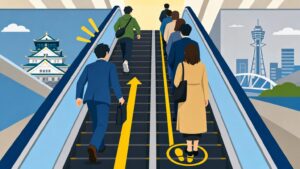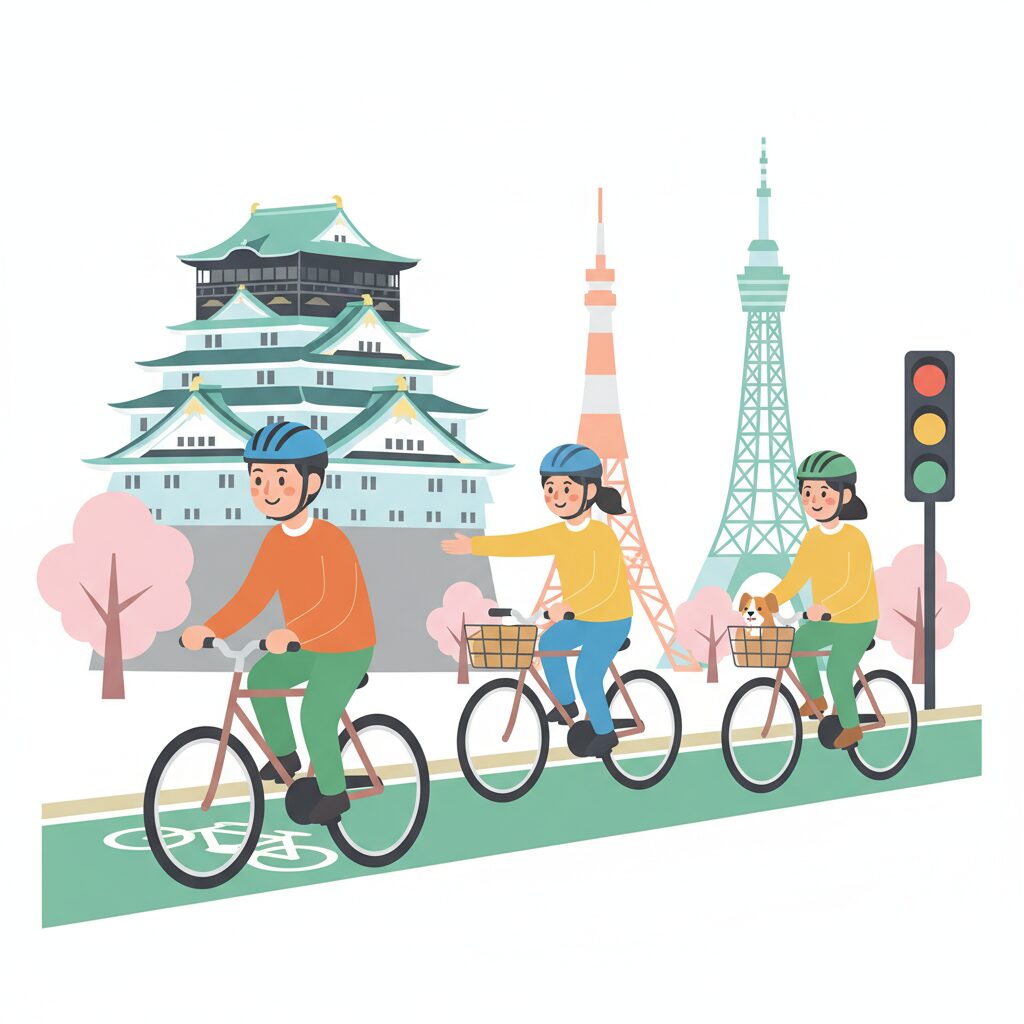
Hello, lovely people! Sofia here, ready to take you on a whirlwind tour not of Osaka’s famous landmarks, but of its arteries, its veins, the very lifeblood of the city: the bicycle paths. And when I say paths, I mean the sidewalks, the back alleys, the slivers of asphalt between a parked car and a speeding truck. My first week in Osaka, I stood on a corner in Namba, absolutely mesmerized. It wasn’t the flashing lights of Dotonbori that caught my eye, but the silent, fluid chaos unfolding before me. A mother with one child strapped to her back and another in a front-mounted seat, bags of groceries swinging precariously from her handlebars, glided through a sea of pedestrians like a swan. A businessman in a crisp suit, briefcase in the front basket, expertly weaved around a group of tourists. An elderly woman, moving at a pace that defied her years, rang a tiny bell, and the crowd parted for her like the Red Sea. It was a symphony of motion, a ballet of near-misses and silent negotiations. I thought to myself, there are no rules here. But I was wrong. There are rules. They’re just not written down. They’re felt. They’re understood. They’re the rhythm of Osaka itself, and if you want to truly live here, you have to learn the steps to this two-wheeled tango.
As you absorb the intricate coordination of Osaka’s streets, it might be exciting to explore a local neighborhood matsuri experience that reveals another layer of the city’s vibrant pulse.
The Mamachari: Queen of the Osaka Streets
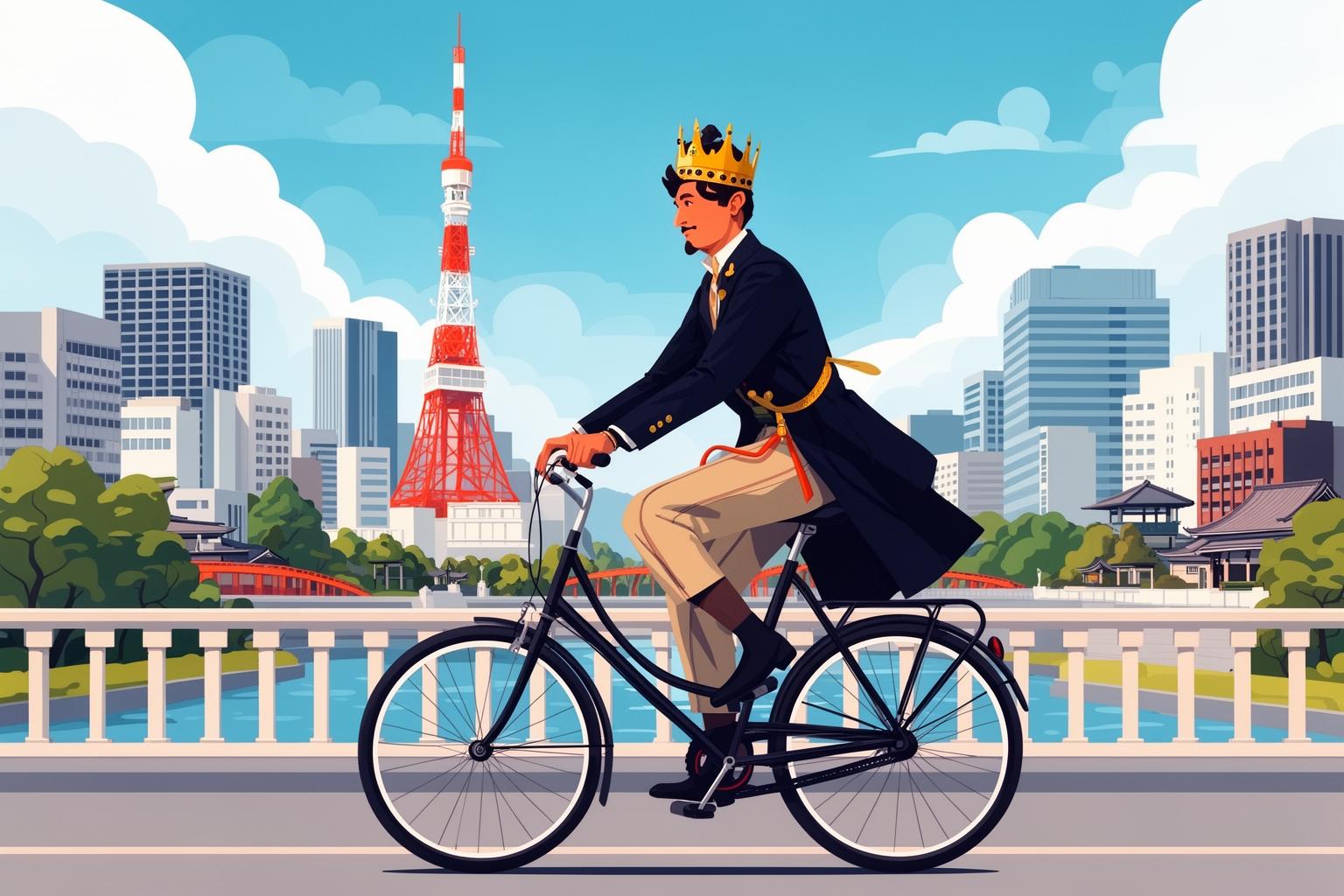
Before we delve into the intricate dance of cycling in Osaka, you first need to meet the queen. She’s not sleek, she’s not fast, and she’s certainly not built for sport. She is the mamachari, the “mom’s chariot,” and she reigns supreme on Osaka’s streets. These bikes are the city’s dependable workhorses, utilitarian masterpieces of engineering crafted for a single purpose: to get daily life done. Typically designed with a low, step-through frame for easy mounting, a sturdy basket in front, a robust rack at the back, and a kickstand so stable you could probably change a tire without it tipping over, the mamachari embodies Osakan pragmatism.
In Tokyo, you’ll find many sleek road bikes, foldable commuter models, and stylish single-speeds. Cycling there often feels like a deliberate lifestyle choice, part of a carefully curated urban identity. In Osaka, the mamachari goes beyond choice; it’s essential, an extension of the home, a second minivan. It’s a cultural emblem that declares, “I have places to be, things to carry, and I won’t be slowed down by trivial obstacles like traffic or pedestrian zones.” This is the first key to grasping the Osaka mindset: functionality trumps form. Efficiency is the highest virtue. Why take the subway two stops when you can hop on your bike and arrive in half the time, picking up daikon and soy sauce on the way?
I’ve witnessed scenes on these bikes that would make a structural engineer gasp. A father cycling with a toddler in the front seat and a full-sized keyboard strapped to his back. A grandmother maneuvering with a mountain of cabbages in her basket, so large it completely blocked her view, navigating by what must have been sheer instinct. The true experts are the mothers, the namesakes of the machine. They perform a daily ballet of balance, often with three children in tow—one in front, one in back, and one older child standing on the rear axle, clinging on for dear life. This isn’t considered reckless; it’s seen as resourcefulness. It’s a vivid portrayal of the Osaka spirit of nanto ka naru, or “it’ll work out somehow.” This practical, make-it-work attitude is woven into the city’s very fabric, and the mamachari is its proud, slightly squeaky chariot.
The Sidewalk vs. The Street: A Fluid Concept
Here lies the greatest source of fear and confusion for the newly arrived foreigner. You’ve just purchased your first shiny mamachari. You recall the rule from back home: bikes are vehicles, so they belong on the road. Confidently, you pedal onto the street, only to be narrowly passed by a taxi inches from your handlebars. Frightened, you swerve onto the seemingly safe sidewalk, only to confront a crowd of pedestrians who clearly don’t think you belong there either. So, where should you ride? The answer, in true Osaka fashion, is “it depends.”
The official law in Japan states that bicycles should generally be ridden on the street unless signs indicate that sidewalk riding is permitted. In Osaka, this rule is treated less as a strict regulation and more as a suggestion. The real, unwritten rule is to occupy whichever space causes the least disruption to the overall flow of traffic, both pedestrian and vehicular. This demands constant environmental assessment—a kind of high-speed urban calculus. Is the road a narrow, one-way street jammed with delivery vans and impatient taxis? Then the sidewalk is your ally. Is the sidewalk a bustling artery in front of Umeda Station during rush hour? Stay on the road and hug the left curb like your life depends on it—because it just might.
This is a fundamental contrast to the more orderly, rule-following culture of Tokyo. In Tokyo, there’s a stronger sense of designated spaces. Cyclists, drivers, and pedestrians tend to stay in their respective lanes. In Osaka, the boundaries are wonderfully, terrifyingly blurred. It’s not about strict compliance with a top-down rule; it’s about a bottom-up, collective negotiation of space. The core principle isn’t “follow the law,” but meiwaku o kakenai—“don’t cause trouble for others.” An Osakan cyclist on a crowded sidewalk will ride at walking pace, ready to stop instantly. A pedestrian will hear the faint whir of a bike behind them and instinctively shift a few inches aside, creating a path without breaking stride or conversation. This fluidity is often mistaken for rudeness or chaos by outsiders. It’s not that; it’s a sophisticated form of social cooperation, a shared understanding that the most efficient way for everyone to reach their destination is to be predictable, aware, and willing to bend formal rules for practical harmony.
The Art of the Weave: Navigating Pedestrians
If cycling in Osaka were a tango, then navigating pedestrians would be the most intricate step of the dance. It’s a close-contact activity demanding nerve, intuition, and a healthy respect for the small bell on your handlebar. That bell serves as your primary means of communication. In many Western cultures, and even in Tokyo, ringing a bicycle bell can come across as aggressive, an impatient “move out of my way!” In Osaka, the bell, or chirin-chirin, is a gentle alert, a polite “excuse me, I’m right behind you.” It’s part of the city’s soundscape, as familiar as the recorded announcements on the Loop Line.
A double-tap of the bell signals your approach from afar. A single, soft ring is used in closer proximity. The response seldom includes startled jumps or angry glares. Instead, you witness a marvel of human spatial awareness. People don’t step aside; they simply compress. Shoulders turn inward, bags are drawn closer, and a bicycle-wide channel appears in the crowd, only to close seamlessly once you’ve passed. It’s a beautiful sight, a testament to a collective understanding of space honed over generations.
This dance has its own rules. You don’t speed through a shopping arcade like the Tenjinbashisuji Shotengai. That is sacred pedestrian territory. The proper etiquette is to dismount and walk your bike, becoming a pedestrian yourself. Riding through would be a serious social faux pas, earning silent, judgmental stares capable of curdling milk. Conversely, on a wide, spacious sidewalk such as the grand Midosuji Boulevard, pedestrians usually keep to the building side, leaving an unofficial “bike lane” along the curb. No signs indicate this. No lines are painted on the ground. It’s simply understood. Learning these subtleties, knowing when to assert your presence with a gentle chirin-chirin and when to yield entirely, is essential. It shows you’re not just a tourist on a rental bike but someone attuned to the local rhythm.
Parking Pandemonium: Where Does the Bicycle Go?
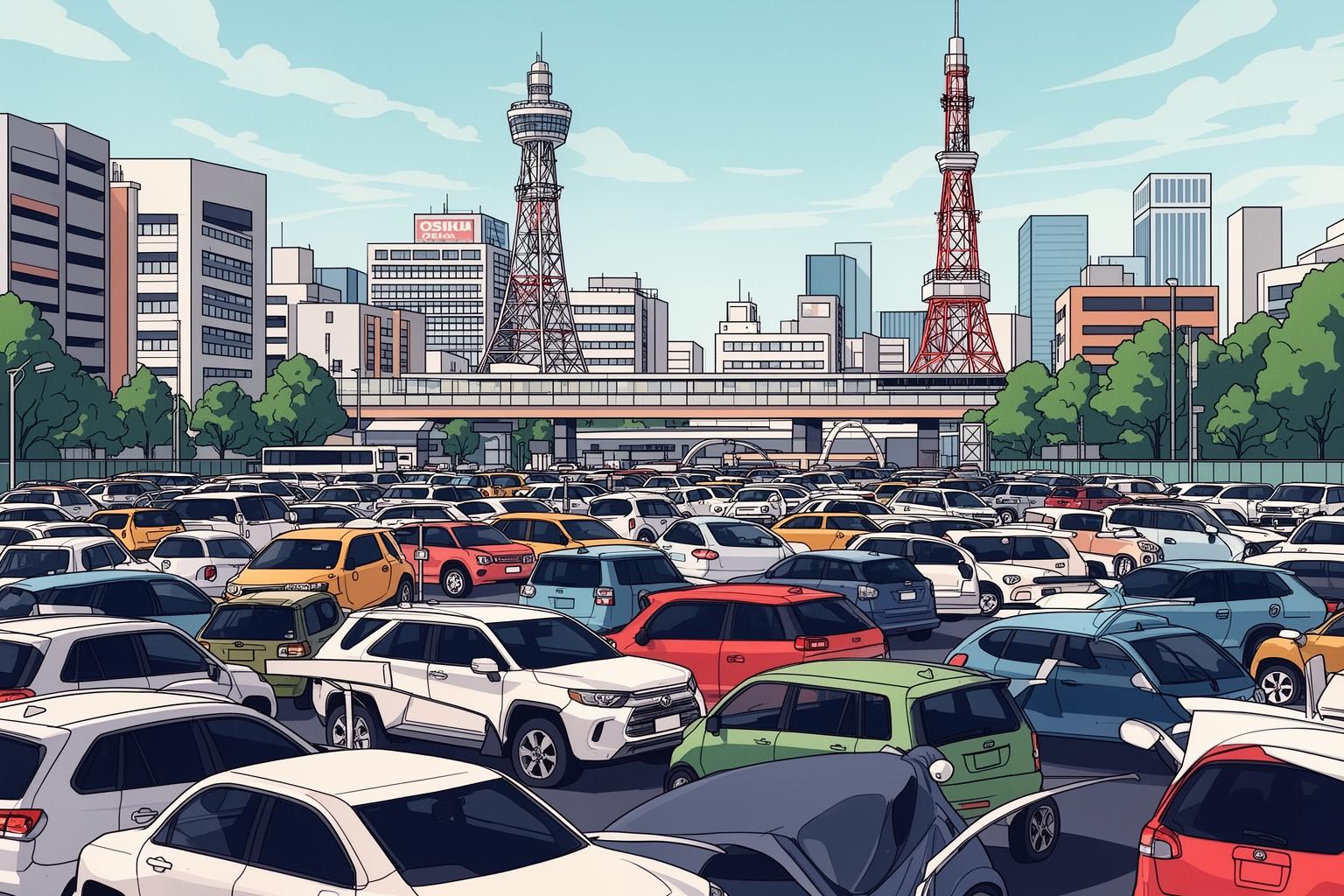
So you’ve successfully navigated the streets, weaved through pedestrians, and reached your destination. Now comes the final challenge: parking. At first glance, it seems bicycles are simply abandoned anywhere, chained to guardrails, signposts, or saplings at random. This, much like the sidewalk situation, is an illusion of disorder concealing a complex, unspoken system of rules and consequences.
Of course, there are official bicycle parking lots (churinjo), large, multi-level facilities near train stations and department stores. They are inexpensive, secure, and the “proper” place to park. However, they often fill up by 8 AM or might be a five-minute walk from where you actually need to be, which, to the efficiency-driven Osakan mindset, is an unacceptable hassle. This leads to what I call “guerrilla parking.”
There’s a clear hierarchy here. Parking in a designated, marked area on a sidewalk is acceptable but competitive. Parking neatly against a long guardrail, away from pedestrian flow, is generally permitted. Leaning your bike against a convenience store wall for a quick visit is common practice. The cardinal sin is parking in a way that blocks others. Obstructing tactile paving for the visually impaired is a major taboo. Blocking a store entrance, a fire hydrant, or a narrow alley invites trouble. This is where the meiwaku principle comes into play again. If your bike isn’t in anyone’s way, it’s likely to be ignored. If it causes a problem, you’ll be dealt with swiftly.
The punishment takes the form of a dreaded yellow or red tag attached to your bike by city officials, marking it as illegally parked. If you’re lucky, it’s just a warning. If not, you’ll return to find your cherished mamachari gone, vanished into thin air. A small notice on the ground will inform you that your bicycle has been impounded. The ensuing trip to a remote, windswept impound lot under a highway overpass, the payment of a fine, and the shame-faced retrieval of your bike is a rite of passage for every Osaka cyclist. It teaches you the invisible boundaries of acceptable parking far better than any sign ever could. It’s the city’s way of saying, “We’re flexible, but don’t take our flexibility for granted.”
Osaka vs. Tokyo: A Tale of Two Cycling Cities
To truly understand the distinctive character of Osaka’s bike culture, it’s crucial to compare it with its major rival, Tokyo. Cycling in Tokyo often appears organized and well-mannered. Cyclists tend to stick to the roads, wear helmets, and choose bikes designed for performance or style. The infrastructure is usually clearer, with more dedicated bike lanes and stricter enforcement of parking regulations. If Tokyo’s public transportation is an example of precision and punctuality, its cycling culture mirrors this attitude: there is a correct way to do things, and social harmony is preserved when everyone adheres to it.
Osaka, on the other hand, is pure improvisation. The bicycle is not a lifestyle accessory but a practical tool, as essential as a reliable pair of chopsticks. The philosophy isn’t about following a set path but about finding the most practical route, even if it means cutting across a plaza or briefly riding on a wide, empty sidewalk. This culture stems from a flat terrain, densely packed neighborhoods, and a merchant’s drive to get things done efficiently. The interaction between cyclists, pedestrians, and cars in Osaka feels less like strict rules and more like an ongoing, fluid conversation. It may seem more hazardous to outsiders, but locals are highly adept at reading cues and anticipating movements.
Put it this way: Tokyo is like a classical orchestra, where each musician plays their part precisely as written to produce a perfect, harmonious performance. Osaka is a jazz band. Everyone knows the basic melody, but the real magic lies in the improvisation, the call-and-response between the saxophone and the bass, and the intuitive understanding that allows individual freedom within the collective rhythm. Neither is inherently superior, but they represent fundamentally different expressions of city life. Tokyo’s order brings a sense of calm and predictability, while Osaka’s spontaneous dance offers freedom and a direct connection to the urban environment.
Essential Gear and Unspoken Etiquette
To become a true practitioner of Osaka cycling arts, you need the right gear and a thorough understanding of local etiquette. This isn’t about flashy brands; it’s about practical survival tools.
Your Communication Toolkit
First, your bell. Its importance is crystal clear. It is your voice. Use it early and gently. A rusty, silent bell signals an amateur. Next is your light. It’s legally required after dark, but more importantly, it’s a social obligation. In a city where bikes silently emerge from shadowed alleys, being seen is just as crucial as seeing. Riding without a light is considered rude and genuinely dangerous.
The Fortress of Security
Bike theft is a real concern. The standard lock built into the back wheel of a mamachari is a good starting point, but insufficient. The local custom is to “double lock.” This means using both the built-in wheel lock and an extra, sturdy chain or cable lock to secure the bike frame to an immovable object. It clearly says, “This bike is cared for. Find an easier target.”
The Rainy Day Warrior
Rain doesn’t stop Osaka. The bicycle is an all-weather vehicle, thanks to a brilliant invention: the sasube. This clamp-like device attaches to your handlebars, holding a full-sized umbrella overhead, leaving your hands free to steer and brake. It looks strange, like a quirky mobile sculpture, but it’s a game-changer. Riding through a downpour, perfectly dry under your umbrella canopy, is a uniquely satisfying Osaka experience. Without a sasube, the highly skilled—though technically illegal—one-handed umbrella ride is common, reflecting the city’s steadfast determination to get where it needs to go, rain or shine.
Sensory Etiquette
Finally, a note on what not to do. The most important rule is never to ride with headphones. You need all your senses. You must hear the whir of another bike approaching behind you, the footsteps of a child about to dart into your path, the warning chime of a streetcar. Blocking yourself off from these sounds is not only dangerous but also breaks the social contract. To ride safely in Osaka, you must be fully present—listening, watching, and anticipating. It’s a complete, full-body experience.
What It All Means: The Osaka Mindset on Two Wheels
After countless hours spent in the saddle, weaving through the charming chaos of Osaka’s streets, you begin to realize that the city’s bicycle culture is a reflection of its entire character. It’s not merely a mode of transportation; it’s a moving embodiment of the Osakan spirit.
The constant, fluid negotiation between street and sidewalk reflects a deep-rooted pragmatism. Why adhere to a rule when it proves inefficient or unsafe in a given moment? The objective is the result, not the process. This results-oriented approach is a legacy of Osaka’s long history as a merchant city, where practical solutions and successful outcomes have always been valued above strict formality.
The remarkable loads carried on the back of a mamachari showcase a can-do resourcefulness and a disregard for superficial appearances. It’s not about looking stylish; it’s about getting the kids to daycare and the groceries home in a single trip. This emphasis on substance over style is a fundamental part of Osaka’s identity, a down-to-earth authenticity that contrasts with the more image-conscious cultures of other major cities.
The intricate dance between cyclists and pedestrians, accompanied by the gentle chirin-chirin of a bell, reveals a form of communication that is direct, efficient, and surprisingly cooperative. It requires a high level of mutual trust and shared awareness. It may not be polite in the bowing, formal sense, but it is deeply considerate in its own way—a system designed to keep the entire, messy, beautiful urban machine moving smoothly.
To learn to ride a bike in Osaka is to learn the city’s language. It means understanding that rules are sometimes just guidelines, that space is something to be shared and negotiated, and that a bit of common sense and mutual awareness can create a system far more resilient and efficient than any rigidly enforced code. When you can glide through a crowded market, ring your bell with confidence, find that perfect “grey zone” parking spot, and do it all with a week’s worth of groceries in your basket, you haven’t just mastered a mode of transport. You’ve tapped into the very heartbeat of Osaka.