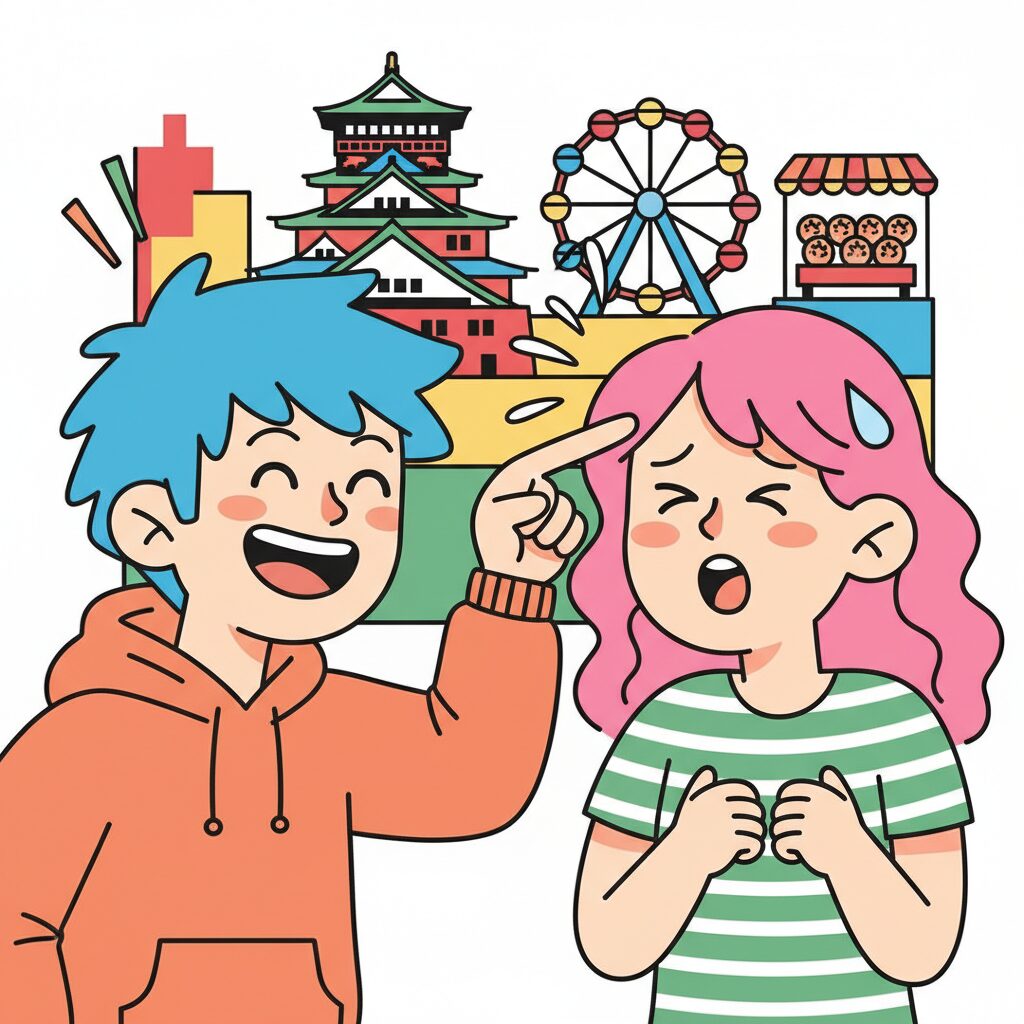
The first time it happened, I was utterly lost. I was standing in a tiny, cluttered shop in the Kuromon Market, trying to buy some pickles. The owner, a woman who looked like she’d been presiding over this salty kingdom for a solid seventy years, squinted at my selection. I’d pointed to a bright yellow daikon. She scooped it into a bag, weighed it, and then looked me dead in the eye. “Just this one?” she asked, her voice a gravelly rumble. I nodded. She shook her head with theatrical disappointment. “So lonely. This pickle is going to be so lonely at your house. You should buy it a friend.” The other customers, a couple of older guys next to me, let out a chuckle. My Japanese was still shaky, but I understood the words. What I didn’t understand was the intent. Was she mocking my meager purchase? Was she calling me a loner? My face flushed, a mix of confusion and mild panic. I mumbled a thank you, paid, and fled into the market’s bustling lane, my sad, lonely pickle in hand.
It took me months of living here, of countless similar interactions, to finally get it. That wasn’t an insult. It wasn’t a sales tactic. It was an opening. It was a verbal nudge, a playful jab meant to close the distance between a shopkeeper and a foreign customer. It was tsukkomi. And in Osaka, tsukkomi isn’t just a style of comedy; it’s a way of life, a form of communication, and, most surprisingly, a dialect of intimacy. For anyone moving to Osaka, thinking about living here, or just trying to decode the city’s unique frequency, understanding this constant, witty repartee is the key to unlocking the entire social landscape. It’s the difference between feeling like an outsider and feeling like you’re finally in on the joke. Because in Osaka, the joke is everywhere, and you’re always invited to be a part of it.
Understanding the subtle art of tsukkomi can also lead you to explore hidden cafes in Osaka that offer a unique glimpse into the city’s welcoming everyday culture.
The Manzai Mindset: Life as a Comedy Duo
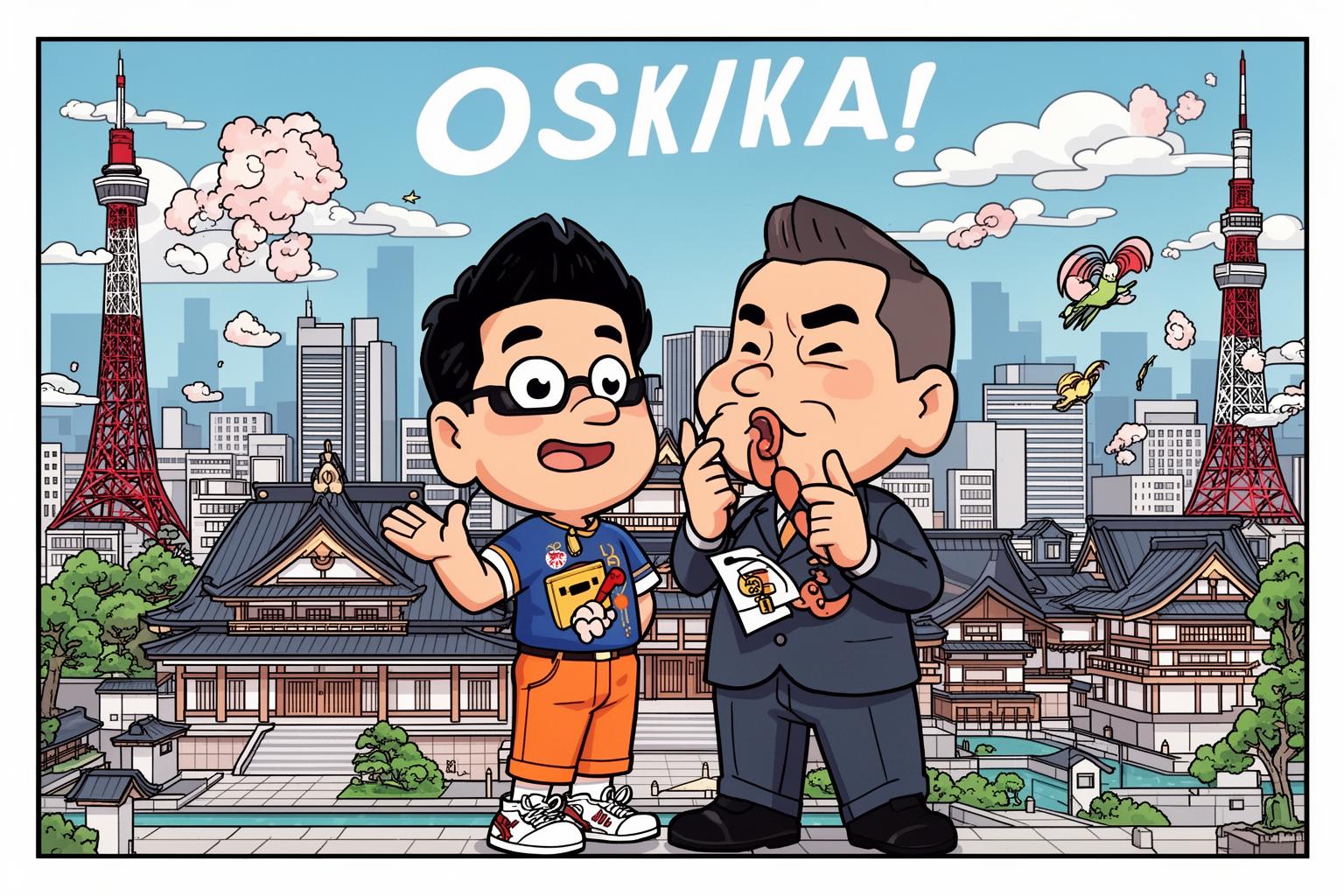
To understand Osaka, you first need to grasp manzai. This traditional style of Japanese stand-up comedy is usually performed by a duo. One is the boke, the funny, scatterbrained character who says or does something absurd, silly, or incorrect. The other is the tsukkomi, the sharp, logical partner who corrects the boke, often with a witty comeback or a light slap on the head. This classic straight-man/funny-man dynamic sets the rhythm that underlies conversation in Osaka.
The important thing to realize is that this isn’t only for the stage. In Osaka, the whole city becomes a stage, and every conversation turns into a possible manzai routine. People subconsciously look for the boke and tsukkomi roles. The boke sets things up; the tsukkomi delivers the punchline. When someone says something a bit illogical, wears an outrageously loud shirt, or awkwardly handles their chopsticks, they’ve just played the boke. The quick, almost automatic comment that calls it out—that’s the tsukkomi. The phrase “Nande ya nen!,” roughly meaning “Why the heck?!” or “What are you talking about?!,” is the classic tsukkomi response.
This isn’t about being harsh or overly critical. It’s about interaction. The tsukkomi closes the loop. It shows you’re listening, attentive, and quick-witted enough to join in. A boke without a tsukkomi is just a blunder left hanging, creating an awkward silence. But a boke met with a tsukkomi turns into a shared moment of laughter. It turns a minor social slip-up into spontaneous, collaborative entertainment. This mindset is deeply embedded in the local culture—a conversational reflex that prizes wit and active participation over passive politeness.
A Love Language Spoken in Jabs
So why does this dynamic feel so unique, and why is it considered a form of intimacy? Because the act of tsukkomi requires a certain familiarity, or at least a willingness to build it. You don’t perform tsukkomi on a complete stranger you want to keep at a distance. Instead, you do it with people you feel at ease with, or those you want to feel comfortable around. It’s a social shortcut that says, “Let’s skip the formalities. I see you, I acknowledge your little oddity, and we’re close enough to laugh about it.”
Think about it. Letting your friend know they have a piece of spinach in their teeth isn’t hostile; it’s caring. The Osaka tsukkomi works on the same idea, just applied to a broader range of social cues. The old man at the ramen shop who notices you struggling with the ticket machine and says, “First time using electricity, kid?” isn’t insulting you. He’s breaking the ice, inviting you into a shared human moment, turning your minor frustration into connection rather than awkwardness.
This is where many foreigners misunderstand. Often, we grow up in cultures where pointing out someone’s mistake, especially that of a stranger, is seen as rude or intrusive. We’re taught to overlook it politely to spare them embarrassment. In Osaka, the opposite can hold true. Ignoring a clear boke might be interpreted as coldness, disinterest, or social detachment. The tsukkomi, the playful retort, is the warmth. It’s like putting an arm around someone’s shoulder in words. It signals that you’ve been noticed, that you’re on their radar, and that they feel close enough to tease you. It’s an expression of inclusion.
The Great Communication Divide: Osaka vs. Tokyo
This conversational style arguably marks the clearest contrast between everyday life in Osaka and Tokyo. Tokyo often follows the principle of tatemae, the public-facing persona that emphasizes harmony, politeness, and avoidance of conflict. Conversations tend to be more reserved, formal, and indirect. You might work alongside someone in Tokyo for years without learning much about their personal life. The social boundaries are higher and more distinct.
In contrast, Osaka operates on a version of honne, the open expression of one’s true feelings and thoughts, though typically filtered with humor. The aim isn’t to keep a perfectly smooth surface but to build rapport through shared humanity, often by laughing at our own and each other’s flaws. Imagine this scenario: You arrive at a casual meeting with your shirt inside out.
In Tokyo, your colleagues would probably say nothing. They would politely ignore it, assuming you’d be embarrassed if they pointed it out. The social norm is to protect everyone’s public image, even if that means keeping a certain distance. The group’s harmony is maintained, but the moment passes quietly.
In Osaka, you wouldn’t get two steps into the room before someone exclaims, “Whoa, trying out a new fashion trend today? I didn’t know inside-out was in style!” This would be followed by laughter, not at you, but with you. The remark isn’t meant to embarrass you; it’s intended to quickly dissolve the awkwardness with humor. You’d laugh, fix your shirt, and the ice would be completely broken. Osaka’s style prioritizes connection over formality. It dismantles the wall of polite pretense with a sharp, good-natured tsukkomi.
This core difference in communication style explains why many people describe Osaka as “friendlier” or “warmer” than Tokyo. It’s not that people in Tokyo are unfriendly; they simply follow a different set of social conventions. Osaka’s “friendliness” is active and participatory. It requires engagement and pulls you into the conversation, whether you’re ready or not.
A Foreigner’s Field Guide to Handling Tsukkomi
Navigating this as a non-native can be challenging, but it’s a skill you can develop. It’s less about mastering Japanese and more about grasping the rhythm and intent. Here are some survival tips.
Rule 1: It’s Almost Never Personal
This is the key rule. Ninety-nine percent of the time, a tsukkomi from a shopkeeper, coworker, or neighbor isn’t a personal attack. It’s a social gesture. The moment you stop translating the words literally and begin interpreting the humorous, inclusive intent behind them, the whole experience changes. That comment about your “lonely pickle” wasn’t directed at you; it was a small, improvised comedy bit meant for everyone in the shop. Your role was simply to be the straight man, the boke.
Rule 2: Embrace Your Inner Boke
As a foreigner in Japan, you are a natural, walking, talking boke machine. You will misread kanji. You’ll use the wrong honorifics. You’ll bow awkwardly. You’ll try to open a door that says “pull” by pushing it with all your might. This isn’t a curse; it’s a superpower. Every small mistake you make creates the perfect setup, a golden chance for an Osakan to connect with you through a friendly tsukkomi. Don’t be embarrassed by your errors. See them as invitations to interact. The more you stumble in small, harmless ways, the more chances people have to playfully engage with you.
Rule 3: You Don’t Have to Be a Comedian to Respond
This is the best part. You’re not expected to deliver a clever, lightning-fast tsukkomi in return. That’s an advanced skill. All you need to do is show that you understand the gesture. The simplest and best response is simply to laugh. A good-natured chuckle and a smile signal that you get it, you’re not offended, and you value the connection. If you want to take it a step further, you can add a simple phrase. Something like, “Honto ya!” (You’re right!) or “Yabai!” (Oops!) works perfectly. Acting a bit embarrassed while smiling shows you’re a good sport. What to avoid is a cold, silent stare or a defensive, angry reaction. That shuts down the interaction and signals that you’re not willing to join in the fun, which can be seen as standoffish.
Tsukkomi in the Wild: A Day in the Life
Once you start noticing it, you’ll find tsukkomi everywhere. It’s the city’s background soundtrack. Here’s what it looks and sounds like throughout an ordinary day:
- At the bakery: The owner catches you eyeing a pastry. “Don’t just stare at it, it’ll get cold! Are you going to buy it or just make it nervous?” This is his way of saying, “Can I help you?” in the most Osaka style.
- In the office: Your coworker spots your new, slightly quirky glasses. “Are you trying to see the future with those things? They’re huge!” This is their way of saying, “Hey, nice glasses, I noticed.”
- At the grocery checkout: The cashier scans your basket loaded with instant noodles. She looks at you, then at the noodles, and deadpans, “Studying hard for your exams?” It’s a playful remark, a tiny moment of shared humor in a routine exchange.
- With your neighbor: You’re struggling with a stubborn garbage net. Your neighbor, an older woman, watches from her window for a moment before calling out, “Are you wrestling with that thing or trying to dance with it? Let me show you.” It’s an offer of help wrapped in gentle teasing.
In every instance, the tsukkomi serves the same purpose. It breaks through the bubble of anonymity that shapes so much of modern city life. It’s a constant, low-level stream of human connection, turning strangers into temporary comedy partners and everyday errands into memorable moments.
This is the true texture of daily life in Osaka. It’s a city that talks to you, that pokes you, that refuses to let you be just another face in the crowd. At first, this endless stream of commentary can feel jarring. But over time, it becomes comforting. The silence of other cities can feel cold, sterile. You start to miss the gravelly voice of the pickle lady, the cashier’s teasing, the neighbor’s unsolicited advice. You come to realize that tsukkomi isn’t noise; it’s the sound of a city alive and talking to itself—and to you. It’s the assurance that you are seen, that you are part of the chaotic, hilarious, and deeply human fabric of Osaka. And once you learn to laugh along, you’re not just living in the city; you’re finally part of the conversation.