Step off the gleaming, silent efficiency of an Osaka subway train and into the embrace of a shotengai. The air changes instantly. It’s a humid, kinetic world, a river of humanity flowing under a high, arched roof that filters the sun into a hazy, nostalgic glow. The air is thick with the savory scent of grilled eel, the sweet perfume of freshly pounded mochi, and the sharp, clean aroma of daikon radish from a greengrocer’s stall. You hear the rhythmic clatter of a pachinko parlor, the cheerful, repetitive jingle of a supermarket, and the gravelly-voiced calls of vendors hawking their daily specials. This is the shotengai, the traditional Japanese shopping arcade, and in a city like Osaka, built on the backs of merchants and artisans, it is nothing less than the city’s beating heart. But in this age of sterile mega-malls, soulless big-box stores, and the relentless convenience of a one-click online purchase, a persistent question hangs in the air, as tangible as the steam from a ramen shop: are these vibrant arteries of community life slowly bleeding out? Are Osaka’s shotengai truly dying? The answer, like the city itself, is complex, defiant, and thrumming with an unexpected kind of life. To find it, we must walk these covered streets, not as tourists, but as urban archaeologists, piecing together a story of decline, resilience, and radical reinvention.
This story of resilience and reinvention is also reflected in the challenging yet rewarding journey for foreign entrepreneurs opening a cafe or bar in Osaka.
The Soul of the City: What Exactly is a Shotengai?
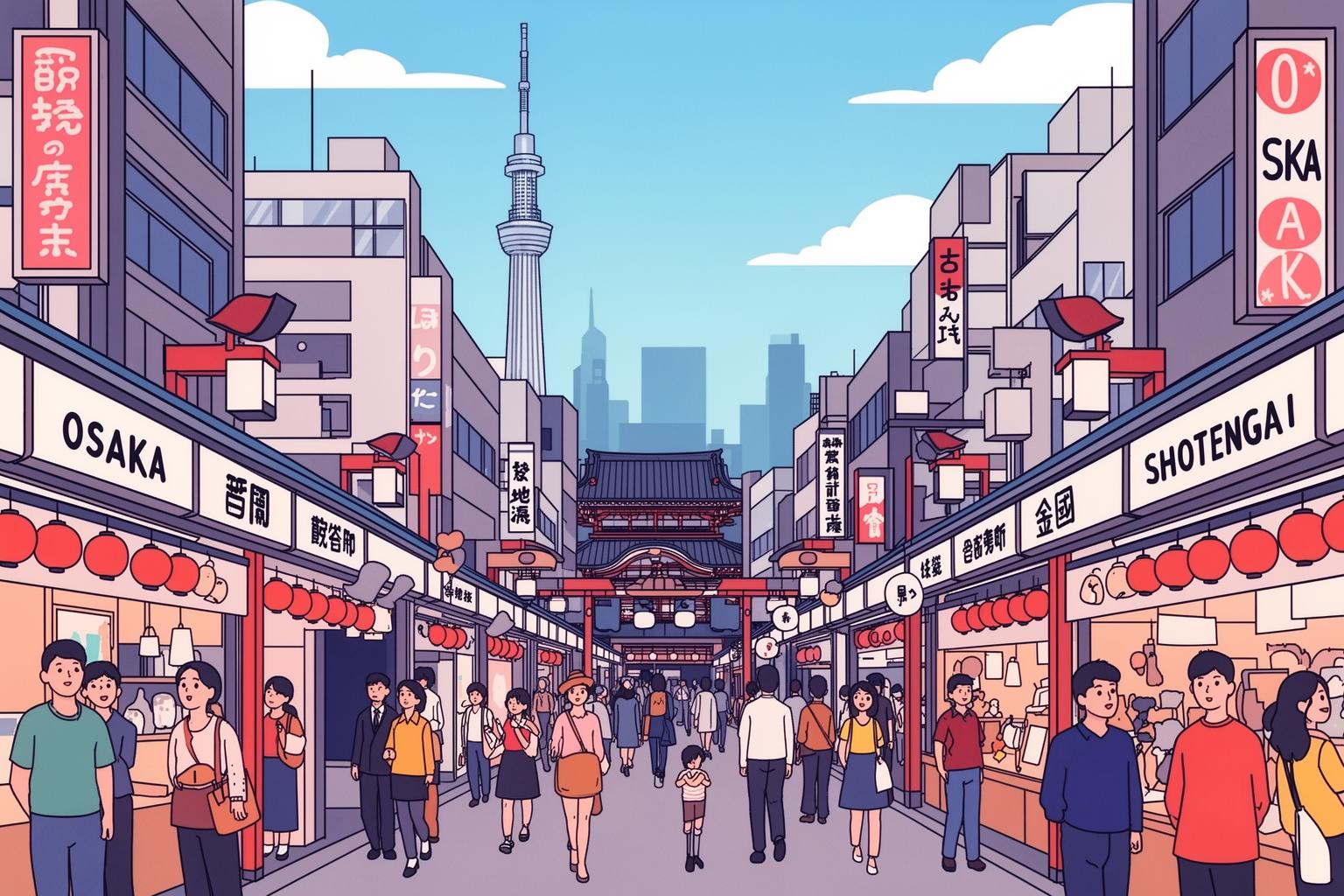
To grasp the crisis confronting the shotengai, one must first understand what it truly is—and what it is not. A shotengai is more than just a shopping street; it is a living, breathing ecosystem, a microcosm of Japanese neighborhood life. The term itself, 商店街, translates to “commerce town street,” yet this translation falls short of conveying its cultural significance. These arcades serve as the semi-public living rooms of their communities. They are places where grandmothers exchange gossip while selecting mackerel for dinner, where children spend their first pocket money on inexpensive sweets, and where shopkeepers have witnessed generations of local families grow up. This profound sense of place is intricately woven into Osaka’s identity. Historically known as “Tenka no Daidokoro” (The Nation’s Kitchen), Osaka has always been a city defined by commerce, where the relationship between producer, seller, and buyer is direct and personal.
The origins of the modern shotengai trace back to the post-war economic boom. As Japan rebuilt, these covered arcades emerged, providing shelter from the weather and a concentrated hub for everyday necessities. They symbolized progress, prosperity, and a return to normal life. The architecture itself reflects this narrative—the tall, often ornate roofs, sometimes decorated with stained glass or elaborate metalwork, stood as a symbol of civic pride. Beneath them, a familiar but indispensable cast of characters formed the community’s backbone: the fishmonger with perpetually cold, damp hands; the butcher who knew exactly how customers preferred their pork sliced for shabu-shabu; the amiable tofu maker with vats of fresh, silken tofu resting in cool water; the futon shop piled high with soft bedding; and the tiny, dimly lit kissaten (old-style coffee shop), where the air was forever filled with the scent of toast and dark-roast coffee. This was the opposite of anonymous consumption. Here, shopping was a social act, a daily ritual of greetings and brief conversations. The shopkeeper wasn’t a faceless employee; they were your neighbor. They knew your name, asked after your family, and might slip an extra croquette into your bag for free—a small gesture of omake, or bonus, that forged a bond no loyalty card ever could.
The Whispers of Decline: Acknowledging the Challenges
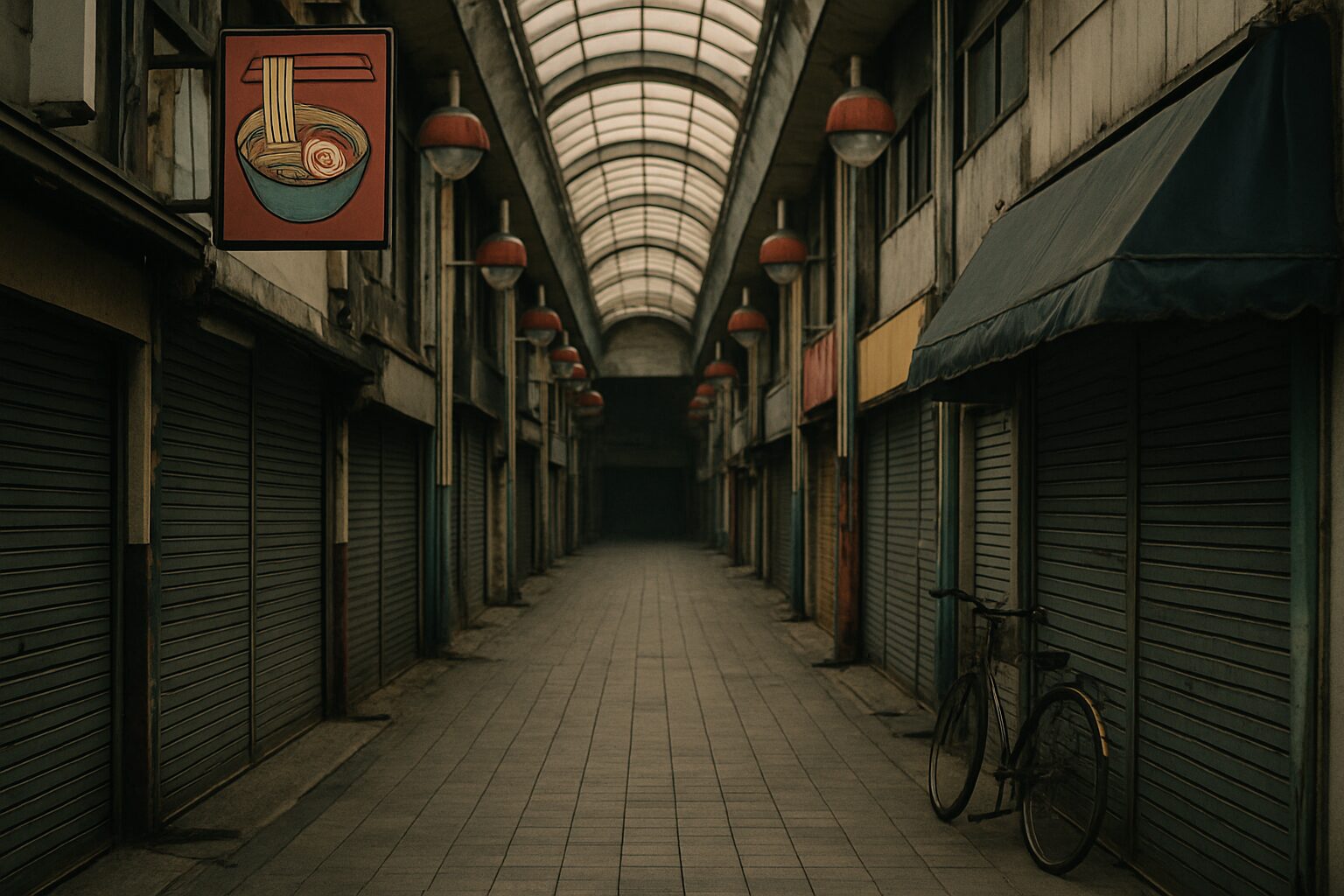
The nostalgic image, however, is now overshadowed by a starkly different reality in many parts of the city. The phenomenon of the “shutter-gai” stands as a poignant symbol of the struggles these institutions face. Strolling through certain older, more residential neighborhoods, you will encounter shotengai where over half the storefronts are shuttered with dull, corrugated metal. Some display faded, hand-painted signs from a bygone era, haunting reminders of the life that once thrived within. The silence is overwhelming, broken only by the hum of a vending machine or the rumble of a passing delivery scooter. This is the face of decline, driven by a perfect storm of societal changes.
The most obvious factor is the drastic shift in consumer habits. The emergence of large-scale supermarkets and, later, the ubiquitous konbini (convenience stores) introduced a model of efficiency that traditional shotengai struggled to compete with. Why visit the butcher, baker, and greengrocer separately when you can find everything under one brightly lit roof, pre-packaged and available 24/7? Aeon Malls and Life supermarkets offered expansive parking, climate-controlled environments, and a consistent, standardized experience appealing to the modern, time-pressed family.
Adding to this is Japan’s stark demographic reality. The aging and shrinking population delivers a double blow to these small, family-run shops. The customer base is literally disappearing, and younger generations are not stepping in to replace them. The children of shopkeepers, having often moved to larger cities for university and corporate careers, show little interest in taking over the family business, which usually means long hours, slim profits, and hard physical work. The artisan skills of fishmongers or traditional sweet-makers vanish when there are no apprentices to inherit them. This leads to the slow, inevitable closure of shop after shop, triggering a domino effect. As more shutters come down, the shotengai loses convenience and appeal, driving customers away until only a small number of resilient businesses remain, like islands in a sea of silent, gray metal.
Lastly, the digital revolution has delivered what many feared would be the fatal blow. The rise of e-commerce giants like Amazon and Rakuten brought a world of products to consumers’ doorsteps, often at lower prices and unmatched convenience. How can a small, independent bookstore compete with an algorithm that knows your reading preferences better than you do? How can a local hardware store survive when factories abroad can ship the same products directly to consumers at a fraction of the cost? This globalized, digital marketplace seems to leave no room for the old-fashioned, face-to-face commerce that the shotengai embodies. The whispers of decline are no longer whispers; in many places, they have become a roar.
Osaka’s Resilience: The Counter-Narrative of Adaptation and Revival

Yet, to declare the shotengai dead would be a profound misunderstanding of Osaka’s character. This is a city that has been burned to the ground and rebuilt, one that prides itself on its pragmatic, tenacious, and endlessly inventive spirit. The story of the shotengai in the 21st century is not one of uniform decline, but of a fascinating, multifaceted evolution. Different arcades have charted radically different paths not only to survive, but to thrive by embracing what makes them unique.
Case Study: The Unstoppable Behemoth – Tenjinbashi-suji
If there’s any shotengai that defies decline, it is Tenjinbashi-suji. Stretching an astonishing 2.6 kilometers, it holds the title of Japan’s longest shopping arcade—a seemingly endless corridor of commerce that takes about 40 minutes to walk from end to end without stopping. Its sheer scale is its first line of defense. The arcade is a city within a city, a bewildering, exhilarating mix of old and new. Here, a 100-year-old knife sharpener works beside a trendy bubble tea shop; a traditional kimono store stands opposite a loud pachinko parlor flashing neon lights. The aroma of a high-end coffee roaster blends with the greasy, delicious steam from a stall selling takoyaki for a few hundred yen.
Tenjinbashi-suji’s success teaches a lesson in strategic symbiosis. Anchored by the prestigious Osaka Tenmangu Shrine at one end, it ensures a steady stream of visitors for festivals and prayers. Intersected by multiple train and subway lines, it is incredibly accessible. Its diverse offerings cater to every need and budget. You can find impossibly cheap croquettes, bargain clothing, and everyday groceries alongside artisanal pottery and high-end sushi. It masterfully serves both as a daily resource for locals and a must-see destination for tourists. So iconic has it become that its survival is almost a matter of civic pride. Walking its length is a quintessential Osaka experience, a journey through the city’s commercial soul from the Edo period to the Reiwa era.
Case Study: The Reinvented Kitchen – Kuromon Ichiba Market
While Tenjinbashi-suji thrived by being everything to everyone, Kuromon Ichiba Market took the opposite approach: it survived by radically reinventing itself for a very specific audience. For generations, Kuromon was the professional’s market, the true “Kitchen of Osaka” where the city’s top chefs arrived at dawn to source the finest fish, meat, and produce. Though always open to the public, its main focus was supplying restaurants. As wholesale logistics changed and chefs altered their sourcing, Kuromon faced a crisis of purpose.
Its solution was a pivot so dramatic that it remains a topic of debate among Osakans. It transformed into a street-food paradise targeting international tourists. Traditional fishmongers who once sold whole tuna now offer perfectly sliced, jewel-like slivers of otoro (fatty tuna) on plastic trays for immediate consumption. Stalls grill giant scallops, fresh oysters, and sea urchin on the spot, serving them with soy sauce and a lemon wedge. Butchers skewer cubes of premium Kobe beef and sear them before your eyes. The entire market has become a grand stage for performative gastronomy.
This strategy has been undeniably successful commercially. On any given day before the pandemic, Kuromon bustled with a chaotic, multilingual crowd of tourists, cameras in hand, sampling the best of Japanese cuisine. The market was saved from obsolescence. However, this has come at a cost. Many locals now avoid Kuromon, complaining that prices have soared and the authentic market atmosphere has been replaced by a contrived tourist trap. This raises a crucial question: if a shotengai is saved by losing its local community, has it truly survived? Kuromon is the brilliant, delicious, and complicated answer.
Case Study: The Creative Rebirth – Nakazakicho and Karahori
A third path to survival can be seen in the quieter, more labyrinthine alleyways of areas like Nakazakicho and the Karahori district. Here, shotengai are smaller, older, and less grand. Many traditional businesses did indeed close down. But into the vacuum stepped a new generation of pioneers: artists, designers, independent boutique owners, and specialty coffee brewers.
Rather than tearing down the old two-story wooden shop-houses (machiya), they restored them, preserving Showa-era charm while infusing interiors with a modern, minimalist aesthetic. The result is a magical fusion of past and present. A former rice shop is now a vintage clothing store; an old bathhouse has become a gallery and cafe. These once sleepy, shuttered arcades have been reborn as hubs of creativity and curated consumption. You won’t find cheap groceries here; instead, you’ll discover handmade leather goods, single-origin coffee beans, obscure art books, and one-of-a-kind ceramics. These shotengai thrive not through volume but uniqueness. They cater to a demographic actively seeking authentic, artisanal, and anti-corporate experiences. They have transformed their small scale and old-fashioned appearance from liabilities into their greatest assets, creating a powerful sense of place that simply cannot be replicated in a mall or online.
The Anatomy of a Modern Shotengai: Strategies for Survival
These case studies highlight a wider range of strategies that successful shotengai are employing. The central theme is a move away from competing on price and convenience—a fight they are bound to lose—toward competing on experience, quality, and community. The shotengai that endure are those that recognize they are selling not just products, but an emotion. They are emphasizing what makes them truly human.
Specialization is essential. The general store that offers a bit of everything is now outdated. The thriving shop today is the one that excels at a single specialty. It might be the senbei (rice cracker) store using a family recipe passed down for three generations, the tofu artisan who can explain the nuances between kinugoshi and momen tofu, or the tea seller who can guide you through tasting a dozen varieties of gyokuro. This is expertise—an unparalleled level of service and knowledge that a supermarket employee simply cannot match.
Additionally, they are evolving into “Third Places”—a concept introduced by sociologist Ray Oldenburg to describe important social spaces outside the home (the first place) and workplace (the second). The emergence of cafes, small bars, community event venues, and even co-working areas within these arcades illustrates this shift. They are becoming spots for lingering, socializing, and connecting, with shopping serving as just one part of the experience. The local merchant’s association plays a vital role by organizing seasonal festivals (matsuri), stamp rallies for children, and flea markets that reinforce the shotengai’s position as the community’s heart.
Interestingly, technology is contributing to their revival as well. Although e-commerce poses a threat, social media has turned into a valuable tool. A small, traditional wagashi (Japanese confectionery) shop can now use Instagram to display its beautiful, seasonal treats to a worldwide audience, attracting customers who might never have discovered it otherwise. A local butcher could use a Facebook page to announce the arrival of a particularly fine cut of meat or to share daily specials. This approach doesn’t replace face-to-face interaction but enhances it, leveraging digital tools to strengthen real-world community bonds and draw people back into the physical space.
A Visitor’s Guide to Diving In: How to Experience Shotengai Like a Local
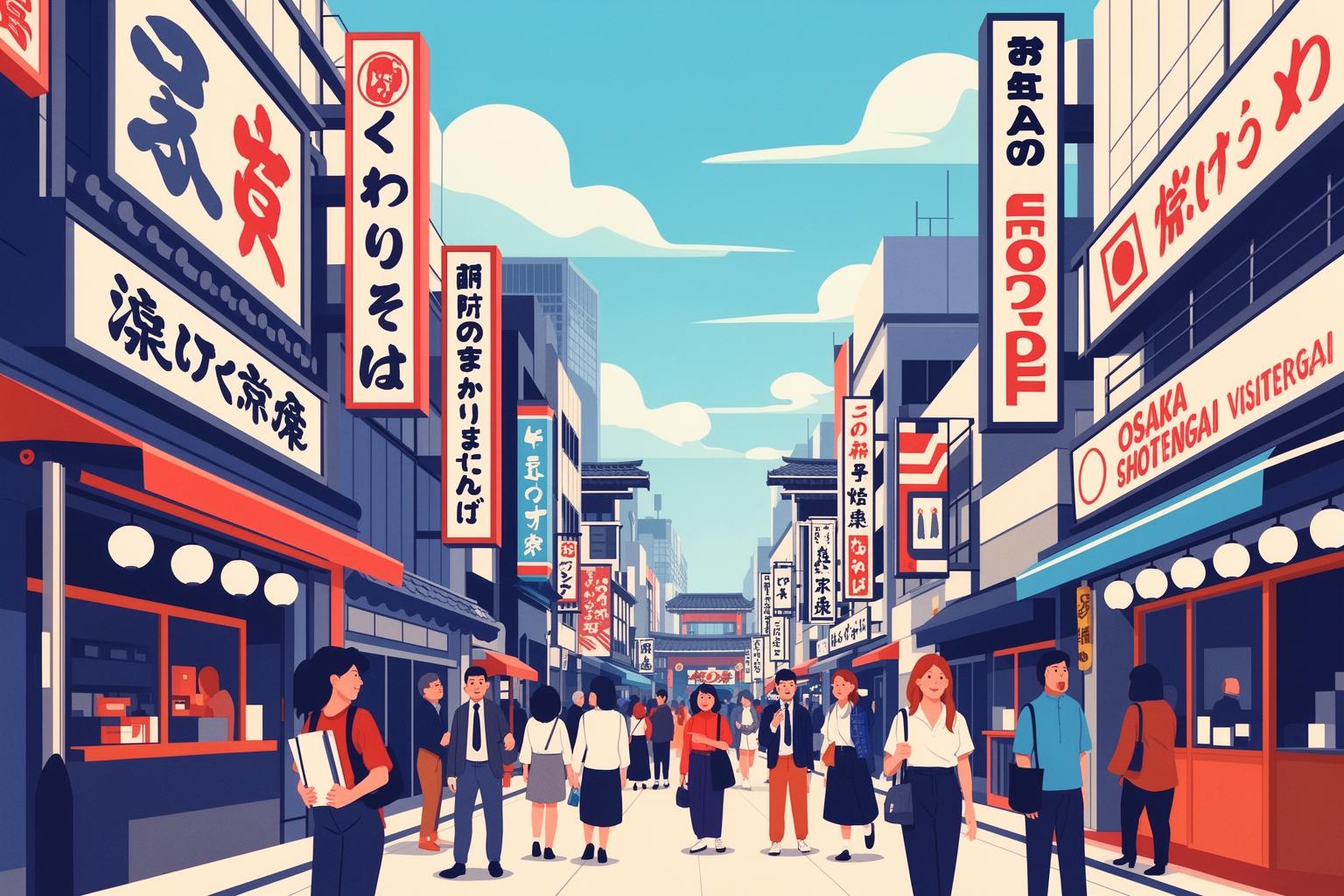
For any foreigner living in or visiting Osaka, exploring the shotengai is one of the most fulfilling ways to experience the city’s genuine culture. However, truly appreciating them requires a slight change in perspective.
First, go beyond the well-known names. While Tenjinbashi-suji and Kuromon are must-see spots, the real essence of Osaka’s neighborhoods lies in the smaller, more local arcades. Take a local train and get off at a random stop like Tengachaya, Komagawa-Nakano, or Juso. Locate the nearby shotengai and simply explore. Here, you’ll witness everyday life unfold without the tourist filter.
Be mindful of the timing. Most shotengai are liveliest from late morning to late afternoon. Arrive too early, and many shops will still be closed; come too late, and shutters will be going down. Also, keep in mind that many small shops have a set closing day, often Tuesday or Wednesday, which can make the arcade feel quieter on those days.
Although Japan is becoming more credit card-friendly, cash is still king in the shotengai. Many small family-run stalls and eateries operate on a cash-only basis, so it’s wise to carry some yen. This adds to the charm of a system founded on straightforward, direct transactions.
Embrace the art of tabe-aruki, or eating while walking. It’s one of the great pleasures of the shotengai. Grab a freshly fried croquette (korokke), a warm, savory octopus ball (takoyaki), or a sweet, grilled mochi skewer (mitarashi dango) and enjoy it as you stroll. Just be considerate of local etiquette: move to the side when eating if the street is busy, and always dispose of your trash in designated bins or carry it with you.
Above all, engage your senses and stay curious. Don’t rush through. Look up at the intricate arcade roof designs. Notice the hand-painted signs and traditional noren curtains hanging in doorways. Listen to the friendly banter between shopkeepers and regular customers. Try using a few simple Japanese phrases like “Konnichiwa” (Hello) or “Oishisou” (That looks delicious). A smile and a gesture of interest can bridge any language barrier and are often met with warm hospitality.
The Verdict: A Living, Breathing Evolution
So, are Osaka’s shotengai dying? The answer is a clear no. However, they aren’t static, unchanging relics of the past either. Instead, they are undergoing a profound, dynamic, and sometimes painful transformation. The weaker ones, those that failed to adapt to the evolving economic and social landscape, are indeed fading, leaving behind silent and shuttered “shutter-gai” as reminders of a bygone era. Their decline is a real and tangible loss for their communities.
But focusing solely on them overlooks the bigger picture: the remarkable story of resilience. The shotengai that endure are those that have rediscovered their core purpose. They are not trying to be Amazon. They are not trying to be Aeon Mall. Instead, they aim to be the best possible versions of themselves: centers of specialization, hubs of community, and providers of the kind of human-centered experience no algorithm can replicate. The future of Osaka’s local commerce is a vibrant mosaic. Some arcades will become polished tourist attractions, others enclaves of hipster cool, and many will continue their quiet, essential role of serving their local neighborhoods day in and day out. This diversity is not a sign of weakness; it is their greatest strength. They prove that in an age of rising anonymity, the human desire for connection, community, and a sense of place is not just nostalgic fantasy, but a powerful and enduring economic force. The next time you are in Osaka, step beneath that arched roof. Buy some fruit, chat with a vendor, and feel the pulse of the real city. You won’t just be shopping; you’ll be part of the ongoing, living story of the shotengai.