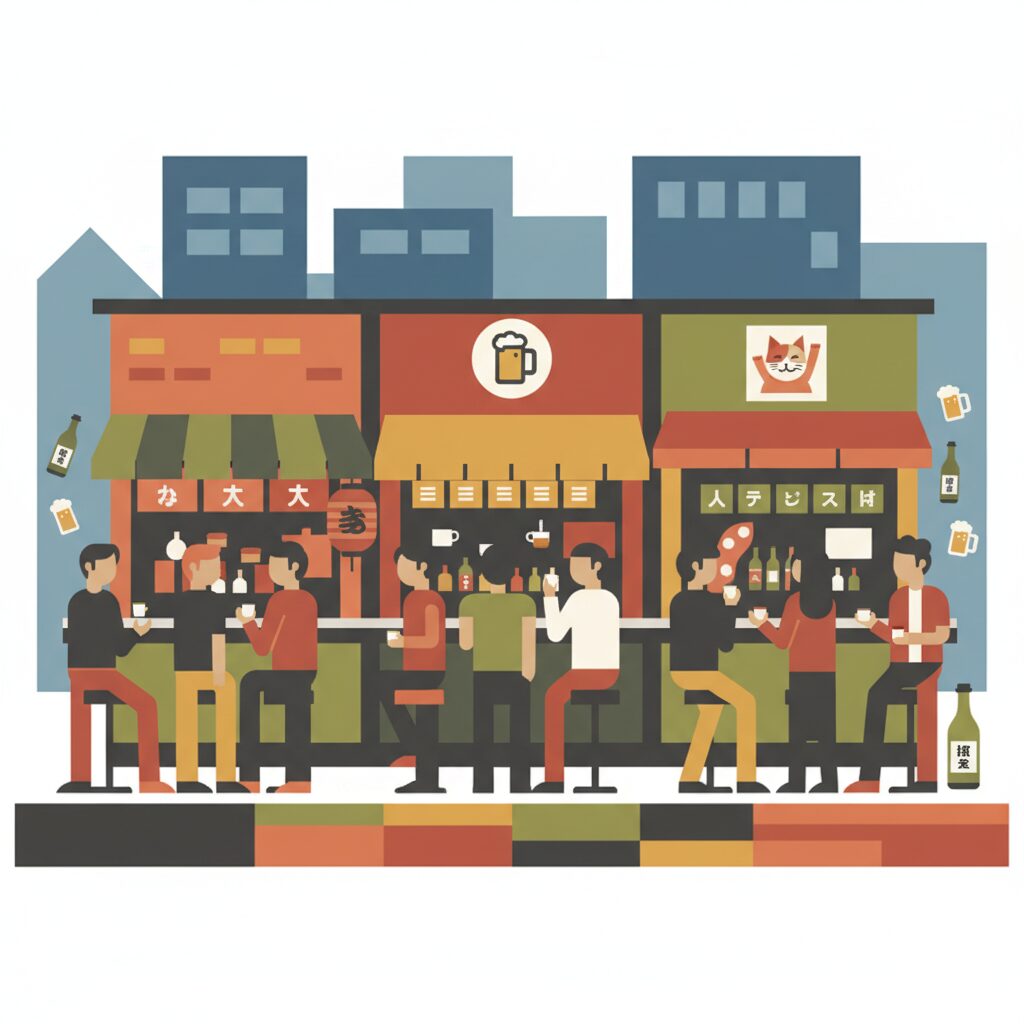
Step off the train in Osaka after a long day, and you’ll feel it. A current, a hum, a city shedding its daytime skin. Follow that current, and it will likely lead you down a narrow street, under a rumbling train track, or into a brightly lit shotengai arcade. There, you’ll see them: small, open-fronted establishments, steam fogging the windows, glowing with the warm light of naked bulbs. Inside, people stand shoulder-to-shoulder along a wooden counter, glasses in hand, their voices a low, convivial roar. This is the world of tachinomi, the standing bar. And in Osaka, it’s not just a place to get a drink. It’s a ritual, a community center, a pressure valve for the city’s working soul. To a newcomer, it can look intimidating—a closed-off world of unwritten rules and rapid-fire Japanese. But push past that hesitation, step over the threshold, and you’ll find one of the most authentic, unfiltered windows into what makes this city tick. It’s where you’ll learn that in Osaka, efficiency doesn’t mean sacrificing warmth, and a cheap drink doesn’t mean a cheap experience. This is the city’s heart, beating in real-time, one quick beer at a time. The best places are often clustered together, creating entire neighborhoods buzzing with this unique energy.
As you unwind in these intimate spaces, exploring the kuidaore budget reveals another layer of Osaka’s authentic, budget-friendly culture.
More Than a Bar, It’s a Social Pit Stop

First, let’s clarify one thing. You don’t go to a tachinomi to settle in for the night—that’s a fundamental misconception. A tachinomi serves as a waypoint, a transitional space bridging the structured world of work with the private refuge of home. It’s meant for a quick reset. Think of it as a social and spiritual pit stop. Typically, the stay lasts about twenty to forty minutes—just enough time for one or two drinks and a few small plates. The aim isn’t to get drunk; it’s to decompress, shake off the day, and enjoy a brief, human connection before moving on. This transient nature is reflected in the very design. There are no chairs or cozy corners to linger in. The standing-only setup fosters a certain flow, a steady, gentle rotation of patrons. You arrive, drink, eat, and leave. This keeps the atmosphere lively and the prices affordable.
Here, you’ll also find the famous Osaka concept of senbero—a blend of sen yen (1,000 yen) and berobero (drunk). Senbero promises you can get pleasantly buzzed for about the cost of a movie ticket. A draft beer might be 300 yen, a highball 250 yen, a plate of grilled skewers 300 yen. It’s an economic setup that makes this daily ritual accessible to everyone—from the construction worker in his dusty gear to the salaryman with a loosened tie, to the elderly gentleman on his evening stroll. It’s a great equalizer. At the counter, titles and salaries disappear. You become simply another person in the city, sharing a space, a drink, and for a brief moment, a common experience. This isn’t about luxury; it’s about accessibility, community, and the deeply rooted Osaka belief that good food and drink should be enjoyed by everyone, every single day.
The Unspoken Rules of the Standing Counter
Stepping into a crowded tachinomi for the first time feels like trying to merge onto a highway during rush hour—fast, dense, and governed by a logic that’s initially puzzling. But like any system, there are rules—unspoken yet universally understood by the regulars. Learning these rules is your gateway to the full experience.
Space is Sacred, Keep it Tight
The most precious asset in a tachinomi isn’t the beer; it’s the counter space. Here, personal bubbles don’t exist. You’ll be shoulder-to-shoulder with strangers—that’s part of the experience. The golden rule is to make yourself as small as possible. Hang your bag on a hook under the counter or place it on the floor between your feet—never on the counter itself. Keep your coat on or fold it neatly. When you find a spot, occupy only as much space as your shoulders require. The counter is a communal resource, a shared table. When a new guest arrives and it’s packed, the regulars subtly shift and squeeze together, creating a sliver of space where none existed before. This is the tachinomi ballet. Do your part. Slide over an inch. It’s a silent message: “We’re all in this together. There’s room for one more.” Leaving a large gap around you marks you as an amateur. Keep your footprint minimal, and you’ll earn the quiet respect of everyone around.
The Art of the Quick Order
This isn’t the place to leisurely browse the menu for ten minutes. The pace is brisk. The staff, often just one or two people, are busy serving a packed house. Know what you want, or be prepared to decide quickly. The first order is almost a ritual itself. The phrase you’ll hear repeatedly is toriaezu, nama— “For now, a draft beer.” It’s the default, the universal starting point. It gives you a moment to scan the handwritten menu on the wall and plan your next order. When you’re ready, don’t wave your hands wildly. Make eye contact with the staff, nod slightly, and state your order clearly and briefly. Many places operate on a kyasshu on (cash on delivery) basis: you place your money in a small tray on the counter, and the staff takes the correct amount, returning any change. Keep the tray within your space. Others run tabs, with payment at the end. Observe how others behave to figure out the system. The key is to be low-friction: ready, clear, and efficient. It’s a mutual dance of respect between customer and staff, designed to keep things flowing smoothly.
Conversations are Fluid, Not Forced
This is often the biggest difference for many foreigners. The invisible walls found in a Tokyo bar or a Western pub are more permeable here. You might find the elderly man next to you asking where you’re from. He’s not being intrusive; he’s simply being Osakan. There’s an honest, sometimes blunt curiosity about people. It’s a city built on commerce and interaction. People talk. It’s what they do. Don’t be alarmed. A simple answer and a smile are all that’s needed. If you want to chat, great. If not, that’s fine too. A polite nod and turning back to your food signals “Thanks for the chat, but I’m good.” Conversations and customers alike are transient, sparking up and dying down in minutes. No one expects a deep or meaningful connection—it’s about sharing a moment. This sharply contrasts with the often more reserved, formal social norms of Tokyo, where striking up a conversation with a stranger in a bar is much less common. In Osaka, the tachinomi is a social space first, and a drinking space second.
Osaka Tachinomi vs. Tokyo Tachinomi: A Tale of Two Cities
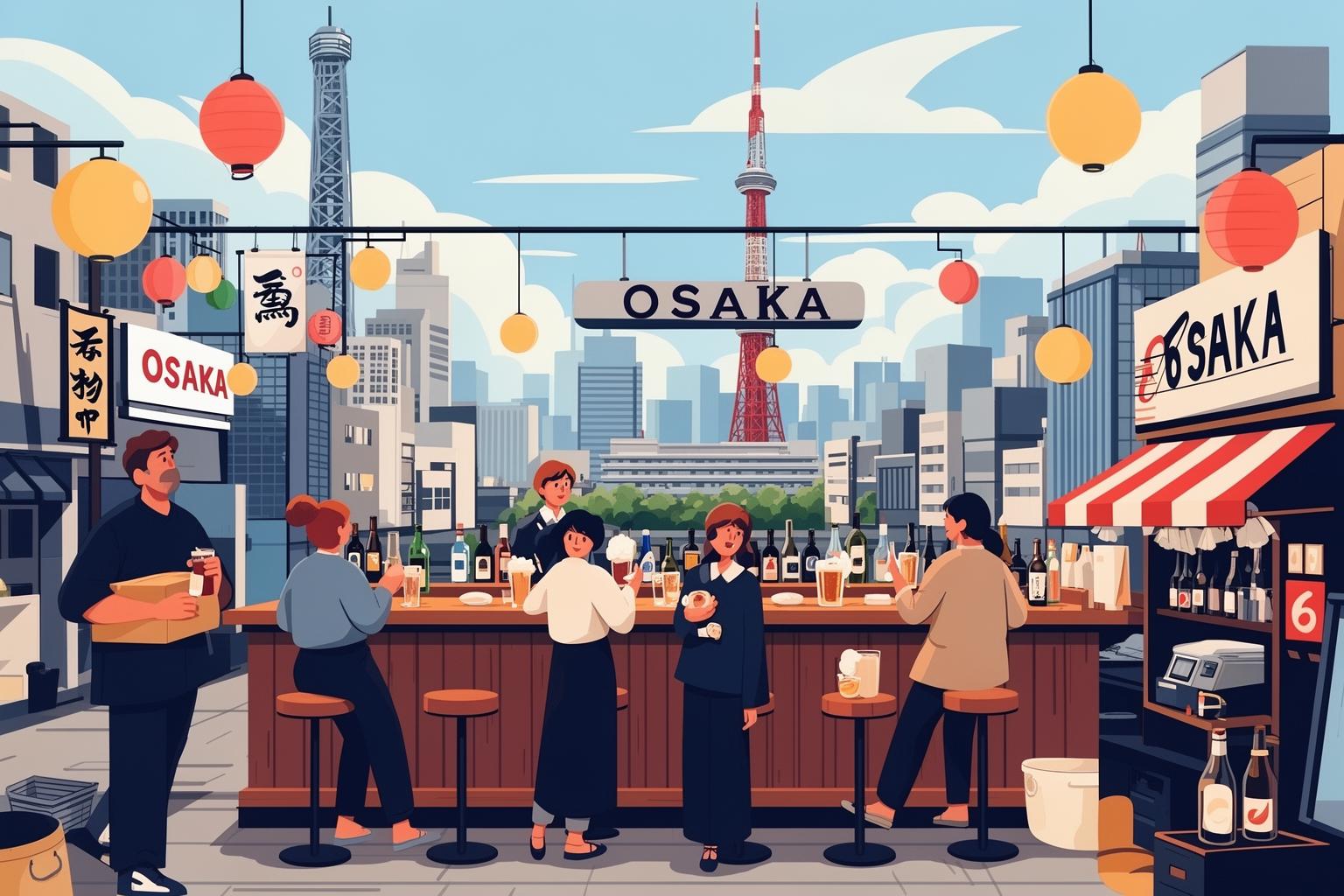
While Tokyo certainly has its own standing bar culture, it feels fundamentally distinct. To grasp Osaka is to understand how its tachinomi reflect the city’s unique character, setting it apart from its eastern counterpart. It’s a difference palpable in the atmosphere, a contrast that reveals much about these two metropolises.
The Vibe: Communal vs. Efficient
An Osaka tachinomi often resembles a lively family reunion where everyone is a stranger. It’s loud. People laugh, shout orders, and chat across the counter with the staff. It’s a celebration of community. The space acts as a stage for the city’s personality: direct, unpretentious, and slightly chaotic. The aim is connection, however brief. In contrast, a Tokyo tachinomi can feel more like a human charging station—an exercise in urban efficiency. The mood is subdued, the conversations quieter. Patrons come with a clear purpose: to enjoy a quick, affordable drink and bite before their long commute home. They stand silently or speak softly with their companions. It’s less about socializing and more about individual recharging. An Osakan visits a tachinomi to soak in the city’s energy; a Tokyoite often seeks a momentary escape from it.
The Food: Dashi Rules Everything Around Me
This is where Osaka’s kuidaore (“eat till you drop”) spirit truly shines. The food at an Osaka tachinomi is rarely an afterthought; it takes center stage. And it’s almost always affordable. You’ll find sashimi that rivals what you’d get at a proper restaurant, intricate stews simmered for days, and perfectly fried skewers—all for just a few hundred yen. The foundation of this quality lies in a deep pride in cooking and a focus on value. Why serve something average when you can offer something delicious at the same price? The flavor profiles are classic Kansai: savory, umami-rich, and often centered around a masterful dashi (broth). Dishes like dote-yaki (beef sinew stewed in sweet miso) embody this philosophy—transforming a cheap cut of meat into something exceptional through time and care. In Tokyo, while the food can be excellent, you might encounter more trendy or specialized dishes. Osaka tachinomi fare feels more grounded and soulful. It’s the city’s culinary DNA, served on a tiny plate for the price of a cup of coffee.
Decoding the Menu: What to Order and How
For those unfamiliar, the handwritten menus plastered on the walls may seem like a confusing mix of kanji. However, a few essential items act as your Rosetta Stone, unlocking the essence of the tachinomi experience. Understanding what to order is understanding the culture.
The Holy Trinity: Beer, Highball, Sake
Your journey usually starts with nama biiru (draft beer). It’s cold, quick, and the social lubricant that kicks off the evening. After the first glass, many switch to a haibōru (highball). A simple blend of Japanese whisky and super-carbonated soda, it’s refreshing, clean, and complements nearly any food. Its affordable price and crisp taste make it the tachinomi’s workhorse. The third key drink is sake. Don’t be intimidated—just ask for osake, and you’ll likely be served the house futsushu (table sake), either hot (atsukan) or cold (hiya). It’s typically a reliable local brew that satisfies without being pricey. These three drinks form the core of the tachinomi beverage lineup: straightforward, effective, and budget-friendly.
Must-Try Dishes That Tell a Story
Beyond drinks, the food menu reveals the establishment’s character. Look out for these classics. Dote-yaki is essential—a rich, dark stew of beef sinew and konjac jelly slow-cooked in miso, embodying Osaka comfort food. It reflects a tradition of utilizing every part of the animal and turning humble ingredients into deeply flavorful dishes. Then there’s kushikatsu, deep-fried skewers of meat, seafood, and vegetables. Here you’ll encounter Osaka’s famous culinary rule: nidozuke kinshi—no double-dipping! The communal pot of thin, savory tonkatsu sauce is shared by all. You dip your skewer once, and only once, before eating. This rule is not just about hygiene; it’s a social pact, a shared respect in a communal setting. Breaking it marks you as an outsider. Lastly, especially in winter, try oden. A simmering pot of ingredients like daikon radish, tofu, fish cakes, and boiled eggs in a delicate dashi broth. Each item soaks up the broth’s flavor, and a touch of sharp Japanese mustard cuts through the richness. It’s a simple, elegant dish that highlights Kansai’s dedication to the purity of dashi.
Finding Your Spot: From Gritty Alleys to Polished Counters
Not all tachinomi are the same. The classic image is of a gritty, smoke-filled spot beneath the train tracks in neighborhoods like Kyobashi or Tenma, frequented solely by older men wearing newsboy caps. These establishments do exist and serve as incredible repositories of Showa-era culture. They feel like stepping back in time. The counters are polished smooth from years of elbows, and the air is thick with the aroma of grilled fish and cheap shochu. They may be the most daunting to enter but also the most rewarding, offering a genuinely unfiltered glimpse into Osaka life.
That said, the tachinomi concept has shown remarkable adaptability. Recently, a new wave has appeared, catering to a different crowd. You’ll find sleek, modern standing bars specializing in craft beer or natural wine, often located in trendier areas like Fukushima or Ura Namba. There are Italian-style tachinomi serving prosecco and prosciutto, and Spanish ones offering sherry and tapas. These venues attract a younger clientele, including more women and couples, providing a slightly more refined and less intimidating introduction to the culture. What’s fascinating is that even in these contemporary variations, the fundamental principles remain unchanged: high turnover, excellent value, and an emphasis on social, stand-up interaction. This evolution highlights the lasting charm of the tachinomi model, proving it’s not just a relic of the past but a dynamic, living part of Osaka’s social scene.
The Takeaway: More Than Just a Drink
Ultimately, a visit to a tachinomi is about far more than what’s in your glass or on your plate. It serves as a live-action lesson in Osaka culture. It’s a place where the city’s focus on practicality, value, and communal living unfolds in real time. Here, the formal barriers of Japanese society briefly fade away, replaced by a more direct, honest, and human form of interaction. This is the realm of honne (one’s true feelings) rather than tatemae (the public facade). The brief connections you form over a shared counter—a nod, a laugh, a mutual comment about the Hanshin Tigers—reflect a microcosm of the city’s social fabric.
So, when you spot that brightly lit doorway, hear the clatter of plates and the hum of conversation, don’t just pass by. Take a moment, push open the door, and find a small spot at the counter. Order a nama biiru. Observe, listen, and absorb everything around you. You might feel a bit uneasy at first, but you’ll be taking part in a daily ritual that shapes life for hundreds of thousands of Osakans. You’ll leave feeling a little richer, not just in yen, but in understanding. You’ll have experienced the true, unfiltered heartbeat of this magnificent, maddening, and utterly lovable city.