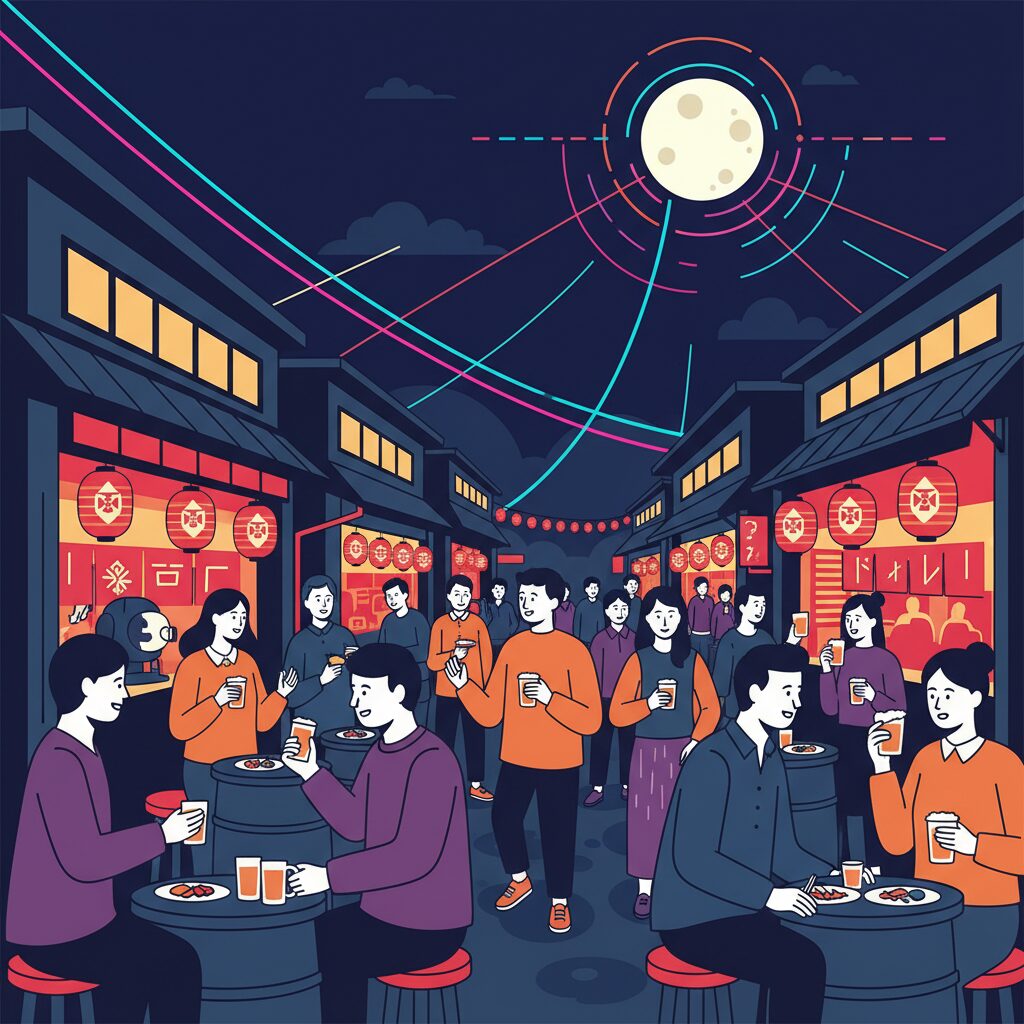
You hear it all the time. Osaka is loud. It’s in your face. It’s a city that doesn’t just talk to you; it grabs you by the shoulders and shouts a friendly, slightly beer-scented greeting. And while you can feel this energy on a crowded Saturday in Shinsaibashi, or hear it in the rapid-fire banter of shopkeepers in the Kuromon Market, you never truly understand it until you spend an evening in a tachinomi. A standing bar. It’s not just a place to grab a cheap drink. It’s a social laboratory, a cultural classroom, and the pulsing, beating heart of working-class Osaka. Forget the curated experiences and the polished facades of tourist traps. If you want to learn the city’s source code, you need to go where the locals go when the work day is done and the neon lights start to flicker on. We’re talking about Tenma and Kyobashi. These aren’t just neighborhoods; they’re sprawling ecosystems of food, drink, and conversation, built on a foundation of speed, value, and an unspoken social contract. This isn’t about getting a reservation or finding a quiet corner table. This is about finding your footing, literally and figuratively, in the middle of the beautiful, delicious chaos. It’s about learning to navigate a world where personal space is a fluid concept and the best conversations happen with complete strangers over a three-hundred-yen beer and a plate of grilled guts. Planning a weekend tachinomi tour here isn’t about mapping out the best spots on an app. It’s about preparing your mindset for a full-immersion dive into the soul of Osaka.
Discover another facet of Osaka’s unbridled spirit by checking out this guide on Super Tamade’s chaotic supermarket scene for a deeper dive into the local experience.
The Philosophy of the Stand
Before you even set foot in a tachinomi, you need to understand why it exists. This isn’t a passing trend; it’s a tradition rooted in pure Osaka pragmatism. In Tokyo, drinking culture often feels more formal—you head out with a specific group of colleagues or friends, sit down at a private table in an izakaya, and the experience is contained within your familiar social circle. Osaka, however, throws that model out the window. A tachinomi is designed for speed and efficiency. Without chairs, more people can fit into a small space, allowing for higher turnover. This means the owner can keep overhead low, resulting in prices that seem almost unbelievably cheap. This is the origin of the senbero culture—the idea that you can get comfortably drunk for around a thousand yen. But foreigners often mistake this as merely about cheapness. That’s just a surface-level understanding. The true charm lies in how this affordability breaks down the barrier to entry: no reservation is needed, no large group required, and not much time at all. You can stop by alone for fifteen minutes on your way home, grab a quick beer and a skewer, and be off again. This creates a fundamentally different social dynamic. The bar isn’t a destination but a brief stop, a momentary pause in the rhythm of the day. Because everyone is standing, everyone shares the same level—there’s no hierarchy of tables or cozy booths. You’re simply people, sharing a small slice of space and time. This physical arrangement encourages interaction, or at least the possibility of it, which you don’t get when seated behind a table. It embodies the merchant spirit of Osaka: everything is a transaction, but it should be swift, fair, and leave both sides feeling satisfied.
The Arenas of Authenticity: Tenma vs. Kyobashi
Tachinomi can be found throughout Osaka, but the two undisputed giants, the main stages of this standing drinking culture, are Tenma and Kyobashi. Deciding between them is like choosing between two distinct styles of street fighting—both effective and intense, yet completely different. Spending a weekend exploring either one offers a unique perspective on Osaka’s life.
Tenma: The Labyrinthine Village
Tenma is less a grid and more a living organism, sprawling from Tenjinbashisuji, Japan’s longest covered shopping arcade. While the main arcade is a bustling commercial artery, the real gems lie in the tiny side streets and back alleys branching off like capillaries. Here, you’ll find tachinomi packed into spaces so small it’s hard to believe they’re commercially viable. Tenma’s vibe is a chaotic, joyous mix of old and new. A 70-year-old shop run by a gruff yet kind grandmother sits beside a trendy natural wine bar that opened just last month, both jam-packed. After 6 PM, walking through Tenma is a sensory overload. The air thick with smoke from grilling mackerel and chicken skin, accompanied by a symphony of clinking glasses, sizzling tempura, and boisterous laughter. The crowd is a cross-section of the city: young couples on dates, office workers with loosened ties, and seasoned regulars who have drank at the same spot for decades. Planning a tour here means embracing the labyrinth—your best move is simply to dive in. Wander down alleys that catch your eye, follow the noise, peek into doorways. Tenma’s energy is one of discovery. It feels like a village swallowed by the city but refuses to lose its intimate, slightly chaotic charm. It rewards the curious wanderer.
Kyobashi: The Gritty Transit Hub
If Tenma is an expansive village, Kyobashi is a well-oiled machine. Centered around a major train interchange where the JR, Keihan, and subway lines converge, Kyobashi’s tachinomi culture is raw, unfiltered working-class spirit. The core of the scene lies beneath the elevated train tracks. The atmosphere is grittier, louder, and more intense. As trains rumble overhead, shaking the very foundations of the bars, you glimpse a different side of Osaka. This is where salarymen, construction workers, and shop clerks grab drinks and food before long commutes home. The establishments here are often starkly functional: concrete floors, stainless steel counters, and minimal décor. The focus is entirely on speed, value, and quality. The owners are models of efficiency, taking orders, pouring drinks, and plating food in seamless, nonstop motion. The social vibe is direct and less whimsical than Tenma; conversations revolve around work, the latest Hanshin Tigers game, or gripes about the boss. It’s less about discovery and more about reliability. People come to Kyobashi knowing exactly what they’ll get: a cold beer, a hot meal, and a brief escape, all served without fuss. It offers a raw, honest glimpse into the city’s engine room—the places fueling the people who keep Osaka running every day.
The Unspoken Rules of Engagement
Entering a crowded tachinomi for the first time can feel daunting. There’s no host to welcome you, no English menu, and what appears to be a chaotic crowd. Yet, there is an order within the chaos, a set of unspoken rules that guide the flow. Grasping these rules is essential to fully immersing yourself.
Master the Art of the Squeeze
The first lesson is that personal space is a shared commodity. When you see a packed bar, don’t search for a completely empty spot. Instead, find a place that could be a spot—where people are slightly spread apart—and offer a subtle nod or small gesture that says, “Could I slide in here?” Nine times out of ten, people will instinctively shift, angling their bodies to create a narrow slice of space for you at the counter. This is the initial social contract. By accepting the space, you agree to do the same for the next arrival. Avoid placing your bag on the counter or stretching out your arms. Keep your presence compact. This constant, subtle adjustment reflects Osaka’s communal mindset. It’s not about marking territory; it’s about sharing the experience. You’ve become part of this temporary, tightly packed community.
The Transactional Tango
Ordering is a dance of efficiency. Don’t wait for staff to come to you. Your role is to catch their eye when they have a free moment. Know what you want. Starting with classics like nama biiru (draft beer), a highball, or a lemon chuhai is a safe bet. Many traditional spots operate on a kyasshu on (cash on delivery) basis. You place your money in a small tray on the counter, and staff deduct the cost of each order from it, returning any change. This isn’t rude; it’s a clever system that avoids the hassle of calculating bills at the end, keeping things flowing smoothly. Observe how regulars do it: they order quickly and clearly, have their money ready, and don’t linger or hesitate. This mirrors the straightforward, no-nonsense approach Osakans take to business and life. Time is money, so keep it brief: get what you need and let the next person have their turn.
The Conversational Gauntlet
Here the “friendly Osaka” stereotype becomes more complex. It’s not soft, welcoming friendliness but a proactive, participatory kind. Don’t be shocked if the person next to you comments on your drink, asks where you’re from, or teases your Japanese. This isn’t an intrusion; it’s an invitation. In Tokyo, striking up conversation with a stranger at a bar may feel odd or unwelcome, but in an Osaka tachinomi, it’s the norm. The initial contact might feel like a playful jab, a tsukkomi. It’s a way to break the ice and test your willingness to engage. The best response is to join in—banter back, ask a question. This conversational style is like a sport, where the goal is to keep the exchange going. That said, there’s also strong respect for the solo drinker. If you’re quietly enjoying your drink and gazing away, people will generally leave you be. The key is that the option to connect is always open, lingering in the air like the savory smoke from the grill. It’s an opt-in community system.
The Graceful Exit
Perhaps the most important and often misunderstood rule of tachinomi culture is not to linger. These places are intended for quick visits. Typically, you have one or two drinks and small plates before you head out. A half-hour to an hour is considered a standard stay. This is the essence of bar-hopping, or hashigozake. Staying for three hours is a rookie mistake—it takes up precious space and disrupts the natural flow of customers that sustains the business. When finished, clear your area, stack empty plates if appropriate, and offer a heartfelt gochisousama deshita (thank you for the meal) to the staff. A swift exit shows respect and understanding of the system. You’ve had your moment, enjoyed the space, and now it’s time to let someone else enjoy theirs. This rhythm of brief, varied stops is what makes a night out in Tenma or Kyobashi so vibrant. You’re not just visiting one bar; you’re sampling the whole neighborhood, one quick stop at a time.
Your Weekend Itinerary is No Itinerary
So, how do you plan your weekend tour? The truth is, you don’t – not really. The biggest mistake foreigners make is over-planning a tachinomi experience. Trying to follow a blog’s “top five bars” list in order is a sure way to miss the entire point. The essence of this culture lies in spontaneity and discovery. The real plan is a mindset.
Start early. The golden hour is from 4 PM to 7 PM, when bars fill with post-work locals and the atmosphere is most electric. By 9 or 10 PM, the first crowd has usually gone home, and the vibe shifts. Approach with an open mind and an empty stomach. Your only goal in the first hour should be to walk and observe. Let your senses lead you. Follow the sound of laughter down a narrow alley. Let the smell of grilled fish draw you to a certain door. Look for places with red lanterns glowing, steam wafting from the entrance, and crowds spilling onto the street. These signs mark a spot with good energy.
When you choose a place, just dive in. Squeeze in, order a beer, and pick one dish that looks intriguing. Maybe it’s doteyaki, slow-cooked beef sinew in a sweet miso broth. Or perhaps a plate of freshly sliced sashimi that seems too good to be true for the price. Eat, drink, and soak in the atmosphere. Listen to nearby conversations. Watch the skilled bartender or chef at work. After 30 or 40 minutes, settle your bill and move on. Walk another five minutes and choose a place that feels completely different. Maybe a clean, modern spot known for tempura. Or a gritty, beloved tavern serving only sake and oden. The aim is to collect experiences, not tick off a list. By night’s end, you’ll have sampled not just a range of food and drink, but a spectrum of social atmospheres. You’ll gain a richer, more nuanced understanding of Osaka than by visiting one top-rated restaurant.
This is the true rhythm of daily life for many here. It’s not about big, planned events, but the small, stolen moments of pleasure and connection. A quick drink after a long day. A chance encounter with a stranger. A delicious, inexpensive meal that recharges you for the journey home. A weekend spent hopping through the tachinomi spots in Tenma or Kyobashi is a crash course in the city’s soul. You’ll discover that Osaka’s famed friendliness isn’t passive; it’s an active, participatory energy. You’ll see that the city’s focus on value isn’t mere thriftiness, but a philosophy of making life’s joys accessible to everyone. You’ll witness a community balanced delicately between individualism and shared responsibility. You’ll leave with a full stomach, a gentle buzz, and a deep understanding that in Osaka, even when standing alone, you’re never truly by yourself.