The city hum of Osaka has a rhythm all its own, a vibrant pulse of neon, commerce, and conversation that energizes the soul. But sometimes, the soul craves a different beat—a slower, more melodic tune played by crashing waves, rustling leaves, and the quiet hum of an open road. Just a short drive from the urban sprawl, suspended between Honshu and Shikoku in the shimmering Seto Inland Sea, lies an escape that sings this very song: Awaji Island. This isn’t just another island; it’s a place steeped in mythology, believed to be the very first island created by the gods, the birthplace of Japan itself. Today, it’s a destination where this ancient spirit coexists with breathtaking modern architecture, fields of endless flowers, and a culinary scene so rich it could make the gods themselves envious. A weekend road trip to Awaji is more than a simple getaway; it’s a journey through the heart of Japan’s creation story, a feast for the senses, and a chance to trade the city’s concrete canyons for coastal highways and panoramic skies. It’s where you can feel the deep roots of Japanese culture while breathing in the fresh, salty air of its future. So, grab your keys, set your playlist, and let the road pull you toward an island of wonders waiting to be discovered.
For a truly luxurious base to explore the Kansai region, consider the upcoming Grand Hyatt Kyoto, set to open in 2028.
The Call of the Open Road: Getting to Awaji Island

Crossing the Pearl Bridge
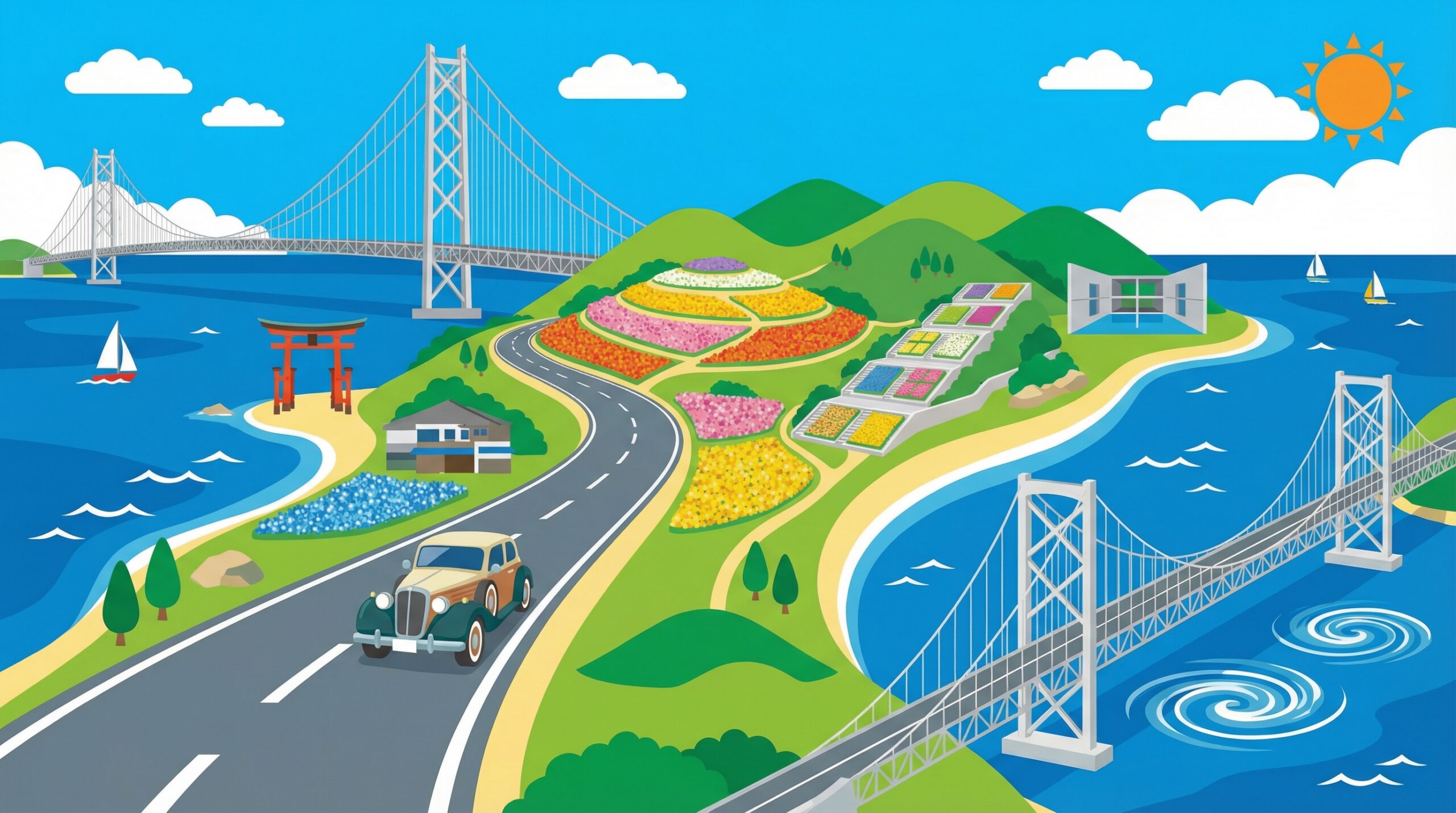
The adventure truly begins the moment your tires touch the approach to the Akashi Kaikyo Bridge. This is far more than just a bridge; it stands as a monumental gateway, a steel harp stretched across the Akashi Strait, linking the mainland city of Kobe to the northern point of Awaji Island. Affectionately called the Pearl Bridge due to its beautiful, pearl-like illuminations at night, it held the distinction of being the world’s longest suspension bridge for decades. The drive across is a rite of passage. As you climb, the Kobe cityscape fades in your rearview mirror, replaced by a vast panorama of blue sea and sky. On a clear day, the water sparkles below, dotted with cargo ships and fishing boats tracing slow, purposeful paths across the strait. You feel suspended between two worlds—the familiar buzz of Honshu and the promise of island tranquility ahead. The structure’s immense scale is awe-inspiring. The two main towers soar skyward, dwarfing everything nearby, while the suspension cables sweep down in graceful, powerful arcs. Driving beneath them, you gain a tangible sense of the incredible engineering holding this colossal structure together. The experience shifts dramatically with the time of day. A morning crossing feels crisp and full of potential, sunlight glinting off the waves. A sunset drive is pure magic, the sky awash in fiery oranges and soft purples, silhouetting the bridge’s elegant form. At night, the bridge dazzles with its light display, a rainbow necklace draped across dark waters, guiding you toward—or away from—the island’s embrace. For those wishing to experience its grandeur without driving, the Maiko Marine Promenade is a must-see. Located on the Kobe side, this observatory walkway is built beneath the bridge’s platform, about 50 meters above the water. Walking its length, you can feel subtle vibrations as cars and trucks rumble overhead and gaze through glass floor panels down at the swirling strait currents. It’s a dizzying, exhilarating perspective that deepens your appreciation for this modern marvel.
The Rhythms of the Road: Navigating the Island
Once you’ve crossed the bridge and paid the toll, the pace of life immediately changes. You have arrived. Awaji Island is a driver’s paradise. A well-maintained highway cuts the island from north to south, providing a quick route between major points of interest. Yet the true joy of an Awaji road trip lies in veering off this main artery onto the coastal roads hugging the island’s edge. These scenic routes reveal the island’s authentic character. The east coast road, facing Osaka Bay, is generally more developed, dotted with towns, resorts, and attractions. It offers a pleasant drive, with calm waters and views across to the mainland. However, it’s the west coast that truly steals the heart. This road, facing the Harima-nada Sea, is renowned for its stunning sunsets. The route winds through quiet fishing villages, past terraced fields, and along dramatic cliffs. Countless unnamed pull-offs and hidden beaches invite you to stop, stretch your legs, and watch the waves. The sense of freedom is immense. With your own car, you’re not bound by bus schedules or train lines. You can follow a whim, turn down a narrow, intriguing lane, or spend extra time at a viewpoint that captivates you. Renting a car is straightforward. Numerous agencies operate in Osaka and Kobe, especially near major train stations like Shin-Osaka, Umeda, or Sannomiya. It’s wise to book ahead, particularly during peak seasons such as Golden Week or summer holidays. Don’t forget your passport, your home country’s driver’s license, and an International Driving Permit. Driving on Awaji is generally relaxed. Traffic is light compared to the city, and the roads are easy to navigate with GPS. Keep in mind some smaller coastal or mountain roads can be narrow, so drive cautiously and be ready to yield to oncoming traffic. The investment in a rental car and bridge tolls more than pays off in the immense freedom it gives you to explore the island on your own terms, uncovering its secrets at your own pace.
A Canvas of Nature and Design: Awaji’s Artistic Soul
Awaji Island is a place where the boundary between the natural world and human creation becomes indistinct, resulting in a landscape adorned with architectural marvels and artistic installations that feel both deliberately crafted and naturally evolved. It stands as a testament to the island’s resilience and visionary spirit, transforming past scars into spaces of beauty and reflection.
Tadao Ando’s Concrete Poetry: Awaji Yumebutai
No visit to Awaji’s artistic highlights is complete without a thorough exploration of Awaji Yumebutai. This expansive complex of gardens, conference centers, and memorials is the masterpiece of world-renowned architect Tadao Ando. To fully appreciate it, you must understand its history. The site was once a hillside quarried extensively for earth used in significant construction projects around Osaka Bay, including Kansai International Airport. The land was left damaged and barren. Then, in 1995, the Great Hanshin Earthquake struck, with its epicenter just off Awaji’s northern coast. Ando, who had already planned a park for the site, revised his design. Yumebutai, meaning “stage of dreams,” was reimagined as a space for healing and regeneration—a memorial to the victims and a symbol of nature’s power to recover and flourish.
The Vision Behind the Venue
As you walk through Yumebutai, you can sense this history embedded in its structure. Ando’s hallmark use of smooth, exposed concrete is prevalent throughout, forming a stark, minimalist backdrop. Yet, it never feels cold or unwelcoming. Instead, it accentuates the vibrant life surrounding it—the carefully curated gardens, flowing water, and vast sky above. The entire complex represents a dialogue between human geometry and the organic shapes of nature. It invites contemplation, encouraging a slow and intentional journey through its interconnected spaces. It’s not just a place to see; it’s one to experience with all your senses. You can feel the cool, textured concrete walls, hear the soothing sound of water cascading down terraces and winding through channels, and smell the rich fragrance of thousands of blossoms.
Exploring the Grounds
The most iconic element of Yumebutai is the Hyakudanen, or “100-stepped garden.” It’s a stunning sight: a grid of 100 small, square flowerbeds arranged on a steeply terraced incline, accessible by a seemingly endless staircase. Each flowerbed bursts with seasonal color—vibrant tulips in spring, bright marigolds in summer, and deep chrysanthemums in autumn. Climbing the stairs is an experience in itself. With every step, your perspective shifts, revealing new patterns and color harmonies. From the summit, the view is breathtaking—a geometric mosaic of flowers set against the blue backdrop of Osaka Bay. It stands as a living monument, celebrating renewal and the meticulous beauty that can emerge from adversity.
A short walk from the Hyakudanen is another of Ando’s masterpieces, the Water Temple (Honpukuji). The approach is intentionally understated. Passing a simple concrete wall and turning a corner, you encounter a large, circular lotus pond. Its tranquil surface reflects the sky and surrounding greenery. It’s only when you notice a narrow staircase descending into the pond’s center that you realize the temple lies hidden below. The descent is powerful and symbolic, leaving the outside world behind to enter a sacred space. Beneath, you step into a circular sanctuary bathed in a warm vermilion light. Sunlight filters down from above, illuminating a Buddha statue. The experience is deeply spiritual and moving—a masterful use of architecture to evoke emotion and focus the mind.
Elsewhere in the complex, you’ll find the Sea Church, or Chapel on the Water. This small, intimate space is a perfect concrete cube designed by Ando. The brilliance lies in its simplicity and how it manipulates natural light. A cross-shaped aperture behind the altar allows daylight to pour in, creating a powerful, ethereal symbol that shifts in intensity throughout the day. It offers a space of profound peace and quiet reflection. The complex also includes dramatic open-air venues like the Circular Forum and Oval Forum, whose grand scale and acoustics make visitors feel humble before such bold architectural statements.
Art That Breathes with the Ocean: Contemporary Spots
Beyond Tadao Ando’s monumental vision, Awaji’s artistic spirit thrives in smaller, whimsical, and community-oriented venues scattered along the scenic west coast, breathing new life into old buildings and forging new cultural hubs.
Awaji Art Circus & Nojima Scuola
Nojima Scuola perfectly exemplifies this creative revival. This charming structure, once a local elementary school, was preserved rather than demolished when closed due to the island’s declining population, and lovingly transformed into a multipurpose facility. The name “Scuola,” meaning school in Italian, nods to the Italian cuisine served in its restaurant on the first floor. The space retains its nostalgic schoolhouse charm with wooden floors and large windows but buzzes with new energy. On the ground floor, there’s a café and bakery alongside a market selling fresh Awaji produce—from famous sweet onions to local jams and crafts. Upstairs, the restaurant offers delicious Italian dishes featuring local ingredients. Perhaps most unexpectedly, a small outdoor terrace allows visitors to meet and feed resident alpacas. Nojima Scuola is more than a restaurant—it’s a community hub that honors the past while embracing a vibrant present. It’s a delightful, heartwarming place to spend an afternoon.
Hello Kitty Smile & Hello Kitty Apple House
For a completely different yet equally artistic experience, head further down the coast to the spectacular sight of a giant Hello Kitty head resting on the shoreline. This is Hello Kitty Smile, an immersive media art gallery and restaurant complex dedicated to the iconic Sanrio character. Even if you’re not an avid fan, the boldness and scale of the project are striking. Inside the giant head, a theater and gallery use dazzling projection mapping and digital art to bring Hello Kitty’s world to life in a whirlwind of color, light, and sound. Adjacent buildings house several themed restaurants, serving everything from upscale Chinese cuisine to casual hot pot, all adorned with subtle—or occasionally not-so-subtle—Hello Kitty motifs. Nearby, the newer Hello Kitty Apple House stands as a giant apple-shaped observatory, offering panoramic sea views from within another intricately designed, character-themed environment. This surreal, high-tech, and highly photogenic celebration of Japanese pop culture provides a playful contrast to the island’s more traditional and natural attractions.
Craft Circus & Ocean Terrace
As the sun sets, there’s no better place to be than one of the west coast’s stylish lifestyle complexes like Craft Circus or the adjacent Ocean Terrace. These venues embody a relaxed, bohemian, and international atmosphere. Craft Circus features a collection of food stalls and shops set on a spacious wooden deck right by the water’s edge. You can enjoy fresh seafood paella, a gourmet burger, or a cold beer while taking a seat at one of the colorful tables or lounge chairs. The vibe is casual and festive, often accompanied by live music. It’s a place to unwind, socialize, and soak in breathtaking sunset views. Nearby restaurants offer slightly more upscale dining but share the same dedication to showcasing local ingredients in a beautiful setting. These venues represent a modern form of artistry—the art of crafting the perfect moment by blending excellent food, elegant design, and the incomparable beauty of nature.
The Island’s Bounty: A Gastronomic Journey
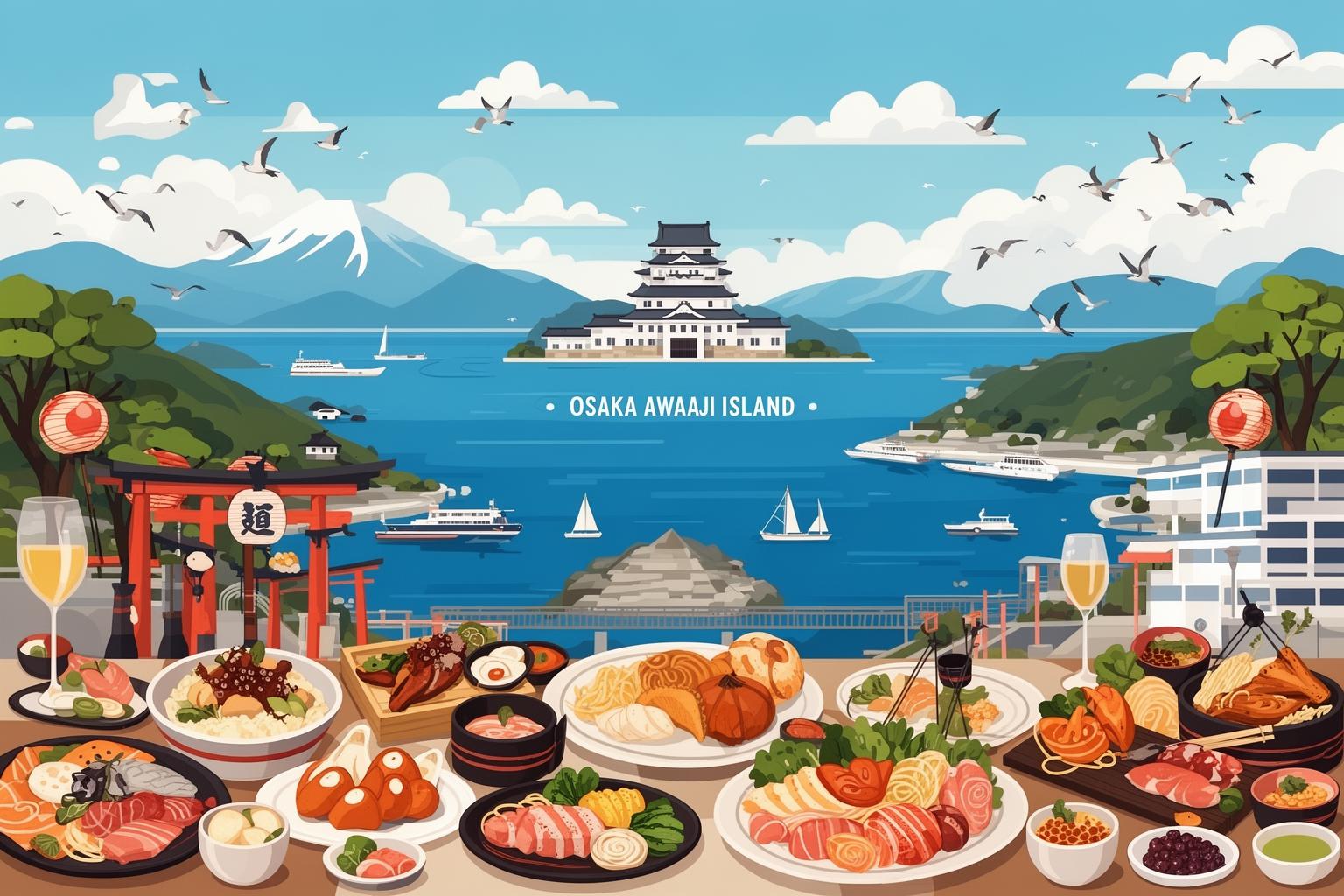
Visiting Awaji Island without savoring its culinary delights means missing the very essence of the place. The island is renowned as a foodie haven, endowed with fertile soil, a mild climate, and abundant seas. Here, ingredients aren’t just fresh—they are legendary. The cuisine is straightforward yet deep, highlighting the pure, unblemished flavors that the land and sea offer.
The Trinity of Awaji Cuisine: Onions, Beef, and Seafood
Although the island produces a variety of agricultural goods, three standouts form its culinary cornerstone. Mastering these three reveals why dining on Awaji is so exceptional.
The Legendary Awaji Onion
It may seem unusual to praise an onion so highly, but the Awaji onion is far from ordinary. It’s a culinary symbol celebrated across Japan for its remarkable sweetness and mildness. This comes from the island’s mineral-rich soil and abundant sunlight. Awaji farmers also use a distinctive method of drying the onions in special huts called “tamanegi goya,” which further concentrates their sugars. The result is an onion so sweet and gentle you can eat it raw, thinly sliced in salads with just a touch of ponzu dressing. Its versatility is its greatest asset. You might enjoy it deep-fried to crispy, golden perfection as onion rings or a whole “onion flower.” You can relish its comforting sweetness in a simple, creamy onion gratin soup. One of the most well-known dishes features a whole onion, slow-roasted or steamed until tender, served with a dollop of miso or butter. For a uniquely memorable experience, visit the Uzu no Oka Onaruto Bridge Museum in the island’s south, where you can pose with a giant onion sculpture called “#Ootamanegi” and try your luck at an onion-themed UFO catcher game—a playful homage to the island’s most famous vegetable.
The Exquisite Awaji Beef
While Kobe Beef enjoys worldwide acclaim, true connoisseurs know that many prized Tajima calves destined for Kobe Beef actually originate from Awaji Island. Awaji Beef is a premium brand prized for its exceptional quality, fine texture, and beautiful marbling. The fat melts at a low temperature, dissolving in your mouth to release a rich, savory, and subtly sweet flavor. The cattle are raised in a stress-free environment, contributing to the meat’s tenderness. There are many ways to enjoy this delicacy. For a truly indulgent experience, visit a teppanyaki restaurant where a skilled chef grills your steak to perfection before your eyes, often accompanied by grilled vegetables and garlic chips. Upscale hotels and traditional ryokans frequently feature Awaji Beef in multi-course kaiseki dinners, served as shabu-shabu hot pot or sukiyaki. For a more casual yet equally delicious option, gourmet burger joints offer Awaji Beef burgers, often topped with caramelized Awaji onions on a soft bun—a sublime blend of fine dining quality and comfort food.
Treasures from the Seto Inland Sea
Surrounded by the nutrient-rich waters of the Seto Inland Sea and the Kii Channel, Awaji is a seafood lover’s paradise. Strong currents, especially near the Akashi and Naruto Straits, foster a rich variety of marine life. The undisputed star of Awaji seafood is sea bream, or tai. Its flesh is firm yet delicate, with a clean, sweet taste. It’s often served as pristine sashimi or as tai-meshi, a celebratory dish where a whole fish is steamed with rice, infusing the grains with its umami. Octopus, or tako, from the Akashi Strait is another must-try, prized for its tender texture and featured in sashimi, takoyaki, or tako-meshi. In summer, sea eel, or anago, is a local specialty, frequently grilled and served over rice with a sweet soy glaze. And don’t miss shirasu, tiny whitebait or young sardines, often served fresh over rice (shirasu-don), sometimes with a raw egg yolk. Freshness is what truly sets Awaji seafood apart. Dining at restaurants in fishing ports like Iwaya in the north or Fukura in the south means you’re likely enjoying fish caught that very morning.
From Roadside Stalls to Seaside Cafes: Where to Eat
Awaji’s dining scene is as varied as its landscape. The pleasure lies in the diversity of experiences offered. For an authentic taste of the island, visit small, family-run eateries in fishing villages. The décor may be simple, but the food is honest and incredibly fresh. Here, you can enjoy a kaisen-don, a bowl of rice topped with a generous selection of the day’s catch, dining alongside local fishermen. For a more modern and scenic experience, the west coast features stylish cafes and restaurants designed to maximize stunning ocean views. These spots are ideal for a leisurely lunch or a coffee and dessert break, many offering outdoor terraces to savor the sea breeze. For casual diners or families with varied tastes, food courts and market-style venues like Awaji Highway Oasis or Craft Circus provide excellent choices. You can sample various dishes from different stalls and enjoy a relaxed, communal atmosphere. Imagine a perfect meal: beginning with a crisp salad featuring raw, sweet Awaji onion slices, followed by a platter of assorted sashimi caught fresh that day, then a main course of sizzling Awaji Beef teppanyaki, and ending with a simple dessert of local fruit. This isn’t a fantasy, but a typical, unforgettable dining experience on this abundant island.
Whispers of Mythology and Nature’s Grandeur
Awaji is more than just a feast for the senses; it is a place steeped in rich history and vibrant natural energy. It serves as the backdrop for Japan’s creation myth and offers a firsthand experience of the ocean’s raw, untamed power. Discovering this side of the island adds a deep and meaningful dimension to your visit.
The Birthplace of a Nation: Izanagi Jingu Shrine
According to Japan’s oldest historical records, the Kojiki and the Nihon Shoki, the first islands of the Japanese archipelago emerged from the sea through the actions of the primordial deities Izanagi-no-Mikoto and Izanami-no-Mikoto. The very first island they created was Awaji. After completing his work, Izanagi is said to have retired to Awaji, where he spent his final days. The Izanagi Jingu Shrine is believed to stand on his burial site, making it potentially the oldest shrine in all of Japan. Entering the shrine grounds feels like stepping into a tranquil, timeless realm. The air is calm and fragrant with the scent of pine and ancient camphor trees. The wide gravel path creates a meditative crunch underfoot in the stillness. The shrine’s architecture is simple yet elegant, crafted in a traditional Shinto style that blends harmoniously with the natural surroundings. The most revered and striking feature on the grounds is the Meoto-no-Okusu—a colossal camphor tree formed by two separate trees that have grown together over centuries, their branches intertwined. Estimated to be over 900 years old, this “husband-and-wife camphor tree” symbolizes unity and longevity. Visitors pray here for marital harmony and fertility. Standing before it, one can’t help but feel a deep reverence for the passage of time and nature’s enduring strength. Visiting Izanagi Jingu offers a unique connection to the very roots of Japanese culture and spirituality—a peaceful moment to reflect in the cradle of the nation.
The Roaring Tides: The Naruto Whirlpools
In the southern part of the island, where Awaji nearly meets Shikoku, nature stages one of its most spectacular shows: the Naruto Whirlpools. These are not mere ripples but gigantic, swirling vortexes of water reaching up to 20 meters in diameter, among the largest and fastest in the world. This natural spectacle results from the narrow Naruto Strait’s unique geography. As the tides shift, immense volumes of water rush between the high tide of the Pacific Ocean and the low tide of the Seto Inland Sea (or vice versa), creating significant differences in water levels. This tremendous flow surges through the underwater features of the strait, generating the breathtaking whirlpools. There are two main ways to witness this phenomenon, and doing both offers the fullest experience. The first is from above, on the Uzu no Michi walkway—an enclosed corridor beneath the Onaruto Bridge that extends 450 meters over the strait. The highlight here is the glass floor panels, providing a direct view of the swirling, roaring waters 45 meters below, a terrifying yet exhilarating sensation as you watch the powerful currents collide beneath your feet. The second, and arguably more thrilling, option is to join a whirlpool cruise from Fukura Port. Several companies operate sightseeing boats that take you right into the heart of the action. As the boat enters the strait, the calm sea begins to churn, and you hear the roar of the currents before seeing the whirlpools form. Skilled captains maneuver the boats safely close to these awe-inspiring natural phenomena. You can feel the spray against your face and truly grasp the ocean’s immense power. It’s a humbling and unforgettable experience. Visitors should note that the whirlpools depend entirely on the tides, being most dramatic around new and full moons, at the peaks of high and low tides. Checking tide schedules beforehand is essential to time your visit for the most spectacular effect.
Fields of Flowers and Sandy Shores
Beyond its iconic landmarks, Awaji’s natural beauty is a major attraction, earning it the nickname “The Island of Flowers.”
A Symphony of Colors: Awaji Hanasajiki
Situated atop a high plateau in the island’s northern region, Awaji Hanasajiki is an expansive flower park offering some of the most breathtaking views on the island. Its name, meaning “flower viewing gallery,” perfectly captures the essence of the park. Rolling hills are covered with seasonal blooms, creating a vibrant tapestry of color that shifts with the seasons. In spring, the fields glow with yellow rapeseed and vivid poppies. Summer brings seas of blue salvia and bright sunflowers. Autumn showcases deep red salvia and delicate cosmos flowers. The scale is immense, and as you stroll along the paths, you are completely enveloped by blossoms, with the blue sea and the majestic Akashi Kaikyo Bridge in the distance. It’s a photographer’s paradise, and an ideal spot for simply sitting back to breathe and enjoy the stunning surroundings. Best of all, admission is free, making it a delightful experience accessible to everyone.
Sun, Sand, and Relaxation
As an island, Awaji boasts beautiful coastlines and several charming beaches. Ohama Beach in Sumoto is a favorite, featuring a long stretch of white sand perfect for swimming and sunbathing during summer, with a relaxed, classic beach town atmosphere. For a more distinctive experience, visit Goshiki-hama, the “Five-Colored Beach,” on the west coast. Instead of sand, this beach is covered with large, smooth, rounded pebbles in various shades of black, gray, brown, and green, polished by constant waves. Although it’s not suitable for swimming, it is a beautiful, soothing place to walk and listen to the gentle clatter of stones as waves wash over them. These natural spaces offer a perfect complement to Awaji’s cultural and culinary highlights, providing simple, serene moments of relaxation and connection with nature.
Crafting Your Perfect Awaji Weekend: A Suggested Itinerary
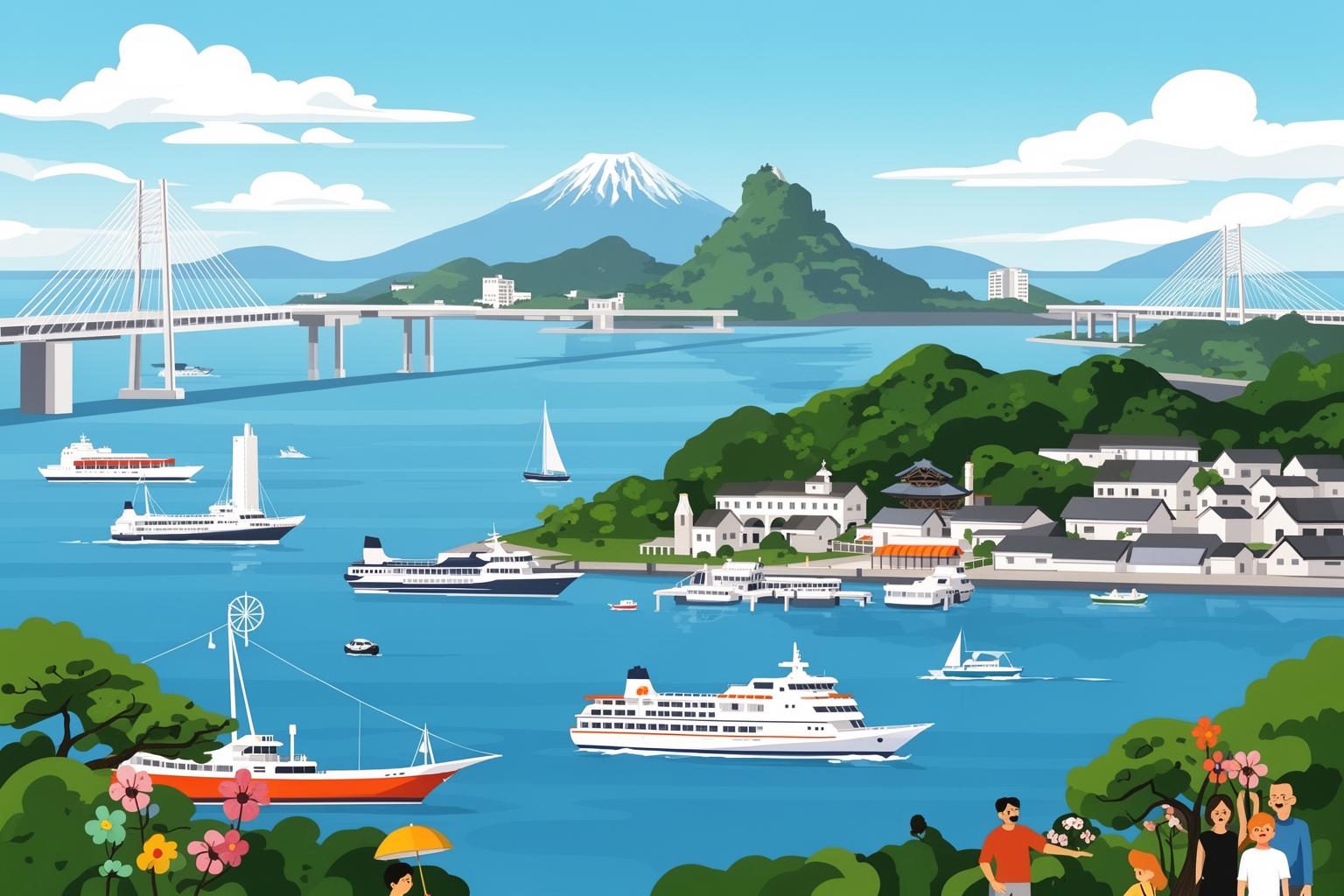
While the charm of a road trip lies in its spontaneity, having a rough plan can help you maximize your time on Awaji Island. Here’s a recommended two-day itinerary that balances the island’s highlights, presented as a flowing narrative rather than a strict checklist.
Day One: Art, Architecture, and a Fiery Sunset
Your journey begins on Saturday morning as you leave the familiar Osaka skyline behind. Excitement builds as you approach Kobe and see the magnificent Akashi Kaikyo Bridge stretch out ahead. Crossing the bridge marks the official start of your island adventure. Once on Awaji, your first stop should be the Awaji Highway Oasis, conveniently located just off the highway. It’s more than a rest stop; it’s a destination itself, featuring a large Ferris wheel, shops, restaurants, and importantly, a stunning viewpoint overlooking the bridge and mainland. It’s an ideal place to enjoy a coffee, adjust to the island’s pace, and plan your next steps.
From here, it’s a short drive to the main attraction for the day: Awaji Yumebutai. Be ready to spend a few hours exploring here—it’s not a place to rush. Begin at the Hyakudanen, the 100-stepped garden. Take your time ascending the stairs, pausing to appreciate the intricate floral designs and the ever-expanding views. Afterwards, wander through the rest of the complex, letting Tadao Ando’s concrete and water landscapes guide your steps. Visit the serene Water Temple and the minimalist Sea Church. Allow yourself to get lost in the geometric forms and peaceful atmosphere. It’s a deeply meditative experience that will refresh your city-worn mind.
As the afternoon light softens, head toward the renowned west coast. The drive itself is part of the charm, with the sparkling Harima-nada Sea on your right. Consider stopping at the charmingly repurposed Nojima Scuola for a late-afternoon snack and to greet the alpacas. As evening draws near, find your spot for the highlight: the sunset. Craft Circus is a fantastic choice, where a bohemian, festive vibe perfectly complements the celestial display. Grab a drink and some international street food, settle on the deck, and watch as the sky transforms into a breathtaking palette of orange, pink, and gold, with the sun slowly dipping below the horizon. It’s an iconic Awaji moment. For your overnight stay, the island offers a variety of options. You might indulge in a luxury hotel with an onsen, such as the Grand Nikko Awaji next to Yumebutai, or choose a more intimate experience at a traditional ryokan or a family-run minshuku for a taste of local hospitality.
Day Two: Myths, Whirlpools, and a Floral Farewell
Wake up to the gentle sounds of the island on Sunday morning. After a relaxed breakfast, your first stop is the spiritual heart of Awaji: Izanagi Jingu Shrine. Begin your day with tranquility and history. Stroll the sacred grounds, pay respects at the main hall, and spend a quiet moment by the ancient Meoto-no-Okusu camphor tree. It’s a peaceful, meaningful start that connects you with the island’s mythological heritage.
Next, drive south along the length of the island toward the Naruto Strait. The goal is the dramatic whirlpools. Having checked the tide schedule in advance, you’ll arrive just in time for peak viewing. Head to Fukura Port and board a whirlpool sightseeing boat. The cruise is exhilarating, bringing you close to the powerful, swirling vortices. The roar of the water and raw force of nature are truly awe-inspiring. Afterward, satisfy your appetite with a fresh seafood lunch near the port. A generous bowl of shirasu-don or grilled fish would be perfect. Before leaving the area, stop by the Uzu no Oka Onaruto Bridge Museum for some onion-themed photo fun and to pick up unique souvenirs.
For your final stop before heading home, drive back north to Awaji Hanasajiki. This expansive flower park offers a grand farewell to the island. Wander through vast fields of seasonal blooms while enjoying spectacular views of the sea and the Akashi Kaikyo Bridge in the distance. It’s a beautiful final memory—a symphony of color and nature that perfectly captures the island’s essence. As the late afternoon light bathes the landscape, begin your journey back toward the bridge. A last stop at the Awaji Service Area on the northbound side is a great opportunity to pick up some omiyage (souvenirs), such as the famous Awaji onion soup packets or local sweets, so you can share a taste of your adventure with friends at home. The drive back across the bridge, with the lights of Kobe and Osaka twinkling ahead, feels different. You return to the city, but carry with you the peace, beauty, and flavors of the island.
Practical Tips for the Road Warrior
A little preparation can make your Awaji road trip smoother and more enjoyable. First and foremost, having a car is essential to fully experience the island’s freedom and access its hidden spots. Although buses are available, they tend to be infrequent and don’t reach all the scenic areas. The best time to visit depends on what you want to see. Spring (March-May) and autumn (September-November) provide the most pleasant weather for exploring, coinciding with peak flower seasons at places like Hanasajiki. Spring is especially beautiful, with blooming flowers and mild temperatures. Summer (June-August) is ideal for beach enthusiasts but comes with heat, humidity, and larger crowds, particularly during school holidays. Winter (December-February) is the quietest season, perfect for a peaceful retreat centered on onsen (hot springs) and enjoying winter seafood specialties such as pufferfish (fugu). When packing, don’t forget your driving essentials: your license and International Driving Permit. Also, bring comfortable shoes since you’ll be walking a lot at spots like Yumebutai and Hanasajiki. A camera is essential, as are sunglasses and a light jacket or sweater, because the coastal breeze can be cool even on warm days. Be ready for tolls; crossing the Akashi Kaikyo Bridge requires a fee, which varies but should be included in your budget. While major hotels and tourist facilities usually have English-speaking staff, English may be limited in smaller local restaurants and shops. A translation app on your phone can be very helpful, and learning a few basic Japanese phrases like “arigatou” (thank you) and “sumimasen” (excuse me) will be warmly appreciated and go a long way.
The Island’s Lasting Echo

Returning to Osaka after a weekend on Awaji presents a study in contrasts. The city’s electric energy welcomes you like an old friend, yet something inside you has shifted. The rhythmic pulse of the metropolis feels different after being attuned to the island’s gentler frequency—the cadence of the tides, the rustle of flowers in the breeze, the slow, satisfying pace of a coastal drive. Awaji Island leaves a lasting impression not only as a place of stunning beauty, but as a holistic experience. It’s where the ancient past feels alive in the quiet reverence of a shrine, and the future seems hopeful in the brilliant blend of architecture and nature. It’s where a simple onion becomes a delicacy and a sunset turns into a life-changing event. The island reminds you that just beyond the city’s edge lies a world of profound peace, vibrant culture, and incredible flavor waiting to be discovered. It’s an easy escape that feels a world away, a perfect journey to refresh your spirit and awaken your senses. The echoes of the waves, the taste of the sea, and the memory of that fiery sunset will stay with you long after you’ve rejoined the city traffic, calling you back to the island where Japan began.