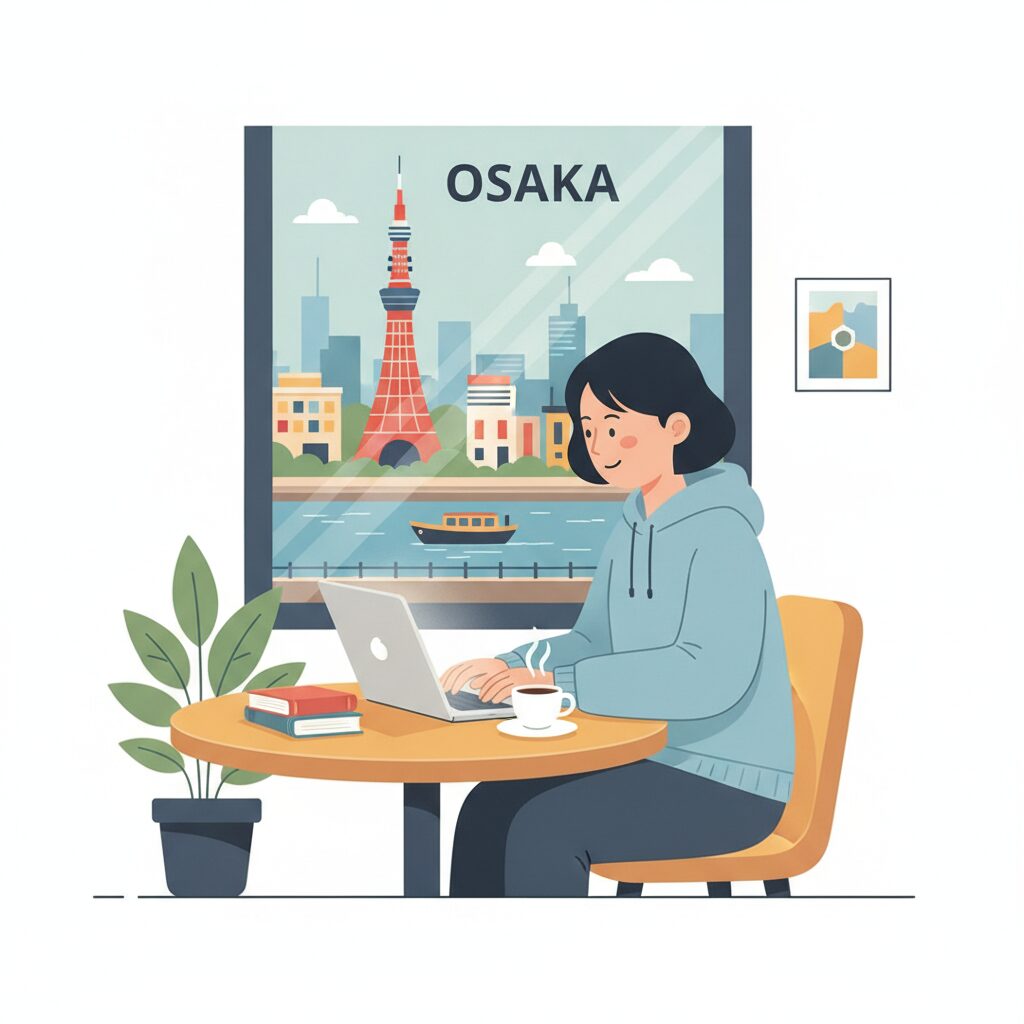
You’ve found it. The perfect little neighborhood cafe, tucked away on a side street in Tenma or Nakazakicho. The coffee is dark and rich, the light is perfect, and the quiet murmur of conversation is the ideal soundtrack for productivity. You open your laptop, ready to dive into a few hours of work. But then you feel it—a subtle shift in the atmosphere. A lingering glance from the old man behind the counter. The sudden, crisp sound of a cup being placed a little too firmly on a saucer. You haven’t broken any written rules, but you’ve committed a cardinal sin in Japan: you’ve failed to kuuki wo yomu, or “read the air.”
Navigating the social landscape of a local Osaka cafe is a masterclass in understanding the city’s unique psyche. It’s a world away from the anonymous, transactional efficiency you might find in a Tokyo Starbucks or a sprawling cafe in a Western city. Here, the rules aren’t posted on the wall; they’re woven into the very fabric of the community. To outsiders, this can feel intimidating, a minefield of potential faux pas. But once you understand the underlying principles—a blend of fierce pragmatism, community spirit, and a touch of warm-hearted nosiness—you’ll find not just a place to work, but a place to belong. This isn’t about rigid etiquette; it’s about learning the rhythm of the neighborhood and finding your place within it. It’s about understanding that in Osaka, a cup of coffee is never just a cup of coffee. It’s a ticket into a shared public living room, and that ticket comes with a few unspoken expectations.
Embracing these unspoken guidelines can transform your cafe visits into meaningful local experiences, so if you’re curious about becoming a regular in your neighborhood cafe, exploring insider tips may help you navigate Osaka’s unique social etiquette.
The Unspoken Contract of a Cafe Seat
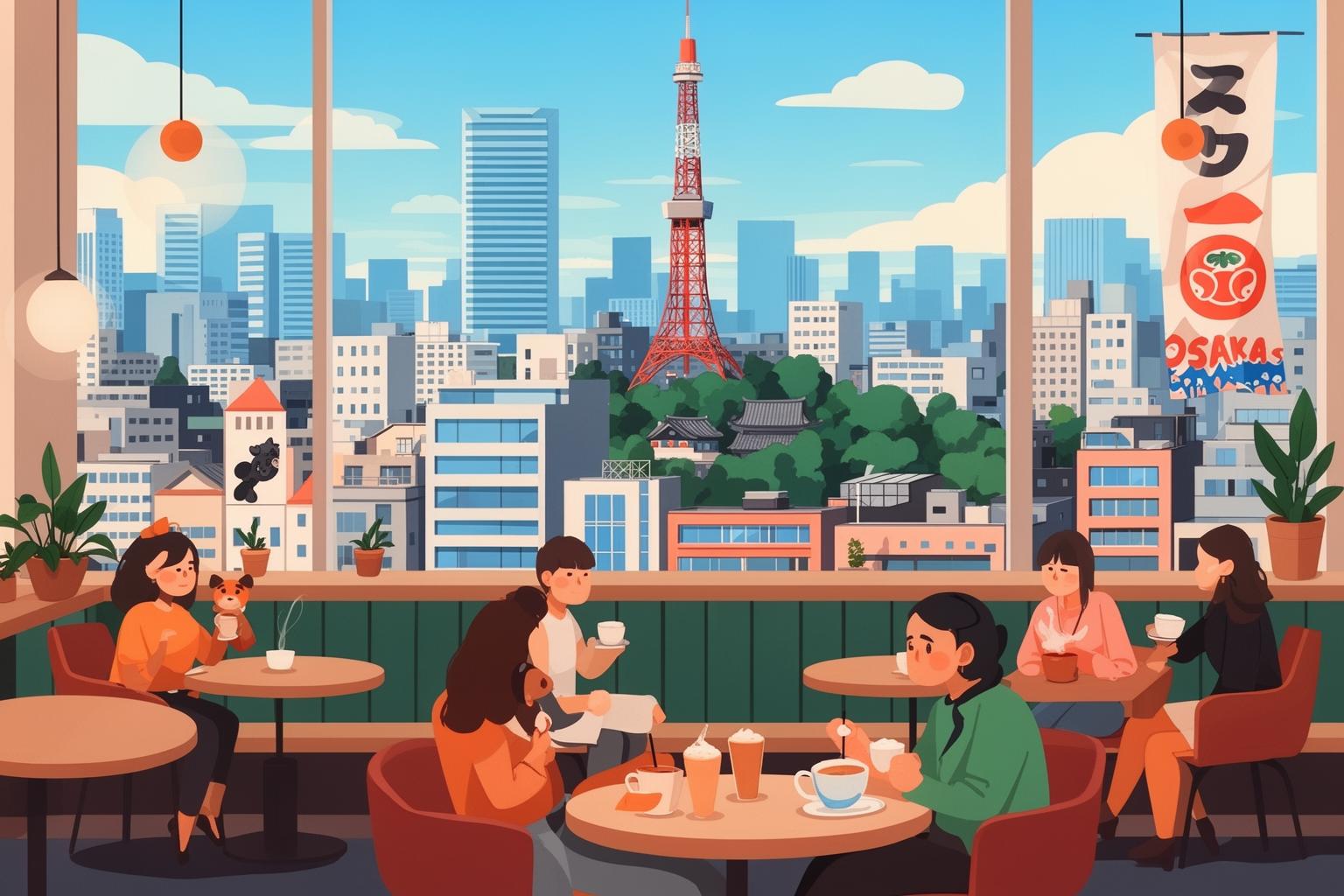
To truly understand the essence of Osaka cafe culture, you must first recognize how it contrasts with that of the capital. In Tokyo, the cafe experience often follows a clear, unspoken rule: money equals time. You purchase a latte, and in return, you rent a small piece of space for a socially acceptable duration. The staff are polite but distant, the setting designed for efficiency, and your presence remains largely anonymous. Provided the cafe isn’t overcrowded, you can usually work for a few hours without attracting attention. It’s a seamless, frictionless exchange, ideal for a megacity where millions must coexist without interfering with one another.
Osaka runs on a different, more organic system. Here, especially in the independently run cafes that define the city’s character, the relationship is less transactional and more personal. The cafe is not merely a business; it’s the owner’s personal domain, often a husband-and-wife duo referred to warmly as the “Master” and “Mama.” They have invested their lives into this small space. It’s like their living room, and you are a guest. This approach is closely tied to Osaka’s history as Japan’s merchant capital. The city’s pragmatic, business-first spirit is captured in its unofficial motto and greeting: “Moukarimakka?” which means “Are you making a profit?”
A foreigner might mistakenly interpret this as rude or materialistic. However, that’s a fundamental misunderstanding. “Moukarimakka?” is Osaka’s equivalent of “How are you?” It’s a way of showing concern for the other person’s livelihood, well-being, and success. It acknowledges that everyone is working to make a living and promotes a sense of shared reality. This mindset permeates the cafe experience. When you occupy a seat for three hours with only a single 450-yen coffee, you directly affect the Master’s ability to “moukari.” The people of Osaka are keenly aware of this economic truth—not out of greed, but practicality. They recognize cause and effect. A seat is a revenue-generating asset. Thus, your prolonged stay isn’t merely poor etiquette; it represents a real impact on the owner’s earnings. Understanding this is the key to reading the atmosphere correctly.
Reading the Air: A Practical Guide
So, how do you become a welcomed long-stay guest rather than an oblivious seat-warmer? It’s not about memorizing a set of rules; it’s about developing situational awareness—a fluid interplay of observation and response. It’s an art, but one with clear, practical steps.
The Master’s Gaze and the Clock on the Wall
Your most important guide in any independent cafe is the owner. Forget your phone; watch the Master. Is it a young, rotating staff member in a corporate chain, or a 70-year-old man who has been polishing the same syphon coffee maker for forty years? The latter is the keeper of the unspoken laws. His mood sets the tone for the entire establishment.
Learn to read the environmental cues. Look at the door. Is a line forming? Even a small one? Are people peeking in, seeing no empty seats, and walking away? If so, the clock on your stay is ticking loudly. Is the Master starting to look stressed, clearing finished cups with frantic energy, or repeatedly wiping down the one empty table? These are not-so-subtle signals that turnover is needed. Conversely, if it’s a rainy Tuesday afternoon, the place is half-empty, and the Master is leisurely reading the sports pages behind the counter, you’re in the clear. The air is calm. You have permission to linger.
This constant environmental scan is crucial. In Osaka, you’re expected to be aware of how your presence affects the whole. You’re not an isolated customer in a bubble; you’re a temporary part of a living, breathing ecosystem. Your awareness—or lack thereof—is what makes you either a welcome regular or a silent nuisance.
The Art of the “O-kawari” (Refill/Second Order)
This is the golden rule, the single most important gesture you can make to earn your keep. One cup of coffee does not entitle you to an afternoon of free Wi-Fi, electricity, and air conditioning. The unspoken social contract typically allows for about 90 minutes. After that, you need to renew your lease, so to speak.
This is where the o-kawari comes in. It means “another one” or “a refill,” but in this context, it simply means ordering something else. It’s your way of acknowledging the unspoken contract. You’re signaling, “I value this space, I understand you need to run a business, and I’m happy to contribute more to stay.” This single act resets the social timer. Your lingering is no longer an imposition; it’s continued patronage.
It doesn’t have to be a full meal or another expensive coffee. It could be a simple slice of toast, a scoop of ice cream, or a glass of juice. The key is the gesture. It communicates respect for the moukarimakka principle. You’re actively helping the Master turn a profit. In the practical, business-savvy mind of an Osakan, this makes perfect sense. Your ongoing presence is now justified not just socially but economically. You’ve shifted from being a liability to an asset.
Choosing Your Battlefield: The Right Cafe for the Job
Not all cafes are equally suited for remote work. Trying to set up a mobile office in the wrong type of establishment is the original sin from which all other problems flow. Knowing the different archetypes is essential.
First, there’s the traditional kissaten. These are the soul of Japan’s coffee culture. Often dark, woody, and filled with the gentle sounds of jazz or classical music, they are run by an older generation. The patrons are regulars who come to read the newspaper, smoke, and have quiet conversations. Pulling out a laptop and clicking away on a keyboard here is like starting a chainsaw in a library. You are fundamentally misunderstanding the purpose of the space. A kissaten is for contemplation and escape, not conference calls. Avoid them for long work sessions.
Next are the chain cafes—Doutor, Tully’s, Excelsior. These are generally your safest choice. They are more anonymous, accustomed to students and office workers, and often have designated counter seats with power outlets designed for solo patrons. The transactional Tokyo model is more common here. However, even in a chain cafe in Osaka, the principle of reading the air applies, especially during the lunch rush from 12:00 to 1:30 PM. If you see office workers circling like vultures for a seat, it’s a clear sign to pack up.
Finally, you have the modern, independent cafes. These often have a younger vibe, pour-over coffee, and an aesthetic aimed at a more contemporary crowd. They can be the sweet spot. They understand the desire for a work-friendly space. However, they are still small businesses. The o-kawari rule is even more vital here. Supporting these smaller shops is part of the culture, and your conscious patronage will be noticed and appreciated.
The “Sekkaku ya kara” Bonus Round
To truly graduate from novice to pro, you can adopt a classic Osaka mindset: “Sekkaku ya kara.” This phrase is hard to translate directly, but it means something like, “Since I’m already here, I might as well…” or “You only live once, so let’s…” It’s an expression of making the most of a situation.
Apply this to your second order. Don’t just get another bland coffee. Look at the menu. Is the cafe famous for its thick-cut pizza toast? Its homemade cheesecake? Its seasonal fruit sandwich? Sekkaku ya kara, order that. This transforms your o-kawari from a mere obligation into an act of genuine appreciation. You’re engaging with what makes the cafe special. When you leave, a simple but heartfelt “Gochisousama, anou toosuto, metcha oishikatta desu!” (“Thank you for the meal, that toast was incredibly delicious!”) will work wonders. You are no longer a faceless laptop user; you are a customer who appreciates the Master’s craft. This small human connection is immensely powerful in Osaka.
Why This Is Different from Tokyo (and What Foreigners Misunderstand)
The fundamental difference lies in the social fabric. Tokyo thrives on cultivated anonymity. It’s a city of specialists where social interactions tend to be limited to specific, designated contexts. You can live there for years and still remain a stranger to your neighbors and the shopkeepers you encounter daily. This creates a sense of freedom but can also feel isolating.
Osaka, by contrast, is a city of villagers. The boundaries are less distinct. Your local baker isn’t just a service provider; he’s a familiar figure in the neighborhood. In a local cafe, you quickly become a kao-najimi, a recognized face. This reflects Osaka’s sewa culture—a tendency to care for others, to get involved, and to be a little nosy in a warm, caring way. The Master might ask where you’re from or what you’re working on. This isn’t an invasion of privacy but an invitation to connect.
A common misunderstanding for foreigners is to mistake Osaka’s directness for rudeness. A Tokyo shopkeeper might quietly endure as you overstay, perhaps growing coldly formal. The Osaka Master, however, might simply give you a look. It’s not one of personal dislike. It’s a practical, non-verbal message that says, “Hey, pal. We’re both adults here. You see the line, I see your empty cup. You know what needs to happen.” It’s based on the assumption that you’re both reasonable people who understand the basics of business. There’s a certain blunt honesty to it that can be refreshing once you realize it’s not personal.
You want to avoid creating the unspoken “Akan!” vibe. Akan is Osaka-ben for “no good,” “useless,” or “don’t.” When you break the unspoken rules, you generate an atmosphere of Akan. It’s a feeling of social dissonance, a sense that something isn’t quite right. Your goal is to keep the air free of Akan by being a considerate, situationally aware participant.
The Payoff: Becoming a True Regular
When you master this delicate dance, the rewards are immense. You stop being just a passing customer and become a true regular, an integral part of the cafe’s daily rhythm. This is where the magic of living in Osaka comes to life.
The Master, who once seemed intimidating, will begin greeting you with a warm, familiar nod. “Itsumo no?” (“The usual?”) he might ask, already reaching for your preferred coffee beans. You might discover a small extra—a piece of chocolate or a complimentary cookie—placed beside your cup. This is called “saabisu,” a small gift from the house as a gesture of gratitude for your loyalty. They might even reserve your favorite window seat when they see you approaching.
You become woven into the fabric of the neighborhood. You’ll learn the stories of the other regulars. You’ll witness the small dramas and comedies of daily life. The cafe shifts from a mere functional workspace to a true “third place”—a refuge that is neither work nor home, but a warm, communal space in between.
This is the authentic Osaka experience. It isn’t found in guidebooks or tourist spots. It emerges from these small, everyday exchanges, grounded in mutual respect and a shared understanding of the city’s practical yet deeply human spirit. By learning to read the air, you’re not just learning how to avoid trouble. You’re learning the language of the city’s heart—a language that says, “If you support me, I’ll support you. Let’s make something good together.”