
Walk through Osaka, really walk, and you’ll feel a certain rhythm in the air. It’s not the polished, almost silent hum of a Tokyo business district. It’s a percussive beat, a clatter of commerce, a chorus of shouted greetings from shopkeepers, the sizzle of oil hitting a hotplate. It’s a city that works, and it wants you to know it. Foreigners often land here and get caught up in the neon glow of Dotonbori or the historic grandeur of Osaka Castle, but to truly understand this city, you need to look past the landmarks and into the minds of its people. The operating system that runs Osaka, the code that dictates how people shop, eat, work, and even talk, is a concept called ‘Shimatsu’ (始末). Ask a Tokyoite about ‘Shimatsu,’ and they might give you a vague nod, perhaps associating it with tidying up or being frugal. But here in Osaka, ‘Shimatsu’ is a philosophy. It’s a worldview. It’s the merchant’s DNA that has shaped this city for centuries.
‘Shimatsu’ is a notoriously difficult word to translate directly into English. ‘Frugality’ is too simple, too focused on just saving money. ‘Resourcefulness’ is closer, but it misses the nuance. ‘Efficiency’ captures a part of it, but not the whole spirit. The kanji characters themselves offer a clue: ‘始’ (shi) means ‘beginning,’ and ‘末’ (matsu) means ‘end.’ At its core, ‘Shimatsu’ is the principle of thoughtfully managing something from its beginning to its very end, ensuring nothing is wasted along the way—not money, not resources, not time, not even an opportunity. It’s about seeing the entire lifecycle of a thing and maximizing its value at every stage. This isn’t about being cheap; it’s about being smart. It’s the quiet pride in turning leftover vegetable scraps into a delicious pickle, the satisfaction of negotiating a fair price for a quality product, the directness of a conversation that gets straight to the point. This mindset is the invisible force behind why Osaka feels so different from the rest of Japan. It explains the city’s famous food culture, its boisterous markets, its pragmatic people, and its unapologetic focus on substance over style. To live in Osaka, or to even begin to comprehend it, you have to understand the soul of ‘Shimatsu.’ It is the key that unlocks the city’s most confusing and most charming quirks.
This enduring commitment to efficient resource management mirrors broader regional trends, as shown by the recent surge in international hotel investment in Kansai, where high occupancy and post-Expo momentum are driving growth.
The Merchant’s DNA: Where ‘Shimatsu’ Comes From
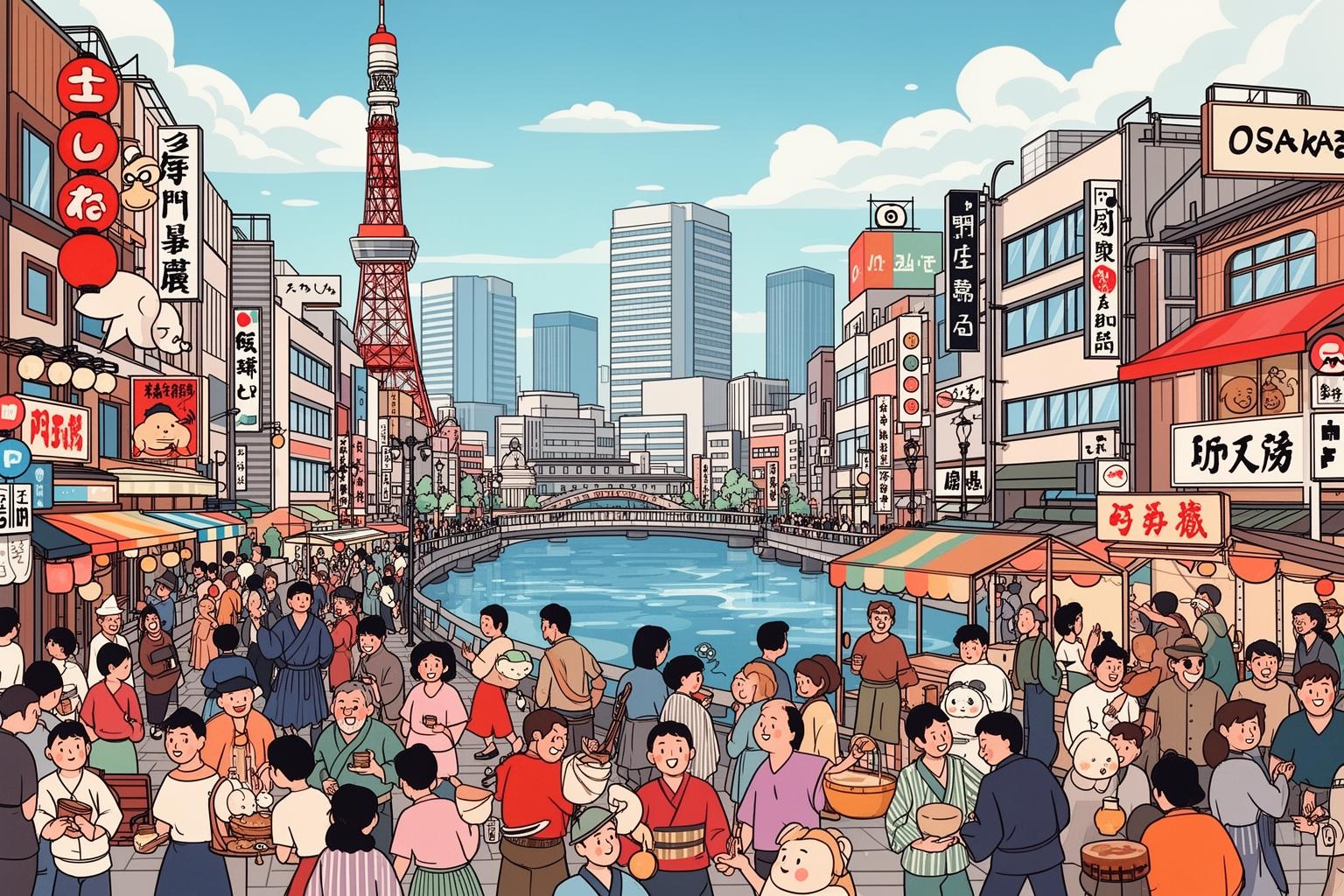
To understand why ‘Shimatsu’ is so deeply ingrained in the Osakan psyche, you need to rewind the clock. Set aside the gleaming skyscrapers of Umeda for a moment and imagine a city of canals, wooden warehouses, and bustling docks. During the Edo Period (1603-1868), while Edo (modern-day Tokyo) was the political center, home to the shogun and his samurai armies, Osaka was the undisputed economic heart of Japan. It earned the nickname ‘Tenka no Daidokoro,’ or the ‘Kitchen of the Nation.’ This was more than just a charming epithet—it accurately described its role. Rice, sake, soy sauce, textiles, and goods from across the country flowed into Osaka’s warehouses, were traded on its exchanges, and then distributed throughout Japan. This city wasn’t built by warriors but by merchants, artisans, and financiers.
This fundamental difference in origins—Edo as the city of consumers and the samurai class, Osaka as the city of producers and the merchant class—gave rise to two distinct cultures that endure today. Samurai lived in a world defined by stipends, rigid social hierarchies, and honor. Their economy was based on land and rice, and their culture emphasized appearances, ceremony, and maintaining face. A samurai’s status was linked to his swords, armor, and family name—often more symbolic than practical. Lavish spending to showcase one’s rank was not only common but expected.
Conversely, Osaka’s merchants operated in a world of fluctuating markets, calculated risks, and razor-thin profit margins. Their survival relied not on birthright but on wits, reputation, and resource management. For them, waste was a cardinal sin. An unsold bale of rice meant a loss. An inefficient shipping route drained profits. An unnecessary expense threatened the whole enterprise. From this crucible of commerce emerged the philosophy of ‘Shimatsu.’ It began as a survival tactic and evolved into a cultural virtue. It wasn’t about hoarding wealth but about the intelligent circulation of capital and resources. An Osaka merchant understood that a tool left to rust was as much a waste as a coin lost in a river. Everything had to serve a purpose, function, and be used to its fullest extent.
This mentality is evident in historical Osaka’s layout. Take the Nakanoshima sandbar, now home to the city hall and lovely parks. In the Edo period, it was lined with ‘kurayashiki,’ vast warehouse-residences owned by feudal lords from across Japan. These lords shipped their tax rice to their Osaka ‘kurayashiki,’ where merchant brokers stored, managed, and sold it for them. The Dojima Rice Exchange, founded here, became the world’s first organized futures market—a remarkably sophisticated financial innovation born from pure Osakan pragmatism. The merchants weren’t just trading rice; they traded promises—contracts for future delivery that hedged against famine and surplus. This demanded foresight, calculation, and a deep respect for the value of every grain. This is ‘Shimatsu’ on a macroeconomic level—managing the nation’s most vital resource from start to finish.
In contrast, the grand samurai estates in Edo emphasized prestige, with imposing gates and sprawling gardens, often serving little practical economic purpose. An Osaka merchant’s home was typically a ‘machiya,’ a long, narrow wooden townhouse that combined residence and workplace. The storefront faced the street, living quarters were toward the back, and a small, functional garden (‘tsuboniwa’) in the center provided light and ventilation. Every inch of space was purposefully designed for maximum efficiency. This architectural pragmatism physically embodies ‘Shimatsu,’ valuing function over form and results over ritual. While a samurai might lavishly spend on a perfectly arranged tea ceremony, an Osaka merchant would admire a well-balanced ledger. This historical foundation is key to understanding why, even today, an Osakan might proudly boast about the great deal they found on a pair of shoes, whereas a Tokyoite might be more inclined to subtly display the luxury brand logo.
‘Shimatsu’ in the Kitchen: More Than Just Eating
Nowhere is the spirit of ‘Shimatsu’ more alive, more palpable, and more delicious than in the kitchens of Osaka. The city’s fame for ‘kuidaore’—a term often translated as ‘to eat until you drop’ or ‘to eat oneself into bankruptcy’—might seem at odds with the idea of frugality. However, this is a common misconception. ‘Kuidaore’ isn’t about reckless indulgence or lavish spending. It represents a deep, passionate, and thoughtful connection with food. Osakans love to eat but reject superficiality. They demand outstanding flavor at a fair price, a balance achievable only through the rigorous practice of ‘Shimatsu’ principles in the kitchen. At its core, ‘Shimatsu’ in cooking means respecting your ingredients. It’s a culinary mindset that insists on using every part of a plant or animal, from root to leaf, nose to tail.
Take the modest daikon radish, a staple in Japanese cooking. In many other homes, the thick green leaves might be casually chopped off and thrown into the compost. But in an Osakan kitchen, that’s unthinkable—a waste. The leaves, finely chopped, are stir-fried with sesame oil and soy sauce to create a savory topping for rice or pickled into a crunchy, refreshing side dish. The tough outer peel of the radish? It’s not discarded but sliced into thin strips, added to miso soup, or simmered in a hearty kinpira-style dish with carrots. The radish itself is handled with careful strategy. The top part near the leaves is the sweetest and juiciest, ideal for grating raw and serving with grilled fish. The middle section is tender and readily absorbs flavors, perfect for simmering in oden or rich stews. The bottom tip is the most pungent and slightly bitter, best suited for pickling or adding a sharp note to soups. This is not just cooking; it’s a deliberate, thoughtful process ensuring the entire organism—from seed to plate—reaches its fullest potential.
This philosophy extends to the very essence of Osaka cuisine: dashi. The savory broth made from kombu (kelp) and katsuobushi (bonito flakes) forms the base of countless dishes. Once the dashi is steeped and strained, what remains? The kombu and katsuobushi. To an outsider, their main purpose is fulfilled. But to an Osakan with ‘Shimatsu’ in their blood, discarding them would be a culinary sin. The used kombu is sliced into fine strips and simmered with soy sauce, mirin, and sugar to make ‘tsukudani,’ a salty-sweet condiment perfectly paired with white rice. The leftover bonito flakes are dried in a pan and mixed with sesame seeds and nori to become homemade ‘furikake,’ a tasty and nutritious rice seasoning. The cycle is complete—ingredients contribute their primary flavor to the dashi, then their secondary texture and substance to another dish. Nothing goes to waste. This is the art of ‘Shimatsu’—finding value in what others might see as waste.
This principle underlies the city’s most iconic street foods. Take takoyaki, for example. The batter is simple and inexpensive—flour, eggs, dashi. The filling is a small piece of octopus, once plentiful and affordable in Osaka Bay. It’s a brilliant example of creating high-value flavor from low-cost ingredients. Or consider okonomiyaki: essentially a savory pancake made with flour, eggs, and shredded cabbage, another cheap and abundant vegetable. You can add whatever other ingredients you have on hand—scraps of meat, seafood, leftover vegetables. It’s the ultimate ‘Shimatsu’ meal, a delicious way to clear out the refrigerator. The genius of Osaka’s food culture lies in this ability to elevate the ordinary, turning humble ingredients into something deeply satisfying through skill, creativity, and a steadfast refusal to waste anything.
Shopping with ‘Shimatsu’: The Art of the Deal
The merchant spirit of Osaka shines brightest when its residents are spending money. Shopping here is far from a passive activity; it’s an energetic, interactive sport, with ‘Shimatsu’ setting the rules. The aim isn’t just to obtain goods, but to get them at the best possible value. This pursuit of value, or ‘kosupa’ (cost performance) as it’s called in Japanese, drives Osakan consumer behavior and sharply contrasts with the brand-conscious shopping often seen in Tokyo.
This is most visible in the city’s lively ‘shotengai,’ the covered shopping arcades winding through residential areas. These are not sterile, uniform malls. Instead, they are noisy, chaotic, and intensely human spaces where customer-vendor interaction is vital. In much of Japan, especially in department stores, haggling is frowned upon and can even be considered rude. But in an Osaka ‘shotengai,’ friendly negotiation is often part of the routine. It’s not about aggressively low-balling the seller; it’s a form of communication, a dance. You might ask, “Ochotto makete?” (“Can you give me a little discount?”) with a smile. The shopkeeper might chuckle and throw in an extra orange or shave a few yen off the price. This isn’t just about saving a little money—it’s about building a relationship. You appreciate their effort, they respect your savvy, and both parties leave feeling positive about the exchange. This is ‘Shimatsu’ in practice—optimizing the outcome not just financially, but socially.
The emphasis on intrinsic value over superficial branding is a fundamental Osakan trait. A Tokyo shopper might pay extra for a melon presented in an elegant wooden box from a prestigious department store, seeing the brand and packaging as part of its worth. An Osakan shopper is more likely to tap the melon, smell it, chat with the grocer about its origin, and feel proud of buying an equally delicious, unboxed melon for half the price from a trusted local vendor. The pride lies in the smart purchase, not the status it projects. This mindset explains the Osakan fondness for things that are ‘yasui-umai’ (cheap and delicious) or ‘joubu de naga-mochi’ (durable and long-lasting). The highest praise for a product isn’t its fame but its status as a ‘horidashi-mono’—a real find, a bargain of exceptional quality.
For a tangible symbol of this philosophy, look no further than Super Tamade. This supermarket chain is a sensory overload and an Osaka icon. Garish neon lights flash nonstop, a barrage of cheerful jingles blares from the speakers, and bright, hand-written signs proclaim unbelievable deals. It stands in stark contrast to the calm, minimalist style of upscale Tokyo grocery stores. Visitors might feel overwhelmed by the chaos, but locals navigate it masterfully. They know Super Tamade is the sanctuary of ‘kosupa.’ They come for the legendary 1-yen sales (with a minimum purchase), the heavily discounted produce at day’s end, and the surprisingly good and affordable bento boxes. The aesthetics don’t matter. The flashing lights and loud music don’t enhance the food’s flavor. What counts is the price. Super Tamade unapologetically removes all pretense, branding, and superfluous flair to deliver the pure essence of ‘Shimatsu’: maximum value for minimal cost. Shopping at Tamade is a core ritual of Osaka life.
‘Shimatsu’ in Daily Life: Resourcefulness Beyond Money
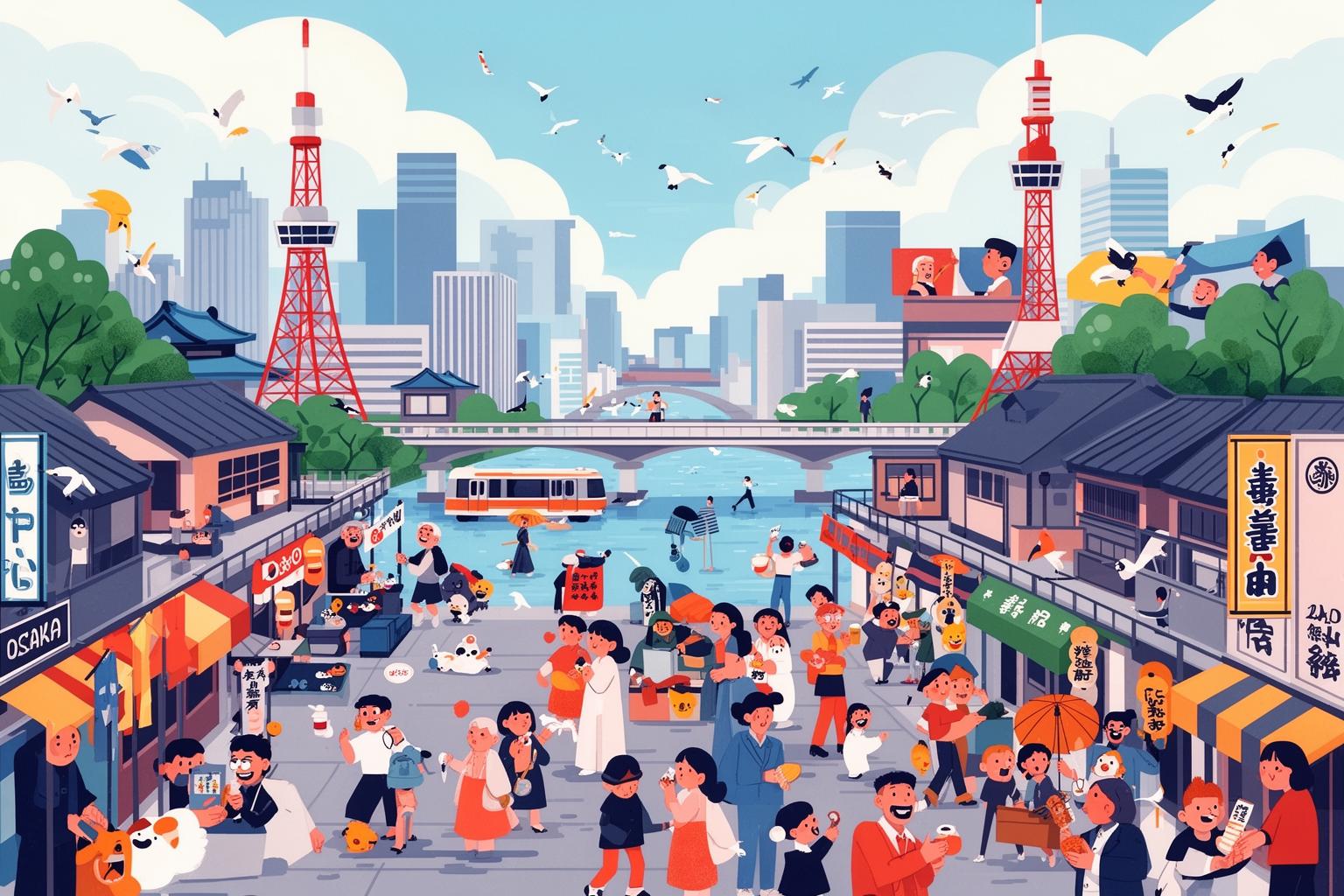
While ‘Shimatsu’ is most readily seen in the spheres of food and commerce, its principles of efficiency and comprehensive management extend into every part of daily life in Osaka. This is a vital detail often overlooked by outsiders. ‘Shimatsu’ is not merely a financial tactic; it represents a philosophy for managing all of life’s limited resources, including time, space, and energy. Applying ‘Shimatsu’ to intangible aspects is frequently what causes the most significant cultural friction for those familiar with the social norms of Tokyo or other regions of Japan.
Take the resource of time, for example. Osakans are known for their straightforwardness. Whether in a business meeting or casual chat, they typically get right to the point. The elaborate introductions, layers of polite but vague language (‘kenjo-go’ and ‘sonkei-go’), and emphasis on consensus-building before voicing a clear opinion—which characterize communication in Tokyo—are often shortened or skipped entirely in Osaka. This can be surprising. A foreigner or even a Japanese person from another area might perceive this directness as impatience, aggression, or impoliteness. However, from an Osakan standpoint, it is a form of ‘Shimatsu’ applied to time and energy. Why spend twenty minutes circling around a topic when it can be addressed in five? This approach is not about being disrespectful; it’s about efficiency. The aim is to reach the heart of the matter, resolve the issue, and move forward. It reflects the merchant’s mentality applied to conversation: identify the need, agree on terms, and close the deal. Relationships are based on clarity and results, not prolonged formality.
Space is another valuable resource managed with ‘Shimatsu’ ingenuity. Like all large Japanese cities, Osaka is densely populated. Yet, there is a distinct pride in how cleverly space is used. Consider the tiny, standing-only ‘tachinomi’ bars tucked beneath railway arches, accommodating dozens of customers in what would be a storage closet elsewhere. Notice how shopkeepers in the ‘shotengai’ arrange their goods in towering, gravity-defying displays that utilize every vertical inch. In Osakan homes, multi-functional furniture is standard. A low table (‘kotatsu’) used for eating and socializing becomes a warm gathering place in winter. A futon is rolled up and stored in a closet during the day, turning a bedroom into a living room. This is not merely coping with limited space; it exemplifies intelligent and dynamic environmental management. The space is fluid, constantly adapted to meet current needs, a perfect demonstration of maximizing a resource’s utility from start to finish.
This resourcefulness is also evident in everyday objects. Although the disposable culture is present across Japan, it feels less dominant in Osaka. There is a strong tradition of repairing items rather than replacing them immediately. Small neighborhood shops specializing in fixing everything from shoes and bicycles to aging electronics still thrive. An Osakan might take pride in extending the life of a reliable old rice cooker with some tinkering. This represents ‘Shimatsu’ applied to an object’s lifecycle. The purchase marks the ‘beginning’ (shi), but the ‘end’ (matsu) is delayed as long as possible through maintenance, repair, and creative reuse. It quietly resists consumerism for its own sake, rooted in the belief that an item’s value lies not only in its newness but also in its durability and continued usefulness.
What Foreigners Misunderstand about ‘Shimatsu’
Because ‘Shimatsu’ is such a profound and subtle cultural concept, it is often misunderstood by outsiders. These misconceptions can result in a distorted view of Osakan people, unfairly generalizing them in inaccurate ways. Clarifying these misunderstandings is essential to truly appreciate the city and its culture on its own terms.
The most prevalent and harmful misconception equates ‘Shimatsu’ with being ‘kechi’—stingy, cheap, or miserly. This is fundamentally incorrect. A ‘kechi’ person avoids spending money at any cost, even when it is necessary or beneficial. They opt for the cheapest product available, regardless of its low quality or short lifespan. ‘Shimatsu,’ on the other hand, is about recognizing and paying for genuine value. An Osakan practicing ‘Shimatsu’ has no hesitation spending a substantial amount on something they believe is worthwhile. They will invest in a high-quality set of kitchen knives that will last a lifetime. They will pay for an exceptional meal made with the finest ingredients. They will splurge on a durable, well-crafted coat that will endure many winters. What they detest is not spending money, but wasting it. They despise paying for hype, flashy packaging, or a famous brand name that lacks superior quality. A person practicing ‘Shimatsu’ scoffs at paying 2,000 yen for mediocre coffee in a trendy Tokyo cafe, not because they can’t afford it, but because the value is nonsensical. They would much rather pay 500 yen for a far better cup at a local ‘kissaten’ where the owner has roasted his own beans for forty years. ‘Kechi’ focuses on price; ‘Shimatsu’ focuses on worth.
Another significant misunderstanding concerns the Osakan communication style. Their directness, readiness to express opinions, and love for friendly debate can be mistaken for confrontational behavior or lack of social grace, especially when compared to Tokyo’s highly indirect, harmony-focused communication. However, interpreting this as simple rudeness misses the essence. Within the ‘Shimatsu’ framework, direct communication is efficient. It saves time and prevents misunderstandings. Lively debates are a means to rapidly reach the truth. It is a form of collaborative problem-solving, not a personal attack. Osakans often build trust and rapport through such candid exchanges. Concealing one’s true feelings behind layers of politeness can be seen as insincere or even untrustworthy. It represents a different cultural protocol for relationship-building, one based on transparency rather than the careful preservation of surface harmony.
Finally, there is the paradox of the ‘Shimatsu’ practitioner who is also an extraordinarily generous host. The same person who meticulously separates vegetable scraps for different uses and haggles over 100 yen at the market might then spend a fortune treating friends and colleagues to an extravagant dinner and drinks, refusing any offers to contribute. This is not hypocrisy; it perfectly illustrates the ‘Shimatsu’ principle of intelligent resource allocation. For an Osakan, investing in relationships, goodwill, shared experiences, and human connections is among the highest-value commitments. This is not an expense; it is an investment yielding immense returns in loyalty, friendship, and community. Wasting money on a branded handbag is foolish. Investing money in a memorable evening that strengthens bonds with loved ones is one of the smartest decisions one can make. This is the refined calculation of ‘Shimatsu’: discerning what is a frivolous cost and what is a priceless investment.
Living the ‘Shimatsu’ Life in Osaka
For a foreigner settling into life in Osaka, embracing the spirit of ‘Shimatsu’ is more than just a way to save money; it’s a means to connect with the city on a deeper level. It involves shifting your mindset from being a passive consumer to becoming an active participant in the city’s economic and social fabric. It means learning to recognize value in places you might have previously overlooked and finding joy in resourcefulness.
Your first step is to explore the ‘shotengai.’ Leave behind the sterile convenience stores and soulless supermarkets. Discover your local shopping arcade and make it your own. Don’t rush in just to grab what you need. Slow down. Observe. Notice which fruit stand has the longest line of local grandmothers—they always know where to find the best quality for the price. Instead of buying pre-packaged, plastic-wrapped vegetables, buy them loose from a vendor. Learn simple phrases to ask what’s in season (‘shun wa nan desu ka?’) or to request a recommendation (‘osusume wa?’). Build a rapport with the local tofu maker, the fishmonger, and the butcher. They are masters of their craft and your guides to the world of ‘Shimatsu.’ They will teach you which cut of fish is best for grilling today or which part of the chicken offers the best value for soup.
At home, start considering the lifecycle of your purchases. Before throwing something away, ask yourself: can this be repurposed? Leftover rice can become fried rice or toasted ‘yaki-onigiri’ for lunch tomorrow. Tough broccoli stems can be peeled and stir-fried. An old t-shirt can be turned into cleaning rags. This isn’t about deprivation; it’s a creative challenge. It’s about appreciating the full value of the things you own. This mindset will not only reduce waste and save money but also deepen your appreciation for the resources you consume.
When interacting with Osakans, try to adjust your interpretation of their communication style. If a colleague gets straight to the point or offers blunt criticism, resist the urge to take it personally. Instead, see it as a sign of respect for your time and intelligence. They treat you as a peer capable of engaging directly with an issue. Respond with honest and clear opinions, and you’ll often find it’s the quickest way to earn their trust and respect. Learn to appreciate the humor and warmth that often accompany this directness. The goal is mutual understanding, and Osakans believe the shortest path between two points is a straight line.
Ultimately, living the ‘Shimatsu’ life means valuing substance over style, function over form, and genuine worth over perceived status. It’s about finding satisfaction in a well-made tool, a perfectly ripe piece of fruit bought at a fair price, clever use of leftovers, and an honest conversation. It’s a practical, resilient, and deeply human philosophy. While it may lack the refined elegance of Kyoto’s traditions or the high-fashion gloss of Tokyo’s trends, it is the powerful, invisible engine that makes Osaka one of the most dynamic, down-to-earth, and endlessly fascinating cities in the world.