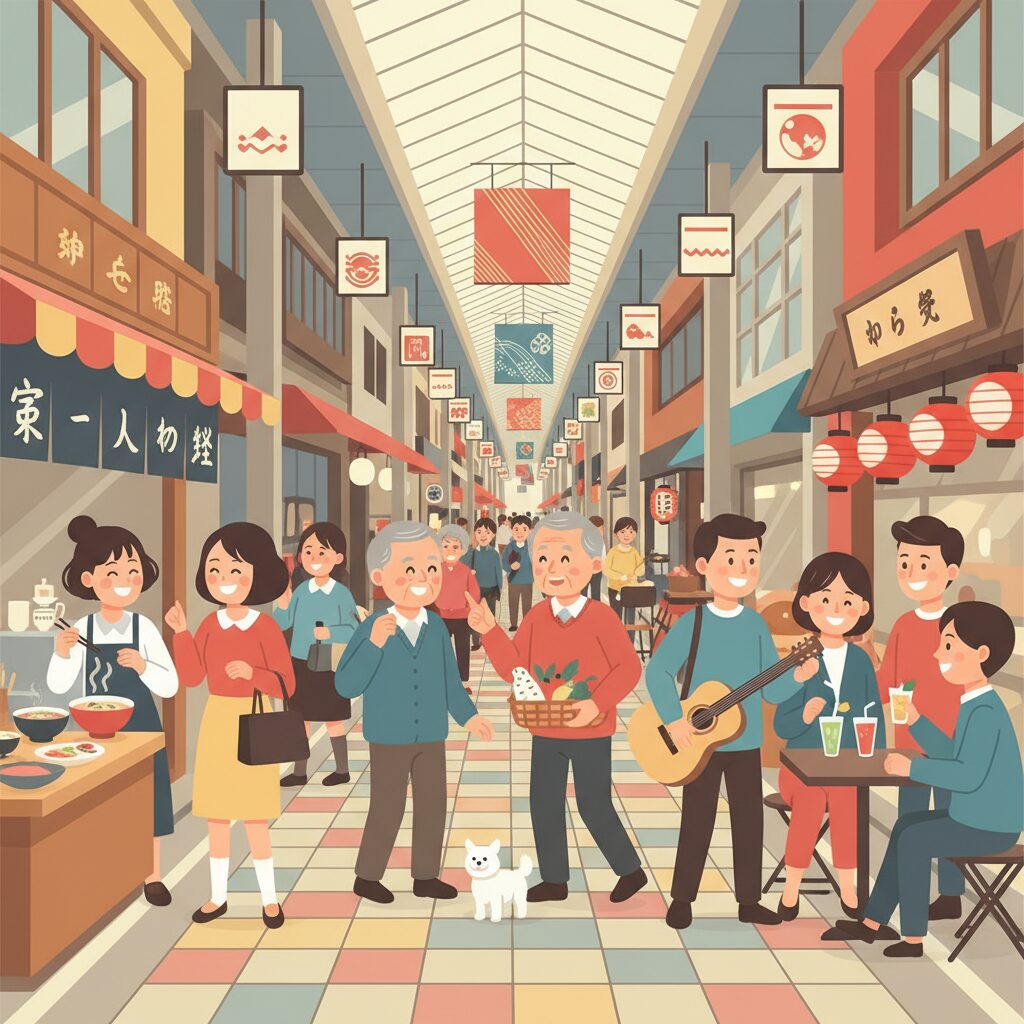
When I first moved to Osaka from Australia, my Japanese was textbook-polite, my personal space bubble was firmly inflated, and my shopping was an efficient, silent mission. I’d navigate the pristine aisles of a brightly lit supermarket, grab what I needed, and glide through the self-checkout without making eye contact. It was familiar. It was clean. It was, I realized after a few months, incredibly lonely. My first trip into a proper, old-school shotengai—one of Osaka’s covered shopping arcades—was a full-blown sensory assault. It was a chaotic symphony of shouting vendors, clattering shutters, the sizzle of takoyaki, and the rumbling of bicycles weaving through the crowds. It felt loud, messy, and a little too close for comfort. People didn’t just walk past you; they acknowledged you, their eyes meeting yours with a flicker of curiosity. It was here, in this beautiful, bewildering chaos, that I began to understand the true heart of Osaka. The shotengai isn’t just a place to buy your groceries. It’s the city’s public living room, a place where transactional conversations are just the opening act for the real performance: community. It’s where you learn that in Osaka, a simple trip for vegetables can turn into a lesson in local politics, a debate on the Hanshin Tigers’ latest game, and the beginning of an unlikely friendship.
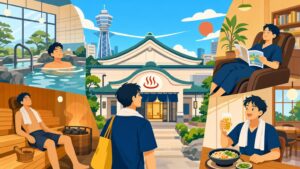
Embracing the vibrant community spirit of Osaka doesn’t end at the shotengai, as you can also discover the calming benefits of local sento wellness to enrich your daily life.
The Anatomy of a Shotengai Conversation
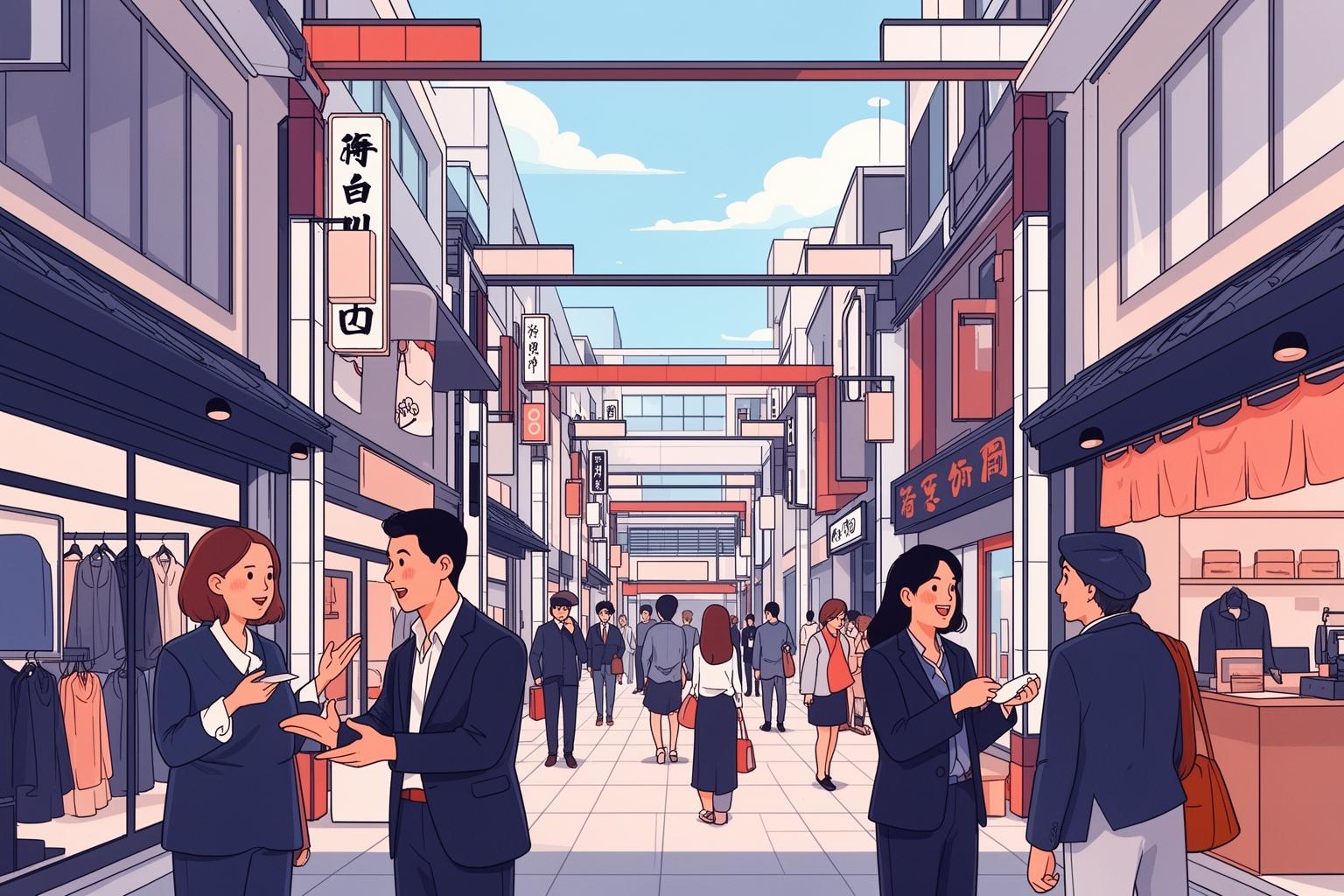
In most areas of Japan, particularly Tokyo, public interactions follow a script of politeness. It’s elegant and efficient, yet it can sometimes feel like dealing with a helpful but impersonal user interface. An Osaka shotengai completely breaks that script. Here, conversation is a contact sport—a lively, unscripted performance. It’s less about flawless grammar and more about connection, energy, and shared humor. Grasping the rhythm of these exchanges is essential to feeling at home.
The Opening Salvo: More Than Just a Greeting
The first thing you’ll hear is the sound. A chorus of “Maido!” echoes from every stall. This isn’t the usual “Irasshaimase!” (Welcome!) you hear at chain stores. While that’s a general greeting to anyone who walks in, “Maido!” carries a different meaning. It literally means “every time,” but its true sense is closer to “Thanks, as always, for your business.” It’s a term rich with history and relationship. It assumes you’re a regular, even if it’s your first visit. It’s an optimistic, welcoming pull into the community. Replying with a simple nod and a “Konnichiwa” is perfectly fine, but the real charm emerges when you become a familiar face and can confidently return it with a “Maido!”. It’s like discovering a secret handshake. You’ll also hear shopkeepers exchanging “Otsukare-sama!” with each other. This phrase, recognizing each other’s hard work, is the glue that holds the arcade community together. It’s a constant, audible reminder that they’re all in it together, a team keeping the neighborhood’s heart beating.
The Art of the Compliment and the Tease
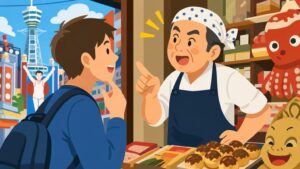
When a shopkeeper catches your eye, the conversation seldom begins with “Can I help you?” Instead, it often starts with a personal remark. “Ah, nee-chan, sono kaban ee naa!” (Hey sis, that’s a nice bag!). It can be surprising at first. Why is the fishmonger commenting on my handbag? But it’s not a sales pitch; it’s an icebreaker. It’s a way of saying, “I see you as a person, not just a wallet.” This is often followed by a playful tease, the classic Osaka way of showing affection. If you buy a large daikon radish, expect a comment like, “Konna dekkai no, hitori de taberun?” (You gonna eat such a big one all by yourself?). This isn’t accusing you of greed; it’s a joke, an invitation to banter back. A good reply might be, “Kyou wa paatii ya nen!” (It’s for a party today!). This lively back-and-forth is the opposite of the deferential service in Tokyo. It signals that they feel at ease with you, that you’ve been welcomed into the inner circle of casual banter. It’s a compliment disguised as a wisecrack.
The Unsolicited Advice Department
Nowhere is the caring, slightly meddlesome spirit of the shotengai clearer than in the advice you’ll get, whether you asked for it or not. If you buy a piece of fish, the seller won’t just wrap it up. They’ll lean in mysteriously and say, “This one’s best just grilled with salt. Don’t use soy sauce, it’ll spoil the flavor.” The butcher will notice you eyeing a cut of pork and suggest, “For tonkatsu? No, no, this one’s better. It’s more tender.” The elderly woman at the vegetable stand will hold up a bunch of spinach and explain the exact boiling time to avoid sogginess, then recommend adding a pinch of sugar to the water. A foreigner used to minding their own business might find this intrusive. But in the shotengai, it’s part of the service. It shows pride in their products and a sincere wish for you to enjoy them properly. They’re not just selling food; they’re sharing their knowledge and, in a small way, looking out for you.
Shotengai vs. Supermarket: The Human Algorithm
To truly understand the social significance of the shotengai, you need to compare it to its modern counterpart: the supermarket. Both sell food, but they provide fundamentally different experiences. One is designed for sterile efficiency, while the other fosters messy, vibrant human connection. It’s the contrast between a curated playlist and a live concert.
Anonymity vs. Recognition
Entering a supermarket is an exercise in anonymity. The automatic doors slide open, you grab a sanitized cart, and you navigate wide aisles under the harsh glow of fluorescent lights. You are one among many, a mere data point in an inventory system. The cashier, if you interact with one at all, follows a polite script. There is no expectation of being recognized. The shotengai stands in stark contrast. After a couple of visits to the same tofu shop, you’re no longer a stranger. You become “the mother with the energetic kids” or “the person who likes the silken tofu on Wednesdays.” The shopkeeper, the ‘human algorithm,’ remembers your preferences. They’ll see you and say, “None of the firm tofu today? Just the usual?” This simple act of being seen and remembered carries profound meaning. It transforms a routine chore into a moment of belonging. It roots you in your neighborhood. You’re not just residing in a place; you are a known part of it.
Fixed Prices vs. “Omake” Culture
In a supermarket, the price is fixed. It’s non-negotiable, printed on a sticker by a machine. The idea of value is strictly mathematical. The shotengai operates on a different, more fluid system of value, best illustrated by the culture of omake. Omake means “a little extra,” a bonus. It’s not a discount you request, but a gift freely given. Buy three tomatoes, and the vendor might throw in a fourth, slightly imperfect one with a grin and a “Kore, omake!” (This one’s on the house!). Purchase some minced meat for dinner, and the butcher might add a small extra scoop to round out the amount. This isn’t about getting something for free. The omake is a tangible sign of the relationship between you and the vendor. It’s a thank you for your loyalty. It acknowledges your shared humanity. It’s the shopkeeper’s way of saying, “I appreciate you, and I want you to return.” This culture creates a bond that loyalty cards and point systems can never replicate. It’s a transaction of the heart, not just the wallet.
Cracking the Code: How to Participate, Not Just Observe
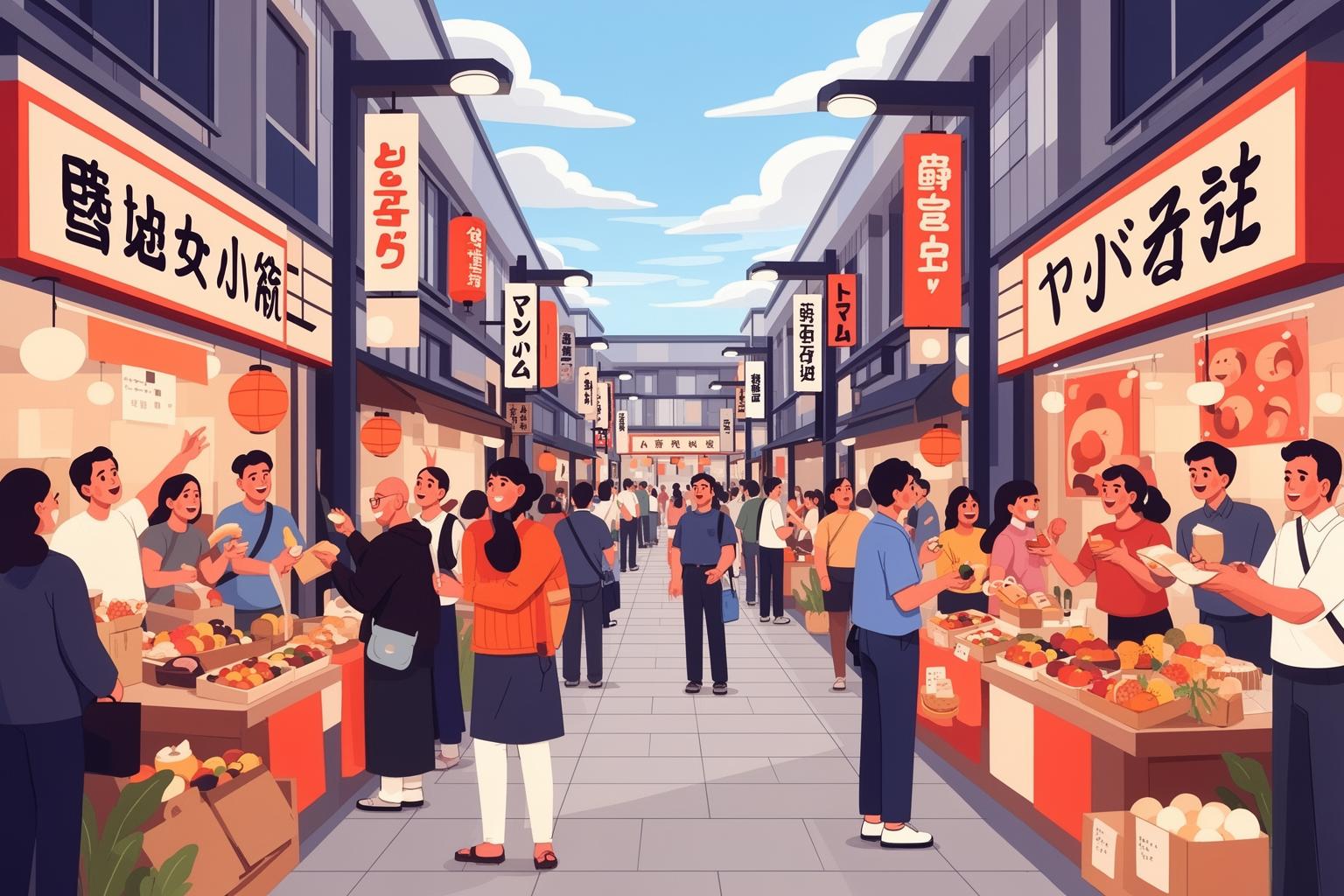
For many newcomers, the lively chaos of the shotengai can feel overwhelming. It seems like a private club, making it easy to stay on the sidelines as a silent observer. However, entering this world is simpler than you might expect. It doesn’t require fluent Japanese, only a willingness to connect on a human level. It’s about showing up, both literally and figuratively.
The Power of Consistency
The most important thing you can do is be consistent. Pick a butcher, a fishmonger, and a vegetable stand to make your regular spots. Return to the same ones each week. At first, you don’t need to say much—your repeated presence speaks volumes. They will begin to recognize you. A nod will become a smile. A simple “Arigatou” will gradually lead to questions about your day. This slow, steady way of building familiarity is the foundation of any shotengai relationship. Don’t spread yourself too thin across ten different vegetable stands; invest your time in one or two. They are remembering you, so you should be memorable through your consistency.
Learn the Local Lingo (Just a Little)
Fluency isn’t necessary, but learning a few key phrases—especially in the local Osaka dialect (Osaka-ben )—acts like a superpower. It shows effort and signals that you’re more than just a passing tourist. Instead of the usual “Oishii” (delicious), try “Meccha oishii!” (Super delicious!) after sampling something. When a price seems good, a simple “Yassui!” (Cheap!) will often get a laugh. And for the bold, there’s the classic Osaka business greeting: “Moukarimakka?” (Making money?). You’ll probably get the typical self-deprecating reply, “Bochi bochi denna” (So-so). Using these phrases, even imperfectly, creates an instant connection. It says, “I’m trying to meet you on your terms,” and in Osaka, that effort is always appreciated—and often rewarded with a warmer smile and maybe even a better omake.
Embrace the Interruption
Conversations in a shotengai rarely follow a straight path. They’re messy, overlapping, and frequently interrupted. The butcher might be mid-story about his grandson when his neighbor from the pickle shop calls out a question, while another customer squeezes past to ask about the price of chicken wings. It’s easy to feel overlooked or brushed aside in these moments. But this isn’t rudeness; it’s the natural rhythm of a vibrant community hub. The key is to relax and go with the flow. Don’t get flustered. Wait patiently, listen to the other conversations buzzing around you. You’re not just having a private chat—you’re temporarily part of a public, multi-threaded discussion. It offers a glimpse into the interconnected lives of the arcade, and your patience shows respect for their world.
What Foreigners Often Misunderstand
The direct, boisterous, and occasionally personal style of communication in Osaka can sometimes cause classic cultural misunderstandings. What might seem like prying or aggression to an outsider is almost always something entirely different: a wish to connect, to understand, and to welcome you into the community.
Is it Nosy or Is it Caring?
During your first few proper conversations at a shotengai, you’ll probably be asked a series of questions that might feel very personal by Western standards. “Where are you from?” “Why Japan?” “Are you married?” “How many kids?” “What does your husband do?” It can feel like an interrogation. My first instinct was to become defensive. But I quickly realized this isn’t nosiness; it’s social mapping. In a community-oriented culture, people need to know where you fit in. They are creating a mental profile of you in order to understand you as a neighbor. They’re looking for common ground. Answering these questions openly builds trust. It shows them you’re not just a passing stranger but part of the neighborhood fabric. It’s their way of reaching out and saying, “Let me get to know you so I can be a good neighbor to you.”
The “Loudness” Factor: Aggression or Enthusiasm?
Compared to the hushed tones of a Tokyo department store, an Osaka shotengai often sounds like a constant argument. Voices are loud, laughter is hearty, and sales pitches come with theatrical flair. For someone not used to it, this barrage of sound can be mistaken for anger or aggression. This is a common misunderstanding. In Osaka, loudness expresses passion. A raised voice isn’t anger; it’s engagement. It’s the voice of a shopkeeper excited about the quality of their tuna or the freshness of their tomatoes. It’s a vocal style meant to cut through the arcade noise and attract customers—not with aggression, but with infectious energy. The loudness is the sound of life, commerce, and people unafraid to express themselves openly. It’s the city’s vibrant pulse made audible.
The Myth of Instant Friendship
Because Osakans are so open and playful with their banter, it’s easy to confuse this initial warmth for instant, deep friendship. You might have a fun, laughter-filled ten-minute chat with the fruit stand owner and leave feeling like you’ve found a new best friend. But genuine friendship, much like the slow-cooked oden sold in winter, takes time. The initial banter is an invitation—a door opening. It tests your willingness to engage. Moving from “friendly customer” to “real friend” takes the consistency mentioned earlier. It is cultivated over months and years of small exchanges: asking about their family, sharing something about your own life, remembering what they told you last week. The friendliness is sincere, but the trust and closeness of true friendship are earned through loyalty and time. The banter is the gate; your ongoing presence is the key that opens it.
The Shotengai as a Social Safety Net
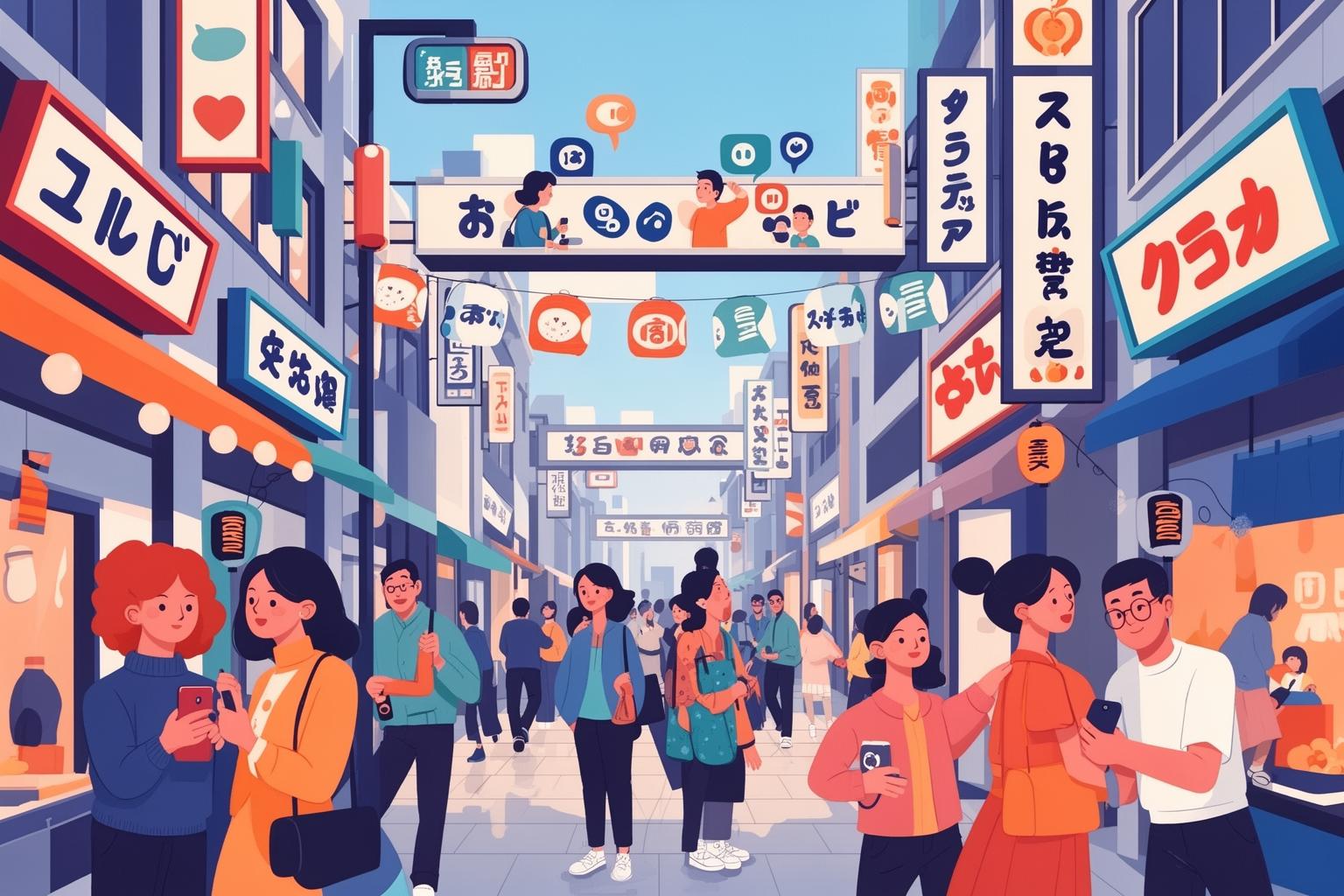
Beyond commerce and conversation, the shotengai fulfills a deeper, more essential role within the community. In an era marked by growing urbanization and digital isolation, these arcades serve as a powerful, human-scale social safety net. They act as the connective tissue of the neighborhood, standing as a bulwark against loneliness.
Eyes on the Street
Shopkeepers in a shotengai act as the neighborhood’s unofficial guardians. They are present all day, every day. They observe everything. They know which children should be in school, recognize unfamiliar faces, and notice when a daily routine is disrupted. If Mrs. Tanaka, who buys a block of tofu every morning at 10 AM, doesn’t appear, the tofu vendor will notice. They might check with the fishmonger next door to see if he’s seen her. This informal network of vigilance offers a deep sense of security. When my own kids were younger and occasionally got a little too far ahead of me, it was never alarming. I knew that a dozen pairs of shopkeepers’ eyes were on them, ready to gently guide them back with a friendly “Okaasan wa doko?” (Where’s your mom?).
A Lifeline for the Elderly and Isolated
For many elderly residents, the daily walk to the shotengai represents their primary, and sometimes only, social interaction of the day. The brief chat with the vegetable seller about the weather or their health is far from trivial; it is a vital check-in, a moment of human connection that helps stave off the crushing weight of solitude. The shopkeepers understand this role intuitively. They treat their elderly customers with a special kind of patience and familiarity, asking after their health and listening to their stories. The shotengai ensures that the most vulnerable community members remain seen, heard, and cared for in a way that no government program or app ever could.
Preserving a Way of Life
Make no mistake, these pillars of community are facing significant challenges. They compete with the convenience of 24-hour supermarkets, the endless options of online retailers, and a younger generation often more comfortable with screens than face-to-face conversation. Choosing to shop in a shotengai is more than just a preference for fresher fish or crisper vegetables. It is a conscious choice to invest in a more human way of life. It is a vote for community over convenience, for relationships over transactions. It is a commitment to keeping the neighborhood’s heart beating, ensuring that the warm chorus of “Maido!” continues to resonate down the covered streets for generations to come.