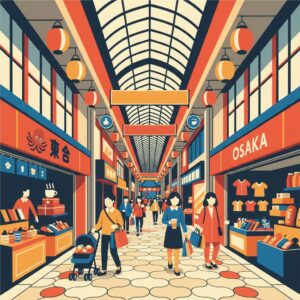
The first time it happened, I was genuinely confused. I was power-walking through the Tenjinbashisuji shopping arcade, a miles-long artery of commerce and chaos, on a mission to get to the post office before it closed. My path was abruptly blocked by two women, grandmothers by the look of them, their shopping carts positioned like a defensive barricade. They weren’t fighting. They weren’t exchanging goods. They were just… talking. Standing there, mid-stream in a river of humanity, chatting with the unhurried ease of someone in their own living room. People flowed around them like water around a stone, a practiced, fluid weave that I, in my Tokyo-calibrated haste, had yet to master. I felt a flicker of that big-city impatience. Could you please move? My brain screamed it, but my mouth, trained in Japanese politeness, stayed shut. It was my first, baffling lesson in the art of tachibanashi.
Tachibanashi (立ち話) literally translates to “standing talk,” but that’s like calling a hurricane “a bit of wind.” It’s a spontaneous, sidewalk-blocking, time-devouring, and utterly fundamental form of social interaction in Osaka. It is the city’s lifeblood, a conversational dance that happens anywhere and everywhere, without invitation or agenda. It’s the unspoken agreement that any piece of pavement can be momentarily repurposed as a forum for neighborhood news, gossip, and genuine human connection. For anyone coming from the hyper-efficient, non-intrusive social landscape of Tokyo, or frankly most other major world cities, it feels like a system error. But here in Osaka, it’s the core operating system. Understanding tachibanashi isn’t just about learning a new word; it’s about understanding the very soul of this vibrant, messy, and deeply human city.
While this spontaneous sidewalk culture defines daily life, Osakans also have a deep appreciation for escaping the urban rhythm, often seeking a relaxing weekend trip to nearby Kobe or a cultural reset in Kyoto.
The Anatomy of a Tachibanashi
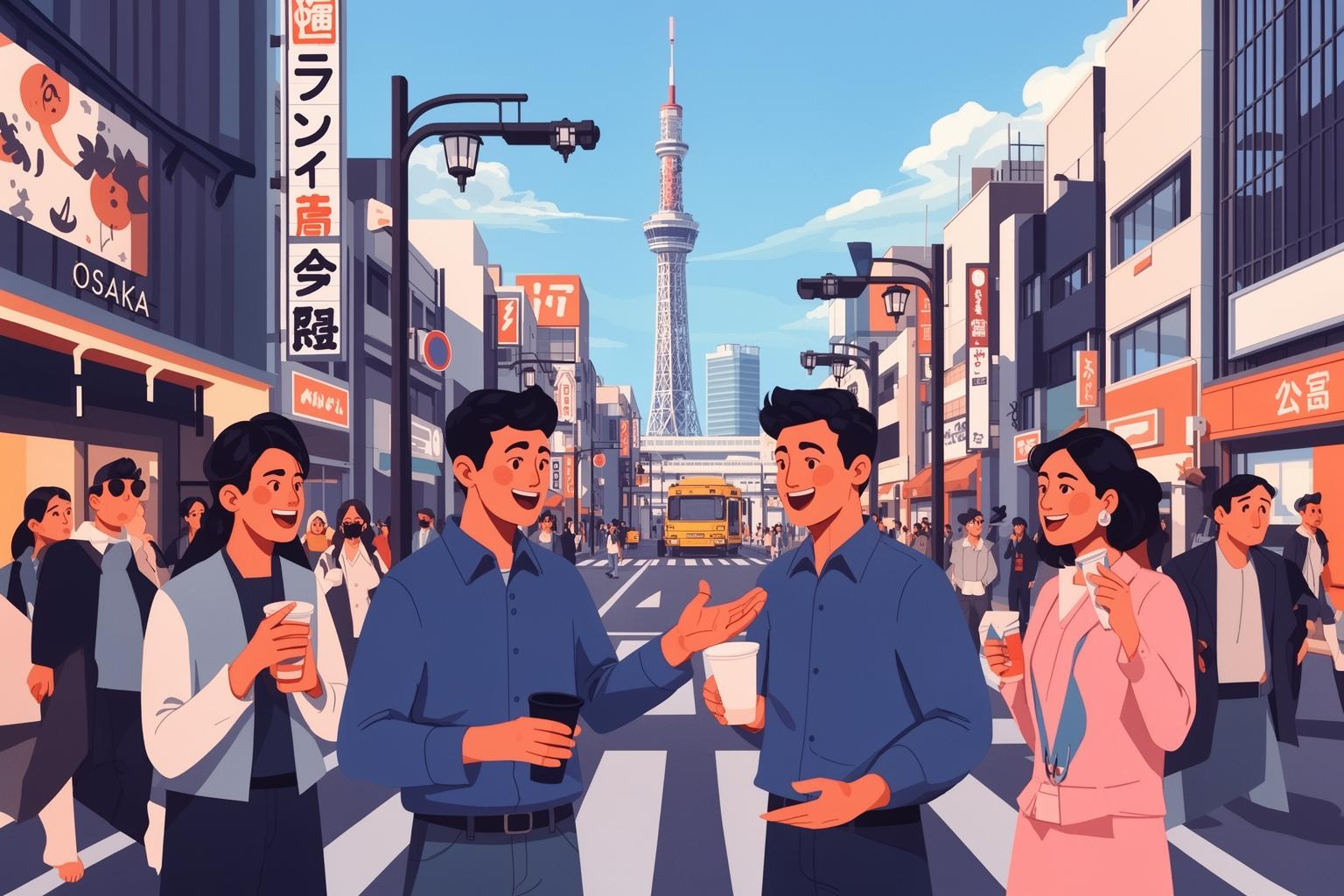
Unlike a scheduled meeting, a tachibanashi is purely a spontaneous creature. It ignites from the tiniest spark and can burn unpredictably long. To outsiders, it may seem random, but there’s an underlying structure—a rhythm to this street-corner symphony. Mastering its subtleties is essential to feeling at home here. It’s about noticing the subtle signals that transform a simple greeting into a fifteen-minute deep dive on mackerel prices.
The Spark: How It All Begins
A tachibanashi seldom starts with a formal “Konnichiwa.” That feels too sterile, too detached. Instead, it begins with an observation, a shared moment breaking the wall of anonymity. It’s an act of noticing. You might be admiring strawberries at the local fruit stand when the person beside you leans in and says, “A bit pricey today, huh? They were cheaper last week in Kuromon.” Suddenly, you’re not just two strangers—you’re savvy shoppers navigating fruit price fluctuations. The conversation has begun.
The catalyst is often a flavor of affectionate meddling called osekkai. In Tokyo, osekkai can carry a negative meaning—being nosy or intrusive. In Osaka, it’s a form of communal care. It’s the butcher calling out, “Hey! You look tired! I’ve got some good pork for ginger stir-fry; it’ll give you energy!” It’s the elderly woman at the bus stop remarking on your thin jacket on a chilly day and saying, “You’ll catch a cold like that! Make sure you take a hot bath tonight.” This isn’t an invasion of privacy; it’s a declaration of shared existence. It says, “I see you. You belong to this community, and your well-being matters.” This mindset is the fertile soil from which almost all tachibanashi grow. A simple compliment on your dog, a question about your grocery bag, or an unsolicited tip—these are all open invitations to stop, engage, and chat for a while.
The Location: Prime Spots for Conversation
Certain settings are natural habitats for the tachibanashi. The most common is the shotengai, or covered shopping arcade. These narrow pedestrian streets are the arteries of Osaka’s neighborhoods, and the steady, slow foot traffic makes them perfect for spontaneous stops. The entrance to a supermarket is another hotspot, where people block the automatic doors as they catch up. Bicycle lanes, street corners, outside the local clinic—no public space is off-limits.
What shocks newcomers most is the blissful disregard for pedestrian flow. A full-blown tachibanashi can take over the narrowest sidewalk space, forcing others to step into the street or perform an intricate shimmy to pass. In Tokyo, this would be unthinkable. It would provoke sharp looks, audible sighs, or passive-aggressive coughs. The dominant philosophy there is meiwaku, the idea of not bothering or inconveniencing others. Preserving smooth, efficient public movement is paramount. Blocking a path is a serious meiwaku offense.
In Osaka, the approach is different. The unspoken rule isn’t “don’t get in the way,” but rather “we’ll all manage.” Human connection takes priority over sidewalk efficiency. It’s on the person in a hurry to weave around the chatters, not on the talkers to disperse. A simple “Sumimasen, toorimasu” (Excuse me, passing through) suffices. The speakers might shift an inch or two, but they won’t break their flow. It’s a beautiful, maddening dance that reimagines public space as a shared living room rather than just a transit corridor.
The Content: From Weather Banter to Life Stories in 60 Seconds
The arc of a tachibanashi conversation is a marvel of social acceleration. There’s no slow warm-up; it dives swiftly to the heart of matters. It may start with a classic weather comment—“It got so humid all of a sudden!”—but within moments, you’re onto weightier topics.
The subjects cover daily life, unvarnished and candid. You’ll hear about rising electricity costs, the disappointing run of the Hanshin Tigers, or a recommendation for a new ramen spot just two blocks away. The talk often turns personal. You might learn about someone’s daughter-in-law’s pregnancy, their neighbor’s recent surgery, or their frustration with a son who spends all day playing video games. There’s a casual intimacy that can be surprising. People share life details with an openness rare in more reserved cultures.
Humor is the essential lubricant. The famed Osaka comedic duo dynamic—the boke (funny man) and tsukkomi (straight man)—unfolds in miniature on every corner. Someone makes a slightly exaggerated complaint (boke), and their friend immediately gives a gentle smack and corrects them (tsukkomi). “My back is killing me; I feel like I’m 100 years old!” says one. “You’ve been saying that since you were 40! Get over it!” comes the retort, both breaking into laughter. This playful, self-deprecating banter is the rhythm of Osaka speech, turning even the most mundane exchange into a brief street-side theater.
Tachibanashi as a Social Contract
To truly grasp tachibanashi, you must view it not as a series of random, inconvenient chats, but as an essential, unwritten social contract. It serves as the mechanism through which community is created and sustained. Each sidewalk pause is a thread, and together they form a tight-knit social fabric that is both remarkably strong and wonderfully resilient. This system is founded on mutual recognition, shared information, and a collective commitment to value people over pace.
It’s Not Rude, It’s Community
Many foreigners initially see tachibanashi as rude. “Why are they blocking my path? Don’t they realize people need to get through?” This reaction stems from a culture where public spaces are mainly for transit and personal interactions are meant to be private or at least unobtrusive. In Osaka, however, that boundary is blurred. The street acts as an extension of the home.
Engaging in this culture requires a shift in mindset. The minor inconvenience of walking around a chatting pair is a small price to pay for living in a place where people genuinely look out for one another. The same woman blocking the aisle with her cart today might be the one who notices you struggling with heavy groceries tomorrow and comes to assist. She might alert the shopkeeper if she sees a lost child. The tachibanashi stands as a clear signal of a healthy, functioning community where people pay attention to each other. Patience here isn’t just a virtue; it’s essential for understanding how the city operates. The unspoken rule is that everyone takes their turn as the stone in the river. One day, it may be you catching up with a friend after weeks apart, and the river of people will naturally flow around you.
The Information Exchange Network
Long before the internet, the tachibanashi network was Osaka’s original real-time, hyperlocal search engine. It remains one of the most reliable sources of information in any neighborhood. This is especially true of the powerful “obachan network”—the unofficial council of elderly women who are the keepers of all local knowledge.
Need to know which local doctor is most patient with children? Forget Google reviews; ask an obachan outside the supermarket. Looking for a place that repairs old watches? The woman running the dry cleaner will know someone, and she’ll share the details while tagging your shirts. This network reveals hidden gems: the small eatery with the best lunch deal, the greengrocer who brings in the sweetest tomatoes, the annual neighborhood festival that isn’t advertised online. Information here is currency, exchanged freely and generously on the streets.
I experienced this firsthand when I was trying to make a specific soup and couldn’t find a certain herb. My local grocer was out of stock, but as I explained what I needed, a woman behind me overheard. Not only did she tell me about a smaller shop nearby specializing in rare vegetables, but she also shared her personal recipe for the soup, complete with a firm warning not to overcook the daikon radish. This is the magic of the tachibanashi network—organic, community-driven, and powered by a genuine desire to be helpful.
The Osaka vs. Tokyo Tachibanashi Divide
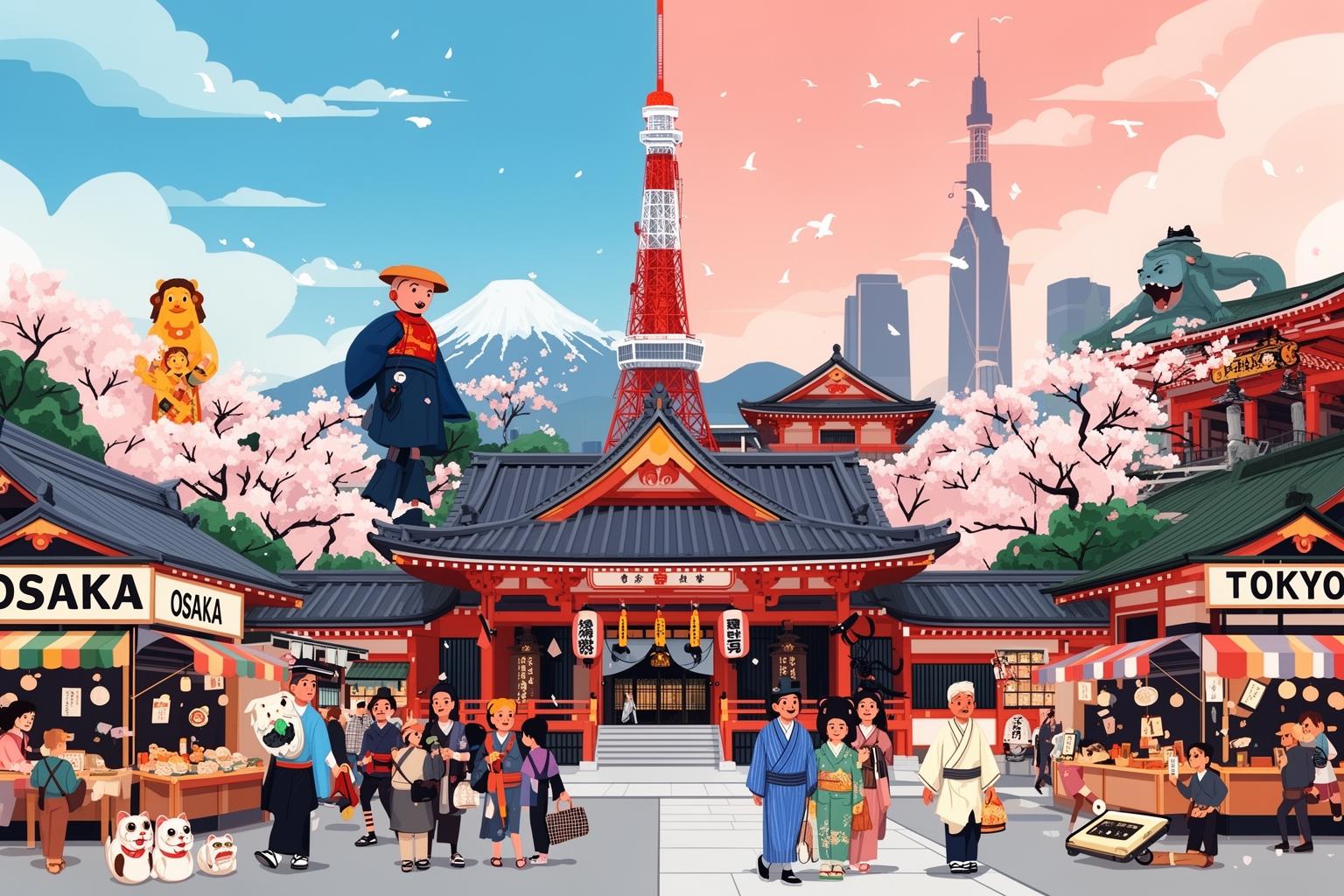
The contrast between Osaka and Tokyo is a recurring theme in any discussion about Japan, but it is most evident in their cultures of public interaction. Although the two cities are only a short bullet train ride apart, they operate on fundamentally different social norms. Their approaches to spontaneous conversation reflect their distinct historical identities and priorities.
Tokyo’s Calculated Encounters
Life in Tokyo exemplifies social efficiency and the preservation of personal space. The city’s immense density necessitates unspoken rules designed to minimize friction. Interactions tend to be planned and purposeful. You meet a friend for coffee at a set time and place. It is uncommon to strike up a deep conversation with a stranger in a checkout line. Public spaces are meant for moving through, not lingering.
The concept of meiwaku guides behavior. Every action is measured against its potential to inconvenience others. Speaking loudly on the train, walking slowly in a crowded station, or blocking a narrow street are all significant breaches of social etiquette. A spontaneous tachibanashi in the middle of a crowded Shinjuku walkway would be unthinkable, as it would disrupt the flow, or nagare—the sacred, invisible current keeping the city moving. In Tokyo, social harmony is maintained through respectful distance. People coexist by creating small, invisible bubbles around themselves, making street talk a rare exception rather than the norm.
Osaka’s Spontaneous Combustion of Chatter
Osaka, by contrast, achieves social harmony through engagement. The city was built by merchants rather than samurai or bureaucrats. For centuries, commerce—their lifeblood—relied on communication, negotiation, and relationship-building. To be a successful merchant in old Osaka, you had to be outgoing—you had to talk, persuade, banter, and connect. This ethos remains deeply ingrained in the city’s culture.
An Osakan view of meiwaku is shaped by this history. While they avoid causing serious trouble, failing to acknowledge a neighbor or engage with a local shopkeeper could be seen as a form of coldness or unfriendliness. The greater social offense is indifference. Valuing transactional efficiency over a moment of human connection would feel strange, even somewhat sad.
The Osaka dialect, Osaka-ben, is perfectly suited for tachibanashi. It is more direct, more musical, and more expressive than standard Japanese. Filled with playful contractions, emphatic sentence endings, and a rhythm that invites lively exchanges, a conversation in Osaka-ben feels less like a formal information exchange and more like a jam session, with participants riffing off each other’s energy. It is a language made for connection, laughter, and, of course, standing on a corner and talking just a little too long.
Navigating Tachibanashi as a Foreigner
For a non-Japanese resident, the world of tachibanashi can seem like an exclusive club governed by unwritten rules. Jumping into a rapid-fire conversation in a dialect you barely understand can be intimidating. However, engaging with this aspect of Osaka life is one of the most rewarding experiences you can have. It’s the quickest way to transition from feeling like a temporary visitor to becoming a true member of the community.
To Join or Not to Join?
The answer is almost always: join. Or at least, be open to being included. You don’t need to start a full conversation right away. Begin with the basics—a smile and a nod to the shopkeepers you see daily, or a simple “Konnichiwa” to the neighbor you pass in the hallway. These small gestures show that you are open to interaction.
When someone initiates a conversation—and they will—don’t worry if your Japanese isn’t perfect. Osakans tend to be patient and appreciate any effort. They’re often curious about foreigners and delighted that you’re willing to chat. A common icebreaker is the ame-chan, a small candy that Osaka obachan seem to pull from their pockets like magicians. If you’re offered an ame-chan, it’s more than just a sweet treat—it’s a symbol of welcome, a conversation starter, and an invitation to join the local community. Accept it graciously, and you might find yourself in your first genuine tachibanashi.
The Graceful Exit: A Masterclass in Subtlety
Perhaps the hardest skill for a foreigner is gracefully ending a tachibanashi. These conversations unfold at their own pace, and a direct, Western-style exit like, “Well, I have to go now, goodbye!” can feel abrupt and even rude. It disrupts the warm, unhurried flow of the exchange.
The Osaka way is a slow, gradual fade-out—an art that involves a series of verbal and non-verbal signals. You might begin with, “Soro soro ikan to akanna…” which roughly means “Ah, I should probably be getting along soon…” This is your opening cue. You keep talking while subtly checking your watch or shifting your posture toward your intended direction. You slowly, almost imperceptibly, start to create distance, taking tiny steps backward while still engaged in the chat. The final farewell is often something like, “Ja, mata!” (“Well then, see you again!”), delivered with a nod or wave as you finally turn to leave. This process can add three to five extra minutes but ensures the social connection ends gently, without any abruptness.
What You Gain: More Than Just a Chat
Learning to navigate and even start tachibanashi is more than a way to practice your Japanese. It’s your entry into the real Osaka. It transforms your neighborhood from a mere group of buildings into a network of people. It’s how you find out who makes the best tofu, where to enjoy cherry blossoms away from tourists, and who to call when your faucet leaks. These conversations create a web of familiarity and trust that enriches and secures daily life.
More importantly, it breaks down the invisible barrier that often separates foreigners from the local community. When you engage in tachibanashi, you stop being just a generic “gaikokujin” (foreigner). You become “Emily-san from the third-floor apartment,” the person with the friendly dog, the one always asking about cooking bamboo shoots. You become a distinct, recognized individual. In a world that can often feel anonymous and disconnected, this simple act of standing and talking is a powerful way to feel seen and to belong.
The Deeper Meaning: Why Tachibanashi Thrives in Osaka
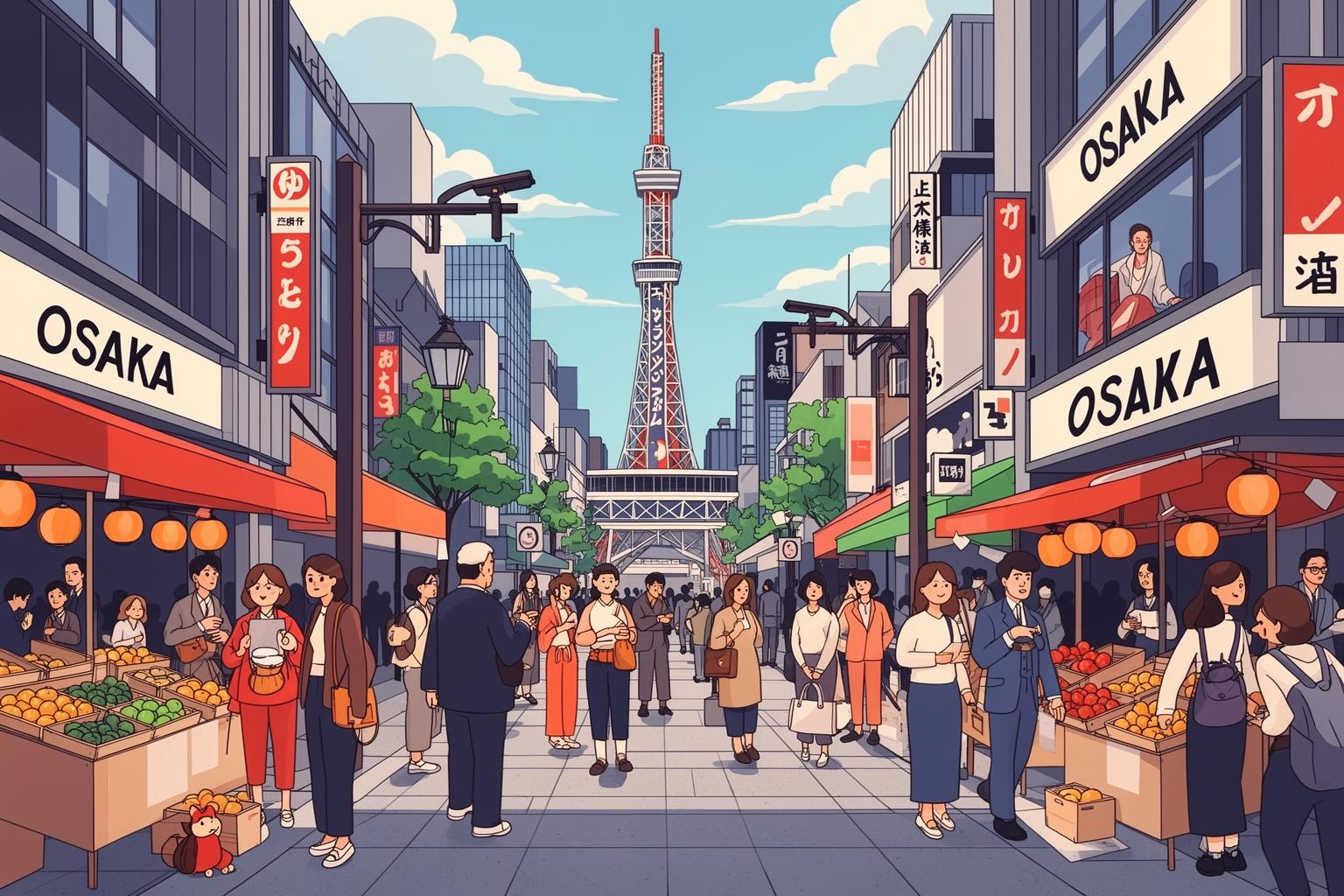
Tachibanashi is more than just an endearing local custom. It emerges from Osaka’s distinctive history, geography, and social fabric. It thrives here because the city is fundamentally designed for human-scale connection. It endures as a potent remedy to the isolation of modern life, a reflection of a culture that still deeply values direct, unmediated human interaction.
A Human-Scale City
Though Osaka is one of Japan’s largest cities, it feels remarkably like a patchwork of small towns woven together. At the core of this structure lies the shotengai. Unlike Tokyo, where many traditional shopping arcades have given way to sterile malls and large chain stores, Osaka’s shotengai remain the vibrant pulse of neighborhood life. Residents do their everyday shopping here, greeting the butcher by name, discussing the day’s fresh catch with the fishmonger, or asking the fruit vendor about her son. These routine, face-to-face interactions form the foundation of tachibanashi culture. It’s impossible not to pause and chat when you’re constantly bumping into familiar faces.
An Antidote to Modern Isolation
In an era when much social interaction is mediated by screens, tachibanashi is a profoundly analog, grounding tradition. It’s an immediate, real-time check on those around you. When an Osakan asks, “Genki?” (“Are you well?”), it’s rarely just a polite formality. They are observing your expression and tone, genuinely wanting to hear your honest answer. This culture of casual observation builds a strong, informal social safety net. Neighbors notice when an elderly person hasn’t been seen for a few days and watch out for children playing in the park. This is community care at its simplest and most effective, practiced daily on sidewalks and within shopping arcades.
The Merchant’s Soul: A Legacy of Connection
At its core, the survival of tachibanashi is tied to Osaka’s identity as the “Nation’s Kitchen,” a city of merchants and artisans. The city’s spirit was shaped not in the rigid order of castles and government offices but in the lively, competitive, and highly social marketplace. In that world, reputation, relationships, and communication skills were invaluable. A stranger wasn’t a threat but a potential customer, supplier, or source of important information. This fundamental mindset—that people are resources, not obstacles—still shapes Osaka’s social landscape. Efficiency matters, but strong relationships matter more. A clear path is welcome, but a good conversation is priceless.
When I first arrived in Osaka, the sidewalk standstill felt like a hindrance, an annoying delay. Now, I understand it as the system itself functioning perfectly. It’s the city’s heartbeat—an ongoing rhythm of chatter and laughter heard on any street, in any neighborhood. Living here isn’t about rushing to the post office on time; it’s about realizing that sometimes the most meaningful destination is exactly where you stand, engaged in conversation with a neighbor, becoming part of Osaka’s lively, talkative, and endlessly captivating community fabric.