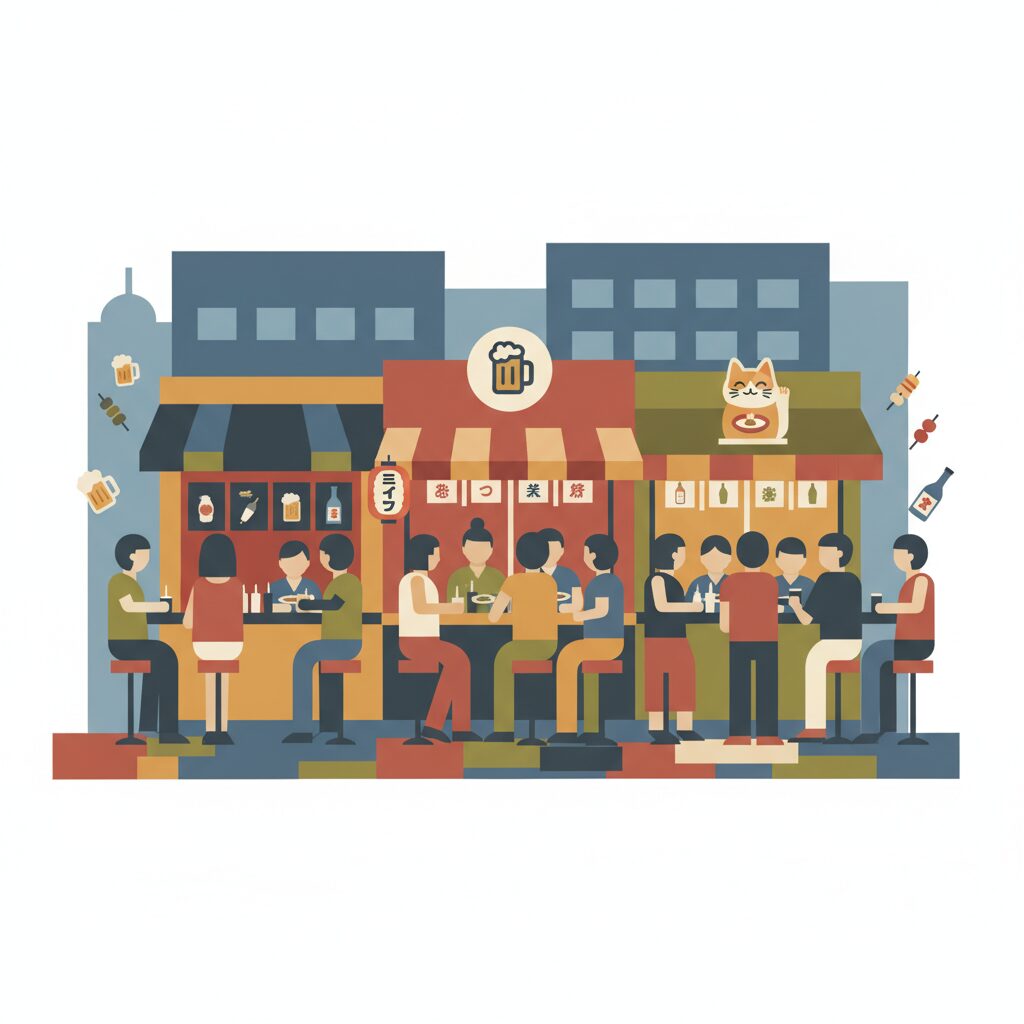
Step off the main drag in Umeda, duck under the train tracks of Kyobashi, or wander the backstreets of Namba, and you’ll find them. They are little pockets of light and noise, steam fogging up the windows, the clatter of glasses spilling out onto the pavement. From the outside, they look like little more than closets with a counter, crammed with people standing shoulder-to-shoulder. This is the world of tachinomi, Osaka’s standing-only bars. For a newcomer, they can seem intimidating, chaotic, an impenetrable fortress of local culture. You might ask yourself, “How do I even get in there? What are the rules? Is it okay to talk to people?” These are the right questions to ask, because a tachinomi is so much more than a cheap place to grab a drink. It’s a microcosm of Osaka itself—a lesson in efficiency, community, and the art of communication, all packed into a few square meters. This isn’t a guide to the best tachinomi for tourists. This is a deep dive into the philosophy and etiquette that make these places tick. It’s an explanation of the unwritten social contract that governs these spaces, a contract that reveals the very soul of Osaka’s pragmatic and surprisingly warm-hearted people. Understanding the tachinomi is understanding the city’s rhythm, its values, and what it truly means to live here. It’s where you stop being an observer and start participating in the daily life of this incredible city. Before we dive in, let’s get our bearings. The heart of Osaka’s tachinomi culture beats strongest in the city’s bustling hubs, where workers spill out of offices and train stations looking for a quick, restorative stop on their way home.
To truly grasp this rhythm, it helps to understand how the city’s famous comedic culture, or Osaka’s unique sense of humor, influences everyday social interactions.
The Tachinomi Philosophy: Quick, Cheap, and Close
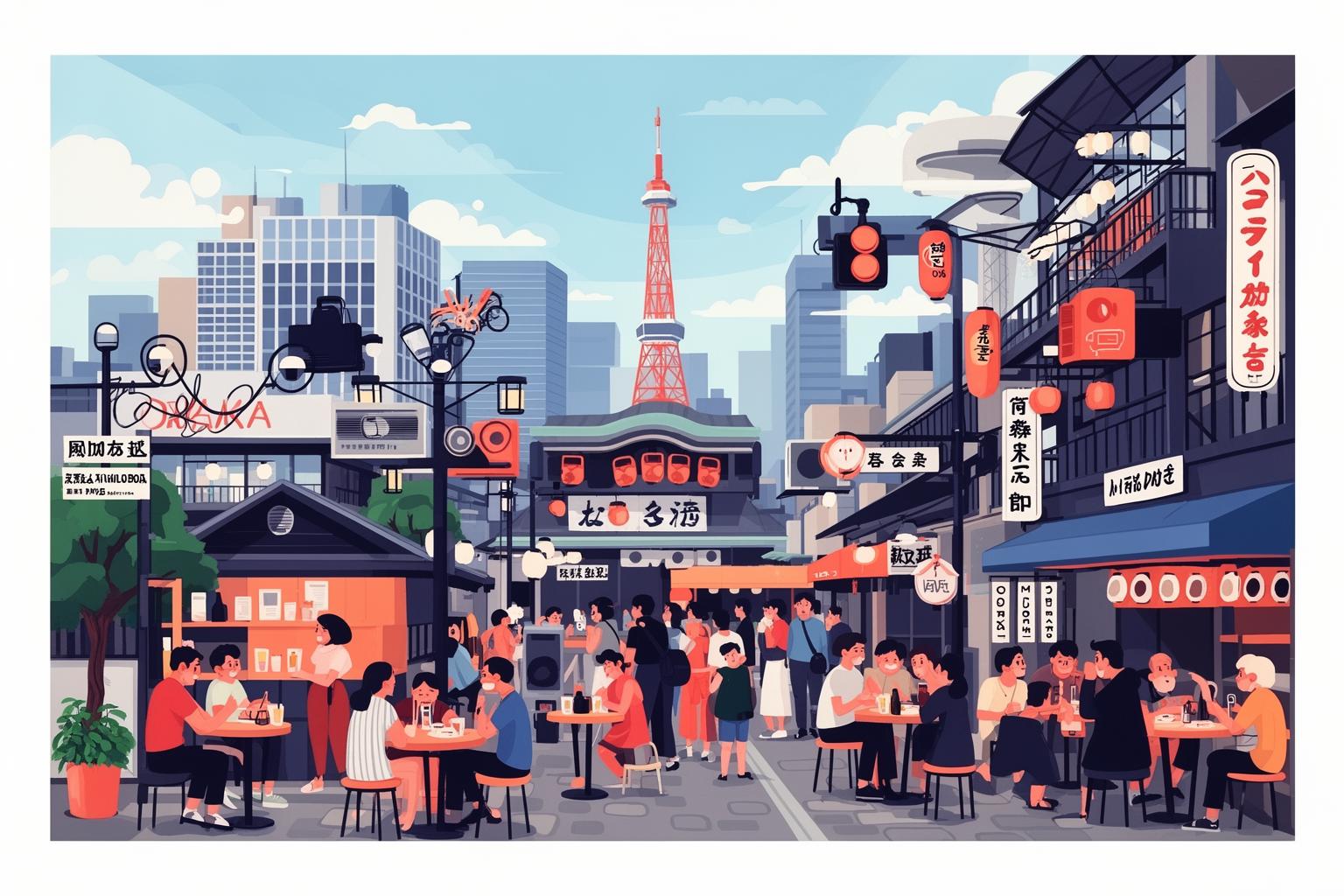
The very idea of a standing bar can seem unfamiliar. In the West, a bar is a destination where people settle in for the evening. In Japan, even a typical seated izakaya usually involves a commitment of at least an hour or two. The tachinomi follows an entirely different timeline and philosophy. It serves as a transitional space—a cultural and social buffer between the strict demands of the workplace and the private refuge of home. It’s a place to hit the reset button, to wash away the day’s frustrations with a cold beer and a hot skewer, all without the formality or time commitment of a full sit-down meal. This philosophy rests on three pillars: speed, value, and proximity—both physical and social.
More Than Just Standing
Standing is not a gimmick; it lies at the heart of the experience. The absence of chairs is a purposeful design choice that shapes the establishment’s entire dynamic. It promotes turnover and keeps the energy lively. You aren’t meant to get too comfortable. The idea is to have a drink, maybe two, enjoy a quick bite, and then move on. The average stay ranges from twenty minutes up to an hour. This efficiency is quintessentially Osaka. The city was built by merchants, where practicality and getting a good deal are ingrained in the cultural fabric. Wasting time is akin to wasting money. The tachinomi physically embodies this mindset—there are no frills or unnecessary luxuries. The focus is on the essentials: a cold, well-served drink and tasty, straightforward food that can be eaten standing up. This idea can confuse foreigners, who might see an empty spot at the counter and assume it’s their spot for the next several hours. Attempting this is the first—and most serious—cultural misstep you can make, signaling a misunderstanding of the space’s fundamental purpose, which is to maintain a constant, fluid rotation of customers.
The Art of `Senbero`
At the heart of the tachinomi economy is a charming concept called `senbero`. This term combines `sen-en` (1,000 yen) and `berobero` (to get drunk or tipsy). The challenge is simple and elegant: can you enjoy a pleasant buzz for less than a thousand yen? In most tachinomi, the answer is emphatically yes. A draft beer might cost 300 or 400 yen. A highball or a chuhai (a shochu highball) may be even cheaper. A couple of skewers of grilled chicken (`yakitori`) or fried meat and vegetables (`kushikatsu`) might add another 200 to 300 yen. Before long, you’ve had two drinks, a satisfying snack, and still have change left from your 1,000 yen coin. `Senbero` is more than just a pricing strategy; it’s a point of pride and a cultural hallmark. It embodies the Osakan passion for Cospa, or “cost performance.” It’s not about being cheap for the sake of it, but about maximizing value and enjoyment for your money. This sharply contrasts with the often upscale and pricey bar culture found in parts of Tokyo. In Osaka, there’s little tolerance for pretension. A bar is judged by the coldness of its beer, the flavor of its `doteyaki` (beef sinew stew), and the fairness of its prices. The `senbero` philosophy keeps the tachinomi accessible and democratic, welcoming everyone from construction workers heading home to salaried managers and local shop owners. It acts as a great social equalizer, where status outside the bar matters far less than the ability to savor a good deal.
Navigating the Space: The Unwritten Rules of the Counter
The counter is the heart of the tachinomi. It serves as the stage, the altar, and the communal table. Every interaction centers around it, and navigating it skillfully is essential for a smooth experience. The space is very limited, requiring a complex, unspoken dance of social awareness to keep everything running smoothly. These rules aren’t posted anywhere; they’re learned through observation and participation. Mastering them is your ticket into this exclusive yet welcoming world.
Finding Your Spot
Your first challenge is gaining entry. You can’t simply walk in and claim a spot. You need to read the room first. Look through the door or window. Is there a genuine gap—about the width of a person’s shoulders—or just a tight crowd? If it looks completely packed, wait a few minutes. The turnover is quick, and a space will likely open soon. Once you spot a potential opening, quietly slide into the space. As you do, the most important gesture is a slight nod or quiet acknowledgment to the people on either side of you. A soft “sumimasen” (excuse me) or “ii desu ka?” (is this okay?) doesn’t necessarily ask for permission but signals your awareness. You’re acknowledging that you are entering their personal, albeit temporary, space. This small act shows respect and an understanding of the communal nature of the bar. It’s an unspoken agreement to share the limited space. In Tokyo, you may receive a silent, indifferent glance. In Osaka, you’ll likely get a nod back, a welcoming grunt, or even a friendly “douzo” (go ahead). This is your first handshake, your initial step toward joining the temporary community at the counter.
Ordering and Paying: The Rhythm of the Bar
The pace at a tachinomi is fast, and the ordering system is designed for maximum efficiency. When you’re ready to order, don’t wave your hands wildly or shout across the room. Make eye contact with the `taisho` (the master or owner) or staff. They expertly scan the counter and know who’s new and who needs another drink. Have your order ready—hesitation slows the flow. A classic first order is simple: “Nama, hitotsu” (One draft beer). It’s quick, easy, and gives you time to look over the menu—often just handwritten strips of paper on the wall. The payment system is where many foreigners get confused. Many tachinomi operate on a cash-on-delivery system called `kyasshu on`. When you arrive, a small tray, bowl, or sometimes just a designated spot on the counter will be placed in front of you. This becomes your personal bank. You place a 1,000 or 5,000 yen note in the tray. When you order a drink, the staff takes the money, brings your drink, and returns your change to the tray. You then use that change for subsequent orders. This system is brilliant in its simplicity. It eliminates the hassle of settling bills at the end, lets you track your spending in real time (helping you stick to your `senbero` budget), and most importantly, allows for a quick, seamless exit. When you’re ready to leave, just pick up your remaining change and go. It’s a system built on trust and a shared understanding of the need for speed.
The Counter is Sacred Ground
Think of your spot at the counter not as a table, but as a slice of personal territory within a crowded public space. Preserving it is a shared responsibility. Your domain is vertical, not horizontal. Keep your elbows close to your body. Hang your bag on hooks often found beneath the counter, or keep it tucked securely between your feet. Spreading your belongings—your phone, wallet, shopping bags—across the counter is a major breach of etiquette. The counter is reserved for two things: your drink and your small plate of food. It’s a shared utility. This respect extends to your interactions with others. If you need to pass someone to reach the restroom, quietly say “sumimasen” while turning slightly sideways. If someone needs to get past you, instinctively turn and lean into the counter to make room. It’s a constant, subconscious physical dance in a cramped space that allows the whole ecosystem to function. Showing this level of respect demonstrates you understand you are a guest in a shared house, not merely a customer in a private booth.
The Social Code: Talking to Strangers (or Not)

This is perhaps the most significant difference between the tachinomi experience in Osaka and Tokyo, where the true spirit of the city reveals itself. In many parts of Japan, striking up a conversation with a complete stranger in a bar is uncommon. In an Osaka tachinomi, it’s often the very purpose. These bars serve as essential social hubs, what urban sociologists call a “third place”—a setting that is neither home nor work, where people can gather, interact, and foster a sense of community.
The Invitation to Converse
At a Tokyo standing bar, it’s entirely possible, even likely, that you might stand beside the same person for thirty minutes in total silence. Each person exists within their own bubble. In Osaka, maintaining that bubble requires conscious effort. The default mode is open. Conversations ignite with remarkable ease, rarely starting with formal introductions. The spark is almost always a shared, immediate experience. Someone might lean over and ask, “That `maguro` (tuna) looks good, where is it on the menu?” Or if the Hanshin Tigers are playing on the small TV in the corner, a collective groan or cheer might break out, instantly connecting everyone at the counter. Topics like the weather, an absurd news story, or a comment about the `taisho`’s new haircut are all fair game. This reflects the Osakan personality. There is a general aversion to the rigid formalities and social distance (`tatemae`) that often mark interactions in Tokyo. People there are more direct, more inquisitive, and more eager to engage. A question like “Where are you from?” isn’t mere small talk; it’s a sincere expression of interest. For foreigners, this can be both exhilarating and slightly disconcerting. It feels as if the social rules carefully learned elsewhere in Japan have been discarded. In a sense, they have. Here, the rule is to connect.
Reading the Room: When to Talk and When to Sip
Nonetheless, this openness is not an invitation for loud, boisterous, or overly personal conversation. The art of tachinomi communication is subtle. It requires reading the room and picking up on social cues. You must learn to distinguish between someone open to chat and someone quietly unwinding after a tough day at work. Observe their body language. Are they watching the TV attentively? Looking around the room, making eye contact? Or are they focused on their phone or staring into their drink? The conversations tend to be light and fleeting. These moments aren’t for debating politics, religion, or deep personal traumas. They’re meant for sharing a moment. Sports, especially baseball, are a consistently safe and popular topic. Food is another. Praising the bar’s dishes is also complimenting the `taisho` and everyone else dining there. The key is to test the waters with a small, general comment to your neighbor. If they respond with more than a one-word answer and slightly turn toward you, you’ve been welcomed. If they just nod and turn back to their drink, the invitation has been declined. Respect that and don’t force it. The transient nature of tachinomi means these conversations are brief. You might enjoy a lively ten-minute chat with a stranger, discover their favorite baseball player and what they ate for lunch, then they finish their drink, say a quick goodbye, and disappear—likely never to be seen again. And that’s the charm. It’s a low-stakes social interaction, a moment of human connection without any expectation of future obligation.
The Master of the House: The `Taisho`
Every tachinomi has a central figure, and that figure is the `taisho` (or sometimes the `mama-san`). This person is much more than just a bartender or cook. They act as the conductor of the orchestra, the captain of the ship, the heart and soul of the venue. The personality of the `taisho` shapes the character of the bar. Some are stern and quiet, managing their bar with strict efficiency, while others are lively and talkative, treating every customer like an old friend. Understanding their role is key to grasping the social dynamics of the space.
The Conductor of the Orchestra
The `taisho` sees everything. They know who needs another drink, who has had a bit too much, and who might be new to the crowd. They oversee the flow of orders, the clatter of dishes, the buzz of conversation, and the delicate balance of personalities packed into a small space. They are both gatekeepers and hosts. Observe how they interact with the `jouren` (the regulars). They might share a private joke, inquire about a family member, or place a plate of food before them in silence, knowing it’s their usual order. These interactions form the living history of the bar and its community. The bond between the `taisho` and the `jouren` is the foundation of the establishment. They create the welcoming, familiar atmosphere that makes a tachinomi feel like a second home. For newcomers, initial interactions are purely transactional, and this is natural. Your first role is to be a good customer: order clearly, pay properly, and avoid causing trouble.
Building a Relationship
Becoming a regular is a gradual, natural process that cannot be rushed. It is founded on consistency and respect. The first step is simple: when leaving, make eye contact with the `taisho`, offer a slight bow or nod, and say a clear “Gochisousama deshita” (Thank you for the meal). This basic gesture of respect goes a long way. If you enjoyed your visit, return again. Try to come on the same day of the week and order one of the bar’s specialties. After a few visits, the `taisho` will begin to recognize you and may greet you with a nod in return. This is progress. Eventually, they might start a brief conversation, asking where you are from or what you do. This is a significant milestone, showing that you have been noticed, accepted, and respected as someone who understands their space. Once this connection is established, even if small, your experience changes completely. You are no longer just a customer; you become part of the atmosphere, part of the community. This loyalty is a fundamental aspect of Osaka’s merchant culture. People cherish relationships and will frequent the same shops, restaurants, and bars for years, fostering bonds that go beyond mere business.
Common Pitfalls and How to Avoid Them

Despite their welcoming nature, tachinomi operate under a strict, though unspoken, code of conduct. Breaking this code, even accidentally, can upset the delicate social balance. Most errors made by foreigners arise from a basic misunderstanding of the tachinomi’s purpose and rhythm.
Lingering Too Long
This is the biggest mistake. A tachinomi depends on quick turnover. Its business model relies on selling many low-cost items. A customer who occupies a prime spot at the counter for two hours while nursing a single 300-yen drink is not only inconsiderate but also actively causing the establishment to lose money. The unwritten agreement at a tachinomi is that you hold your spot temporarily, allowing others to enjoy the space after you. The ideal visit lasts between 30 and 60 minutes. Have a drink or two, enjoy a snack, and then leave politely. This shows you respect the economic and social reality of the bar. For a long, leisurely drinking session, visit a seated izakaya instead, as they are designed for that purpose.
The Group Invasion
Tachinomi are mainly intended for individuals and pairs. While a group of three may still be manageable, it pushes the limit. A group of four or more is essentially an invasion. The reason is straightforward: a large group fundamentally alters the social dynamics of the space. Instead of a line of individuals and pairs open to interaction, a sizable group forms a closed circle. They converse only among themselves, their backs turned to the rest of the bar. They tend to be louder, occupy more physical and auditory space, and create a barrier that disrupts the casual flow of conversation between strangers. When a large group of foreigners enters a small tachinomi, the atmosphere can shift instantly. The gentle murmur is replaced by one loud source of noise, making other patrons uncomfortable and breaking the communal spirit. If you are part of a large group and want to experience Osaka’s drinking culture, opt for one of the many excellent izakaya that can easily accommodate you.
Misinterpreting Osaka Directness
Osaka residents are known for being more direct, expressive, and less reserved than people in other regions of Japan. This can sometimes lead foreigners to misinterpret them as rude or abrupt. The `taisho` may seem somewhat gruff. A fellow customer might ask you a question that feels quite personal by Western standards. It’s important to remember this rarely stems from ill intent. It’s simply a different communication style. The `taisho`’s gruffness often masks a deep pride in their work and a straightforward approach to service. Direct questions from strangers usually indicate genuine curiosity and an effort to bridge gaps and connect. In a city that values honesty and disdains pretense, such directness is viewed as a more efficient and authentic way to interact. Responding defensively or suspiciously will close off interaction. Responding with openness and humor will lead to a memorable and truly local experience. Embrace the directness—it’s one of the qualities that makes living in Osaka so refreshing.
Your First Tachinomi: A Practical Walkthrough
Armed with this cultural insight, you’re ready to take the plunge. The prospect might still feel intimidating, so here is a step-by-step guide to ensure your first successful tachinomi adventure.
Choosing Your Bar
For your first visit, choose carefully. Avoid the most intimidating, locals-only spots with heavy, closed doors. Look for a bar with large windows or an open front so you can observe the atmosphere inside. Is there a clear space at the counter? Does it seem lively but not overwhelmingly crowded? Neighborhoods like Tenma, with its expansive covered shopping street, Kyobashi, beneath the train tracks, or Namba’s back alleys offer excellent options. These areas feature a wide range of tachinomi—from sleek, modern bars to charmingly worn Showa-era relics. Select one that feels welcoming and easy to access.
The First Five Minutes
Follow these steps for a smooth start:
- Step 1: The Peek. Pause outside for a moment and observe. Make sure there’s a spot you can realistically take.
- Step 2: The Entry. Enter quietly. No grand announcements. Find your place at the counter.
- Step 3: The Acknowledgment. Give a gentle nod to your new neighbors. Place your bag on the floor or hang it on a hook.
- Step 4: The Order. Catch the staff’s attention. Order the simplest item on the menu. Saying “Nama biiru, kudasai” (A draft beer, please) will serve you well as your entry ticket.
- Step 5: The Payment. When the staff sets down your payment tray, slip a 1,000 or 2,000 yen note inside. Watch as they take the cost of your beer and hand back the change. The system will become clear.
- Step 6: The Observation. Take a sip of your beer and relax. You’ve made it. Now, watch and listen—notice how others order, the rhythm of conversations, and soak in the atmosphere. You are part of the scene now.
The Graceful Exit
Once your glass is empty and you’ve finished your snack, it’s time to go. Don’t linger over an empty glass. The exit process mirrors your entry:
- Step 1: Consolidate. Finish every last bite and drop of drink. It’s considered polite.
- Step 2: The Bill. There’s no formal bill. Simply take the remaining change from your tray. If you need more change, the staff will provide it.
- Step 3: The Farewell. Catch the `taisho`’s eye one last time. Offer a nod and say a clear “Gochisousama deshita.” This is the most important step.
- Step 4: The Disappearance. Gather your belongings and slip out as unobtrusively as you came in. You’ve successfully completed your first full cycle of the tachinomi experience.
Tachinomi as a Window into Osaka’s Soul
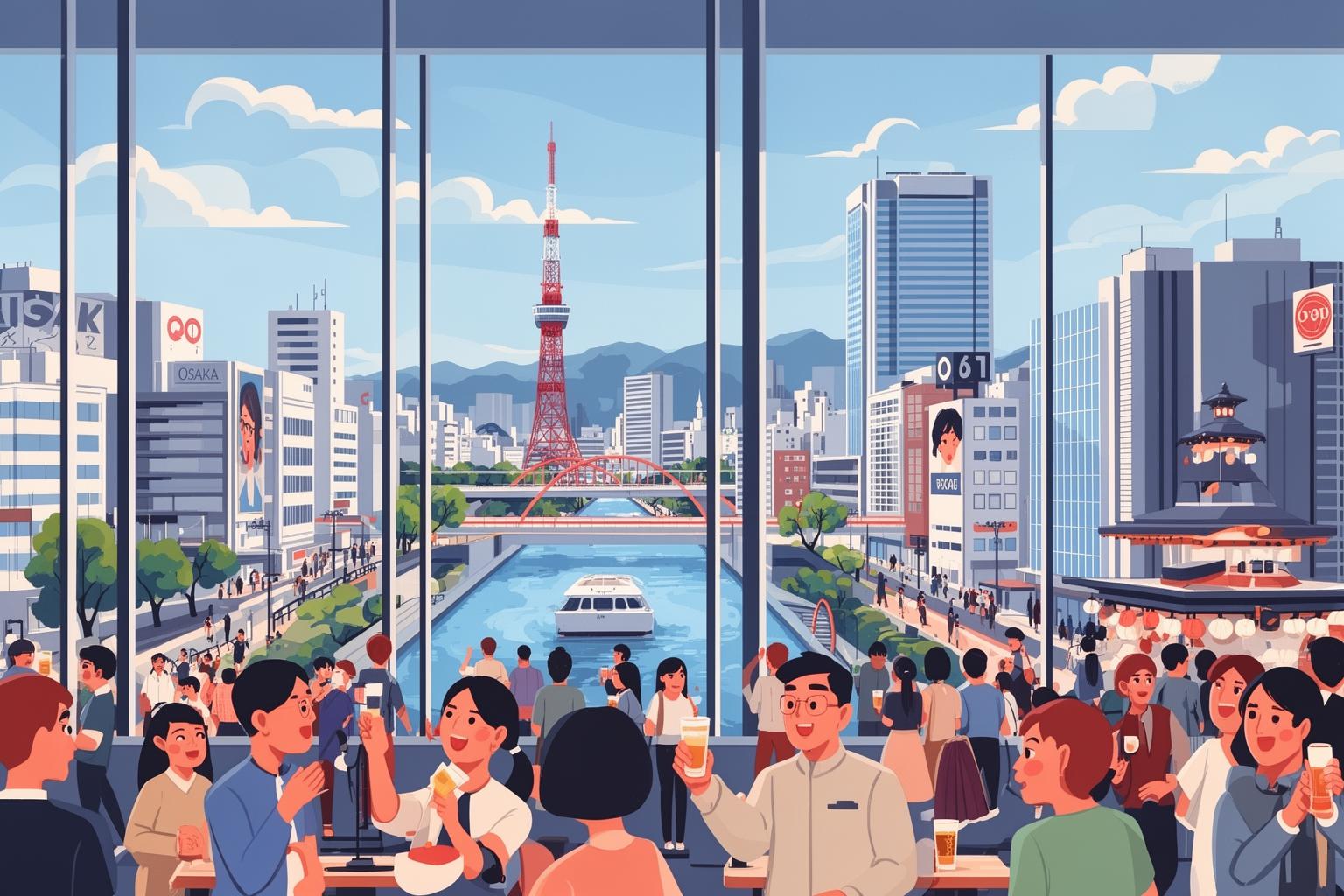
Ultimately, a tachinomi is more than merely a bar. It represents a living, breathing cultural institution—a performance of Osakan identity in its purest form. These crowded, standing-room-only spots capture the essential values of the city and its people. They reflect the ruthless efficiency and love for a good bargain rooted in a long commercial history. The `senbero` and cash-on-delivery systems stand as symbols of pragmatism. They highlight the city’s renowned openness and its disregard for strict social hierarchies. Here, strangers become temporary friends over shared plates of `kushikatsu` and jokes about the local baseball team. The tachinomi serves as a testament to the strength of community, a third place where people can shed the stresses of modern life and simply be themselves, together, if only briefly. To understand the etiquette of the tachinomi is to grasp the language of Osaka itself—a language of mutual respect, shared space, and straightforward, heartfelt communication. So next time you see one of those warmly lit doorways, don’t just pass by. Peek inside, find a spot at the counter, and step in. You’re not just going for a drink; you’re embarking on a master class in what it means to be Osakan.