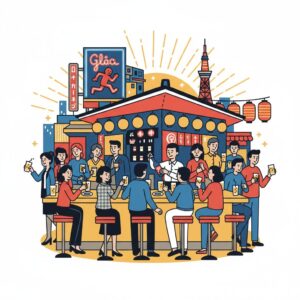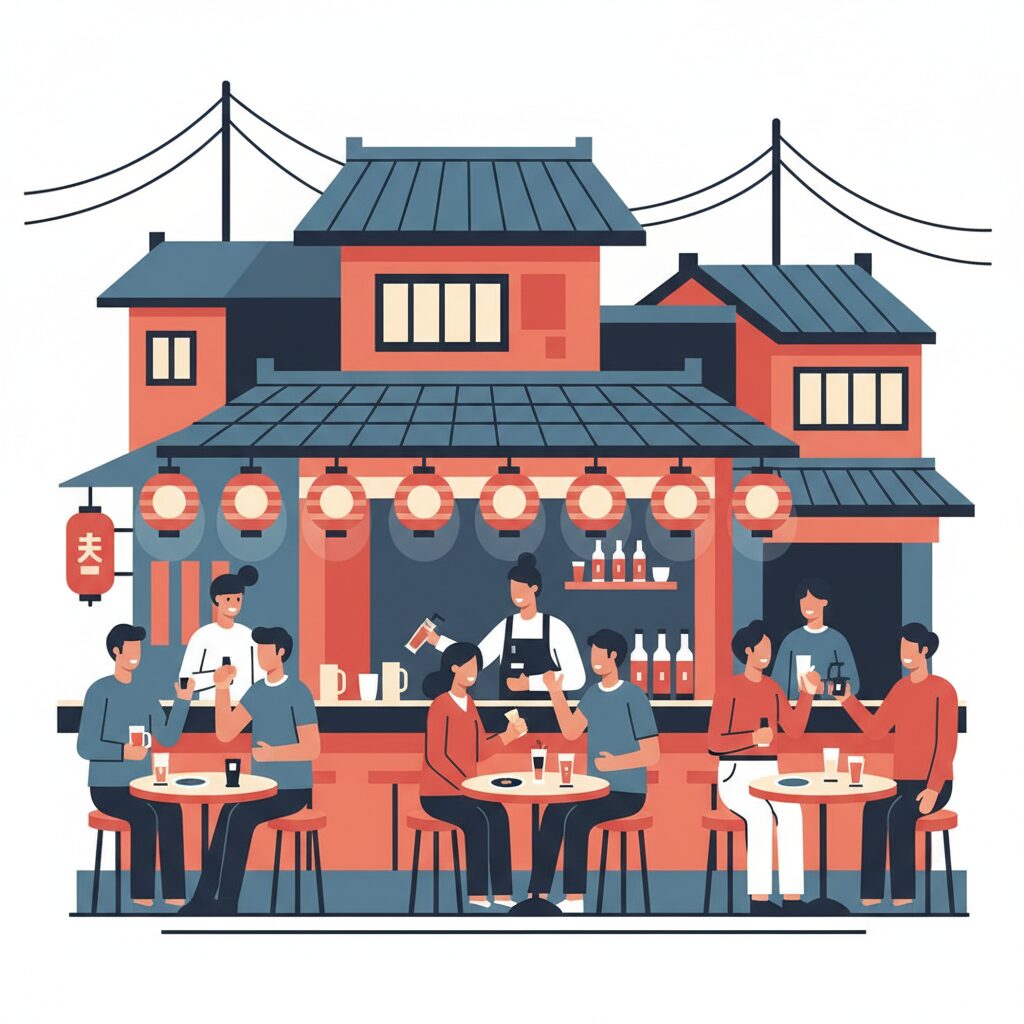
Osaka doesn’t reveal its secrets in quiet temples or serene gardens. It tells its story loud and clear, over the clatter of plates and the hiss of a beer tap, in the cramped, chaotic, and utterly brilliant world of its tachinomi, or standing bars. For a foreigner trying to understand the city’s pulse, walking past these brightly lit doorways can feel like peering into a secret society. You see salarymen, grandmothers, young couples, all packed shoulder-to-shoulder, laughing, drinking, and eating with a speed and familiarity that seems impenetrable. The question isn’t just what they are doing, but how. How do you break into that circle? How do you go from being an outsider looking in to an insider sharing a laugh? This isn’t a guide to the best beer or the tastiest skewers. This is a guide to the unwritten rules, the social currency, and the surprising warmth of Osaka’s standing bars, the city’s real living rooms. It’s where you stop being a visitor and start, just maybe, becoming a regular.
If you’re looking for another authentic way to unplug and connect with local life, consider visiting one of Osaka’s traditional neighborhood sentō bathhouses.
The Philosophy of the Counter: More Than Just a Cheap Drink
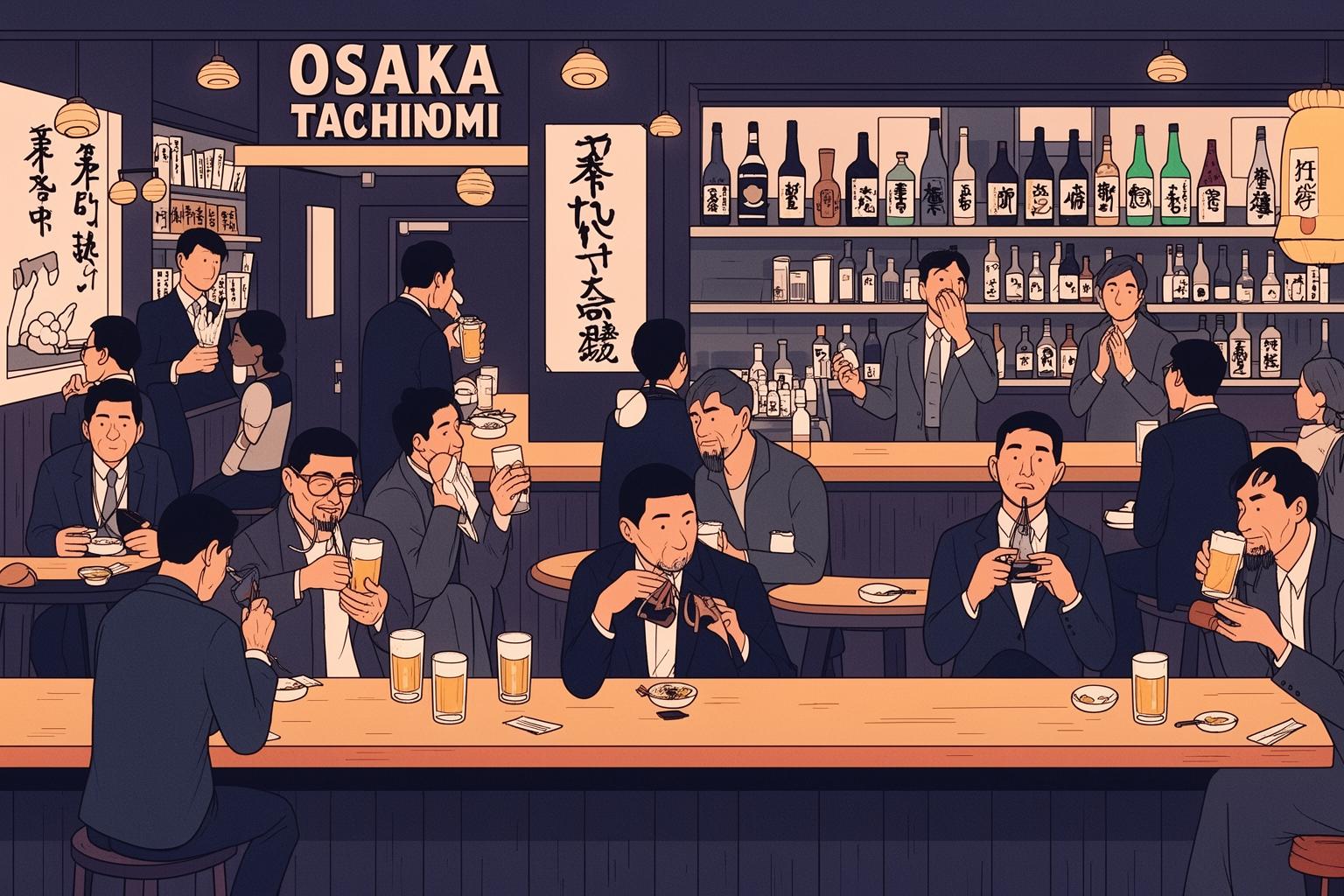
Before you even step inside, you need to understand what a tachinomi is and, more importantly, what it isn’t. It’s not a place for a long, leisurely dinner or a quiet spot for intimate conversation. Instead, it’s a social hub, a human charging station designed for speed, value, and connection. This whole concept is deeply rooted in Osaka’s spirit as a merchant city. For centuries, it served as Japan’s kitchen, its warehouse—a place where people worked hard, made deals, and couldn’t afford to waste time or money. Time is money, and so is space. Removing chairs allows for more people to fit in. More people mean higher turnover. It’s a practical solution that unintentionally created a unique social incubator.
In Tokyo, you’ll find many stylish standing bars, often sleek and modern, a trend embraced for its efficiency. But in Osaka, it feels less like a trend and more like a tradition, a core part of daily life. A true Osaka tachinomi is often a bit worn around the edges, its counter etched with countless stories, the air rich with the aroma of dashi broth and grilled fish. It’s a testament to the city’s obsession with kospa—cost performance. The goal is often summed up by the magical word senbero, literally meaning ‘1,000 yen drunk.’ The idea is that you can enjoy a few drinks and some small dishes for roughly a single 1,000 yen coin. This isn’t about getting wasted cheaply; it’s a philosophy of accessible, everyday enjoyment. It democratizes the after-work drink, making it available to everyone, from construction workers to office managers.
The physical layout is crucial. The close proximity is not a flaw; it’s a feature. You’re literally inches from the person next to you. You can hear their conversations, see their orders, and smell their food. While this might be a nightmare for privacy-loving Tokyoites, in Osaka, it’s fertile ground for conversation to grow. The counter serves as a communal table for the entire room. There are no private booths, no walls to hide behind. You’re on display, and so is everyone else. This creates a subtle but constant social pressure to engage, or at least be open to it. It’s a space that says, ‘We’re all in this together.’
The Tachinomi Tango: Mastering the Unspoken Rules
Walking into a crowded tachinomi for the first time can feel daunting. The noise surrounds you immediately—a flood of chatter and clinking dishes. There’s no host to welcome you, no one to escort you to a table, because tables simply don’t exist. Your first challenge is to claim your own space. Here’s how the rhythm unfolds.
Finding Your Ground
Don’t hesitate at the entrance—that instantly marks you as a lost tourist. Step inside with confidence. Look for an opening at the counter. It doesn’t have to be large, just enough room for your shoulders. As you maneuver through, a slight nod or a soft ‘sumimasen’ (excuse me) to those you’re passing is customary. Often, regulars will subtly shift to create a small gap for you. This little gesture is your first sign of acceptance. Take your spot. Plant your feet. You are now part of the scene.
Once inside, take in the system. Most traditional tachinomi run on a cash-on-delivery basis. You may find a small tray or basket in front of you—that’s where you leave your money. When you order, the staff takes the payment from the tray and returns any change. This method is wonderfully efficient—no waiting around for the bill. It keeps the pace smooth. Some places allow tabs, but cash-on-delivery is the classic approach. Having a handful of 1,000 yen notes and some coins ready is savvy. Fumbling with a 10,000 yen bill for a 300 yen beer is a rookie error that grinds the system to a halt.
Mastering the Order
Your first order should be simple and quick. Now is not the time to pore over a menu for ten minutes, even if one exists. The typical opening is ‘Toriaezu, biiru’ (‘For now, a beer’). It’s the universal password, signaling you understand the pace. While the taishou (master) or staff prepares your drink, take a moment to scan the food options. Often, the best dishes aren’t listed on printed menus but on paper strips pasted to the walls. Another hallmark is a glass case on the counter displaying small pre-prepared dishes—potato salad, simmered daikon, fried fish. Just point and say ‘Kore, kudasai’ (‘This one, please’).
Portions are intentionally small. The idea is to order a few different items. This is a marathon of small plates, not a race to a single entrée. Ordering one or two dishes at a time keeps you engaged and lets you pace both your meal and your drinks. The food is typically simple, unpretentious, and tasty: doteyaki (slow-cooked beef sinew in miso), kushikatsu (deep-fried skewers), oden in winter. It’s comfort food designed to complement the alcohol and spark conversation.
The Unspoken Agreement of Shared Space
Personal space here is flexible. Expect to be bumped. Your elbow may brush a neighbor’s. That’s normal. What matters is the spirit of yuzuri-ai, a mutual sense of give-and-take. If you see someone new searching for a spot, you make yourself a bit smaller. You shift your stance. You create room. When you leave, you’re careful not to knock over anyone’s drink. It’s a constant, subtle dance of small adjustments that keeps the crowded environment functional. This is a physical expression of Osaka’s community mindset—less about strict rules, more about a shared understanding that a little consideration from everyone makes the system work.
Equally important is knowing when to move on. A tachinomi is not a place to settle for the whole night. You come for a few drinks, a handful of plates, some laughs, then you head out. An hour, maybe an hour and a half, is typical. Hanging around for three hours nursing a single beer is the biggest faux pas. It disrupts the flow and hogs precious space. The senbero culture is your guide—once you hit around 1,000 to 2,000 yen spent, it’s a good cue to prepare your exit. Leaving smoothly is as important as arriving confidently. Catch the staff’s eye, say ‘Gochisousan deshita’ (‘Thank you for the meal’), nod briefly to your neighbors, and slip away. No fuss, no lengthy farewells. The river keeps flowing.
Cracking the Code: How Osakans Actually Talk to Strangers

Alright, you’re settled in. You’ve got your beer and your doteyaki. So, what’s next? The stereotype is that people in Osaka are friendly, but that’s an oversimplification. It’s more accurate to say they are interactive. They thrive on engagement, but it happens in a particular way—a local dialect of social interaction you need to grasp.
The Opening Gambit
Asking the person next to you directly, ‘Where are you from?’ can work, but it’s often too blunt, almost like an interview. The Osaka style is more nuanced, usually beginning with a shared observation. The TV in the corner is a great conversation starter. A good play in a Hanshin Tigers baseball game offers an unspoken invitation to exchange a glance and a nod with your neighbor. A shared groan at a missed opportunity creates an instant connection.
Food is the ultimate icebreaker. For instance, if the person next to you orders a dish that looks fantastic, lean in slightly and say, ‘Sore, oishisou desu ne. Nan desu ka?’ (‘That looks delicious. What is it?’). This is a golden opportunity. It’s both a compliment and a question, showing genuine interest. Nine times out of ten, this will open the floodgates. They won’t just explain the dish; they’ll insist you have to try it, rave about it being the best on the menu, or share how the chef makes it just like his mother did. You’ve invited them to share their knowledge, and an Osakan rarely says no to that.
The Language of Banter: Tsukkomi and Osekkai
To truly grasp conversations at an Osaka tachinomi, you need to understand two key concepts: tsukkomi and osekkai.
Tsukkomi originates from manzai, the traditional Osaka stand-up comedy style. It’s the role of the straight man who points out the ridiculousness in his partner’s jokes with a quick, witty comeback, sometimes accompanied by a playful tap. In everyday life, it shows up as friendly teasing or sharp, humorous remarks. If you spill a bit of your beer, someone might say, ‘Ah, mou yopparatteru nka?’ (‘What, you’re drunk already?’). In Tokyo, that could come off as rude. In Osaka, it’s a form of affection—an invitation to join in the fun. The right response isn’t offense but playful banter. Laugh and say, ‘Mada mada!’ (‘Not yet!’). This back-and-forth is the currency of connection. It signals that you don’t take yourself too seriously and that you’re willing to engage on a local level. Foreigners who misinterpret this can unintentionally shut down conversations by mistaking good-natured teasing for personal attacks.
Osekkai is often translated as ‘meddling’ or ‘being nosy,’ but in Osaka, it’s seen as proactive kindness. It’s the older gentleman who notices you looking confused at the menu and, without being asked, recommends exactly what to order. ‘Brother, you gotta get the kasu-jiru. It’ll warm your bones!’ He might then explain the best way to enjoy it, perhaps suggesting a pinch of shichimi pepper. He’s not being rude—he’s including you. He’s taking it upon himself to make sure you have a great experience. In a more reserved culture, this might feel intrusive. Here, it’s a warm embrace. Embracing the osekkai spirit is essential. Thank them, follow their advice, and watch their face light up. You’ve just confirmed their role as a local ambassador and likely made a friend for the night.
The Cast of Characters: A Nightly Theater Production
Every tachinomi is like a stage, and each night, a familiar cast of characters takes their positions. Recognizing them is part of the fun and helps you grasp the social dynamics at work.
The Taishou: The Conductor
The taishou, or bar master, is the center of everything. He (and it’s usually a he) serves as chef, bartender, cashier, and therapist. He may come across as gruff, speaking in brief, clipped phrases, but he notices everything. He knows who the regulars are, who’s new, and who’s had one too many. Building a relationship with the taishou is vital. Don’t be overly talkative when he’s busy, but a simple ‘Kore, meccha umai!’ (‘This is delicious!’) when sampling something can go a long way. Earning a nod or a rare smile from the taishou is like receiving a knighthood. He is the gatekeeper; if he accepts you, the regulars are more likely to welcome you.
The Jouren-san: The Gatekeepers
The jouren-san are the regular patrons. They have their usual spots at the counter and their customary drinks that arrive without being ordered. They embody the bar’s living history. At first, they may seem like a closed clique, overlooking newcomers. But they also protect the bar’s atmosphere, enforcing unwritten rules through example. The best way to connect with a jouren-san is with patience. Don’t interrupt their conversations on your initial visits. Become a familiar face first. After a few visits, a nod may turn into a ‘Maido!’ (‘Welcome back!’). They often initiate the tsukkomi or offer unsolicited advice (osekkai). If a jouren-san strikes up a conversation with you, you’ve reached a new level. They’re the ones who share the best stories about the neighborhood, the bar’s history, and the local baseball team’s shortcomings.
The Salaryman and the OL: The Steam Valves
By day, they are the gears in Japan’s corporate machine. But at the tachinomi, their suits are just costumes. This is where they come to unwind, let off steam, and be themselves for an hour before heading home. They’re often the most open to random conversations, their social guards lowered by a couple of beers and the relief of a finished workday. They may be curious about your life, work, and thoughts on Japan. They provide a remarkable glimpse into the realities of working life in Osaka—something you’d never see in a formal business environment.
From Stranger to Familiar Face: The True Meaning of Friendship

The aim in a tachinomi isn’t to leave with five new phone numbers. Friendships here develop slowly and naturally. The first step is becoming a kaomishiri—literally, a ‘face that is known.’ It’s about showing up consistently. Try visiting the same bar, around the same time, once or twice a week. At first, you might not speak to anyone. That’s perfectly fine. You’re simply making your presence known. The taishou will begin to recognize you, and the regulars will see you’re not just a one-time visitor.
A nod will turn into a greeting: ‘Osu!’ or ‘Chissu!’ A greeting will evolve into a small question: ‘Work was busy today?’ or ‘It’s cold out, huh?’ These little exchanges are the foundation. One day, a regular might slide a small plate of food toward you, saying ‘Kore, tabete mi’ (‘Try this’). This is a significant step. It’s an act of sharing, an invitation to belong. The right response is to accept it gratefully, and on your next visit, you might return the gesture. ‘I ordered too much, have some of this.’ Bonds aren’t formed through grand gestures but through hundreds of small, mutual acts of community.
I recall my own breakthrough at a tiny, ten-person tachinomi in Kyobashi. For weeks, I was the quiet foreigner in the corner, simply observing. I’d nod to the old man who was always there, reading his sports paper. One evening, a Hanshin Tigers game was on. The star player hit a home run, and the bar erupted. In the excitement, I high-fived the old man. We both froze, surprised. Then he broke into a big grin, slapped me on the back, and ordered me a beer. He didn’t speak a word of English, and my Japanese was shaky, but from that day forward, I had a spot. I was no longer just a face; I was part of the scene. That’s the magic of the tachinomi. A single shared moment can change everything.
Your Practical Field Guide
To assist you on your journey, here are a few final, practical tips.
A Few Words Go a Long Way
You don’t need to be fluent, but using a bit of the local dialect shows you care. Instead of saying ‘Arigatou,’ try ‘Ookinni’ for ‘thank you.’ ‘Maido’ is a flexible greeting that can mean ‘hello,’ ‘thanks,’ or ‘welcome.’ ‘Honma ni?’ (‘Really?’) is the go-to expression of surprise. Using these simple words will earn you smiles and open doors.
Tachinomi Etiquette: What to Avoid
- Don’t nurse a single drink for hours; keep the pace steady.
- Don’t use your phone while there; it disrupts the communal vibe.
- Don’t enter with a large backpack that takes up two spots.
- Don’t treat the place like a zoo by taking photos indiscriminately. Be discreet and respectful. If you want to snap a photo of someone, ask first.
- Don’t be the loudest person in the room. Match the energy; don’t overpower it.
Where to Start Your Adventure
Not all neighborhoods are the same. For beginners, Tenma is an excellent choice. The maze of covered arcades near the station is home to hundreds of tachinomi, many accustomed to foreign visitors. Kyobashi offers a rougher, more old-school local experience. Ura-Namba, the cluster of alleys behind Namba Grand Kagetsu, has a slightly younger, more modern feel but remains authentically lively. Shinsekai, beneath the Tsutenkaku Tower, is a unique, nostalgic world, but its tachinomi are as genuine as they come.
Begin by ‘window shopping.’ Stroll down the streets and glance inside. Find a place that seems lively but not too crowded. Look for a spot with a diverse mix of people. An open door is a welcoming sign. Trust your instincts—the right bar will feel just right.
The Final Sip

A tachinomi is a microcosm of Osaka itself. From the outside, it can appear loud, chaotic, and slightly intimidating. But once you muster the courage to step inside, you’ll find a world that is remarkably warm, unexpectedly intimate, and deeply loyal. It’s a place that prizes human connection over formality, good value over elegant presentation, and shared laughter over silent reverence.
Making friends here isn’t a science—it’s an art. It involves being present, paying attention, and embracing the city’s lively, unpredictable energy. It means understanding that in Osaka, a friendly insult can be a sign of affection, and an unsolicited piece of advice can be a gesture of friendship. So take a deep breath, find a spot at the counter, and order your first beer. You’re not just having a drink—you’re pulling up a chair—or rather, a standing spot—at the vibrant, crowded, and wonderful table of Osaka life.