I first understood that the Hanshin Tigers were not just a baseball team in a dental clinic. It was a small, unassuming office tucked away in a quiet residential street in Tennoji. The dentist, a man in his late sixties with impeccably steady hands, was discussing a treatment plan with me. Behind him, on every available inch of wall space, was a shrine. Not a religious one, but a devotional tapestry of yellow and black. Signed jerseys, faded photos of players from the 1980s, bobbleheads lining the window sill, and a calendar where every single game day was circled in thick, aggressive red ink. He noticed me looking. A slow grin spread across his face. “Big game tonight,” he said, his voice a low rumble of anticipation. “If we win, maybe I give you a discount.” He wasn’t entirely joking. In that moment, I realized that in Osaka, the Hanshin Tigers are not a hobby, a pastime, or even a passion. They are a fundamental condition of existence, an atmospheric pressure you either learn to breathe or suffocate under. For a curator from Tokyo like myself, accustomed to the city’s polite, compartmentalized interests, this was a revelation. In Tokyo, you can support a team; in Osaka, the team supports the very fabric of the city.
This isn’t an article about the rules of baseball. It’s about the unwritten rules of being alive in Osaka. It’s an attempt to decode the social grammar of a city whose emotional state is directly tethered to the wins and losses of twelve men in pinstriped uniforms. For anyone living here, or thinking of making that leap, understanding the Tigers is as critical as learning the subway map or mastering the local dialect. They are the city’s beating heart, its collective roar, and its shared, perpetual sigh. And their spiritual home, the place where all this raw energy converges, is a stadium that feels more like a cathedral.
This deep-seated cultural obsession is just one facet of understanding the city’s unique character, much like deciphering the principles of Osaka’s ‘kuidaore’ food culture.
More Than a Game: The Tigers as Osaka’s Social Operating System
In most cities, sports form part of the cultural landscape. In Osaka, however, the Tigers are the landscape. They act as a kind of social operating system, a default program running quietly in the background of nearly every human interaction. It’s the fundamental assumption from which all social life unfolds. Ignoring this is the fastest way to mark yourself as a complete outsider, someone who simply doesn’t understand. This isn’t about being rude or exclusive; rather, the idea of indifference is so foreign that it triggers a brief system crash in the local consciousness. To truly grasp Osaka, you must first recognize that fandom isn’t a choice—it’s a setting you’re either born into or expected to adopt upon arrival.
The Unspoken Default Setting: Assuming Fandom
Step into any izakaya, standing bar, or neighborhood ramen shop from Namba to Kyobashi on game night. The first thing that strikes you isn’t the menu or the decor; it’s the television. It will be on, tuned to the baseball game. The atmosphere of the entire place—the rhythm of the chef’s chopping, the volume of the patrons’ chatter, the pace at which the bartender serves drinks—is dictated by what unfolds on that screen. The question “Did you see the game last night?” is not mere small talk in Osaka. It’s an essential, information-gathering probe, a verbal key that opens the door to genuine connection. It holds more significance than asking about the weather or someone’s weekend plans. The expected answer isn’t just “yes” or “no,” but a detailed, emotionally charged critique of a player’s performance or a manager’s questionable call.
This default assumption of fandom creates a distinctive kind of social pressure, especially for newcomers. I saw a young man from Fukuoka on his first day at an Osaka marketing firm. Instead of a pen or notebook, his new colleagues welcomed him with a Hanshin Tigers jersey. The gesture was warm and genuinely welcoming, but it was also an induction. It was a uniform—not just for attending games but for social survival at the office. It signaled that to belong to the team, you had to belong to the team. To refuse or show indifference would be more than a personal choice; it would reject the group’s core identity. This is the essence of it: in a city proud of its directness, gut instincts, and a certain disdain for Tokyo’s formalities, the Tigers offer a universal, pre-approved emotional language. It’s a social lubricant, a way to overcome the awkwardness of first meetings and connect on pure, unfiltered passion. You don’t need to discuss your job or hobbies when you can both yell in unison at a bad call by the umpire.
A Language of Stripes and Roars
The Tigers’ fanbase has its own liturgy—a full set of rituals, hymns, and sacred texts every local is expected to know, at least passively. The most important is the team song, “Rokko Oroshi.” This isn’t just a stadium anthem; it’s the city’s unofficial anthem. You’ll hear its triumphant, brassy tune in the covered shopping arcades of Shinsaibashi, playing in local supermarkets, or hummed by the elderly man sorting vegetables at the corner shop. When the Tigers win, it blasts from bars and echoes through train stations. Knowing the lyrics signals belonging. Not knowing them, or failing to recognize the melody, clearly marks you as foreign—not just as a non-Japanese person but as someone not from Kansai.
This extends to the intricate system of player-specific chants. At Koshien Stadium, the home ground, the right field stands are a spectacle of synchronized enthusiasm. Every batter’s turn is met with a distinctive, rhythmic chant, a mini-anthem crafted just for them. These aren’t ordinary cheers; they are complex, multi-part compositions memorized by the entire section. But this knowledge isn’t limited to the stadium. It spills into daily life. Local comedy shows reference these chants as punchlines, assuming the audience understands. Groups of friends at karaoke bars drunkenly sing the chant for the star cleanup hitter. It’s a shared cultural lexicon, a collection of inside jokes that tens of thousands share. This starkly contrasts with Tokyo. While the Yomiuri Giants have passionate followers, their culture remains mostly confined to the Tokyo Dome. You could live for decades in Tokyo neighborhoods like Shimokitazawa or Kichijoji without ever encountering a Giants player’s chant. In Osaka, this language is ambient—part of the air you breathe. To be unaware of it is to be practically illiterate in the local dialect of emotion.
The City’s Emotional Barometer: How Wins and Losses Shape the Urban Mood
If you want to gauge how Osaka is feeling on any given day between April and October, don’t rely on the weather forecast. Instead, look at the Hanshin Tigers’ box score from the night before. The team’s performance acts as a city-wide emotional barometer, a collective mood ring that influences every social and economic interaction. A victory can make even the typically gruff train station attendants smile. A crushing loss can cast a noticeable shadow over the morning commute. This is no subtle shift; it’s a palpable change in the city’s energy, a collective breath that rises and falls with the team’s fortunes. This open display of shared emotion, this readiness to let a sports team shape the collective mood, is one of the most defining traits of life in Osaka and a stark contrast to Tokyo’s cool, reserved emotional atmosphere.
The Ecstasy of Victory: A Communal Catharsis
When Osaka celebrates a Tigers win, the city is transformed. The usual rules of Japanese social conduct—the polite distance, quiet reserve, and respect for public order—are momentarily set aside. Strangers who, just hours earlier, avoided eye contact on the subway will slap each other on the back, united in pure joy. I once witnessed an elderly woman in a kimono and a young man with bleached hair and ripped jeans high-five with unrestrained delight on the Midosuji Line after a walk-off home run. Such a scene would be unheard of in Tokyo. Bars in the Namba district put up signs offering free beer to anyone wearing a Tigers jersey. The air feels lighter, charged with buoyant, infectious energy.
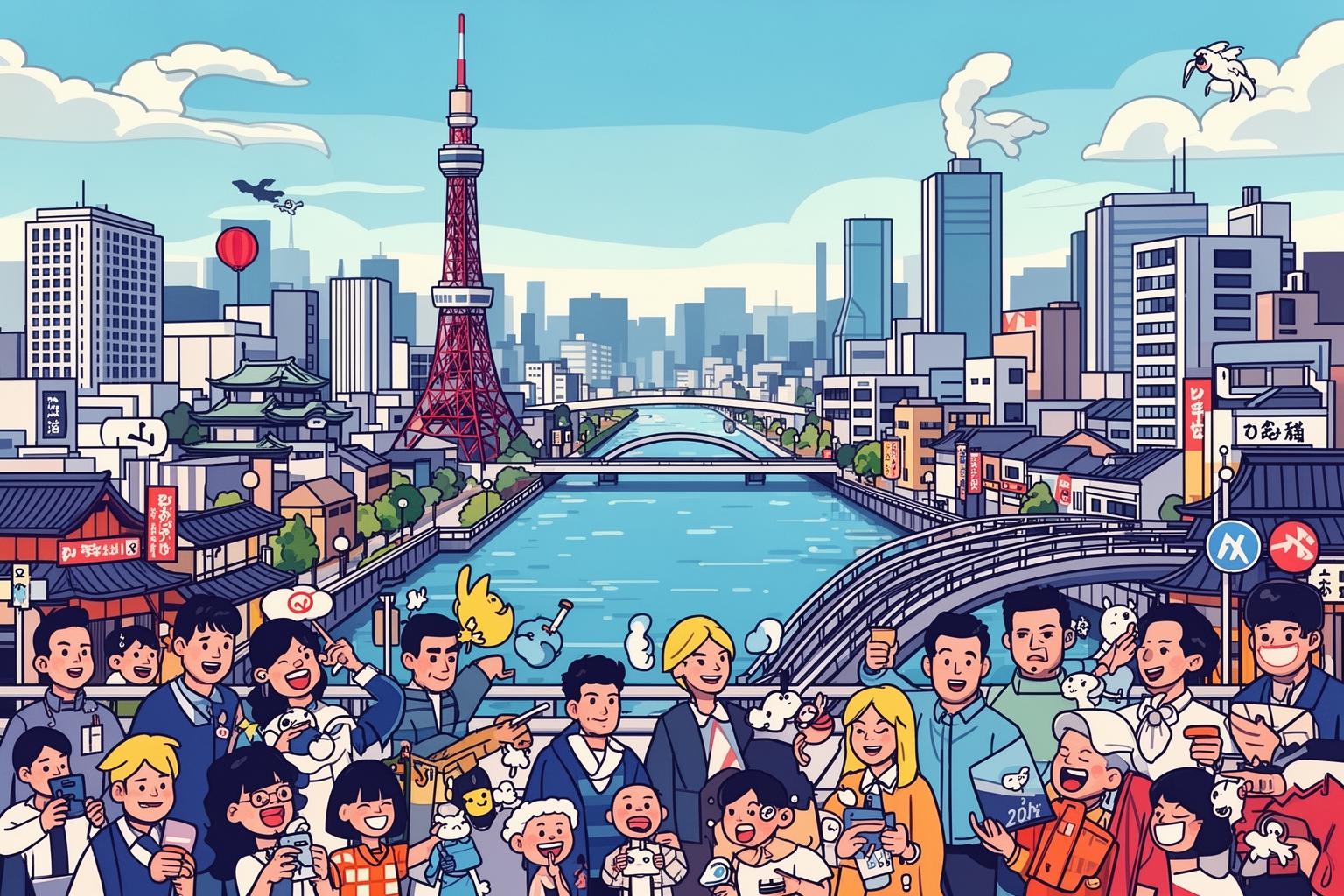
The most famous, and often misunderstood, expression of this is the Dotonbori River dive. When the Tigers claim a major victory, such as winning the league championship, fans gather on the Ebisu Bridge and leap into the murky canal below. To outsiders, it appears as reckless, drunken chaos. But to an Osakan, it is a baptism—a powerful communal catharsis, symbolizing the washing away of tension, anxiety, and doubt. It signifies the complete dissolution of individual identity into the collective, a moment where the self merges with the tribe. This public emotional release, so un-Japanese in nature, is quintessentially Osaka. Local businesses are active participants in this celebration. The day after a big win, department stores like Hanshin (which, not coincidentally, owns the team) and local supermarkets across the city hold massive “Victory Sales.” Prices are slashed on everything from beer to electronics. This is more than a marketing strategy; it is a sincere act of sharing in the city’s happiness. It reinforces a core belief in Osaka’s worldview: the team’s success is the city’s success, and everyone deserves to partake in the rewards.
The Agony of Defeat: A Shared, Public Mourning
The other side of this emotional spectrum is the profound, city-wide despair that follows a defeat, especially a close or critical one. The vibrant energy of the previous day evaporates, replaced by a heavy, somber gloom. The morning commute becomes a procession of long faces and downcast eyes. Usually lively taxi drivers grow sullen and monosyllabic. Local television news programs lead not with politics or international affairs but with a solemn, frame-by-frame breakdown of the game-losing error, treating it as seriously as a natural disaster.
This deep connection to failure is linked to the team’s long-standing identity as the perennial underdog, the lovable loser. The infamous “Curse of the Colonel,” a local folklore blaming the decades-long championship drought on a sunken statue of KFC’s Colonel Sanders, is more than a humorous tale. It perfectly captures the fanbase’s self-image: passionate, loyal, and forever star-crossed. They have endured suffering for their team, and this shared misery bonds them as strongly as victory. This narrative resonates deeply with Osaka’s own historical identity. As a merchant capital, it has long defined itself in opposition to the political power of Edo, and later Tokyo. It views itself as more human, emotional, and authentic, yet continually cheated out of the top position by the cold, calculating establishment in the east. The Tigers’ struggles validate this perspective. One morning, following a particularly painful playoff loss, I was in a small butcher shop in Kuromon Market. The butcher and an elderly customer weren’t talking about beef prices. Instead, they were engrossed in a hushed, intense analysis of the game’s ninth-inning pitching change, discussing it with the kind of aching expertise you’d expect from seasoned analysts. For them, it was more than just a game—it was another chapter in a long, shared saga of hope and heartbreak.
The Tiger Economy: How Fandom is Woven into the Urban Landscape
In Osaka, supporting the Hanshin Tigers is far from a passive pastime; it is an act of consumption, a lifestyle choice, and a potent economic force that influences the city’s visual and commercial environment. The team’s branding extends well beyond stadiums and sports shops, permeating every aspect of daily life and reinforcing its central role in Osaka’s identity. This economic involvement surpasses simple merchandise sales, creating a social currency where knowledge of the team and participation in its rituals hold value comparable to professional skills, fostering both opportunities for connection and subtle pressures to conform.
The Ubiquitous Yellow and Black: A Visual Uniform
To live in Osaka means to be constantly enveloped by the Tigers’ iconic yellow, black, and white palette—it is the city’s unofficial color scheme. The sheer visual saturation highlights the depth of the team’s integration into the local economy. It’s not just the official stores near major train stations; even small, family-run businesses proudly display their Tigers allegiance. Bakeries sell “Torakki” (the team’s mascot)-shaped buns decorated with chocolate and custard stripes. Florists craft custom bouquets in bold yellow and black for die-hard supporters. I’ve come across dry cleaners offering special discounts for Tigers jerseys and pachinko parlors with dedicated Tigers-themed machines, their flashing lights and rattling balls creating a baseball-infused symphony. Professional offices aren’t exempt either; that dental clinic was just one example. Law firms feature Tigers calendars, and accounting offices display framed, signed baseballs in their reception areas.
For residents, this visual environment is unavoidable. It acts as a constant, subtle reminder of the team’s significance. At no point are you more than a few steps away from a Hanshin Tigers symbol. The team is woven into the city’s very fabric, becoming a natural and organic part of the surroundings rather than a separate entertainment entity. This sharply contrasts with Tokyo, where you can stroll through residential neighborhoods for miles without encountering Yomiuri Giants memorabilia. Tokyo fandom is intense but geographically contained with designated zones. In Osaka, no such boundaries exist; the entire city itself is the zone. The yellow and black stripes are the threads forming the urban tapestry.
The Social Currency of Tigers Knowledge
In Osaka, possessing knowledge of the Hanshin Tigers is a concrete asset, serving as social currency to build rapport, open doors, and smooth social and professional dealings. Discussing the team’s latest game, debating the strengths of the starting pitcher rotation, or offering insights about a promising rookie is more than casual conversation—it is a vital skill for engaging with local culture. This holds especially true in business. At many Osaka companies, formal business card exchanges and stiff pleasantries can be bypassed through an enthusiastic chat about the previous night’s game. It acts as an icebreaker that instantly establishes common ground and signals that you’re an insider—or at least someone who respects local customs enough to participate.
This dynamic creates a unique pressure, particularly for foreign professionals or Japanese relocated from other regions. There is a clear expectation to be prepared. I have known Tokyo-based salarymen assigned to Osaka branches who began diligently reading sports sections for the first time in their lives. They weren’t necessarily becoming fans; they were learning a new business language. They realized that connecting with clients over a shared frustration with the team’s bullpen could be more valuable than any PowerPoint presentation. This is often misunderstood—the pressure isn’t necessarily to become a passionate, lifelong supporter. The pressure is to be literate: to follow the conversation, recognize key players and storylines. To be unaware is to be excluded from a fundamental part of the city’s social and economic life, an ongoing conversation happening all around you.
Us vs. Them: The Tigers as a Bastion of Kansai Identity
To fully understand the depth of Osaka’s passion for the Hanshin Tigers, it must not be seen in isolation. This love is intensified by a fierce rivalry. The team represents more than just a sports club; it symbolizes and upholds Kansai regional identity. Every identity requires an opposing “other” to define itself against. For the Hanshin Tigers and their devoted fans, that “other” is, has been, and always will be the Yomiuri Giants of Tokyo. This rivalry transcends baseball. It embodies a long-standing cultural, economic, and psychological contest between Japan’s two major urban centers. Supporting the Tigers is a declaration of self-identity and, just as importantly, a rejection of the other.
The Giants in the East: A Rivalry That Shapes a Region
The matchup between the Hanshin Tigers and the Yomiuri Giants is known as the “Traditional Match” (dentō no issen). The title itself carries weight and history well beyond a typical sporting event. It serves as a proxy battle. In this story, the roles are clearly defined. The Yomiuri Giants stand for everything Osaka defines itself against: Tokyo’s power, wealth, and perceived arrogance. They are a team backed by large corporations, national media (owned by the Yomiuri Shimbun, Japan’s largest newspaper), and political influence. Their image is one of cool, efficient, and almost inevitable triumph. In Osaka’s mind, they are the clean-cut, corporate champions—orderly but dull.
By contrast, the Hanshin Tigers embody the Kansai spirit. They are seen as passionate, gritty, and emotional underdogs. Their fans embrace a certain roughness and lack of polish as a mark of authenticity. They are loud, demanding, and fiercely loyal, enduring decades of disappointment. This rivalry allows Osakans to channel their regional anxieties and pride onto the baseball field. Defeating the Giants is not just about earning two points, but a moral victory—a validation of the Osaka way of life. It proves passion can overcome power, and raw emotion can outmatch calculated efficiency. For many fans, the core belief goes beyond “I love the Tigers” to “I love the Tigers, and I hate the Giants.” This hostility is central to fan identity, uniting them in a shared cause. It offers a clear, tangible, and endlessly engaging expression of the deep cultural divide between Kansai and Kanto.
A Tent Large Enough for Everyone (As Long As They’re Cheering)
Despite the intensity and occasional social pressure, the Tigers fanbase is fundamentally a remarkably inclusive community. Its strength lies in transcending Japan’s usual social divisions. Inside Koshien Stadium, or watching a game in a bar, differences of age, gender, profession, and social class fade away. A construction worker in his work clothes can stand beside a bank executive in a sharp suit, and for three hours, they are defined not by their jobs but by their shared loyalty. They become equals, united in hope and frustration, shouting the same cheers and groaning at the same strikeouts.
This is the profound social value of the Tigers phenomenon. It offers a strong and immediate means for social integration. For a foreigner feeling isolated or struggling to connect, embracing the Tigers can be the key to unlocking the city. It provides an instant shared interest with a broad, diverse segment of the population. I know an American friend who moved to Osaka to teach. For months, he felt like an outsider, unable to move past the polite but distant surface of daily interactions. On a whim, he bought a cheap ticket to a Tigers game and went alone, feeling awkward and out of place. Yet from the moment he sat down, the family next to him—a grandfather, a mother, and her young son—embraced him. They bought him a beer, taught him the words to “Rokko Oroshi,” and showed him how to inflate and release the iconic seventh-inning balloons. By the game’s end, he felt as if he’d known them for years. This reveals the truth behind the phrase “Osaka people are friendly.” Their friendliness is not random or unconditional; it is sparked by shared participation. By showing a willingness to join in their passion, my friend signaled his desire to be part of the community, and the community welcomed him warmly.
Navigating the Fandom: A Survival Guide for the Non-Believer
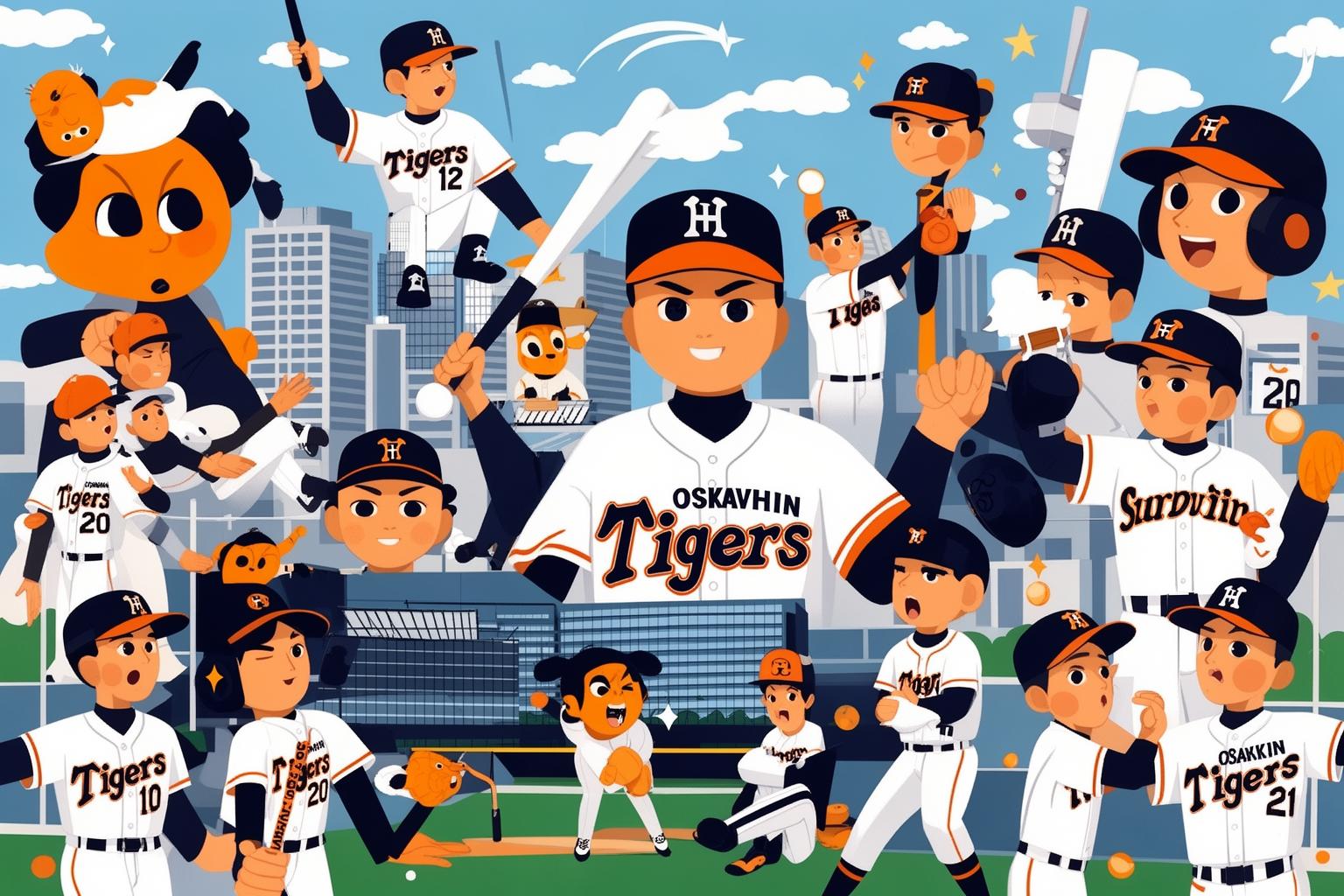
So, you find yourself living in Osaka. You don’t know the slightest thing about baseball, and honestly, you don’t care. You respect the passion, but have no desire to be involved. How do you navigate a city where the very air feels striped yellow and black? It can seem like a daunting social challenge, a continuous test of your ability to fit in. But moving through the world of the Tigers as a non-believer isn’t about conversion. It’s about crafting a strategy based on respect, awareness, and a clear grasp of what is—and isn’t—expected of you. It’s about learning the local language of passion, even if you never become fluent.
To Fake It or Not to Fake It?
The first impulse for many newcomers is to pretend interest. You might try memorizing a few players’ names or repeating a sports headline you saw that morning, hoping it will suffice. This is almost always a mistake. The average Tigers fan’s knowledge is encyclopedic, and their passion is razor-sharp. They will detect a fraud from a mile off. A clumsy attempt to fake it can feel more insulting than honest indifference. In Osaka, a city that values authenticity and straightforwardness, honesty is the best approach. Admitting your ignorance is far more effective than a poorly executed charade.
Saying something like, “I don’t really follow baseball, but I can see how much it means to people here. Did they win last night?” works wonders. This approach does two important things. First, it shows respect. You acknowledge the Tigers’ importance in their culture without pretending it matters to you personally. Second, it opens the door for them to share their passion, which is what most fans want to do anyway. You position yourself as an interested, curious observer rather than an active participant. This often results in a much more positive interaction. Finding a middle ground can also work well. You don’t need to become an expert on the game, but learning the absolute basics shows a good-faith effort to engage with local culture. Know the name of the current manager. Recognize the team’s superstar player. Understand why a game against the Giants matters. This small investment signals that you’re not dismissing their culture, and that little gesture of respect will be noticed and appreciated.
Finding Your Place on the Spectrum
It’s important to remember that despite the team’s overwhelming cultural presence, not every person in Osaka is a die-hard fan. The city is home to millions, and fandom exists on a wide spectrum. There are fanatics, yes, but also casual followers who just check scores, people who get excited only during playoffs, and a quiet minority who are genuinely indifferent. The key is understanding that while individuals vary, the public culture is largely dominated by passionate fans. The social system runs on Tigers software, even if some individual users keep it in the background.
Your job as a resident is to find a comfortable spot on this spectrum. You don’t have to wear the jersey or learn the chants to live well in Osaka. But you do need to be aware of how fandom shapes the city’s rhythm. This means conscious choices. If you want a quiet, contemplative drink on a Tuesday night, avoid sports bars in Umeda. If you want to feel the raw, unfiltered energy of the city, that’s exactly where you should be. It’s about managing your environment. It’s about knowing that after a big loss, your boss might be in a bad mood, and it’s wise to keep a low profile. You can opt out of active participation, but not out of the cultural context. The Tigers are Osaka’s social grammar. You don’t need to write poetry in that language, but learning a few basic phrases, recognizing sentence structure, and catching the tone will make your life much easier and richer. It’s not about becoming a baseball fan. It’s about becoming a student of Osaka.