Step off the train at a station along the Kintetsu Nara Line, just a short ride east from the electric pulse of Osaka’s Namba district, and the air changes. The neon dazzle recedes, replaced by a low, persistent hum. It’s a sound that weaves itself into the very fabric of the city, a mechanical heartbeat that has powered this region for generations. This is Higashiosaka, a city not built on grand castles or ancient temples, but forged in the fires of industry and polished by the hands of countless artisans. This isn’t just a place; it’s an idea, a living, breathing testament to the Japanese spirit of monozukuri—a term that translates to ‘making things’ but encompasses a profound philosophy of craftsmanship, precision, and relentless innovation. For the foreigner living in Osaka, Higashiosaka offers more than just a glimpse into Japan’s industrial backbone; it presents a unique, tangible pathway to becoming part of that legacy, to find not just a job, but a vocation as a modern craftsman in a city that truly values the art of creation. It’s a world away from the curated experiences of Kyoto or the corporate towers of Umeda. Here, the beauty lies in the function, the culture is found on the factory floor, and the soul of the city is etched into every screw, every gear, and every perfectly molded piece of plastic that originates from its thousands of small workshops. This is where Japan’s industrial might is nurtured, not in massive, impersonal conglomerates, but in family-run businesses and hyper-specialized workshops that form a complex, resilient ecosystem of creation. To understand Higashiosaka is to understand the quiet dedication that drives the modern world.
To truly connect with the city’s spirit, understanding the local culture, including the distinctive Kawachi dialect, is essential.
The Resonant Soul of Monozukuri

To truly understand the essence of Higashiosaka, you must first appreciate the spirit of monozukuri. It’s a term you’ll hear everywhere here, spoken with a reverence that elevates it beyond simple manufacturing. It embodies a profound belief that the creation process is just as important as the final product. It’s about infusing your work with passion, whether you’re crafting a satellite component with micron-level precision or shaping a simple, elegant metal bracket. This isn’t about anonymous, automated mass production. It’s about a human touch, a commitment to quality that borders on obsessive, and a continuous improvement cycle called kaizen. In Higashiosaka, monozukuri is not an abstract corporate phrase; it’s the daily rhythm of life. It’s the elderly man with calloused, oil-stained hands who can diagnose a machine’s problem by its sound alone. It’s the young engineer programming a cutting-edge CNC machine to carry out a delicate, intricate task. It’s the collective pride in knowing that the tiny, unseen parts made in these modest workshops are essential cogs in the world’s most advanced technologies—in cars, airplanes, medical devices, and even space exploration. The city is renowned for having the highest density of small and medium-sized enterprises (SMEs) in Japan, fostering a vibrant, competitive yet cooperative environment. This density creates a unique synergy, where a workshop specializing in metal plating might stand next to one excelling in precision cutting, enabling rapid innovation and problem-solving. This is the magic of Higashiosaka: a city-sized workshop where expertise is the currency and quality is the shared language.
A City Forged in Steel and Sweat
Higashiosaka’s identity as a manufacturing center did not develop overnight. Its origins date back to the Edo period, but its modern character was shaped during Japan’s post-war economic boom. As the country rebuilt, a strong demand for industrial parts arose, and this part of Osaka, with its advantageous location and enterprising spirit, stepped up to meet the challenge. Small, family-run workshops appeared in residential neighborhoods, often operating from the ground floor of family homes. This organic pattern of growth remains evident today; walking down a quiet residential street, you might suddenly hear the rhythmic clang of a power press or catch the faint, sharp smell of cutting oil. This blending of industry and everyday life defines the city’s atmosphere, reflecting an era when work wasn’t something to commute to but was deeply integrated into home and community life. This history has nurtured a strong sense of resilience. Higashiosaka’s workshops have endured economic booms and busts, global competition, and ongoing technological advances. They have survived by staying flexible, specializing in niche technologies that larger firms cannot replicate, and fostering a culture of trust and mutual support. When a company needs a specific type of screw, it doesn’t place an order overseas; it walks down the street to a neighbor who has honed the craft of screw-making for fifty years. This interconnected network of highly specialized artisans forms the city’s greatest strength, enabling it to produce everything from the ordinary to the extraordinary.
The Symphony of the Workshop: An Atmosphere You Can Feel

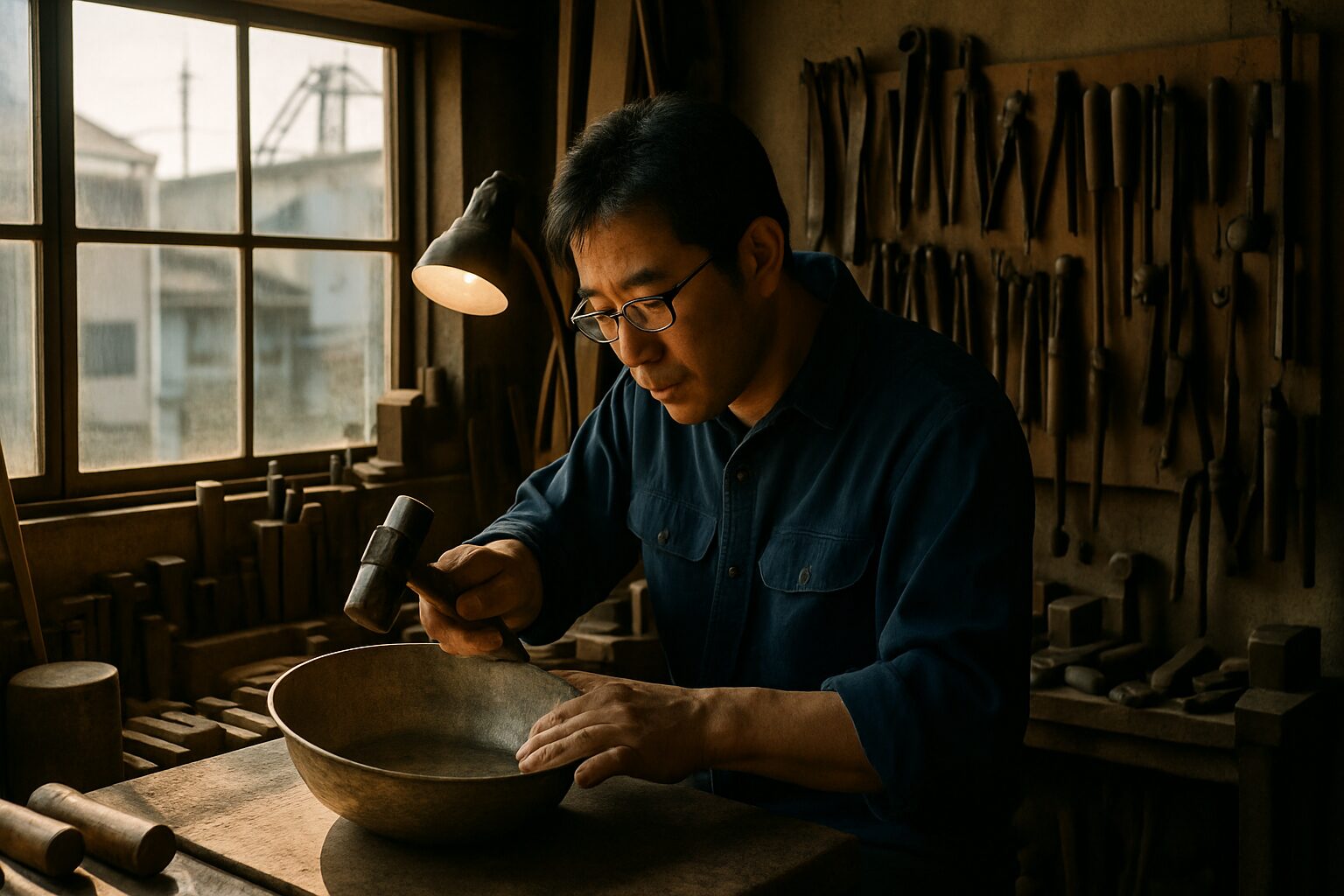
Exploring Higashiosaka is a sensory journey unlike any other in Osaka. It’s a place best understood not through guidebooks but through your ears, your nose, and your curiosity. The city hums with a constant, underlying industrial symphony. In the distance, the deep growl of heavy machinery sets the bassline. Closer still, you’ll catch the high-pitched whine of a lathe shaving metal, the steady thump-thump-thump of a stamping machine, and the sharp hiss of a welder’s torch. It’s a soundscape of productivity, where raw materials are shaped by intention and skill. The air itself tells the story of the city’s labor—an intricate blend of metallic dust, lubricating oils, and the faint, oddly pleasant scent of heated plastic. It’s the aroma of creation. Visually, the city is a captivating blend of old and new. Sleek, modern factory fronts stand alongside weathered, tin-sided workshops that have endured for decades. Through open bay doors, you might glimpse a scene both timeless and modern: a craftsman bent over a workbench, carefully inspecting a part, lit by the glow of a digital caliper. The people of Higashiosaka are the soul of this environment. They carry a pragmatic, no-nonsense attitude, paired with deep pride in their work and a welcoming openness toward those who show real interest. They guard tacit knowledge—skills passed down through observation and hands-on experience rather than textbooks. This is a city that doesn’t perform for tourists. It is unapologetically authentic—a place of labor, grit, and quietly profound beauty. The energy here is not frantic but focused and deliberate. It is the feeling of thousands engaged in meaningful, tangible work, each contributing their unique skill to a collective effort far greater than themselves.
The Modern Craftsman’s Path: Finding Your Place in the Workshop City
For many foreigners in Japan, the typical routes to employment often involve English teaching, IT, or the service sector. However, Higashiosaka offers an intriguing, less conventional option: the path of the modern craftsman. This is not about idealizing the past; rather, it’s about participating in a vibrant, technologically advanced industry actively seeking fresh talent to sustain its legacy into the future. The demand is genuine. With Japan’s aging population, many small, highly skilled factories are confronting a succession crisis. They hold priceless expertise and steady client networks but lack the next generation to succeed them. This situation creates a unique opportunity for dedicated individuals, including foreign residents, who are eager to learn and contribute.
Redefining the ‘Craftsman’ in the 21st Century
Forget the outdated, solitary artisan stereotype. The modern craftsman in Higashiosaka is a hybrid professional, integrating traditional methods with state-of-the-art technology. They might be a welder employing advanced TIG welding techniques on exotic alloys, a programmer coding intricate instructions for a 5-axis CNC milling machine, or a quality control specialist operating sophisticated 3D scanning tools to ensure parts meet microscopic tolerances. The work demands both manual skill and intellectual acuity. It requires knowledge of materials science, problem-solving ability, and patience to perfect processes through repeated iterations. The ‘craft’ now lies not only in the hands but also in the capability to interact with technology, interpret complex blueprints, and collaborate with a team to realize a design. This evolution has made the field more approachable than ever, as skills from engineering, design, and software development directly apply on the factory floor.
The Spectrum of Opportunity: From Micro-Screws to Aerospace Components
Higashiosaka’s industrial landscape is remarkably diverse. Rather than a single dominant industry, it consists of a constellation of specialized fields. This diversity means there are roles well suited to a wide array of interests and talents. Here are some key sectors where one might discover their niche.
Metalworking and Machining
This is the traditional core of Higashiosaka. It covers a broad range of processes. Some factories focus on metal stamping (press kako), where powerful machines shape metal sheets into specific forms, producing everything from automotive parts to electronic housings. Others excel in lathing (senban), utilizing lathes to precisely shape cylindrical metal components. Milling (furaisu) involves rotary cutters removing material from a workpiece to create complex shapes and details. Welding (yosetsu), the skill of joining metal parts, remains in constant demand. Jobs here might entail operating these machines, programming them (especially CNC machines), or finishing processes like grinding and polishing (kenma). The precision required is astounding; many shops operate within tolerances measured in microns (thousandths of a millimeter).
Plastic and Rubber Molding
Beyond metal, Higashiosaka is a leading hub for plastic injection molding. This technique injects molten plastic into molds to produce a vast range of items, from simple household objects to sophisticated consumer electronics parts. The true artistry lies in designing and maintaining the molds (kanagata), intricate engineering feats demanding great skill. Positions in this sector range from machine operation to mold design and repair, highly valued skills. Similarly, rubber processing factories manufacture seals, gaskets, and other flexible components essential across industries.
Surface Treatment and Finishing
An object isn’t complete once shaped. Often, its surface needs treatment to improve durability, appearance, or function. Higashiosaka houses many workshops specializing in processes like plating (mekki), which applies thin layers of metals such as chrome or zinc, and anodizing (arumaito), an electrochemical method that creates protective and decorative oxide layers on aluminum. Painting and coating experts apply specialized finishes that resist heat, corrosion, or wear. These roles demand a chemist’s process knowledge combined with a painter’s precision.
The World of Fasteners and Springs
Though it may seem mundane, Higashiosaka excels in producing tiny components. It’s renowned for manufacturing screws (neji), bolts, and springs (bane). These are not the typical hardware store screws but custom-made, high-performance fasteners designed for demanding fields like aerospace, medical devices, and robotics. A single workshop might make thousands of screw types, each with unique threads, materials, and head designs. Springs require exact wire coiling to achieve specific mechanical properties. Working here means mastering the physics of tension and compression and the machinery for producing these vital yet often unseen components of modern industry.
Skills in Demand: Building Your Toolkit for Success
Entering the world of monozukuri requires a defined skill set, some of which can be acquired on the job, while others are best learned beforehand. Fundamentally, employers in Higashiosaka seek a combination of technical ability and the right mindset.
Technical Foundations
Although many companies are open to training newcomers, a basic understanding of mechanics or engineering provides a significant advantage. The ability to read technical drawings and blueprints (zumen) is arguably the most critical skill. These documents serve as manufacturing’s universal language, detailing dimensions, materials, and tolerances precisely. Familiarity with measurement tools like calipers and micrometers is also essential. For advanced roles, experience with CAD (Computer-Aided Design) or CAM (Computer-Aided Manufacturing) software is highly valuable. Certifications in welding or operating equipment such as forklifts or cranes can further distinguish candidates.
The Monozukuri Mindset: Beyond the Technical
More crucial than any technical skill is the right attitude. Employers value individuals who are meticulous and have a sharp eye for detail. The work often involves identifying tiny defects or making subtle adjustments that profoundly impact quality. Patience and persistence are key; manufacturing is frequently a cycle of trial, error, and refinement. A strong sense of responsibility is vital; in a small workshop, every team member’s role is important, and a single error can be costly. Finally, genuine curiosity and a commitment to learning—the essence of kaizen—truly separate a worker from a craftsman. It’s the drive not just to complete tasks but to understand, improve, and master them.
Bridging the Gap: A Practical Guide for the Foreign Applicant
Navigating a foreign job market can be challenging, but for those serious about a manufacturing career, Higashiosaka offers a surprisingly accessible entry point. Here is a practical overview of steps and considerations.
Language: The Most Important Tool
Let’s be straightforward: proficiency in Japanese is essential. While some larger firms may have English-speaking staff, most workshops in Higashiosaka operate solely in Japanese. Clear, precise, and immediate communication on the factory floor is critical, especially regarding safety and technical details. A Japanese ability equivalent to JLPT N2 is often the professional standard. However, many hands-on positions accept solid N3-level conversational and listening skills, especially if the candidate quickly learns technical vocabulary. Being able to understand instructions, ask questions, and communicate with colleagues is key. Investing in language classes focusing on practical and workplace Japanese is highly recommended.
Visas and Status of Residence
Obtaining the correct visa is a crucial step. University graduates with degrees in engineering or related fields typically pursue the “Engineer/Specialist in Humanities/International Services” visa, which covers many skilled positions. Those without university degrees but with relevant practical experience might qualify for the “Specified Skilled Worker” (Tokutei Ginou) visa program, designed to address labor shortages in sectors like industrial machinery manufacturing. It’s important to research visa requirements thoroughly and consult with an immigration lawyer or scrivener to ensure proper application.
Where to Find the Jobs
Job openings in Higashiosaka’s manufacturing sector are not always posted on major English job boards. Local resources are vital. The public employment service, “Hello Work,” with offices in every city, lists thousands of local opportunities, including many in manufacturing. Although primarily Japanese, they often provide translators or support staff. The Higashiosaka Chamber of Commerce and Industry is another valuable resource, frequently hosting job fairs and maintaining strong ties with local businesses. Networking remains powerful; attending local events like the open-factory festival “KOUBA” offers informal ways to meet factory owners and workers. Building personal connections often leads to unadvertised opportunities.
The Interview and Trial Period
When you secure an interview, prepare to showcase not only your skills but also your enthusiasm and dedication. Demonstrating genuine interest in monozukuri and the company’s work is important. Researching their products and history signals seriousness. Interviews often include practical tests, such as reading simple blueprints or handling tools. Many companies implement a trial period (shiyou kikan) lasting three to six months—a common Japanese practice allowing both employer and employee to evaluate fit. Use this period to learn intensively, prove your commitment, and build good relationships with your colleagues.
Beyond the Factory Floor: Living in Higashiosaka
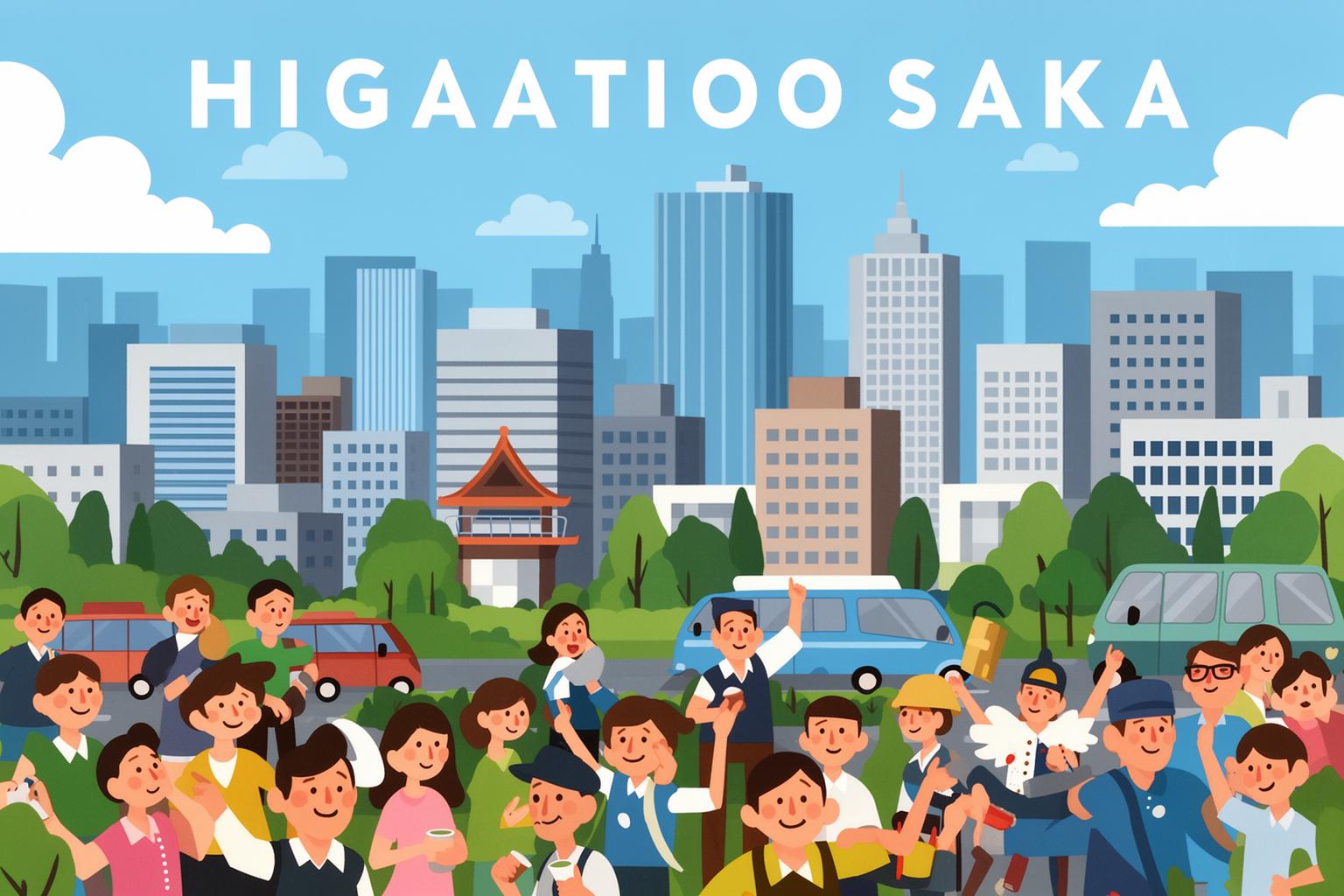
Life in Higashiosaka is about more than just work. It’s a city with a distinctive character and charm. Known as the “Rugby Town” of Japan, it is home to Hanazono Rugby Stadium, one of the country’s most iconic rugby venues. On match days, the city comes alive with a special energy as fans from across the nation gather to support their teams. This sports culture offers a fantastic way to connect with the local community beyond the workplace. The city also boasts numerous green spaces for relaxation, including Hanazono Central Park, a large park surrounding the stadium. The food scene is simple and hearty, designed to satisfy the appetites of working people. You’ll discover many small, family-run restaurants serving tasty and affordable bowls of ramen, curry plates, and tonkatsu sets. These spots provide a chance to enjoy a fulfilling meal while soaking up the local vibe. For a bit of history, visiting Hiraoka Shrine at the base of the Ikoma mountains offers a tranquil escape and beautiful views of the city. Living here means becoming part of a close-knit community that values hard work, straightforward communication, and mutual respect. It’s a place where you can build a stable and meaningful life grounded in practical skills.
Practical Advice for Your Monozukuri Journey
If you’re ready to explore Higashiosaka, whether as a potential home or out of curiosity, a few tips can help you make the most of your visit. Access is simple: the Kintetsu Nara Line runs directly through the city center, linking it to both Osaka Namba and Nara. The JR Gakkentoshi and Osaka Higashi lines also serve the area. When visiting factories, especially during open-house events like KOUBA, keep in mind these are active workplaces. Always be respectful of the staff and their work, avoid touching machinery unless invited, and follow all safety guidelines. Genuine curiosity will be warmly welcomed. Learning a few technical Japanese terms related to the craft will be highly appreciated. For first-time job seekers, patience is essential. The hiring process may be slower than you expect. Focus on building a strong foundation in language and skills, and approach your search with a long-term mindset. This is not just about finding a job next month, but about developing a career for the years ahead.
The Future is in Your Hands

Higashiosaka stands at a captivating intersection. It is a city that respects its industrial roots while looking forward to the future. The workshops here are increasingly incorporating robotics, IoT, and AI to improve their accuracy and efficiency. However, technology is regarded as a means to support the craftsman, not to replace them. The human element—the creativity, problem-solving, and commitment to quality—remains the most valuable asset. For foreign residents seeking a different path, Higashiosaka presents a meaningful opportunity. It offers a chance to acquire a valuable, hands-on skill, become part of a proud and resilient community, and contribute to a globally respected legacy of craftsmanship. The work can be challenging, but the rewards are great: the satisfaction of holding a flawlessly crafted item, the pride in completing a complex project, and the quiet dignity of mastering a craft. In an era of digital fleetingness, there is something deeply grounding and fulfilling about the world of monozukuri. It’s a world that is welcoming, ready for the next generation of makers—regardless of origin—to take up the tools and shape the future.