So, you’ve been in Osaka for a while now. You’ve mastered the train lines, you can navigate the covered arcades of a shotengai without getting completely lost, and you’ve learned that ordering kushikatsu without observing the “no double-dipping” rule is a cardinal sin. You’ve heard the clichés a thousand times: Osaka people are loud, they love takoyaki, they’re the friendly, funny cousins to stoic, serious Tokyo. And while there’s a grain of truth in the stereotypes, you’ve probably felt that there’s a deeper current running underneath, a logic to the city that you can’t quite grasp. You feel the rhythm, but you don’t yet know the song.
People will tell you to go to Namba or Shinsaibashi to find the “real” Osaka. They’ll point you toward the flashing lights of the Glico Running Man and the chaotic, delicious-smelling steam rising from a hundred food stalls. And they’re not wrong. That’s the city’s beating heart, its loud, vibrant, commercial core. But to understand the mind, the ambition, and the quiet pride of this city, you need a different perspective. You need to go up. Way up. To the top of the Umeda Sky Building, a place many residents dismiss as a tourist spot, but which holds a key to deciphering the entire urban landscape laid out below. Forget the guidebooks. We’re going for a drink, and through the window of a sleek, quiet bar forty floors above the ground, we’re going to look down and finally understand the soul of the city you call home.
For those looking to blend this elevated perspective with a productive daily life, our guide to co-working spaces in Umeda offers the perfect ground-level complement.
The Concrete Dream: Why This Building is So Osaka
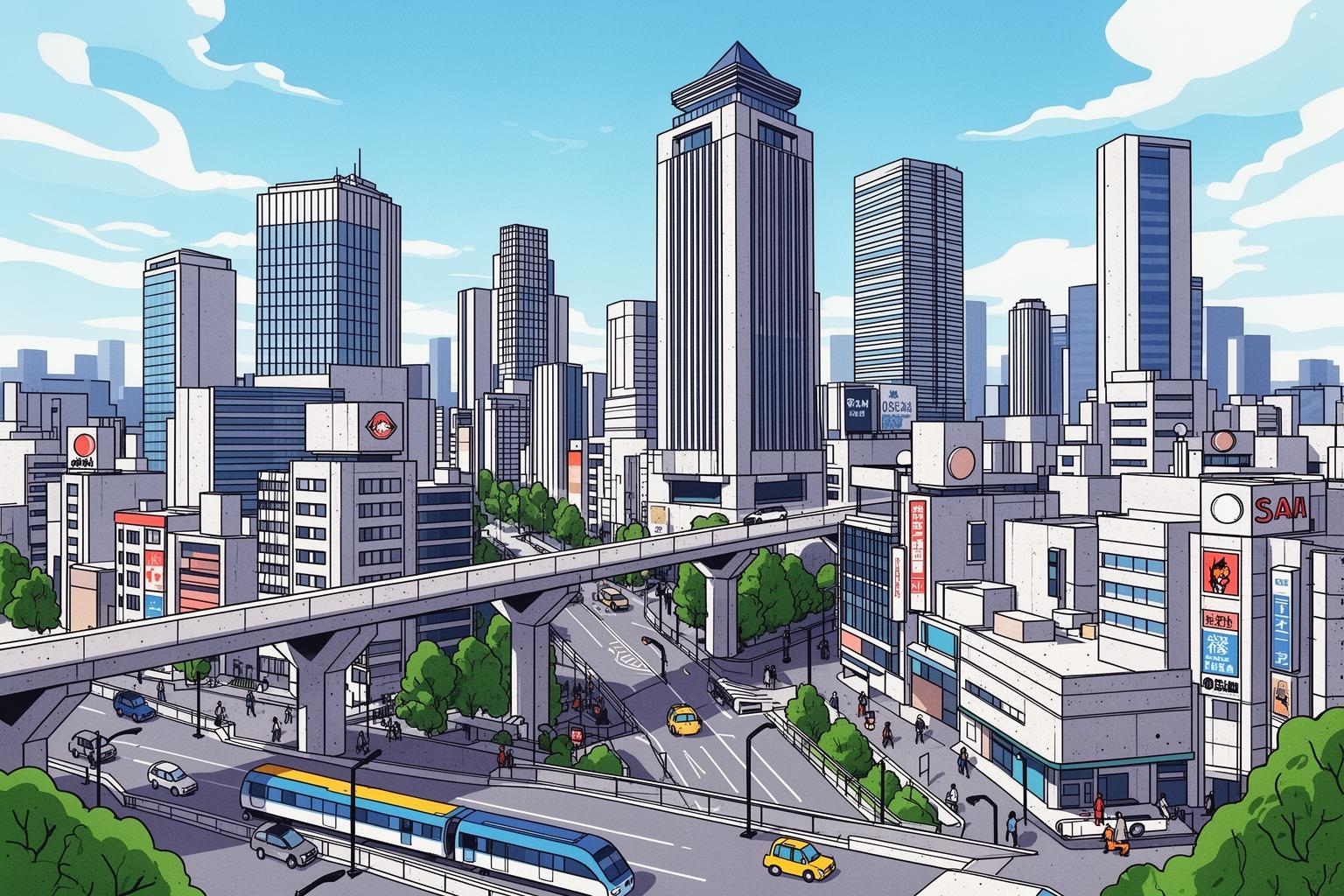
Even before you reach the view, the building itself is already telling you a story. The Umeda Sky Building isn’t simply a skyscraper; it’s a declaration of purpose, a relic from a very specific era and mindset that still resonates throughout the city today. It comprises two separate towers, proud and distinct, choosing to become stronger by linking at the top with a “Floating Garden Observatory.” It’s bold, audacious architecture—purely Osaka.
More Than Mere Steel and Glass: The Bubble-Era Swagger
Finished in 1993, the Sky Building emerged from Japan’s bubble economy. This was a period marked by immense optimism and near-reckless ambition. While Tokyo was constructing sleek corporate towers that pierced the sky as a display of economic power, Osaka’s response was this… almost sci-fi marvel of interconnected structures. It wasn’t about being the tallest or the largest. It was about being the smartest, the most original, the most talked about. This reflects a fundamental trait of Osaka’s character. There’s a clear recognition that they can’t outmuscle Tokyo in sheer size or political influence. Tokyo is the capital, the center of the universe to many. So Osaka competes along a different axis: ingenuity, creativity, and a spirited swagger.
This building is the architectural equivalent of a successful Osaka merchant saying, “Think you’re impressive? Watch this.” It symbolizes a city that has always punched beyond its weight, built on the belief that clever ideas outweigh big budgets. Living here, you encounter this mindset daily. It’s in the tiny, highly specialized restaurants that outshine sprawling chains. It’s in the independent fashion boutiques in Horie that set trends Tokyo later adopts. It’s in the way local entrepreneurs find unique, roundabout solutions where large corporations would simply throw money. The Sky Building stands as a monument to that spirit—the belief that being different is a strength, not a weakness.
The Connection at the Summit
Consider the design. It’s not a single tower. It’s two. And they are incomplete without the bridge linking them. This serves as a powerful metaphor for how Osaka’s society and business actually operate. Tokyo can feel like a collection of individuals climbing a massive hierarchical ladder. It’s a city of solitary ascents, symbolized by its many lone skyscrapers. Osaka, however, is a city of partnerships. It’s a city of networks. Business here remains deeply relational. Deals are often sealed not with contracts, but with handshakes and shared drinks between people who trust each other. Your network, your connections, your reputation—these are the currencies that matter.
The Sky Building captures this perfectly. The two towers stand strong individually, but their true worth, their unique identity, emerges from their connection. The link creates something entirely new: the floating garden, a shared space that benefits both. This is the essence of Kansai’s business culture. It’s about fostering symbiotic relationships, finding partners who complement your skills, and building something together that you couldn’t achieve alone. Living in Osaka teaches you quickly that going it alone, the rugged individualist approach, is often less effective than collaborating with the right people. The city is a web of these connections, from neighborhood associations to intricate supply chains powering its manufacturing sectors. The very building you’re in doesn’t just support you physically; it reveals the blueprint for success in this city.
Umeda’s Polished Mask: Osaka’s Answer to Tokyo
As you ascend the stunningly long, glass-enclosed escalator to the top, you’re leaving a specific area: Umeda. And Umeda is a vital piece of the Osaka puzzle. For many foreigners, Umeda and Namba serve as the two main hubs, often regarded as interchangeable city centers. But for locals, they embody two entirely different facets of Osaka’s character. Namba is the city’s wild, uninhibited spirit. Umeda represents its calculated, professional side. It’s Osaka dressed in a suit and tie. It’s the part of the city that most resembles Tokyo, and that’s by design.
Navigating the “Dungeon”: A Metaphor for Osaka Logic
Before you can appreciate Umeda’s sleek exterior, you must first navigate what lies beneath: the Umeda underground, affectionately and aptly called the “Umeda Dungeon.” It’s a vast, confusing maze of tunnels linking multiple train stations, subway lines, department stores, and office buildings. It’s famously easy to get lost in—a place where GPS signals fail and maps seem to taunt you with their supposed simplicity. A first-timer’s encounter with the Dungeon often sparks panic and confusion. Yet, after living here long enough, you begin to grasp its internal logic, and in doing so, you come to understand something fundamental about Osaka.
The Dungeon wasn’t planned; it evolved. It grew organically over decades, with new tunnels and pathways added as needed. There was no overarching master plan. It was built with pure Osaka pragmatism: “We need a way to get from this station to that new department store without going out in the rain? Okay, let’s dig a tunnel.” Repeat that over fifty years, and you have the Dungeon. It’s chaotic and far from visually pleasing, but brutally efficient once you learn its routes. It’s a system born out of necessity, not theory. This is Osaka’s approach to problem-solving in a nutshell: don’t overthink it, don’t wait for an ideal plan—just find a solution that works for now, and if needed, add to it later. This sharply contrasts with the meticulous, top-down planning often seen in Tokyo. The Dungeon stands as a monument to the beauty of functional chaos—a concept you have to embrace to truly feel at home in Osaka.
Surface Level vs. Reality
When you emerge from the underground, Umeda reveals a different face. Gleaming glass buildings, luxury department stores like Hankyu and Hanshin, and crowds of sharply dressed office workers dominate the scene. This is where major corporations have their Osaka headquarters. It’s clean, orderly, and impressive. Umeda serves as Osaka’s embassy to the wider world, especially Tokyo. It’s the city proving it can master the corporate game just as well as the capital. It shows that Osaka is more than just takoyaki stands and comedians; it possesses a powerful economic force demanding respect.
What’s fascinating, though, is how quickly this polished facade fades. Walk ten minutes in any direction from Umeda’s central hub, and you’ll enter much older, more authentically “Osaka” neighborhoods. You might stumble upon a rickety old shotengai with vendors selling pickled vegetables or a tiny, family-run coffee shop that’s thrived for sixty years. This ability to switch codes is essential to the Osaka identity. People here understand the difference between their public face (tatemae) and their true feelings (honne), and they apply this awareness to their city’s geography too. Umeda is the tatemae: professional, impressive, and somewhat formal. The surrounding areas are the honne: relaxed, honest, and deeply communal. Living in Osaka means navigating not only physical spaces but also these social and cultural shifts. An Osakan can close a multi-million yen business deal in a Umeda skyscraper by day and then be joking with the owner of their local izakaya wearing a worn tracksuit by night. These two identities aren’t contradictory; they complement each other.
The View from the 40th Floor: Deconstructing the City’s Soul
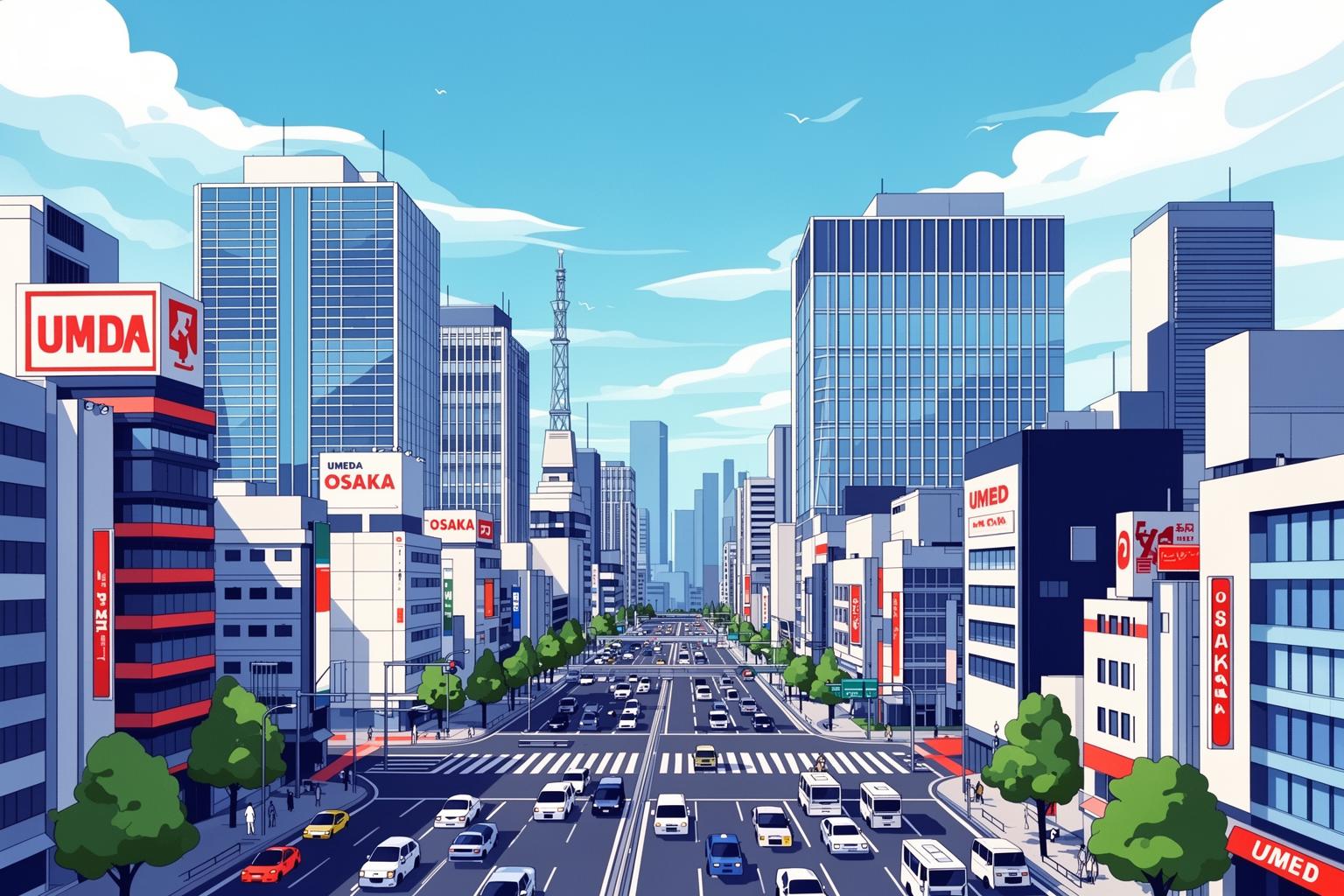
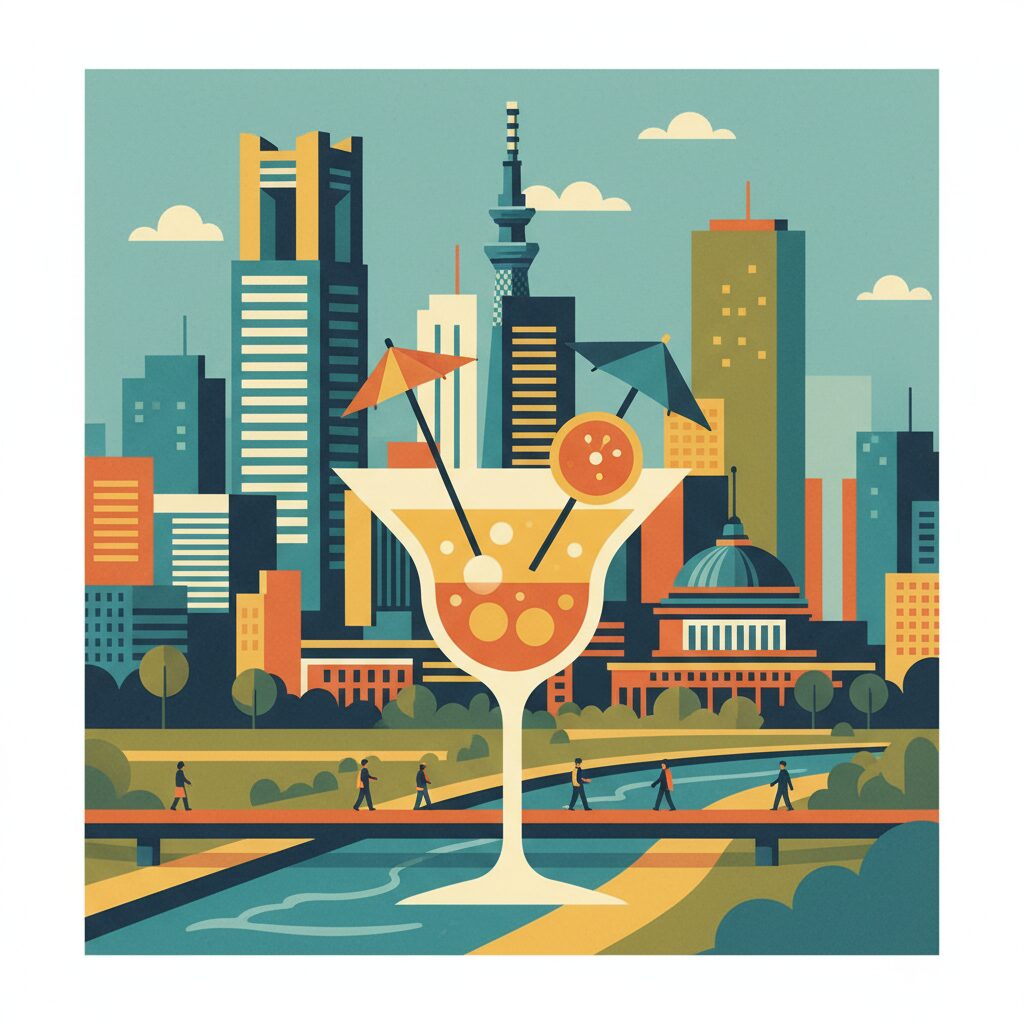
At last, you arrive. Stepping out of the elevator, you enter the quiet ambiance of the Sky Lounge Stardust and settle into a seat by the floor-to-ceiling windows. The entire city of Osaka spreads out before you, a dazzling mosaic of light and shadow. The city’s usual low hum fades away, replaced by the clink of ice in a glass and soft jazz. This is where the true lesson begins. You’re about to order a drink, but you’re also about to learn how to read the city.
Ordering a Drink, Osaka-Style: The “Cospa” of Experience
Let’s be honest: the cocktails here aren’t cheap. You’re facing prices that could buy you three or four drinks at a standing bar in Kyobashi. This is where a vital, often misunderstood Osaka concept comes into play: “cospa,” or cost performance. Many mistakenly think people from Osaka are “cheap” or stingy. Nothing could be further from the truth. Osakans enjoy spending money, but they are absolutely obsessed with value. They’re not cheap; they’re discerning. They’re masters of evaluating worth.
When an Osakan looks at the menu here, they don’t just see the price. They run a complex mental calculation. The equation considers: the quality of the cocktail’s ingredients, the bartender’s skill, the comfort of the chair, the attentiveness of the service, the room’s ambiance, and, of course, the multi-million-dollar panoramic view. They weigh all these factors against the cost and decide if the experience delivers good cospa. If it does, they pay gladly, confident they made a smart choice. If not, they leave without hesitation, regardless of the location’s prestige. This mindset is the legacy of a merchant city. Everything is a transaction, and the aim is to secure the best possible return on investment, whether buying stocks or a gin and tonic. Internalizing the logic of cospa helps you understand the economic choices your Osaka friends and colleagues make every day. It’s not about spending less; it’s about spending wisely.
Northward Glance: The Flow of Commerce and Water
Turn your gaze north. The wide, dark ribbon winding through the city is the Yodo River. Beyond it, lights continue, merging with the neighboring cities of Hyogo Prefecture, stretching toward the great port of Kobe. This view tells the story of Osaka’s origins and enduring identity. Osaka is a city built on water. Its historic wealth did not come from rice farming on a plain but from its strategic position at the mouth of a river system that connects the old capitals Kyoto and Nara to the Seto Inland Sea and beyond. It was a city of canals, bridges, and warehouses. Japan’s gateway for goods, culture, and ideas.
This geography shaped the character of its people. They were merchants, traders, and shippers. Their outlook was always outward-looking. They needed to be adaptable, multilingual (in a manner of speaking), and open to innovation because their livelihood depended on it. This contrasts sharply with Tokyo, which as Edo was the seat of a samurai government that famously closed the country off for over two centuries. Tokyo’s historical mindset was insular and hierarchical. Osaka’s was, and remains, commercial and international. The northern view reminds you that Osaka sees itself not as isolated but as the central hub of the greater Kansai region, a vibrant economic zone with a long history of global outlook.
The Southern Lights: Embracing the Glorious Chaos
Now shift your gaze south. This is the postcard view everyone associates with Osaka. It’s an impossibly dense cluster of lights, brighter and more frenetic than any other part of the city. That’s Namba, Shinsaibashi, and Dotonbori. That’s the raw, untamed energy of the city. From this vantage point, you see it not as a chaotic tangle of streets, but as a massive, pulsing engine of commerce and entertainment. While Umeda represents the city’s sophisticated brain, Namba is its wild, beating heart.
Why do Osakans cherish this area, with its noisy pachinko parlors, gaudy signage, and shoulder-to-shoulder crowds? Because it embodies a certain freedom. It’s a place where rules feel more flexible, where entrepreneurial spirit can run free. It’s home to Yoshimoto Kogyo, the entertainment giant defining Japanese comedy. It’s the birthplace of countless food trends. In Tokyo, there’s often pressure to conform, to maintain order and sophistication. In Namba, the opposite reigns. Louder, bolder, more unique is better. This embrace of what outsiders might call “tackiness” is a source of immense local pride. It’s a rejection of the minimalist, restrained aesthetic often linked with traditional Japan (and especially nearby Kyoto). Osaka’s aesthetic is one of abundance, vitality, and bold expression. The southern view reminds you that in this city, chaos isn’t a flaw to fix; it’s a feature to celebrate.
The Ghost in the East: A Merchant’s Castle
Finally, look east. On a clear night, you may spot the faint, illuminated outline of Osaka Castle. The castle is more than a historical landmark; it’s the spiritual heart of the Osaka mindset. Crucially, it wasn’t a samurai castle like Himeji Castle. It was built by Toyotomi Hideyoshi, a man who rose from peasant origins to become Japan’s ruler. He wasn’t born into the warrior aristocracy. He was a brilliant strategist, master logistician, and shrewd negotiator. In short, he had the soul of a merchant.
Hideyoshi chose Osaka as his base and built it into a thriving commercial hub. He brought merchants from across Japan, recognizing that economic power was the true foundation of political power. This legacy is everything. It established Osaka as a city where birthright mattered less than ability. It created a culture where business success was the ultimate mark of prestige, a status respected above that of distant, unproductive aristocrats. This is the key difference between Osaka and Tokyo. Tokyo (Edo) was the city of samurai, a rigid, class-based society. Osaka was the city of merchants, a place of social mobility where wit and wealth lifted you up. This history explains the city’s pragmatism, its slight anti-authoritarian streak, and deep respect for business savvy that persists today. The castle’s distant light is more than a pretty sight; it’s a constant reminder of why Osaka is the way it is.
The Unspoken Language of the Skyline
As you sip your second drink, the initial awe of the view begins to soften, replaced by a deeper comprehension. You’re no longer merely observing lights; you’re interpreting a language. You’re witnessing the city’s history, character, and values inscribed across the horizon. You begin to perceive the invisible frameworks that shape daily life on the streets below.
Osaka vs. Tokyo: A Tale of Two Nightscapes
A nighttime panorama from a Tokyo skyscraper is a stunning sight, yet it offers a different kind of spectacle. From the Tokyo Skytree or observation decks in Shinjuku, the city spreads out as an immense, almost boundless and uniform sea of light. It extends to the horizon in all directions, embodying the overwhelming scale of the world’s largest metropolis. The feeling it evokes is often one of anonymity, a sense of being a small, insignificant part of a vast, unstoppable machine. It physically represents the Tokyo system: immense, powerful, and demanding that you find your place within it.
The view from the Umeda Sky Building tells a contrasting story. Osaka is a large city, but its landscape is more textured and varied. You can distinctly observe the unique personalities of different districts. There’s the corporate glow of Umeda, the fiery blaze of Namba, the softer, more dispersed lights of residential areas, and the dark patches of parks and rivers. It feels less like a single, monolithic entity and more like a federation of interconnected neighborhoods. This accurately reflects how the city functions. Life in Osaka is often more locally focused. Your identity ties closely to your neighborhood, your local shotengai, your favorite train station. You exist within a network of smaller, overlapping communities. The city feels vast, yet your daily life can be surprisingly intimate and small-scale. The skyline reveals that Osaka’s strength lies not in uniformity but in the dynamic interplay of its diverse parts.
Why “Friendly” is the Wrong Word for Osaka
The refined, quiet atmosphere of the bar offers the perfect setting to rethink one of the biggest clichés about Osaka: that its people are universally “friendly.” Foreigners often use this term because locals on the street readily engage in conversation, crack jokes, or offer help. But “friendly” doesn’t quite capture the truth. What you’re often encountering is not friendliness in the Western sense of wanting to be your friend, but a cultural trait characterized by directness and a lack of pretense.
Throughout much of Japan, especially Tokyo, there is a strong emphasis on maintaining a smooth, frictionless social surface. Avoiding direct confrontation, speaking ambiguously, and keeping polite distance are common. Osakans often find this approach tiring and inefficient. Their style is to get straight to the point. If they see you’re lost, they won’t hesitate or wonder if they should bother you; they will simply come over and ask, “Where are you going?” This is not an invitation to lifelong friendship but a pragmatic desire to solve the problem quickly. The famous Osaka humor is part of this dynamic. A joke is the fastest way to break the ice and create a human connection, which is essential for meaningful interaction, whether in business or just asking for directions. They are not being friendly; they are being efficient and practical. This directness may feel abrupt at first, but once understood as stemming from honesty rather than ill will, it can be remarkably refreshing. You rarely need to guess what an Osakan is thinking—they will usually just tell you.
The Daily Grind Below: What the View Conceals
Despite its beauty, it’s important to remember that the panoramic view is sanitized. From forty floors up, you cannot see the salaryman rushing for the last train, the shop owner worried about slow sales, or the student studying late into the night. The glittering lights are fueled by the hard work, stress, and daily struggles of millions. An Osakan looking at the same scene is keenly aware of this. There is a deep-rooted respect here for anyone working hard to earn a living. This pride traces back to the merchant city ethos: your worth is measured by your effort and skill. This explains why a master takoyaki maker can be respected almost equally to a bank manager. Both are craftsmen who have perfected their trade and contribute value to the community.
The view from above is a luxury, a brief refuge from the daily grind. But that escape gains meaning only because of the grind itself. The panorama’s beauty is poignant because it symbolizes the collective effort of everyone below. It offers a moment of perspective, a chance to see the entire system you belong to before you return to the bustle the next morning. It fosters a shared sense of identity, a feeling of “we’re all in this together,” which remains a powerful yet often unspoken aspect of life in Osaka.
Finding Your Place in the Panorama
As you finish your drink and get ready to leave, you realize that the Umeda Sky Building is more than just a tall structure with a stunning view. It acts as a lens—a tool for grasping the complex, contradictory, and wonderful city you’ve chosen to call home. It has helped you discern patterns within the chaos, uncover the history behind certain attitudes, and find the logic in what once seemed strange.
The Sky Building as a Local Landmark, Not Just a Tourist Spot
While tourists undoubtedly flock here, it’s mistaken to believe locals have abandoned the place. You just need to understand what they use it for. You won’t find Osakans visiting on an ordinary Tuesday night, but you will find them here for special anniversaries, milestone birthdays, or a third date that’s becoming serious. They bring their parents visiting from the countryside, pointing out landmarks with genuine pride: “That’s where I work,” “That’s our neighborhood over there.”
For residents, the Sky Building is a venue to mark significant moments. It’s a space to step outside daily life and view your own story from a fresh perspective. It’s a place to fall in love with your city anew. By approaching it not as a tourist checking a box, but as a resident seeking insight, you engage with the city’s life on a deeper level. You use the landmark just as locals do: as a reference point, a source of pride, and a place for reflection. It ceases to be a tourist trap and becomes part of your personal map of the city.
The True Osaka is on the Ground, Yet Understood from Above
Ultimately, you must return to the streets. The real Osaka isn’t played out in a sleek bar in the sky; it thrives in crowded subways, noisy shopping arcades, small neighborhood parks, and warm, welcoming izakayas. It’s a city that demands to be experienced at street level, engaging all five senses.
Yet, the view from above alters how you perceive the streets. The next time you get lost in the Umeda Dungeon, you might feel not panic but a reluctant appreciation for its pragmatic, layered logic. The next time you see the gaudy, flashing signs of Dotonbori, you might perceive not tackiness but a joyful celebration of commercial vibrancy. The next time you have a surprisingly direct conversation with a local shopkeeper, you might hear not rudeness but the echo of a merchant culture valuing honesty and efficiency above all else. The Umeda Sky Building doesn’t reveal the “real” Osaka, but it offers the map you need to discover it yourself. It shows how all the disparate, confusing, and wonderful pieces of this city fit together. From up there, you see that the chaos has a rhythm, the noise a melody, and the city a soul. And now, you’re one step closer to truly understanding it.