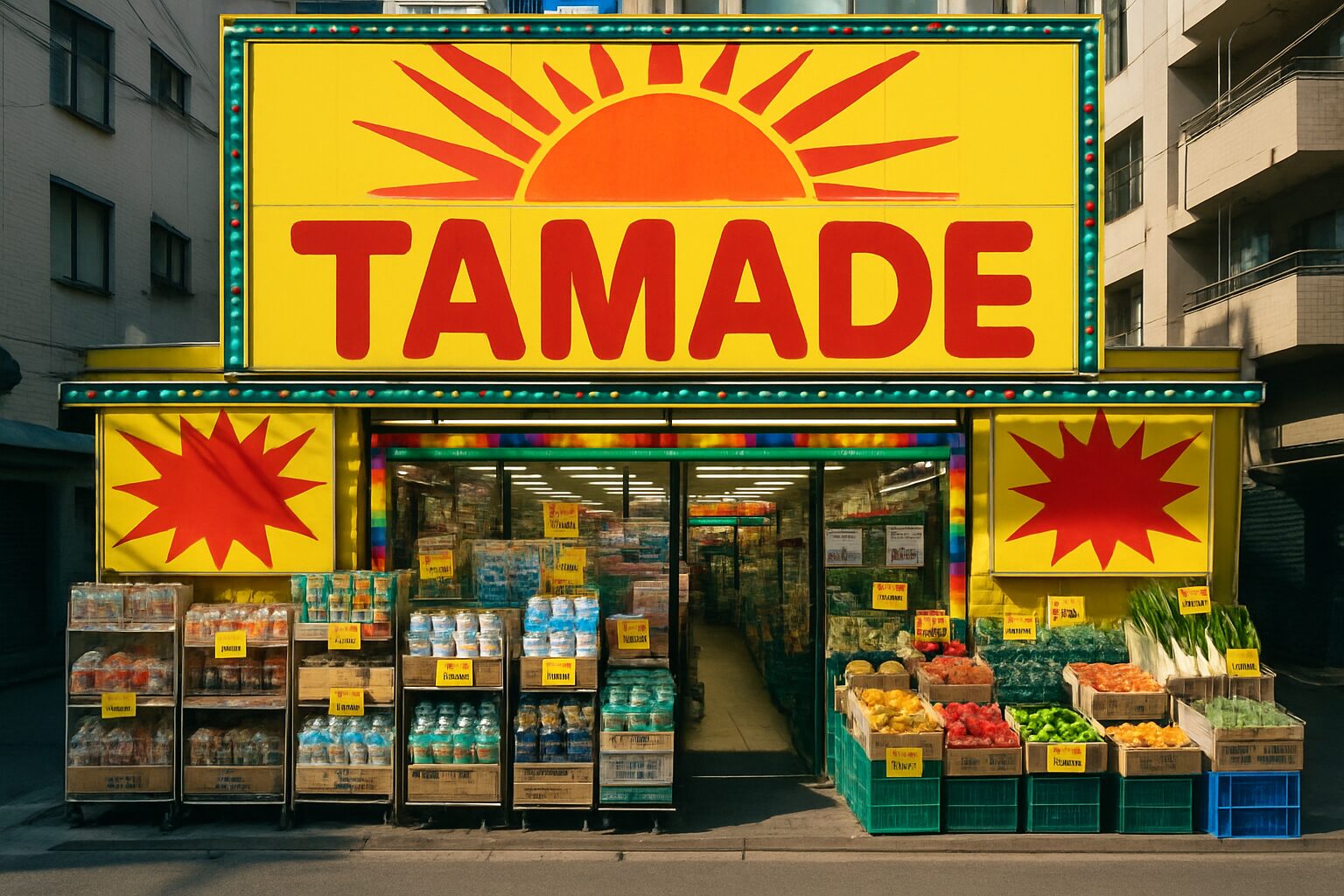
Osaka breathes a different kind of air. It’s a city that hums with a palpable, unapologetic energy, a rhythm that pulsates from the neon-drenched arteries of Dotonbori to the quiet, lantern-lit alleys of Hozenji Yokocho. It’s a place built on the foundations of commerce and comedy, where the pursuit of a good meal and a good deal is elevated to an art form. While visitors flock to the castle and the towering Umeda Sky Building, the true, unfiltered spirit of Osaka often resides in more humble, chaotic corners. And there is no corner more chaotic, more vibrant, and more quintessentially Osakan than the blazing, beautiful madness of Super Tamade. This is not merely a supermarket; it is a cultural landmark, a beacon of budget brilliance, and a sensory experience that will sear itself into your memory long after the taste of its impossibly cheap sushi has faded. Forget serene temples and minimalist design for a moment. To understand the heart of this city, you must step through the flashing, screaming, wonderful doors of Super Tamade, a place where the philosophy of “kuidaore”—to eat oneself into ruin—is made possible for just a few hundred yen. It’s a destination in its own right, a living museum of local life, and an adventure that begins the moment you spot its gaudy, glorious facade from a block away.
For a deeper immersion into the city’s everyday rhythms, consider exploring the local culture of Osaka’s neighborhood public baths.
The Neon Assault on the Senses

Your first encounter with a Super Tamade is less about discovery and more about confrontation. You don’t find Tamade; it finds you. Even before you can read the katakana on its sign, a visual symphony of chaos pulls you in. Every store’s exterior bursts with an explosive riot of color and light, a design approach seemingly inspired by a pachinko parlor crashing into a 1980s video arcade. Blazing yellow dominates, a shade so intense it feels like it’s shouting at you. This is highlighted by fiery reds, electric blues, and strobing LEDs chasing one another across the building’s facade. Gigantic, roughly drawn illustrations of fish, vegetables, and smiling suns vie for your attention. At night, the effect becomes hypnotic and overwhelming—a pulsating beacon of bargains cutting through the urban twilight. It boldly rejects the understated elegance and wabi-sabi aesthetic often linked to Japan. Super Tamade is loud, proud, and utterly lacking in subtlety, and that is exactly its charm. Stepping inside offers little relief to the senses. The assault continues, now both auditory and visual. The air is dense with the store’s jingle—a relentlessly cheerful, maddeningly catchy tune that loops endlessly. The lyrics are simple—the store’s name repeated with energy—but it burrows into your subconscious, becoming the soundtrack to your Osaka escapades, whether you like it or not. Layered atop this are frantic announcements crackling through the PA system, a cacophony of special offers, limited-time sales, and staff call-outs. Bright fluorescent lights hang overhead, unfiltered, bouncing off yellow walls and linoleum floors, creating a space without shadows or respite. This environment serves one purpose: to stimulate, excite, and propel you through the aisles in a state of bewildered, bargain-hunting delight.
A Treasure Hunt for the Budget-Conscious Gourmet
Once your senses adjust to the initial shock, the true appeal of Super Tamade becomes clear: its remarkably low prices. This is the heart of its reputation and the reason it enjoys a devoted following among locals, students, and savvy travelers alike. Tamade reigns supreme as the budget supermarket king, offering deals so good they often defy economic sense. The most famous of these deals is the iconic “1-yen sale.” This is no urban legend; it is a regular promotion where, after spending a certain amount (usually 1,000 yen), you qualify to buy a selected item—whether a carton of eggs, a block of tofu, or a bag of bean sprouts—for just one yen. It’s a classic loss-leader tactic, reflecting the store’s dedication to exceptional value. Yet, beyond these headline deals, the everyday prices are astonishing. The aisles are a treasure trove for anyone wanting to eat well without overspending. The produce section might lack the polished, individually wrapped fruit of a department store basement, but it’s fresh, abundant, and incredibly affordable. You’ll find heaps of cabbage, daikon radish, and onions—all staples in Japanese home cooking—for a fraction of what you’d pay elsewhere. The real gem, though, is the prepared foods section, a vast and impressive array of 惣菜 (sozai) and bento boxes. Here, Tamade truly shines, offering an answer to Osaka’s “kuidaore” spirit for the everyday shopper. The variety is staggering. You can pick up large bento boxes packed with rice, a main protein like fried chicken (karaage) or grilled mackerel (saba shioyaki), and several small side dishes, all for as little as 250 or 300 yen. There are trays of surprisingly fresh-looking sushi and sashimi, ideal for a quick, satisfying meal. The agemono, or deep-fried section, is a golden-brown haven of temptation: crispy croquettes (korokke), juicy pork cutlets (tonkatsu), and assorted tempura, all sold individually for mere pocket change. Creating a complete feast for under 500 yen isn’t just possible; it’s standard. This is the sustenance that fuels the city’s students, single workers, and anyone seeking a tasty, filling meal without the time or money to cook from scratch. For travelers, it’s a generous invitation to sample an extensive variety of Japanese dishes on a wonderfully budget-friendly scale.
Decoding the Tamade Code: A Shopper’s Guide

Navigating Super Tamade calls for a specific strategy. It’s not the calm, orderly experience typical of most Japanese retailers. Instead, it’s a dynamic and sometimes chaotic environment where understanding its unique rhythm is essential to making the most of your visit. Above all, timing is crucial. While good deals can be found throughout the day, the real excitement happens in the evening. As closing time nears, usually around 7 PM, the staff begin their special ritual: applying 割引 (waribiki) discount stickers. This is the moment eagerly anticipated by a subculture of shoppers known as “sticker hunters.” Red and yellow discount stickers appear on perishable items, starting with 10% or 20% off and rising to 30%, 50%, or even more as the night goes on. Bentos, sushi, sashimi, and prepared side dishes see their already low prices dramatically cut. The atmosphere grows tense yet quiet as shoppers wait patiently for the perfect chance to grab the best bargains. For visitors, witnessing this nightly event is a cultural experience in itself, and taking part feels like an exhilarating challenge. Snagging a half-priced, high-quality sashimi platter for a few hundred yen feels like a major win. The store layout can be confusing as well. Aisles are often narrow, stacked high with products, and crowded with fellow shoppers and their carts. There’s a method to it, but it’s a uniquely Tamade method. Don’t expect a peaceful, spacious shopping trip. Instead, embrace the clutter—it’s a treasure hunt, not a carefully curated boutique experience. Be ready to navigate tight corners and maneuver through crowds. Although Japan is rapidly moving toward a cashless society, it’s still wise to carry some yen when visiting Tamade. Many older branches especially prefer cash, which also speeds up the checkout process. Lastly, remember to bring your own bag. Like most supermarkets in Japan, Super Tamade charges a small fee for plastic bags as part of a nationwide effort to reduce waste. Bringing a reusable tote or backpack is not only environmentally friendly but also a practical way to blend in with locals. Packing your discounted finds into your own bag is the final step in a successful Tamade mission.
The Soul of Osaka in a Supermarket Aisle
To dismiss Super Tamade as merely a cheap grocery store is to completely miss the point. This place embodies Osaka’s distinctive cultural identity in a vibrant, living form. For centuries, Osaka was known as “tenka no daidokoro,” or “the nation’s kitchen,” serving as the central hub for the country’s rice and food trade. This legacy cultivated a pragmatic, no-nonsense merchant spirit (商人の町 – shounin no machi) that still characterizes the city today. Osakans are renowned for being shrewd consumers; they value quality but insist on getting good value. Their passion for a bargain is deep-rooted and a source of pride, not embarrassment. Super Tamade stands as the modern shrine to this ethos, where the city’s long-standing merchant culture converges with its insatiable appetite. The store’s flamboyant founder, Kyoichi Maekawa, was a local personality famous for his showmanship and eccentricity, and the stores reflect his vision directly. He realized that in Osaka, making noise is essential to stand out. The flashy lights and blaring music aren’t mere gimmicks but bold declarations in a city that admires audacity. Moreover, the store fulfills a crucial role by making the city’s celebrated “kuidaore” culture accessible to all residents, regardless of income. In Tokyo, fine dining often feels exclusive and costly. In Osaka, thanks to places like Super Tamade, everyone can enjoy a royal feast. You can assemble a multi-course meal of sushi, tempura, and grilled fish for less than the cost of a ramen bowl in the capital. This democratization of quality food is central to Osaka’s way of life. Shopping here also offers an invaluable opportunity for people-watching. You’re not in a tourist bubble but side-by-side with real Osakans: the elderly couple carefully selecting their dinner, the university student stocking up on instant noodles and inexpensive bentos, the salaryman in his suit grabbing a late-night snack after a long day, and the young family budgeting every yen. The conversations you overhear and the interactions you witness reveal the city’s unscripted reality. It’s an authentic slice of life, more insightful than any museum exhibit. In the crowded, fluorescent-lit aisles of Tamade, you’ll discover the true, unfiltered, and warmly practical spirit of Osaka.
Beyond the Aisles: Exploring Tamade’s Neighborhoods

A trip to Super Tamade is more than just a simple errand; it can serve as the foundation for an intriguing day of urban exploration. The stores are strategically placed throughout the city, often nestled in vibrant, gritty, and authentically local neighborhoods just off the main tourist paths. Planning your visit around a particular branch can reveal a fresh perspective on Osaka. A favorite among visitors is the Super Tamade in Nipponbashi, located on the edge of Den Den Town, Osaka’s version of Tokyo’s Akihabara. This makes for an ideal combination. Spend your afternoon immersed in the worlds of anime, manga, video games, and electronics, then recharge with an incredibly affordable and tasty bento from Tamade. Find a nearby bench or take your purchases back to your hotel to savor a feast while admiring the day’s haul. This blend of pop culture and everyday life offers a distinctly modern Japanese experience. For a richer, more historical exploration, visit branches in the southern parts of the city, such as Tengachaya or the wider Nishinari area. This is the core territory of Super Tamade, where the chain’s roots run deepest. These neighborhoods are less polished than central districts like Umeda or Namba, providing insight into the city’s working-class past. A visit here can be paired with a stroll through nearby Shinsekai, a retro-futuristic entertainment district seemingly frozen in time, with the iconic Tsutenkaku Tower standing tall above. Grab some food from Tamade, then head to a local park to enjoy it, soaking in the rhythm of a community that has preserved its character amid rapid modernization. Naturally, with dozens of locations spread across the city, there’s likely a Super Tamade close to wherever you are staying. Use it as an opportunity to explore your temporary neighborhood. Find the local branch on a map and take a walk. You’ll uncover small temples, family-run shops, and quiet residential streets you might otherwise miss. Let the glowing yellow sign guide you, serving as the starting point for an authentic, unscripted adventure into the true fabric of Osaka.
The Final Checkout: Why You Can’t Miss Super Tamade
In a world dominated by curated travel experiences and picture-perfect social media posts, Super Tamade stands out as a glorious, defiant anomaly. It’s messy, loud, overwhelming, and absolutely essential. It offers more than just cheap groceries; it provides a genuine connection to the city it serves. This is a place that peels back the polished facade of tourism to reveal the vibrant, beating heart underneath. A visit here is a lesson in Osakan culture: the value of affordability, the joy of food, the boisterous energy, and the unpretentious, down-to-earth spirit of its people. So when you visit Osaka, by all means, see the famous sights. Climb the castle, snap a photo with the Glico Running Man, and try takoyaki in Dotonbori. But when you’re ready for something authentic, follow the flashing neon lights and listen for the faint, looping jingle. Step inside Super Tamade. Embrace the sensory overload. Wander the crowded aisles, marvel at the prices, and fill your basket with a feast fit for a shogun, purchased with the coins in your pocket. You’ll leave with more than just an inexpensive meal. You’ll leave with a story, a deeper understanding of this incredible city, and perhaps a newfound appreciation for the beautiful chaos of a great bargain. In a city celebrated for its food and flair, Super Tamade delivers both in the most unexpected and unforgettable way. Go, explore, and eat well for less. That, right there, is the Osaka way.