If you live in Osaka, the sea can feel strangely absent. You may pass through Osaka Bay on a train, see container cranes from the expressway, or notice ferries leaving from the port, yet daily life in the city rarely feels like life beside an ocean. Osaka’s center is made of offices, shopping arcades, apartment buildings, rivers, elevated highways, and narrow streets. The coastline often appears only as infrastructure.
That is why a weekend journey from Osaka’s bay area to its fishing villages can teach you more about the city than another visit to a famous attraction. The route reveals a tension at the heart of Osaka. Osaka is a port city, but most residents do not live as coastal people. The water has shaped the city’s food, commerce, neighborhoods, humor, and working habits, even when the shoreline has been filled with warehouses, factories, ferry terminals, and reclaimed land.
A useful route begins in the urban bay area, where Osaka’s maritime identity is large, industrial, and international. It then moves south through Sennan and Tajiri, where fishing boats, morning markets, and small harbor communities make the sea feel local again. The point is not to collect seaside photographs. It is to understand how Osaka became a city that thinks in terms of movement, trade, practical exchange, and food brought in from somewhere else.
For a foreign resident, this journey also corrects several common misunderstandings. Osaka is not simply “friendly” in an easy, informal way. Its people often use humor to test distance, direct speech to save time, and everyday bargaining to build trust. A fishing port shows these habits in a concentrated form. You see how people greet one another, how work and eating overlap, how residents distinguish visitors who are curious from visitors who are demanding, and why a small purchase can matter more than a grand cultural performance.
Why Osaka’s Maritime Heritage Still Matters in Daily Life
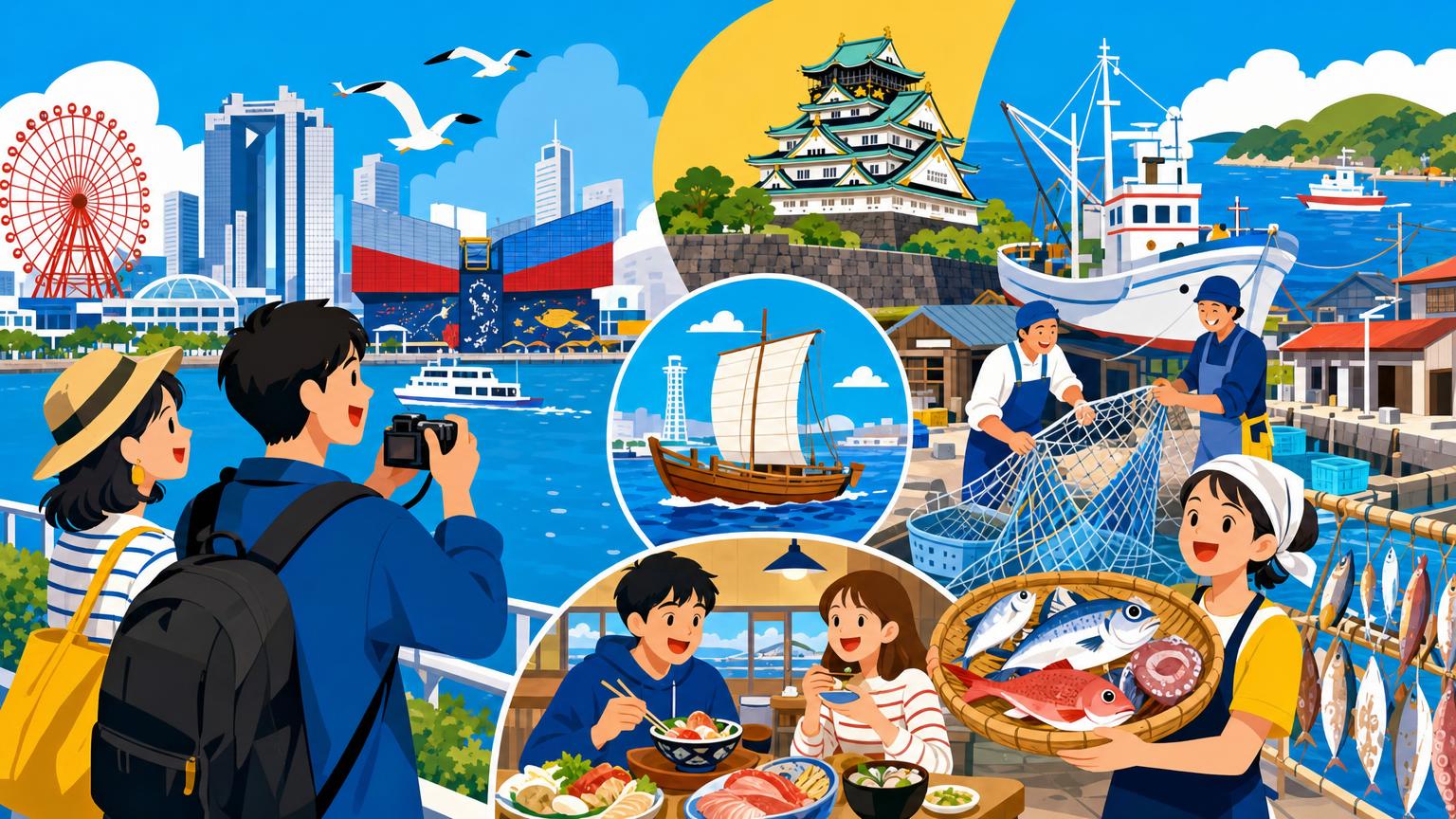
Osaka’s connection with water predates the modern port. The city grew up around rivers, canals, tidal zones, and access to Osaka Bay. Historically, water was not merely a scenic element; it served as transportation, storage, employment, flood risk, and a food source.
The city’s commercial expansion relied on bringing rice, fish, oil, vegetables, textiles, and other goods into Osaka and distributing them outward. The port and river system contributed to Osaka’s reputation as the “nation’s kitchen,” but that phrase can be misunderstood. It doesn’t mean Osaka has always been a city of restaurants. Rather, it signifies that Osaka became a hub where goods were collected, priced, stored, exchanged, and dispatched.
This history continues to shape the city’s character. Osaka residents often focus on whether something is useful, fairly priced, and worth the effort. This doesn’t imply that everyone is calculating or money-driven. Instead, value is often openly discussed. A meal, a service, or a conversation may be evaluated based on whether it offers something in return: pleasure, convenience, information, laughter, or connection.
The port also fostered a practical outward-looking attitude in Osaka. Commercial cities encounter strangers—sailors, merchants, migrants, wholesalers, workers, and travelers—each with different customs. Over time, the city has developed ways to handle unfamiliar people without making every interaction formal. Osaka’s humor can serve as one of these tools. A joke might ease tension. A teasing comment could test whether a new acquaintance can respond. A direct question may aim to understand you quickly rather than to offend.
Foreign residents sometimes misinterpret this style. They might perceive a blunt remark as hostility or a joke as intimacy. In Osaka, both readings can be incorrect. The speaker might simply be gauging the atmosphere. Can you sense the tone? Can you laugh without losing face? Can you answer directly? Can you keep the conversation going after a minor disagreement?
A coastal weekend offers the chance to observe these patterns because the environment is less polished than central Osaka. In a fishing port, people aren’t constantly presenting heritage for your benefit. Instead, they’re unloading, cleaning, sorting, selling, eating, waiting, repairing, and checking the weather. The maritime past endures not only in monuments but in the practical rhythm of daily work.
Osaka Bay: The City’s Maritime Identity in Urban Form
Begin in the bay area rather than on a beach. The urban coastline reveals why many Osaka residents feel connected to the sea despite rarely spending time directly by it.
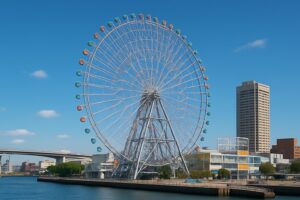
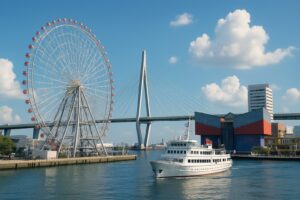
Osaka Bay today is a multifaceted working environment. It encompasses international shipping, ferry routes, logistics centers, industrial zones, reclaimed islands, recreational facilities, and large-scale redevelopment projects. Osaka City describes the port as a hub of transport and international exchange for centuries, with modern development expanding the harbor through industrial land, container terminals, ferry facilities, and artificial islands.
This blend is significant. In some cities, waterfronts are designed mainly for public enjoyment. In Osaka, the bay remains closely tied to work. You might see promenades and entertainment areas, but behind them lie trucks, warehouses, shipping lanes, security fences, and restricted zones. The sea is nearby, yet access is inconsistent. Someone living ten minutes from the water may still have no ordinary reason to engage with it.
That division reflects Osaka’s modern history. As industrialization progressed, parts of the shoreline were reshaped for larger vessels, factories, cargo handling, flood protection, and reclaimed land. The coast became more industrial and less accessible as a natural edge. The result is a city that is maritime in its economy but often inland in daily life.
What the Bay Area Says About Osaka
The bay area reveals a side of Osaka easily missed when walking through Umeda, Namba, or Tennoji. The city is more than a dense commercial center with a vibrant food culture. It is also a place defined by flows: goods arriving, workers commuting, trucks moving, ferries departing, and rivers linking the interior to the bay.
This helps explain why Osaka can feel less formal than Tokyo. Tokyo often presents itself through political, corporate, and institutional power. Osaka presents itself through circulation and exchange. It has prestige, universities, major companies, and formal organizations, but everyday status is often softened by casual conversation. People ask what you do, where you live, whether the train was crowded, whether the restaurant was worth the price, and if your landlord is reasonable.
In Tokyo, a new acquaintance may take longer to maintain formal distance. In Osaka, someone may move more quickly to an ordinary topic. This can feel welcoming but also intrusive. The difference isn’t that Osaka residents lack boundaries; their boundaries are often negotiated more openly through conversation.
This is one reason foreigners moving to Osaka often face a faster social learning curve. Someone may comment on your Japanese, your lunch, your clothes, or your neighborhood. Sometimes comments are careless; sometimes, they are invitations. The safest response is generally not to become defensive immediately. Notice the tone, answer briefly, and see if the person continues respectfully.
The City Is Not the Same as the Shoreline
Do not assume that everyone living in Osaka has a strong personal connection with fishing communities. Many residents have never visited a working port. People in northern Osaka may rarely travel to the southern shoreline, while those in southern Osaka may have little reason to visit the urban bay area. Osaka Prefecture contains diverse local identities, commuting patterns, and relationships with the city center.
This is important for foreigners trying to understand “what Osaka people are like.” There is no single Osaka personality. A salary worker in Nishi Ward, a family in Kishiwada, a student near Suita, and a fish vendor in Tajiri may all speak Kansai dialect, but their daily pressures and local customs differ.
The maritime route is valuable because it allows you to observe these differences without turning them into a staged cultural lesson. You move from a metropolitan port to suburban coastal towns and then into communities where the sea remains part of the local economy. The transition is gradual, not theatrical.
From Central Osaka to Sennan: Leaving the Commercial Core
A weekend route to the southern coast can start from Namba, Tennoji, or Osaka Station depending on your destination. For many southern Osaka coastal trips, the Nankai Main Line serves as the most practical backbone. The journey from Namba to the Sennan area typically takes about one to one and a half hours, depending on the train and stops. From Kansai International Airport, the same coastline is much closer, which contributes to the southern bay area feeling connected both to Osaka and the broader flow of international travel.
The precise travel time is less important than the change in atmosphere. You begin surrounded by large stations, convenience stores, overhead signs, and dense apartment buildings. Gradually, the buildings become shorter, spacing widens, and signs take on a more local character. You’ll notice small workshops, detached houses, roadside businesses, and utility poles. Although the sea might still be out of sight, the environment starts to feel less like the heart of a metropolitan system.
Foreign residents often expect a clear boundary between city and countryside. Osaka doesn’t always offer such a stark division. The transition is gradual. A suburban station may feature a chain restaurant, a supermarket, a karaoke venue, and a street with centuries-old neighborhoods all within walking distance. Modern convenience doesn’t erase local history—it coexists alongside it.
This blend is typical of Osaka Prefecture. While people might complain about aging buildings, narrow roads, and inconvenient bus connections, they often resist redevelopment because neighborhoods hold family businesses, close relationships, or memories that don’t show up on maps. Practicality and attachment coexist here.
Why Smaller Stations Reveal More Than Major Attractions
At a large station, you see Osaka as a transportation hub. At a smaller station, you observe how people arrange everyday life around transport. Which exit leads to the supermarket? Where do older residents wait for the bus? Which side is the school route on? Is there a covered walkway for rainy days? Does the station have a taxi stand, or do people rely on family members for rides?
These details matter to anyone thinking about living in Osaka. A neighborhood’s quality isn’t determined solely by its distance from Namba or Umeda. It also hinges on whether you can buy groceries, reach medical care, walk safely at night, and manage the journey home when trains are delayed.
The coastal towns south of Osaka also remind you that Japan isn’t organized solely for tourist convenience. A place can be interesting, beautiful, or historically significant and still have limited English signage, erratic bus service, and early closing hours. This is not a shortcoming. It shows that the area prioritizes residents first.
Sennan and Tajiri: Where the Sea Becomes Local Again
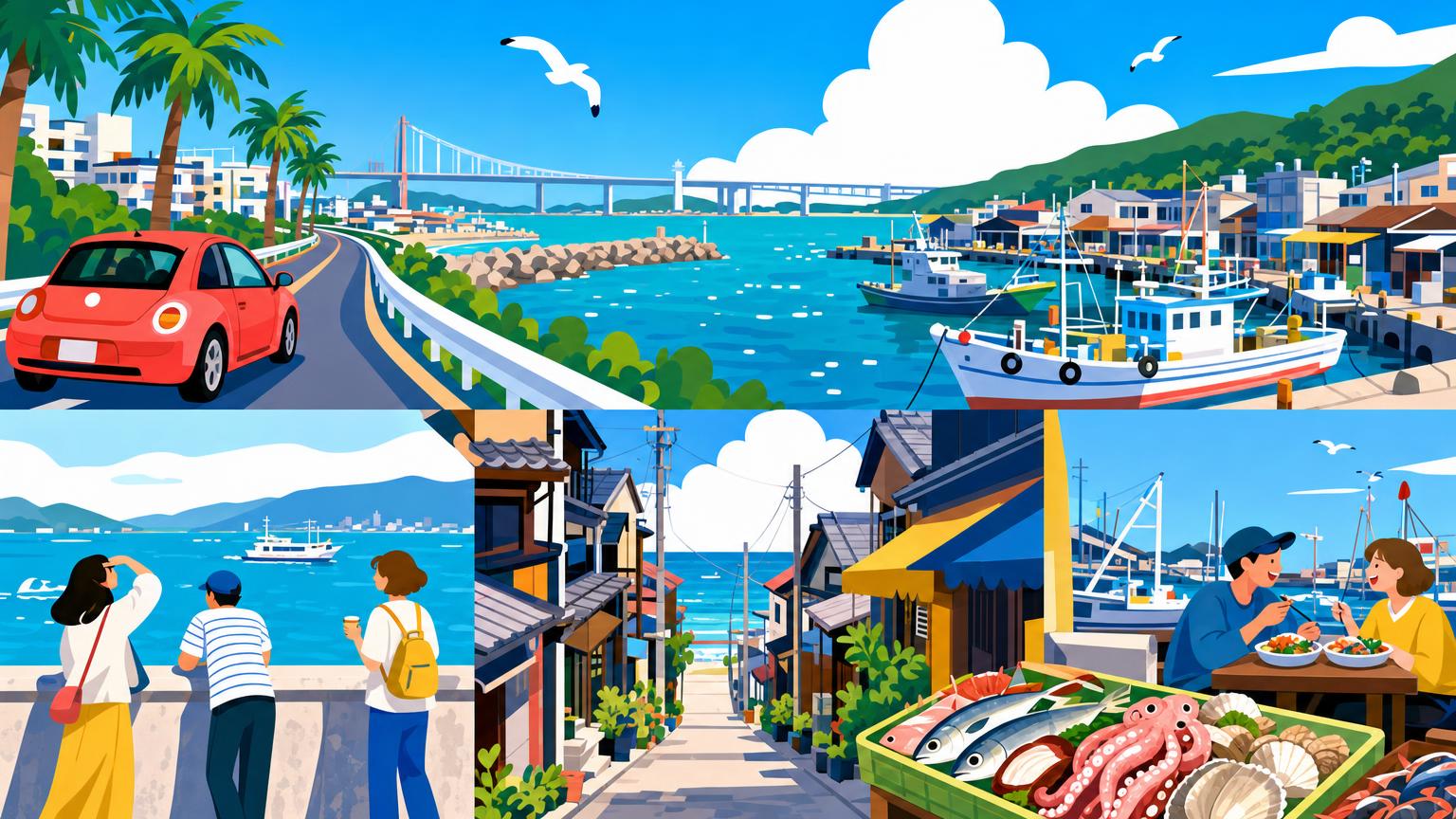
The southern coastline of Osaka features numerous fishing ports and coastal communities. Osaka Prefecture identifies fishing ports in locations such as Sakai, Kishiwada, Tajiri, Sennan, Hannan, and Misaki. These ports vary in character and do not all resemble picturesque old villages. Many have been renovated, repaired, or modified to suit modern coastal conditions.
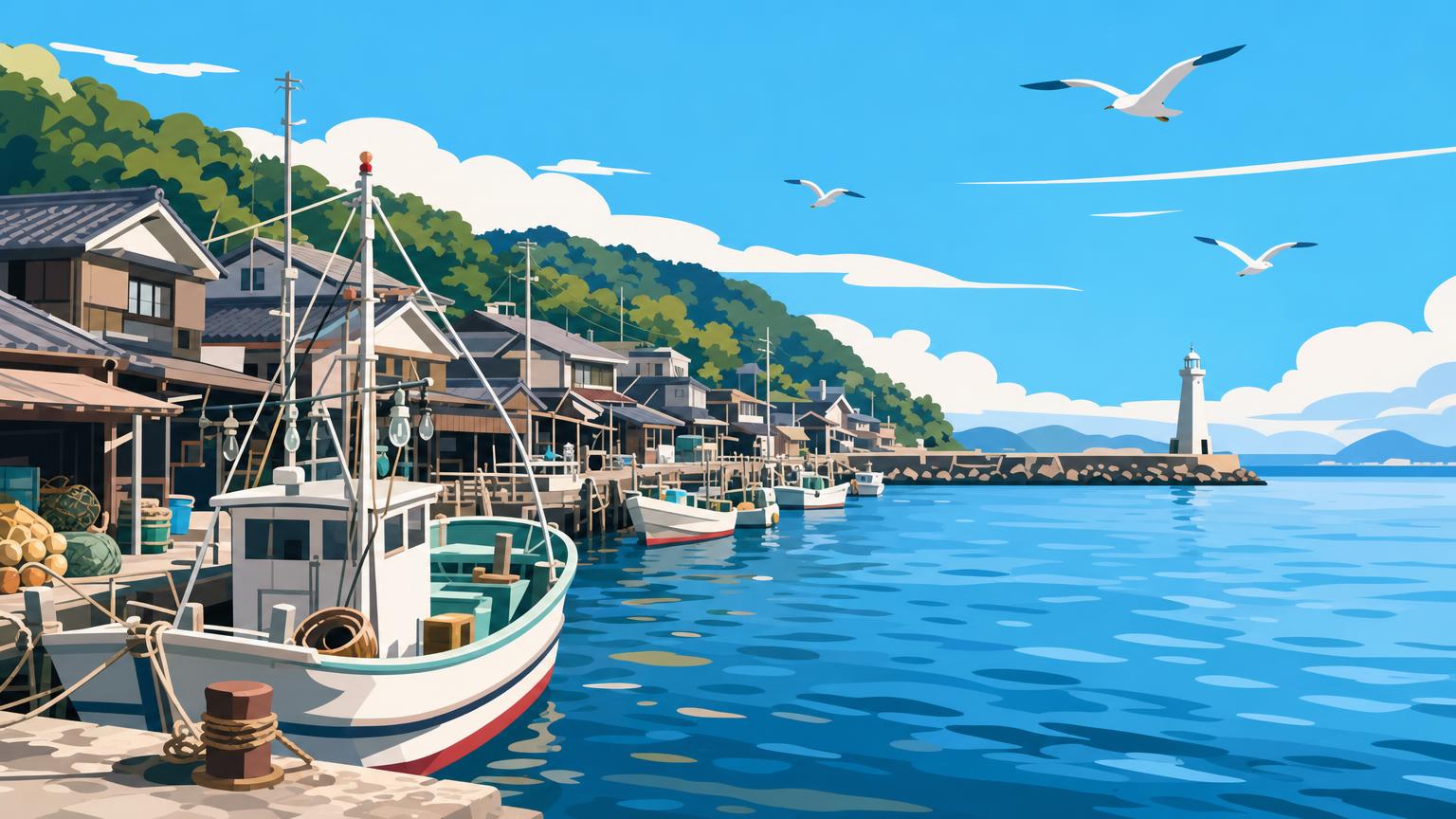
Tajiri is particularly useful for understanding the connection between Osaka’s metropolitan population and the local fishing culture. The port is near Kansai International Airport and accessible from central Osaka, yet its pace and atmosphere contrast sharply with the airport, outlet malls, and major transport routes nearby. The Sunday morning market at Tajiri Fishing Port is well known for fresh fish, vegetables, tempura, processed foods, and other goods sold in a lively early-morning setting.
Such a market should not be viewed as a display of “traditional Japan.” It is better seen as a local solution. Producers and vendors gather food at a specific time, residents arrive early, buyers compare quality and price, and the market provides a social reason to visit the port. The experience is cultural because it serves a practical purpose.
How to Behave at a Fishing Port Market
The key rule is to remember that the market is not a museum. People may be working quickly, space may be limited, and goods may be arranged for customers already familiar with purchasing them. If uncertain, observe local shoppers before asking questions.
Avoid blocking a stall while taking photos. Always ask permission before photographing people, especially vendors handling food or talking with customers. If you buy something, step away from the busiest area of the stall before opening packaging or deciding where to eat. Have cash ready when possible. Do not touch seafood simply out of curiosity.
These behaviors are basic courtesy but also reflect Osaka’s practical social style. Respect is shown by not creating extra work for others. In formal tourist settings, staff may guide you through every step, but in a working market, your responsibility is to observe, adapt, and facilitate smooth transactions.
Foreigners sometimes worry that they must speak perfect Japanese to enter a local market. This is not necessary. A greeting, a smile, a clear gesture, and a willingness to accept correction are often enough. What causes difficulty is not limited Japanese skills but behaving as if the market must accommodate your uncertainty.
Food as a Form of Local Knowledge
Osaka’s food culture is often described through famous dishes, but its maritime heritage is more deeply reflected in how food is handled. Fish is not just a menu item; it involves questions of season, origin, freshness, price, preparation, and trust.
A local buyer may ask where the fish came from, whether it’s best grilled or cooked, and how long it will keep. These questions are part of the purchase and demonstrate that food knowledge is shared through casual conversation. A vendor who suggests a cheaper fish for a certain dish may be offering more than a sales pitch; they are showing an understanding of the customer’s household needs.
This helps explain why Osaka speech can sound commercially direct without seeming aggressive. The goal is often to reach a practical decision: What do you want to eat? How much do you want to spend? When will you cook it? What’s worth buying today?
For residents of Osaka, this style can be freeing. You don’t need to pretend every product is perfect or every service convenient. You can ask straightforward questions, say something is too expensive, and compare options. But it’s important to remember that directness works best when paired with warmth and reciprocity.
Sennan Marble Beach and the Difference Between a View and a Working Coast
Sennan Marble Beach is recognized for its unique pale stones and expansive views over Osaka Bay. Located near Kansai International Airport, it easily connects with other southern Osaka coastal areas. This beach differs from the natural shoreline many foreign visitors envision when they hear “beach near Osaka.” It exists within a highly managed and developed bay environment, surrounded by airport infrastructure, industrial zones, roads, and public amenities.
This is exactly what makes it valuable. The view illustrates how Osaka interacts with nature through a blend of accessibility, engineering, and industry. The sea is visible because the city has constructed roads, breakwaters, airports, parks, and public spaces alongside it. Although the coastline is not untouched, it is far from meaningless.
Many Osaka residents do not expect every waterfront to be wild or scenic. They may appreciate a place for its accessibility after work, safety for a brief walk, suitability for family picnics, or proximity to a station. This practical understanding of enjoyment contrasts with the pursuit of a perfect landscape.
A foreign resident might initially perceive the distant airport as an eyesore. In contrast, a local might view it as part of the coastal character: a source of employment, arrivals, departures, noise, and connection to the wider world. The bay is not solely a place to escape the city; it is also where the city interacts with the world.
Tannowa and Tokimeki Beach: Leisure at the Edge of Osaka
Further south, the Tannowa and Tokimeki Beach area provides a more laid-back coastal vibe. Traveling from central Osaka takes longer and usually requires careful attention to local train schedules, but that inconvenience is part of the experience. The shoreline isn’t meant to be a seamless extension of Namba. You need to plan ahead, leave earlier, and accept that the area may be quiet outside its peak season.
This offers a useful contrast to Osaka’s central neighborhoods. In the city, convenience is taken for granted. There’s usually another train, restaurant, convenience store, or alternative nearby. In a small coastal community, options are more limited. Shops may close early. Buses may run infrequently. The beach may be peaceful simply due to less commercial activity.
People considering living in Osaka should take note of this difference. Osaka provides urban convenience, but not all parts of the prefecture are equally convenient. A coastal neighborhood may offer more space, lower population density, and a slower pace, while making commuting, medical visits, and social integration more challenging.
The Tannowa area also illustrates that “local” does not mean stuck in the past. Coastal recreation varies with the weather, school holidays, municipal funding, and population trends. Some facilities operate only seasonally. Some communities seek to attract visitors while minimizing noise and litter for residents. Others are balancing tourism with the needs of fisheries and families rooted there for generations.
Why Quiet Places Can Be Socially Difficult
Foreigners may sometimes think that a quiet neighborhood will be easier to integrate into than a bustling city, but the opposite may be true. In a busy Osaka district, anonymity shields you. You can shop, exercise, or dine unnoticed. In a smaller coastal town, regular customers are quickly recognized and your actions become more visible.
That visibility isn’t necessarily unfriendly. It can lead to greetings, recommendations, and practical assistance. But it also means careless behavior spreads quickly. Leaving trash, ignoring local signs, entering private property, or taking photos of homes can leave a lasting negative impression.
The best approach is modest consistency. Greet people when appropriate. Frequent the same shops repeatedly. Learn the local rhythms. Avoid demanding immediate friendship. In Osaka, relationships tend to grow warmer through repeated everyday contact rather than one dramatic introduction.
Osaka’s Fishing Villages and the Meaning of “Authentic”
The term “authentic” is meaningful only when it is carefully defined. A fishing village isn’t authentic simply because its buildings are old or its residents act as if they are in a historical play. It is authentic when the place functions according to local needs rather than being designed solely for outside observation.
Tajiri, nearby fishing ports, and other coastal communities exhibit varying degrees of this balance. While there may be markets, restaurants, recreation areas, and visitor facilities, the port continues to serve working purposes. Boats must be maintained, fish handled, weather influences plans, and local roads cater to residents. The sea represents an economic environment, not just a scenic view.
For foreign residents, this distinction prevents a common error: seeing local people as cultural assets. A vendor does not owe you a story about the past, a fisherman does not owe you a photo, and a resident with limited English skills is not failing in hospitality. Sometimes the most respectful approach is simply to buy something, follow the rules, and leave the place as you found it.
Osaka’s straightforwardness can be helpful here. If a vendor says photography is prohibited, the correct response is not to negotiate emotionally but to accept it. If a market is closing, don’t ask staff to stay open because you arrived late. If a local person corrects your behavior, listen attentively. In a culture that values practical exchange, respect is shown by how you act after being given guidance.
Osaka Versus Tokyo: What the Coastal Route Helps You Notice
The Osaka-versus-Tokyo comparison is often simplified to personality traits, with Tokyo described as reserved and Osaka as outgoing. However, this is too simplistic to be meaningful.
A more accurate comparison involves how social interaction is handled. Tokyo tends to emphasize formal distance, institutional roles, and avoiding noticeable disruptions. Osaka also values politeness, but everyday conversation tends to become informal more quickly. People may use humor, teasing, or direct questions to build a practical relationship.
This doesn’t imply that Osaka is less organized. Trains still run on complex schedules, workplaces remain hierarchical, and administrative procedures stay formal. The difference is that outside official contexts, people are often more willing to comment, negotiate, complain, or improvise.
This dynamic is apparent at a fishing port, where buying food might include a brief chat about price and preparation. A market there may feel noisy and bustling rather than quiet and orderly. Vendors might call out to one another across the space, and customers may ask for recommendations without worrying about seeming demanding.
To foreigners used to highly individualized service, such interactions may seem personal. To an Osaka resident, they are simply efficient. The relationship becomes human because both sides acknowledge the reality of the situation.
What Foreigners Often Misunderstand About Osaka Humor
Osaka humor is not always an open invitation to joke; it is often context-dependent. People may joke when a mistake is minor, when tension needs easing, or when they want to see if the conversation can become less formal. But humor does not absolve responsibility.
If a train is seriously delayed, people tend to complain rather than laugh. If someone is under stress at work, a joke might be unwelcome. If you’re a foreigner, a joke about your accent or nationality could be friendly, ignorant, or both. You don’t have to laugh at everything.
The practical approach is to consider repetition and power dynamics. Is the person joking with everyone or only with you? Do they stop if you seem uncomfortable? Are you in a relationship where teasing is mutual? Can you respond with a light comment without risking your position?
A weekend by the coast helps because it slows the pressure to categorize people. You can observe how humor functions among vendors, families, workers, and visitors. You might find that Osaka’s informality is not a personality trait of every individual, but rather a local way of making everyday interactions less rigid.
A Weekend Rhythm That Explains How Osaka Works
A fulfilling coastal weekend doesn’t require a busy itinerary. The key is in the order: start at the urban bay, journey through southern Osaka, spend time near an active port, and return with a deeper appreciation of the city’s relationship with the sea.
On the first day, begin in the bay area and focus on infrastructure instead of entertainment. Observe how the city separates public waterfront areas from working port zones. Watch the flow of vehicles and ferries. Notice how reclaimed land creates wide distances that feel unusual compared to central Osaka.
Continue south toward Sennan or Tajiri. Along the route, observe the shift from metropolitan convenience to a local scale. Take note of station neighborhoods, supermarkets, family-run shops, and older houses. Consider what residents need daily, not what might appeal to visitors.
Arrive early at Tajiri or another fishing port if you want to grasp the market’s true atmosphere. The morning tempo is important. A market later in the day might be pleasant, but the working energy peaks when goods, vendors, and buyers are all actively engaged. Eat simply and buy something local if useful. Avoid turning the visit into just a photo opportunity.
Spend the afternoon by the coast, perhaps at Marble Beach or a quieter shore in the south. Watch how people use the space. Some may walk, fish, sit in cars, chat with family, or gaze toward the airport. Not everyone is seeking a picturesque view. For many, the coast is a place to pause without needing special activities.
If you stay overnight in a coastal town, notice the evening quiet. The absence of urban noise can feel calming but also highlights how much of Osaka’s central convenience relies on population density. Restaurants might close early, streets may empty, and public transport could be limited. This isn’t a more authentic Osaka—it’s simply another way Osaka Prefecture functions.
Practical Advice for Foreign Residents
Transportation and Timing
For southern Osaka, Nankai trains departing from Namba often serve as the most convenient starting point. Depending on the destination and type of service, travel times to coastal areas like Sennan, Tajiri, or Tannowa typically range from about one hour to an hour and a half. Tajiri and nearby coastal spots are much closer when traveling from Kansai International Airport than from central Osaka. Always check the latest timetable before you depart, especially on weekends, as local services and connections may vary.
If you plan to go beyond Osaka Prefecture to destinations such as Wakayama, Shirahama, Amanohashidate, or Ine, the trip may be less suitable for a casual day trip. While JR West passes cover some rail routes, buses, private railways, reserved seats, and local transfers might require additional arrangements. The Kansai WIDE Area Pass covers a wide JR West network including Wakayama, Shirahama, and Amanohashidate, but this does not guarantee coverage of every local bus or private railway.
For a weekend centered on Osaka’s maritime heritage, staying within southern Osaka can offer a more authentic cultural experience than rushing out to a well-known seaside spot farther away. The goal is to observe how coastal life integrates with everyday living rather than focusing on covering the greatest distance.
Clothing, Weather, and Coastal Safety
The coast often feels colder, windier, and more exposed than central Osaka. It’s advisable to bring an extra layer even if the city itself feels warm. In summer, take precautions against sun and heat, but also bear in mind that fishing ports may have slippery surfaces, uneven ground, ropes, and working vehicles.
Do not enter restricted areas to get closer to boats, and avoid standing on breakwaters during rough weather. Tides, wind, and rain can alter conditions rapidly. If traveling alone, inform someone of your plans, especially if you intend to explore quiet shorelines after dark.
Women traveling alone should be aware of the difference between public coastal areas and isolated industrial or harbor zones. Osaka is generally easy to get around, but quiet places are not necessarily safe or convenient. Keep your phone charged, know the time of the last train, and don’t assume that coastal paths will remain well lit.
Language and Social Expectations
Learn a few key phrases related to buying food and asking for directions. Simple expressions like “sumimasen,” “kore wa nan desu ka,” and “osusume wa arimasu ka” can ease brief interactions. Perfect fluency isn’t necessary — patience is more important.
If someone replies in Kansai dialect, you might not catch every word. Don’t worry. Focus on the essential information. Osaka speech can sound faster and more expressive than standard Japanese, but people often repeat themselves if you ask politely.
Avoid constantly comparing everything to Tokyo. Residents of Osaka are used to comparisons with Tokyo, and these can become tiresome when based on stereotypes alone. Instead of saying Osaka is more genuine or Tokyo is cold, describe what you actually observed: people asked more direct questions, the market had less formal service, or the area around the station felt more locally oriented.
What This Journey Teaches You About Living in Osaka
The main lesson is that Osaka’s maritime heritage is not hidden because the city has forgotten the sea. Rather, it is concealed because modern urban life has distanced most people from the physical labor of the coast.
You can live in Osaka for years without ever visiting a fishing port. You can enjoy excellent seafood without knowing its origin. You can cross rivers without considering how water shaped the city’s commercial history. Yet the old logic persists. Goods move. People assess value. Relationships form through repeated contact. Food links households to distant producers. Neighborhoods are judged by usefulness as well as appearance.
This logic also influences the experience of foreigners. In Osaka, you might receive more informal attention than expected. People may ask direct questions, joke, or offer practical advice. Sometimes this will feel generous; sometimes it may feel intrusive. The key is not to label every interaction as either friendliness or discrimination. Observe the pattern. Notice whether respect is mutual. Pay attention to whether the person respects your boundaries.
Living in Osaka requires balancing openness with self-protection. Be willing to answer ordinary questions, but don’t share more than you want. Accept humor, but do not tolerate repeated disrespect. Learn to express complaints constructively. Ask for help clearly. Frequent the same local businesses. These habits help many residents become part of a neighborhood.
The coastal route makes these lessons tangible. At the bay, you see Osaka as a global port. At Sennan and Tajiri, you observe how the metropolitan economy connects with local labor. At a smaller fishing village, you recognize the value of routine, reputation, and practical cooperation. None of these places alone represents the entire city. Together, they reveal why Osaka feels both urban and deeply local.
Conclusion: Understanding Osaka Through Its Coast
A weekend journey from Osaka Bay to the fishing villages along the southern coast is not primarily a sightseeing tour. It is a way to understand the city.
The bay reveals Osaka’s scale: international trade, reclaimed land, ferries, cargo, airports, and infrastructure. Sennan illustrates the gradual transition from metropolitan space to coastal community. Tajiri demonstrates how food, work, and local relationships converge in a port market. Marble Beach and the southern shoreline show that residents may appreciate the sea not as untouched nature, but as an accessible place to pause, converse, eat, fish, or watch the day unfold.
Most importantly, the journey reveals why Osaka people often appear direct, humorous, practical, and socially quick. These traits are not random stereotypes. They evolved within a city shaped by trade, water, movement, food, risk, and exchange. People learned to make decisions, read strangers, negotiate value, and build trust through repeated everyday interactions.
If you are considering living in Osaka, don’t just ask whether the city is friendly. Ask how people show respect, handle disagreement, use humor, and organize daily life around convenience and local ties. Then take the train toward the coast and observe the city as it gradually changes.
You may return without a dramatic story. That is the point. Osaka’s maritime heritage is found not only in grand history but also in the early market, the fish counter, the harbor road, the station conversation, the practical recommendation, and the quiet understanding that a city is built from the movement of ordinary things.