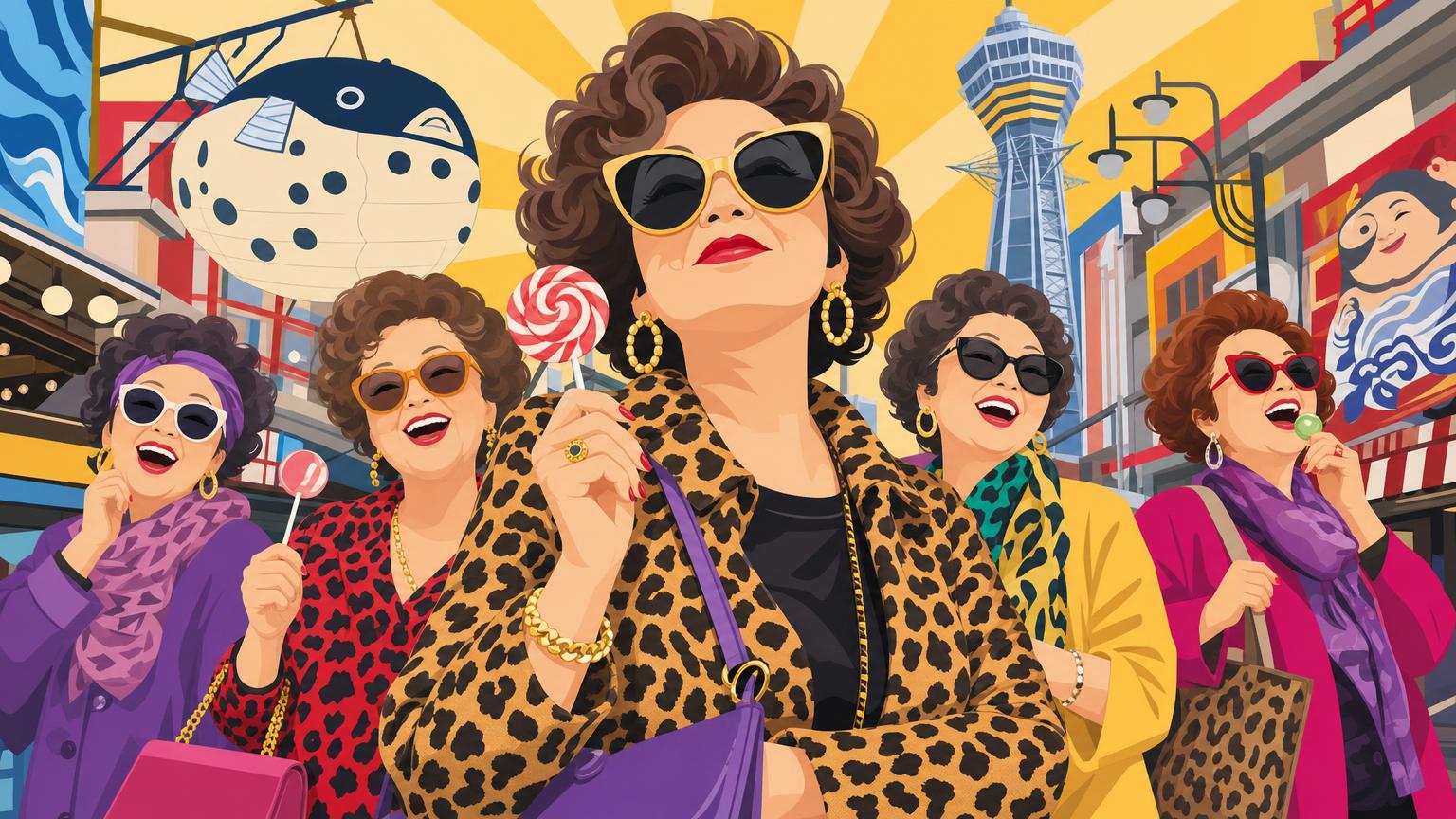
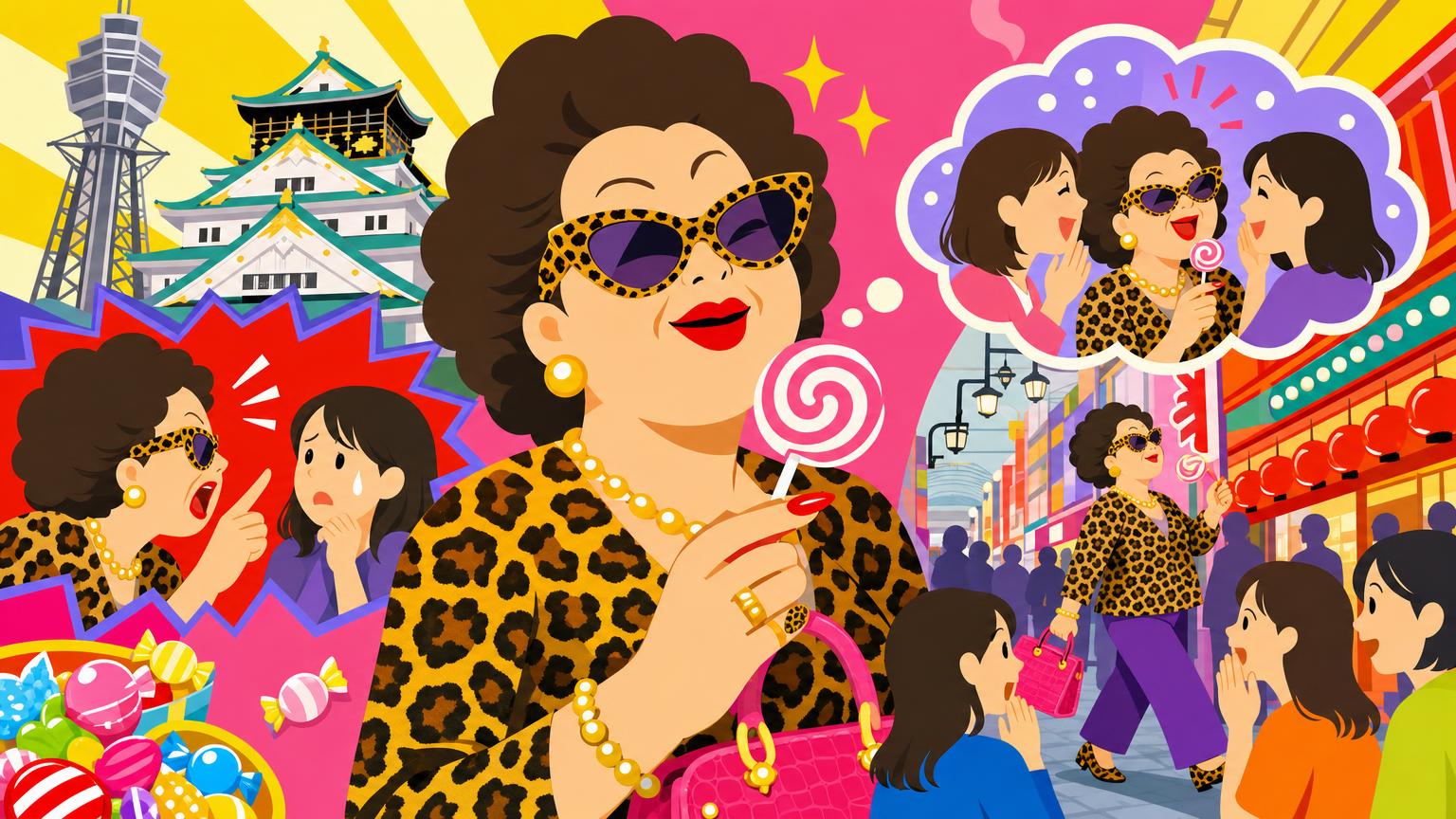
If you live in Osaka, you may eventually experience a scene that feels confusing at first. An older woman in a leopard-print jacket comments on the price of vegetables, asks where you are from, complains about the weather, and then offers you a piece of candy as if you have known each other for years.
Was she joking? Was she being rude? Was the candy safe to accept? Did she expect you to buy something?
Usually, the answer is simpler. You have just encountered one version of the Osaka obachan.
The word “obachan” is often translated as “auntie” or “middle-aged woman,” but neither translation fully captures its social meaning. In Osaka, the stereotype refers to a recognizable style of public behavior: direct speech, quick humor, practical intelligence, loud or distinctive fashion, strong opinions, and an ability to turn a small exchange into a relationship. The famous leopard print and candy are real cultural images, but they are not the whole story.
For foreigners living in Osaka, the important point is this: obachan culture is not merely a collection of funny habits. It reflects how many local communities create trust, manage everyday negotiations, and keep social contact alive. It also explains why Osaka can feel less formal, more verbally active, and sometimes more intrusive than Tokyo or other Japanese cities.
At the same time, the stereotype can mislead you. Not every older woman in Osaka wears animal print. Not every direct comment is an invitation to become friends. Some women dislike being called obachan, and plenty of younger Osaka residents have no interest in performing the stereotype at all. Reality is more varied, more ordinary, and more interesting.
The map below points to the Tenjinbashisuji area, not because it is a sightseeing requirement, but because its long chain of small shops, food stores, cafés, clinics, and neighborhood businesses shows the kind of shared public space where this communication style becomes visible in daily life.
What Is the “Osaka Obachan” Culture?
The Meaning and Nuance of “Obachan”
In Japanese, obachan is typically written おばちゃん. It is pronounced close to “oh-bah-chan,” with the middle sound kept light and short. The term originates from oba-san, meaning aunt or older woman, but the suffix “-chan” adds a more familiar, informal, and sometimes playful tone.
Its meaning varies greatly depending on tone, age, relationship, and context. A child might call a friend’s mother obachan. A shopkeeper might use obachan warmly when referring to a regular customer. A comedian might use the term to depict a loud, practical, middle-aged woman who speaks her mind. However, when used carelessly by a stranger, it can sound offensive.
This often leads to misunderstandings by foreigners about Osaka’s obachan culture. They may see the word in subtitles, videos, or social media and mistakenly view it as a fixed identity category. It is not one. It can signify a family relation, a social role, a comic character, or an attitude toward life.
In everyday Osaka, the most recognizable obachan behavior isn’t necessarily linked to age. It is the readiness to quickly bridge small social distances.
An obachan might ask a stranger if they are married. She might comment on someone’s weight, hair, clothing, accent, or shopping decisions. She might tell a young parent that their child is underdressed. She could suggest a customer buy a cheaper item rather than the pricier one in front of them. She may complain about prices while still shopping at the same store.
From a North American or European point of view, this can feel invasive. In Osaka, it is often an effort to make interactions more personal and less formal. The remarks are not always welcome or harmless, but typically stem from a social instinct that values active engagement over distant politeness.
Obachan vs. Obaasan: What Is the Difference?
Foreigners often search for “obachan grandma” or wonder if obachan simply means grandmother. It does not.
Obaasan, written おばあさん, generally means grandmother or elderly woman. It is more formal and usually implies older age. Obachan, written おばちゃん, means auntie, middle-aged woman, or an older woman addressed in a friendly, informal way. The two terms can overlap in casual speech, but their nuances differ.
Using obaasan can sound respectful in the right setting, especially when referring to an elderly woman. However, it can also make someone feel older than they perceive themselves to be. Calling a woman obachan may seem friendly if used by someone close, but rude if said by a stranger without an established relationship.
A practical guideline for foreigners is to avoid labeling unfamiliar women with either term. Instead, use their name, say sumimasen, or speak politely without resorting to age-related words. You can understand the vocabulary without applying it as a nickname.
This cultural distinction is important because the Osaka obachan stereotype isn’t really about “grandmothers.” It describes a socially active adult woman who may hold a key role in a family, shopping street, apartment complex, school community, workplace, or neighborhood network.
Why the Stereotype Feels So Strong in Osaka
Outspoken older women exist in every region. Osaka’s version became especially prominent due to the city’s rich tradition of popular comedy, merchant speech, shopping streets, TV personalities, and neighborhood interaction. Osaka’s public image values verbal quickness and distinctive character.
An older woman in a simple coat might be recognized as an obachan socially. A stylish woman in her sixties might be one as well. The stereotype gains strength because media highlights the most visually striking examples: leopard print, large handbags, loud laughter, dialect, bargaining, and candy.
In daily life, the reality is less dramatic. Most Osaka residents are simply buying groceries, waiting for a train, handling family matters, working part-time, visiting a clinic, or chatting with a shop owner. The “character” emerges in small moments, especially when everyday tasks create chances for conversation.
Iconic Traits and Facts of the Osaka Obachan
Bold Clothing: The Leopard-Print Phenomenon
Leopard print is the most iconic feature of the Osaka obachan image. It appears on jackets, shirts, scarves, bags, shoes, leggings, and sometimes even as a fully coordinated outfit. The pattern is visually striking, easy to identify, and linked with confidence.
However, it is incorrect to assume that Osaka women wear leopard print merely because they enjoy looking eccentric. Clothing can convey multiple messages simultaneously.
It can signal that the wearer no longer wishes to blend into the background. Older women are often expected to become visually modest, quiet, and socially unobtrusive. Leopard print challenges that expectation. It effectively says, “I am here, I have energy, and you will notice me.”
This can be seen as a positive response to age-related invisibility. In many societies, older women face pressure to appear smaller, safer, younger, or less demanding. A bold pattern offers an alternative message. It can symbolize strength, humor, independence, and resistance to the notion that aging should diminish a woman’s presence.
The pattern also fits well within Osaka’s communication culture. A distinctive outfit can spark conversation. Someone might say, “That jacket is powerful,” or make a joke about the print. The wearer can respond with humor. Clothing becomes part of the dialogue.
Of course, not every leopard-print outfit carries a political statement. Sometimes the wearer simply likes the pattern. Sometimes it was inexpensive, fashionable at the time, or a gift from a department store. Cultural interpretation should not become another stereotype. The important point is that bold fashion is often more readily accepted in Osaka than outsiders expect.
Tokyo’s mainstream image tends to favor controlled presentation, especially in central business districts. This does not mean Tokyo residents lack personality or that everyone dresses conservatively. It means that public appearance is often managed through subtlety, coordination, and situational appropriateness. Osaka allows greater room for visual humor and deliberate exaggeration, particularly in neighborhood settings.
Foreign residents should not assume that a bold outfit grants permission to photograph someone. Admiration is fine; unwanted attention is not. If a person is already conversing with you, a simple compliment such as “kakkoii,” meaning cool or stylish, may be appreciated. If you are passing by on the street, keep walking.
The “Ame-chan” Candy Culture
Ame-chan means candy, with the affectionate Kansai-style suffix “-chan.” You might hear an Osaka woman say, “Ame-chan taberu?” meaning, “Do you want a candy?” The candy may be individually wrapped and taken from a handbag, pocket, shop counter, or small plastic bag.
The key point is that ame-chan is more than just a snack. It serves as a social icebreaker.
Offering candy provides two people with a simple reason to talk. The gift is small enough not to create a serious obligation. It is practical enough to be useful. It can ease an awkward moment, reward cooperation, fill a pause, or transform a stranger into a temporary conversational partner.
An obachan might offer candy to another passenger, a child, a delivery worker, a neighbor, a customer, or a foreign resident struggling with Japanese. The gesture can mean, “Let us relax,” “You look tired,” “You are welcome here,” or simply, “I have candy, and this is how I start chatting.”
This explains why the candy stereotype persists. It reflects a genuine pattern of small-scale social interaction. The candy does not prove that all Osaka women are generous or that every encounter will turn friendly. It is a tool for opening the door to communication.
Foreigners sometimes hesitate when offered ame-chan because they worry about hidden meanings. Usually, there is no complicated catch. Smile, accept it if you want it, and say arigatou gozaimasu. In a more casual exchange, ookini is a natural Kansai-flavored thanks. If you do not want the candy, place your hand near your chest, smile, and say, “Daijoubu desu, arigatou gozaimasu,” which roughly means, “I’m okay, thank you.”
Avoid taking an entire handful unless invited. Do not assume the candy is a pretext to ask for a favor. Do not joke about Japanese hygiene or compare the person to a cartoon character. The gift is small, but the social message deserves respectful treatment.
You may also notice older women exchanging candy among themselves at rapid speed. One produces a bag, another initially refuses, then accepts, and their conversation continues. This is not a formal gift ritual but everyday maintenance of social connection.
Masters of Haggling?
The image of the Osaka obachan as an expert negotiator is partly true and partly exaggerated.
Osaka has long been connected with commerce, market trading, and practical assessment. Many residents feel comfortable asking whether a price can be lowered, whether a product is fresh, if a discount applies, or if another shop sells the same item more cheaply. These questions are often less aggressive than foreigners might think.
In a small independent shop, especially where a personal relationship exists between customer and owner, negotiation can be part of the interaction. A customer might say, “Mou chotto yasuku narahen?” meaning, “Can you make it a little cheaper?” The answer may be no, but asking creates a playful moment and signals that the customer is engaged rather than passive.
However, this does not mean you should bargain everywhere in Osaka. Supermarkets, chain stores, convenience stores, restaurants, pharmacies, and most fixed-price shops are not places for negotiation. Demanding a discount may be uncomfortable for all parties.
The deeper pattern is practical speech. Osaka communication often openly includes discussions about value. Is it worth the price? Is the portion large enough? Is the product fresh? Is there a better option nearby? Does the seller treat customers fairly?
In Tokyo, a customer may privately decide an item is too expensive and quietly leave. In Osaka, the customer is more likely to discuss the price aloud. That discussion can involve complaint, humor, comparison, and eventual acceptance. The difference is not that Osaka people are greedier; it is that discussing value is more socially acceptable.
For foreigners living in Osaka, this attitude can be helpful. It encourages you to ask clear questions about rent, repair costs, mobile plans, furniture, used bicycles, or local services. It can also cause misunderstandings if you treat every conversation as a negotiation. The best approach is to observe whether the other person is playing, explaining, or setting a firm limit.
Straight Talk and Radical Honesty
Osaka people are often described as honest, but “honest” requires clarification. Most Osaka residents are not constantly revealing their deepest private thoughts. They still use politeness, indirectness, and social judgment. What changes is the readiness to make everyday opinions audible.
An Osaka speaker might say that a restaurant is too expensive, that your Japanese pronunciation is improving, that your umbrella is useless in heavy rain, or that your new haircut is unusual. Although these statements may sound blunt, they do not necessarily carry hostility.
Humor often acts as a safeguard. A comment that might seem harsh in a serious tone can become acceptable when accompanied by a smile, laughter, or exaggerated delivery. The speaker might be testing whether you can respond playfully.
Nevertheless, foreigners should not idealize this directness. Some comments are genuinely intrusive. Questions about salary, marriage, children, weight, nationality, or immigration status can cross a boundary. Osaka’s reputation for openness does not override personal limits.
You can respond lightly without revealing private details. “Himitsu,” meaning secret, is useful and often humorous. You can say, “Mada wakarimasen,” meaning you do not know yet, or “Sore wa muzukashii desu,” meaning that is difficult. A smile and a change of subject may suffice.
The key is to distinguish social warmth from entitlement. Someone might speak to you casually because they seek connection, but you are still free to decide how much interaction you want.
The Cultural Roots: Why Osaka?
Osaka’s History as a Merchant City
Osaka’s communication style cannot be understood solely through personality. The city’s historical background plays a significant role.
During the Edo period, Osaka emerged as a major hub for trade, logistics, finance, food distribution, and merchant activities. It was linked to regional production through waterways, warehouses, markets, and commercial networks. The city developed a distinct urban culture that existed outside the warrior-centric world associated with Edo, the former name of Tokyo.
Researchers have connected Osaka’s culture of laughter and verbal exchange to its past as a merchant society. Bargaining, persuasion, customer relationships, competition, and reputation were everyday aspects of commercial life. Speech had practical importance; a merchant needed to explain quality, justify prices, ease disagreements, and maintain relationships after transactions.
This history doesn’t imply that modern Osaka residents act like Edo-period merchants. Culture isn’t biologically inherited. However, old habits may leave behind preferred styles: talking before silence, humor before confrontation, practical judgment before abstract formality, and relationships formed through frequent everyday interactions.
The obachan stereotype fits this context because it combines several skills valued in commerce and neighborhood life: noticing what’s happening, speaking quickly, reading others, making small jokes, sharing information, and keeping conversations flowing.
Rejecting Tatemae for Genuine Connection
Foreigners often explain Osaka by saying people reject tatemae—the formal public stance—and prefer honne, the private or genuine feeling. While this explanation is helpful, it is overly simplistic.
Tatemae and honne don’t simply mean “fake behavior” versus “true behavior.” They refer to different communication styles suited to various social situations. Someone might use polite language to maintain harmony without being dishonest. Similarly, a direct Osaka-style comment may be thoughtfully chosen rather than a full expression of private truth.
Osaka doesn’t do away with social performance; it often alters it. Instead of showing calm, controlled distance, a speaker may perform casualness, humor, complaint, or exaggerated emotion. Saying “That is expensive!” can be a routine opening rather than a serious expression of anger. Saying “You are late!” might mean “I noticed you and expected you.”
This is why foreigners may perceive Osaka residents as more honest than Tokyo residents, even when both are deliberately managing interactions. In Osaka, that management is more transparent. The joke, objection, or teasing remark is openly presented for everyone to respond to.
For some foreigners, this style can ease workplace communication. Supervisors or coworkers might seem more approachable, and disagreements may surface sooner rather than remaining hidden. However, it can also complicate communication if every joke is taken literally or every casual promise assumed to be firm.
Pay attention to tone, repetition, timing, and follow-up actions. If someone complains but continues to help you, the complaint may be part of the relationship. If someone speaks politely but avoids your question, the key message might lie in that avoidance.
The Matriarchs of the Local Community
The Osaka obachan is often seen as loud simply because she is loud. Yet, the stereotype also reflects a social role.
Older women frequently possess detailed local knowledge. They know which clinic has short waits, which supermarket offers late-day discounts, which landlord responds promptly, which neighbor requires assistance, and which shop has changed ownership. They might connect people who’d otherwise remain strangers.
In a neighborhood apartment building, an obachan-like figure may know who recently moved in, who is caring for an elderly relative, which children attend which schools, and when garbage collection rules change. She may ask questions that seem intrusive because local knowledge is built through inquiry.
This role isn’t always comfortable. Community support can feel like surveillance. Advice can turn into pressure. A woman organizing a local festival might also criticize how you separate your garbage. Someone who brings you food may later ask why you missed a neighborhood meeting.
For foreigners, this dual nature is important. Osaka’s neighborhood warmth can simplify daily life, especially when practical information is needed. But it can also limit anonymity. Living in Osaka may mean being noticed more than anticipated.
You don’t have to be socially available to everyone. Yet, a simple greeting, brief conversation, and visible participation in shared rules can improve relations with neighbors. In many local contexts, complete silence is not seen as privacy; it may be interpreted as distance, uncertainty, or lack of interest.
Osaka Compared with Tokyo and Other Japanese Cities
Osaka vs. Tokyo: A Difference in Social Temperature
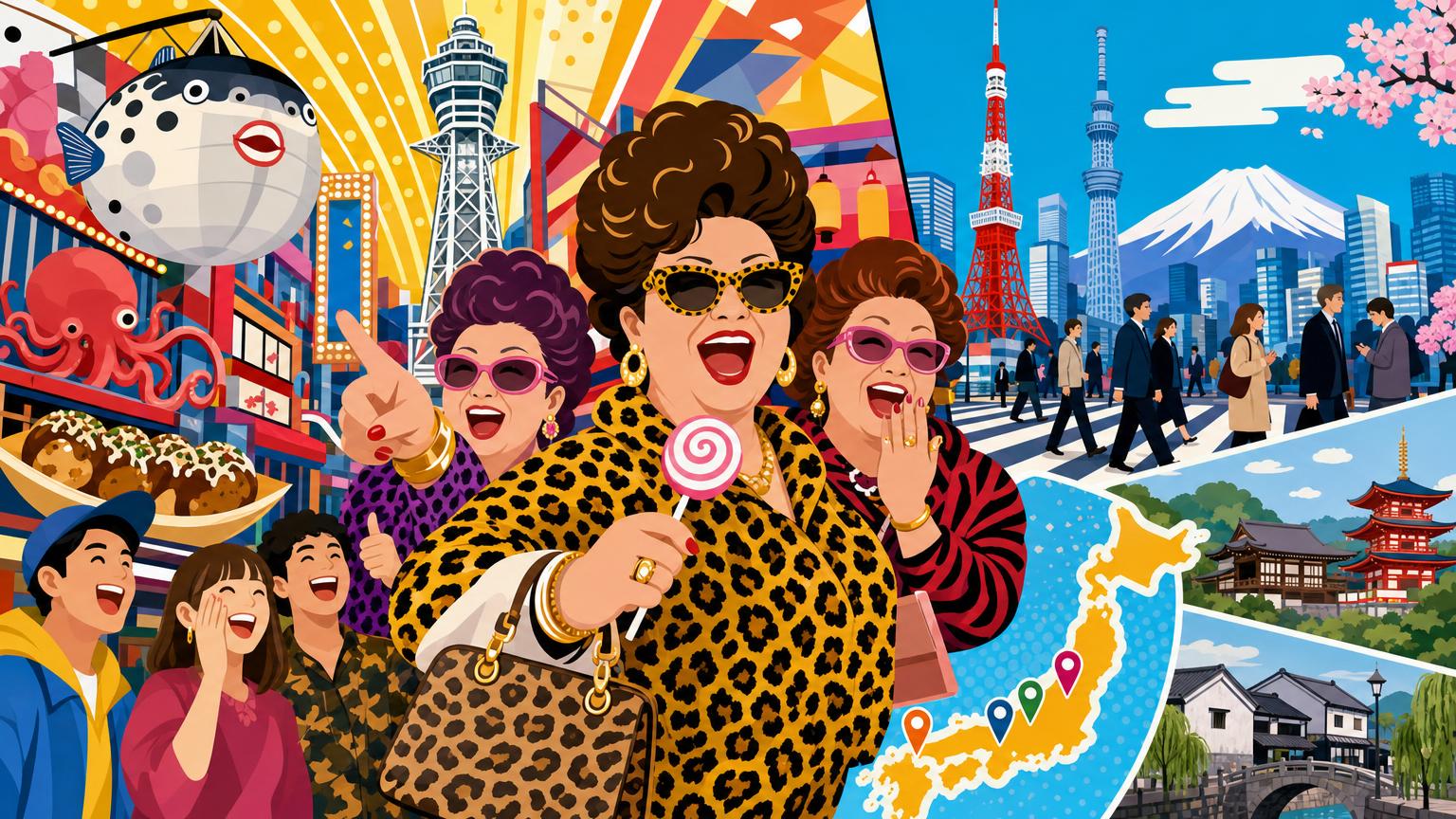
The Osaka-versus-Tokyo comparison is popular because it helps foreigners shape their initial impressions. Tokyo is often seen as more formal, controlled, expensive, competitive, and socially segmented. In contrast, Osaka is often viewed as more casual, verbally expressive, humorous, and practical.
These distinctions are tendencies rather than rules. Tokyo also has warm neighborhood communities, outspoken older women, small family businesses, and excellent comedians. Likewise, Osaka includes reserved professionals, quiet suburbs, highly formal companies, and individuals who dislike casual conversation.
The contrast is best understood as a difference in social temperature and public style. In Osaka, a stranger may strike up a conversation sooner. A shopkeeper might comment on your purchase. A coworker may use a joke to test the relationship. A neighbor might ask where you are from before exchanging names.
In Tokyo, social boundaries tend to be more clearly defined in central urban life. People often avoid talking to strangers, especially on crowded trains or in commercial spaces. Personal privacy is frequently maintained through non-interaction.
Neither style is inherently better. If you value anonymity, Tokyo may feel more comfortable. If you prefer informal contact and don’t mind being noticed, Osaka may seem more approachable. For foreigners, both cities require understanding when casualness is genuine and when it is merely surface behavior.
Osaka and Kyoto Are Not the Same
Foreign residents sometimes group Osaka and Kyoto together as Kansai culture. While the regional connection is genuine, the social styles are not identical.
Kyoto is often linked with historical prestige, refined indirectness, and a more carefully controlled presentation. Osaka is more strongly associated with commercial energy, popular entertainment, practical speech, and open joking. These are broad impressions, not comprehensive descriptions of either city.
A Kyoto resident may be direct in private, while an Osaka resident may be extremely formal at work. Still, the difference can influence how a comment is delivered. Osaka tends to make the joke explicit. Kyoto may leave more meaning to context and implication.
Foreigners who move between the two cities may find that what feels friendly in Osaka can seem overly familiar elsewhere, while what feels polite in Kyoto can seem evasive in Osaka. The best approach is not to rank the cities but to adjust your interpretation of tone and social distance.
What Foreigners Often Misunderstand About Osaka Obachan Culture
“Friendly” Does Not Mean Always Available
The phrase “Osaka people are friendly” is too vague to be meaningful. A clearer explanation is that people in Osaka often have a lower barrier to initiating brief interactions.
Someone might engage you in conversation without aiming for a long-term friendship. A cashier could joke with you while still expecting prompt payment. A neighbor might ask personal questions without wanting an invitation inside. A woman may offer candy as a friendly gesture without encouraging further conversation.
In other words, interaction can be warm without being deeply personal.
This is similar to how people exchange words with strangers in a market or on public transit. The connection is momentary, and the relationship may end once the situation changes. Do not be disappointed if an animated chat does not develop into a lasting friendship.
Directness Does Not Mean You Can Be Abrupt in Every Way
Osaka’s casual communication style does not give foreigners a license to mimic the loudest stereotypes. Speaking forcefully, interrupting frequently, or joking about age and appearance will not automatically make you seem local.
Successful Osaka directness involves timing, warmth, self-deprecation, and sensitivity to the other person’s reaction. A joke is offered and then adjusted if the listener doesn’t respond well. A complaint is expressed but balanced with cooperation. A personal question may be retracted if the other person appears uncomfortable.
Foreigners often copy the words but miss the social nuance. It’s better to be modestly friendly than theatrically Osaka.
Not Every Older Woman Wants to Be Called Obachan
Some women in Osaka accept the label. Others see it as an ageist or sexist stereotype. The caricature reduces women to loudness, body size, clothing choices, shopping habits, and comic behavior, while ignoring their work, education, politics, family duties, and personal interests.
A woman wearing leopard print might be a company manager, nurse, teacher, artist, caregiver, or retired engineer. Her clothing does not tell her whole story. A woman offering candy may be tired, private, or pressed for time.
View the stereotype as a cultural lens, not a diagnosis.
“No” Can Still Sound Gentle
Even in Osaka, people do not always decline requests directly. They may laugh, say chotto, mention being busy, or change the subject. A lighthearted tone should not be assumed to mean agreement.
The opposite can also occur. Someone might complain strongly yet still agree to help. Pay attention to what happens after the words. Does the person provide information, complete the task, invite you back, or offer a clear alternative? Actions often communicate practical meaning more clearly than emotions.
What Daily Life in Osaka Is Actually Like
You May Be Drawn into Brief Conversations
Living in Osaka often involves more brief interactions than a foreign resident might expect. These can occur at a vegetable shop, laundromat, local bakery, clinic reception, school gate, building entrance, or neighborhood event.
These conversations are generally light. Topics might include the weather, food prices, train delays, seasonal allergies, a baseball game, a child’s school, or the quality of a nearby supermarket. Their importance comes from repetition. After several encounters, the same people begin to recognize you.
Recognition is one of the subtle rewards of local life. A shopkeeper might remember your usual purchases. A neighbor could inform you of changes in garbage collection. A café owner may ask if you are working late. Such small signals can help make a big city feel more manageable.
However, they can also bring some pressure. Once people recognize you, they may expect greetings and basic engagement. If you consistently ignore someone trying to start a conversation, the relationship might cool off. You don’t have to chat every time, but a nod or brief greeting usually helps.
Practical Information Flows Through People
Osaka’s neighborhood culture serves partly as an informal information network. While official websites and signs are important, local residents often have practical details that aren’t included in official sources.
They may know that a clinic takes walk-ins only on certain mornings, that a specific recycling collection is postponed during holidays, that an apartment management company is slow to fix leaks, or that a supermarket offers discounts after a certain time.
This informal knowledge is especially helpful for foreigners. Language skills are beneficial, but building relationships is even more important. If you are always rushing, wearing headphones, and avoiding eye contact, you might miss useful information. However, becoming overly dependent on one helpful neighbor can create unwanted obligations.
Use local knowledge with appreciation and independence. Always verify important information through official sources, especially regarding housing, medical care, immigration, employment, and contracts.
Humor Helps Lower Social Risks
Humor in Osaka often acts as a pressure release. It allows people to discuss money, mistakes, inconveniences, and disagreements without turning every issue into a formal conflict.
For example, if a delivery arrives late, a customer in Osaka might complain with exaggerated flair, make a joke, and then accept the package. If a friend forgets an appointment, the reaction may sound harsh but end in laughter. If a shop owner makes a small error, a customer might point it out in a way that lets both parties recover gracefully.
This doesn’t mean problems get ignored. Humor can facilitate correction by reducing the emotional burden of admitting errors.
Foreigners sometimes misinterpret this as a lack of seriousness. In fact, humor and seriousness can coexist. The key is whether the person follows the joke with action. If repairs are made, apologies given, or information corrected, the humor likely served to ease the interaction rather than avoid responsibility.
Where Obachan Culture Appears in Everyday Osaka
Shopping Arcades as Social Infrastructure
Covered shopping arcades like Tenjinbashisuji and other neighborhood commercial streets offer valuable insights into Osaka, not because they are tourist attractions, but because they integrate everyday services into shared public spaces.
A typical arcade might include grocery stores, clothing shops, pharmacies, cafés, clinics, restaurants, repair shops, and small specialty stores. People come for their needs and regularly encounter the same workers and customers.
This setting is where obachan culture becomes practical. A customer inquires about fish prices. A shop worker comments on the weather. Someone recommends a nearby clinic. A regular complains about a product and receives a replacement. A stranger is offered candy while waiting.
The street functions because commerce and relationships intertwine. You don’t have to become close with every shopkeeper, but repeated interactions establish a local rhythm.
Supermarkets and Neighborhood Stores
Supermarkets are ideal places to observe this practical aspect of the stereotype. Older women compare prices, examine produce, discuss quality, and make quick decisions. They might ask staff questions younger customers would search for online.
Their behavior is not just noisy consumerism; it reflects experience. Many shoppers manage household budgets, care for family members, cook for multiple people, or compare product quality across stores. Conversations often focus on efficiency and value.
Foreign residents can learn by politely asking questions. If you wonder which fish is best for grilling, which rice is local, or when discounts appear, staff may assist. Don’t block the aisle while observing, and never photograph shoppers without permission.
Local Cafés, Clinics, and Public Counters
Small cafés and older local businesses often offer a more relaxed version of this culture. People may greet each other, discuss local news, and speak to the staff in friendly terms. This interaction may seem intimate but is usually built on years of repetition.
Public counters show a different aspect. An older woman may be assertive when asking about a form or service, but she might also be helping others understand the process. Osaka directness is sometimes collective: people speak loudly to make the process clear for everyone nearby.
As a foreign resident, you can benefit from this energy. If you don’t understand a procedure, ask calmly and clearly. Someone may explain it in plain Japanese. If it goes too fast, say “Mou ichido onegaishimasu” (once more, please) or “Yukkuri hanashite kudasai” (please speak slowly).
Rules of Engagement: How Foreigners Can Interact Well
How to React When Offered an Ame-chan
When someone offers you candy, the safest response is warm yet simple.
Smile and say “Arigatou gozaimasu.” In a casual setting, “Ookini,” a natural Kansai expression meaning thank you, works well. Accept the candy with one or both hands, depending on the context. A small bow is sufficient.
If you want to keep the conversation going, you might say, “Osaka ni sunde imasu,” meaning “I live in Osaka,” or “Osaka wa omoshiroi desu ne,” meaning “Osaka is interesting, isn’t it?” You may then be asked where you’re from, how long you’ve lived in Japan, or whether you enjoy Japanese food.
If you do not wish to accept the candy, avoid snatching your hand away abruptly. Smile and say, “Daijoubu desu, arigatou gozaimasu.” If you have allergies or dietary restrictions, briefly explain if needed. Most people will understand.
You don’t need to bring candy in return. However, if you frequently visit a small local shop or attend neighborhood gatherings, sharing a small individually wrapped snack occasionally can be a kind gesture. It should feel natural, not like repayment for kindness.
Useful Kansai Expressions: Ookini and Maido
Ookini means thank you. It is linked to Kansai dialect and sounds warm, casual, and local. The pronunciation is roughly “oh-kee-nee,” with a long first vowel. Use it with people who are already speaking casually with you, such as a friendly shopkeeper or café owner.
Maido is more versatile. It can serve as a greeting, thank you, or a familiar commercial phrase. Shopkeepers may say maido to regular customers, and customers may hear it as a sign of recognition. The full phrase maido arigatou means thank you as always or thanks for your continued support.
Foreigners sometimes use maido as if it were a universal Kansai hello. It’s better to understand its relationship-based nuance. It works most naturally when there’s an existing connection or the shopkeeper uses it first.
Other useful expressions include “Meccha,” meaning very or extremely, and “Honma?” meaning really? These are easy to spot in casual conversation. Use them lightly. A little effort can smooth interactions, but overdoing a dialect can come across as imitation.
How to Answer Personal Questions
Obachan-style questions can be direct: “Are you married?” “How old are you?” “How much is your rent?” “Why did you come to Japan?”
You may answer honestly if comfortable, or keep it brief. “Mada desu,” meaning not yet, works for marriage questions. “Himitsu desu,” meaning it’s a secret, can be playful. “Chotto…” can signal the subject is difficult or private.
You can also redirect the question. If asked about your rent, say, “The neighborhood is convenient. Do you like living here?” If asked about marriage, reciprocate only if genuinely interested in hearing the answer.
The goal is not to win an argument but to maintain your boundaries without harming the relationship unnecessarily.
When to Laugh and When to Be Serious
If someone jokes about your Japanese, appearance, or foreignness, you can laugh if the comment seems harmless. Alternatively, say, “Ima no wa wakarimasen,” meaning “I did not understand that one.” This allows the speaker to explain or reconsider.
If the comment is offensive, you don’t have to feign amusement. A calm “Sore wa chotto…” or “Sono hanashi wa yamemashou,” meaning “let’s stop that topic,” sets a boundary. In workplaces or housing situations, document serious issues and use formal channels rather than relying solely on informal conversation.
Osaka’s social style values responsiveness but does not demand endless tolerance.
How This Culture Affects Work and Relationships
In the Workplace
An Osaka workplace may involve more joking, casual language, and verbal negotiation than a foreign resident might expect. A senior coworker might tease a junior employee. A manager could complain about a task before explaining how to complete it. Meetings may blend humor with serious decision-making.
Do not assume a joke means a request is unimportant. Clarify deadlines, responsibilities, and conditions clearly. If a coworker says, “Mou ii yan,” meaning “it is fine already,” confirm whether they mean the work is finished or are simply ending the discussion.
It is also helpful to differentiate between a complaint and a rejection. Someone might say your proposal is “muzukashii,” difficult, while still suggesting a workable alternative. The practical solution may be hidden within the criticism.
Foreigners who respond only with formal silence can come across as distant. A short laugh, acknowledgment, or practical reply can help. You don’t need to become a comedian, but you do need to show you understand the social atmosphere.
In Apartment Buildings and Neighborhoods
In a large modern apartment building, you may have little interaction with neighbors. In a smaller building or older neighborhood, greetings can hold greater significance. Someone might comment on your garbage sorting, ask if you are new, or inform you about a local event.
The interaction may seem intrusive since your home is usually a private space. In Osaka, however, the boundary between private households and the local community can be more porous in some neighborhoods.
A simple greeting in the hallway is usually sufficient. Learn the garbage disposal rules. Keep noise levels down. Respond to building notices. If someone offers practical help, express your thanks. You don’t need to attend every event or share your personal life.
Good neighborhood relations are built less on dramatic friendships and more through consistent reliability.
In Friendships
Friendships in Osaka often develop through teasing and shared complaints. A person may make fun of you because they feel comfortable, but it’s important to distinguish between affectionate teasing and humiliation.
A good indication is reciprocity. If the person jokes about themselves as well as you, checks your reaction, and offers help when needed, the teasing may strengthen the relationship. If the person singles you out, ignores your discomfort, or bases the entire joke on your foreign identity, the relationship is less respectful.
The same principle applies to interactions with obachan. Warmth is not measured by the volume of the conversation but by whether both parties maintain their dignity.
Is Osaka a Good Place to Live for Foreigners?
Osaka can be a great place to live if you desire a large city with a strong sense of community, practical services, diverse housing options, and more opportunities for casual social interaction than you might find in some areas of Tokyo.
However, the city can be challenging if you prefer anonymity, indirect communication, quiet public spaces, or a clear division between personal and practical life. Some people find Osaka invigorating, while others find the frequent questions and unsolicited advice overwhelming.
The obachan culture serves as a good indicator of how well you might fit in with the city. If you appreciate straightforward people who share local information and turn everyday errands into social encounters, you may enjoy Osaka. If you prefer more distance, you can still live comfortably here, but you will need to set boundaries clearly and courteously.
The city is not consistently friendly, inexpensive, relaxed, or humorous. Your experience will vary depending on your neighborhood, workplace, Japanese proficiency, age, race, gender, income, and willingness to engage in local customs. A foreign resident in a central business district may have a very different experience of Osaka compared to someone living near a traditional shopping street or a suburban station.
The most honest answer to “What are Osaka people like?” is that many are comfortable with making relationships visible. They may express this through jokes, complaints, advice, questions, food, candy, fashion, or repeated greetings.
The Reality Behind the Stereotype
Leopard print is not a uniform. Candy is not a personality test. A loud comment is not always an insult. A bargain is not always serious. The “friendly” feeling is not a promise of intimacy.
Together, these details reveal a broader social pattern: Osaka often values active presence. People show attention by speaking, reacting, negotiating, teasing, offering, correcting, and remembering. While a quiet exchange can hold meaning, a visible exchange is often easier to interpret.
The Osaka obachan stereotype persists because it dramatizes this pattern through a recognizable character. She is colorful, direct, practical, and hard to ignore. Yet the deeper truth is not comical; it reflects how communities maintain connection in a dense city.
For foreigners, the best approach is neither blind admiration nor cynical dismissal. Observe the social effort behind the behavior. A candy might start a conversation. A complaint may spark negotiation. A joke can ease tension. A bold jacket might reject invisibility. A question can offer local knowledge while also crossing your boundary.
Respond warmly, but with discernment. Say ookini when it feels natural. Use maido once a relationship has begun. Accept ame-chan if you want it, and politely decline if you do not. Laugh when the joke is kind, and speak clearly when it is not.
Once you understand these nuances, Osaka becomes easier to read. You stop seeing only the stereotype and start recognizing the social intelligence beneath it: the ability to turn an ordinary interaction into contact, an awkward moment into humor, and a crowded city into a place where people still acknowledge one another.