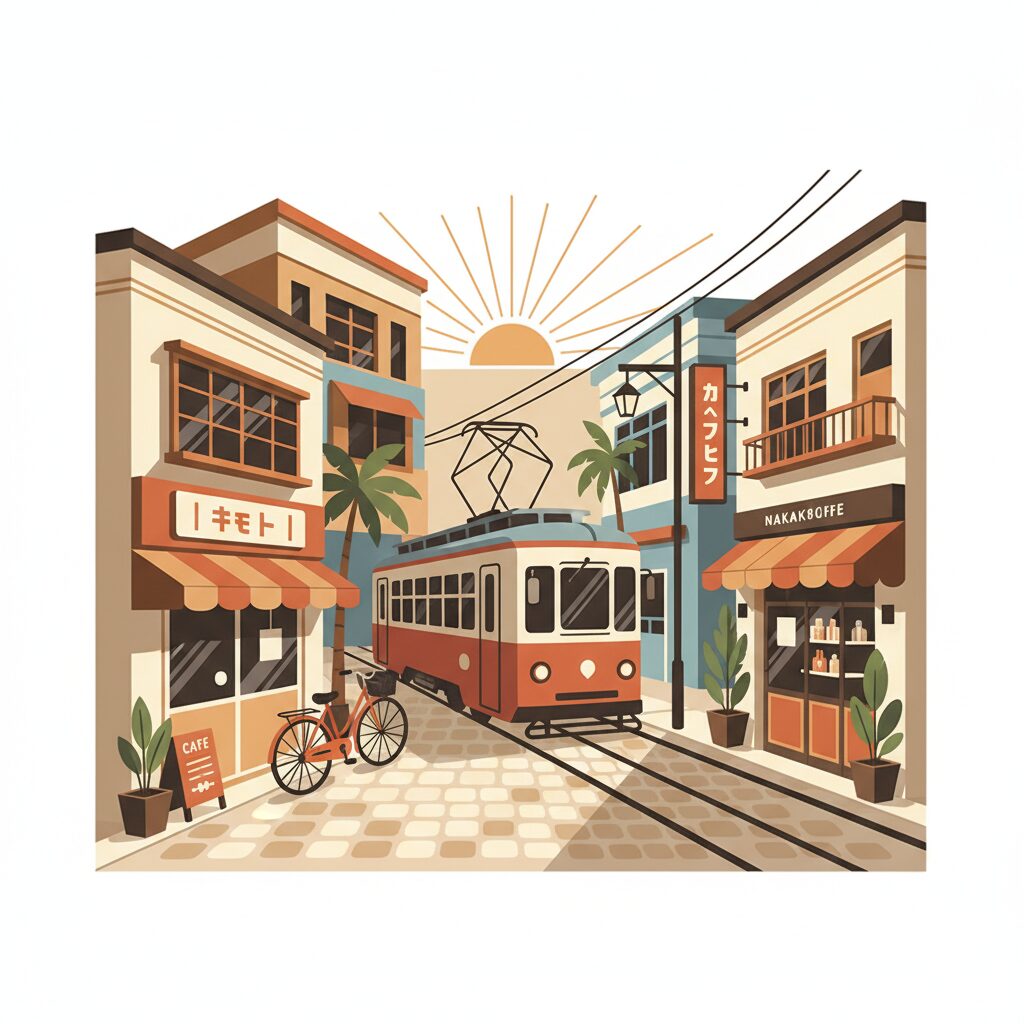
Step off the subway at Nakazakicho, and the air changes. The roar of Umeda’s commercial canyons, just a ten-minute walk away, fades into a hum. The streets narrow, twisting into a labyrinth of low-slung wooden buildings, their facades a patchwork of weathered planks, peeling paint, and lovingly tended flower pots. This isn’t a theme park reconstruction of old Japan; this is the real thing, a neighborhood that miraculously survived the wartime air raids that flattened most of central Osaka. Today, it’s a living museum, its veins pulsing with a new kind of lifeblood: artisan coffee shops, vintage clothing boutiques, independent art galleries, and meticulously designed bistros, all nestled within the fragile shells of pre-war homes. It’s undeniably, intoxicatingly cool. But this raises a crucial question that goes beyond the aesthetics, a question for anyone considering putting down roots in Osaka: What does it actually cost to live inside this picture postcard? Is the retro-chic lifestyle of Nakazakicho an affordable dream for the creative soul, or is it a carefully curated, expensive performance of nostalgia? As someone fascinated by the interplay of history and modernity across East Asia, I found myself compelled to peel back the layers of vintage denim and artisanal foam to understand the true economy of living in Osaka’s most atmospheric corner. It’s an exploration not just of yen and square meters, but of the very values that define Osaka itself—practicality, community, and a fierce, independent spirit.
To truly understand Nakazakicho’s place within the city, it’s helpful to look beyond the common Kita vs. Minami stereotypes when choosing an Osaka neighborhood.
The Nakazakicho Equation: Renting in a Time Capsule
Your first and most crucial financial decision in Nakazakicho centers on rent. This isn’t a simple calculation to plug into a real estate website. The housing market here is a study in character, a story of survival and adaptation. Unlike the towering, uniform apartment blocks typical of much of urban Japan, Nakazakicho’s residential scene is an eclectic, unpredictable patchwork. Grasping the cost of living here means understanding the compromises and perks woven into its distinctive architecture.
The Layout of a Nakazakicho Apartment
The primary choice lies between two distinct worlds: the lovingly restored, historically significant buildings and the more conventional, often older apartments nestled in between. Many dream of living in a renovated machiya (traditional wooden townhouse) or a nagaya (long, row house-style building). These homes are rich with atmosphere—exposed wooden beams, delicate latticework, a tiny inner courtyard (tsuboniwa), or original clay walls. They represent the very soul of the neighborhood.
Yet this soul carries a physical reality. These structures were built long before central heating, insulation, or soundproofing became standard. Winters can be harsh, with cold drafts sneaking through thin wooden frames and single-pane glass. Your air conditioner will run constantly through Osaka’s humid summers, a fact clearly reflected in your electricity bill. Sound travels freely—you’ll hear your neighbors’ footsteps, televisions, and conversations. This isn’t the anonymous, concrete silence of a modern complex; it’s a shared, communal lifestyle, for better or worse.
The alternative is a small, post-war apartment, typically built from the 1960s to the 1980s. These are often one-room studios (1K or 1R) that provide a more predictable, if less romantic, living experience. They may have slightly improved insulation and more modern plumbing but are inevitably compact. Space is the ultimate luxury in Nakazakicho, and most residents learn to live minimally out of necessity. Common features elsewhere—auto-lock security, delivery boxes, spacious balconies, built-in closets—are rare luxuries here. You’re paying for the neighborhood, the vibe, and the community, not for modern amenities.
The Rent Breakdown: The Numbers Game
To get specific, a typical 1K apartment in Nakazakicho, about 20-25 square meters, usually costs between ¥60,000 and ¥85,000 per month. Prices vary depending on the building’s age, its proximity to the main Umeda hub, and how renovated it is. For the same price, you could find a larger, more modern apartment in neighborhoods like Juso or Morishoji, just a few train stops away. Closer to prime real estate in Umeda itself, that rent might only secure you a tiny, older unit, if anything.
Renovated machiya or stylishly designed apartments in older buildings command a significant premium, often exceeding ¥100,000 and sometimes reaching ¥150,000 for relatively small spaces. Here, you’re not just paying for shelter; you’re paying for aesthetics, history, and bragging rights. This is where the Osaka perspective comes into play. An Osakan might see a ¥120,000 machiya and think, “For that price, I could get a modern 2LDK (two bedrooms, living, dining, kitchen) with a balcony in Tennoji.” Choosing to live in Nakazakicho is often an emotional, stylistic decision—a departure from the purely practical housing choices common in this merchant city.
A comparison with Tokyo highlights the difference. Similar “retro-chic” neighborhoods like Shimokitazawa or Koenji would see these prices inflated by 30-50% or more. The idea of a ¥70,000 apartment within walking distance of a major hub like Umeda/Osaka Station is almost unheard of in Tokyo, where proximity to centers like Shinjuku or Shibuya comes at a steep cost. This is a core part of Osaka’s appeal: access to vibrant, character-rich urban living without Tokyo’s soul-crushing expenses. You can experience a unique, artistic lifestyle at a price that feels more grounded.
The Hidden Costs Behind the Charm
Beyond rent, the charm of Nakazakicho carries additional costs. As noted, utility bills can surprise newcomers. An old wooden home is essentially a sieve for heat and cold. You’ll be running space heaters or the heat function on your air conditioner nearly nonstop in winter. In summer, poor cross-ventilation in dense alleyways means AC use is essential. Monthly electricity bills between ¥10,000 and ¥15,000 during peak summer or winter are common for these small spaces, much higher than those for well-insulated modern apartments.
Maintenance is another factor. While landlords cover major repairs, the quirks of older buildings mean that minor issues—sticky screen doors, leaky faucets, unreliable gas water heaters—are routine. Living here requires patience and a willingness to accept imperfections. This contrasts sharply with the flawless, high-spec functionality expected in many new Japanese constructions. This trade-off defines the Nakazakicho experience: sacrificing modern convenience for a deep sense of place and history. It’s a choice grounded in appreciation for wabi-sabi—the beauty of imperfection—a concept that feels at home within Osaka’s organic, unpretentious culture rather than Tokyo’s polished, perfection-driven environment.
Daily Bread and Artisan Coffee: The Cost of Consumption
Life isn’t confined to four walls; it’s experienced on the streets, in the shops, and around the dinner table. In Nakazakicho, the cost of daily living is a fascinating interplay between upscale aesthetic choices and deeply ingrained Osakan practicality. The neighborhood offers a curated experience, yet its residents expertly navigate that curation to fit within a realistic budget.
Groceries: Supermarkets vs. Local Shops
Visitors often assume that Nakazakicho residents rely solely on food from quaint organic stands and artisanal bakeries. While these exist, they represent the neighborhood’s public image rather than its everyday pantry. The reality of grocery shopping is much more pragmatic and reveals a lot about the local mindset.
Most residents rely heavily on the major supermarket at the neighborhood’s edge. A short walk or bike ride leads to a large Life or a budget-friendly Gyomu Supermarket. Prices are competitive, the selection broad, and weekly sales flyers are treated like sacred texts. This is where real Osaka life plays out. People know the price of cabbage, compare pork’s cost per 100 grams, and stock up during tokubai (special sales). Being a savvy shopper—kaimonojouzu—is a point of pride. It’s a game, and Osakans love to win.
That said, local small shops are not overlooked. They serve different purposes. You might purchase daily bread from an independent bakery, not because it’s cheaper, but because it’s superior and you know the owner. You could buy tofu from a long-established family shop due to its unmatched quality. These are conscious choices, small everyday luxuries. Residents combine cost-effective bulk shopping at supermarkets with select quality purchases from local vendors. This hybrid model—saving on staples while splurging on what matters—is quintessentially Osakan: enjoying life’s pleasures (kuidaore, to eat oneself into ruin) without squandering money.
The Cafe Culture Premium
Nakazakicho is undeniably one of Osaka’s top coffee destinations. The alleys are rich with the scent of freshly roasted beans. Each cafe offers a distinct world, ranging from minimalist white spaces to cluttered dens packed with antiques and books. A hand-poured drip coffee or carefully crafted latte costs between ¥550 and ¥750—much pricier than the ¥110 coffee from convenience stores or the ¥300 cup at chains like Doutor.
What do you pay for? The experience: the chair, the mug, the music, the silence, the ambiance—it’s like renting a beautiful space for a moment. For freelancers, students, and artists in the neighborhood, cafes often serve as a third place, an office, a meeting room, or a sanctuary. Spending ¥600 on coffee isn’t just about caffeine; it’s an investment in productivity, inspiration, or tranquility. Locals don’t do this daily; it’s a deliberate indulgence. They might work from a cafe once or twice weekly, balancing that cost with working at home. They recognize the premium and pay it willingly when the value—a beautiful, functional space outside their apartment—justifies it. It’s a calculated luxury, distinct from the often mindless consumption seen in trendier, more hectic Tokyo neighborhoods.
Dining Out: From Hipster Bistros to Local Izakayas
Nakazakicho’s dining scene reflects the grocery shopping pattern. The neighborhood boasts stylish restaurants, natural wine bars, and craft beer pubs where a solo meal can easily cost ¥4,000 to ¥8,000. These spots are reserved for special occasions, date nights, or visitors from out of town—serving as the neighborhood’s glamorous showcase.
Everyday dining, however, happens in less flashy places that wouldn’t make lifestyle magazines. A short stroll toward nearby Tenma—a haven of affordable, cheerful eating and drinking—opens up numerous options. Here, you can enjoy a satisfying set lunch (teishoku) for ¥800, ramen for ¥750, or a stand-up sushi bar where you can eat your fill for under ¥2,000. Many Nakazakicho residents are frequent visitors of Tenma.
This is the key to living affordably in a high-end-looking area: living in Nakazakicho for its atmosphere and community, while dining in Tenma for better value. It’s a perfect Osakan solution—have your cake and eat it too, just in two different neighborhoods. This savvy geographic arbitrage is a common survival strategy in Osaka. Residents understand the character and price points of adjacent areas and use that knowledge to their advantage. It’s a practical, street-smart approach to urban life less common in Tokyo, where neighborhood borders often feel more rigid and self-contained.
The Social Fabric: Is Community a Currency?
The cost of living in Nakazakicho extends beyond mere yen. Much of what you’re “paying” for is intangible: community, walkability, and a sense of belonging—currencies absent from bank statements but essential to quality of life.
More Than Just a Commute: The Walkability Advantage
One of Nakazakicho’s greatest economic benefits is its exceptional location. It is a quiet, human-scale neighborhood situated adjacent to the sprawling urban center of Umeda. For residents, most daily activities can be accomplished on foot or by bicycle. Osaka Station, one of western Japan’s largest and best-connected transit hubs, is just a 10 to 15-minute walk away. Within walking distance are the massive Yodobashi Camera, maze-like Hankyu and Hanshin department stores, as well as countless offices, restaurants, and bars.
This walkability brings direct financial savings. Many city dwellers in Japan routinely spend on monthly commuter passes, but in Nakazakicho, such expenses may be unnecessary. A typical short train commute can cost between ¥5,000 and ¥10,000 per month—amounting to ¥60,000 to ¥120,000 saved annually. This is a considerable factor in the overall cost; when factoring in these savings, the slightly higher rent in Nakazakicho appears far more reasonable. Osakans, pragmatic by nature, inherently grasp this calculation. Why pay to endure crowded trains when you can stroll and save money? Additionally, the time and stress avoided from rush-hour commutes are invaluable perks.
The Price of Admission: Becoming Part of the Community
Living in Nakazakicho entails an unspoken social agreement. It is not an anonymous suburb where neighbors go unknown for years. Rather, it’s a close-knit community—an entire neighborhood embracing the shotengai (shopping street) culture. The “price of admission” is active participation.
Residents are encouraged to support local businesses: become a regular at the coffee shop, purchase bread from the neighborhood bakery, get haircuts at the local salon. Business owners are not distant clerks but your neighbors, who will know your name, your usual coffee order, and inquire about your projects. This fosters a strong sense of belonging and security. Despite being part of a vast metropolis, Nakazakicho feels like a small town, with intimacy at its core.
This contrasts sharply with Tokyo’s style of “cool.” In trendy Tokyo districts, the atmosphere often feels transactional and performative—people come for the scene and trends. In Nakazakicho, the vibe is collaborative and stable. It is home to makers, creators, and small business owners deeply invested in the community’s wellbeing. Here, status is less about appearance or social visibility and more about genuine connection with people and places. For foreigners, this can be a welcoming environment providing direct access to local networks that might be harder to find in more anonymous urban areas.
Tokyo’s Cool vs. Osaka’s Warmth
To compare directly: Shimokitazawa in Tokyo is often regarded as Nakazakicho’s spiritual cousin. Both neighborhoods boast vintage fashion, independent cafes, and artistic scenes. Yet their energies differ fundamentally. Shimokitazawa feels like a destination, a constantly refreshed stage for projecting “cool.” While exciting, it can also appear exhausting and exclusive.
Nakazakicho’s cool feels more organic, less performative—a happy accident born from history and community. Its warmth is evident: shopkeepers chatting on the street, neighbors leaving small gifts of produce at doorsteps. This straightforwardness and lack of pretense typify Osaka. People engage with you and show genuine curiosity. The well-known “friendliness” of Osaka is no cliché here; it functions as part of the social fabric. This warmth—the experience of belonging to a living community, or honnori, a subtle, gentle warmth as the Japanese describe it—is perhaps the greatest asset you invest in by choosing to live here.
The Verdict: Is Nakazakicho’s Retro Vibe Worth the Yen?
After breaking down both tangible and intangible costs, a clear picture becomes apparent. Living in Nakazakicho is not about finding the cheapest place in Osaka; it’s about making a deliberate lifestyle investment where the returns are measured in atmosphere, community, and convenience as much as in financial savings.
Who Thrives Here?: The Ideal Resident Profile
Nakazakicho isn’t for everyone. If your priorities include a spacious, modern apartment with all the latest amenities and the lowest possible rent, other parts of the city might suit you better. Those who thrive in Nakazakicho are individuals who deeply value aesthetics and a sense of place. They are willing to trade square footage for character, and modern conveniences for a piece of history.
This person is likely a creative professional—a designer, writer, artist, or musician—who draws inspiration from their environment. They might be a student or a young professional who appreciates the walkability to Umeda and the lively social scene. Nearly certainly, they embrace minimalism, comfortable with living in a compact space. Most importantly, they want to feel connected to their neighborhood, enjoy daily interactions within a small-town community, and view supporting local businesses not as a duty, but as a joy. They recognize that the slightly higher rent is balanced by transportation savings and an enhanced quality of daily life.
The Misunderstanding of “Authentic”
Foreigners are often attracted to Nakazakicho seeking an “authentic” experience of old Japan. However, it’s essential to understand what “authentic” means in this context. This is not a perfectly preserved, pristine historical district like Gion in Kyoto. Its authenticity lies in its imperfections.
The neighborhood is authentic because it has endured, battered but intact. It’s authentic because a third-generation tofu shop stands beside a brand-new natural wine bar. It’s authentic because the wiring is sometimes messy, the walls occasionally thin, and life a bit inconvenient. This is the genuine, unpolished character of Osaka. The city has always been a place of commerce and practicality, resilience and adaptation. Nakazakicho physically embodies that spirit. It’s not a museum piece; it’s a living, breathing organism that bears its history openly while embracing the future on its own terms. To appreciate Nakazakicho is to appreciate this beautiful, messy, and utterly real reality.
Final Calculation: A Lifestyle Budget
So, what might a typical monthly budget look like for a single person living modestly but comfortably in Nakazakicho? Here’s a plausible estimate:
- Rent: ¥75,000 (standard 1K apartment)
- Utilities (Gas, Electricity, Water): ¥12,000 (higher due to older building)
- Internet/Mobile Phone: ¥8,000
- Groceries: ¥30,000 (a mix of supermarket savings and local treats)
- Eating Out/Socializing: ¥35,000 (balancing budget eats in Tenma with cafe visits and the occasional nice dinner nearby)
- Transportation: ¥2,000 (for occasional train rides beyond walking distance)
- Miscellaneous (shopping, hobbies, etc.): ¥20,000
Total Monthly Estimate: ¥182,000
This budget reflects a lifestyle that fully engages with the neighborhood’s offerings. It’s not the cheapest way to live in Osaka, but far from the most expensive. It represents a sweet spot: a life enriched by culture, community, and convenience at a price that remains accessible. It’s a testament to Osaka’s greatest strength—its ability to provide a world-class urban experience without demanding the sacrifice of your entire paycheck or your spirit. In Nakazakicho, you’re not just renting an apartment; you’re investing in a unique, warm, and deeply human way of life.