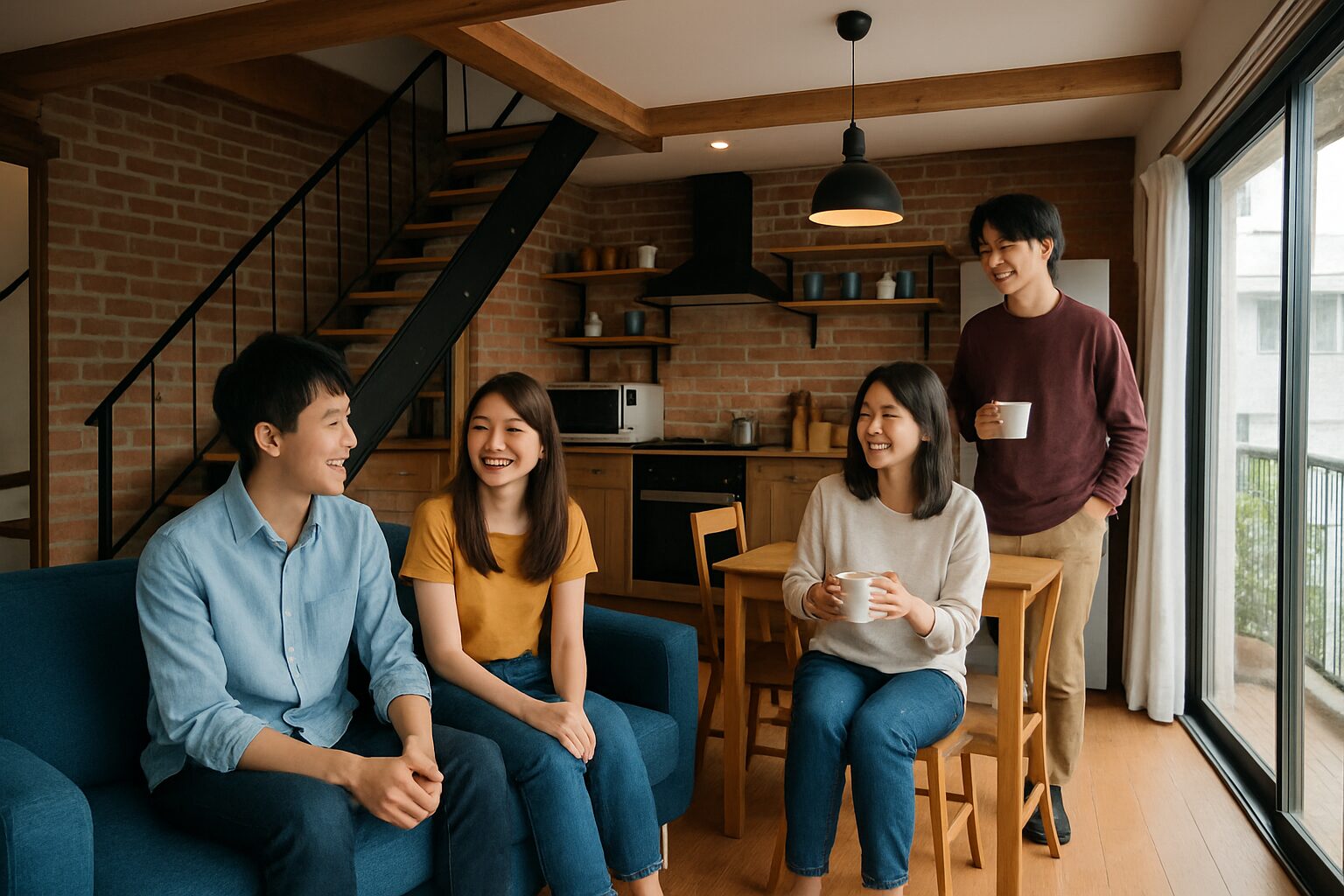
Osaka. The name itself crackles with an electric energy, a symphony of sizzling takoyaki, neon-drenched streets, and the warm, boisterous laughter of its people. It’s a city that doesn’t just welcome you; it grabs you by the hand and pulls you onto the dance floor. For anyone dreaming of making this vibrant metropolis their home, the first big question looms like the Umeda Sky Building on the horizon: Where do I live? For countless foreigners, the answer isn’t a quiet, solitary apartment, but something far more dynamic, more connected, more… Osaka. We’re talking about the share house, a concept that has become the quintessential launchpad for life in Japan. It’s more than just a roof over your head or a way to save a few yen. An Osaka share house is a microcosm of the city itself—a bustling, sometimes chaotic, yet incredibly rewarding convergence of cultures, stories, and friendships waiting to happen. It’s your first neighborhood, your instant support system, and your crash course in the beautiful complexities of Japanese life, all rolled into one. This isn’t just about finding a room; it’s about finding your tribe in the heart of Kansai’s kitchen. It’s the place where your adventure truly begins, where late-night conversations in broken Japanese turn into lifelong bonds, and where the daunting prospect of starting over in a new country transforms into the most exciting chapter of your life. Let’s pull back the curtain on this unique living experience and explore the rhythm of life in an Osaka share house.
After settling into your new share house, you might find that your morning routine naturally leads you to discover the city’s soul at a retro kissaten.
The Allure of the Share House: More Than Just a Room
The appeal of a share house, especially for someone arriving in Japan for the first time, is undeniable. It’s a practical solution that thrives on community. It meets a newcomer’s most urgent needs—shelter, affordability, and connection—in one elegant, often beautifully chaotic, package. Let’s explore the key reasons why this living arrangement has become a rite of passage for so many expatriates building a life in Osaka.
Your Instant Social Lifeline
Picture stepping off a plane, navigating a complex train system, and arriving in a city of millions where you know no one. The loneliness can feel overwhelming. A traditional apartment only heightens this isolation; its four walls can seem more like a fortress of solitude than a home. A share house breaks down that fortress from the moment you step inside. Suddenly, you’re not just a foreigner in a new city; you’re part of a household. People greet you with a warm “Okaeri!” (Welcome home!) after a long day at work or language school. The common room, often the heart of the home, becomes your social hub. Here, you might find a housemate from Brazil practicing Japanese calligraphy, another from France passionately debating the best ramen spot in Namba, and a local Osakan student offering help with confusing city hall paperwork. These aren’t forced interactions but natural connections formed when diverse individuals share a living space. You have an instant group to explore with—whether it’s trying a new okonomiyaki restaurant, hunting through vintage shops in Amerikamura, or taking a spontaneous weekend trip to Kyoto or Nara. Language exchange happens naturally around the dinner table, not just in classrooms. You’ll pick up slang, cultural nuances, and the right way to apologize for using the wrong trash bin—lessons that are invaluable and often amusing. This built-in community is a powerful antidote to culture shock and homesickness, providing a sense of belonging that would otherwise take months or years to develop.
Financial Freedom and Simplicity
Beyond community warmth lies a strong, practical benefit: significant financial relief. Renting a standard apartment in Japan is notoriously complex and costly, especially for foreigners. The process involves upfront costs that can total four to six times the monthly rent. First, there’s the ‘shikikin,’ a security deposit that might be partially or fully refundable if you leave the apartment in good condition. Then comes the infamous ‘reikin,’ or “key money”—a non-refundable gift to the landlord that confuses many newcomers. You often need a Japanese guarantor, which can be impossible for someone new to Japan, forcing you to pay a high fee to a guarantor company. On top of that are agency fees, lock-changing fees, and insurance costs. After paying a fortune just to get the keys, the apartment is empty—you must purchase a refrigerator, washing machine, microwave, bed, table, curtains, and more. Then comes the bureaucratic challenge of setting up separate contracts for electricity, gas, water, and internet—a daunting task with limited English support and piles of paperwork. A share house elegantly sidesteps all this. The financial setup is refreshingly simple: usually, you pay a smaller, refundable deposit plus the first month’s rent, and that’s it. No key money, no guarantor fees, no hidden charges. The monthly rent is almost always all-inclusive—covering electricity, water, gas, high-speed internet, and sometimes even basic household supplies like toilet paper and dish soap—in a single, predictable payment. Rooms and common areas come fully furnished. You can arrive with just your suitcase and start living comfortably right away. This financial simplicity not only saves you significant upfront costs but also frees you from the stress of managing multiple bills and contracts, allowing you to focus on settling in and enjoying your new life in Osaka.
Cultural Immersion on Fast-Forward
Living alone in an apartment can create a cultural bubble. While you may interact with locals at work or shops, your home life remains separate—an extension of your life back home. A share house, especially one with a good mix of Japanese and international residents, bursts that bubble wide open. It becomes a living, breathing classroom for cultural immersion. You’re not just learning about Japanese culture from textbooks; you’re living it. You absorb the unspoken rules of harmony (‘wa’) through daily interactions, like keeping common areas tidy not just for yourself but for everyone’s sake. You participate in ‘souji,’ communal cleaning, a core aspect of Japanese society. You witness the intricate art of ‘gomi-bunbetsu,’ the complex trash-separation system, a skill useful anywhere in Japan. Your Japanese housemates become cultural guides, teaching you the differences between Kansai-ben (the local dialect) and standard Japanese, showing you hidden cherry blossom spots, and inviting you to their family’s New Year celebrations. The kitchen turns into a culinary exchange program—you might show someone how to make your favorite pasta dish while learning the secrets to perfect tamagoyaki. Picture an impromptu ‘takoyaki’ party on a Tuesday night, everyone gathered around the hot plate, laughing as they try (and fail) to expertly flip the octopus-filled dough balls. These shared moments form the foundation of true cultural immersion. They are the everyday experiences that create a deep and genuine connection to Japan, transforming you from a temporary visitor into a true resident of Osaka.
Painting the Picture: What an Osaka Share House Actually Feels Like
To truly grasp the share house experience, you need to move beyond the abstract ideas of community and cost-efficiency and actually step inside. The atmosphere of a share house is its essence. It is a living entity shaped by the building’s architecture and the personalities of its residents. Each house has its distinct vibe and rhythm, and finding one that aligns with your own is essential for a happy living experience. Forget the sterile, cookie-cutter image of an apartment building; a share house is something far more organic and alive.
The Vibe: From Cozy Enclave to Bustling Hub
The variety of share houses in Osaka is extensive. On one end, you have small, intimate houses, often converted single-family homes with just four or five residents. Here, the atmosphere feels like a close-knit family. You know everyone’s schedules, favorite snacks, and life stories. Dinners often become communal events, and the vibe is cozy, quiet, and deeply personal. These smaller houses are ideal for those seeking a gentle introduction and strong, immediate relationships. At the other end of the spectrum are large, purpose-built share houses capable of housing fifty or even over a hundred residents. These resemble university dormitories or trendy co-living spaces. The energy is vibrant, the social calendar packed with organized events like movie nights, yoga classes, or language exchange cafes, and the large number of residents means you’re always meeting someone new. While you may not know everyone’s name, the atmosphere buzzes with potential. These bigger houses often feature impressive amenities like gyms, theater rooms, soundproof music studios, or spacious rooftop terraces with stunning city skyline views. They are perfect for social butterflies who thrive on energy and variety. Between these extremes lie countless variations: women-only houses offering extra security and comfort; houses themed around specific interests such as art, entrepreneurship, or gaming; and homes striving for a balanced 50/50 mix of Japanese and international residents to promote cultural exchange. The vibe of a house is tangible from the moment you enter—it’s in the way people engage, the music playing in the living room, the notes left on the fridge, and the shared laughter echoing down the corridor.
The Common Spaces: The Heart of the Home
The shared spaces are where the magic of a share house unfolds. They’re designed to encourage interaction and create a sense of home. The kitchen is rarely just for cooking; it stands as the central hub of social life. In a typical Osaka share house, you’ll find a large, well-equipped kitchen with multiple refrigerators, rice cookers, and cooking stations to accommodate several people simultaneously. It’s where you might strike up a conversation while waiting for your water to boil, sample someone’s homemade curry, or participate in impromptu cooking lessons. The living room, or common area, is a sanctuary for relaxation and connection. It’s furnished with comfortable sofas, a large-screen TV for movie marathons or video game tournaments, and often a ‘kotatsu’ in winter—the beloved heated table that draws residents seeking warmth and companionship. Here, residents share stories about their day, exchange advice about navigating the city, or simply enjoy the comfortable silence of being together. Many houses also include additional shared amenities. A rooftop terrace or balcony offers an urban oasis, a place to savor morning coffee while watching the city awaken or an evening beer under the stars. Study nooks or co-working spaces provide quiet zones for remote workers or students learning Japanese. Even shared bathrooms and laundry areas serve as points of casual interaction. These spaces are carefully maintained, usually through a combination of professional cleaners and a resident cleaning rota (‘souji’), ensuring the environment remains pleasant and functional for everyone.
The Private Sanctuary: Your Personal Space
While common areas form the heart of the house, your private room is your sanctuary. It offers a vital counterbalance to the social energy of shared spaces—a place to retreat, recharge, and be alone with your thoughts. Share house rooms in Osaka, similar to Japanese apartments, are generally compact but designed for maximum efficiency. Sizes vary, but each space typically fits a bed, desk, chair, and storage comfortably. Most rooms come fully furnished, which is a huge convenience. You’ll usually be supplied with a bed and mattress, desk, chair, small refrigerator, air conditioner/heater unit, and sometimes curtains and a lamp. This allows for an immediate sense of settling in. Though smaller than what you might be accustomed to back home, the room is entirely yours. You can decorate it to showcase your personality, creating a cozy nest that feels uniquely personal. This private space is crucial for maintaining balance. It’s where you can hold private video calls with family and friends, study undisturbed, or simply close the door and decompress after a socially intense day. Having this private refuge is what makes communal living sustainable and enjoyable over the long term. It offers the best of both worlds: a lively community just outside your door and a peaceful, personal haven whenever you need it.
Navigating the Osaka Share House Scene: A Practical Guide
Finding the right share house in Osaka’s vast urban landscape can feel like a quest. However, with some knowledge about the city’s geography and the search process, you can easily discover a place that suits your lifestyle, budget, and commuting needs. The process is much more streamlined and foreigner-friendly than traditional renting, designed to help you settle in with minimal hassle.
Location, Location, Location: Selecting Your Osaka Neighborhood
Osaka is a city of diverse neighborhoods, each with its own unique character and charm. Your choice of neighborhood will greatly influence your daily life. Share houses are scattered throughout the city but tend to concentrate in areas with strong transport links and vibrant local scenes.
Umeda and the Kita District
Kita, meaning ‘north,’ revolves around the major transit hubs of Osaka and Umeda Stations. This area represents the city’s modern side—a skyline filled with skyscrapers, upscale department stores, and corporate offices. Living in a share house here places you at the heart of connectivity, allowing easy access to almost anywhere in the Kansai region. The atmosphere is sophisticated, fast-paced, and energetic, ideal for professionals seeking a short commute to business districts and those who enjoy the sleek, cosmopolitan lifestyle. The nightlife is stylish, dining options are abundant, and world-class shopping is always just steps away.
Namba and the Minami District
Minami, meaning ‘south,’ is Osaka’s entertainment core. Centered around Namba, Shinsaibashi, and the famous Dotonbori canal with its Glico Running Man sign, this neighborhood is a sensory feast. It’s lively, bright, and always buzzing. For food lovers, night owls, or those who thrive amid constant activity, a share house in Minami is perfect. Countless restaurants, bars, live music venues, and unique shops are right at your doorstep. The vibe is grittier, more eclectic, and down-to-earth than Umeda, fully capturing Osaka’s spirit of ‘kuidaore’ (eat until you drop).
Tennoji and its Surroundings
Tennoji offers a captivating combination of old and new. While it serves as a major transit hub, it carries a more relaxed vibe than Umeda. The area includes serene spots like Tennoji Park, the Osaka City Museum of Fine Arts, and Shitennoji Temple, one of Japan’s oldest temples. In contrast, it also features Abeno Harukas, Japan’s tallest skyscraper, with panoramic city views. Living here provides a blend of traditional and modern Osaka, appealing to those who value green spaces and cultural sites but still want easy city access and ample amenities.
Suburban Gems for a Local Feel
For quieter surroundings and more affordable rent, the suburban cities just outside Osaka’s main loop line offer excellent options. Places like Suita, Toyonaka, or Esaka in the north, as well as cities in eastern Osaka, provide a more residential, genuinely local atmosphere. Life here moves at a slower pace, offering more frequent interactions with shopkeepers and neighbors. Despite seeming distant, Osaka’s efficient train system means Umeda or Namba can usually be reached within 20-30 minutes. These areas suit students attending nearby universities or anyone wanting to separate their busy city life from a peaceful home environment.
The Search and Move-In Process
Finding your new home is surprisingly simple. Unlike the traditional rental market, the share house industry is tailored for international and transient residents. The best place to start is online. Many large share house companies operate websites with extensive listings, usually available in English. These platforms feature detailed profiles for each house, including high-quality photos, listings of amenities, maps, current resident information (such as nationality, age range, and gender mix), and crucially, room availability and prices. You can filter searches by location, price, house type, and more. After selecting a few appealing houses, the next step is to submit an inquiry or application form. Companies typically respond promptly to confirm availability and arrange viewings. Visiting in person is highly recommended whenever possible to check the property’s condition, meet residents, and get a feel for the atmosphere. For applicants abroad, virtual tours via video call are often available. Required documents are minimal: usually a copy of your passport and Japanese visa or residence card. Contracts are simplified and offered in English. After signing and paying the deposit and first month’s rent, you’re ready to move in. The entire process, from search to key handover, can take just a few days—offering a refreshing alternative to the weeks-long typical apartment rental process.
Understanding the House Rules
Living harmoniously with others requires clear rules and expectations. Each share house has its own set of guidelines explained before contract signing. These rules are not meant to be restrictive but are essential for maintaining a clean, safe, and respectful environment for all. A common system is the ‘touban seido,’ a rotating cleaning schedule where weekly different residents or groups are responsible for cleaning shared spaces like kitchens or bathrooms, ensuring housework is shared fairly. Guest policies are typical; some houses limit overnight visitors or require prior permission from the house manager. Noise control is another key focus, with quiet hours generally observed from late evening to early morning to respect residents’ rest or work needs. The most challenging rule for newcomers is often garbage disposal, as Japan’s recycling system is complex, with designated days for burnable trash, plastics, cans, bottles, and paper. Each house provides clearly labeled bins and a schedule. Adhering to these rules is mandatory and shows respect for housemates and Japanese society as a whole.
The Other Side of the Coin: The Realities and Challenges
While the share house experience is overwhelmingly positive for many, it’s important to approach it with clear eyes. Communal living is not a utopia and comes with its own set of challenges. Being aware of these potential downsides helps you make an informed decision and better handle any issues that may arise. This isn’t meant to discourage you, but to offer a complete and honest picture of the life that lies ahead.
The Privacy Puzzle
Even with your own private room to retreat to, the core of a share house is, indeed, shared living. Your personal sanctuary is a single room, not an entire apartment. This means that once you step outside your door, you enter a communal space. Some days, you may come home exhausted, hoping to prepare a quiet meal, only to find the kitchen lively with a group dinner. Other times, you might want to binge-watch a show in the living room, but someone else is already holding a study group there. You’ll overhear conversations, encounter people in the hallway when you’re not in the mood for company, and share a bathroom schedule with several others. For introverts or those who value solitude deeply, this constant low-level social presence can become draining over time. It requires a mental shift—an acceptance that you’re trading some personal space and autonomy for the benefits of community and affordability. Many find this trade-off well worth it, but it must be consciously acknowledged.
The Inevitable Culture Clash
One of the greatest strengths of a share house is bringing together people from diverse cultural backgrounds, but this diversity can also cause friction. What’s considered common sense in your culture may be entirely different for someone else. These differences often show up in the small, everyday details of living together. Cleanliness standards, for instance, can vary widely. Your idea of a ‘clean’ kitchen might differ greatly from your Japanese housemate’s meticulous expectations, sometimes leading to passive-aggressive notes or tense house meetings. Food etiquette can be tricky too. Is it okay to use a housemate’s soy sauce, or is that seen as stealing? In some cultures, sharing food is expected; in others, it’s taboo. Communication styles also differ: some cultures are direct and confrontational when addressing problems, while Japanese culture tends to value indirectness and harmony, which can result in issues being left unresolved out of a desire to avoid conflict. These challenges aren’t impossible to overcome, but they require patience, empathy, and a willingness to communicate openly and respectfully. It’s a real-life lesson in cross-cultural negotiation that can be both challenging and deeply rewarding.
The Housemate Lottery
When you move into a share house, you don’t get to choose your housemates. You’re entering a pre-existing dynamic and rolling the dice on the personalities you’ll live alongside. Most of the time, you’ll find a friendly and respectful group. But occasionally, you may end up with someone whose lifestyle clashes completely with yours—perhaps a housemate who is excessively noisy, consistently messy, or just has a personality that doesn’t mesh with yours. This ‘housemate lottery’ is an inherent risk of share house living. Additionally, share houses tend to be transient environments. They often serve as temporary homes for people on working holidays, international students, or young professionals on short-term contracts. This means that close friends you make may move out after six months or a year. The house’s composition is constantly changing, which can be exciting but also emotionally draining as you say goodbye and adjust to new personalities. You need to be prepared for this fluidity and embrace the temporary nature of the connections you form.
The Thin Walls of Japan
A common feature of many Japanese residential buildings, especially older ones, is minimal soundproofing. Walls can be thin. This is especially noticeable in a share house. You might hear your neighbor’s late-night phone conversations, music from the resident above you, or the footsteps of people walking down the hall. While most share houses have rules to limit noise, the everyday sounds of life in a house full of people are inevitable. If you are a light sleeper or particularly sensitive to noise, this can be a significant challenge. Investing in quality noise-canceling headphones or earplugs is a common and often essential tactic for coping. It’s a small but crucial practical detail that can greatly improve your daily comfort and quality of life.
Tips from a Local: Making Your Osaka Share House Experience Unforgettable
Thriving in a share house, rather than merely surviving, is an art. It involves embracing the communal spirit while also honoring your own needs and boundaries. With the right mindset and a few cultural insights, you can turn a simple living arrangement into one of the most rewarding experiences of your time in Japan.
Embrace the “Osewa ni Narimasu” Spirit
A common Japanese phrase, “Osewa ni narimasu,” roughly means “Thank you for taking care of me.” It reflects a spirit of mutual support and gratitude, which is essential for a successful share house. Don’t just be a passive tenant who pays rent; be an engaged member of the community. Participate actively. If there’s a house party or event, try to join, even briefly. Bringing a dish from your home country to share can be a great icebreaker and a gesture of goodwill. Offer to help a housemate practice English or tidy up part of the common area even when it’s not your turn on the cleaning schedule. Small acts of kindness and involvement create a positive atmosphere, improving everyone’s experience. By caring for the community, you’ll find it cares for you in return.
Communication is Your Superpower
In a multicultural setting, you cannot assume others understand your intentions or expectations. Clear, kind, and open communication is vital to prevent minor misunderstandings from becoming major conflicts. If a housemate’s habits bother you, don’t let frustration build up. Find a calm, private moment to discuss it. Use “I” statements rather than accusatory “you” statements. For example, instead of saying, “You’re always leaving a mess in the kitchen,” try, “I feel a bit stressed when the kitchen is messy. Could we work together to keep it tidy?” Learning a few polite Japanese phrases for requests and apologies can also go a long way, even if your Japanese housemates speak English—it shows respect and softens your message. Remember, your house manager is a valuable resource; if direct resolution is difficult, they can act as a neutral mediator.
Master the Art of Setting Boundaries
The many social opportunities in a share house are a great advantage but can also lead to social burnout. It’s perfectly okay—and actually healthy—to set boundaries. You don’t have to accept every invitation to go out or join every conversation in the living room. Wanting to spend an evening alone in your room is not rude. Your private space is your sanctuary for a reason. Learn to politely decline when you need to recharge. A simple, “Thank you so much for the invitation, but I think I’m just going to relax in my room tonight. Maybe next time!” is sufficient. Finding the right balance between social interaction and personal time is key to your long-term happiness. Don’t feel guilty about prioritizing your well-being.
Choose Your House Wisely
Before signing any contract, take the time to research and reflect on what you truly want and need in a living situation. Don’t be swayed solely by low price or convenient location. Consider the house culture. Read online reviews and testimonials from former residents. During your visit, ask detailed questions. What age range do most residents fall into? What is the ratio of Japanese to international residents? Is the atmosphere generally quiet or lively? Try to speak with current tenants to learn what they like and dislike about living there. Your initial house choice will have the greatest impact on your experience. Selecting a house that suits your personality, lifestyle, and social preferences is the essential first step toward an excellent share house life in Osaka.
A Stepping Stone to Your Osaka Life
It’s useful to think of the share house experience not necessarily as a permanent home, but as a vital and valuable chapter in your journey through Japan. For many, it acts as the ideal transitional space—a supportive incubator for starting their new life abroad. It offers a gentle landing spot to find your footing in an unfamiliar culture without the immediate pressure of building a life entirely from scratch. The share house acts as an important buffer during your initial six months to a year, when you are most vulnerable to culture shock and loneliness. It provides an instant support network to assist with everyday practicalities—such as opening a bank account, choosing a mobile phone plan, or locating the best grocery stores. It creates a safe and encouraging setting to practice emerging Japanese language skills without fear of judgment. You begin to learn the city’s rhythm, uncover its hidden gems through housemates’ tips, and gain the confidence to navigate it independently. Many people opt to live in a share house during their first year or two. Afterward, once they’ve expanded their social circle, improved their language skills, and feel more settled, they may choose to move into their own private apartment. In this way, the share house is more than just a place to stay; it’s a launchpad. It provides you with the knowledge, friendships, and confidence needed to take the next step in your Osaka adventure, whatever that may be.
Your Osaka Story Begins

Choosing to live in an Osaka share house goes far beyond a simple housing decision. It’s a commitment to immerse yourself in the vibrant, unpredictable, and deeply human core of this extraordinary city. It’s an open invitation to create a new kind of family—one shaped not by blood, but through shared meals, late-night conversations, and the collective experience of building a life far from home. Yes, there will be challenges—the occasional messy kitchen, cultural misunderstandings, and bittersweet goodbyes. Yet these are far outweighed by the abundant rewards: laughter filling the common room, quiet acts of kindness from a housemate, the thrill of discovering new aspects of Japanese culture, and friendships that can stretch across the globe and last a lifetime. Whether for a brief season or several years, living in an Osaka share house is not just about finding a place to stay; it’s about finding your place within the sprawling, dynamic, and beautiful tapestry of this city. Your community is out there, ready to welcome you with an “Okaeri.” Your Osaka story is about to begin.