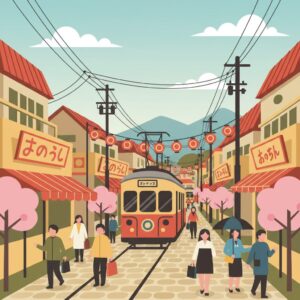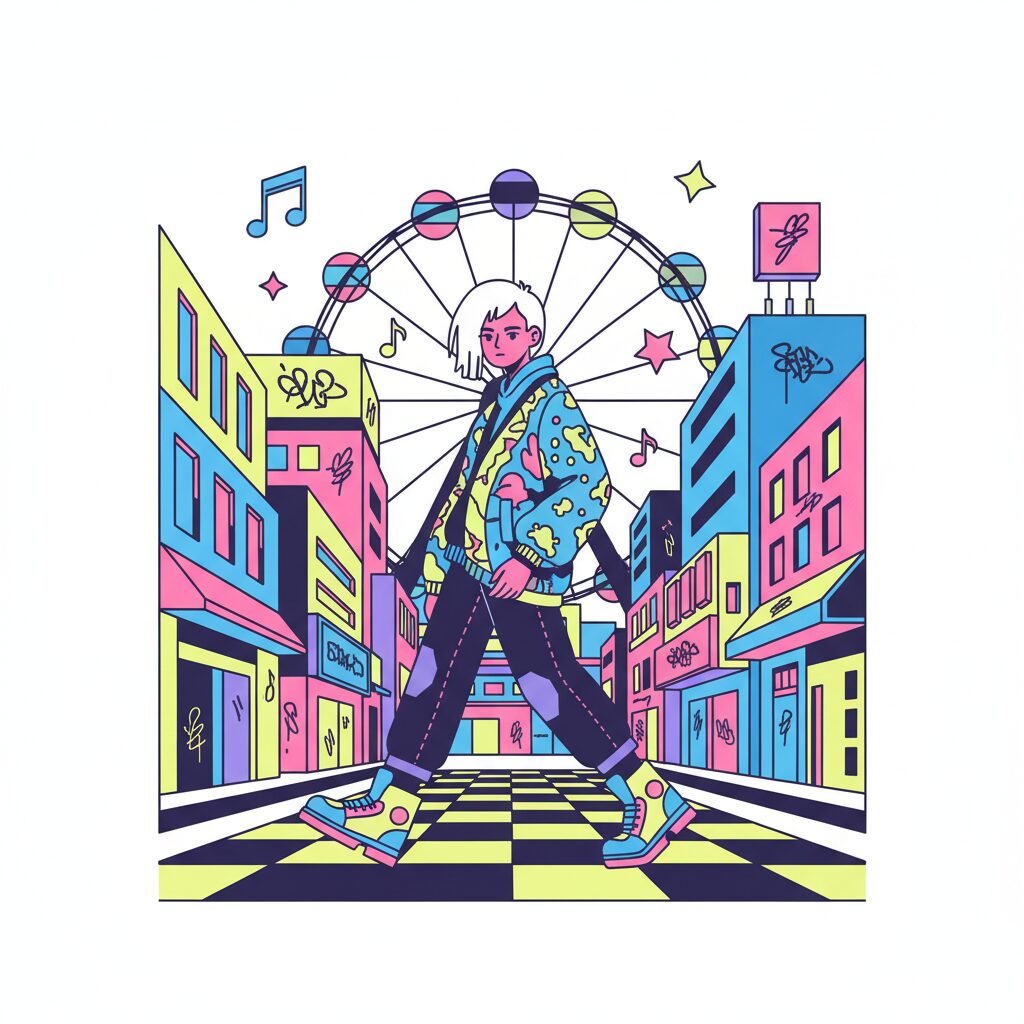
Walk out of Shinsaibashi Station, push through the glittering artery of the covered shopping arcade, and take a sharp turn west. The air changes. The polished gleam of department stores and global brands falls away, replaced by something rougher, louder, more alive. The neat grid of the Japanese city begins to fray at the edges. You’ve just crossed the invisible border into America-mura, or as the locals call it, Amemura. The name itself is a question, a beautiful misdirection. You might expect a sanitized slice of Americana, a theme park of borrowed cool. But what you find is something else entirely—a chaotic, vibrant, and unapologetically Osakan universe that just happens to be built on a foundation of vintage Levi’s and imported rock-and-roll records. This isn’t America; it’s Osaka’s raw, creative id, splashed in day-glo paint across a few city blocks.
For anyone trying to decipher the code of this city, to understand what makes an Osakan tick, Amemura is ground zero. It’s the living answer to the question every foreigner eventually asks: How is Osaka really different from Tokyo? Forget the polite comparisons of food and dialect for a moment. The real difference is a matter of spirit, and that spirit is distilled to its purest form right here. It’s the contrast between the curated perfection of Harajuku and the glorious, self-made mess of Amemura. One is a runway, the other is a workshop. One is about perfecting a look, the other is about broadcasting a feeling. To understand Amemura is to understand Osaka’s deep-seated love for the individual, the hustle, the loud conversation, and the defiant beat of a drum that it insists on playing its own way. This is not a tourist destination; it’s a cultural statement, a place where the city’s youth grab a spray can and write their own definition of Japan, one layer of graffiti at a time.
To truly understand the city’s unfiltered spirit, you can also explore the communal honesty found in Osaka’s public baths.
The Genesis of a Counter-Culture Hub
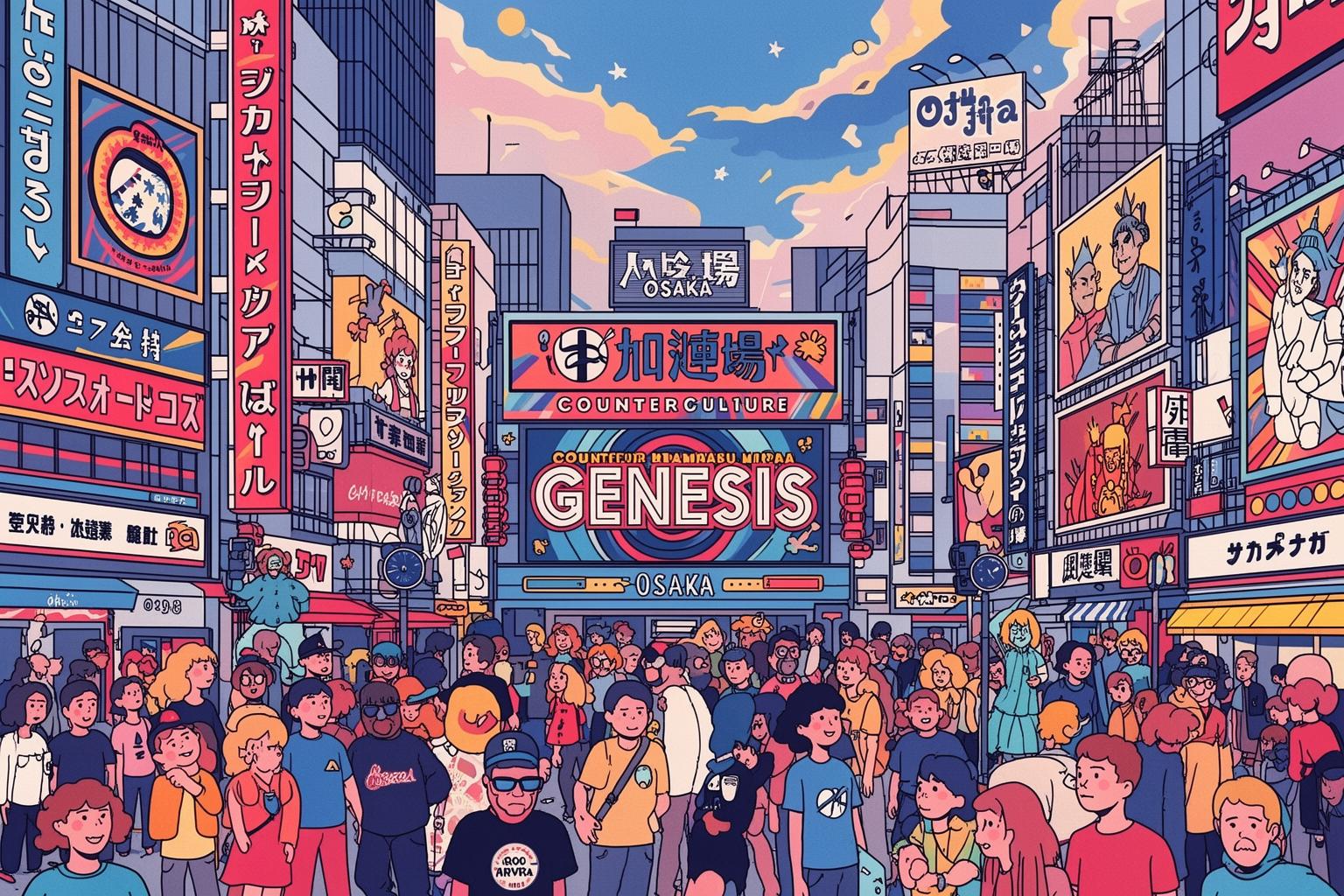
To truly understand Amemura, you need to rewind the tape and go back to the early 1970s, when this area was far from trendy. It was a quiet, overlooked district of warehouses and parking lots, a gray zone located just west of the bustling Shinsaibashi commercial area. There was no grand urban planning or corporate investment strategy aiming to create a youth hotspot. Instead, there was simply available space, low rent, and a handful of enterprising individuals with a vision. This is the first—and perhaps most vital—lesson about the Osaka mindset: culture here doesn’t wait for approval. It emerges spontaneously from the cracks in the pavement, fueled by the hustle of individuals who see opportunity where others see none.
Not a Theme Park, but a Warehouse District Reimagined
The pioneer was a cafe owner who began using an empty warehouse to sell goods he imported directly from the United States. These were cultural artifacts of the American West Coast: faded denim jeans, vivid surfboards, vinyl records pulsing with rock and soul. Young people, eager for a taste of this exotic, free-spirited culture, started flocking to the area. One shop after another, other young entrepreneurs followed, transforming dusty storage spaces into intimate, curated shrines of American vintage. The name “America-mura” wasn’t a marketing catchphrase; it was a straightforward, literal description of what was unfolding. They were selling America in a village of warehouses.
This organic, grassroots growth is quintessential Osaka. In Tokyo, major cultural shifts are often driven by large corporations such as department stores or real estate developers who carefully brand and market new lifestyle concepts. It’s a top-down process. Amemura was the opposite. It was a grassroots movement based on the simple, pragmatic logic of Osaka merchants: find something people want, source it at a good price, and sell it with your own unique flair. There was no dominant aesthetic and no master plan—just a shared energy, a collective intuition that something exciting was happening, with everyone invited to contribute their piece to the puzzle. This improvisational, slightly chaotic way of building community is woven into the city’s DNA, a direct legacy from its centuries-old history as Japan’s merchant capital.
The “Mura” Mindset: A Village Within the Concrete Jungle
The second part of the name, “mura” (村), is as significant as the first. It means “village,” reflecting the intimate, community-centered atmosphere that defined the area and, in many respects, still does. Amemura wasn’t planned as a sprawling commercial zone; it grew organically as a collection of individuals with small, passion-driven businesses. You didn’t simply visit a store; you went to see a particular owner known for their impeccable taste in ’70s rock tees or rare sneaker collections. Every transaction was more than just a purchase; it was a conversation, an exchange of knowledge, a chance to connect with someone who belonged to the same tribe.
This village mentality created a social fabric that remains palpable today. It’s evident in the way shop staff hang out in front of their stores, chatting with friends and customers. It’s visible in the skaters who have claimed Sankaku Koen, or Triangle Park, as their communal living room. It stands in stark contrast to the more anonymous, transient vibe of many Tokyo trend districts. In Harajuku, you might admire someone’s style from afar. In Amemura, there’s a greater chance you’ll start talking to them, compliment their jacket, and find out which small, hidden thrift store they discovered it in. This approachability is often mistaken for simple friendliness. But it’s more nuanced—a reflection of a culture that values human connection and direct interaction over formal politeness and maintaining distance. In the village of Amemura, being part of the scene means showing up, engaging in conversation, and participating. It’s a culture of involvement, not spectatorship.
Deconstructing the Amemura Look: Fashion as a Conversation
Street fashion is the most visible expression of Amemura, and learning to interpret it is essential to grasping the local mindset. It’s a dialogue spoken through worn leather, faded cotton, and custom-ripped denim. However, if your only frame of reference for Japanese street style is the high-concept, meticulously crafted aesthetic of Tokyo’s fashion tribes, you’re in for quite a surprise. The style here is less about fantasy and more about biography. It reflects who you are, where you’ve been, and what you’re into, all worn on your sleeve—quite literally.
More Than “Kawaii”: The Grit and the Glory
The popular image of Harajuku style—whether the pastel frills of Lolita or the chaotic colors of Decora—often involves a complete head-to-toe transformation. It’s a form of costume, a commitment to a very specific and often demanding aesthetic. The aim is polished perfection, an idealized fantasy made real. By contrast, Amemura style embraces imperfection. It’s grittier, more down-to-earth, and profoundly personal. It’s a mash-up, a collage of influences drawn from music, skateboarding, and decades of vintage clothing.
This style reflects the Osakan character directly: pragmatic, unpretentious, and allergic to putting on airs. There’s a liberating “who cares?” attitude here. The pressure to project a flawless, curated image is noticeably weaker than in Tokyo. In Amemura, style is less about chasing trends and more about crafting an identity. A jacket isn’t just a jacket; it’s a thrift store find from another city, a patch sewn on after an unforgettable concert, a tear from a skateboarding spill. The clothes document a life lived, not just items bought for the season. This emphasis on authenticity and personal history over brand names and fleeting trends marks a fundamental divide between the fashion philosophies of the two cities.
The Anatomy of a Street Corner Style
Imagine the scene at Triangle Park on any afternoon. Groups of kids sit on the concrete steps, sharing a can of coffee. Let’s break down a typical look. One guy might be wearing an oversized, sun-bleached t-shirt from a ’90s punk band, so soft it’s almost translucent. It’s probably not a new reproduction; it’s the real thing, found tucked away in a vintage shop. His pants are baggy, military-style cargo pants, perhaps olive drab or camo, with cuffs rolled up just enough to reveal socks and a pair of scuffed-up Vans that have logged countless skateboarding hours. He might sport a wallet chain, a beanie pulled low, and a hoodie from a local Osaka skate brand tied around his waist.
Every piece in this outfit tells a story. The vintage tee signals his musical taste. The baggy fit prioritizes comfort and freedom of movement—essential for skating. The well-worn shoes are a badge of honor, proof of dedication to his craft. The local brand hoodie shows his support for the hometown scene. This is self-expression at its most direct. Importantly, it also demonstrates a distinctly Osakan value: resourcefulness. In Tokyo’s Ura-Harajuku, a similar streetwear look might consist of limited-edition items from internationally famous brands, costing hundreds or even thousands of dollars. In Amemura, there’s immense pride in assembling a killer look for a fraction of the cost. Bragging about a 500-yen gem found in a thrift store is far more respected than flaunting an expensive, hyped-up piece. It shows you have taste, a keen eye, and the hustle to find value where others don’t—the trifecta of the Osaka merchant spirit.
The Business of Individuality: The Independent Shops
The fashion scene thrives on a dense network of independent retailers, and these shops are as integral to the culture as the clothes themselves. Forget sterile, minimalist boutiques staffed by silent, watchful employees. An Amemura vintage store is an experience. Often a tiny, cramped space packed to the ceiling with racks of clothes, it’s infused with the scent of old fabric and dust. The owner is usually a character—a true believer with encyclopedic knowledge of their niche, whether that’s ’60s biker jackets or ’80s hip-hop fashion.
Here, the direct, conversational nature of Osaka shines through. Walking into one of these shops isn’t a passive shopping trip. The owner will likely greet you loudly, perhaps comment on your band t-shirt, and jump straight into conversation. “Ah, you like The Ramones? I just got a killer Johnny Thunders shirt—you gotta see it!” They’ll pull items for you, offer unsolicited styling tips, and share the history behind particular pieces. This can be intimidating for foreigners used to Japan’s more reserved service culture, but it’s not meant to be pushy—it’s an invitation to connect.
This interaction is the heart of the Amemura experience. It’s a relationship, not just a transaction. Shopkeepers serve as gatekeepers and curators of the culture, passionate about sharing it. You learn, you laugh, and you might even score a small discount if your appreciation feels genuine. It’s a world apart from the formal, almost reverential silence of upscale Tokyo boutiques. In Amemura, everything is turned up—the music, the colors, and definitely the people. It’s a place built on personality, both the customer’s and the seller’s.
The Sound and the Fury: Amemura’s Cultural Output
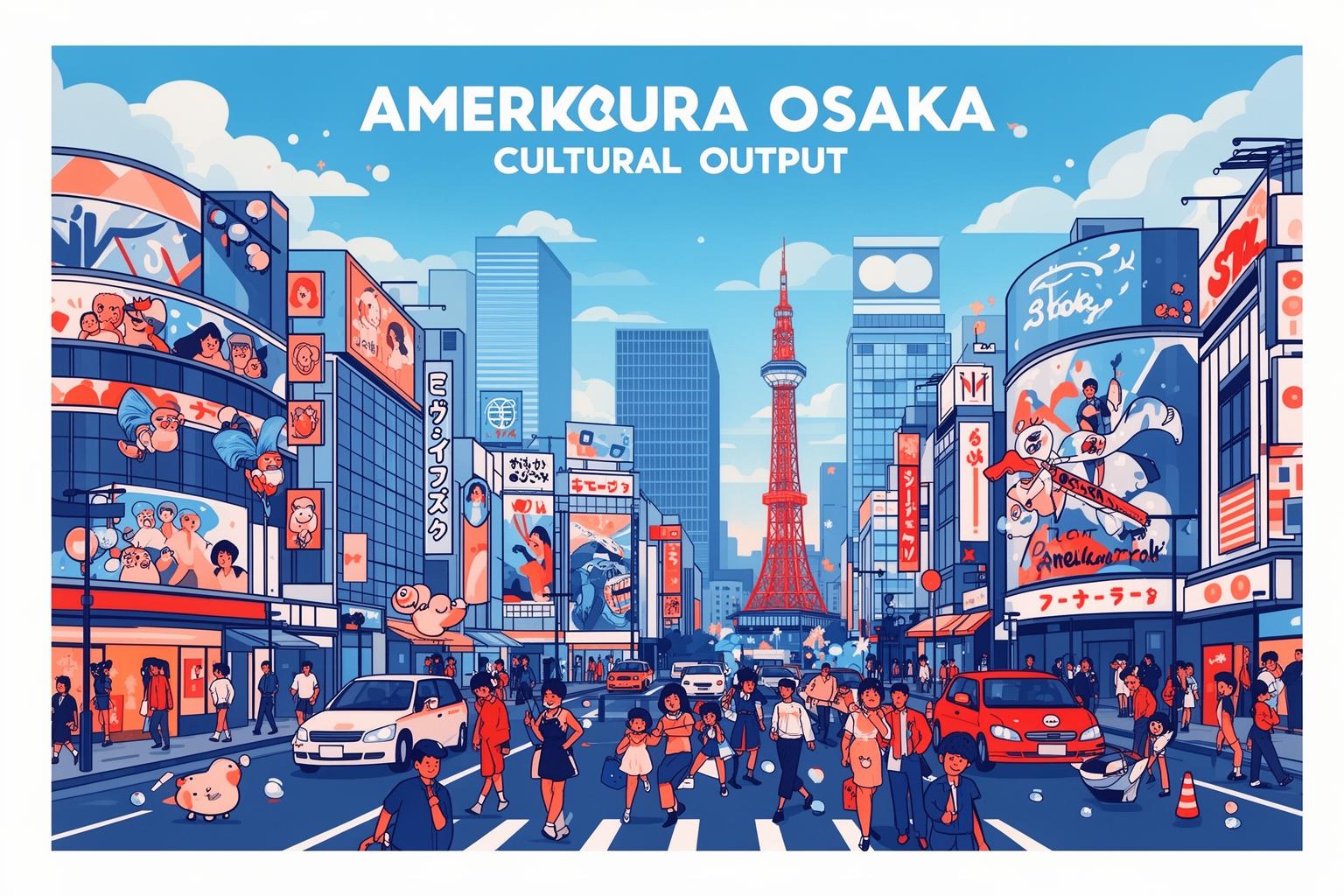
Amemura is more than just a shopping destination. It serves as a vibrant cultural hub, a loud and chaotic workshop for music and art that helps shape the city’s creative identity. The same raw, independent, and somewhat loud spirit that defines its fashion also energizes its music venues and adorns its walls. Here, you can truly feel the city’s heartbeat—a driving rhythm often faster and heavier than anywhere else in Japan.
Music Venues and the Live House Culture
Hidden in basements and on upper floors of modest buildings, Amemura is filled with “live houses.” These small, intimate music venues, typically seating only a few hundred people, are the lifeblood of Osaka’s independent music scene. While places like Shinsaibashi BIGCAT, Club Quattro, and the renowned Shinsaibashi Sunhall are iconic, the true core of the scene lies in the numerous smaller, grittier clubs scattered along the neighborhood’s side streets. This is where the next generation of Osaka’s punk bands, hardcore groups, experimental noise performers, and underground hip-hop MCs thrive.
Attending a show in an Amemura live house is a full sensory experience. You climb down a narrow staircase into a dark, sweat-heavy room filled with electric anticipation. The sound is deafening—not the polished clarity of large concert halls, but raw and visceral, vibrating through the floor and into your bones. The crowd isn’t merely observing; they are an essential part of the performance, pushing forward to create mosh pits, shouting lyrics, and feeding energy back to the band. It’s a shared, cathartic release.
This preference for the raw and authentic is a defining feature of Osaka’s cultural taste, valuing passion and energy over technical perfection. The scene embraces sweat and feedback, cracked voices, and broken guitar strings—a sharp contrast to the often polished, highly produced, and sometimes more restrained live music experiences found in Tokyo. In Osaka, music is something to be felt, not just heard. It is a participatory event that unites people in moments of loud, chaotic joy.
Street Art as Public Dialogue
The visual environment of Amemura is as bold as its music. Almost every surface serves as a potential canvas. Roll-down shutters, utility poles, building facades, and hidden alleys are covered with a dense, overlapping collage of graffiti, stickers, stencils, and commissioned murals. This is far from the sterile, designated “art walls” seen in other cities—it is a dynamic, ever-changing conversation.
The most famous work is the enormous “Peace on Earth” mural by artist Seitaro Kuroda, a landmark watching over the neighborhood for decades. Yet, the true essence of Amemura lies in the smaller, ephemeral creations—a graffiti tag by a local artist, a pasted poster for an underground punk show, or a tiny hand-painted stencil tucked away in an unexpected corner. These marks claim the space as their own and represent the community’s unfiltered, uncensored voice.
This embrace of visual chaos might surprise outsiders. Japan is known for its clean, orderly streetscapes, and Amemura’s graffiti-covered walls can appear as signs of decay or danger. However, this view misses the point. In Amemura, street art is not vandalism but decoration—an expression of the community’s effort to personalize its environment and transform cold concrete into a home. It reflects Osaka’s deep-rooted anti-authoritarian streak, a playful defiance of Japanese public space conventions. While other cities quickly scrub their walls clean, Amemura wears its layers of paint and ink proudly, a badge of honor reflecting its ongoing creative energy.
Living In and Around the Vibe: The Daily Reality
For those living in Osaka, Amemura is more than just a spot for a weekend shopping outing. It’s woven into the fabric of daily life, a neighborhood with its own distinct rhythm and a set of unspoken social norms. Grasping how it operates day-to-day, and how locals view it, reveals another layer of the city’s complex character and clears up some misconceptions foreigners often hold.
The Misunderstanding: Is It Dangerous?
Let’s address the main question right away. For newcomers, especially at night, Amemura can feel intimidating. The streets are crowded, alleyways dimly lit, music thumping loudly, and the people look… different. You might encounter heavily tattooed individuals, people with facial piercings, punk-inspired hairstyles, and fashion that intentionally exudes a tough vibe. This can raise concerns for those used to the pervasive sense of public safety typical of most parts of Japan.
The simple truth is that Amemura operates on a slightly different wavelength, but it’s not dangerous in the way a Westerner might imagine. The chance of random street crime is extremely low, as it is across Japan. However, the social vibe is distinct—more assertive, more direct, and less focused on the quiet public harmony prized elsewhere. The “tough” appearance is, in 99% of cases, just that: an appearance. It’s fashion, a mode of self-expression and subcultural identity, not a threat. The guy with the mohawk and leather jacket is likely the friendly owner of a vintage clothing store. The group of skaters chatting loudly in the park are just hanging out after a session.
To understand Amemura, you need to see beyond the surface and not judge a book by its tattooed cover. It’s a place where individuality is embraced, including styles that challenge mainstream norms. It requires a shift in mindset, a reassessment of your assumptions about public space and personal appearance. In some ways, it’s an excellent introduction to living in Osaka, a city that constantly invites you to value people’s substance over their sometimes unconventional appearances.
The Rhythm of the Neighborhood
Amemura has a unique pulse that shifts throughout the day. Mornings are slow and quiet. The streets are almost empty, except for delivery trucks and the soft hiss of street cleaners. The neighborhood doesn’t fully awaken until around noon, when shop shutters begin to clatter open. Energy gradually rises through the afternoon as shoppers, students, and tourists arrive. The real change comes with sunset. Neon signs illuminate, music from bars and clubs spills onto the streets, and sidewalks fill with people heading to shows, grabbing a bite, or simply soaking in the vibe.
For residents of nearby areas like Horie, Yotsubashi, or even quieter parts of Shinsaibashi, Amemura serves a practical, everyday purpose. It’s the go-to spot for a quick, affordable, and satisfying meal. The streets are dotted with iconic food stands selling Osaka favorites. There’s the renowned Kogaryu takoyaki stall in Triangle Park, offering piping hot octopus balls slathered with mayonnaise and sauce. Stalls serve “long soft cream,” impossibly tall soft-serve ice cream swirls that have become an Instagram cliché for good reason. There are greasy spoon joints for a quick curry plate or burger. This isn’t fine dining; it’s about fuel. The food is made to be eaten on the move, standing street-side or sitting on a park bench. It’s functional, straightforward, and delicious—the holy trinity of Osaka cuisine. It’s the social glue that keeps the neighborhood alive, a cheap and easy way to gather and connect.
Osaka vs. Tokyo: The Amemura-Harajuku Fault Line
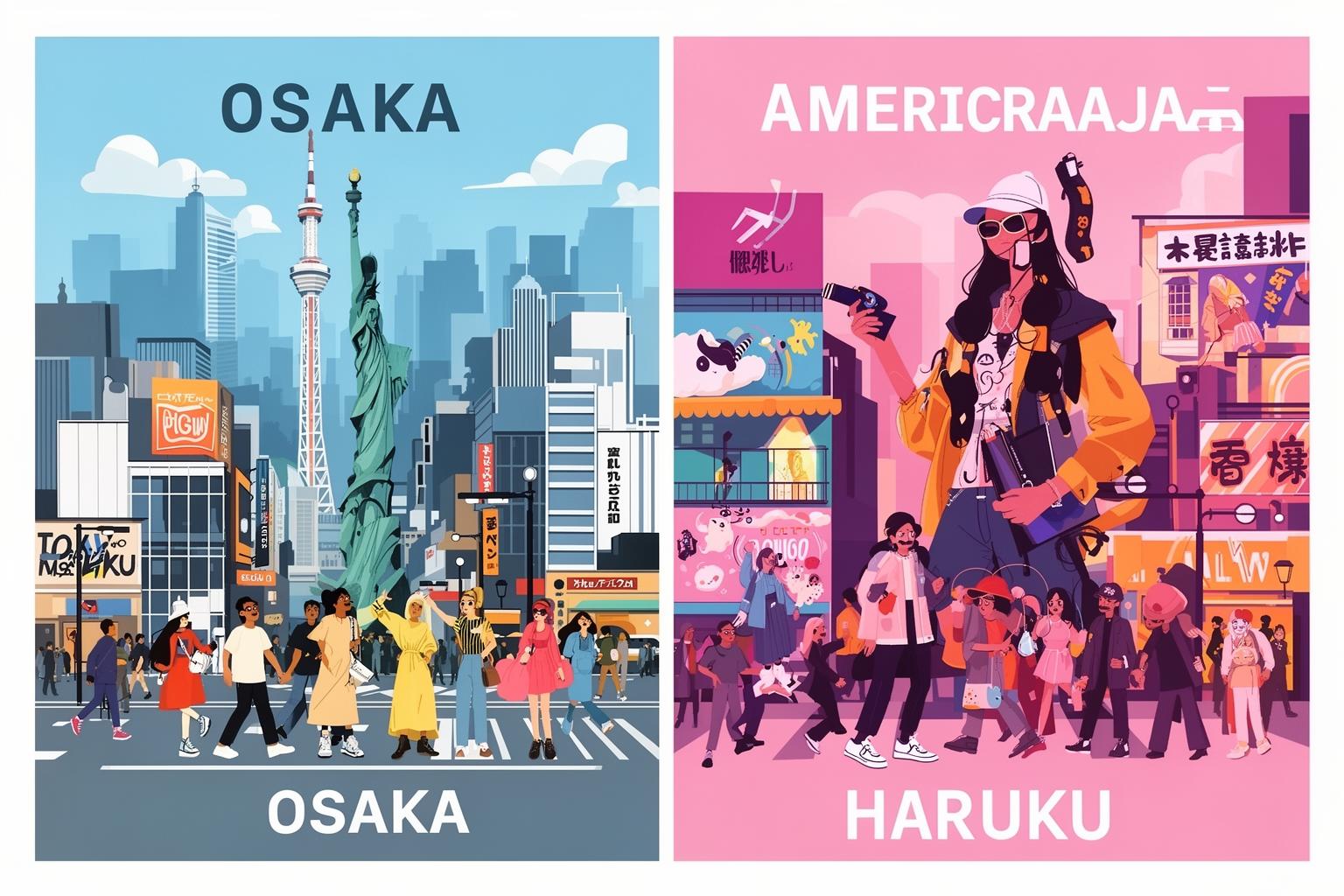
The best way to understand the essence of Amemura, and by extension Osaka, is to compare it directly with its Tokyo counterpart, Harajuku. On the surface, they appear similar: both are internationally renowned hubs of Japanese youth fashion and culture. However, in reality, they represent philosophical opposites—two parallel worlds that expose the profound cultural divide between Japan’s two largest cities.
Curated Cool vs. Chaotic Creation
Walking through Harajuku, especially Takeshita Street, can feel like stepping onto a movie set. It’s a vibrant, hyper-commercialized, and densely packed crowd. The experience is largely curated. Trends often originate from the media, idol culture, and the marketing teams of major clothing brands. The shops are sleek, branding is polished, and the overall atmosphere can resemble a wonderfully strange theme park. Here, you consume the culture, take in the sights, and purchase the products. It’s a spectacle, and you are the audience.
Amemura follows a completely different rhythm. It isn’t just one street but a sprawling, tangled maze of back alleys and side streets. The energy is decentralized, spreading out from the communal heart of Triangle Park. It’s much less a spectacle and more of a laboratory. Culture isn’t handed to you on a silver platter; it’s actively created, experimented with, and remixed on street corners in real time. It feels participatory by nature. Simply being there, hanging out, and chatting with people makes you part of the fabric. Trends aren’t dictated from above; they emerge from the ground up, from a kid’s unique shoelace style, a new band’s DIY merchandise, or a fresh piece of graffiti that appears overnight. Harajuku is the polished finished product; Amemura is a chaotic work in progress.
Communication Styles: The “Nori” Factor
Perhaps the deepest difference lies in communication style, revealing the key to the Osakan spirit. In Tokyo, social interactions—even casual retail encounters—are often guided by a sense of professional distance and politeness, reflecting the principle of tatemae (public facade). In Amemura, interactions revolve around a concept called nori (ノリ).
Nori is a tricky word to translate exactly. It can mean vibe, energy, flow, or groove. It describes the shared atmosphere of the moment, and the ability to tune into—and contribute to—it’s a highly prized social skill in Osaka. It’s about being playful, responsive, and spontaneous. When an Amemura shop owner loudly jokes about your haircut, they’re not being rude—they’re testing your nori. They’re throwing out a conversational ball, inviting you to hit it back. The expected response isn’t offense or awkward silence, but a witty comeback, a laugh, or continuation of the joke. It’s a form of social improvisation.
For foreigners, this can be both the most difficult and rewarding part of navigating Osaka culture. It demands dropping the script of formal Japanese politeness and being fully present. It feels more direct, more human, and sometimes more volatile than the Tokyo experience. There’s less separation between public and private selves. What you see is usually what you get. Mastering nori—catching the vibe and going with it—is the final key to truly grasping why Amemura feels unique. It’s a place built not just on commerce but on connection, laughter, and the shared energy of lively conversation.
Why Amemura Matters for Understanding Osaka
Ultimately, America-mura is much more than just a collection of shops and a popular hangout spot for the city’s youth. It is a living museum of Osaka’s spirit, a concentrated embodiment of the city’s core values. To dismiss it as merely a quirky fashion district is to completely miss its significance. It is an essential part of the puzzle for anyone aiming to build a life here or trying to grasp what gives this city its vitality.
A Microcosm of the Osaka Spirit
If you had to capture the essence of Osaka in a single neighborhood, Amemura would be the one. Every element of this area reflects a key aspect of the city’s character. Its organic, unplanned beginnings highlight the entrepreneurial and pragmatic nature of a city shaped by merchants, not samurai. The focus on vintage items and thrift store gems reveals a resourcefulness and a rejection of pure consumerism in favor of creativity and individuality. The loud music, vivid street art, and straightforward communication style express an unfiltered honesty and a culture that values bluntness over subtlety. The communal vibe of the parks and the conversational atmosphere of its shops demonstrate a community-oriented mindset that emphasizes human connections. And its entire role as a center for subculture stands as a testament to Osaka’s slightly rebellious streak and its historical function as a counterbalance to Tokyo’s cultural and political dominance.
The Evolving Heartbeat
Of course, Amemura is not a static relic. It has undergone significant changes since its emergence in the 1970s. It has grown more popular and commercialized. Major brands have established outlets, and on weekends, it can feel inundated with tourists. Some longtime residents mourn that it has lost some of its original edge. But dismissing it outright would be a mistake. The core spirit remains alive. It continues to serve as the city’s primary cultural incubator. It is still where a young person with a distinctive style can get noticed, where a new band can perform their first gig, and where a fresh idea can take root on the streets and grow into a movement.
For any foreigner living in Osaka, spending time in Amemura is essential. It teaches you to look beyond appearances, engage directly with people, and appreciate the beauty in chaos, imperfection, and authenticity. It stands as a counter-narrative to the stereotype of a reserved, uniform Japan. And in Osaka, you quickly discover that this counter-narrative is often the most important story of all. Amemura is the city’s youthful, defiant, and creative heart, and its pulse remains as strong as ever.