Step away from the electric river of light and sound that is Dotonbori. Just a few paces from the giant mechanized crab and the ceaseless glow of the Glico Running Man, a different kind of magic hums. It’s a secret whispered on the Osaka night air, a passage into a world that time seems to have forgotten. This is Hozenji Yokocho, a narrow, stone-paved artery that beats with the heart of old Naniwa. Here, the concrete jungle recedes, replaced by the soft, warm glow of paper lanterns, the hushed sizzle of kitchens preparing age-old recipes, and the palpable weight of history clinging to every wooden beam and moss-covered stone. It’s not merely a street; it’s a feeling, an atmospheric journey that offers a profound contrast to the dazzling modernity that surrounds it. This is where Osaka slows its frantic pace, inviting you to listen to the stories etched into its ancient stones, stories of prayer, performance, and the enduring spirit of a city that cherishes its soul. Before you take your first step onto its hallowed ground, get your bearings and see where this pocket of the past is tucked away in the bustling heart of Minami.
For a deeper dive into the city’s rich cultural heritage, be sure to explore our guide to the National Bunraku Theatre.
The Verdant Heartbeat: Mizukake Fudo-son
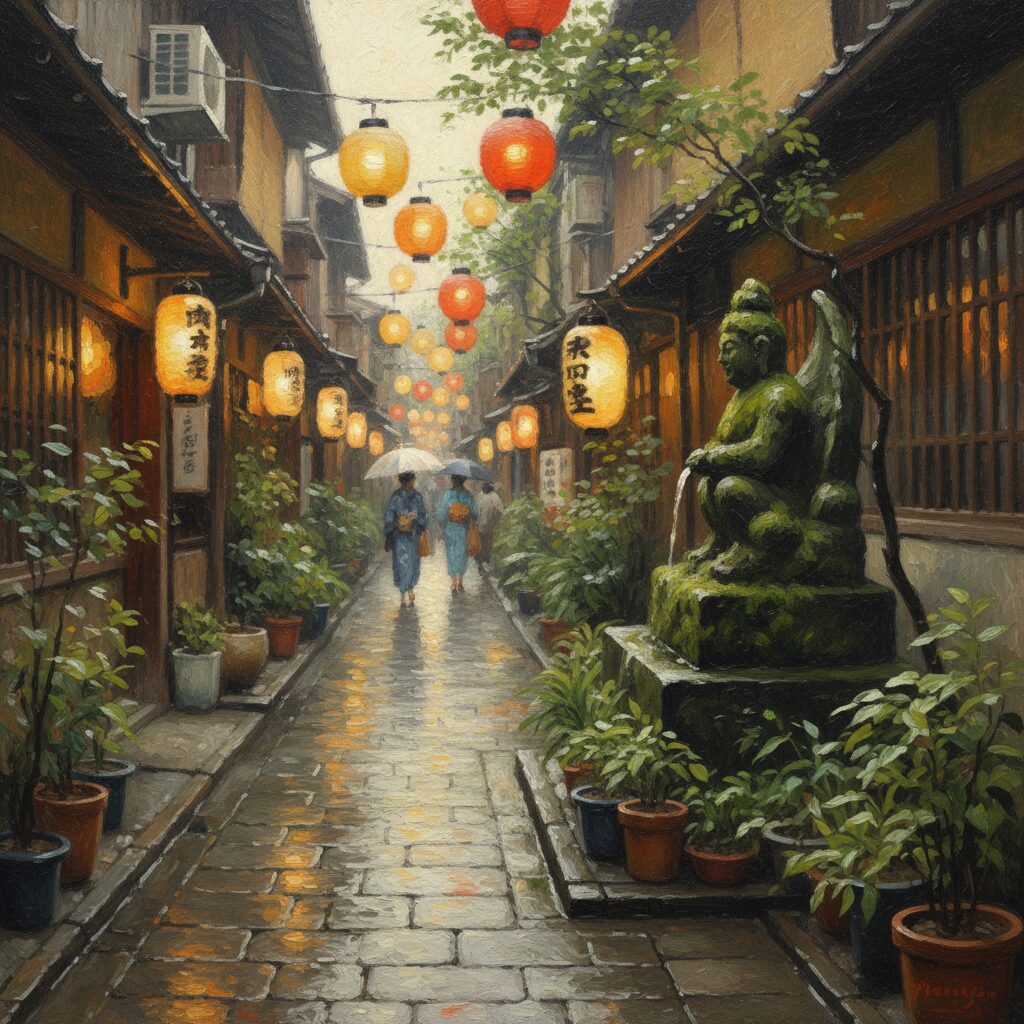
At the very heart of Hozenji Yokocho lies its spiritual centerpiece, a presence so potent it bestows the alley with its name and character. Nestled in a small alcove is Hozenji Temple, home to the renowned statue of Fudo Myo-o. You will catch the temple’s scent before your eyes meet it—the sweet, woody fragrance of burning incense drifting among the restaurants, a fragrant guide leading you to this sacred space. Fudo Myo-o, one of Buddhism’s Five Wisdom Kings, is a figure of formidable power. His expression is fierce, his gaze piercing, often portrayed surrounded by flames, wielding a sword and a rope. Yet beneath this fearsome exterior lies a deeply compassionate spirit; he is a protector, a vanquisher of evil, and a guide for those seeking enlightenment. In this modest temple, however, he takes on a singular and beautiful form.
The statue is not hewn from cold stone but appears almost alive, entirely cloaked in a thick, vibrant green mantle of moss. This is why he is lovingly called “Koke-fudo-san,” the Moss-Covered Fudo. Legend holds that many years ago, a woman visiting the temple made a wish and, as an offering, splashed the statue with water from a nearby well. Her wish was granted, and soon others followed her example. Over the decades, this simple gesture of prayer—repeated thousands of times by hopeful merchants, lovelorn youths, aspiring actors, and weary travelers—has nurtured a thriving mossy ecosystem on the deity’s surface. The moss acts as a living record of every prayer, a tangible expression of generations of hope.
To take part in this ritual is to connect with the very soul of Osaka. You approach the water basin, take one of the wooden ladles, or hishaku, and fill it with cool water. Bowing your head slightly, you make your wish and then gently pour the water over the statue. The sound is a soft splash, a liquid whisper joining the chorus of countless others. It is a moment of deep tranquility amidst the city’s bustle. As the water trickles down the statue’s lush green contours, you realize you are part of a continuous, living tradition. It is profoundly moving to witness, whether you are offering a prayer yourself or quietly observing the locals’ devotion. The smoke from thick incense bundles curls and twirls in the lantern light, carrying prayers upward into the night sky—a fragrant tribute from the heart of the city.
Echoes on the Ishidatami: A Stroll Through Time
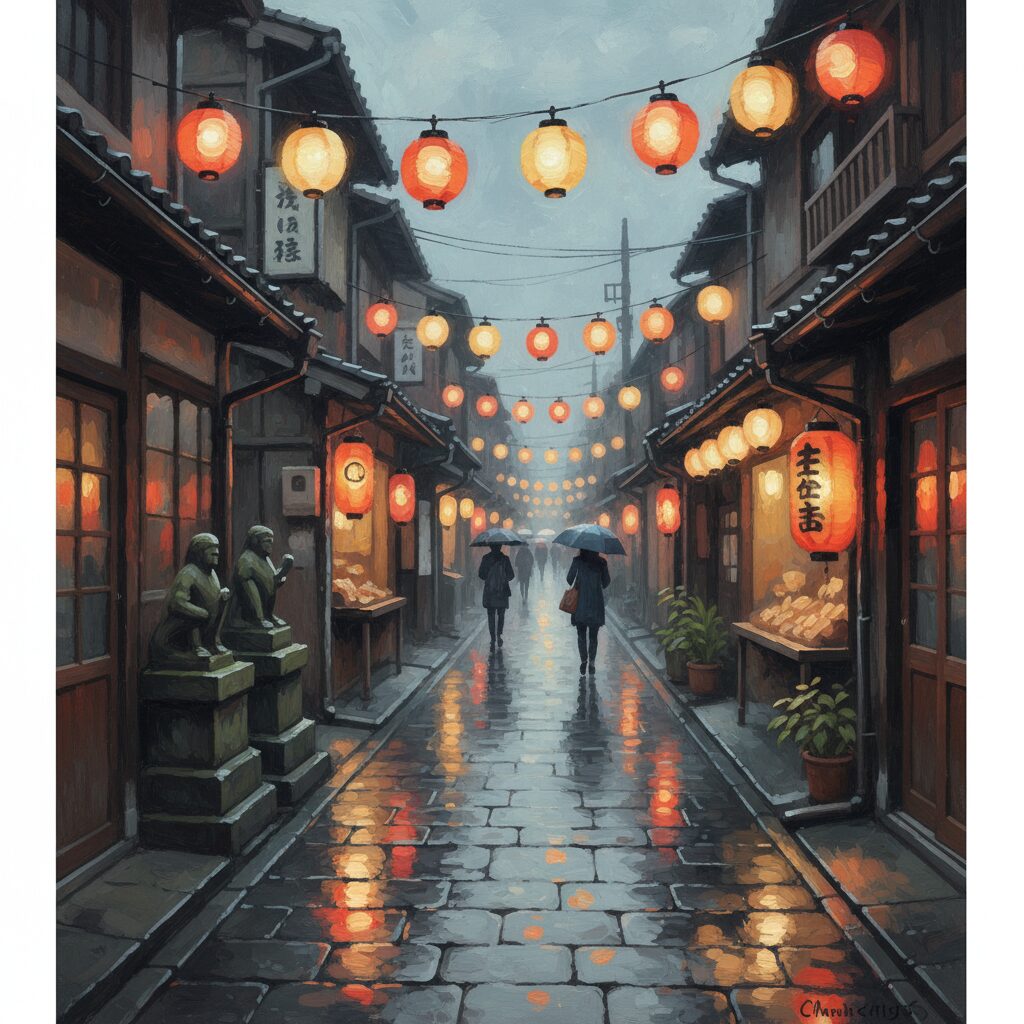
Beneath your feet in Hozenji Yokocho, the very ground tells a story. The alley is paved with ishidatami, irregular stone slabs smoothed by centuries of footsteps. Walking here is a tactile experience; you sense the subtle unevenness and the history embedded in each stone. After a brief rain, the stones shine like polished obsidian, reflecting the warm, golden glow of the paper lanterns lining the alley, creating a scene reminiscent of a classic Japanese film. This is a place that urges you to slow down. Rushing through would mean missing the essence entirely. The alley consists of two narrow lanes running east to west, each barely wide enough for a few people to walk side by side, fostering an immediate sense of intimacy and discovery.
The architecture intentionally preserves a bygone era. The buildings are low, traditional wooden structures, many with the dark, latticed fronts known as koshi-do. In front of each establishment, a noren, a fabric curtain dyed with the restaurant’s name or crest, hangs and sways gently as patrons enter and leave. These curtains function both as signs and as soft barriers, warmly welcoming visitors inside. Glance upward to see tiled roofs and small second-story windows, hinting at the compact, efficient use of space that has long characterized urban Japanese life.
The area’s history is deeply connected to Hozenji Temple, which once occupied a much larger stretch of land. The yokocho grew naturally around it, becoming a spot where temple visitors could find refreshment and entertainment. Its proximity, just a stone’s throw from the Dotonbori theater district, also made it a favored haunt for kabuki actors, bunraku puppeteers, and their audiences. Imagine the conversations held within these tiny establishments—the artistic debates, the post-performance celebrations. The alley endured the devastating air raids of World War II that destroyed much of Osaka, standing as a testament to its resilience. To walk here is to follow in the footsteps of artists, storytellers, and merchants who have shaped Osaka’s vibrant, pragmatic, and pleasure-loving culture for generations. You can almost hear the faint clatter of wooden geta sandals on the stones, an auditory ghost of the past blending with the city’s modern sounds.
The Taste of Tradition: Osaka’s Soul on a Plate
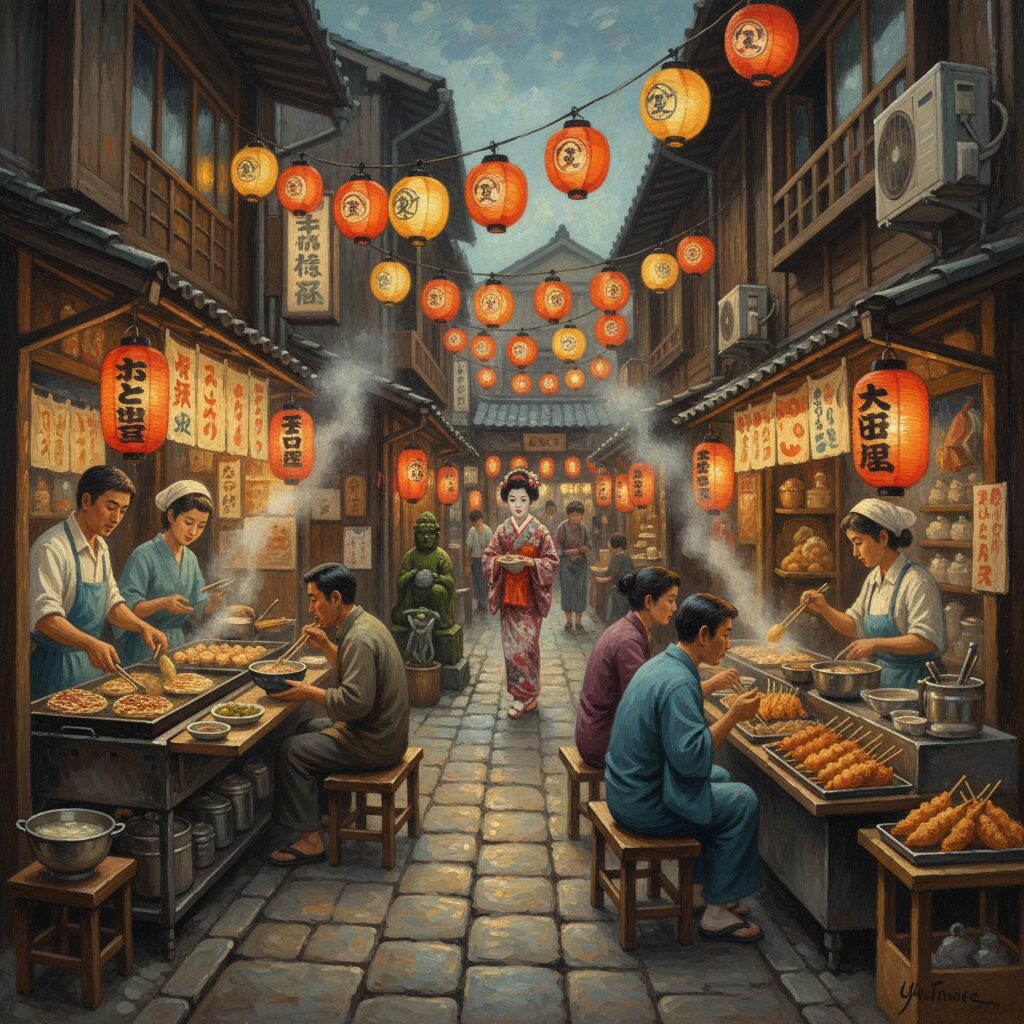
Hozenji Yokocho is, above all else, a culinary haven. While Dotonbori boldly advertises its offerings with giant plastic octopuses and flashing signs, the yokocho gently entices through the enticing aromas wafting from behind its noren curtains. Dining here is more intimate, refined, and deeply rooted in tradition. It’s a place to savor rather than simply eat.
The Art of Kappo
Many of the most esteemed venues in the alley specialize in kappo ryori, a style of dining that is quintessentially Osakan. The term kappo literally means “to cut and to cook,” and the experience revolves around an open kitchen with a long counter. Guests sit directly in front of the master chefs, or itaemae, observing their every move with admiration. It’s a form of culinary theater. You watch the precise, almost dance-like skill with which they slice sashimi, the controlled flare of flame as they grill seasonal fish, and the delicate art of arranging dishes to be as visually stunning as they are flavorful. The menu is often not fixed but evolves through dialogue with the chef, based on the absolute freshest ingredients sourced that very morning. Dining at a kappo restaurant is a commitment—an evening-long experience where you entrust your meal to a master craftsman. It’s an opportunity to savor the subtle tastes of the seasons and to experience the pinnacle of Japanese hospitality, or omotenashi.
The Heart of Osaka’s Cuisine
Beyond the refined art of kappo, the alley hosts beloved soul foods that Osaka is famous for. You’ll find small, cozy restaurants specializing in okonomiyaki, the savory pancake loaded with cabbage, meat, or seafood and grilled to perfection on a hot teppan. The sizzle and the aroma of sweet and tangy brown sauce combined with Japanese mayonnaise are intoxicating. Other spots focus on kushikatsu, skewered meat, seafood, and vegetables lightly battered and deep-fried to golden, crispy perfection. They’re dipped in a communal pot of tonkatsu-like sauce, following the strict Osaka rule: “no double-dipping!” These dishes are unpretentious, delicious, and deeply satisfying, embodying the hearty, down-to-earth spirit of the city.
A Sweet Story for Two: Meoto Zenzai
No visit to Hozenji Yokocho is complete without stopping at a small, unassuming shop called Meoto Zenzai. For over a century, this shop has served just one item: zenzai, a warm, sweet soup made from adzuki red beans with a toasted mochi rice cake floating inside. What makes it special is how it’s served—one order comes with two separate, small lacquer bowls. This tradition is inspired by the word meoto, meaning “married couple.” The two bowls symbolize a harmonious and joyful union. The sweet treat was immortalized in a famous novel by Osaka-born author Sakunosuke Oda, securing its place in the city’s cultural heritage. The shop itself is a tiny jewel box, filled with charm and nostalgia. Stepping inside feels like stepping back to the Showa era. The zenzai is comforting and delicious, with the sweetness of the beans perfectly balanced by the chewy mochi. It’s more than just a dessert; it’s a taste of history and a symbol of good fortune—a perfect, heartwarming conclusion to a stroll through the alley.
The Alley’s Two Faces: Day and Night
Hozenji Yokocho possesses a dual nature, and to truly grasp its essence, you need to experience it at different times of day. Each moment reveals a distinct perspective on its timeless charm.
The Serenity of Day
In daylight, the yokocho rests quietly. Lanterns remain unlit, many restaurants are closed, and their noren curtains are drawn back or taken down. This is the perfect time for a calm, reflective stroll. Without the evening crowds, you can fully admire the details: the texture of the dark wooden buildings, the intricate calligraphy on the signs, and the way sunlight gently filters through the narrow passage. The centerpiece during the day is the Mizukake Fudo-son statue. The moss covering it appears even more vibrant and lush in the natural light, a striking emerald green against the dark, wet stone. The temple feels peaceful, inviting a more personal and meditative moment of reflection. While the distant city hum persists, a sense of calm dominates the alley. This is a time of quiet preparation; you might catch faint scents of dashi being simmered or vegetables chopped as kitchens slowly come to life for the evening ahead.
The Enchantment of Night
As dusk falls over Osaka, Hozenji Yokocho transforms spectacularly. One by one, paper lanterns flicker on, bathing the stone path in a soft, enchanting amber glow. This is the yokocho at its most captivating. The alley fills with visitors, yet it never feels as overwhelming as its lively neighbor, Dotonbori. The atmosphere becomes intimate and warm. Sounds shift as well — the quiet hum gives way to a symphony of gentle clinking glasses, cheerful conversations drifting from doorways, and the enticing sizzle of passionate cooking. Steam rises from kitchen vents, catching the lantern light and adding a touch of magic to the scene. The warm light creates deep shadows, making the narrow alley feel even more mysterious and inviting. Nighttime is for dining, drinking, and fully immersing yourself in the ambiance. Experiencing the alley at night feels less like visiting a tourist spot and more like stumbling upon a well-kept secret—a magical world running on its own rhythm under the watchful, moss-covered gaze of Fudo Myo-o.
Your Practical Guide to a Timeless Escape
While immersing yourself in the atmosphere of Hozenji Yokocho is the main objective, a few practical tips will help ensure your visit goes smoothly and remains memorable, allowing you to focus on the experience rather than the logistics.
Getting There
Hozenji Yokocho’s remarkable accessibility adds to its charm. It is situated in the heart of the Minami district, just a short walk from several major train and subway stations. The nearest is Namba Station, which serves the Midosuji, Yotsubashi, and Sennichimae subway lines, as well as the Nankai Railway, providing access from Kansai International Airport. It’s also within easy walking distance from Nippombashi Station on the Sakaisuji and Sennichimae subway lines. The easiest way to locate it is to head toward the main Dotonbori canal area. From the Ebisubashi Bridge (famous for the Glico Man sign), walk east along the south side of the canal. The entrance to the alley is subtle, a narrow gap between modern buildings, marked by a traditional gate and the name “法善寺横丁” in Japanese characters. Its proximity to Dotonbori, Shinsaibashi, and the Den Den Town electronics district makes it an ideal evening destination after a day of exploring and shopping.
A Few Words of Advice
To get the most out of your visit, keep a few local customs in mind. When you visit the Mizukake Fudo-son, remember it is an active place of worship. Approach respectfully, speak softly, and be considerate of those there to pray. When pouring water, do so gently. The alley is narrow, so stay aware of your surroundings and make way for others. The stone pavement may be slippery, especially after rain, so wearing comfortable, sturdy shoes is advisable.
Many restaurants in the alley are quite small, some with only a few seats. For the more renowned kappo establishments, making a reservation well in advance is strongly recommended, if not essential. For more casual spots, you might have to wait briefly for a seat to become available. While credit cards are increasingly accepted, Japan remains largely a cash-based society, especially in smaller, traditional venues like these. It’s wise to carry enough Japanese yen to cover your meal and drinks. Lastly, don’t hesitate to be adventurous. If a place looks welcoming, with warm light spilling from its doorway and laughter inside, step in. Often, the best experiences in Hozenji Yokocho are the ones you find on your own.
The Unforgettable Echo of Old Naniwa
Visiting Hozenji Yokocho is more than just a brief stop on a busy Osaka itinerary; it is an immersive experience, a passage through a temporal gateway into the city’s living history. This is a place that awakens all the senses: the sight of glowing lanterns against dark wooden walls, the sound of water ladled onto moss, the aroma of incense and grilling food, the taste of exquisitely crafted dishes, and the feel of ancient stone beneath your feet. In a city constantly rushing toward the future, this small, enduring alley stands as a striking and beautiful reminder of the value of tradition, devotion, and community.
It reflects the very essence of Osaka—a city known for being loud, bold, and brilliantly modern, yet also profoundly soulful, treasuring the quiet corners where its history still breathes. When you leave Hozenji Yokocho and step back into the neon blaze of Dotonbori, the contrast is stark, but you carry the alley’s tranquility with you. The warmth of the lanterns stays with you, a golden glow that quietly reminds you that even in the busiest metropolises, secret places exist where stories are whispered, wishes are made, and the gentle, moss-covered heart of a city continues to beat strongly.