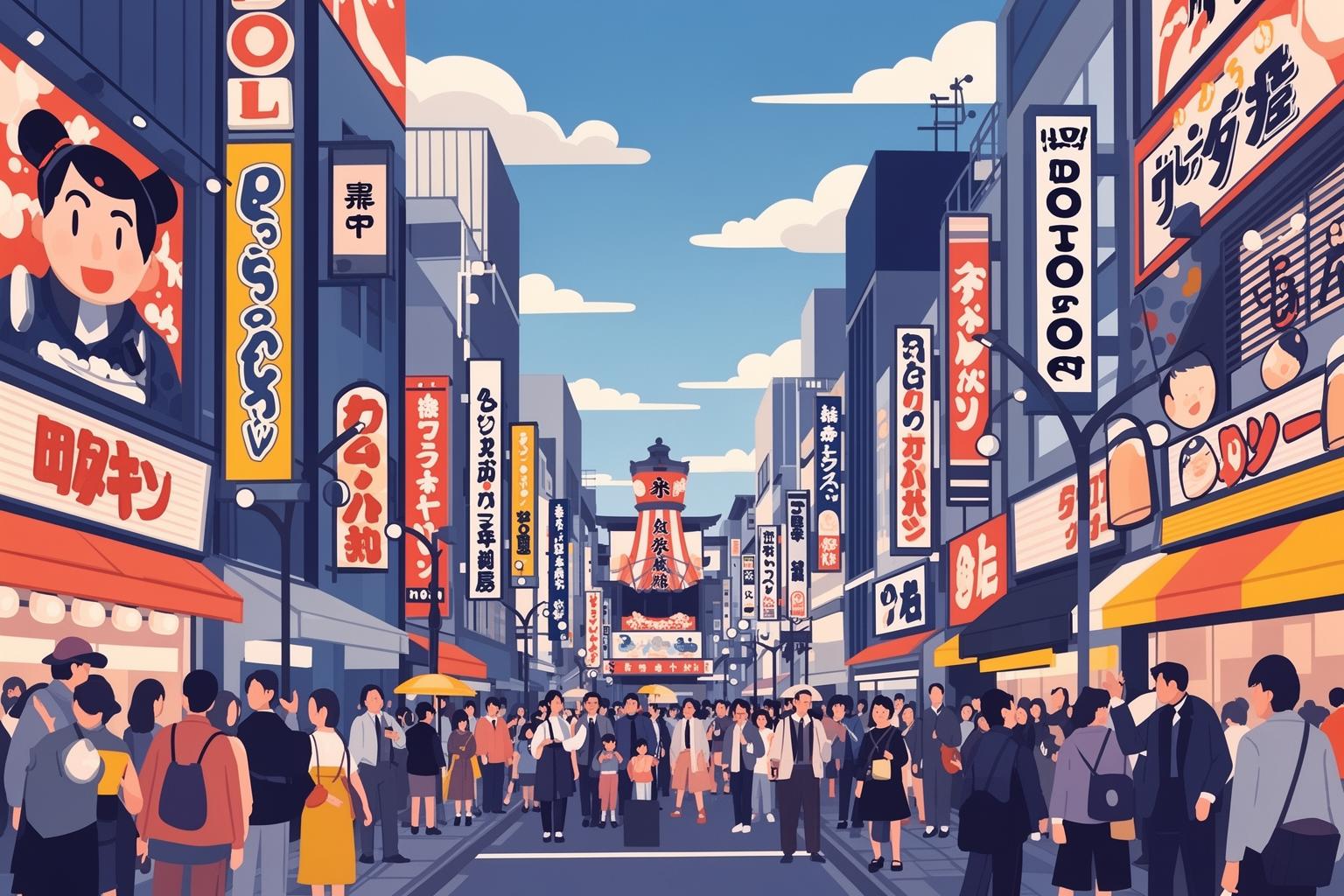
When you first arrive in Osaka, the city hits you with a sensory overload, a neon-drenched feast for the eyes and ears. At the heart of it all is Dotonbori, a place that feels like the world’s most energetic food court threw a party in a theme park. You see the Glico Running Man, the giant mechanical crab, and the puffed-up fugu lantern. And you hear the phrase, everywhere: kuidaore. Eat until you drop. As a Tokyo native, an event planner used to the sleek, curated aesthetics of my home city, I initially dismissed it. I saw it as a snappy marketing slogan, a tourist-friendly tagline designed to sell endless mountains of takoyaki and okonomiyaki to wide-eyed visitors. It felt like a caricature, a fun but ultimately shallow representation of a city that loved to eat. Oh, how wrong I was. Living here has taught me that kuidaore isn’t a slogan; it’s the city’s operating system. It’s a deeply ingrained philosophy that dictates not just where people eat, but how they shop, socialize, budget, and build relationships. It’s a practical, sharp-witted, and communal approach to life, disguised as an obsession with food. Forget the flashy signs for a moment. To truly understand Osaka, you have to understand that ‘eat until you drop’ is less about volume and more about value, a principle that runs through the veins of daily life far from the tourist throngs.
The way this philosophy intertwines with everyday living is further illustrated by Osaka’s authentic kuidaore culture, highlighting how food shapes not only meals but entire lifestyles.
Kuidaore Isn’t Gluttony, It’s an Obsession with Value
The fundamental misunderstanding of kuidaore is believing it’s about consumption for the sake of consumption. It’s not a competition to see how much one can physically eat. Rather, it’s an unrelenting, city-wide pursuit of the very best food experience for the money spent. This philosophy is guided by an almost sacred principle known locally as cos-pa, shorthand for ‘cost performance.’ Every food transaction, from a 100-yen croquette to a 10,000-yen sushi course, is subconsciously evaluated using this powerful formula. Am I getting satisfaction proportional to, or greater than, the yen I’m spending? If not, the establishment is doomed. It’s a beautifully ruthless form of culinary democracy.
The ‘Cos-Pa’ Equation: Maximum Flavor for Minimum Yen
In Tokyo, a restaurant can succeed based on its location, stylish interior, celebrity chef, or Instagram appeal. You might pay extra for the view from a Shinjuku skyscraper or the minimalist charm of a Ginza dining room. The food might be good, but you’re also paying for the experience, the brand, and the story. Osaka residents find this concept confusing, even insulting. Here, taste is king, and cost performance is queen. A cramped, ten-seat ramen joint tucked beneath a railway arch in Tenma, with peeling paint and a gruff owner, will be revered and have a permanent line if it serves a mind-blowingly delicious bowl for 700 yen. Meanwhile, a beautifully designed restaurant in a prime spot charging 2,000 yen for a mediocre pasta dish will be met with shrugs and fail quickly. This isn’t about being cheap; it’s about being discerning. It’s a deeply held belief that good food doesn’t need fancy surroundings. The quality should speak for itself, loudly and clearly. Conversations among friends and colleagues constantly exchange cos-pa intelligence. You don’t ask, ‘Have you been to that new Italian place in Namba?’ Instead, you ask, ‘Did you hear about the new tachinomi (standing bar) in Kyobashi? They have fresh sashimi for 300 yen a plate, and it’s better than what’s offered at places charging triple!’ This ongoing search for value is a shared cultural pastime, a sport where everyone wants to discover the next unbeatable deal.
The Unspoken Rule: Never Settle for ‘Maa, Ii ka’ (Oh, Well, It’s Okay)
Across Japan, you’ll often hear the phrase ‘maa, ii ka’. It’s a flexible expression of mild resignation, meaning ‘oh, well,’ ‘good enough,’ or ‘I guess this will do.’ It’s used for everything, from missing a train to picking a lunch spot. In Osaka, applying this phrase to a meal is considered a cardinal sin. Every meal is an opportunity, and settling for something merely ‘okay’ is a genuine source of regret. It’s a failure not only of taste but of judgment. An Osaka resident will walk an extra ten minutes in the rain, passing five other perfectly adequate restaurants, to reach the one place they know has superior dashi broth in their udon. They’ll analyze, debate, and agonize over lunch choices with an intensity that might seem comical to outsiders. But it’s deadly serious. This high standard creates a hyper-competitive food scene where only the strong—meaning delicious and well-priced—survive. This pressure cooker of consumer demand is exactly why the overall quality of food in Osaka, at all price points, is so astonishingly high. You can’t get away with being average. The city’s collective palate is sharp, and their wallets are savvy. Settling for mediocrity is admitting defeat, and in the grand game of kuidaore, defeat is not an option.
How ‘Eat Until You Drop’ Translates to the Daily Grind
This obsession with value extends beyond weekend dinners or special occasions. It’s ingrained in everyday life, from the office worker’s lunch break to the evening trip to the grocery store. The principles of kuidaore are most evident in the ordinary, practical decisions residents make daily. It’s a philosophy that demands efficiency and sustainability, profoundly influencing the city’s economic and social rhythms.
Lunchtime Economics: The Salaryman’s Pursuit of the 500-Yen Meal
Visit a business district like Honmachi or Yodoyabashi around noon, and you’ll see the kuidaore philosophy at work. The streets fill with office workers, but they aren’t wandering without purpose—they are on a mission. In Tokyo, grabbing a convenience store bento or a simple bowl of soba is a typical, pragmatic choice. In Osaka, lunch is a strategic endeavor: to find the most satisfying, generous, and tasty meal possible for just a single 500-yen coin. The city is dotted with eateries fiercely competing in this ‘one-coin lunch’ battle. Small restaurants display their daily teishoku (set meal) with handwritten signs boasting ‘Rice refills free!’ or ‘Includes mini-udon!’ You’ll find salarymen and women in sharp suits leaning over steaming bowls of curry, plates of tonkatsu, or grilled fish sets with rice, miso soup, and pickles, all for under 500 yen. These spots aren’t luxurious. Often, they are standing-room-only or feature shared tables where you sit close to strangers. But the goal is clear: provide maximum caloric and flavor satisfaction at the lowest possible cost. It’s a source of pride. A manager might drive a luxury car but will still brag to subordinates about the amazing 480-yen chicken katsu lunch he discovered in a basement eatery. It’s a display of street smarts and a shared respect for a good deal that transcends corporate rank.
The Supermarket as a Battlefield: Reading the Discount Stickers
The search for value continues after the workday ends. The local supermarket becomes the evening’s strategic battleground. While supermarkets across Japan offer discounts on prepared foods near closing time, in Osaka, it’s a much-anticipated ritual observed with tactical care. Locals know exactly when the staff member with the sticker gun will come out. They know the first round might offer a 20% discount, but if you wait another hour, you could hit the jackpot: the prized hangaku (half-price) sticker. Supermarkets like the famously garish Super Tamade have built their entire business model on this extreme discounting, attracting a loyal group of shoppers who navigate the aisles like expert hunters. Spotting a well-dressed person eagerly awaiting the half-price sticker on a tray of premium tuna sashimi isn’t a sign of poverty—it’s a mark of a savvy Osaka shopper. It’s a triumph. You go home and proudly say, ‘Look at this beautiful sea bream I scored for half price!’ It’s proof of your patience and skill. This mindset influences how you cook and eat. Your dinner plans become flexible, shaped by the day’s best deals. It fosters creativity and reduces waste, all while embodying the core principle of kuidaore: why pay full price when a bit of timing and strategy can deliver the same delicious meal for less?
Food as the Main Event: Shaping Social Life and Relationships
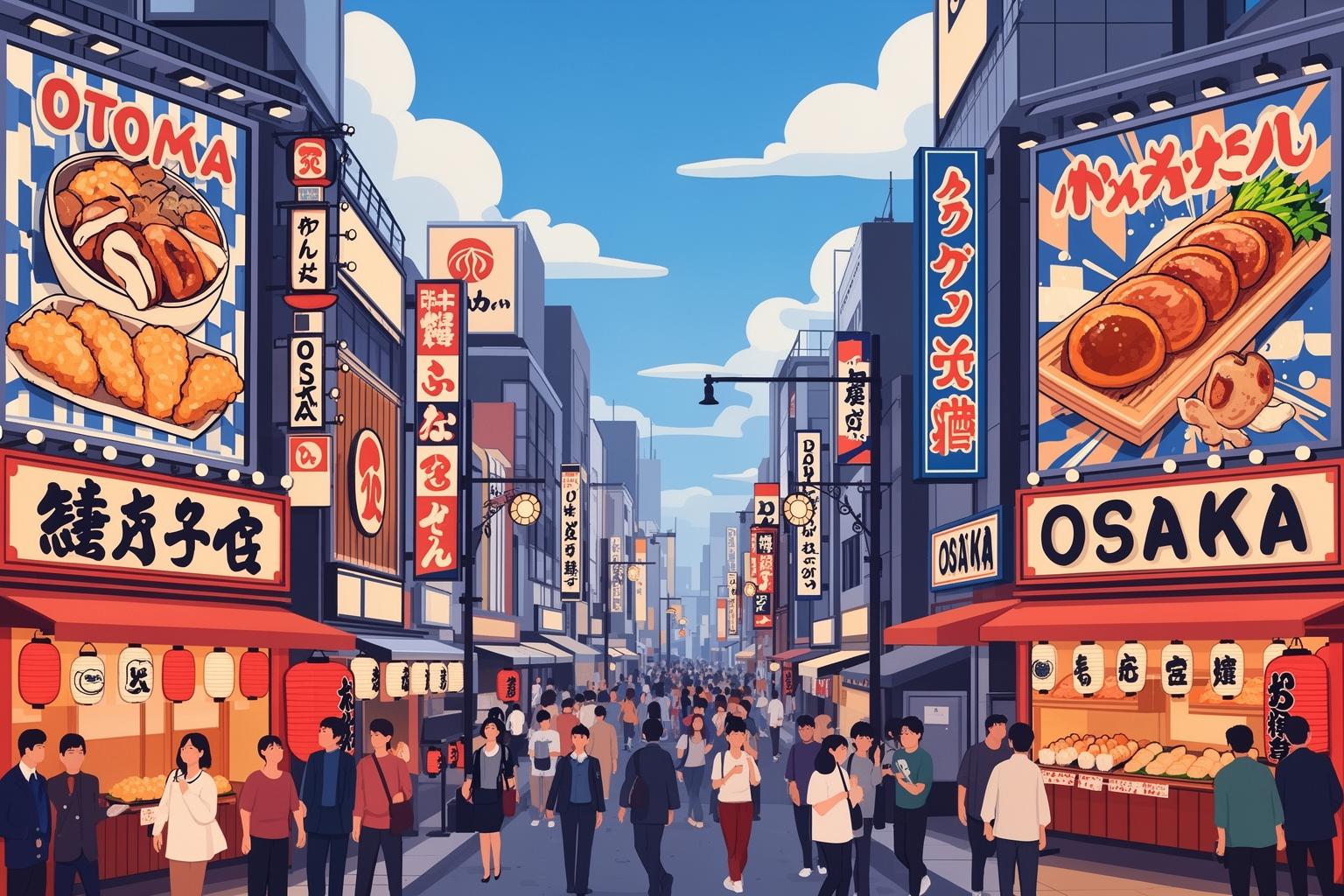
In Osaka, food serves as the main medium for social connection. It’s the reason people gather, the topic of conversation, and the foundation on which relationships are built. This marks a subtle yet significant contrast to other regions of Japan, where social gatherings might revolve around different activities, with food playing only a supporting role. In Osaka, food always takes center stage, fundamentally shaping how people interact.
‘Nomikai’ vs. ‘Tabekai’: Drinking First or Eating First?
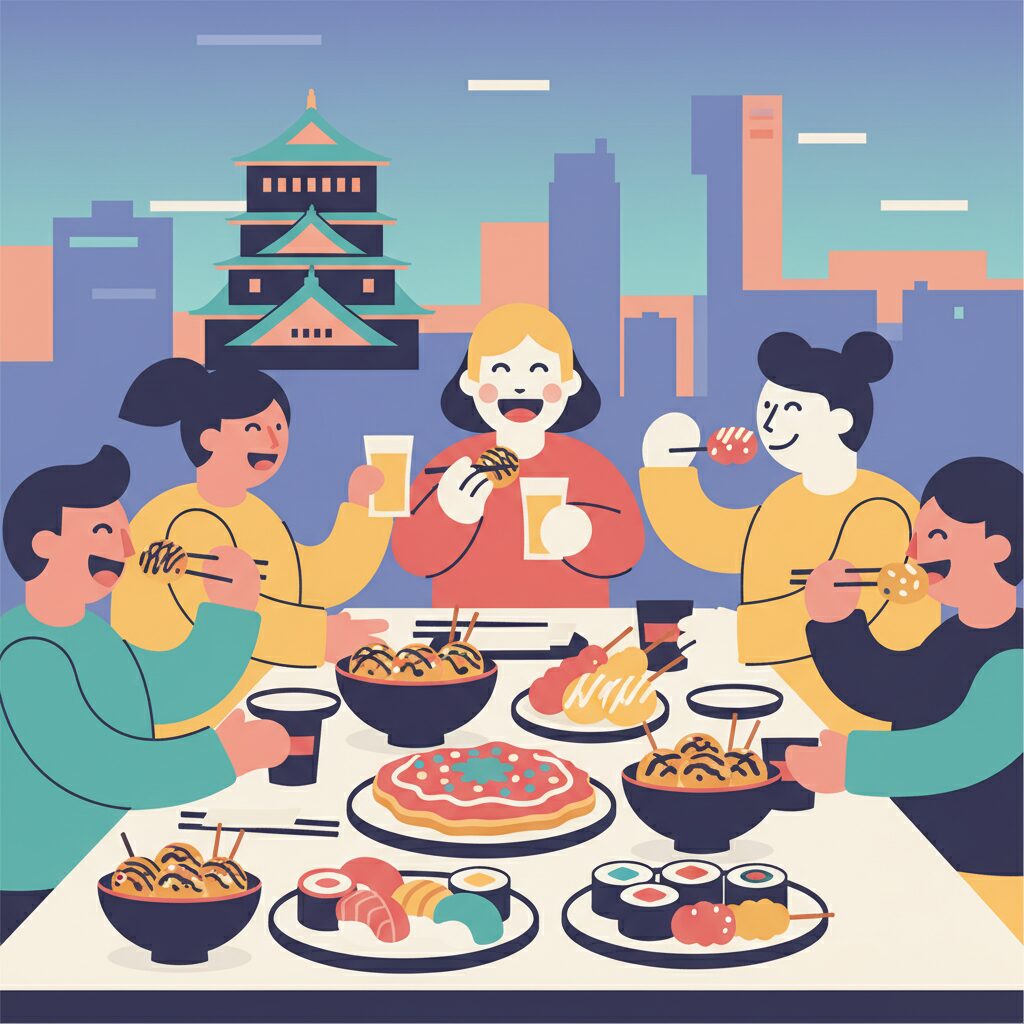
In Tokyo, the corporate nomikai (drinking party) is a core part of work culture. The main goal is to drink with colleagues and bosses, strengthening team bonds through shared inebriation. The food tends to be secondary, usually a predictable assortment of chain-izakaya staples like edamame, fried chicken, and potato salad, mainly intended to accompany the alcohol. By contrast, in Osaka, although drinking is certainly enjoyed, the food is the genuine centerpiece. Gatherings resemble a tabekai (eating party). The primary question is never ‘Where should we go to drink?’ but rather ‘What delicious food should we eat tonight?’ The choice of venue is debated with the seriousness of a major business decision. Should we visit that spot in Fukushima famous for its grilled offal? Or the seafood izakaya in Namba where the owner sources fish straight from the market? The night’s success depends on the quality of the food. A great conversation can easily be eclipsed by a disappointing meal. This food-first approach turns social gatherings into genuine pleasures rather than corporate obligations. It creates an even playing field; everyone, from new hires to department heads, can bond over a perfectly grilled skewer or an exceptional piece of sashimi.
The Neighborhood ‘Kappo’ and the Kitchen Counter Community
A defining feature of Osaka’s social fabric is the prominence of small, counter-style restaurants, often run by a single owner-chef (taisho) or a husband-and-wife duo. These venues aren’t just places to eat; they act as vital community hubs, extensions of the local living room. In Tokyo, dining can be a private, compartmentalized experience. But in an Osaka kappo or izakaya, the counter serves as both stage and communal table. You don’t simply order from a menu. You engage with the taisho, asking, ‘What’s fresh today?’ or ‘What do you recommend?’ You place trust in their expertise, and they reward you with their finest offerings. This interaction fosters a personal connection. Before long, the chef knows your preferences, and you learn a bit about their life. This dynamic spills over to other customers as well. Sitting shoulder-to-shoulder at the counter, it’s nearly impossible not to chat. Conversations start naturally, usually about the food. ‘Wow, that looks amazing, what is it?’ a stranger might ask about your dish. Before you know it, you’re exchanging recommendations and laughing with people you’ve never met, all bonded by the delicious food before you. This is the true source of Osaka’s famed friendliness. It’s not just an abstract trait; it’s a friendliness born from a shared context and a universal, easy-to-discuss passion: food.
Home Parties and the ‘Mochiyori’ Potluck Culture
The kuidaore spirit extends into private homes as well. When friends gather, the concept of mochiyori (potluck) is elevated to a new level. Elsewhere, bringing a simple bottle of wine or a generic store-bought dessert might be sufficient. In Osaka, what you bring reflects your taste and your knowledge of the city’s culinary scene. It acts as a form of social currency. You don’t just bring any takoyaki; you make a special trip to your absolute favorite stand, the one you believe is objectively the best in your neighborhood, bringing a large platter still hot. You might arrive with a famous butaman (pork bun) from Horai 551 or an exquisite fruit daifuku from a celebrated shop in the depachika (department store food hall). The gathering turns into a delicious show-and-tell. Conversation naturally revolves around the food. ‘Where did you get this? It’s incredible!’ It’s a way to share personal discoveries, inviting friends into the secrets you’ve uncovered in your own quest for culinary gems. This transforms a simple get-together into a collaborative feast, a celebration of the city’s endless gastronomic treasures.
What Foreigners Often Misunderstand about Osaka’s Food Scene
For newcomers, Osaka’s food culture can be as bewildering as it is exhilarating. The city follows a set of unwritten rules and values that may seem counterintuitive, especially when compared to the more polished and internationally renowned culinary scenes of other major cities. Grasping these local idiosyncrasies is essential to genuinely appreciating what makes dining here so unique.
It’s Not Just Takoyaki and Okonomiyaki
Osaka cuisine’s global reputation is largely shaped by its famous street foods, often labeled as ‘B-kyu gourmet’ or ‘B-grade cuisine.’ While locals take immense pride in their takoyaki, okonomiyaki, and kushikatsu, it’s a misconception to believe that this represents the full extent of their culinary domain. The kuidaore philosophy—demanding great value for money—applies rigorously across every type of food. An Osaka businessperson will be just as exacting and discerning about a high-end French tasting menu or a traditional kaiseki meal as they would be about a simple plate of fried noodles. They expect both perfection and value at every price level and will voice dissatisfaction if a 20,000-yen meal feels even slightly overpriced given the quality of the ingredients or the chef’s skill. The city boasts a wealth of exceptional fine dining, but these establishments succeed and flourish on the same principle as the humble takoyaki stall: they must provide an experience that justifies the cost to a highly demanding audience. The label ‘B-grade’ is misleading; it’s more about being unpretentious and accessible than about inferior quality.
‘Loud and Cheap’ Doesn’t Mean ‘Poor Quality’
Aesthetic tastes in Osaka can be startling for those used to the quiet elegance of Tokyo or Kyoto. Many of the city’s most cherished eateries are, to put it mildly, not visually appealing. They can be noisy, filled with the hearty laughter of customers and the clatter of the kitchen. They are often cramped, with mismatched furniture and menus taped to the walls. Smoke from the grill may linger thickly in the air. To an outsider, these signs might suggest ‘low quality’ or resemble a ‘dive bar.’ This is perhaps the biggest misconception of all. In Osaka, ambiance takes a backseat to the point of being nearly irrelevant. Every ounce of energy, money, and pride is invested directly into the food. A worn exterior or chaotic interior is rarely a warning; rather, it often signals an establishment so confident in its product that it doesn’t rely on distractions. A long queue of locals patiently waiting outside a shabby ramen shop is the only Michelin star that counts here. The noise isn’t bothersome; it is the sound of contented, delighted customers. It’s the authentic soundtrack of kuidaore at its purest. You quickly learn to trust your nose and the crowd over a polished facade.
Living in Osaka means taking part in an ongoing, city-wide dialogue about food. The kuidaore spirit is not just a tourist lure found in Dotonbori; it is the heartbeat of life here. It’s a practical and deeply human philosophy that values quality over showiness, community over exclusivity, and smart value over empty status. It influences how families budget for groceries, how coworkers bond after work, and how neighbors become friends. It is a relentless pursuit of small, everyday pleasures and a refusal to settle for anything less than delicious. To live in Osaka is to join this delightful, never-ending quest. It’s learning to view the world through the lens of ‘cost performance,’ to celebrate the win in a half-priced bento, and to realize that the best conversations often happen over a shared plate of something extraordinary. Ultimately, this is how you know you’re no longer a visitor but a resident who truly understands.