When I first moved to Japan, my world of grocery shopping was, let’s be honest, a little… beige. I’d walk into a supermarket in Tokyo, and it was a sanctuary of serene order. Soft, instrumental music floated from invisible speakers. The lighting was gentle, designed to make the perfectly stacked pyramids of apples glow. The staff bowed and spoke in hushed, respectful tones. Every shopping trip was a quiet, civilized, and predictable affair. It was pleasant. It was calm. And after living in Osaka for a while, I can tell you, it was profoundly, deeply, and fantastically not Osaka. My real education in the heart and soul of this city didn’t happen in a castle or a famous restaurant. It happened under the blinding, pulsating, gloriously chaotic neon lights of Super Tamade.
To the uninitiated, your first encounter with a Super Tamade is less a shopping trip and more a full-blown sensory recalibration. You see it from a block away, a beacon of gaudy yellow and red that looks more like a pachinko parlor that’s had way too much caffeine. Blinking lights, promising unbelievable bargains, crawl across digital signboards. As you step inside, the polite quiet of Japanese retail shatters. You’re hit with a wall of sound: a relentlessly cheerful, looping jingle that worms its way into your brain, punctuated by staff members shouting deals over a crackling PA system. The aisles are narrow, the signs are hand-scrawled in thick, aggressive marker, and everything—absolutely everything—is screaming for your attention. This isn’t just a place to buy groceries. This is a spectacle. This is a battleground for bargains. This, my friends, is Osaka in a shopping basket. It’s here, amidst the 1-yen mackerel and towering stacks of instant noodles, that you start to understand the city’s unwritten rules of pragmatism, performance, and the unapologetic pursuit of a good deal.
If you want to understand another facet of Osaka’s pragmatic and vibrant food culture, you should explore the lively market atmosphere of Kuromon Ichiba.
The Sensory Assault: What Hits You First

Before you even have a chance to absorb the prices, your senses are working overtime just to keep up. Tamade doesn’t gently welcome you; it grabs you by the collar and yells its identity right in your face. This initial jolt is a vital part of the experience, a deliberate choice that sets it apart from the sterile retail environments found elsewhere in Japan and offers the first hint of Osaka’s unique character.
The Neon Lights and Pachinko Palace Atmosphere
The look of Super Tamade can be summed up in one word: loud. The exteriors are famously garish, often showcasing giant, brightly colored reliefs of the Seven Lucky Gods or other extravagant imagery, all glowing under the neon lights that shine day and night. It’s an architectural style that outright rejects subtlety. While a Tokyo store might choose a tasteful, minimalist logo on a clean facade, Tamade opts to look like a carnival has permanently pitched its tents. This is no accident. In Osaka, a city built by merchants, attention is currency. A quiet, modest storefront is a wasted opportunity. The objective is to be noticed, to be unforgettable, and to become a landmark that nobody can ignore.
Inside, the ‘more is more’ philosophy persists. The fluorescent lights are harsh and relentless, intended not for atmosphere but for maximum product visibility—and more importantly, their prices. Strings of bare, colored bulbs, similar to those you’d see at a summer festival, often hang from the ceilings. The color palette relentlessly combines bright yellow, fire-engine red, and stark black. Visually overwhelming yet incredibly effective, your eyes are instantly drawn to bursts of color that highlight the day’s best bargains. This visual tactic directly reflects Osaka’s commercial spirit: get straight to the point. The point is the price. Everything else is just decoration, and at Tamade, the decoration is shouting about the price too.
The Soundtrack of Savings
If the visuals are a shout, the audio is a full-blown rock concert. Forget the gentle tunes of a typical grocery store. Tamade’s soundscape is a carefully choreographed chaos designed to stir urgency and excitement. The cornerstone is the infamous store jingle—a maddeningly catchy, upbeat melody that loops relentlessly. After a few minutes, it blends into the background; after a full shopping trip, it’s seared into your memory for days. It becomes the subconscious anthem to your bargain hunt.
Layered on top are constant announcements. It’s not the polite, pre-recorded “Welcome to our store” you might expect. Instead, employees—often with the distinctive, hearty Osaka accent—grab microphones and shout out specials with the energy of a ringside announcer. “Ima dake! Sanma, sanbiki, hyaku en! Hayai mon gachi ya de!” (“Only now! Three mackerel pike for 100 yen! First come, first served!”). The enthusiasm is tangible. It transforms a routine chore into a competitive game. Are you quick enough to snag the deal? This high-energy, human touch is quintessential Osaka. It’s direct, a bit raw, and creates a sense of immediacy. You’re not a passive shopper—you’re part of the action.
The Visual Chaos of Bargains
Where other Japanese stores pride themselves on pristine, artfully arranged displays, Tamade embraces a kind of organized chaos. Products aren’t so much arranged as piled high. Mountains of cabbage, crates of daikon radish, and towering walls of instant ramen packs form a landscape more reminiscent of a warehouse than a retail outlet. This, again, is a strategic choice. It signals abundance and, by extension, low prices. The message is clear: we’re so committed to selling cheap, we don’t bother with fancy displays.
Signage plays a key role in this aesthetic. Forget professionally printed signs. The biggest deals are advertised on neon-colored paper with prices scribbled in thick, black marker. The numbers are enormous, often taking up most of the sign. Exclamation marks are liberally used. Words like “Gekiyasu!” (Super cheap!) or “Kakumei Kakaku!” (Revolutionary Price!) plaster the walls. This handmade, urgent style cuts through the clutter. It feels immediate, genuine, and unfiltered—a sharp contrast to the polished corporate branding of competitors. It’s as if the store manager themselves burst out, marker in hand, to personally tell you about a deal too good to miss. This is Osaka’s communication style in a nutshell: direct, emotional, and relentlessly focused on the bottom line.
The Tamade Trinity: Price, Pragmatism, and Performance
Once your senses have somewhat adjusted, you can begin to grasp the core philosophy of Super Tamade. It’s not merely about being cheap; it embodies a deeply rooted cultural mindset centered on value, efficiency, and a bit of showmanship. This triad shapes every facet of the store and offers profound insight into the everyday priorities of the people of Osaka.
“Meccha Yasui!” – The Religion of the Bargain
In Osaka, securing a good deal is not just a happy accident; it’s an essential life skill, a point of pride, and a frequent topic of conversation. The phrase “Meccha yasui!” (“It’s insanely cheap!”) is proclaimed with a sense of victory. People eagerly share how little they paid for items, celebrating their bargain-hunting successes with friends and family. Super Tamade is the grand temple of this citywide belief, complete with its own unique rituals and customs.
The 1-Yen Sale
The most legendary of Tamade’s customs is the 1-yen sale. This isn’t a myth; it happens weekly. On specific days, if you spend a minimum amount (usually 1,000 yen), you qualify to buy a particular item—whether it’s a carton of eggs, a block of tofu, a can of coffee, or even a single onion—for the remarkable price of one yen. Financially, it’s a small saving, but that misses the point. The 1-yen sale is a masterful piece of commercial theater. It’s a game that transforms shoppers from mere customers into players who can ‘win’ something. The thrill of handing over a single yen coin for a tangible product is a small but powerful psychological win. It perfectly embodies the Osaka `akindo` (merchant) spirit: create excitement, give customers a story to tell, and draw them in. They come for the 1-yen onion, but leave with a cart full of other items. This playful, game-like approach to commerce feels worlds apart from the more formal, service-focused retail culture of Tokyo.
The Questionable Quality vs. Unbeatable Price Equation
Now, the honest truth every Osaka resident understands: Tamade is cheap for a reason. You need to be a discerning shopper. This is where the famed Osaka pragmatism comes into play. While you may find brand-name drinks, snacks, and condiments at rock-bottom prices, the quality of fresh produce, meat, and fish can be a gamble. This highlights a crucial difference in mindset. In many other regions of Japan, there is a strong preference for consistent, reliable quality, and people are willing to pay extra for it, trusting the store to handle quality control.
Osaka shoppers, on the other hand, operate differently. They rely on their own judgment. They carefully inspect vegetables, check meat expiration dates, and assess fish freshness with practiced eyes. An Osaka `obachan` (auntie) doesn’t blindly toss items into her cart; she evaluates. She knows that slightly bruised tomatoes are perfect for the sauce she’s making tonight, and at half the price, it’s a bargain. She’ll buy cheap tofu and noodles at Tamade but may walk a few steps to the local butcher in the `shotengai` (shopping arcade) for pork for her `tonkatsu`. This is strategic, multi-stop shopping aimed at optimizing the budget without sacrificing quality entirely. It’s an active, engaged form of consumption, not a passive one. This resourcefulness and keen eye for value have been refined over generations in a city where every yen counts.
Pure Pragmatism: No Frills, Just Food
Super Tamade stands in stark contrast to lifestyle brands. There are no displays of organic kale, no artisan cheese counters, no in-store cafés serving single-origin coffee. The entire operation is ruthlessly tuned to one aim: to move a high volume of products at the lowest possible price. The floors are simple linoleum; the shopping carts are old but functional; the bags are thin. No energy is wasted on creating a luxurious or even particularly comfortable atmosphere. This directly reflects a core Osaka value: prioritizing `honne` (one’s true feelings or reality) over `tatemae` (public facade). Why pay more for a product simply because it’s sold in a prettier store with softer lighting? The product is the same. The usefulness of the transaction is what truly matters. Outsiders might mistake this for a lack of refinement, but locals see it as common sense: a rejection of paying for unnecessary luxuries, an attitude that permeates many aspects of life in Osaka.
The Unspoken Performance of Shopping
Despite its no-frills nature, visiting Tamade is far from dull. There is an unmistakable element of performance. The loud, energetic staff are performers. Shoppers, darting through aisles to snag timed specials, are performers. The store itself, with flashing lights and loud music, forms the stage. Commerce in Osaka has always been tightly woven with entertainment. The city’s history is rich with theater, comedy, and lively markets. Tamade is a modern extension of this tradition, turning the mundane act of grocery shopping into an event—a shared, high-energy experience. You’re not just quietly ticking items off a list; you’re partaking in the bustling, chaotic, vibrant economic life of the city. This sharply contrasts with the near-sacred silence of a high-end `depachika` (department store food hall) in Tokyo, where shopping is a quieter, more curated experience. In Osaka, it’s a communal hustle.
The People of Tamade: A Cross-Section of Osaka Life
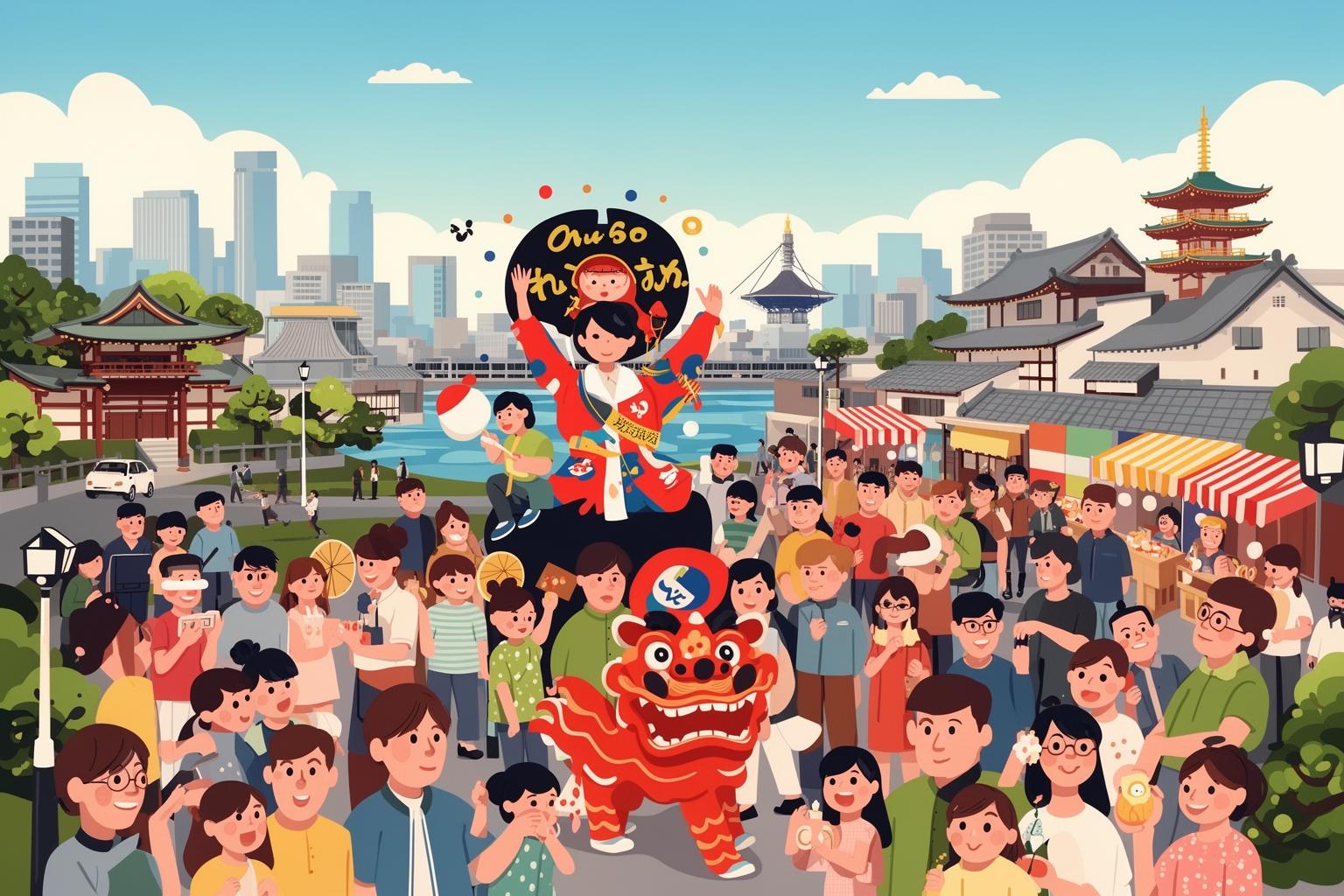
To truly grasp the essence of a place, you need to observe the people who live there. More than any tourist attraction, a supermarket provides a raw insight into the demographics and social fabric of a neighborhood. Super Tamade serves as a great equalizer, a spot where people from all backgrounds come together for one common goal: to save money. The interactions—or the lack of them—inside reveal much about Osaka’s social dynamics.
The “Obachan” (and “Ojiichan”) Brigade
Above all, Super Tamade is dominated by Osaka’s `obachan` and `ojiichan`—the elderly who are unmatched experts in household budgeting. They form the backbone of the Tamade community. Watching them shop teaches you everything about efficiency. They arrive with their own reusable carts or `maido-bukuro` (shopping bags), often featuring logos from other stores, reflecting their long history of bargain hunting. They maneuver through the crowded aisles with a focused determination that is both impressive and a little intimidating. Their eyes scan shelves, instantly calculating value per gram, comparing discounts, and selecting the freshest items amid the chaos. As guardians of family finances, they approach their task with utmost seriousness.
Their style of communication is distinctly Osaka. They are straightforward. They might point out a better deal to you, a total stranger. They might comment on what’s in your basket while waiting in the checkout line (“Ah, making `sukiyaki` tonight, are you?”). This isn’t meant to be intrusive; it’s a casual, pragmatic form of social interaction. Unlike other cities, there’s little formal distance here. This directness, this readiness to engage strangers practically, is often what foreigners interpret as Osaka’s “friendliness.” It’s less about warmth and more about a grounded acknowledgment that everyone is in this together, aiming to get the best price on dinner tonight.
Students, Singles, and Survivors
But it isn’t just seniors. Tamade is an essential resource for anyone living on a tight budget. University students living alone for the first time learn the skills of affordable cooking from its shelves. Young professionals starting out and saving money make it a regular stop. Families struggling to get by rely on its low prices. In this way, Tamade functions as a social safety net, cushioning the impact of high living costs. Here you see a real cross-section of society: a young mother with a baby in a carrier, a construction worker returning from a long shift, a single office employee picking up an inexpensive bento for dinner. This diversity powerfully underscores the economic realities of urban life—often hidden behind the polished exteriors of more upscale venues. Tamade is unapologetically for everyone, reflecting the real, working core of the city in its clientele.
The Foreigner’s Experience
As a non-Japanese shopper in Tamade, you become part of this diverse mosaic. In the more local branches, you might receive a few curious looks, but mostly you blend in as just another bargain hunter. The experience offers valuable insight into Osaka’s communication style. The staff tend to be busy and efficient. They generally avoid the elaborate, multi-layered polite language (`keigo`) typical of department stores. Their instructions are brief and direct: “Next, please.” “Do you have a point card?” “Thank you.” This shouldn’t be mistaken for rudeness—it’s efficiency. It’s the `honne` style of interaction—straightforward, unembellished, and focused on the task. In a bustling, fast-paced place like Tamade, there’s no time for excessive formality. For many foreigners, this directness can actually feel refreshing and less daunting than navigating the complex etiquette of more formal Japanese environments.
Beyond Tamade: The Ecosystem of Osaka Bargain Hunting
Super Tamade, despite its fame, does not operate in isolation. It plays a crucial role within a broader, interconnected ecosystem of bargain hunting that shapes neighborhood life in Osaka. Grasping this network is essential to understanding how the city’s residents manage their daily lives with remarkable economic savvy. Osaka shoppers are loyal not to a single store but to the idea of finding the best deal, wherever it may be.
Shotengai Synergy
Many Super Tamade outlets are strategically positioned at the entrances, exits, or central areas of a `shotengai`, a traditional covered shopping arcade. This relationship is mutually beneficial. The `shotengai` serves as the heart of local community life, filled with small, family-run specialty shops: the butcher who knows your preferred cut of meat, the fishmonger with the freshest catch, the greengrocer who can identify the perfectly ripe melon, and the tofu maker who prepares fresh tofu every morning. The Osaka shopping strategy, perfected by the `obachan` brigade, involves a multi-faceted approach. First, you visit Tamade to stock up on loss-leaders and non-perishables such as drinks, beer, soy sauce, instant coffee, snacks, canned goods, and some hardy vegetables. Then, with most of your shopping done inexpensively, you move into the `shotengai` to purchase high-quality items where freshness is paramount. You get premium cuts from the trusted butcher and delicate seafood from the fish specialist. This method delivers the best of both worlds: unbeatable supermarket prices and the superior quality and personalized service of local shops. It’s a sophisticated system of household resource management that sustains both the big discount store and small family businesses.
Competing Titans: Gyomu Super and Others
While Tamade is arguably Osaka’s most famous and flamboyant budget supermarket, it is not the only competitor. The city is a battleground for discount chains, each occupying its own niche. Another major player is `Gyomu Supa`, or “Business Supermarket.” Originally targeting restaurants and businesses, it has gained huge popularity among regular consumers for its bulk-sized items, frozen foods, and surprisingly wide range of affordable international products. The shopping approach here shifts somewhat. You visit `Gyomu Supa` to stock your freezer with a kilogram of frozen chicken, a huge bag of vegetables, or imported pasta sauces. Tamade remains the leader in daily specials, cheap bento boxes, and its uniquely chaotic energy. The presence of multiple thriving discount chains demonstrates that demand for value is not niche but mainstream in Osaka. The competition among these stores keeps prices low and offers consumers abundant choices, reinforcing the city’s reputation as Japan’s most budget-conscious metropolis.
What Tamade Teaches You About Osaka
A weekly visit to Super Tamade offers more education than an entire semester of cultural studies. It peels away the polished facade of Japan often shown to the outside world, revealing the raw, lively, and pragmatic spirit of Osaka. It serves as a living museum of the merchant city’s essence.
Money Is Not a Dirty Word
In many cultures, especially within the more reserved circles of Tokyo, openly discussing prices and money can be seen as improper, with an expected subtlety and decorum. In Osaka, however, this norm is completely reversed. Talking about money, value, and the skill of saving is not only acceptable but celebrated as a social activity. Boasting about a good bargain is a way to showcase one’s cleverness and resourcefulness. The entire Tamade experience—from the huge price signs to the shouted announcements—embodies this mindset. Price takes center stage. This ease with discussing money directly stems from Osaka’s history as Japan’s commercial hub, a city founded by merchants, traders, and artisans who thrived on their financial savvy. Tamade is the modern-day cathedral where these values are practiced every day.
A Different Kind of Wealth
The intense focus on saving might lead outsiders to mistakenly think life in Osaka is somehow impoverished. But that assumption misses the point entirely. The purpose of saving money at Tamade isn’t merely to accumulate it; it’s about freeing it up for other pleasures. This underpins Osaka’s famous `kuidaore` (“eat till you drop”) culture. By being exceptionally thrifty with everyday essentials, residents free disposable income to spend on joyful experiences: dining at an excellent `okonomiyaki` spot, enjoying drinks with friends, or attending a baseball game. The richness of life in Osaka isn’t necessarily reflected by a high salary but by the ability to live fully and enjoyably within one’s means. It’s a culture of resilience and savvy living. Super Tamade is not a symbol of poverty; it’s a tool for crafting a richer, more fulfilling life on your own terms.
Embracing the “Gaudy” and Unpretentious
The aesthetic of Super Tamade—the neon lights, the noise, the chaos—perfectly captures a broader Osaka sensibility. The city deeply values the bold, energetic, and unabashedly flamboyant. This is evident in the giant mechanical crabs and pufferfish of Dotonbori, the vibrant animal-print fashions some locals favor, and the loud, warm-hearted style of communication. There is a defiance against the quiet, minimalist `wabi-sabi` aesthetic often regarded as the quintessential Japanese style. Osaka favors vitality over silent reflection, impact over subtlety. Tamade’s design is not seen as tacky but as effective. It gets the job done. This straightforward, results-driven worldview is among the most distinctive and refreshing traits of the city and its people.
So, Should You Shop at Tamade?
For anyone living in Osaka or even just visiting for an extended stay, the answer is a definitive yes. However, you need to approach it with the right strategy and mindset. Don’t expect a calm, curated shopping experience. Instead, anticipate a loud, chaotic, and incredibly enjoyable adventure.
Head to Super Tamade for your essentials. Stock up on drinks, beer, canned goods, sauces, spices, instant noodles, and snacks. These are often brand-name products at prices you won’t find anywhere else. Explore the produce section carefully. Packaged salads, mushrooms, and root vegetables often offer great deals. Be more cautious with meat and fish; it’s best to know what you want or stick to pre-made items like the famously cheap bento boxes and sushi packs, which provide excellent value for a quick meal.
Above all, visit for the cultural immersion. A thirty-minute stroll through a bustling Super Tamade on a busy evening will teach you more about the real, everyday life of Osaka than any museum. You’ll witness the city’s priorities laid bare: value over presentation, pragmatism over prestige, and an energetic, boisterous approach to life that is utterly contagious. It’s a place that perfectly captures the spirit of a city that works hard, saves wisely, and lives loudly. Super Tamade is not just a supermarket—it is the thumping, neon-lit, bargain-shouting heart of Osaka.