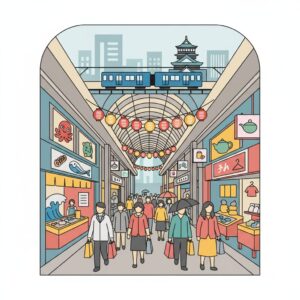
The air in Osaka changes before the sun comes up. It thins out, sheds the weight of the previous night, and begins to hum with a quiet energy that most of the city will sleep right through. This is the hour of the market, the sacred time when the true heart of Osaka, the city known for centuries as Japan’s kitchen, begins to beat. Down in the Naniwa ward, just a stone’s throw from the neon glow of Namba, lies a place where this pulse is strongest: the Kizu Wholesale Market, or Kizu Oroshiuri Ichiba. For over three hundred years, this sprawling, unpretentious hub has been the source, the very fountain from which the city’s legendary food culture springs. Forget what you think you know about breakfast. We’re not talking about toast and coffee. We’re talking about a pilgrimage to the source, a chance to taste the ocean’s bounty mere hours after it’s been plucked from the waves. This is about sitting at a tiny counter, shoulder-to-shoulder with seasoned chefs and grizzled fishermen, and experiencing sushi at its absolute zenith of freshness. It’s a meal that rewrites the rules, a taste of Osaka in its purest, most unvarnished form, a tradition that connects you directly to the soul of the city.
For a complete guide on how to plan your own visit to this legendary market, read our detailed Sunrise Sushi guide to Osaka’s Kizu Wholesale Market.
The Pulse of Osaka’s Kitchen: A Market Awakens
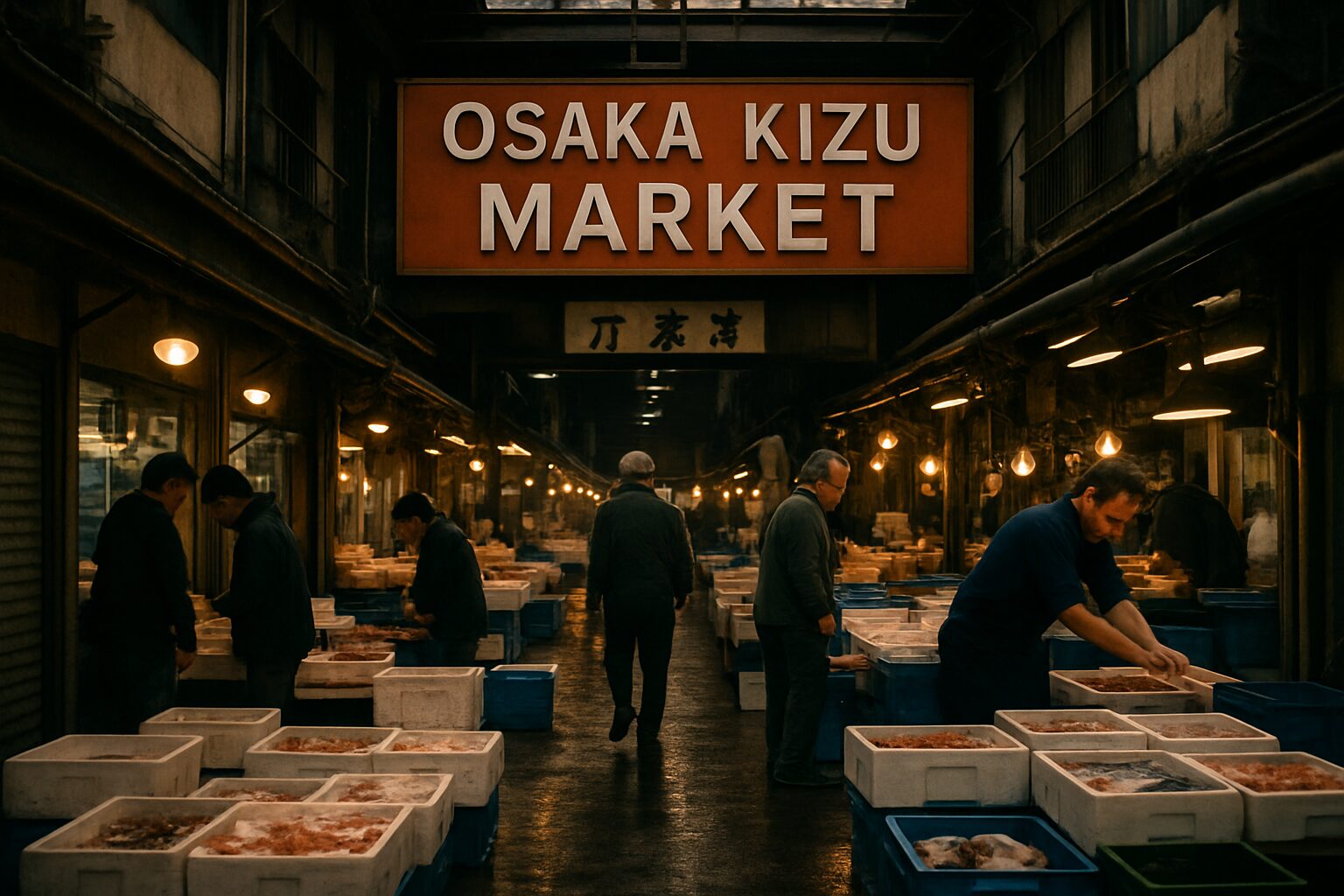
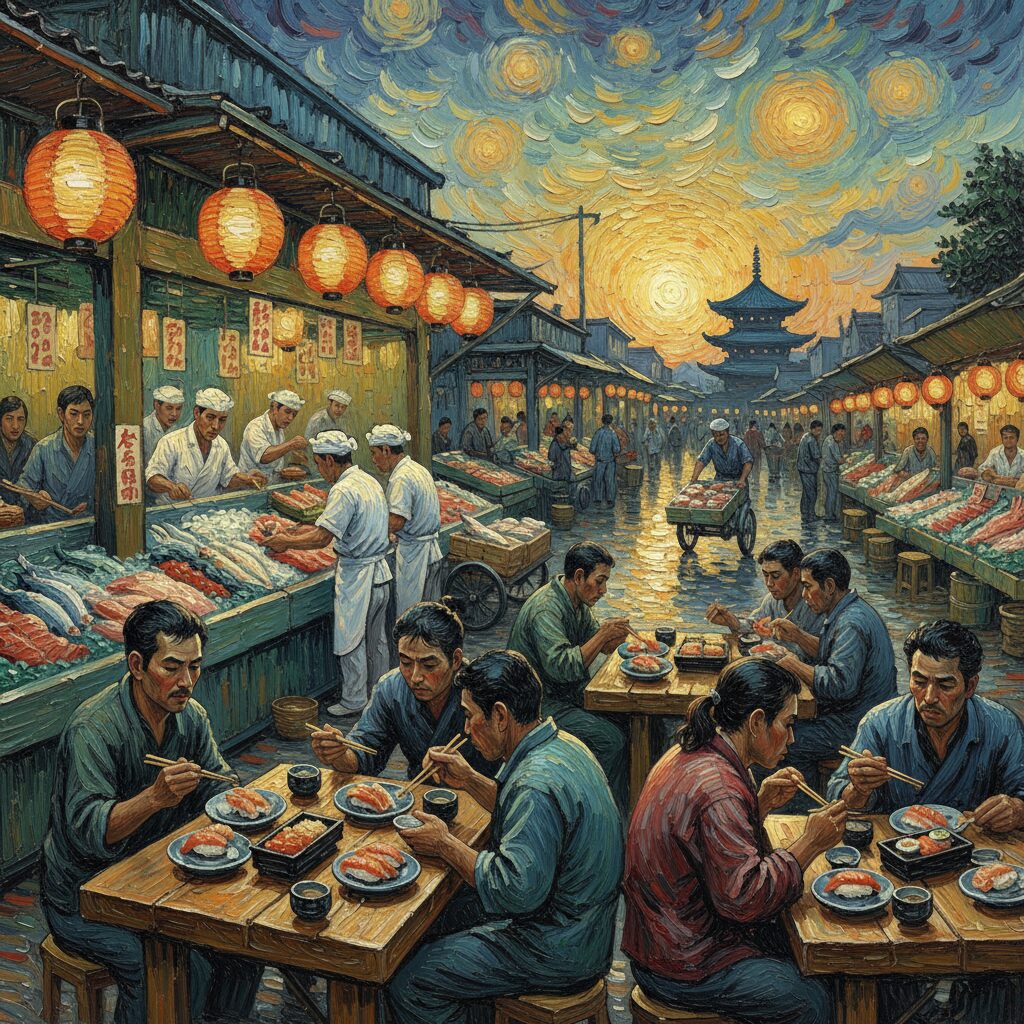
Stepping into Kizu Market at five in the morning feels like entering another dimension. Outside, the world remains wrapped in a deep, inky blue, but beneath the vast roofs and harsh fluorescent lights, a bustling universe is already alive. The air is thick with a unique blend of aromas found nowhere else. The prevailing scent is the clean, briny essence of the sea, drifting from freshly caught fish laid on beds of ice. Yet beneath that layer lies more: the earthy smell of damp soil clinging to daikon radishes stacked like ivory tusks, the sweet aroma of seasonal fruits, and the sharp, tangy fragrance of pickled vegetables emanating from wooden barrels. Occasionally, a fresh wave of scent sweeps over you—the savory steam from a vendor selling oden, the nutty aroma of roasting tea leaves, or the sweet, smoky fragrance of grilled eel, hinting at forthcoming delights. It’s a rich, intoxicating fragrance that narrates the story of Japanese cuisine, from its rawest ingredients to its most cherished dishes.
The soundscape is equally rich and layered. A constant, rhythmic hum of activity fills the air. The low growl and persistent beeping of turret trucks and small forklifts—the market’s lifeblood—zip through narrow aisles with remarkable agility, their drivers steering through controlled chaos with practiced skill. You hear the steady clatter of carts rolling over wet concrete, the sharp, percussive sound of knives being sharpened on whetstones, and the deep, guttural calls of vendors shouting to one another in an Osaka dialect full of character. This isn’t the polished, polite Japanese of department stores; it’s the language of commerce, camaraderie, and a community that has worked together here for generations. You’ll catch the thud of heavy boxes of fish being dropped, the rustle of paper wrapping produce, and the hiss of water from hoses washing the floors—a constant ritual of cleansing and preparation for the day ahead. This isn’t a performance for tourists. Kizu is a working market with a purpose. Its beauty lies in its raw, unfiltered functionality. The floors are wet, the lighting harsh, and the focus entirely on the product. It’s worlds apart from the curated perfection of a supermarket; it’s a vibrant, living ecosystem where the story of your food begins.
A 300-Year Legacy: More Than Just a Market
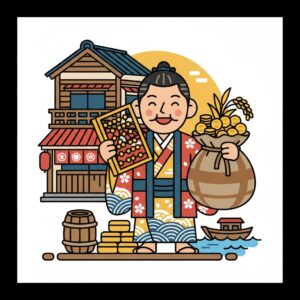
To understand Kizu is to understand Osaka itself. The market’s origins extend over three centuries, dating back to when Osaka was earning its title as the “Tenka no Daidokoro,” or the Nation’s Kitchen. In the early 18th century, during the Edo period, this area became a crucial hub where fish, vegetables, and goods from across Japan gathered before being distributed throughout the city and beyond. It was more than merely a marketplace; it was an essential piece of infrastructure that nourished a growing metropolis and powered its economy. The market has silently witnessed the city’s turbulent history, enduring devastating fires, wartime chaos, and the relentless advance of modernization. It has been rebuilt, transformed, and revived many times, yet its fundamental mission remains unchanged: to supply the people and chefs of Osaka with the freshest, highest-quality ingredients. This rich history is embedded in the very concrete of the market floor. As you walk its aisles, you tread the same ground where merchants have bargained, chefs have sought inspiration, and families have obtained their daily meals for centuries. This continuity is profound, connecting the modern visitor to a long, unbroken chain of culinary tradition. Many vendors today are descendants of families who have worked here for generations, passing down their skills and knowledge from father to son, from mother to daughter. They hold an intimate understanding of the seasons, encyclopedic knowledge of their products, and deep respect for the bounty of land and sea. For them, this is not just a job; it is a legacy.
The Art of the Morning Meal: In Search of the Perfect Sushi Breakfast
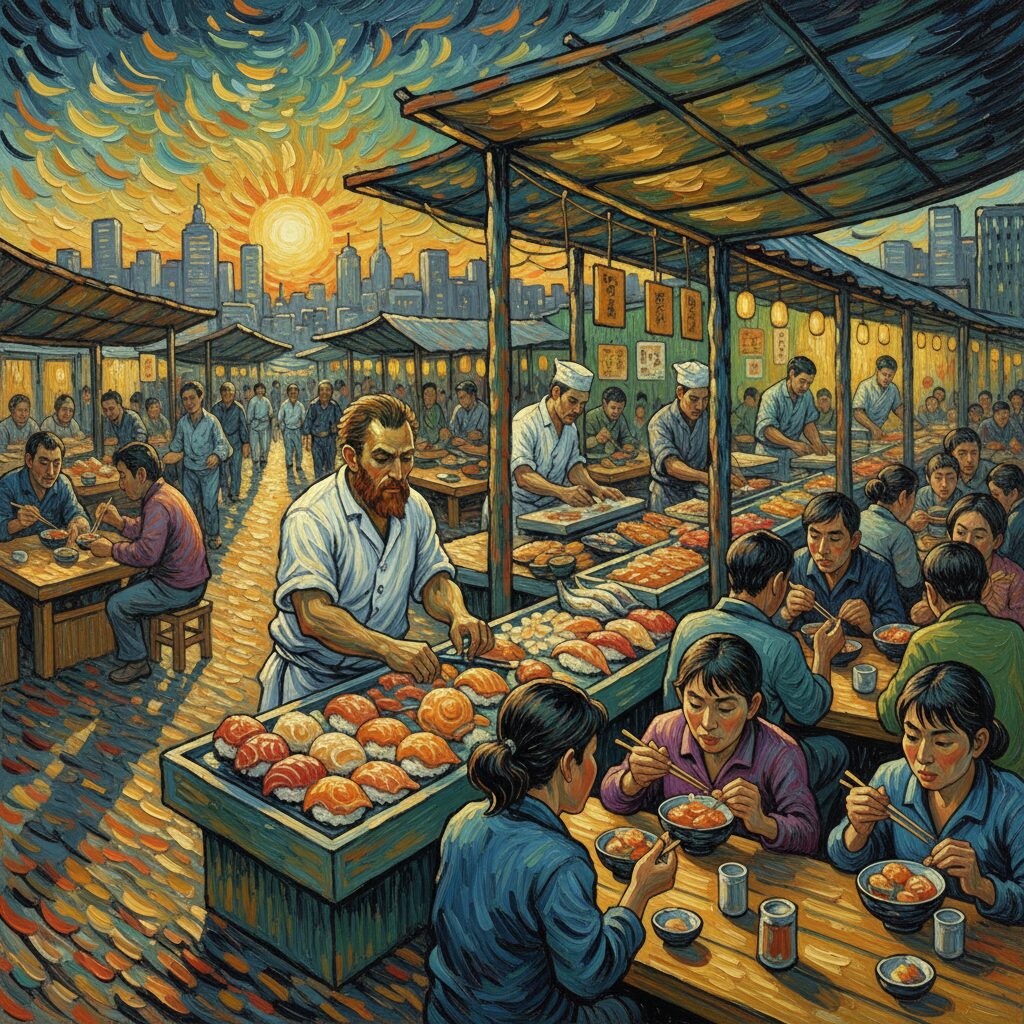
While the entire market offers a feast for the senses, the ultimate reward for the early-rising visitor is breakfast. And in Kizu, breakfast means sushi. This might seem unusual to a Western palate, but it makes perfect sense. The fish you eat was likely part of a pre-dawn auction just hours, or even minutes, before it arrives on your plate. There is no middleman, no long-distance shipping, no flash-freezing involved. This is the absolute peak of freshness, a concept the Japanese call “shun,” referring to the peak season of an ingredient, taken to its most immediate and thrilling extreme. The restaurants and small eateries tucked inside the market are not fancy; they are humble, functional spaces designed to serve market workers—people who know fish better than anyone. This is your guarantee of quality. These chefs have first pick of the day’s catch and cater to an incredibly discerning clientele. There is no room for anything less than perfection.
Navigating the Culinary Maze: Where to Eat
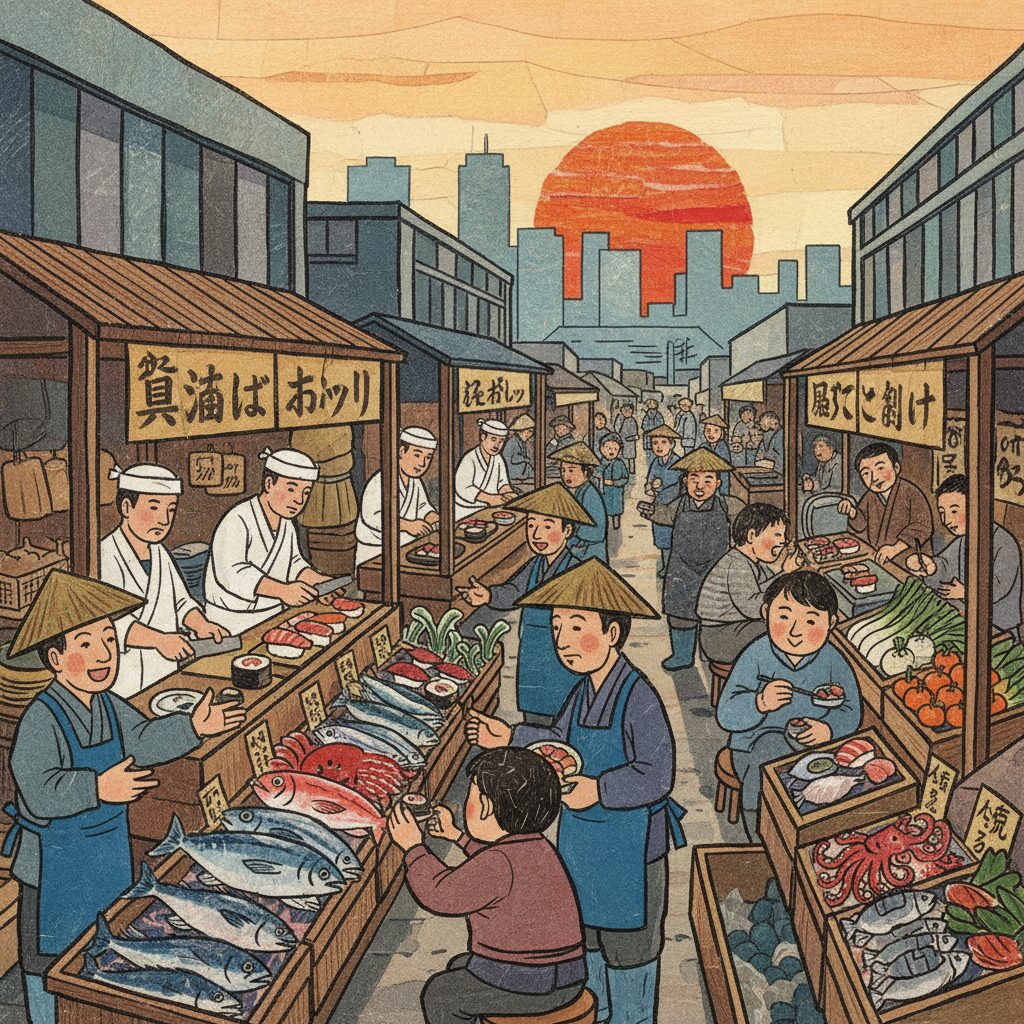
Finding a place to eat is part of the adventure. You won’t find large signs or flashy advertisements. Instead, you look for subtle clues: a simple noren curtain hanging over a doorway, a hand-written menu taped to the wall, and the warm glow of light spilling out into the still-dark aisle. The best spots are often tiny, with just a few seats around a single wooden counter. Peering inside, you’ll see the itamae, or sushi chef, a figure of quiet concentration, his hands moving with fluid, mesmerizing grace. The atmosphere is intimate and focused. The main sounds are the gentle patting of rice, the precise slice of the knife, and the appreciative murmurs of the diners. There is a reverence for the food, a shared understanding that you are partaking in something special. Don’t be deterred by the lack of English or the seemingly local-only vibe. A simple smile and a point at the menu or display case usually suffice. The welcome is almost always warm, a quiet recognition of your effort to seek out this authentic experience.
The Stars of the Show: What to Order
This is where the magic unfolds. The menu reflects the day’s best catch. Trust the chef. The “omakase” (chef’s choice) is always an excellent option, offering a guided tour of the morning’s highlights. If you opt for à la carte, prepare for a revelation. The maguro (tuna) is unlike any you’ve tasted before. The akami (lean tuna) is a deep, satisfying ruby red with a clean, meaty flavor. The chutoro (medium-fatty tuna) strikes a perfect balance—richer than akami but with a firm texture. And then there is the otoro (fatty tuna), the undisputed king. It’s a pale, marbled pink that doesn’t just melt in your mouth; it dissolves into a wave of pure, umami-rich bliss, leaving a lingering sweetness on the palate. But the journey doesn’t stop with tuna. Try the tai (sea bream), a white fish with subtle sweetness and a delightfully firm texture. The hamachi (yellowtail) is buttery and rich, especially in winter. For a more adventurous choice, the uni (sea urchin) is a must. Sourced from the cold waters of Hokkaido, it’s a creamy, briny custard that tastes of the ocean itself. The ikura (salmon roe), marinated in soy sauce and sake, bursts in your mouth with a satisfying pop, releasing savory liquid gold. Notice the shari (sushi rice) beneath the fish—it’s served at body temperature, not cold, and seasoned with a delicate balance of rice vinegar, sugar, and salt that enhances rather than overpowers the neta (topping). Each piece of nigiri is a perfectly crafted bite, a harmonious marriage of fish and rice, showcasing a lifetime of skill. Beyond sushi, many stalls offer kaisendon—a beautiful bowl of jewel-like sashimi artfully arranged over sushi rice. It’s a fantastic way to sample a variety of seafood all at once. You’ll also find stalls grilling fish to order, serving it with miso soup, rice, and pickles—a classic Japanese breakfast that is both rustic and deeply satisfying.
Beyond the Sushi Counter: Exploring Kizu’s Treasures
Once you’ve finished your breakfast, it’s time to explore the market itself. Kizu is a world of culinary marvels waiting to be uncovered. Step into the produce section, and you’ll be struck by the sheer perfection on display. Piles of shiitake mushrooms emitting their earthy aroma, boxes of strawberries so red and fragrant they seem to glow, and immaculate vegetables in every shape and hue. Here, you’ll find yuzu, the fragrant citrus fruit, fresh wasabi root—far superior to the tube paste—and bamboo shoots in spring. The vendors are artisans of their trade, and even if you don’t purchase anything, it remains a visual delight.
Next, immerse yourself in the realm of Japanese pantry essentials. There are shops dedicated solely to katsuobushi (dried, smoked bonito flakes), where you can watch craftsmen shave the hard, wood-like blocks into delicate pink flakes that form the base of dashi, the essential Japanese soup stock. Other stores focus on kombu (dried kelp), offering varieties from different regions of Japan, each with its distinct flavor profile. You’ll find barrels of miso paste in every shade from pale yellow to deep reddish-brown and countless types of tsukemono (Japanese pickles), ranging from bright pink pickled ginger to crunchy, salty daikon. These are the foundational flavors of Japanese cuisine, and seeing them firsthand is an education in itself. Don’t miss the shops selling professional kitchenware, where you can find high-carbon steel knives so sharp they might seem intimidating, beautiful handmade ceramics to elevate any meal, and specialized tools for every culinary task imaginable. These make exceptional, meaningful souvenirs far removed from the usual tourist trinkets.
If your visit coincides with the second or last Saturday of the month, you’re in for a special experience. This is when the Kizu Asaichi, or Morning Market, is held. The atmosphere shifts from purely commercial to a more festive, community-oriented event. The aisles fill with locals and curious visitors alike. Special events are hosted, most famously the tuna cutting show, where a master handler skillfully dismembers a whole giant bluefin tuna with a sword-like knife—a breathtaking display of strength and precision. There are also cooking demonstrations, food stalls offering samples, and special discounts, making it an even livelier and more engaging time to visit.
Your Guide to a Perfect Market Morning: Practical Tips & Etiquette
To fully enjoy your Kizu experience, a bit of planning goes a long way. This isn’t a place you can simply stroll into at noon and expect to see it at its best. The market’s true energy pulses strongest in the early morning. Aim to arrive between 6:00 AM and 9:00 AM, when the atmosphere is vibrant, the restaurants offer the best choices, and you can observe the market in its genuine, bustling state. By 10:00 AM, many vendors begin packing up, and around lunchtime, the market gradually winds down.
Getting to Kizu is easy. It’s situated in a convenient area of Osaka. The nearest subway station is Daikokucho on the Midosuji and Yotsubashi lines, just one stop south of Namba. From Daikokucho Station, it’s a well-marked, brief walk of about three to five minutes. You can also walk from major hubs like Namba Station or JR Namba Station in roughly 15-20 minutes, a pleasant way to experience another side of the city as it awakens. Don’t forget to bring cash. Although Japan is becoming more credit card-friendly, many small, independent vendors and eateries in a traditional market like Kizu still operate on a cash-only basis. Carrying a mix of smaller and larger bills will help make purchases easier. Wear comfortable, closed-toe shoes since the floors can be wet and slippery, and you’ll be walking a lot. Dress in layers you don’t mind getting splashed a little because this is a working environment, not a polished shopping center.
Most importantly, keep in mind the unspoken rules of market etiquette. The vendors are working, and their efficiency is crucial. Always be aware of your surroundings. Stay to the side of the aisles to allow turret trucks and workers with heavy carts to pass—they move quickly and expect you to be considerate. Always ask permission before taking photographs, especially of vendors or their stalls; a simple gesture and a smile usually earn a positive response and show respect. Please refrain from touching the products unless you intend to buy them, as the fish and produce are delicate and meant for sale, not casual handling. By being a respectful and mindful visitor, you’ll enjoy a richer experience and help maintain the authentic, active atmosphere that makes Kizu so unique.
An Unforgettable Taste of Osaka
A visit to Kizu Wholesale Market is far more than just a meal. It’s a full-body immersion into the culinary heart of Osaka. It offers a chance to observe the intricate interplay of commerce, tradition, and craftsmanship that unfolds each day, long before most of the city has its first coffee. It’s about gaining insight into where your food originates and appreciating the immense effort and passion behind every perfect slice of fish, every shining vegetable, and every grain of meticulously seasoned rice. Rising before dawn and journeying to this lively hub means pulling back the curtain to witness the engine room of Osaka’s food culture. The reward is not only the freshest, most exquisite sushi you may ever taste but also a genuine connection to the city’s living history and a memory that lingers long after the flavors fade. It is, without question, one of the most authentic and unforgettable experiences Osaka can offer.