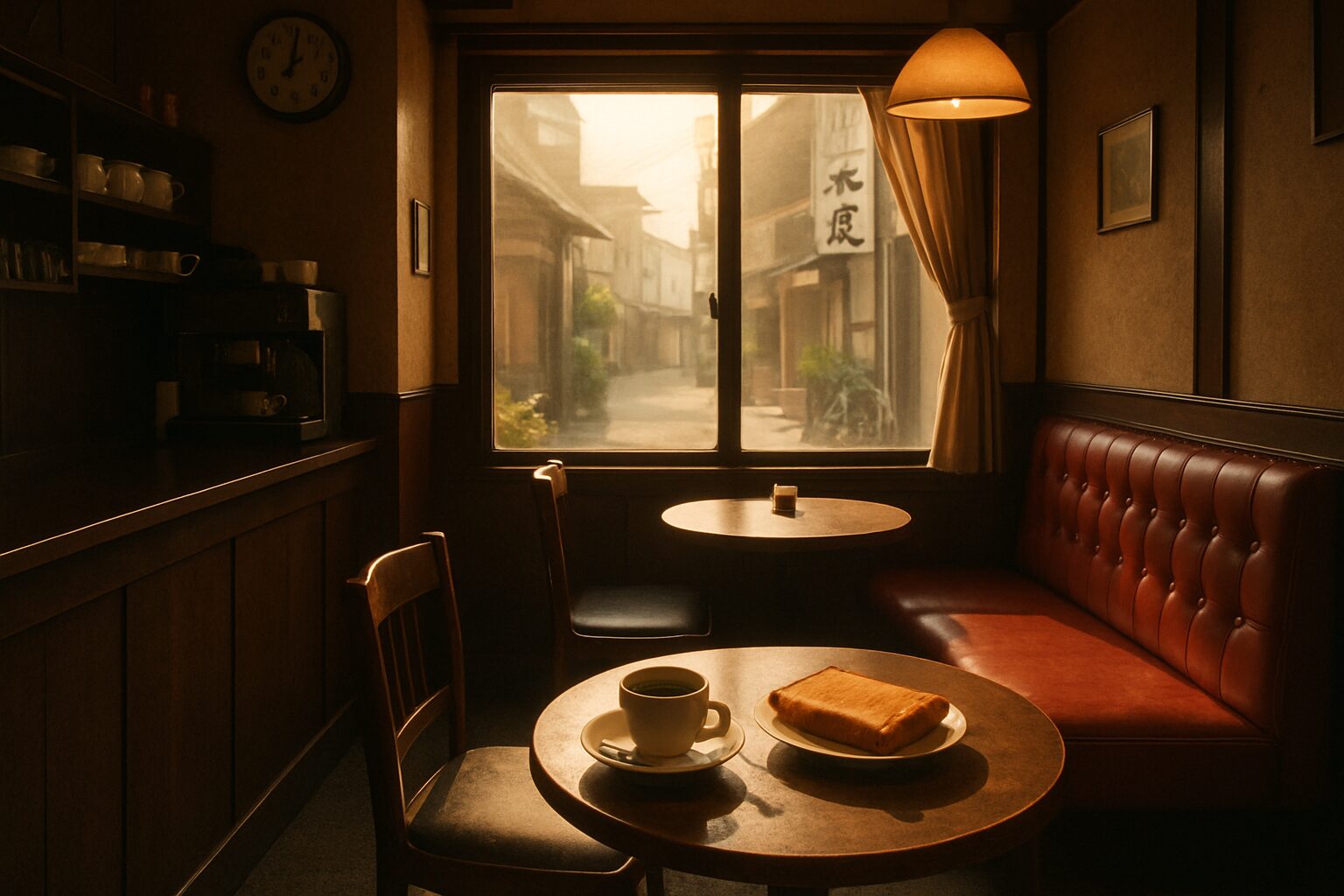
The rain is coming down in sheets, a familiar silver curtain over the neon-streaked streets of Namba. It’s that time of morning when the city is still shaking off its slumber, the last echoes of yesterday’s revelry fading into the steady hum of the approaching rush hour. For a newcomer, a Tokyo transplant like me, this moment could feel isolating, a vast metropolis still keeping its secrets. But here in Osaka, there’s an antidote to the morning chill and the anonymous cityscape. It’s a warm, glowing beacon, often unassuming, tucked away in a shotengai arcade or down a quiet side street. It’s the neighborhood kissaten, and it holds the key to one of this city’s most cherished daily rituals: the “Morning Service.”
Forget the sterile efficiency of a grab-and-go coffee chain. We’re talking about something deeper, a cultural institution wrapped in the comforting aroma of dark-roast coffee and thick-cut toast. “Morning Service,” or simply mōningu as the locals call it, is more than just a breakfast deal. It’s a social contract, a moment of pause, a taste of Showa-era nostalgia, and a window into the very soul of Osaka. For the price of a single cup of coffee, ordered between the sacred hours of opening time and around 11 a.m., a kissaten will gift you a simple, perfect breakfast—typically a slab of golden toast, a hard-boiled egg, and maybe a small salad. It’s an act of hospitality, a remnant of a time when community was built over leisurely sips and the rustle of a newspaper. It’s the city’s way of saying, “Good morning. Sit down. Stay a while.” And to truly understand the rhythm of this magnificent, maddening, and utterly lovable city, you have to start your day here, in the vinyl booth of a classic Osaka kissaten.
To further immerse yourself in the daily rhythms of the city, consider exploring the vibrant life of an Osaka local shotengai.
The Anatomy of an Osaka Kissaten: More Than Just a Coffee Shop
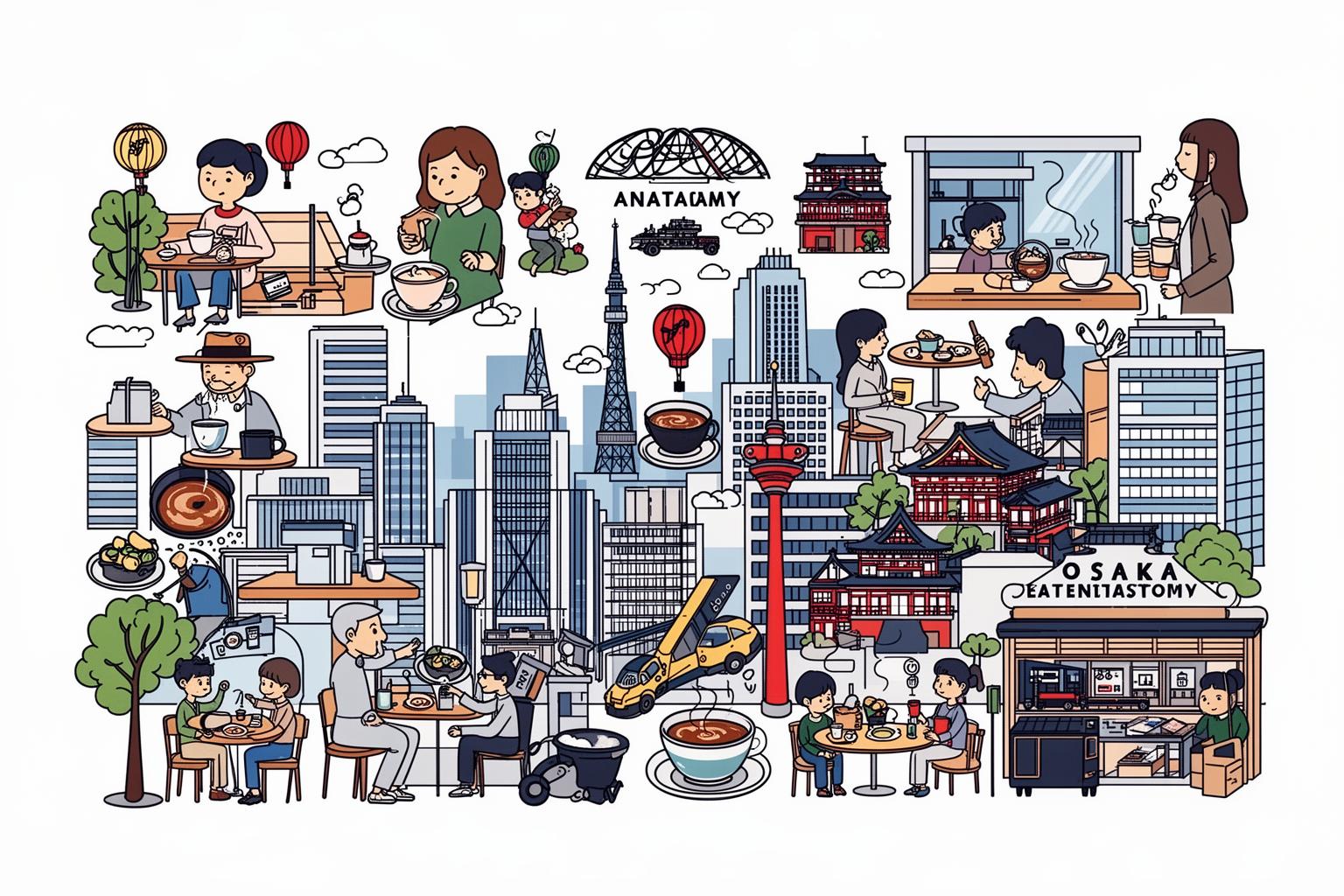
Before we even discuss the food, you need to grasp the vessel that holds this entire experience. A kissaten is not a café. While a café reflects the 21st century—bright, airy, minimalist, complete with Wi-Fi passwords and the frantic clatter of laptops—a kissaten is a time machine. Step across the threshold of a traditional, old-school Osaka kissaten, and you are immediately transported to the Showa Era, that vibrant, optimistic period of post-war Japan lasting until 1989. The change is instant and engages every sense.
First, the air itself feels different. It’s thick with the rich, almost chocolatey aroma of deeply roasted coffee beans, a scent that has permeated the very walls of the place over decades. This sharply contrasts with the light, acidic roasts of modern coffee culture. Here, coffee is a bold, unapologetic statement. Often, you’ll also detect the warm, comforting smell of toasting bread and—let’s be honest—at many of the older establishments, the faint, sweet, lingering ghost of tobacco smoke. Though a 2020 law made most restaurants non-smoking, many smaller, long-standing kissaten were exempt, and they remain bastions of this fading tradition. It’s an integral part of the atmosphere, for better or worse, and vital information for first-timers.
Next, your eyes adjust to the lighting, which is invariably dim and warm. Soft golden light filters through stained-glass windows or ornate Tiffany-style lamps, casting a gentle glow over the surroundings. The decor reflects a comfortable, well-worn luxury. Dark wood paneling lines the walls, worn smooth by years of patrons leaning back in their chairs. Seating isn’t designed for quick turnover. You’ll find plush, high-backed booths upholstered in burgundy or forest green velvet, or sturdy wooden chairs with cushioned seats inviting you to settle in and stay awhile. Tables often feature heavy wood or intricate tile tops, sometimes housing a small, silent tabletop arcade game from the 80s. Minimalism is not the aim here; shelves may be crowded with porcelain cups, antique coffee grinders, and a quirky assortment of knick-knacks collected over a lifetime.
The soundtrack of a kissaten is as carefully curated as its interior. There’s no Top 40 here. Instead, you’re enveloped by the smooth, melancholic melodies of classic jazz or the soaring drama of classical symphonies, played at a volume that encourages conversation but never dominates. This auditory backdrop is punctuated by the distinctive sounds of the kissaten: the gentle clink of a silver spoon against thick porcelain cups, the hiss of a syphon coffee maker, the quiet rustle of broadsheet newspapers, and the low, respectful murmur of conversations among regulars.
At the center of this entire operation is the “Master.” He (and it is often a he) is no mere barista. He is a craftsman, a quiet authority who has devoted his life to the art of coffee. You’ll see him behind the long wooden counter, often dressed in a crisp white shirt, perhaps paired with a black vest or bowtie. He moves with an economy of motion that reflects decades of experience. He doesn’t engage in performative latte art; his focus lies in the ritual of pour-over, the precise temperature of the water, the careful bloom of grounds in a Nel drip filter, or the scientific theater of the syphon brewer. His presence is a calming, reassuring constant. Though not chatty, a slight nod upon your arrival and a quiet “arigatou gozaimashita” as you leave provides all the welcome you need.
Deconstructing the Morning: A Symphony in Three Parts
The charm of the Osaka mōningu lies in its simplicity and exceptional value, a concept deeply rooted in the city’s practical, merchant-class history. Osakans cherish a good bargain, a spirit they call otoku. Morning service represents the ultimate otoku experience. Let’s explore the classic trinity.
The Coffee: The Heart of the Service
The coffee you receive is the cornerstone of the entire meal. It justifies the price, while everything else is essentially “service” (a complimentary bonus). This isn’t the fruity, intricate single-origin brew common in third-wave cafés. Kissaten coffee is usually a dark, strong, low-acidity blend—robust, intense, and meant to be savored slowly. The beans are often roasted to a deep, oily finish, yielding a flavor profile that is nutty, smoky, and mildly bitter, but in a warm, comforting way. For many Japanese, it’s a nostalgic flavor that recalls their parents’ or grandparents’ generation.
Its preparation is an art form. The syphon method, in particular, is theatrical. You’ll see two glass globes connected by a tube, with an alcohol lamp heating water in the bottom chamber. As the water heats, vapor pressure forces it upward into the top chamber with the coffee grounds. After a precise brew time, the lamp is removed, creating a vacuum that draws the brewed coffee back down through a filter into the bottom globe. The result is a remarkably clean, full-bodied cup. More common, however, is the Nel drip or flannel drip method. This uses a cloth filter, which lets more coffee oils pass through than paper, producing a brew with a uniquely smooth, velvety texture and rich flavor. The Master’s slow, deliberate spiral pour of hot water over the grounds is a captivating ritual. Your coffee typically arrives in a pre-warmed, thick ceramic cup, often alongside a small pitcher of fresh cream and a bowl of sugar cubes, allowing personal customization to your nostalgic ideal.
The Toast: The Perfect Blank Canvas
The toast served with morning service is a marvel. It is nearly always a slice of shokupan, the incredibly fluffy, slightly sweet Japanese milk bread. Its defining trait is its thickness. This isn’t a thin, flimsy slice of packaged bread. It’s a substantial slab, often an inch or more thick, toasted to perfection—crispy and golden on the outside, yet soft and steamy inside. It’s a textural triumph.
It usually comes pre-buttered, with warm butter melting into every crevice. Sometimes, a pat of butter or a small container of strawberry jam may be served on the side. For a truly special experience, seek out a kissaten that offers variations. The anko (sweet red bean paste) toast is a classic, with the earthy sweetness of the beans complementing the salted butter and fluffy bread beautifully. Another favorite is the egg salad toast, topped generously with creamy, Japanese-style egg salad. Some places may offer cinnamon sugar toast or cheese toast as well. Whatever the topping, the shokupan remains the star, a perfect, comforting canvas for flavor.
The Egg: The Humble Supporting Actor
The third component of the classic morning set is the yude tamago, a hard-boiled egg. It seems simple, almost incidental, yet it’s essential. It’s often served warm in its own small dish, accompanied by a tiny packet of salt. There is a simple, meditative pleasure in tapping the egg on the table, carefully peeling it, and seasoning it with a pinch of salt. It provides a modest protein boost, completing the meal and transforming it from a mere coffee-and-toast snack into a satisfying breakfast. Some cafes might offer a small, perfectly cooked fried egg (medama yaki) or a small portion of scrambled eggs instead, but the humble boiled egg remains the iconic symbol of the morning service tradition.
Of course, many kissaten expand beyond this revered trinity. A small side salad is a very common and welcome addition, typically a handful of shredded iceberg lettuce with a slice of cucumber or tomato, dressed in a uniquely Japanese style—either creamy, nutty sesame (goma) dressing or a tangy soy-based (wafu) vinaigrette. This touch of green freshness provides a lovely contrast to the richness of the toast and coffee. Some sets also include a small glass of yogurt, a few slices of orange or banana, or even a small bowl of soup. Each kissaten offers its own unique take, and part of the enjoyment lies in discovering the charming quirks and generous extras that define each place.
The Kissaten in Osaka’s Urban Fabric: A Tour of Morning Cultures
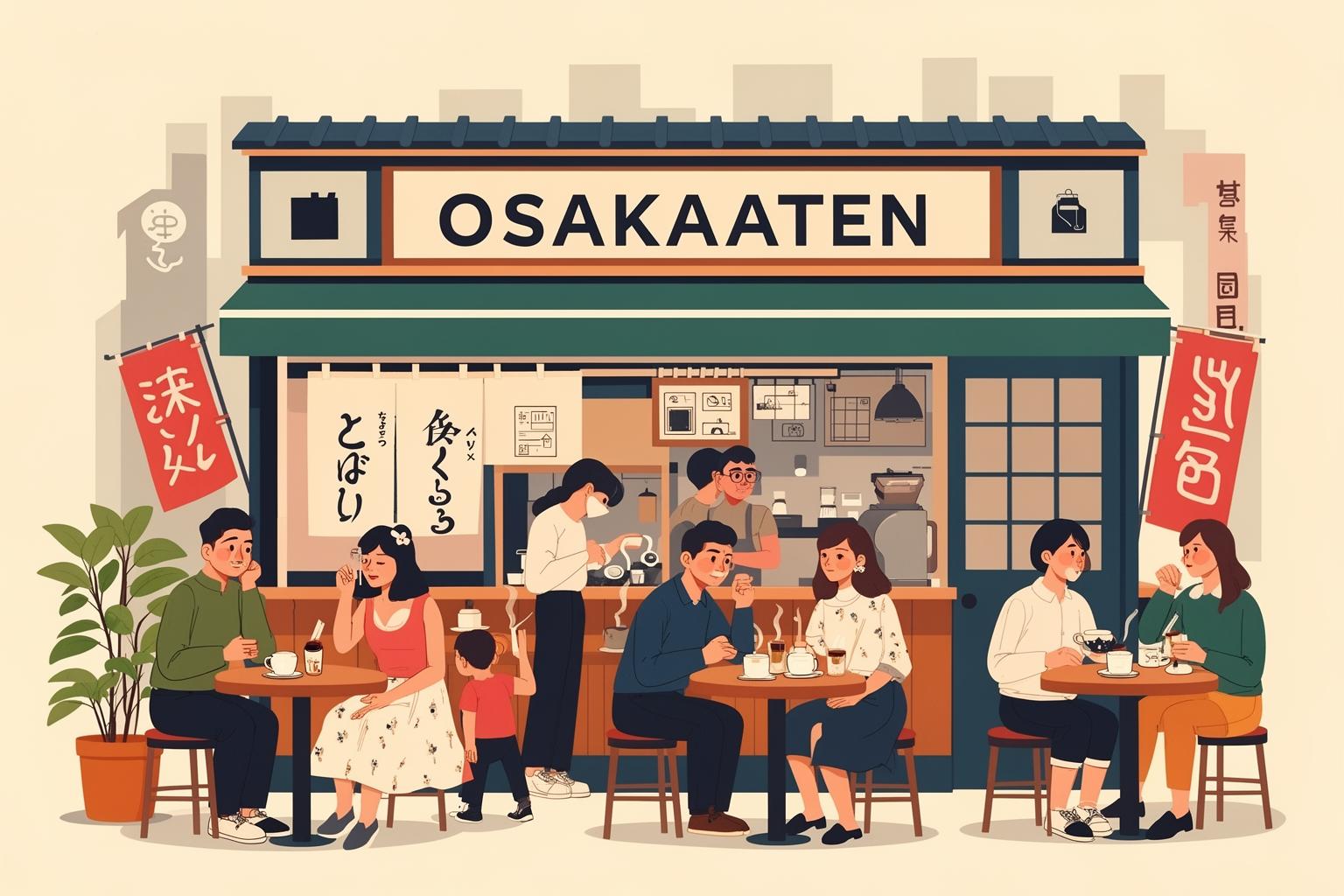
Morning service isn’t limited to one neighborhood; it’s a city-wide phenomenon. However, the character and clientele of kissaten can vary greatly depending on the location, providing a fascinating cross-section of life in Osaka.
Umeda and Kita: The Salaryman’s Refuge
In Umeda’s expansive business district, with its towering skyscrapers and intricate underground malls, kissaten serve as an essential pre-work ritual for the city’s legion of salarymen. Here, the atmosphere is brisk yet comforting. Hidden in office building basements or tucked away on side streets off main roads, these spots are filled with men in dark suits reading the Nikkei newspaper and preparing for the day ahead. Conversation is subdued, attention centers on the coffee, and service is efficient. For visitors, it offers an intriguing glimpse into Japanese work culture. The morning set is often a simple, classic offering designed to be quick and satisfying. It’s a quiet moment of reflection before the day’s chaos—a shared, silent ritual connecting the city’s workforce.
Namba and Minami: The 24-Hour Pulse
Travel south to the vibrant, bustling entertainment district of Namba, and the kissaten scene becomes much more diverse. Amid the flashing lights of Dotonbori and the covered arcades of Shinsaibashi, you’ll find legendary establishments serving coffee for nearly a century. Places like the renowned Marufuku Coffee Shop in Sennichimae are true institutions. Their interiors are grand and somewhat theatrical, featuring dark wood, red velvet, and an old-world glamour. The clientele is a mix of everyone populating this dynamic area: shoppers taking a break, tourists uncovering a piece of history, theater performers grabbing a bite between shows, and night-shift workers finishing their “day” with breakfast. Some kissaten in this area operate 24 hours, so “morning service” can be enjoyed at 5 a.m. by someone just ending their shift or at 10 a.m. by a late-rising traveler. The energy here is livelier and more varied, reflecting the constant buzz of Minami.
Shinsekai: A Gateway to Old Osaka
For a trip into the heart of old Osaka, visit Shinsekai, a neighborhood seemingly untouched by time and dominated by the iconic Tsutenkaku Tower. The kissaten here are rougher around the edges, more worn-in, and genuinely authentic. The air resonates with the unfiltered Osaka-ben dialect. Regular patrons form a colorful cast: elderly men playing shogi, local market shopkeepers, and lifelong residents of the area. These kissaten are more than just businesses; they function as community living rooms. The morning service may be simple but is accompanied by local gossip and a warmth unique to this part of the city. Sitting in a Shinsekai kissaten, you feel less like a customer and more like a temporary member of a close-knit, longtime community. It’s an experience far removed from the polished shine of central Osaka.
Nakazakicho: The Retro Renaissance
To see how the kissaten tradition is being reimagined by a new generation, explore the quiet, winding alleys of Nakazakicho. This neighborhood, which remarkably survived wartime bombings, is filled with old wooden homes and storefronts lovingly transformed into independent boutiques, galleries, and coffee shops. Kissaten here often merge the classic Showa-era aesthetic with a modern, artistic touch. You might meet a young owner passionate about specialty coffee, serving it in vintage porcelain amid carefully curated retro furniture and décor. They honor the spirit of the kissaten—the relaxed pace, focus on quality, and unique atmosphere—while injecting their own creative flair. Morning sets here might include artisanal bread or homemade jam. It’s a beautiful blend of old and new, a hopeful sign that the kissaten culture is not just surviving but evolving.
A First-Timer’s Guide to Embracing the Morning Ritual
Entering a kissaten for the first time can feel a bit intimidating. The spaces tend to be small, the regular customers all seem to know one another, and the Master behind the counter may appear stern. However, don’t worry; the experience is very welcoming once you know a few basic things.
First, don’t feel rushed. The whole purpose of a kissaten is to slow down. Find a seat, take a moment to absorb the atmosphere, and browse the menu. The staff will probably bring you an oshibori (a wet towel, warm in winter, cool in summer) and a glass of water as a standard gesture of hospitality.
Ordering is straightforward. Look for the characters モーニングサービス (Mōningu Sēbisu) or simply モーニング (Mōningu) on the menu. There may be an “A set,” “B set,” and so on, with slight variations. Usually, you only need to order your drink—hotto kōhī (hot coffee) or aisu kōhī (iced coffee)—and the food set will be included automatically. If you’re uncertain, simply point and say, “Mōningu, kudasai.”
As mentioned, be mindful of the smoking policy. If the smell of cigarette smoke bothers you, it’s a good idea to peek inside before deciding. Look for signs that say 全席禁煙 (zenseki kin’en – all seats non-smoking). If you see ashtrays on the tables, the establishment allows smoking. While this is becoming less common, it remains a feature of many authentic, old-school kissaten.
Appreciate the analog nature of the experience. Many kissaten have no Wi-Fi, and it is considered somewhat rude to take out a laptop and start typing. This is a place to read a book, study a map, or simply watch the world go by. It offers a chance to disconnect from the digital world and engage with your immediate surroundings.
Finally, when it’s time to pay, don’t be surprised if only cash is accepted. Many small, family-run shops have yet to adopt credit card machines. It’s wise to carry some yen with you. The bill is typically brought to your table on a small tray, and you take it to the register near the door to pay as you leave.
Beyond Breakfast: A Moment of Connection
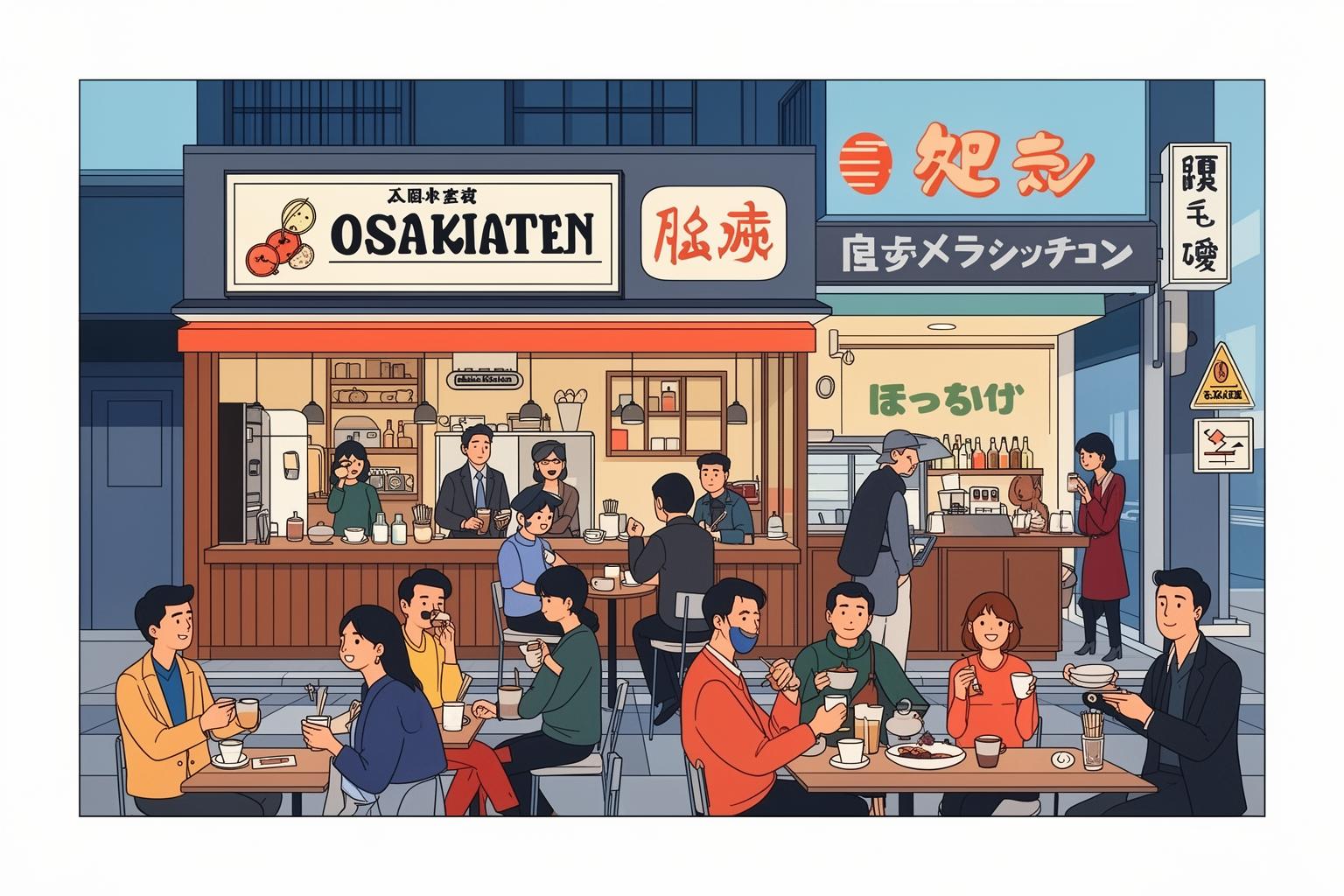
What truly transforms the morning service from a simple meal into a meaningful cultural experience is the unspoken sense of community it nurtures. In a hyper-modern, often transient society, the kissaten serves as a sanctuary of stability and connection. It is a place where generations blend, where an elderly woman can share a table with a young student, both finding comfort in the same humble ritual.
For a foreigner living in Osaka, adopting a local kissaten as your own can be a powerful way to feel rooted in the city. It’s a small step that shifts you from an observer to a participant. After a few visits, the Master will begin to recognize you. A subtle nod will become a quiet greeting. You’ll start to recognize the other regulars. You’ll learn their habits—the man who always reads the sports section, the two women who meet every Wednesday to chat. You become part of the calm, understated fabric of the neighborhood.
This ritual is more than just an affordable breakfast. It’s a daily celebration of community. It’s a quiet rebellion against the hectic pace of modern life. It is, in its own subtle way, a profoundly human experience. So tomorrow morning, instead of grabbing something on the go, seek out a local kissaten. Push open the heavy wooden door, breathe in the rich aroma of coffee and time, and order the morning set. Sit back, relax, and watch the city of Osaka truly awaken, one thick slice of toast at a time. You won’t just be having breakfast; you’ll be savoring the heart of the city.