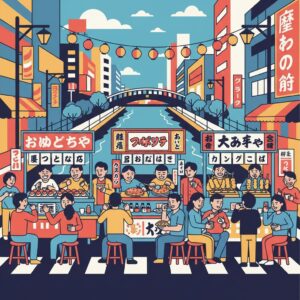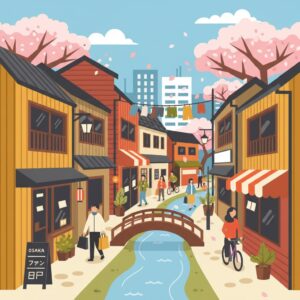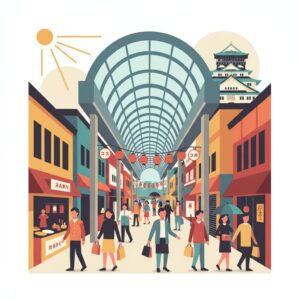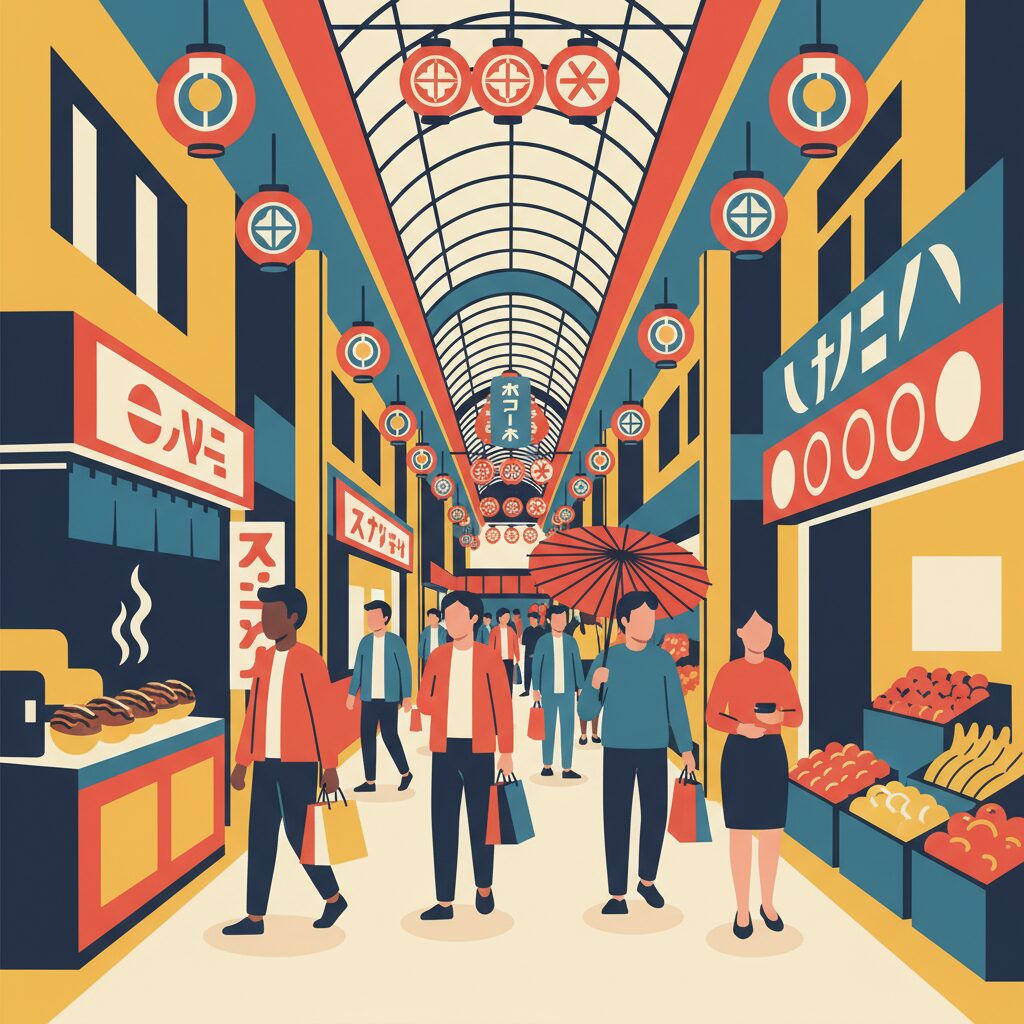
When you first land in Osaka, you’ll be told to see the shotengai. You’ll see pictures of Shinsaibashi-suji, a river of people flowing under a high, modern roof, flanked by global brands and flashy drugstores. You’ll hear about Dotonbori, less a shopping arcade and more a neon-drenched theme park for the senses, where tourists pose with giant mechanical crabs. And you might come to a logical conclusion: shotengai are for sightseeing. They are charming, perhaps a bit retro, a fun place to grab takoyaki and a souvenir. But they aren’t for living. That’s what the big, clean, quiet supermarkets are for, right? That’s what I thought, too. For months, I treated them like outdoor museums, places to visit but not to frequent. It was a profound misunderstanding of how Osaka actually works. The moment of revelation came on a Tuesday morning, watching my neighbor, Tanaka-san, expertly navigate her local, no-name shotengai with her wheeled `koro-koro` cart. She wasn’t sightseeing. She was hunting. She was buying three fat daikon radishes for a price that seemed like a typo, a slab of glistening tuna from a man who called her by name, and a bag of warm, freshly fried croquettes for her lunch. In ten minutes, she had done half her weekly shopping for less than the cost of a fancy coffee in Tokyo. And I realized the shotengai isn’t just a feature of Osaka life. It is its circulatory system, its loud, beating heart. It’s the arena where the city’s core philosophies—pragmatism, community, and an almost religious devotion to a good deal—are played out every single day. Forget the tourist maps. If you want to understand this city, you need to understand its arcades.
To truly master the rhythm of daily life here, you’ll also want to learn the art of the Osaka tachigui lunch rush.
Beyond the Neon: The Real Purpose of a Shotengai

The first step is to mentally distinguish the famous, internationally recognized arcades from the hundreds of others that weave through the city’s neighborhoods. The big names often fall victim to their own success. Shinsaibashi-suji functions well as a shopping street, but its tenants are now largely the same Uniqlo, Matsumoto Kiyoshi, and Onitsuka Tiger you’ll find anywhere else. It’s a corridor for commerce, not community. Kuromon Market, once the exclusive haunt of the city’s top chefs and discerning home cooks, now resembles more of a street food festival. Tourists crowd shoulder-to-shoulder, paying inflated prices for a single grilled scallop on a stick. While locals still frequent parts of it, they come early, with purpose, before the crowds arrive.
The genuine shotengai, those that truly matter to Osakans’ daily lives, are quite different. They tend to be older, a bit rougher around the edges, and decidedly less polished. You won’t find major fashion brands here. Instead, you’ll encounter the holy trinity of Japanese home cooking: the `yaoya` (vegetable vendor), the `sakanaya` (fishmonger), and the `nikuya` (butcher). Between them are shops selling tofu made fresh that morning, futons, affordable clothing, traditional pickles, and all kinds of household goods you might need. These aren’t destinations; they are lifelines. The roof—whether a high steel arch or a simple corrugated plastic awning—isn’t mere decoration. It allows you to shop daily without an umbrella during the relentless rainy season or to stay shaded in the stifling August humidity. It is pure, practical utility.
The Merchant’s DNA: Why Osaka People Love a Good Deal
To understand the significance of the shotengai, you must appreciate Osaka’s history. This was never a city of samurai and shoguns—that was Edo (Tokyo). Osaka was Japan’s kitchen, the city of merchants, the `akindo`. For centuries, rice and goods from across the country flowed into Osaka, where they were traded and sold. This fostered a population that is savvy, pragmatic, and incredibly price-conscious. A Tokyoite might pay for convenience, beautiful packaging, or brand status. An Osakan prioritizes one thing above all: `kosupa`, or cost performance. Is the quality good for the price? Is the price fair for the quality? This assessment is a constant, running algorithm in every Osaka shopper’s mind.
The shotengai is the ultimate expression of this mindset. It’s a theater of value. You don’t just see a pile of onions; you see a handwritten cardboard sign shouting `TAMANEGI 5-KO 100 YEN!` (5 Onions for 100 Yen!). The price is the headline, the main attraction. Outsiders often mistake this culture for cheapness or stinginess, but that’s a fundamental misunderstanding. Osaka people will readily spend a fortune on a truly exquisite meal or a perfectly crafted knife. It’s not about spending the least money; it’s about getting the absolute maximum value for your spending. A shotengai is a highly efficient marketplace where you can easily compare the quality and price of cucumbers from three different vendors within twenty meters. This fierce, localized competition keeps prices low and quality high. It’s a system honed over centuries, powered by the discerning eyes of customers.
Tokyo’s Polish vs. Osaka’s Pragmatism
The contrast with Tokyo is pronounced. In a typical Tokyo neighborhood, daily shopping usually revolves around a large, multi-story supermarket, often owned by corporations like Aeon or Ito-Yokado. These stores are clean, well-lit, and offer vast selections. Yet they are also impersonal. Vegetables come pre-packaged in plastic, fish is sealed on styrofoam trays, and prices are fixed by a head office hundreds of kilometers away. The experience is efficient but sterile.
In Osaka, supermarkets exist too, but the shotengai often remains the primary source for fresh ingredients. The Osaka way is to build a meal from specialists. You visit the `nagasakiya` because the old man running it knows exactly which fish is best for grilling that day. You go to the `tofu-ya` because their kinugoshi (silken tofu) is creamier than the mass-produced supermarket version. You go to the butcher because you can request a specific cut and thickness of pork for your tonkatsu. It’s a more involved, interactive way of shopping. It’s less about a single efficient transaction and more about a series of relationships. This preference for specialization and personal connection over corporate convenience defines Osaka life. The shotengai isn’t a relic; it’s a deliberate choice, a rejection of the impersonal in favor of the personal.
The Symphony of the Arcade: A Sensory Guide to Daily Shopping
Entering a bustling neighborhood shotengai on a weekday morning is an immersive experience for the whole body. It’s a symphony—and sometimes a cacophony—of sensations you won’t find in a supermarket. The first thing that strikes you is the soundscape. It’s loud, but not with piped-in corporate muzak; rather, it’s filled with the sounds of commerce. Vendors shout their daily specials in a distinctive, guttural Osaka dialect: “Hona, iko ka!” (Alright, let’s do this!) or “Meccha yasukattende, 奥-san!” (It’s super cheap today, ma’am!). Their voices create a rhythmic beat over the general hum of conversation, the rumble of steel shutters, the squeak of bicycle brakes, and the steady clack-clack-clack of dozens of koro-koro shopping carts rolling over the tiled floor.
The smells form a rich tapestry through which you could navigate blindfolded. There’s the savory sweetness of soy sauce and sugar wafting from the nimono (stewed vegetables) shop, the salty tang of the pickle stand, and the sharp, fresh scent of daikon and ginger from the yaoya. Intertwined with these aromas is the rich, meaty fragrance of the butcher’s shop and the unmistakable smoky smell of grilled eel or mackerel from a fishmonger preparing lunch specials. It’s the scent of real food being made and sold, unlike the sanitized, odorless air of refrigerated aisles.
Visually, it’s delightful chaos. Handwritten signs on cardboard, neon paper, and old whiteboards announce the day’s bargains. Produce is heaped high in wicker baskets and wooden crates, not carefully arranged in plastic containers. Old-fashioned light fixtures hang from the ceiling, casting a warm, slightly yellow glow. Above the shops, windows often reveal the apartments where shopkeepers and their families live, laundry hanging from balconies. This is not a curated retail space; it’s a living, breathing ecosystem where work and life intermingle completely.
Decoding the Shouts and Signs
For newcomers, the relentless shouts and signs can feel overwhelming at first. But it’s a language you quickly learn to decode. The loudest cries usually advertise the time service (taimu saabisu), a limited-time sale intended to move produce quickly. A vendor might suddenly yell that a whole box of tomatoes is now half price for the next ten minutes, triggering a rush of activity. The handwritten signs are where the real treasures lie. A neatly printed sign generally indicates a regular price, while a scrawled, frantic sign in thick marker means the item is freshly arrived, a special purchase, or must be sold before spoiling. This is the shopkeeper communicating directly with you, letting you know what’s especially good right now. Learning to read these visual cues is essential for finding the best deals.
Another important phrase to catch is omake shitoku wa, which roughly means, “I’ll throw in a little extra for you.” This isn’t something you ask for but a gift given once you’ve become a regular. It’s a sign of recognition—a small reward for your loyalty. It might be an extra potato, a handful of green onions, or a small piece of fish. This exchange goes beyond economics and enters the realm of relationship.
The “Obachan” Economy
No discussion of the shotengai is complete without honoring its undisputed queens: the Osaka obachan (middle-aged and older women). They are the driving force behind this entire economy. Armed with their koro-koro carts, sun visors that could challenge a welder’s mask, and encyclopedic knowledge of market prices, they are formidable shoppers. They move with determined, relentless energy, eyes scanning for deals with laser focus. They’re not shy—they might ask a vendor outright, “Is this one really sweet?” or say, “This one looks better than that.” It’s not rudeness but a firm demand for quality, born from decades of experience cooking for their families.
Watching them is a masterclass in efficiency. They know which shop offers the best tofu on Mondays and where the butcher has a ground pork sale on Fridays. They maintain established relationships with vendors, who often reserve the best items for their regular customers. The obachan act as guardians of quality and enforcers of fair pricing. If a shop’s quality slips or prices rise, the obachan simply take their business elsewhere, dooming the shop to fail. Their collective buying power shapes the entire marketplace. They are not merely customers; they are the heart, soul, and regulatory force of the shotengai.
Your Practical Shotengai Strategy: How to Shop Like a Local

So how do you transition from being a tourist to an active participant? It’s simpler than you might think. It just takes a slight change in mindset, moving away from the one-stop-shop approach of supermarkets.
Start by having a meal in mind, but stay flexible. For example, if you want to prepare `nabe` (hot pot), at a supermarket you’d usually buy a pre-packaged “nabe set.” In a shotengai, you create it piece by piece. Begin at the `yaoya`. You notice the Chinese cabbage looks especially fresh and affordable, so you pick up a whole head. The vendor notices your selection and recommends the `shungiku` (chrysanthemum greens), which are also very good today. Then, head to the `tofu-ya`, where you select a block of firm `yaki-dofu` (grilled tofu) that will hold its shape in the broth. Next, visit the `nikuya`, where you request thinly sliced pork belly. The butcher slices it fresh just for you. Finally, you might stop by a small specialty store for some `dashi` (broth base) and ponzu sauce. Each ingredient comes from a specialist, and the total cost will almost certainly be less than the supermarket alternative.
Cash, Carts, and Common Courtesy
Moving through the shotengai requires some spatial awareness. These passageways are often narrow and crowded. The first rule is to keep moving. Stopping suddenly in the middle of the lane to check your phone is a major faux pas. If you need to pause, step aside. Second, watch out for bicycles. Many shotengai allow cyclists, who skillfully weave through the crowd. Just maintain your course, and they will navigate around you. Third, although many shops now accept electronic payments, cash remains the quickest and most appreciated way to pay, especially at smaller, family-run stalls. Having a pocket full of coins and 1,000-yen bills will make your experience much smoother.
A `koro-koro` cart might seem like a tool for the elderly, but it’s incredibly practical. If you plan to buy heavy items like daikon, cabbage, or bottles of soy sauce, it will save your back and shoulders. It is the designated vehicle of serious shotengai shoppers.
The Rhythm of the Day: When to Find the Best Deals
The shotengai follows its own daily rhythm. Mornings, from about 9:30 AM to noon, are prime shopping time. This is when produce is freshest, selection is at its peak, and the `obachan` are bustling. The energy is high, and shopping is focused. Early afternoon is quieter—a good time to visit if you want to avoid crowds. However, the magic often happens in the late afternoon, generally from 4 PM onward. That’s when `nebiki` (discount) stickers begin to appear. Delis and bento shops mark down their prepared meals to clear stock before closing. Fishmongers might offer discounts on remaining fresh fish. If you’re not particular and are hunting for a bargain dinner, this is your golden hour. You can often find a delicious, ready-made meal for a fraction of the original price.
It’s Not Just Shopping, It’s Community
After a few months of shopping at your local shotengai, something shifts. You stop being just another anonymous face in the crowd. The vegetable lady begins greeting you with a nod and a “Maido!” (Osaka’s traditional merchant greeting, meaning “Thanks for your continued patronage”). The butcher remembers you prefer your chicken deboned. The man at the fish stall holds up a particularly attractive piece of salmon as you pass by, knowing you often buy it for your family.
These small interactions are the threads that weave the fabric of a neighborhood. This is what is fundamentally lacking in the supermarket experience. The shotengai serves as a de facto community center. People stop to chat with neighbors they encounter. Shopkeepers keep an eye on elderly residents living nearby, often noticing if a regular customer hasn’t come for their daily tofu or newspaper. In an aging society, this informal social safety net is incredibly valuable. It’s a system of mutual support built on decades of daily, face-to-face interactions.
More Than a Transaction: The Art of “Omake”
I’ll never forget my first omake. I had been buying vegetables from the same cheerful woman for about a month. One day, as she bagged my tomatoes, she picked up a small cucumber and, without a word, tossed it into my bag with a wink. It wasn’t about the cucumber’s monetary value, which was minimal. It was a gesture of inclusion. It was a signal: “I see you. You’re one of my regulars now.” That small act felt more welcoming than any polite, scripted greeting from a uniformed supermarket employee. Omake is the physical expression of the relationship between seller and buyer. It’s a core part of shotengai culture, turning a simple economic exchange into a moment of human connection.
The Shotengai as a Social Safety Net
This sense of community runs deep. In a city as vast and dense as Osaka, the shotengai provides a human-scale anchor for the neighborhood. It’s where kids walking home from school stop to buy a 50-yen croquette. It’s where local notices are posted, and where informal news and gossip are shared. When a typhoon approaches, it’s the shotengai vendors who help tape up their neighbors’ windows. This communal aspect is perhaps the arcade’s most important function, and the one hardest to replicate. It results from generations of families living and working in the same place, building a foundation of trust and mutual reliance. In many ways, it is the antidote to the anonymity and isolation that can accompany modern urban life.
To live in Osaka without using your local shotengai is to miss the essence of Osaka. It’s like living in Paris and never sitting at a sidewalk café. You’re willingly cutting yourself off from the city’s cultural and economic lifeblood. So, next time you need groceries, resist the allure of the brightly lit, air-conditioned supermarket. Grab a canvas bag, some cash, and walk to your nearest arcade. Don’t just look—buy something. A handful of spinach, a piece of fish, a bag of rice crackers. Engage with the person selling it. Begin to build your own network of relationships. You’ll not only eat better and save money, but you’ll also start to grasp the pragmatic, warm, and deeply human spirit of this remarkable city. You’ll see that the shotengai is not a relic of the past, but a powerful and enduring model for a more connected and sustainable way of life.