You step off the train at Dobutsuen-mae Station, and the polished veneer of modern, corporate Japan instantly melts away. The neon signs here are older, buzzing with a distinct electric hum. The conversations are louder, echoing down narrow alleyways without a hint of hesitation. The smell of frying oil, savory broth, and stale beer hangs heavy in the humid evening air. This is Shinsekai. When foreign residents first arrive in Japan, they usually carry a very specific expectation of what the country’s drinking culture looks like. They imagine stiff, dark suits. They imagine forced corporate gatherings called nomikai. They imagine a rigid, unspoken social hierarchy playing out over identical, perfectly poured glasses of draft beer in a polished Tokyo high-rise. But down here in the deep south of Osaka, the rules are entirely different. The rhythm of the streets dictates a completely different relationship with alcohol, food, and the surrounding community.
I have spent countless evenings wandering these alleyways. With an eye naturally drawn to spaces that possess authentic, unpolished character, I find Shinsekai to be the ultimate canvas of Osaka’s raw, unapologetic soul. It is not just a place to grab a quick drink after work. It is an intricate, breathing ecosystem. To truly understand how Osaka works, you have to understand how Shinsekai drinks. You have to let go of your preconceptions of polite, silent, reserved Japan. You have to embrace the chaotic, beautiful, and deeply communal reality of this neighborhood. The aesthetic alone tells a story of survival and stubborn pride, where vintage typography and weathered stainless steel counters outlast any passing modern trend. Let me take you beyond the flashy tourist postcards. Let me show you what happens when the neon lights flicker to life under the steel skeleton of the Tsutenkaku tower, and how the people of this city actually connect with one another.
What Makes Shinsekai’s Drinking Culture Unique?
The Showa-Era Retro Atmosphere Beneath Tsutenkaku
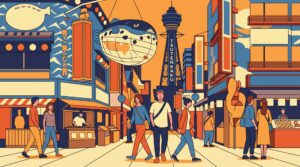
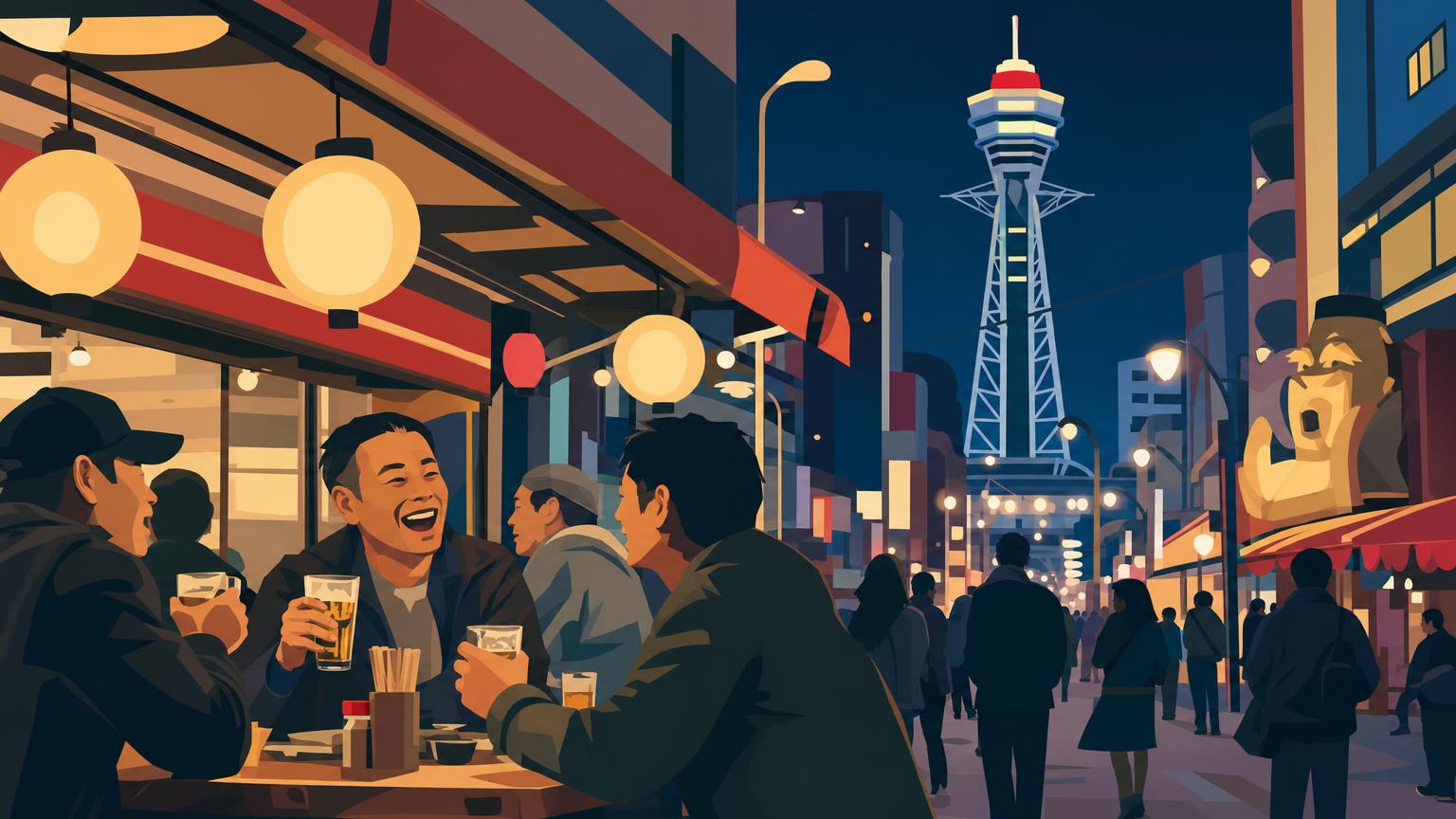
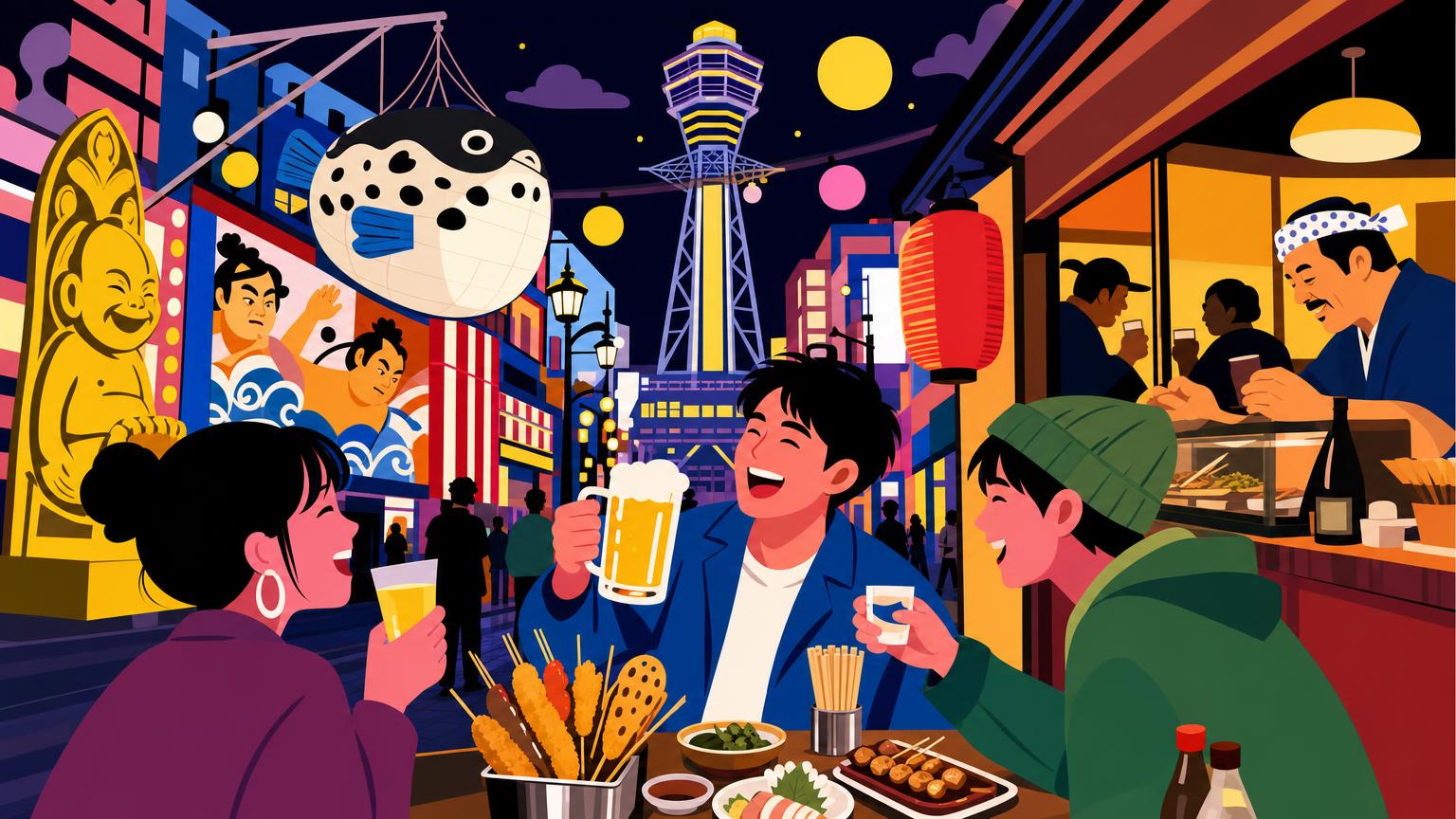
To truly grasp Osaka’s mindset, you need to observe its architecture, and nowhere is this clearer than under the shadow of the Tsutenkaku tower. In contrast to the sleek, futuristic skyscrapers dominating Tokyo’s skyline or even Osaka’s northern commercial district of Umeda, Shinsekai remains steadfastly anchored in the Showa era. The streets burst with retro charm. Gigantic, three-dimensional blowfish lanterns dangle precariously above the sidewalks. Hand-painted signs boast bold, forceful brushstrokes advertising inexpensive beer and hot food. The tower itself isn’t glamorous—it’s slightly rusty, wholly quirky, and stands as a nostalgic symbol for the working-class people of the Kansai region.
This physical backdrop shapes social interaction. In a polished, pricey bar in a gentrified area, people tend to soften their voices, sit more upright, and worry about their image. In Shinsekai, however, the gritty, well-worn environment acts as an equalizer. The mindset here is straightforward: we are who we are, and we’re here to enjoy ourselves. There is no pretense. You’ll find construction workers in their work clothes drinking beside young artists in vintage attire, who, in turn, stand next to local grandfathers analyzing the latest horse race. The city’s renowned friendliness isn’t just a personality trait—it’s a cultural outcome of spaces like this, where the environment discourages arrogance and encourages open, genuine human connection.
Hirunomi: The Pleasure of Daytime Drinking
One of the most notable distinctions between Osaka and other major Japanese cities is the widespread acceptance and practice of “hirunomi,” which simply means daytime drinking. In Tokyo’s highly productive, corporate-driven core, ordering a large draft beer at eleven in the morning on a Tuesday might invite subtle disapproval. It suggests you aren’t working, not contributing, or failing to stick to the strict social timetable. In Shinsekai, hirunomi is practically a local pastime, completely free of stigma.
Stroll down the main arcade before noon, and you’ll hear the unmistakable clinking of heavy glass beer mugs sliding across wooden counters. The crowd is a mix of night-shift workers finishing their shifts, retirees enjoying their pensions, and young couples on casual dates. It’s a genuine celebration of leisure. It reveals a fundamental aspect of the Osaka mindset: life is meant to be lived, not just endured. While work matters, savoring a cold drink and hot meal with good company is sacred. This relaxed attitude toward time is liberating for foreign residents who often feel the crushing pressure of Japan’s workaholic stereotypes. Shinsekai shows that a strong counter-culture of relaxation is embedded in the heart of the country’s second-largest metropolis.
Iconic Drinks and Soul Food Pairings in Osaka
Kushikatsu and the Golden Rule: No Double Dipping
If Shinsekai had an official religion, kushikatsu would be its sacrament. These are simple skewers of meat, seafood, and vegetables, coated in a light panko batter and deep-fried to a perfect, golden crunch. You’ll find everything from classic beef and lotus root to more adventurous choices like pickled ginger and quail eggs. But the food itself is only part of the experience. The true cultural hallmark lies in how you eat it, particularly how you engage with the communal stainless steel tray of thin, sweet-and-savory Worcestershire-style sauce on the counter.
The unbreakable rule of Shinsekai is “nido-zuke kinshi,” which means absolutely no double-dipping. Since the sauce tray is shared by all customers occupying that spot throughout the day, dipping a skewer you’ve already bitten into is a major breach of hygiene and social trust. This rule is posted on signs, printed on menus, and enforced by the vigilant eyes of the shop owners. If you want more sauce after a bite, you must use a piece of raw cabbage—offered freely in a bowl on the counter—to scoop extra sauce from the tray and drizzle it over your skewer. This ritual reveals much about Osaka: a city that cherishes communal experiences but depends on an unwritten agreement of mutual respect to make those experiences function. You trust the person before you, and the person after you trusts you.
Doteyaki: The Perfect Companion for Cold Beer
While kushikatsu enjoys most of the international spotlight, true locals know that the heart of Shinsekai comfort food is doteyaki. This is a rich, slow-simmered stew made from beef sinew, konjac, and a thick, sweet white miso paste. Large, shallow iron pots bubble steadily at the front of the stalls, filling the street with a sweet, savory aroma that is impossible to resist. The meat simmers for hours until the tough sinew completely breaks down, resulting in a gelatinous, melt-in-your-mouth texture that is incredibly rich.
Doteyaki reflects the working-class roots of the neighborhood. Historically, beef sinew was an inexpensive and undesirable cut of meat. The people of Osaka, known for their pragmatic, no-waste philosophy, discovered how to transform the cheapest ingredients into culinary treasures through time and care. When you order a plate of doteyaki, dust it generously with spicy shichimi pepper, and wash it down with an ice-cold draft beer, you are savoring the pinnacle of local culinary craft. The sharp, crisp carbonation of the beer cuts perfectly through the heavy, fatty sweetness of the miso. This is not delicate fare—it is bold, satisfying, and deeply comforting.
What the Locals Drink: Nama Beer and Lemon Sour
If you’re searching for a quiet speakeasy where a mixologist carves artisanal ice cubes and infuses gin with rare botanicals, Shinsekai will quickly disappoint you. The drinking culture here values speed, refreshment, and volume over complexity. The undisputed star at the counter is “nama beer,” or draft beer. It is served in heavy glass mugs chilled in the freezer, poured with a thick, creamy foam head that preserves the carbonation.
Close behind the beer is the beloved Chu-hai, particularly the Lemon Sour. This simple blend of clear distilled spirit, carbonated water, and sharp lemon juice is aggressively sour, affordable, and serves the essential role of cleansing the palate after rich fried foods. Shinsekai isn’t a place to dissect your drink’s tasting notes. You drink to quench your thirst, fuel conversation, and keep the evening’s energy alive. The drinks are straightforward vessels for social connection, mirroring the direct and no-nonsense communication style Osaka is known for.
Types of Bars You Will Find in Shinsekai
Tachinomi (Standing Bars) in Janjan Yokocho
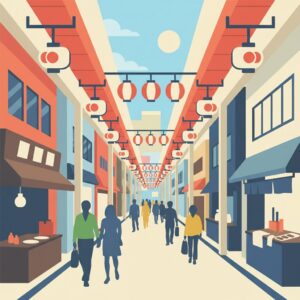
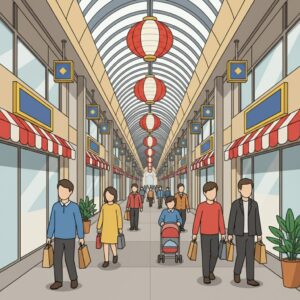
Running along the southeastern edge of Shinsekai is a narrow, covered arcade called Janjan Yokocho. The name originally comes from the sound of shamisen instruments played by parlor girls who used to attract customers in the post-war era. Today, that music has been replaced by lively chatter spilling from tiny “tachinomi” establishments. These are standing-only bars, often so small they accommodate just five or six patrons at a time. The counters are worn smooth from decades of elbows leaning on them, and the menus are handwritten on strips of paper taped to the walls, yellowed from years of cigarette smoke and kitchen grease.
Tachinomi culture is key to understanding Osaka’s social fabric. With no chairs, there’s no sense of permanence. You drop in, stand shoulder-to-shoulder with strangers, and the close physical proximity naturally encourages social interaction. The strict personal space boundaries typical of daily life in Tokyo simply don’t exist here. If you’re standing at a tachinomi counter, it’s only a matter of time before the person next to you asks where you’re from, comments on your food, or offers to pour you a drink. It breaks down class barriers and social anxieties. The standing bar is the city’s great social equalizer.
Flashy 24-Hour Izakayas
In contrast to the tiny, cramped spaces of Janjan Yokocho are the massive, sprawling izakayas that dominate Shinsekai’s main plazas. These establishments are visually overpowering, covered in thousands of LED lights, giant plastic food models, and bold signage. Many operate twenty-four hours a day, providing a constant, pulsing energy to the neighborhood no matter the time.
These large venues are ideal for bigger groups or when you want to immerse yourself in the district’s chaotic energy. The menus are encyclopedia-sized, offering everything from fresh sashimi to fried chicken and savory pancakes. Waiters shout orders across the room, groups of friends burst into laughter, and the atmosphere remains relentlessly vibrant. These sprawling restaurants anchor the neighborhood—they are brightly lit safe havens that keep the streets lively and populated, ensuring Shinsekai never truly sleeps.
Essential Etiquette and Rules for Shinsekai Bar Hopping
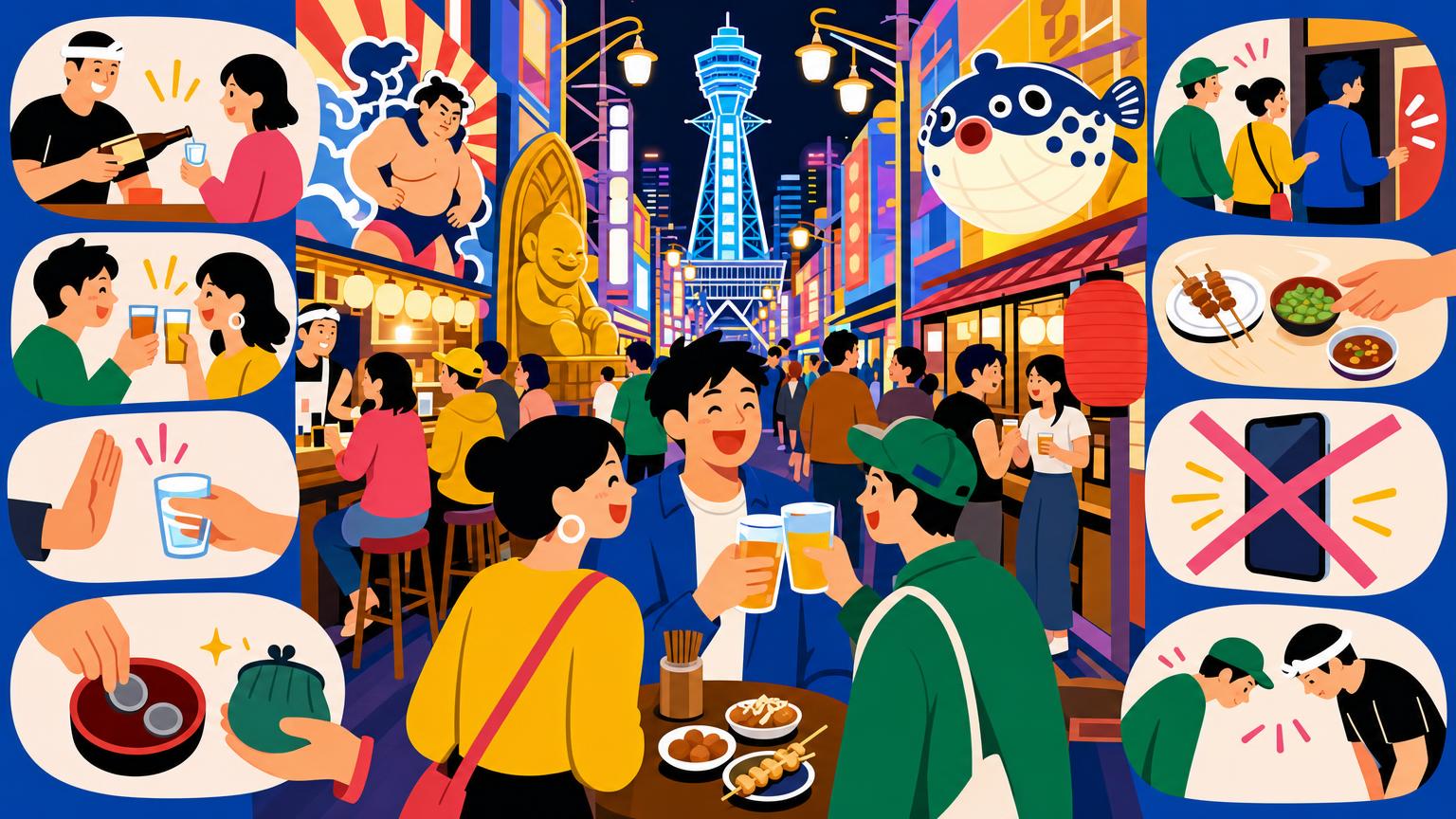
Cash is Still King
Japan has made significant progress in cashless payments over recent years, with digital wallets and transit cards now common in convenience stores and shopping malls. However, when you venture into the narrow alleys of Shinsekai, you need to let go of your dependence on smartphones and credit cards. In the realm of tiny standing bars and family-run skewer stalls, cash remains absolutely king.
This is not only about avoiding credit card fees; it’s about the speed and flow of the transaction. Many tachinomi operate on a “cash-on-delivery” basis. You will often find a small plastic tray or woven basket placed in front of you on the counter. The local practice is to place a few thousand yen into this tray when you arrive. Each time the owner brings you a beer or a plate of food, they will simply take the exact change from your tray. This keeps service lightning-fast, prevents any confusion over the bill at the end of the night, and allows you to leave the moment you’re ready to go. It’s a brilliantly efficient, tactile system built on mutual trust.
Understanding Otoshi (Table Charges)
One cultural nuance that often confuses and frustrates foreigners in Japan is the concept of “otoshi.” When you sit down at an izakaya, a waiter will almost immediately bring you a small, unsolicited dish of food. It might be edamame, simmered vegetables, or a bit of potato salad. When your bill arrives at the end of the night, you’ll notice a small charge—usually between three hundred and five hundred yen—added for this dish. Many tourists feel they’re being scammed or subjected to a hidden tourist tax.
It’s important to understand that otoshi is deeply rooted in Japanese drinking culture and is definitely not a scam. It acts as a seating or cover charge, and the small dish is offered as a gesture of hospitality to provide something to eat while you wait for your first round of orders. In Shinsekai, the otoshi often reflects the kitchen’s personality. Standing bars often skip the otoshi to keep turnover fast, but almost every seated izakaya enforces it. Don’t argue about it. Accept it as the price of admission, enjoy the small appetizer, and recognize it as a standard part of the local economy.
Is Shinsekai Safe for Tourists at Night?
If you read older guidebooks or hear rumors from people living far from Osaka, Shinsekai might be described as sketchy, dangerous, or a place to avoid after dark. As a woman who often explores back alleys and unpolished neighborhoods, I pay close attention to local security and the reality of street-level safety. The truth about Shinsekai is that its “dangerous” reputation is relative to the extreme, almost sterile safety typical of Japanese society. By any global standard, Shinsekai is remarkably safe.
When people call Shinsekai sketchy, they usually mean it is visibly working-class. It is near Kamagasaki, a neighborhood with many day laborers and unhoused individuals. You will see people sleeping on benches and older men, often heavily intoxicated, stumbling down the arcade in the afternoon. The streets are loud, and the aesthetic is deliberately unrefined. However, this gritty appearance does not equate to violent crime or danger for visitors.
Locals are fiercely protective of their neighborhood’s vibe. While the atmosphere is relaxed, an unspoken community watch is in place. As long as you navigate the area with basic common sense and respect, you will encounter no problems. My main safety advice is cultural rather than physical: avoid pointing your camera directly at locals’ faces, especially older men drinking in small bars or people sleeping on the street. Treat residents with the respect they deserve. If you come to Shinsekai with an open mind instead of treating it like a zoo for gritty photography, you will be greeted with genuine warmth and hospitality.
How to Enjoy “Hashigo-zake” (Bar Hopping) Like a Local
The best way to truly experience the neighborhood identity of Shinsekai is to master the art of “hashigo-zake.” The term “hashigo” means ladder, and the idea involves moving from one bar to another, creating a layered evening rather than settling into a single seat for hours. This is the genuine rhythm of Osaka nightlife.
The philosophy behind hashigo-zake is all about momentum. You don’t spend the night at one place indulging in a huge meal. Instead, you begin at a standing bar in Janjan Yokocho, order a cold beer and a quick serving of doteyaki, chat with the owner for about twenty minutes, then pay your bill from the tray and move on. Next, you head to a lively kushikatsu stall beneath the tower, order five freshly fried skewers, dipping each perfectly once in the communal sauce, and wash it down with a sharp lemon sour. Then you move on again. Your final stop might be a small, dimly lit counter bar for a glass of sweet plum wine before heading back to the train station.
This style of drinking accomplishes several things. First, it keeps you from becoming too heavy or tired in one spot. Second, it lets you sample the unique specialties of multiple chefs in a single night. Most importantly, it expands your social footprint. By hopping through three or four different places, you encounter dozens of locals, experience different atmospheres, and support multiple small business owners. It keeps the night lively, spontaneous, and utterly unpredictable.
Shinsekai isn’t just a place to admire the lights. It’s a place to immerse yourself in. It invites you to stand up, share your space, follow the local customs like the sauce tray rules, and engage with the city on its most honest, unfiltered terms. When you finally walk back to the quiet platforms of the train station, carrying the faint scents of fried batter and cigarette smoke, you will hold a deep understanding of what makes the people of Osaka so profoundly, beautifully human.