The train doors hiss open at Tsuruhashi Station, and before you see a thing, it hits you. It’s not a landmark, not a sign, but a smell. A glorious, intoxicating wave of sizzling beef, of pungent garlic, and the sharp, funky promise of fermentation. You haven’t just arrived at another stop on the Osaka Loop Line; you’ve been teleported. You’ve stepped through a portal into the vibrant, pulsating heart of Osaka’s Koreatown, a district that sings with a rhythm all its own. Forget the polished perfection and skyscraper gleam of Umeda or Namba; this is a place with grit, with soul, a beautifully chaotic maze of covered market streets and smoky barbecue joints where the culture of Korea is not just preserved, but vibrantly, deliciously alive. It’s a sensory overload in the best possible way, a living symphony of sounds from the latest K-pop beats blasting from a storefront to the rhythmic chop-chop-chop of a kimchi vendor’s knife. For decades, this neighborhood has been the undisputed champion of authentic Korean cuisine in Japan, a pilgrimage site for those seeking the real deal. People flock here for the legendary yakiniku, for the dazzling rainbow of banchan side dishes, and most importantly, for the kimchi—kimchi that defines the very essence of Korean flavor. But beneath the surface of this well-known culinary scene, a new legend is simmering, a new tune is being played. A dish that perfectly encapsulates the dynamic spirit of Tsuruhashi: a bold, unapologetic, soul-stirring fusion of Korean fire and Japanese form. I’m talking about Korean-inspired ramen, a bowl of noodle soup so powerful, so complex, it redefines what you thought ramen could be. Today, we’re diving deep. We’re going beyond the guidebooks to taste the history, the passion, and the fierce innovation that makes Tsuruhashi’s kimchi and ramen a truly unforgettable Osaka experience. Let’s get lost in the groove.
While Tsuruhashi offers a vibrant Korean experience, for a taste of Osaka’s own enduring, gritty spirit, you can explore the historic charm of Karahori Shopping Street.
The Pulse of the Streets: Feeling the Tsuruhashi Vibe
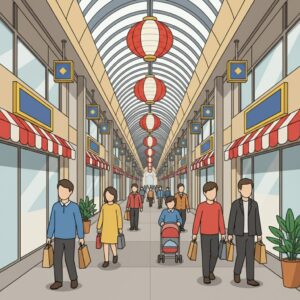
To truly grasp the essence of Tsuruhashi’s food, you must first immerse yourself in its vibrant atmosphere. Stepping out of the station, you are immediately swept up in a surge of human energy. The main streets are lined with yakiniku restaurants, their signs glowing in Japanese and Korean, adorned with enticing images of marbled beef. As evening falls, the air thickens with fragrant smoke, beckoning meat lovers like a siren’s call. Yet, the true enchantment begins when you slip into the covered shopping arcades, the shotengai, branching off like veins from the main road. The most renowned among these is the Miyukimori Shopping Street, the unofficial main thoroughfare of Koreatown. Here, everything changes: the space narrows, the sounds grow more intimate, and the colors burst forth. Shops crowd together, spilling their goods onto the walkway in a lively, abundant display.
This place engages all your senses. Your eyes flit from stacks of vibrantly colored chima jeogori (traditional Korean clothing) to arrays of gleaming stainless steel chopsticks and bowls, from K-pop posters featuring flawlessly styled faces to shelves heavy with Korean snacks and groceries. Your ears catch the unique linguistic blend of the area—vendors calling greetings in a mix of Korean and Osaka-ben, the local Japanese dialect, while shoppers converse animatedly, effortlessly switching between the two languages. You sense the pulse, the bustle of a community deeply rooted in its heritage yet fully woven into the fabric of Osaka. There’s an authenticity here that cannot be faked. This is a neighborhood lived in and cherished, not a tourist attraction. You’ll spot grandmothers carefully selecting vegetables, students grabbing street food after school, and families doing their weekly shopping. This is the true rhythm of everyday life, and you’re welcome to join in.
Kimchi: The Fermented Soul of Koreatown
At the very heart of this sensory universe lies kimchi. It serves as the anchor, the foundation, the very essence of Tsuruhashi’s culinary identity. To describe it merely as pickled cabbage is a vast understatement; it is a pillar of Korean culture, a tribute to the artistry of preservation and the science of fermentation. In Tsuruhashi, kimchi is not just seen—it is experienced in its full, magnificent range. The Miyukimori arcade is essentially a cathedral dedicated to kimchi. Every few steps, you encounter another specialty shop, each a family-run business with recipes that have been fiercely protected and perfected over generations.
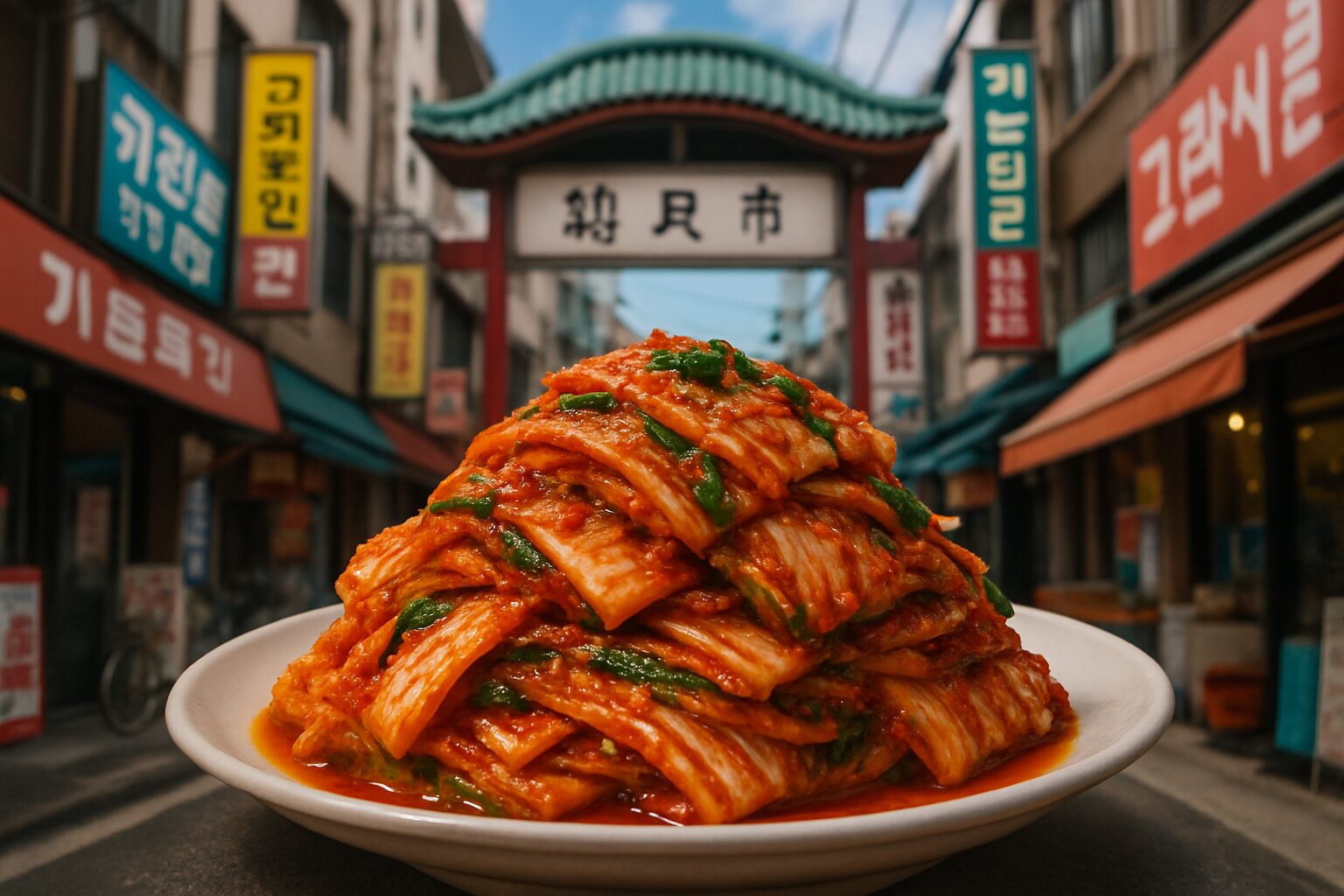
Forget the single, uniform version you might find in a supermarket jar. Here, kimchi is a universe of flavor and texture. The most familiar is, of course, baechu-kimchi, made from napa cabbage. Yet even within this category, the variations are astonishing. Some are freshly made, bright and crisp with a sharp, spicy bite. Others are deeply fermented, aged to develop a profound sourness and a rich umami complexity that is utterly addictive. The vendors, often family matriarchs, stand proudly behind piles of their creations, their hands tinted a vivid crimson from the gochugaru (Korean chili powder). They are the alchemists of Tsuruhashi, transforming simple vegetables into edible treasures.
Look closer, and the diversity is striking. You’ll find kkakdugi, chunky cubes of daikon radish offering a satisfyingly juicy crunch and a refreshing spice. There’s oi-sobagi, whole cucumbers sliced and stuffed with a spicy paste of garlic and chives, perfect as a palate cleanser on a hot day. Then there are more specialized varieties: pa-kimchi, made from green onions, packing a sharp, pungent punch, or the elegant, non-spicy baek-kimchi (white kimchi), which highlights the clean, crisp flavors of vegetables in a mild, fruity brine. Many shops have their own unique specialties—perhaps kimchi made with celery or one incorporating seafood for an extra layer of savory depth. The ajummas (a respectful term for middle-aged women) are usually more than happy to offer you a taste. A small piece of cabbage or radish is offered on a toothpick, a simple gesture that opens a world of flavor. The taste is electric. It’s a symphony on the palate: the initial saltiness, followed by the rising heat of chili, the pungent notes of garlic and ginger, the deep, savory undertones from fish sauce or fermented shrimp, and finally, the bright, acidic tang that cleanses the palate and leaves you craving more. This is the magic of Tsuruhashi kimchi; it is alive, ever-evolving, and a direct taste of the history and heart of the people who craft it.
The Ramen Revolution: A Symphony in a Bowl
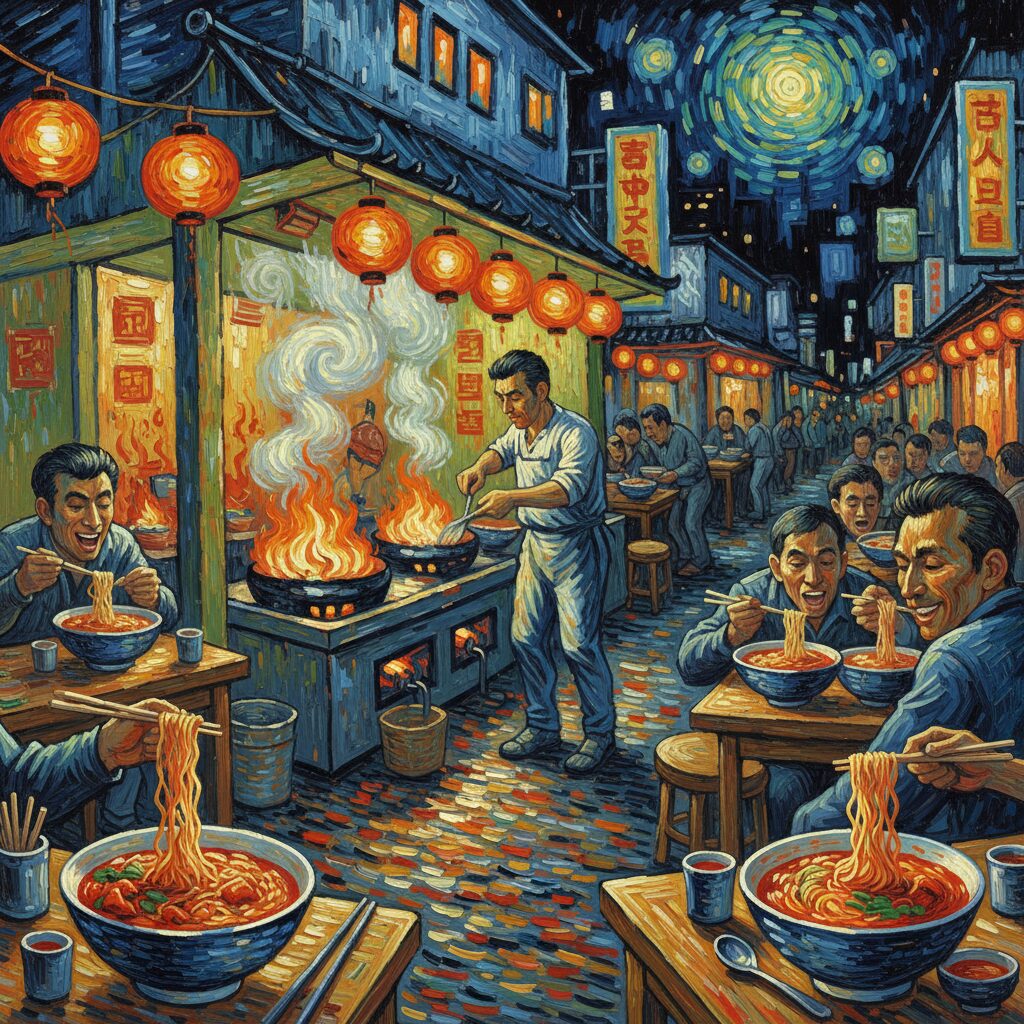
After immersing yourself in the traditions of kimchi, you might believe you’ve grasped the essence of Tsuruhashi’s culinary landscape. But then, a different scent captures your attention. It’s a rich, meaty aroma, tinged with that familiar, spicy kimchi bite. You have encountered the new trend, the culinary movement shaping the next chapter of Tsuruhashi’s narrative: Korean-inspired ramen. This isn’t merely the novelty of adding kimchi to a typical bowl of shoyu ramen. It’s a complete reinvention, a thoughtful and intentional fusion of two beloved Asian comfort foods. It embodies Zainichi Korean identity, a flavorful conversation between the chefs’ Korean roots and their Japanese surroundings.
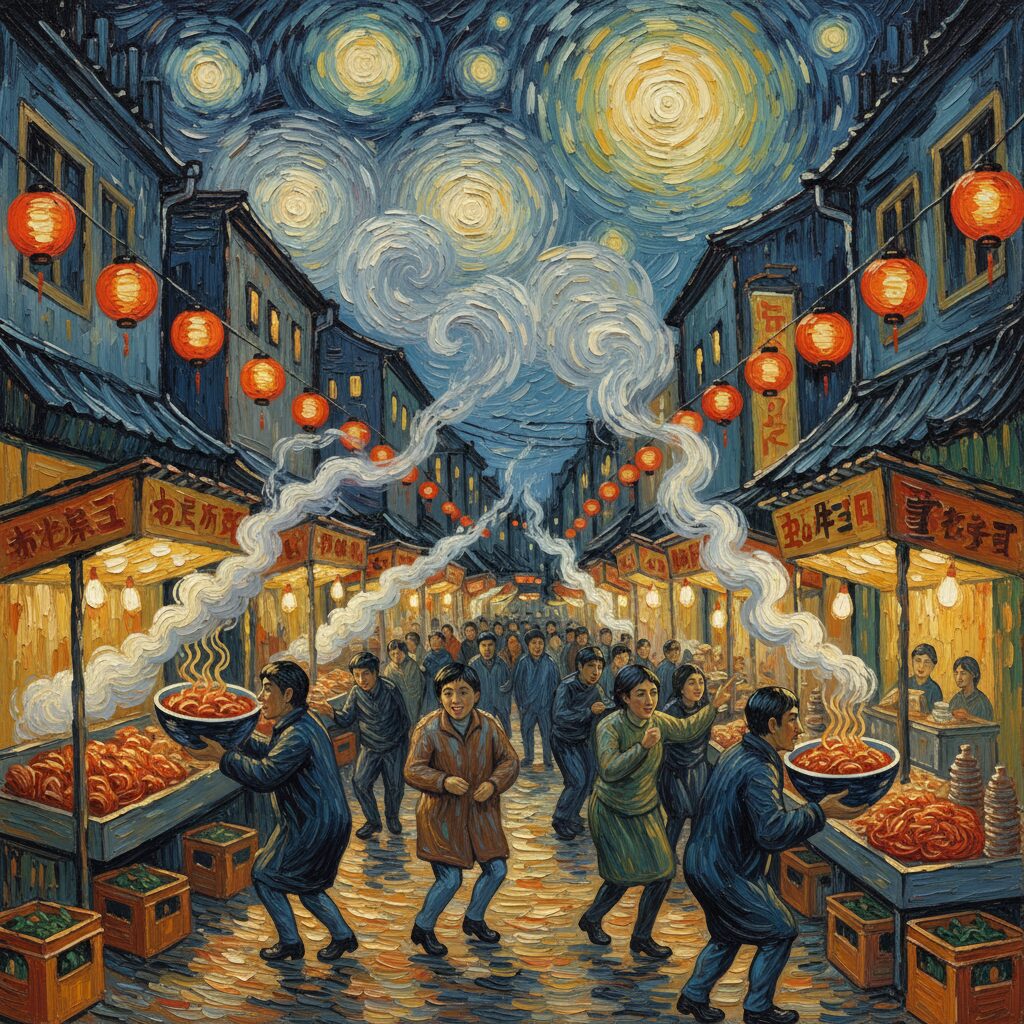
Discovering these ramen shops is part of the thrill. They often hide in narrow alleys, modest spots with a few counter seats. You push the door open, and a wave of warm, spicy steam greets you. The air is dense with the scent of simmering pork bones and fiery gochujang. This is ramen with character. Let’s break down a bowl, this exquisite instance of cross-cultural flavor. The base, the heart of the dish, is the broth. It usually begins with a foundation resembling Japanese tonkotsu—pork bones simmered for countless hours until they dissolve into a rich, creamy, collagen-filled liquid. Then comes the Korean touch. This pristine broth is enriched with a fiery, complex paste called dadaegi. Made from a potent blend of gochujang (fermented chili paste), gochugaru (chili powder), garlic, soy sauce, and several secret ingredients, this paste transforms the soup. It turns a vibrant, glowing orange—a liquid both as comforting as a warm embrace and as electrifying as a lightning bolt. It’s spicy, certainly, but it’s a nuanced, layered heat, not merely a blunt burn.
The noodles are thoughtfully selected. They must be sturdy enough to stand up to the robust broth, so they’re often a bit thicker and chewier than typical ramen noodles, with a springy texture that catches the soup with every slurp. Yet the toppings are where this fusion truly excels. Instead of the usual chashu pork, you might find tender, sweet, and savory bulgogi beef, seared on a grill just before serving. Or perhaps kalbi—succulent marinated short ribs that fall off the bone. And naturally, there’s kimchi. Not just any kimchi, but one aged perfectly, its sour tang slicing through the broth’s richness like a spotlight, adding essential contrast and depth. Other classic Korean elements join the mix: a heap of seasoned bean sprouts (kongnamul), wilted spinach (sigeumchi-namul), and a flawlessly soft-boiled egg (ajitama), its creamy golden yolk soothing the spice. Eating this ramen is an experience. The first spoonful of broth is a revelation. The pork’s richness coats your mouth, followed by waves of deep, savory, and spicy notes from the dadaegi. Then you grasp the noodles, slurping them along with bulgogi and kimchi. It’s a symphony of textures and flavors—chewy, tender, crunchy, soft, rich, spicy, sour, and sweet—all in a single extraordinary bite. It tells the story of Tsuruhashi in a bowl: bold, intricate, and utterly unforgettable.
Beyond the Bowl: An Epicurean Adventure
While the kimchi and ramen alone justify the trip, they are merely the opening acts in Tsuruhashi’s vibrant culinary scene. The neighborhood is, after all, Osaka’s premier destination for yakiniku, or Korean barbecue. The streets are lined with numerous venues, ranging from humble, smoky eateries to more refined restaurants. The experience is interactive and communal: a grill is built into your table, and plates of raw, beautifully marbled meat are brought for you to cook to your preference. The quality of the beef is outstanding, but for a genuine Osaka experience, you must try horumon—the offal. Though it might seem daunting, cuts such as heart (hatsu), intestine (tecchan), and stomach (mino) are grilled into remarkably delicious, texturally intriguing bites. Accompanied by a variety of dipping sauces and an endless array of banchan (small side dishes like pickled vegetables, seasoned greens, and savory pancakes), a yakiniku dinner in Tsuruhashi is a lively, joyous celebration.
If a full sit-down meal isn’t planned, the streets themselves offer a continuous buffet of irresistible snacks. You can’t walk ten feet without encountering a stall selling something mouthwatering. Follow the sweet, cinnamon-scented smoke to a vendor expertly pan-frying hotteok, a delightful sweet pancake filled with molten brown sugar, honey, and nuts. Join the queue for tteokbokki, chewy cylindrical rice cakes bathed in a thick, sweet, and spicy gochujang sauce. Savor Korean fried chicken, renowned for its impossibly crispy, double-fried skin and juicy meat, often glazed with sweet and spicy sauce. Or for a lighter option, grab a roll of gimbap, the Korean take on a sushi roll, packed with seasoned vegetables, egg, and meat. A street food crawl through Tsuruhashi is an adventure itself, offering a chance to sample the incredible variety of Korean cuisine one delicious bite at a time.
And when it’s time for a break from eating, the shopping adds another dimension of discovery. The grocery stores are a treasure trove for any adventurous home cook, stocked with every imaginable type of gochujang, doenjang (soybean paste), and imported Korean ingredients. You’ll find beautiful, handcrafted Korean pottery and metalwork—perfect for enhancing your own dining experience. For fans of contemporary Korean culture, the shops selling K-pop merchandise and the latest Korean cosmetics and skincare products are a slice of paradise. Tsuruhashi is not just a place to eat Korean food; it’s a place to immerse yourself in the culture from every angle.
A Taste of History and Practical Tips
The vibrant culture of Tsuruhashi today is rooted in a rich and poignant history. The area emerged as a center for Osaka’s Zainichi Korean community—ethnic Koreans who have permanent residency in Japan—particularly in the years following World War II. The markets and businesses that developed arose from a spirit of resilience, community, and entrepreneurship. They established a space to preserve their culture, language, and most importantly, their food traditions, far from their ancestral homeland. Understanding this background adds profound meaning to your visit. Every bite of kimchi, every bowl of ramen, is more than just food; it’s a flavor of that history and a tribute to the enduring spirit of the community. This place is not merely Koreatown; it is a living monument to the people who built it.
Getting here is simple. Tsuruhashi Station is a major transit hub served by the JR Osaka Loop Line, the Kintetsu Line, and the Sennichimae Subway Line, making it easily reachable from anywhere in Osaka. From the station, just follow your nose and the crowds toward the covered arcades. The main Koreatown area, Miyukimori Shopping Street, is roughly a 10-15 minute walk from the station itself.
A few tips for first-time visitors will help make your experience smoother. While many larger restaurants now accept credit cards, smaller market stalls and eateries often only take cash, so it’s wise to have some yen ready. The best time to visit is during the day, especially from late morning to mid-afternoon, when the markets are bustling. Many kimchi shops and street food stalls close by late afternoon, while the yakiniku restaurants come alive in the evening. Don’t hesitate to engage! The vendors take pride in their products, and if you show genuine interest, they’ll often be happy to explain their goods or offer a sample. Lastly, embrace the maze-like layout. The side streets and alleys can be tricky to navigate, but that’s part of the charm. Allow yourself to wander without a set plan—the best discoveries in Tsuruhashi are often those you find by chance.
The Echo of Flavor
A visit to Tsuruhashi stays with you long after you’ve boarded the train to leave. It’s the lingering taste—the fiery heat of chili, the rich umami of fermented paste, the smoky char of grilled meat. But it goes beyond that. It’s the memory of vibrant energy, the warmth of the people, and the strong sense of a culture that is both proudly unique and beautifully intertwined with the multicultural fabric of Osaka. Tsuruhashi reminds us that food is never merely nourishment. It’s history, identity, community, a story told with every single bite. To come here is to do more than just eat; it’s to connect with that story. So, when you’re in Osaka, step off the beaten tourist path. Let the rhythm of Tsuruhashi lead you, and discover the incredible, soul-satisfying harmony of its kimchi, its ramen, and its unyielding spirit.