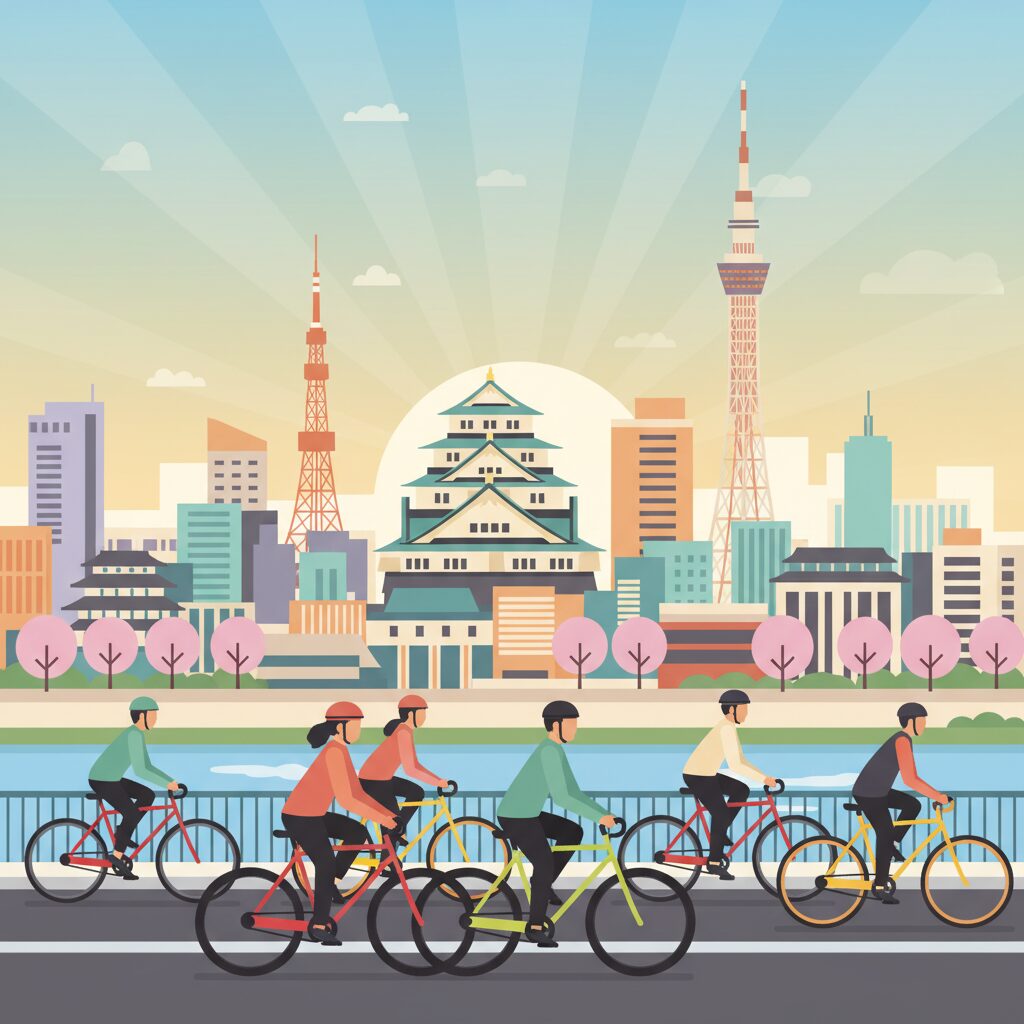
Step out of any train station in Osaka, from the sprawling underground labyrinth of Umeda to a quiet neighborhood stop on the Hankyu line, and you’re met with a sight that defines this city as much as takoyaki or the Tsutenkaku Tower. It’s a glittering, chaotic, and seemingly endless sea of bicycles. They are chained to railings, crammed into designated parking lots, and tucked into spaces so small you’d think they were assembled on-site. This isn’t just a mode of transport; it’s the city’s circulatory system, the lifeblood of daily movement, and your first, most visceral lesson in the pragmatic, unpretentious, and often perplexing mindset of the Osakan people.
To a newcomer, especially one from a car-centric country or even from the more orderly streets of Tokyo, the scene can feel like pure anarchy. Bicycles flow down crowded sidewalks like schools of fish, parting waves of pedestrians with a subtle flick of the handlebars. Elderly women on electric-assist bikes, laden with groceries, will overtake university students with an unnerving, silent speed. The rules of the road seem less like laws and more like gentle suggestions, interpreted with a flexibility that borders on performance art. But this isn’t chaos for chaos’s sake. It’s a highly evolved, deeply ingrained system of organized improvisation, and understanding its rhythm is the key to understanding Osaka itself. Forget the grand temples and shiny skyscrapers for a moment. If you really want to know how this city works, you need to look at the humble bicycle.
This pragmatic mindset extends to all facets of daily life, including the vibrant social scene found in local izakaya hopping spots.
The Osaka Bicycle: More Than Just Transport, It’s a Way of Life
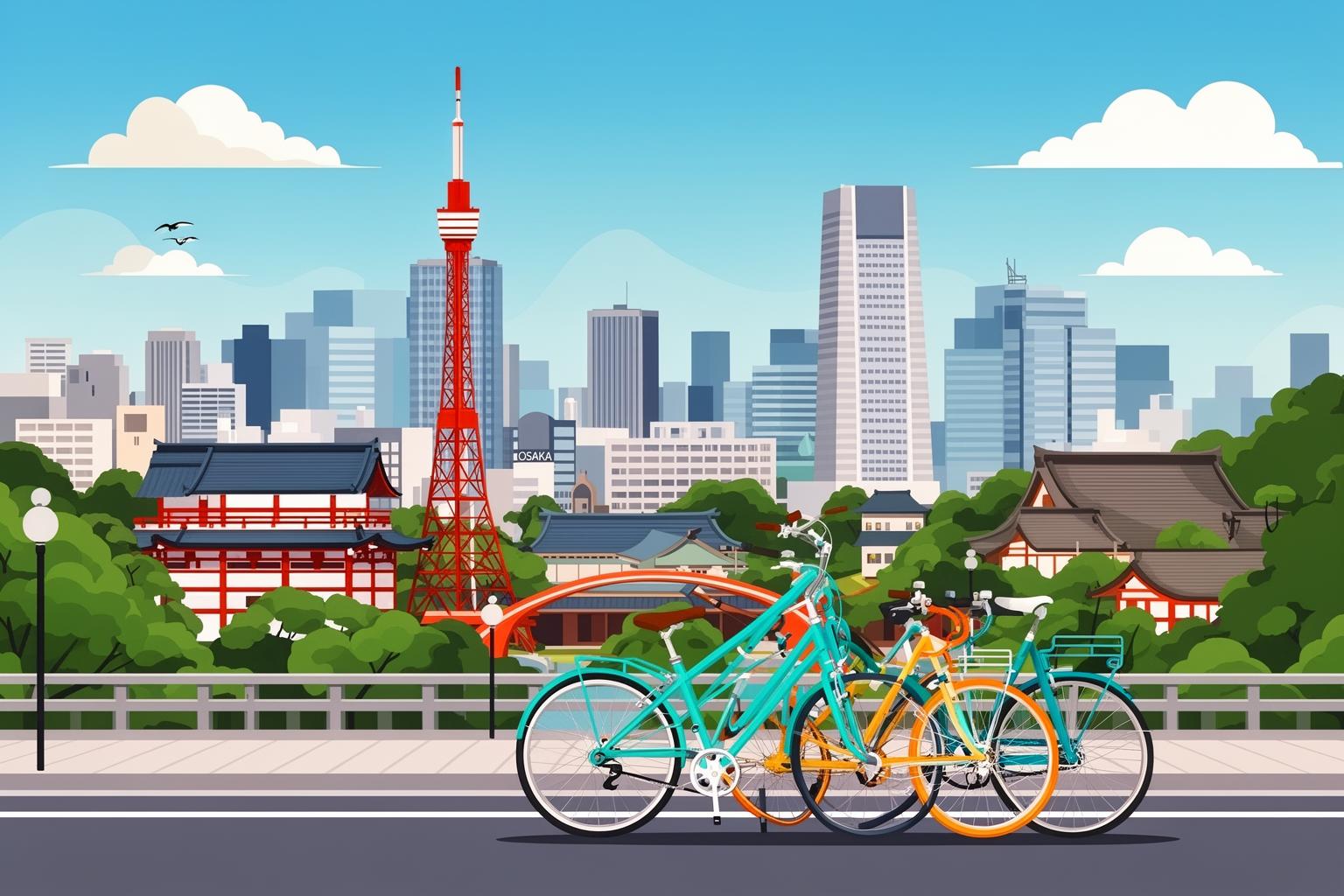
In many major cities around the world, cycling is often a choice—a statement about health, environmentalism, or urban style. In Osaka, however, it is a necessity, the default mode of transport. The city is flat as a pancake, its neighborhoods tightly packed, and although public transit is excellent, it doesn’t always cover that last important kilometer from the station to your front door. The bicycle fills that gap. It’s the vehicle for grocery runs, school drop-offs, quick trips to the ward office, and for many, the main way to commute. This isn’t a niche culture; it’s the culture itself.
The “Mamachari” Monarchy: The City’s Unsung Hero
At the center of this world is the undisputed ruler, or rather, queen: the mamachari. The name literally means “mom’s chariot,” and it is the ideal vehicle for everyday life. These are not sleek, lightweight racing bikes. They are heavy, steel-framed workhorses designed for stability and utility, not speed. The classic mamachari features a low, step-through frame for easy mounting, even while wearing a skirt. It has a wide, comfortable saddle, upright handlebars, and a built-in dynamo light that comes to life as you pedal. But its hallmark is its practical accessories.
A deep front basket is essential, always ready to carry daikon radishes, bags of rice, or toilet paper. At the rear, a sturdy rack almost always holds a child seat—a protective enclosure of plastic and padding where a helmeted toddler can observe their surroundings. The kickstand isn’t a flimsy metal rod; it’s a strong, spring-loaded device that lifts the rear wheel off the ground, ensuring the bike stays upright even when loaded with a week’s groceries and a wriggling child. The mamachari embodies the spirit of Osaka: it’s not about looking stylish, but about getting the job done efficiently and without fuss. It is the minivan of the two-wheeled world and commands the respect of a monarch.
From Students to Salarymen: A Shared Bond
Though the mamachari is the symbol, the affection for two-wheeled transport is universal. High school students, their navy blue uniforms fluttering, race home, weaving through traffic with practiced skill. University students on worn, second-hand bikes navigate campus and part-time jobs. Most surprisingly, perhaps, compared to Tokyo’s corporate culture, you will see countless salarymen in full suits and ties, balancing briefcases precariously in their front baskets as they pedal to the office.
This is a marked contrast to Tokyo, where the commuter image is inseparable from the crowded Yamanote Line trains. In Tokyo, arriving at work by bicycle might seem somewhat unprofessional, a bit too casual. In Osaka, it’s simply practical. It’s more affordable, often quicker for short trips, and offers a level of independence that train timetables can’t match. This preference for pragmatism over formality is a quintessential Osaka trait. Why spend ten minutes walking to the station and another ten on the train when you can just ride directly to your destination in fifteen? The logic is undeniable, and the bicycle is the tool that makes it possible.
Sidewalks, Streets, and the Unspoken Dance
Now we come to the most debated and perplexing aspect of cycling in Osaka for any foreigner: the sidewalk battleground. According to Japanese law, bicycles should be ridden on the road, except on specially marked sidewalks. In Osaka, however, this rule is followed about as faithfully as a “Do Not Touch” sign in a petting zoo. The sidewalk serves as the main arena, and mastering how to navigate it is your first and most crucial challenge.
The Sidewalk Is the Main Stage
This largely stems from historical and structural reasons. Osaka’s center is a labyrinth of narrow streets, many designed long before cars existed. These streets are often filled with delivery trucks, taxis, and local traffic, leaving little space for safe bike lanes. As a result, the sidewalk naturally became the unofficial bike lane by general agreement. This isn’t an act of defiance; it’s a tacit consensus born out of necessity. People cycle on the sidewalk not to inconvenience pedestrians but because, in many areas, the road feels far less safe.
This creates a unique setting where pedestrians and cyclists coexist with surprisingly little conflict. There is an intuitive sense of shared responsibility. Pedestrians generally keep to one side, providing a clear path, while cyclists adjust their speed depending on the crowd’s density. It’s an ongoing, subtle negotiation of space that functions smoothly because everyone follows the same unspoken rules.
The “Osaka Weave”: A Masterclass in Spatial Awareness
Watching an experienced Osaka cyclist maneuver through a crowded shopping arcade like Tenjinbashisuji or Shinsaibashi resembles observing a skilled weaver at work. They don’t force their way through the crowd; instead, they become part of its flow. A gentle shift in weight here, a minor turn of the handlebars there. They anticipate the movements of wandering shoppers, predict a child’s sudden stop, and slip through gaps that seem impossibly narrow. This technique is known as the “Osaka Weave.”
It’s not aggressive but assertive—a profound spatial awareness, almost a sixth sense regarding others’ movements. While a Tokyoite might stop to wait for the crowd to clear, an Osakan finds the path of least resistance. This highlights a broader cultural difference. Tokyo often emphasizes waiting in line, following prescribed routes, and maintaining orderly flow. Osaka culture leans more toward improvising, finding your own angle, and keeping things moving. The sidewalk ballet perfectly captures this mindset. The goal is collective forward movement, even if the individual paths appear chaotic from the outside.
Ringing the Bell: To Ding or Not to Ding?
One of the first reactions a foreigner might have when a pedestrian blocks their way is to ring the bell. Usually, this is a mistake. In the subtle language of Osaka sidewalks, ringing a bell is like shouting. It’s seen as startling, aggressive, and somewhat rude. It signals that you’ve failed to navigate properly and are now demanding others move aside.
The preferred approach is much subtler. Often, the cyclist simply slows down, and the pedestrian, noticing their presence, naturally steps aside. Sometimes, a quiet throat clearing is enough. If verbal communication is needed, a soft, almost apologetic “sumimasen” (excuse me) is the usual choice. The bell is a last resort, reserved only for preventing imminent collisions. This preference for indirect, non-confrontational signals—even in a city known for its directness—reflects the complexity of Japanese social interaction. You can be assertive in your movement, but you must stay humble in your communication.
The Parking Predicament: Where Anarchy Meets a System
If riding a bike in Osaka is a graceful dance, parking it feels more like a contact sport. The vast number of bicycles makes finding a legal and convenient spot a continual challenge. This has created a captivating duality: a widespread culture of guerrilla parking existing alongside a strictly enforced official system.
“Here Seems Good Enough”: The Art of Guerrilla Parking
Stroll down any residential street, and you’ll notice it. Bicycles chained to streetlights, leaning against apartment walls, and gathered near local supermarket entrances. The unspoken rule appears to be, “If it’s not clearly blocking a door or main path, it’s probably acceptable.” This reflects Osaka’s practical mindset. There simply aren’t enough official parking spaces to meet demand, so people devise their own solutions.
There’s an unwritten code here as well. You avoid blocking fire hydrants. You don’t obstruct wheelchair ramps. You try to keep your bike orderly and out of the way. It’s a system of self-regulation. This can be unsettling for foreigners accustomed to strict rules. They see signs stating “No Bicycle Parking” with dozens of bikes parked underneath and experience cognitive dissonance. Osakans see the signs but also understand the reality, choosing the option that makes the most sense. The rule matters, but context matters more.
The Dreaded “Removal Zone” and the Bicycle Pound
This flexible attitude has its boundaries, usually near train stations and major commercial areas. These are designated “Bicycle Removal Zones” (jitensha tetsukyo kuiki). The city posts signs—often with firm yet playful cartoon illustrations—warning that illegally parked bicycles will be promptly towed. And they mean business.
Your first sign of active enforcement is the sight of city workers wielding chalk. They mark the tires of illegally parked bikes. If the bike remains hours later, its fate is sealed. A small truck arrives, and with surprising speed, your beloved mamachari is loaded and taken away. Returning to find your bike gone, replaced only by a sticker on the pavement directing you to the city pound, is a gut-wrenching moment—a rite of passage for nearly every long-term resident.
Recovering your bike from the pound (jitensha hokanjo) is a bureaucratic ordeal mixed with mild public embarrassment. These pounds are almost always in the most inconvenient, out-of-the-way spots—under highway overpasses or near remote industrial ports. You must travel there, present your key and ID, complete paperwork, and pay a fine (usually about 2,500 yen). Walking your reclaimed bike out, you feel relief tempered by the sting of having been caught. It’s a clear lesson in where the city’s flexible attitude ends and strict enforcement begins.
The Rise of “Churinjo”: Finding Legitimate Parking
To avoid the shameful trip to the bike pound, savvy cyclists use official paid parking lots called churinjo. These come in a fascinating variety. The simplest are outdoor lots with metal racks that lock your front wheel. Others are multi-story concrete garages resembling miniature car parks.
The most impressive are fully automated underground systems. You roll your bike onto a platform, insert a card, and watch a mechanical arm whisk it down into a subterranean silo. When you return, swiping your card summons your bike back in under a minute. It feels like something from a science fiction film.
The best part is the cost. These lots are incredibly affordable, often only 100 or 150 yen for a full day. The existence of this high-tech, budget-friendly infrastructure shows the city’s attempt to solve the problem. Yet, the culture of guerrilla parking persists alongside it. This contradiction is quintessential Osaka: a hyper-modern, efficient system stands ready, but many still opt for the slightly riskier, more convenient free-form option. It’s an ongoing negotiation between official regulations and the path of least resistance.
Speed, Rain, and the Indomitable Osaka Spirit
Living in Osaka, you quickly realize that minor inconveniences and environmental factors are not valid reasons to stop moving forward. The city pulses with relentless momentum, and its cyclists perfectly embody this spirit. They are prepared, determined, and surprisingly fast.
The “Osaka Dash”: Speed Is a Matter of Perspective
Don’t be misled by the bulky look of the mamachari. Thanks to electric-assist motors, these bikes have transformed into silent speedsters, especially in the hands of an experienced obachan (older woman). These ladies are the undisputed queens of Osaka’s bike lanes, riding with unwavering confidence and purposeful speed that can be quite intimidating. They have places to go, and they won’t be held back.
Anyone new to cycling here shares one common experience: pedaling at what feels like a good pace, only to be quietly and effortlessly passed by a woman twice your age, basket brimming with leeks, a calm expression on her face. This isn’t aggressive or competitive speed—it’s the speed of efficiency. It’s the pace of a life full of tasks to accomplish. They have mastered generating maximum forward motion with minimal apparent effort. Never underestimate the speed of an Osaka obachan on an electric bike.
Cycling in the Rain: A Test of Determination and Waterproof Gear
Rain doesn’t stop Osaka’s cyclists; it simply calls for different accessories. When the skies open up, a new category of gear comes into play. The most iconic is the “Sasubei,” a clever device that clips onto handlebars and holds a full-sized umbrella overhead, leaving hands free to steer and brake. It looks absurd—like a Mary Poppins-inspired invention—but it works brilliantly.
For heavier rain, full-body ponchos come out. These aren’t flimsy plastic sheets; they are durable garments, often with a clear plastic visor built into the hood to shield the face while maintaining visibility. Watching a group of poncho-clad cyclists glide through rain-slicked streets showcases the city’s resilience. Elsewhere, a downpour might be a reason to cancel plans or take a taxi; in Osaka, it’s just a sign to gear up. The commitment to cycling is unwavering, transcending mere weather. This practical mindset—the belief that with the right tools, any obstacle can be overcome—is core to the local character.
The Phone, the Umbrella, the Impossible Multitasker
Technically, many everyday feats here are illegal. Riding a bike while holding an umbrella, talking on a phone, or wearing headphones is against the law. Yet, these actions are so commonplace they’ve become background noise. You’ll see people texting with one hand while steering with the other, holding a large umbrella against the wind, or carrying a second bicycle alongside them as they pedal.
This is not born from blatant disregard for safety; it’s the result of a lifetime of experience. People who have cycled daily since childhood develop near-superhuman muscle memory and balance. They operate within their own sense of safety limits. This reflects an unspoken social contract: the real offense isn’t breaking the letter of the law but causing trouble for others (meiwaku o kakenai). As long as you multitask without endangering anyone, authorities and fellow citizens generally turn a blind eye. It’s a culture that values individual skill over strict rule-following.
Rules, Reality, and What Foreigners Often Miss
For anyone attempting to adapt to life in Osaka, the bicycle culture can often be a source of ongoing confusion. It seems to clash with the common perception of Japan as a country of strict rules and unwavering public order. The key lies in understanding the difference between the official laws and the code that’s actually practiced on the streets.
The Law vs. The Unspoken Code
The official rules are straightforward: ride on the left side of the road, use a light at night, no passengers except in designated child seats, no cycling under the influence, and no phone use while riding. However, the reality is far more nuanced. The most important rule—one that governs everything—is to stay aware. Be predictable. Avoid sudden moves. Yield to pedestrians. Don’t cause accidents. If you follow this overarching guideline, minor breaches of the official laws will usually be overlooked.
Foreigners often fall into one of two traps. The first is to strictly follow the written laws, riding only on the road, which leads to frustration and fear amid traffic, and feeling out of sync with the locals. The second is to observe local behavior and assume there are no rules at all, cycling recklessly and becoming a nuisance. The truth lies somewhere in between. The system works because there is a shared understanding of this subtle, unwritten code. It’s not lawlessness; rather, it’s a different, more flexible kind of order.
Osaka vs. Tokyo: A Tale of Two Wheels
The contrast with Tokyo’s cycling culture is clear and instructive. In Tokyo, there’s much more adherence to the rules. Cyclists tend to stay on the road. Sidewalk cycling is less common and often met with disapproval. Parking is far more organized—and often more costly. The whole experience feels more cautious, deliberate, and in keeping with Tokyo’s broader focus on public harmony and order.
Osaka’s cycling scene, on the other hand, directly reflects its civic character. It’s louder, faster, and far more focused on individual efficiency. There is a sense of controlled impatience, a collective urge to reach your destination without unnecessary fuss. This isn’t to say Tokyo is “better” or Osaka “worse,” but rather that they offer two distinct approaches to urban mobility shaped by the personalities of their residents. Tokyo’s approach is top-down order; Osaka’s is bottom-up, negotiated chaos.
What it Means to be an Osaka Cyclist
To navigate cycling in Osaka is to absorb the city’s spirit. It demands that you be hyper-aware of your environment, reading subtle signals from those around you. It requires you to be both assertive and considerate, claiming your space while respecting others’. It’s a constant exercise in real-time problem-solving.
For me, daily bike rides here are more than just commutes. They’re lessons in social dynamics and reminders that efficiency and pragmatism are paramount. It’s proof that a system doesn’t need to be rigid to work. The beautiful, chaotic, and endless flow of bicycles perfectly symbolizes this city’s energetic, resilient, and unapologetically practical nature.
So, if you’re new to Osaka, here’s my advice: get a bicycle. Start slow. Observe how others move. Learn the unspoken dance of the sidewalk. Invest in a really, really good lock, and familiarize yourself with the nearest official parking spots for your regular destinations. And when an obachan on an electric mamachari inevitably overtakes you, don’t be discouraged. Just nod respectfully. You’ve just been passed by the true spirit of Osaka.