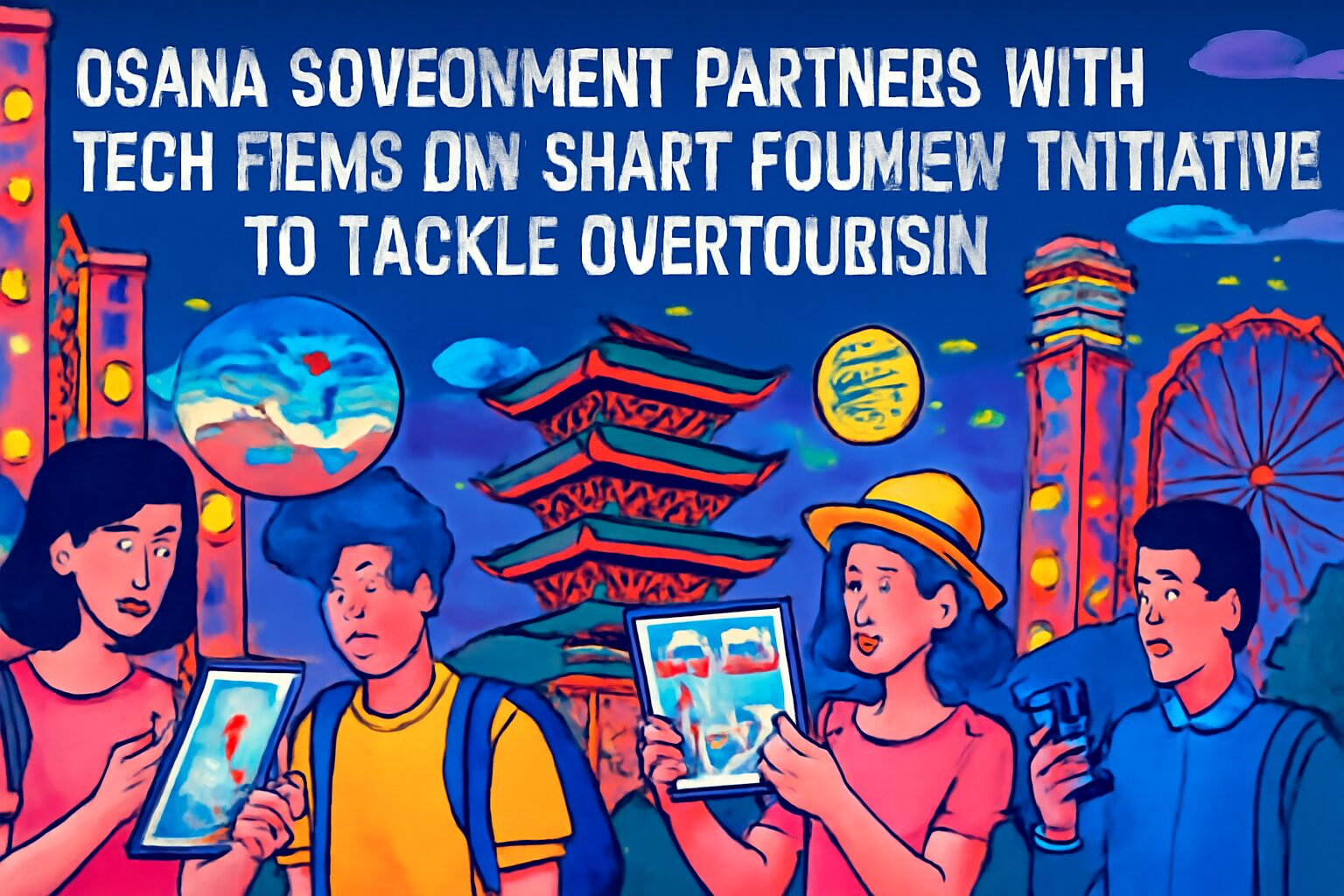
The Growing Challenge of Congestion in the Post-Expo Era
Following the massive influx of visitors during last year’s Expo 2025, Osaka continues to experience an unprecedented tourism boom. In 2024, the city welcomed over 14.58 million international visitors, and numbers climbed even higher throughout 2025. Now in mid-2026, the momentum shows no signs of slowing down. Nationwide, inbound tourist numbers hit an estimated 3.61 million in March 2026 alone, representing a 3.5% increase compared to the same month in 2025.
While this brings substantial revenue to the Kansai region, it has severely strained popular spots like Dotonbori and Osaka Castle. Overtourism has become a pressing issue, causing heavy pedestrian traffic, long wait times, and concerns among local residents. To combat this, the Osaka Prefectural Government has officially unveiled a strategic partnership with leading technology companies to launch a highly anticipated ‘Smart Tourism’ platform.
How AI and IoT are Reshaping the Visitor Experience
The new initiative marks a shift from passive observation to active, data-driven destination management. By leveraging the Internet of Things (IoT) sensors and advanced Artificial Intelligence (AI), the platform analyzes tourist foot traffic across the city in real time.
Visitors will have access to a dedicated application that processes this live data. When major tourist hubs approach maximum capacity, the app immediately alerts users and provides tailored recommendations for alternative attractions and optimal travel times. Instead of waiting in long lines at Osaka Castle, a traveler might be guided to a quieter historical shrine or a hidden culinary street in a neighboring ward.
This smart system ensures that tourists can maximize their time and avoid the frustration of overcrowded venues, offering a smoother, highly personalized travel experience.
Predicted Impact: Spreading Economic Benefits and Preserving Culture
The implementation of this Smart Tourism initiative is expected to have profound positive effects on both the local economy and the daily lives of residents.
By dispersing the flow of tourists more evenly across the prefecture, Osaka aims to bring vital economic benefits to less-explored neighborhoods. Local businesses, cafes, and shops in areas that previously saw little tourist traffic are projected to see a noticeable increase in revenue. This balanced distribution will help sustain traditional crafts and local commerce outside the major commercial districts.
Furthermore, this strategy is crucial for the future of sustainable tourism in the Kansai region. Easing the congestion in central hubs will alleviate the burden on public transportation and infrastructure, greatly improving the quality of life for locals. As the system matures, we can expect a harmonious coexistence between inbound travelers and the communities that host them.
A Sustainable Future for Travel in Kansai
As we move deeper into 2026, technology is proving to be the key to managing modern travel demands. For those planning a trip to Osaka, this new platform means less stress and more opportunities to discover the authentic, lesser-known charms of the city. Osaka’s forward-thinking approach serves as a model for other destinations facing similar overtourism challenges, ensuring that the region remains a welcoming and vibrant destination for years to come.