
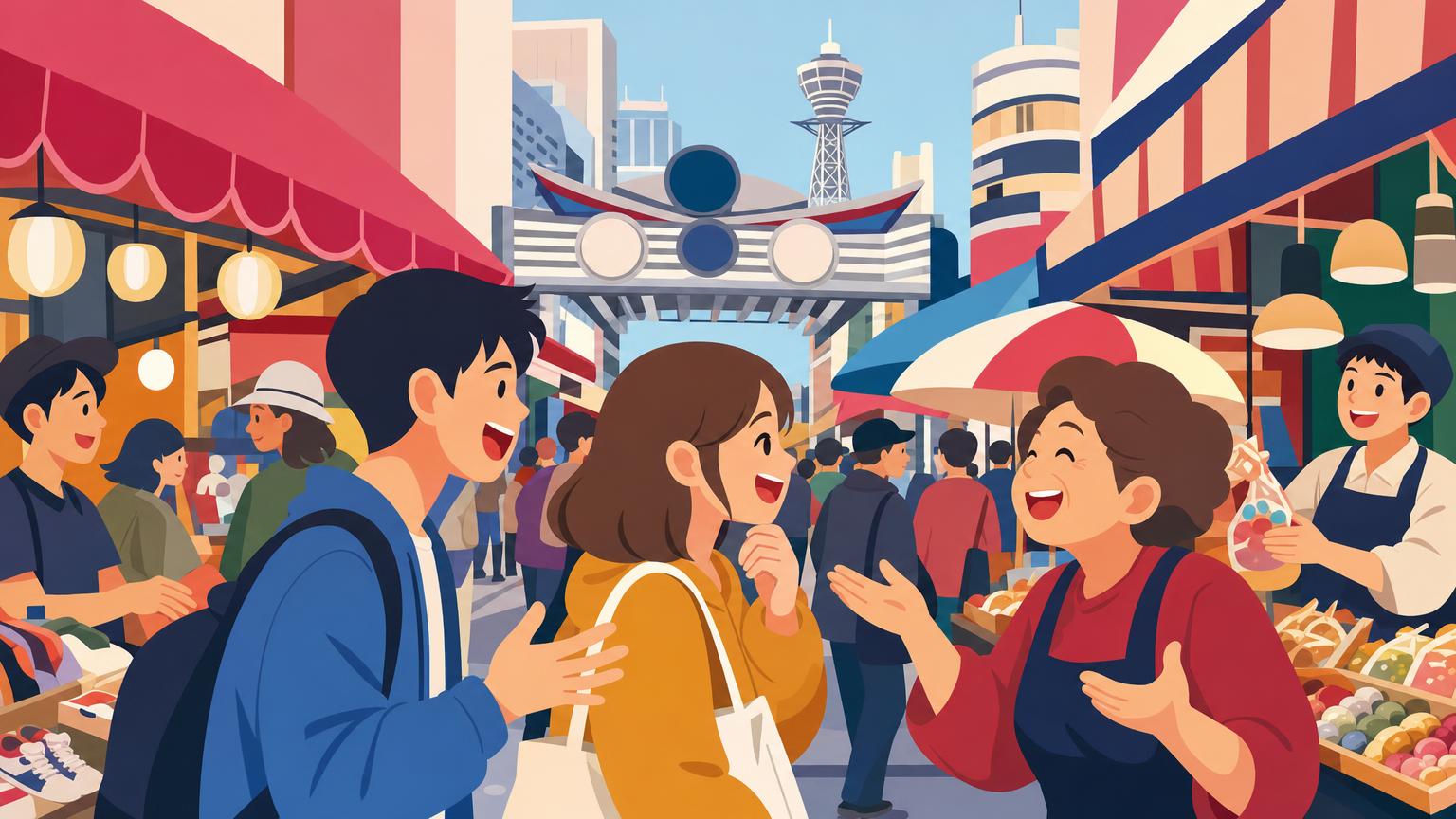
You hear the rustle before you see the candy. It happens on the mid-morning subway rattling along the Midosuji Line. It happens while you stand in line at the local ward office waiting to register your new address. It happens when you pause to catch your breath on the steep, cedar-lined slopes of Mount Kongo on a humid Sunday afternoon. You are minding your own business, lost in your thoughts, perhaps wondering how to navigate the complexities of life in Japan as a foreign resident. Then, a hand enters your peripheral vision. The hand belongs to an older woman. Between her thumb and forefinger is a brightly colored, individually wrapped piece of hard candy. She thrusts it toward you. She does not ask if you want it. She merely offers it with a sharp, rhythmic nod and a few rapid-fire syllables of the local dialect. You freeze. In the city you left behind, taking candy from strangers is the punchline of a childhood warning. In Osaka, refusing it is a minor social transgression. Welcome to the ame-chan culture.
If you are planning to live in Osaka, or if you already live here and find yourself baffled by the daily interactions that seem to break every stereotype of Japanese reserve, you have to understand the candy. This is not a quaint tourist attraction. This is not a highlighted feature in a glossy travel magazine telling you where to eat the best takoyaki or how to navigate the neon labyrinth of Dotonbori. This is the raw, unfiltered social currency of the city. The ame-chan is a microscopic lens through which you can view the entire psychological framework of Osaka. It reveals how the people here think, how they speak, how they bridge the gap between strangers, and how this city operates on a frequency entirely distinct from the quiet, bureaucratic hum of Tokyo. We are going to decode this interaction. We are going to break down the language, the history, the psychology, and the unspoken rules of this everyday exchange. By the time you finish reading, you will not just know how to accept a piece of candy. You will understand the heartbeat of the people who hand it to you.
What is the Ame-Chan Culture in Osaka?
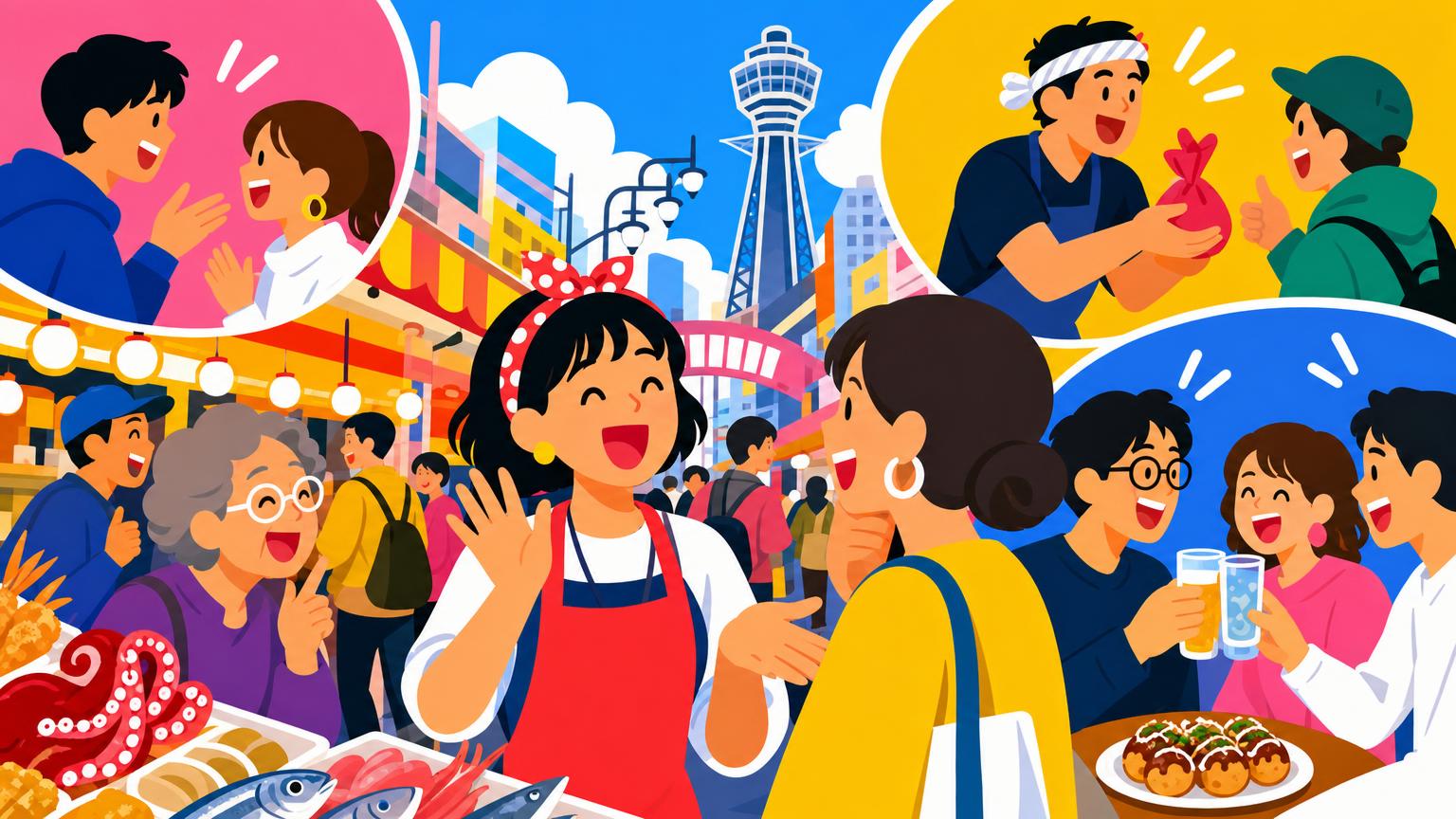
To grasp the culture, you first need to understand the vocabulary. The standard Japanese term for candy is ame, a simple, two-syllable noun. If you visit a supermarket in Tokyo and ask a clerk where the candy is, you would ask for the ame. However, in the Kansai region, particularly in Osaka, the word seldom stands alone. It is almost always accompanied by the honorific, affectionate suffix chan, becoming ame-chan. This linguistic peculiarity forms the foundational building block of the entire social phenomenon. You cannot separate the object from the way the locals talk about it.
The Linguistic Quirks of Kansai Japanese
Kansai dialect, or Kansai-ben, is a rhythmic, melodic, and highly expressive form of Japanese. While standard Japanese often emphasizes precision, neutrality, and polite distance, Kansai-ben embraces emotional resonance, humor, and intimacy. One of the most intriguing features of this regional dialect is its tendency to personify inanimate objects and food items. The suffix chan is traditionally used for babies, young children, close female friends, or beloved pets. It serves as a marker of endearment, reducing the emotional distance between the speaker and the subject.
In Osaka, this affection extends to the dining table and pantry. A sweet potato is not merely imo; it becomes o-imo-san. Tea is not simply cha; it turns into o-cha-han. And candy is ame-chan. By adding this suffix to a piece of boiled sugar, the speaker fundamentally changes the object’s nature. It stops being just a consumer good and becomes a small, friendly companion. When an Osaka local offers you an ame-chan, they are not just handing over calories; they are sharing a little piece of joy, a tiny friend wrapped in cellophane. This linguistic framing shapes the social interaction, softening the exchange and making the act of giving a stranger food feel playful and warm rather than intrusive or suspicious.
Why Do People in Kansai Add Chan to Candy?
The origins of this linguistic habit are widely debated among sociolinguists, but the prevailing theory links it to the historical role of women in Kansai households and the old merchant classes. The language of the imperial court in nearby Kyoto heavily influenced the surrounding areas, including Osaka. Court women developed a specific lexicon, adding soft prefixes and suffixes to words to make their speech sound more refined, gentle, and polite. Over time, this refined court language trickled down into Osaka’s merchant classes, where it was adopted, adapted, and eventually democratized.
In the commerce-driven streets of Osaka, the polite prefixes blended with the casual, familiar chan to create a uniquely local flavor. Candy, once a rare and precious treat made from costly sugar, was cherished. Even as mass production made candy cheap and widespread after the war, the linguistic habit remained. The ame-chan became a symbol of small, accessible luxury. This language reflects a deep cultural appreciation for the little joys that make daily life sweeter. It acts as a linguistic hug, a verbal pat on the back, and a warm introduction to those who use it.
Meet the Osaka Obachan: The Heart of the Culture
You cannot talk about ame-chan without mentioning its main distributors: the Osaka Obachan. While the word obachan literally means middle-aged or elderly woman, in Osaka it signifies much more than an age group. It represents a unique cultural identity, a powerful social presence, and a figure who commands both deep respect and affectionate humor throughout Japan. These women are the matriarchs of the urban environment, the self-appointed guardians of their neighborhoods, and the undisputed rulers of the candy distribution network.
The Unmistakable Fashion and Presence
If you’re new to the city, you’ll quickly learn to recognize them. The typical Osaka Obachan has a distinctive look and sound. Their fashion is bold and unapologetic. Animal prints—leopard, zebra, tiger—aren’t mere accents but the main colors of their attire. Their hair is often tightly permed and sometimes dyed in striking shades of purple or mahogany. They get around on heavy, durable bicycles called mamachari, usually fitted with large front baskets covered by specialized rain nets to protect their groceries.
Yet the defining trait of the Osaka Obachan is her presence. She claims space. In a society where shrinking oneself, avoiding noise, and blending into the background are common norms, the Osaka Obachan stands out unapologetically. She speaks loudly on the train. She laughs heartily. She’ll tap you on the shoulder to warn that your backpack is unzipped. She’ll scold a teenager for not giving up a seat to a pregnant woman. She carries an unwavering, supreme confidence in her right to exist and engage with the world around her. She sees the whole city as an extended living room and every person as a distant relative in need of a little care.
Candy as the Ultimate Icebreaker
For the Osaka Obachan, ame-chan serves multiple purposes. It is a social Swiss Army Knife. Her handbag functions as a mobile dispensary, stocked with an impressive variety of hard candies. Why so much candy? Practically, it’s said to help with low blood sugar, soothe dry throats, or provide a quick distraction during long bus rides. But socially, the candy plays a far more intricate role—it breaks the ice.
Picture this: two Obachans who have never met are seated next to each other on a bench, waiting for a delayed train. In Tokyo, they’d likely stare at their phones and ignore each other. In Osaka, one will reach into her bag, pull out two candies, hand one to the stranger, and say, “Here, have an ame-chan.” The candy instantly dissolves the invisible barrier of urban anonymity. It acts as a low-stakes peace offering. Once accepted, conversation naturally follows. They’ll grumble about the humidity, discuss the rising price of daikon radishes, or complain about knee aches. The candy is the key that opens the door to human connection. For a foreigner living in Osaka, grasping this dynamic is essential. When she offers you that candy, she’s not merely giving you a sweet treat. She’s welcoming you into her living room and telling you that, for the next five minutes, you belong to her community.
The Historical Roots of Osaka’s Friendly Nature
To fully understand why the ame-chan culture flourishes here and nowhere else in Japan, you need to look back in time. You must peel away the modern layers of neon signs, elevated expressways, and concrete apartment blocks to uncover the city’s historical foundation. Osaka’s distinctive social dynamics are not simply a matter of geography; they are the outcome of centuries of economic and social development. At its essence, Osaka is a merchant city.
A Merchant City Fueled by Trade
During the Edo period, from the early seventeenth century to the mid-nineteenth century, Japan was bound by a strict feudal system. At the top of the social order were the samurai, the warrior class. Beneath them were the farmers, artisans, and at the very bottom, the merchants. Tokyo, then called Edo, was the Shogun’s seat of power—a city of samurai, bureaucrats, and rigid social codes. It was a place where stepping out of line, speaking out of turn, or displaying too much emotion could lead to harsh punishment. Edo was characterized by hierarchy, silence, and stoicism.
Osaka, however, lay hundreds of miles to the west, away from the direct, oppressive oversight of the Shogunate. It was Japan’s commercial hub, famously known as the Tenka no Daidokoro, the Kitchen of the Nation. Rice, the era’s primary currency, flowed from all parts of the country into the vast storehouses along Osaka’s rivers. Here, merchants were in control. While samurai held nominal political power, the merchants controlled the purse strings. And merchant culture followed a fundamentally different set of rules than warrior culture.
Merchant Culture and Open Communication
In a merchant society, silence harms business. You can’t sell rice, silk, or sake by staring blankly at a customer. You must talk. Negotiate. Read the room, crack a joke, flatter the buyer, and build immediate, functional trust. Time is money, and trust is the currency of trade. The people of historic Osaka developed a social language based on rapid-fire communication, humor, and leveling the playing field. When haggling over the price of a bolt of fabric, titles and hierarchies mattered less than the final deal.
This historical need fostered a culture of pragmatic efficiency and friendly assertiveness. Fast forward several centuries, and this merchant DNA still runs through modern Osaka. The threshold for starting a conversation is remarkably low. People want to connect because connection was historically essential for survival and prosperity in this city. The modern ame-chan exchange is a direct descendant of the merchant’s opening move. It is a quick, efficient, and universally understood way to establish goodwill. When an Osaka resident offers you candy, they are engaging in a social practice honed over four hundred years of buying, selling, and thriving together.
Contrasting Osaka and Tokyo Through Social Friction
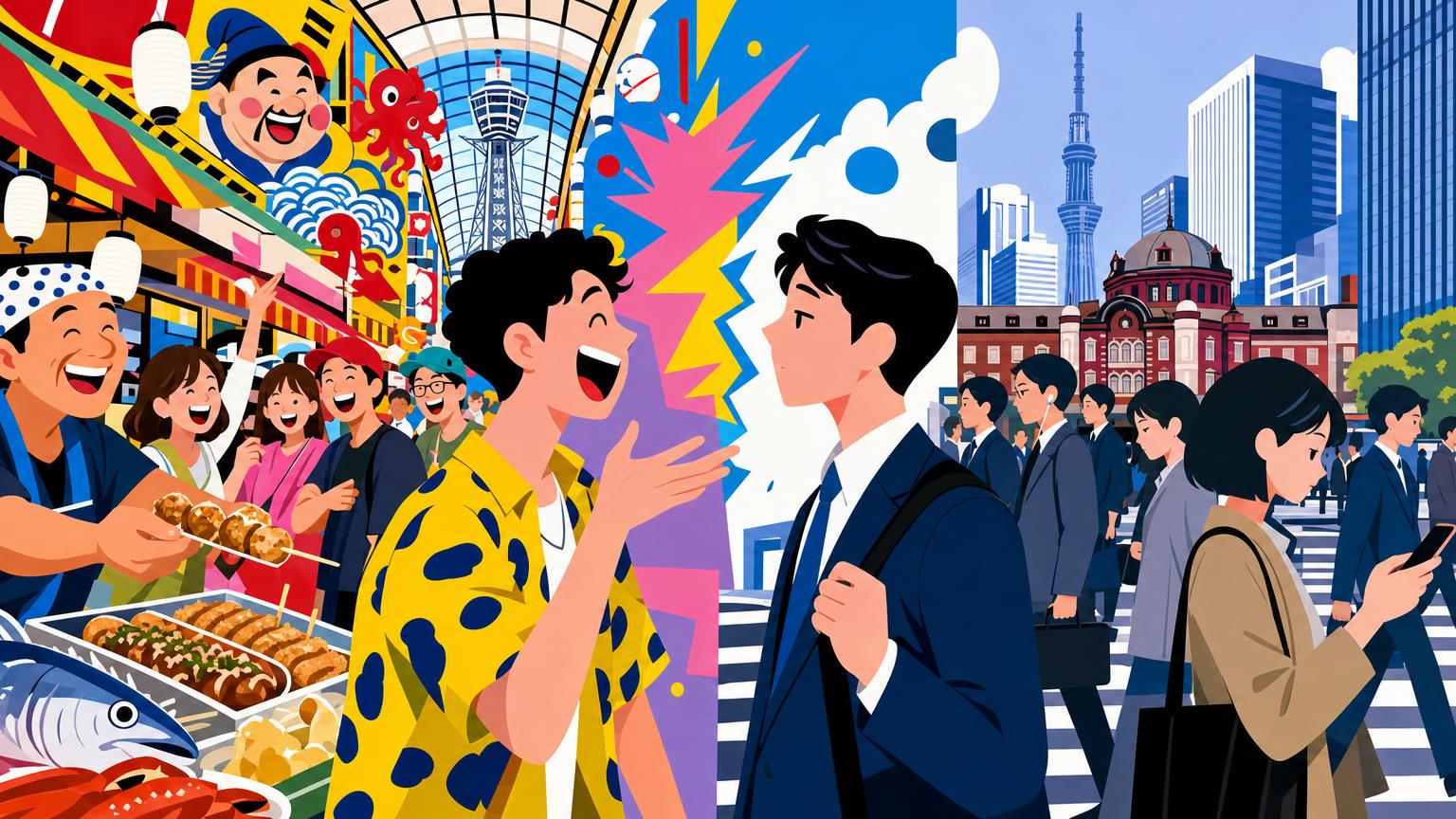
One common mistake foreigners make when moving to Japan is assuming the country is culturally uniform. The image of Japan presented to the outside world is heavily centered on Tokyo’s culture. Many arrive expecting a nation of quiet, reserved, extremely polite people who bow deeply and respect personal space at all times. If you move to Tokyo, this is largely what you will encounter. However, if you move to Osaka, that expectation will be shattered within your first forty-eight hours.
The Silence of the East Versus the Chatter of the West
Living in Tokyo feels like being part of a precisely calibrated, carefully maintained machine. Social friction is minimized as much as possible. People walk on a designated side of the street. Train cars are silent, except for automated announcements. If you drop your wallet, someone might pick it up, hand it to you with a slight bow, and leave before you can properly thank them. The prevailing attitude is one of meiwaku—the mindset of not causing trouble or being a nuisance to others dominates public behavior. Speaking to a stranger on a Tokyo train is considered an imposition, an act of social friction.
In contrast, Osaka thrives on friction. It’s a lively, noisy, and tactile city. While the concept of meiwaku remains, it is often outweighed by a desire for human interaction. In Osaka, silence can feel more uncomfortable than intrusion. If you’re standing in a long line at a supermarket in Tokyo, the shared discomfort is endured in complete silence. But in Osaka, the person behind you might loudly sigh, catch your eye, and complain about the lack of open registers—and then offer you an ame-chan to make the wait more pleasant.
Breaking the Ice Without Breaking Boundaries
This difference in social friction can be startling for new foreign residents. You might mistake Osaka’s outgoing friendliness for an invasion of privacy. A stranger’s comment about the weather or questions about your shoes might feel intrusive. However, it’s important to rethink your concept of personal boundaries. In Osaka, boundaries are not rigid walls but permeable membranes.
The culture of ame-chan perfectly illustrates this. It’s a way to break the ice without demanding a heavy commitment. The candy is small, inexpensive, and carries no burdensome obligation. In Japanese culture, receiving a gift often triggers a cycle of reciprocity called okaeshi. If someone gives you an expensive box of cookies, you are expected to reciprocate with a gift of equal value, which can cause social anxiety. But an ame-chan sidesteps this rule. Its low monetary value means it requires no formal reciprocation. It’s socially frictionless friction, allowing Osaka residents to fulfill their deep need for human connection without ensnaring anyone in a web of obligation. Its brilliance lies in its simplicity.
Everyday Scenarios Where Ame-Chan Appears
If you want to blend into the daily rhythm of life in Osaka, you need to know where and when to expect the candy. It doesn’t happen everywhere, nor every day. However, there are certain places and situations where the chances of an ame-chan encounter soar. Being aware of these moments will help you prepare mentally and respond appropriately.
Supermarket Checkouts and Train Rides
The most common spot for candy exchanges is wherever people are forced to wait closely together. Local supermarkets are prime locations. Supermarkets in Osaka, especially the older, independently run ones nestled in the sprawling, covered shopping arcades called shotengai, serve as bustling hubs of neighborhood chatter. As you stand by the bagging counter, struggling to fit a giant daikon radish into your reusable bag, an Obachan nearby might notice your struggle. She won’t offer to help pack, but she will offer a piece of candy as a gesture of solidarity against domestic chores.
Commuter trains are another frequent setting. Not during the crushing, suffocating rush hour, where survival is the priority, but during the quieter mid-morning or mid-afternoon periods. When the train is half empty, and sunlight streams through the windows, the atmosphere relaxes. If you give up your seat to an older woman, don’t be surprised if she reaches into her bag before even sitting down. The candy is her immediate, tangible way of expressing gratitude. It’s a transaction: you gave her a seat; she gives you sugar. The balance is maintained.
Hiking Trails and Outdoor Encounters
As someone who spends a lot of time outdoors, I’ve found that the ame-chan culture goes well beyond the city’s concrete borders. In fact, the farther you get from the urban center, the stronger this culture becomes. The mountains surrounding Osaka, like Mount Kongo, Mount Ikoma, and the extensive Diamond Trail, are hotspots for candy distribution.
Hiking in the Kansai region is a major social activity for the older generation. On any weekend, the trails are filled with retirees decked out in high-end, brightly colored outdoor gear. The physical effort of climbing a mountain dissolves whatever social reserve remains. When you reach a rest area on Mount Kongo, breathing heavily and sweating, the communal spirit takes over. Benches are shared. Thermoses of hot green tea are passed around. And bags of candy are opened.
For a foreign hiker, this experience is often both confusing and delightful. Miles from civilization, sitting on a log, a stranger suddenly tosses a handful of wrapped candies into your lap. Here, the candy serves two purposes: it’s a social icebreaker and a practical provision. It provides a quick glucose boost to maintain your energy for the descent—an act of genuine care for a fellow traveler on the trail.
How to React When Offered Ame-Chan in Japan
So, the moment arrives. The hand extends. The candy is offered. The words are spoken. How do you respond? For a foreigner, the instinctive reaction is often a mix of confusion, hesitation, and ingrained stranger danger. You might raise your hands, shake your head, and politely decline in broken Japanese. You might believe you are doing the right thing, following the presumed Japanese rules of politeness and avoiding being a burden. You are mistaken. You must accept the candy.
Overcoming the Stranger Danger Reflex
The first step is internal. You need to silence the voice in your head that warns you strangers offering candy are a threat. In the context of the Osaka Obachan, that candy is as safe as a bank vault. The hesitation—the awkward pause where you look at the candy and then at her face—is the only real social mistake you can make. The interaction is meant to be quick. It is a passing of the baton. If you hesitate, you drop the baton.
When the candy is offered, accept it immediately. Hold your hand out flat. Do not snatch it, but take it smoothly. Make eye contact. In many parts of Japan, prolonged eye contact can be seen as aggressive or confrontational. In Osaka, during this particular exchange, a brief, warm glance is entirely appropriate. It acknowledges the human connection the candy symbolizes. Smile. A deep bow is unnecessary. A slight nod of the head is perfectly enough.
Essential Etiquette and Phrases for Travelers
The verbal response is as important as the physical acceptance. If you only know a few words of Japanese, a simple Arigatou gozaimasu (Thank you very much) works just fine. But if you want to truly honor the interaction and earn a radiant smile from the local who offered it, you should use the local dialect.
The ultimate magic word in Osaka is Ookini. It is the Kansai equivalent of thank you. It is a soft, rolling word that immediately marks you as someone who is attentive to the local culture. When the candy lands in your palm, look up, smile, and say, ‘Ookini.’ The response will be instant. The Obachan’s eyes will light up. She might laugh. She might compliment your Japanese. By using her language, you validate her culture.
Another highly useful phrase is Itadakimasu. This is the standard Japanese expression said before eating a meal, roughly meaning “I humbly receive.” Even if you do not plan to eat the candy right away, saying Itadakimasu as you put it in your pocket shows that you acknowledge the candy as a gift of food. It demonstrates a high level of cultural awareness.
What if you truly cannot eat the candy? What if you are diabetic or simply dislike the flavor? You still accept it. The candy is not about consumption; it is about connection. Take it, say thank you, put it in your pocket, and offer it to someone else later. Refusing the candy is tantamount to rejecting the person. It is a refusal of their goodwill. In Osaka, it is always better to accept grace with grace, even if you end up with a pocket full of melted sugar by the day’s end.
Classic Japanese Candies You Might Receive
Not all candies hold equal status in the realm of the Osaka Obachan. There exists a hierarchy, a traditional canon of hard candies that dominate the local distribution channels. When you receive an ame-chan, taking a moment to examine the wrapper reveals much about the tastes and nostalgia of the giver. These are not elegant, artisanal chocolates but rather inexpensive, mass-produced, and deeply nostalgic treats.
The Iconic Pine Ame Experience
If any candy holds the highest regard in Osaka, it is the Pine Ame. Made by Pine Co., Ltd., based in Osaka, this candy is a local icon. Its bright yellow wrapper often features a retro pineapple illustration. The candy itself is a bright yellow ring, shaped like a slice of canned pineapple, complete with a hole in the center.
The history of Pine Ame is closely connected to Japan’s post-war reconstruction. In the late 1940s and early 1950s, fresh pineapples were a rare and costly luxury. The company founders aimed to create a candy that could offer the exotic, sweet-tart flavor of pineapple to the masses at an affordable price. The hole in the center was originally handmade to mimic the appearance of real pineapple. Today, this process is automated, but the flavor remains the same. When an Obachan offers you a Pine Ame, she is sharing a piece of Showa-era nostalgia—a taste that evokes childhood memories, summer festivals, and the hopeful rebuilding of a city.
The Nostalgic Taste of Ogon-to
Another common favorite in the ame-chan world is Ogon-to, the Golden Candy. Its wrapper is shiny, metallic gold, resembling a tiny bullion bar. The candy is a simple, unadorned cylinder of hard, golden-brown sugar. Unlike the fruity zest of Pine Ame, Ogon-to exemplifies simplicity. It consists mainly of caramelized sugar, water, and sweet potato syrup.
During periods of sugar rationing and shortage, the rich, deep sweetness of Ogon-to was a vital source of comfort. Its flavor is slightly burnt, intensely sweet, and soothing to the throat. Often carried by older people because it is believed to ease dry coughs or scratchy voices, Ogon-to serves as the practical workhorse of the candy world. Unwrapping an Ogon-to means tasting the resilience of a generation that found great satisfaction in the simplest ingredients.
Fruit Drops and Matcha Sweets
Beyond the top two, the variety is vast. You might receive a Kuroame, a black sugar candy made from Okinawan brown sugar. It resembles a smooth river stone and has an intense molasses and earthy flavor. While an acquired taste for many foreigners, it is deeply cherished by the older Japanese generation.
You may be offered a Kanko-ame, a hard candy flavored with plum extract and herbal medicines to soothe the throat. It has a medicinal quality with a sharp blend of sour, sweet, and menthol notes. Or you might simply enjoy a classic fruit drop from a tin of Sakuma Drops, dusted with powdered sugar to prevent sticking in the summer heat. Whatever the flavor, the rule stays the same: the wrapper goes in your pocket to be discarded later, and the moment is saved in your memory bank.
The Psychological Weight of a Simple Hard Candy
It is easy to dismiss the ame-chan culture as a quirky regional peculiarity. It is often parodied on Japanese television variety shows, with comedians donning leopard print and tossing handfuls of candy to the audience. However, as a foreign resident trying to establish a life in this city, you need to look beyond the caricature. You must grasp the psychological significance of this seemingly trivial exchange.
Building Community One Piece at a Time
Urban loneliness is a huge problem in modern Japan. Cities are vast, densely populated, yet profoundly isolating. Traditional family structures are eroding, and more elderly people live alone than ever before. In a society that highly values self-reliance and strongly discourages bothering others, the hurdles to seeking simple human connection can be incredibly high.
The ame-chan serves as a loophole in this web of isolation. It is a socially acceptable way to initiate contact. When the Obachan on the train hands you a candy, she is not just offering a treat; she is affirming her own existence, and yours. She is quietly insisting, in the gentlest way, to be acknowledged. She is weaving a small, temporary thread of community in an otherwise sterile subway car. For the few minutes it takes for the candy to dissolve in your mouth, you are connected by a shared moment.
For a foreigner, this is deeply meaningful. Living in Japan as a non-Japanese person can be an isolating experience. You are often treated with polite yet impenetrable distance. You are the guest, the outsider, the perpetual other. People may be kind, but rarely casual. The ame-chan exchange breaks through that barrier. The Obachan doesn’t care where you’re from, what your visa status is, or how poorly you conjugate Japanese verbs. She sees a fellow human nearby and follows Osaka’s standard procedure for human proximity: she offers you sugar. It is an act of radical, straightforward inclusion.
What Foreigners Misunderstand About Osaka
This leads to the most common misunderstanding foreigners have about Osaka. If you read travel blogs or speak to expats living in Tokyo, they will say Osaka people are friendly. But “friendly” is too weak and inaccurate a term. A golden retriever is friendly. A hotel concierge is friendly. Osaka people are not merely friendly; they are aggressively communal. They approach human relationships with deep, relentless pragmatism.
Foreigners often misinterpret this communal assertiveness as boundary-crossing or lack of sophistication. They confuse the loud volume and casual interactions for rudeness. This is a serious misreading of the culture. The manners in Osaka are just as intricate and subtle as those in Kyoto or Tokyo; they are simply based on a different foundational principle. In Tokyo, the highest form of respect is to leave someone alone. In Osaka, the highest form of respect is to acknowledge them, engage with them, and share what you have with them—even if it is just a ten-yen piece of pineapple-flavored sugar.
Integrating into the Local Fabric
Grasping the ame-chan culture is the initial step. Engaging in it is the key move. If you genuinely want to shift from a puzzled expat to a functional local, you need to invert the dynamic. You must carry the candy.
It may sound odd, but it works. Visit your local supermarket. Walk past the imported chocolates and pricey matcha biscuits. Locate the aisle with bags of individually wrapped hard candies. Purchase a bag of Pine Ame or a mixed selection of fruit drops. Place five or six pieces in your bag or coat pocket before leaving the house.
The next time you’re hiking on Mount Kongo and an older hiker stops to give you directions, reach into your pocket, offer a candy, and say, “Ookini, ame-chan dozo” (Thank you, please have a candy). The surprise on their face will be worth far more than the cost of the bag. You’ll have just communicated with them in the deepest, most genuine language of their city. You’re no longer just a foreigner passing through. You’re someone who understands the unwritten rules. You’re someone who adds to the social exchange. You’re, in the smallest and sweetest way possible, becoming part of Osaka.
Life in this city is loud, messy, and deeply human. It can be tiring and overwhelming. But it is never cold. It’s a city that refuses to let you remain anonymous. It demands your involvement. And it smooths that participation with an ongoing, low-level supply of boiled sugar. So keep your eyes open, keep your hands free, and always, always be ready to say Ookini. The next candy is already on its way.








