
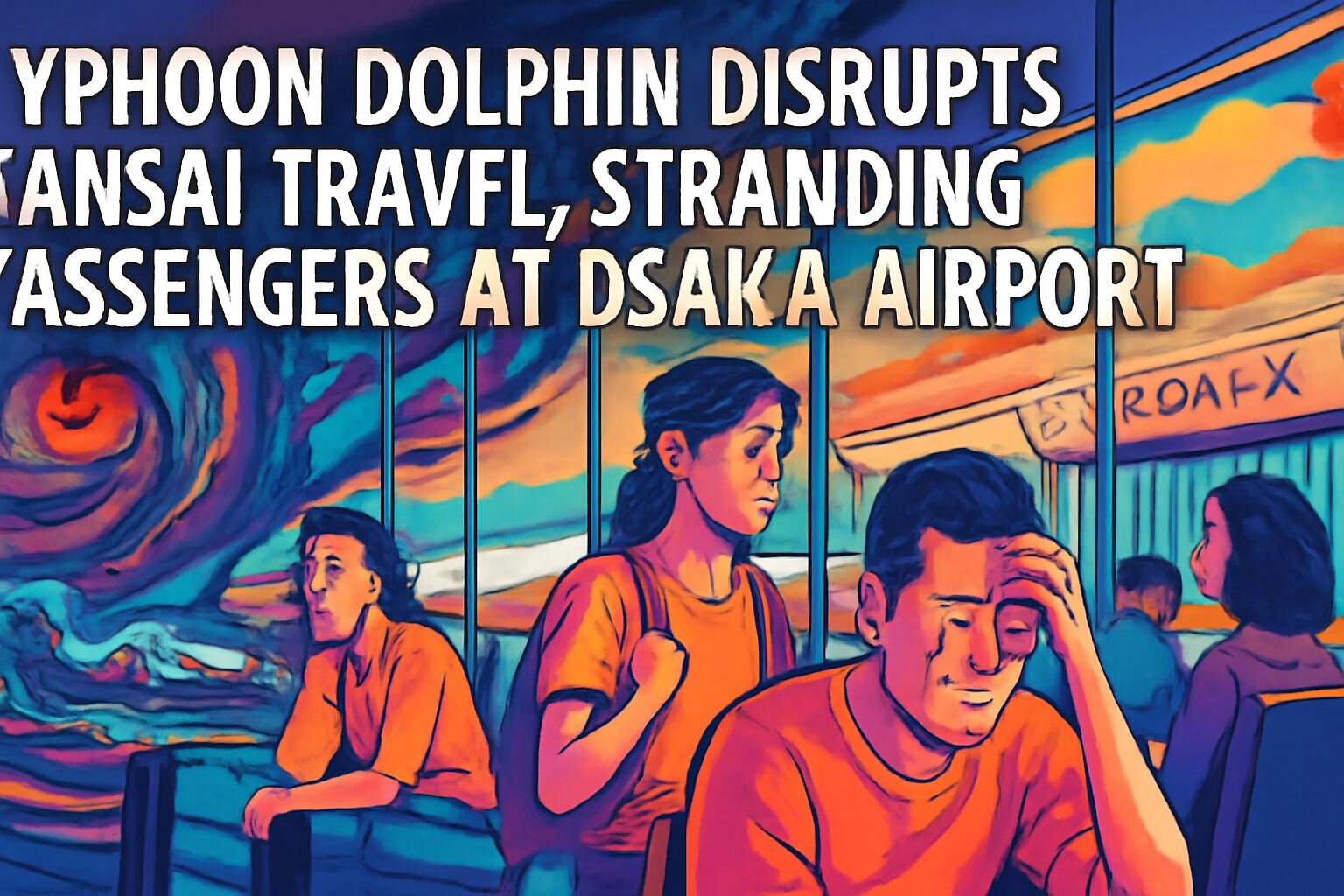
Widespread Flight Cancellations at Kansai International Airport
A powerful storm, Typhoon Dolphin, has caused significant travel chaos across the Kansai region this week. Severe winds and torrential rain forced major airlines to cancel hundreds of flights, heavily impacting operations at Kansai International Airport (KIX). Current estimates indicate that widespread cancellations have affected approximately 90,000 passengers across western Japan and wider regions, with more than 500 flights grounded recently as the typhoon swept through. The disruptions have left many international and domestic travelers stranded at the airport, facing exhausting waits ranging from 24 to 72 hours for rebooking.
Compounding the Obon Holiday Rush
The timing of Typhoon Dolphin could not have been worse for travelers. Striking in early-to-mid August 2026, the storm coincided directly with the beginning of the annual summer Obon holiday travel period. As thousands of locals and international tourists scrambled to reach their destinations, the abrupt suspension of flights created massive bottlenecks. Ground transportation networks, including rail services that connect Osaka to the airport, also experienced significant delays and suspensions. Airlines are currently struggling to manage the enormous backlog of passengers, as the storm has also severely impacted major air routes extending throughout Asia, including connections to China and Taiwan.
Examining Airport Resilience and Future Implications
This intense weather event highlights the ongoing vulnerability of regional travel infrastructure to extreme climate conditions. Kansai International Airport, situated on an artificial island in Osaka Bay, is historically susceptible to high storm surges and ferocious crosswinds. While significant reinforcements have been made over the years, the sheer scale of Typhoon Dolphin, which reached maximum sustained winds of 144 kph during its approach, tested the absolute limits of airport operations and airline contingency plans.
Looking ahead, experts predict that climate patterns could continue to produce highly intense tropical cyclones in the Western Pacific basin. For the tourism sector in Osaka and the broader Kansai region, this means that airlines and airport authorities will need to further enhance their crisis management protocols. Travelers planning to visit the region during the late summer typhoon season are strongly advised to secure flexible booking options and maintain comprehensive travel insurance. As recovery operations continue over the coming days, clearing the current passenger backlog at KIX remains the top priority for regional aviation authorities.








