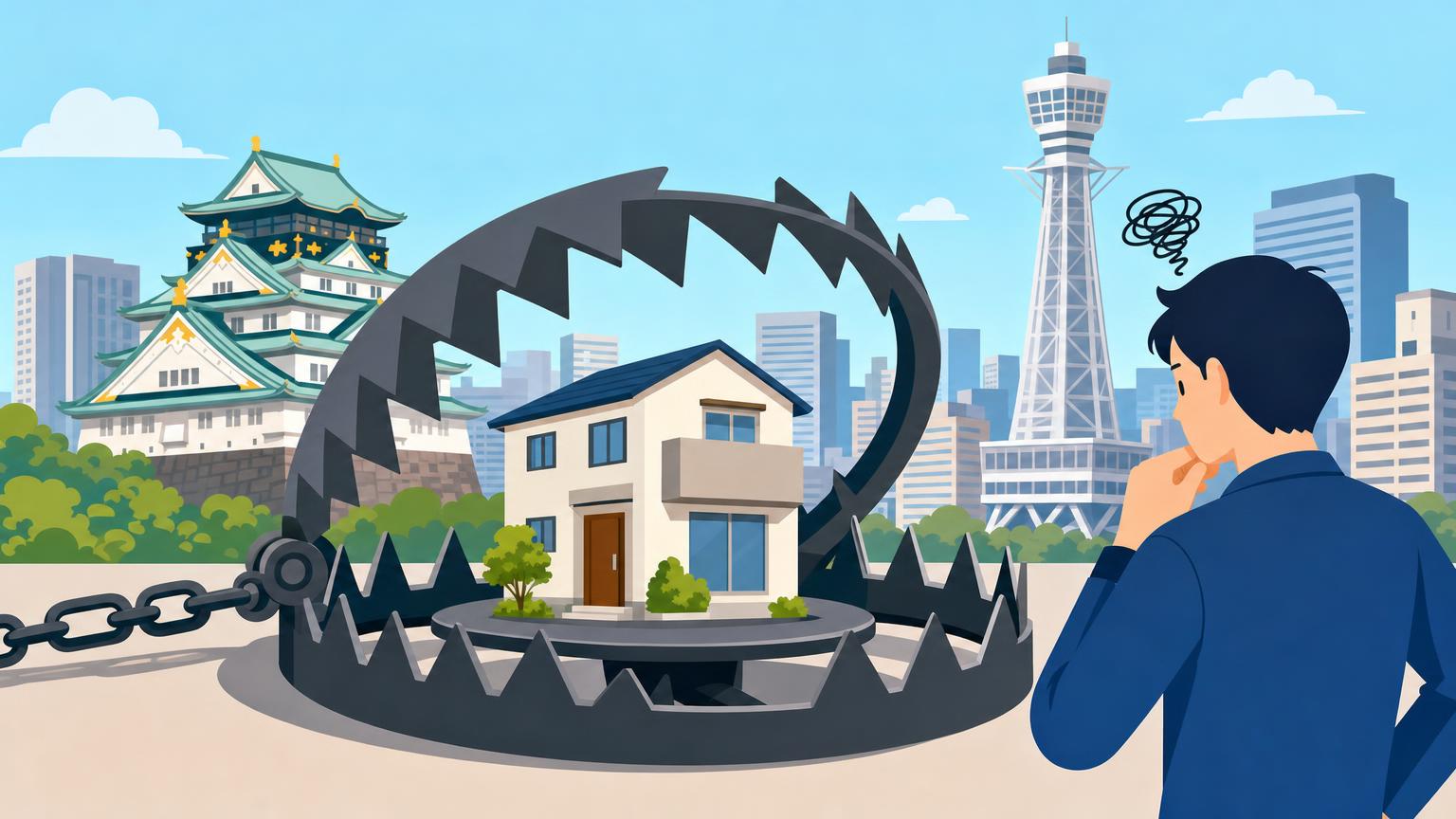
You arrive in Osaka. Your bags are heavy. The neon lights blur across the wet pavement. You just want a place to sleep. A place to call home. But the window of the real estate shop tells a different story. The numbers do not make sense. You see a sign plastered on the glass. Zero key money. Zero deposit. It looks perfect. It looks incredibly easy. Do not be fooled. A trail that looks too flat usually leads straight into a swamp.
My name is Taro. When I am not working at the information desk, I am out in the mountains. I am an outdoor specialist. I spend my weekends trail running in the Rokko Mountains or navigating the steep, rugged inclines of Mount Kongo. Out there in the wilderness, the rules are entirely straightforward. You step wrong, you fall. You read the topographic map correctly, you reach the summit. But navigating the Osaka real estate market? That is a completely different kind of wilderness. It is a dense concrete jungle where the maps are written in invisible ink, and the guides only speak in riddles.
Foreigners moving to Osaka often face a massive culture shock when they discover the sheer amount of money required just to sign a lease. You are suddenly expected to hand over thousands of dollars before you even unlock the front door. So, when you stumble upon a listing for a zero-zero bukken, meaning an apartment with zero deposit and zero key money, your heart leaps. You think you have found a loophole. You think you have beaten the system.
But Osaka is a merchant city. It is a city built on the Akindo spirit, the spirit of the trader. People here love a good bargain. They respect a tough negotiation. However, nobody gives anything away for free. If a deal looks too good to be true, someone is making their money back on the backend. Finding cheap apartments for rent in Osaka Japan is entirely possible, but you have to know exactly where to step. You have to know how to spot the hidden traps. You need the right gear, the right mindset, and a local perspective to guide you through the process.
Why Do You Need to Pay Key Money in Japan? (And How to Avoid It)
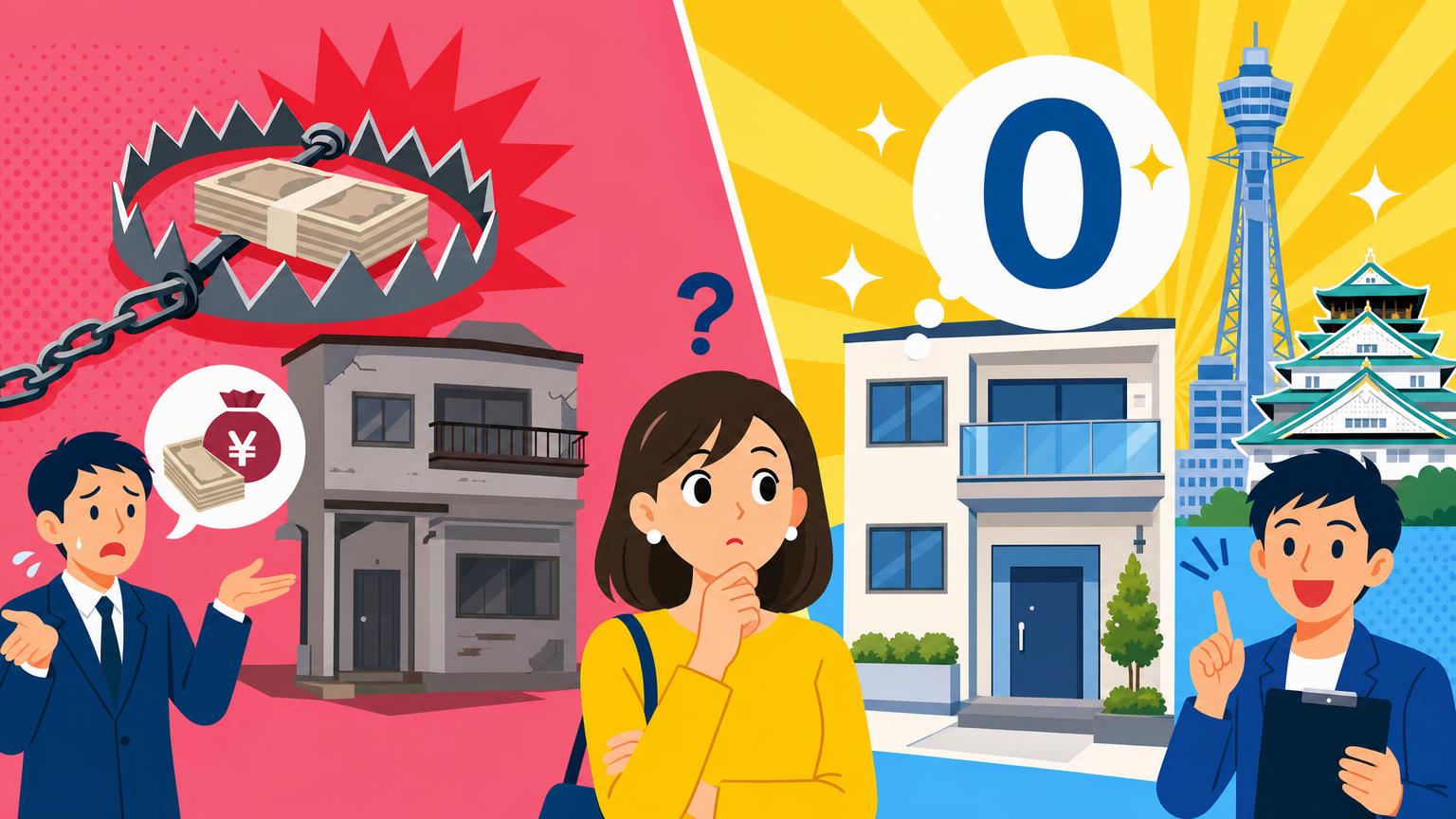
To understand the trap, you first need to grasp the system. You have to know why Japanese rentals require such high upfront fees. In Tokyo, the rules are strict: you see a fee, you pay it. But in Osaka, there is always an underlying negotiation. Osaka residents place great value on personal connections in business; they want to know who they are dealing with.
What is Key Money (Reikin)?
Key money, or Reikin in Japanese, literally means gratitude money. This idea confuses most foreigners. Why should you pay the landlord a non-refundable gift just to rent their property? After all, you’re already paying rent and a deposit.
The history of Reikin goes back to the period right after the Second World War. Housing was extremely scarce, and people were desperate for shelter. When a landlord allowed a family to move in, the family would offer a cash gift as a token of deep appreciation. It was a cultural gesture born from necessity and survival.
Fast forward to today. Japan faces an aging population and has many vacant homes. The housing shortage is over. Yet, the Reikin system remains deeply rooted in real estate culture. It is a tradition that refuses to disappear. In Osaka, you might be able to negotiate Reikin down, especially if an apartment has been empty for months. Landlords there are practical; they prefer a paying tenant to an empty, dusty room. But if you push too hard without understanding the cultural nuances, your application will likely be rejected. They want a tenant who respects the harmony of the building.
Beware of Hidden Costs in Zero Key Money Apartments
This leads us back to the zero-zero bukken—the zero deposit, zero key money apartments. If the landlord waives both the gratitude money and the security deposit, how do they protect their investment?
The answer lies in a barrage of hidden fees. When you sit at the agency office near Umeda station, sipping complimentary green tea, they will hand you the final cost breakdown. You’ll gaze at the paper, seeing charges you never anticipated.
First, there’s the mandatory cleaning fee. Instead of deducting this from a deposit when you leave, you must pay an exorbitant cleaning fee upfront. Then, the lock exchange fee. While it’s reasonable to want a new lock, the property management company charges triple the market rate for a basic cylinder swap.
Next, the guarantor company fee. Previously, you could rely on a Japanese friend or employer as a guarantor. Now, nearly all apartments require using a professional guarantor company, which can cost between fifty and one hundred percent of a month’s rent.
Then there’s the agency fee, or Chukai Tesuryo—the fee for the real estate agent who showed you the property. By law, this can be up to one month’s rent. Add mandatory fire insurance and a pointless 24-hour emergency support subscription you’re forced to purchase.
Suddenly, your zero-zero apartment demands three thousand dollars in upfront costs. It was a trap—an inviting path that looked easy but was littered with hidden roots ready to trip you up.
The Best Ways to Find Zero Key Money Apartments in Osaka
You don’t have to fall into the trap. There are legitimate routes through this wilderness. Whether you’re a digital nomad staying for a few months, a working holiday maker, or a long-term expat, you have tailored options that completely bypass the traditional, costly system.
Furnished Monthly Apartments (Best for Short to Mid-Term)
If you’re searching for a furnished apartment, Osaka has plenty to offer. For anyone staying between one month and one year, this is often the most practical choice.
Traditional Japanese apartments come entirely unfurnished. I mean completely empty. No refrigerator. No washing machine. No curtains. Sometimes, not even ceiling lights are installed. You must purchase every single fixture yourself. If you’re only staying in Osaka for six months, buying a refrigerator and washing machine is a huge waste of money and an enormous hassle when it’s time to dispose of them. Japan enforces strict, costly regulations for discarding large appliances.
Furnished monthly apartments avoid all of this. Companies offering these units usually cater to business travelers and mid-term expats. While you pay a slightly higher monthly rent, you pay absolutely no key money, no agency fees, and no deposit. Utilities are often included in the rent or charged at a flat daily rate. You simply arrive with your suitcase, drop your bags, and head out to enjoy some Takoyaki. It’s the most stress-free way to begin your life in Osaka.
Share Houses (Best for Budget and Community)
If you’re on a tight budget and want to immerse yourself in the culture, a share house is an excellent choice. The atmosphere in an Osaka share house is fundamentally different from one in Tokyo. Tokyo share houses can sometimes be quiet, isolated places where residents politely ignore each other in the kitchen.
Osaka share houses, on the other hand, are lively. They’re vibrant. They’re messy. Osaka people are naturally curious and very social. They’ll ask you where you’re from, what you’re eating, and why you’re paying so much for your groceries.
Renting a room in a share house usually requires a small, flat-rate deposit that is mostly refundable. There’s no key money. No guarantor is necessary. Your room comes fully furnished with a bed, desk, and climate control unit. You share the kitchen, bathrooms, and lounge areas. This not only reduces your initial moving costs to a fraction of a standard apartment but also provides you with an instant social network. In a lively city like Osaka, having local roommates to show you the best cheap izakayas in Tenma is an invaluable perk.
UR Housing (Best for Long-Term, No Key Money or Guarantor)
Now, let me share the ultimate secret for anyone seeking a long-term rental apartment in Osaka: UR Housing. UR stands for Urban Renaissance Agency. This is a semi-public housing corporation supported by the Japanese government.
UR was originally established decades ago during Japan’s rapid economic growth to provide affordable, standardized housing for the expanding middle class. They built large apartment complexes, known as Danchi, throughout the country. Today, UR housing is available to foreigners and completely breaks the rules of the traditional real estate market.
With UR housing, there is no key money. No agency fees. No guarantor needed. No renewal fees every two years. You only pay a standard, refundable security deposit, usually equivalent to two months’ rent.
The buildings are often surrounded by parks, trees, and playgrounds. As an outdoor enthusiast, I greatly appreciate the green spaces around most UR complexes. The units are spacious, well-maintained, and sturdy.
So, what’s the catch? Why doesn’t everyone live in UR housing? The challenge lies in the financial screening. Since UR doesn’t use guarantor companies, they impose strict income requirements. You generally must prove your monthly salary is at least three times the rent, or four times if the rent is lower. If you’re a freelancer or don’t meet the income threshold, you must pay exactly one year of rent plus the deposit upfront in cash. If you have those savings, UR is the safest, most transparent, and most affordable long-term housing choice in Osaka.
Foreigner-Friendly Real Estate Portals
If you want a standard private apartment but want to avoid the outdated practices of traditional neighborhood agencies, you need to use agencies specializing in international residents.
Walking into a random real estate office in your neighborhood is a gamble. As a foreigner, you might encounter the infamous polite rejection. The agent will sigh, look at the floor, and say the landlord is uncomfortable renting to someone who doesn’t understand the complex rules of Japanese garbage sorting. It’s frustrating. It’s demoralizing.
Foreigner-friendly portals remove this friction. They pre-negotiate with landlords who actively welcome international tenants. These portals often feature search filters for zero key money, no guarantor required, and furnished options. They speak English, understand your visa situation, and guide you smoothly through the complex paperwork without hidden traps.
Top Websites to Search for Cheap and No Key Money Rentals in Osaka
When you’re ready to begin your search, it’s important to know which platforms are genuinely effective. There’s no need to wander the streets looking at window displays. You can do the bulk of the work online before you even arrive in Kansai.
GaijinPot Apartments and YOLO JAPAN (For Standard Rentals)
GaijinPot is the top choice when it comes to foreigner-friendly housing in Japan. Their apartment section lets you filter properties specifically in Osaka. You can easily select options for no key money, no deposit, and credit card payments. The properties listed are managed by agencies well-versed in working with foreigners. Initial costs are clearly displayed on each property page, so there are no unexpected fees.
YOLO JAPAN is another excellent resource. They focus strongly on helping foreigners integrate into the Japanese workforce and local communities. Their housing listings often include very affordable properties. They recognize that many newcomers to Osaka are starting fresh. They collaborate with guarantor companies that accept foreign passports and residence cards without requiring a domestic emergency contact fluent in Japanese.
Oakhouse (For Share Houses and Furnished Rooms)
If you choose the share house option or a furnished room to avoid the zero-zero trap, Oakhouse is the platform to use. They manage dozens of properties throughout the Osaka area.
Their process is very simple. You pay a single flat reservation fee. There’s no key money or agency fees. Rent covers all utilities and high-speed internet. You can view detailed photos of common areas, read profiles of current residents, and complete the entire booking process online from your home country. It’s like a well-marked hiking trail in real estate—you know exactly where you’re going and exactly how much it will cost.
Best Affordable Neighborhoods to Live in Osaka
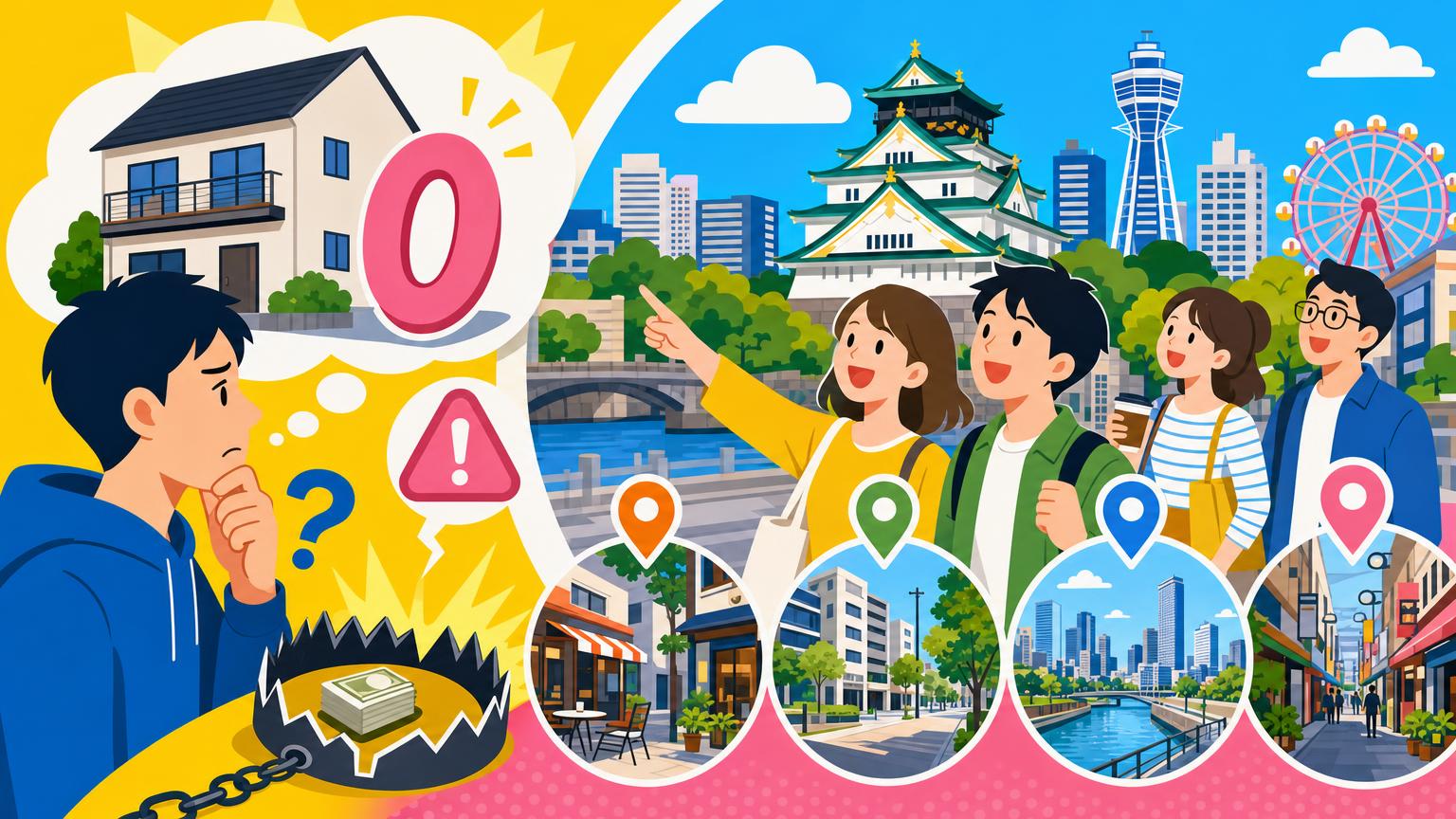
Finding the right apartment is only part of the challenge. You also need to select the ideal basecamp. Osaka is a vast, sprawling city made up of distinct neighborhoods, each with its own unique character, atmosphere, and cost of living. You want a place that’s affordable but not isolated. You need access to the city’s energy, the train lines, and local supermarkets.
Daikokucho and Namba Area (Central and Vibrant)
If you want to be right in the city’s vibrant core, look just south of Namba. Daikokucho is a neighborhood situated directly on the Midosuji subway line, the main artery of Osaka.
In the past, Daikokucho had a slightly gritty reputation as a working-class wholesale district. Today, it’s transformed into a major hub for international residents, students, and young professionals. The rent here is surprisingly cheap, considering you can literally walk to the neon lights of Dotonbori in fifteen minutes.
The neighborhood is full of affordable supermarkets, late-night ramen shops, and wholesale produce markets. Its energy is raw and unapologetic. You’ll hear the heavy, melodic Kansai dialect everywhere. Bicycles weave through narrow streets at breakneck speeds. It’s chaotic, loud, and undeniably Osaka. You can easily find zero key money apartments here, but be sure to verify the specifics of cleaning and lock fees upfront.
Tennoji and Abeno Area (Great Connectivity)
Further south is the Tennoji and Abeno district, the southern gateway of Osaka. It is anchored by the massive Abeno Harukas building, the tallest skyscraper in the city.
Tennoji has undergone significant gentrification over the last decade. It combines the old, gritty charm of retro Osaka with brand-new shopping malls and beautifully maintained parks like Tenshiba. The connectivity here is unbeatable, with direct train access to the airport, Umeda, and—most importantly for someone like me—direct routes to Nara and Wakayama for mountain hikes.
The residential streets around Tennoji station offer excellent value. Spacious apartments here are significantly cheaper than comparable ones in Tokyo. It’s a very practical area for foreigners seeking a balance between urban convenience and affordable living.
Esaka (Suburban, Expat-Friendly and Peaceful)
If you prefer a quieter environment, something more organized and less chaotic, consider looking north toward Esaka.
Esaka is located in Suita City, just outside Osaka’s city limits, but it is directly connected to the Midosuji line. It takes about twelve minutes to reach Umeda. Esaka is a major corporate hub, home to many regional branches of Tokyo-based companies, giving it a slightly different vibe. It feels more polished, somewhat like Tokyo, but with rent prices that remain distinctly Osaka-level.
Esaka is very popular with expats and families. The streets are wider, supermarkets larger, and there are beautiful parks nearby, including the vast Expo 70 Commemorative Park just a few stops away on the monorail. Landlords in Esaka are well-accustomed to corporate transfers and foreign professionals, making it easier to find transparent lease agreements without the predatory hidden fees common in downtown zero-zero bukken.
Essential Tips for Renting an Apartment in Osaka as a Foreigner
Before signing any paperwork or handing over your hard-earned money, it is essential to understand the practical realities of daily life and administration in Osaka.
First, be aware of the emergency contact requirement. Even if you use a guarantor company, nearly every property management company will ask for a Japanese emergency contact. This person bears no financial responsibility and is not a guarantor. The management company simply needs a domestic phone number to call in case of emergencies like a fire or water leakage in the building. If you don’t have a Japanese friend or coworker who can serve as your emergency contact, you should inform the foreigner-friendly agency right away so they can help you find a property with more lenient requirements.
Second, pay close attention to bank account regulations. Many landlords in Japan require rent to be deducted automatically from a specific domestic bank account—you cannot simply pay using a foreign credit card or wire transfer. Opening a bank account in Japan is notoriously frustrating for newcomers, often requiring a registered address upfront, creating a frustrating catch-22. That’s why services like GaijinPot or initially moving into a share house are so useful—they allow you to bypass the bank account requirement while you get your administrative life organized.
Finally, respect the garbage disposal rules. I cannot emphasize this enough. The primary reason landlords in Osaka hesitate to rent to foreigners is the concern that they will not sort their trash correctly. Osaka enforces strict regulations for combustible, non-combustible, recyclable, and oversized waste. Each neighborhood has a detailed collection schedule. If you place the wrong bag out on the wrong day, the garbage collectors will leave it with a large red warning sticker. This causes serious embarrassment for the landlord and displeases the neighborhood association. Show your real estate agent that you understand and respect these local rules—it greatly helps build trust.
Navigating the Osaka real estate market is challenging. It is filled with winding paths, hidden fees, and cultural nuances that don’t appear on any map. The zero-zero bukken may seem like a shortcut, but it frequently leads to a swamp of hidden costs.
Take your time. Use the appropriate portals. Consider furnished monthly apartments or share houses to establish your base. If you plan to stay long-term, look into UR housing. Embrace the Akindo spirit of the city. The people of Osaka are incredibly warm, fiercely loyal, and deeply practical. If you approach them with honesty, preparation, and a willingness to understand their system, this chaotic, beautiful, neon-lit urban jungle will open its doors to you—you just need to know exactly where to knock.