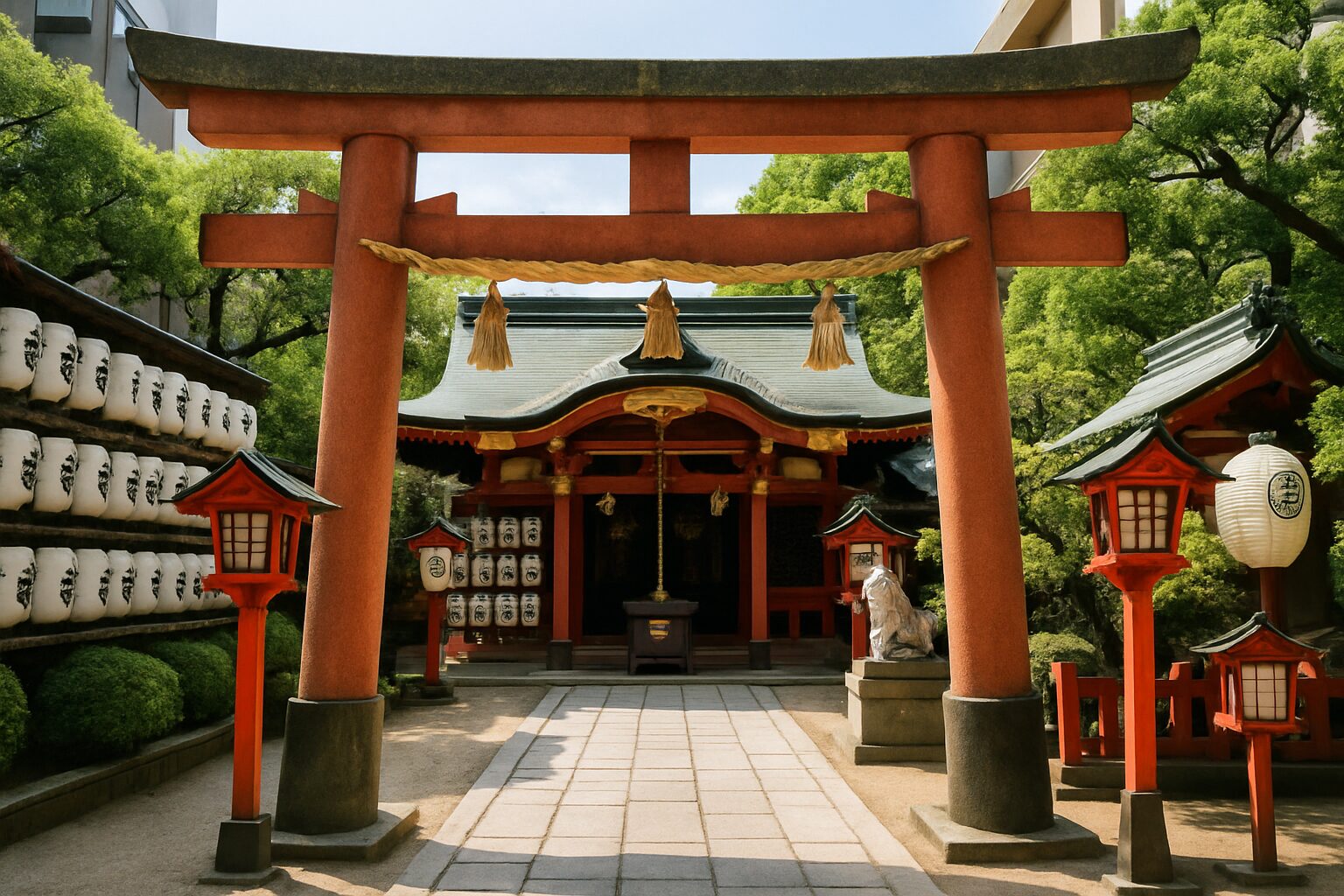
In the heart of Osaka’s Umeda district, a place defined by the ceaseless pulse of modernity, where rivers of people flow through gleaming subterranean malls and skyscrapers pierce the clouds, lies a portal to another time. Tucked away in a narrow alley, almost swallowed by the neon and chrome of its towering neighbors, you will find Tsuyunoten Shrine. To the locals, however, it is known by another, more intimate name: Ohatsu Tenjin. This is not merely a place of worship; it is a theater of the heart, the final stage for one of Japan’s most profound and tragic love stories. It is a sanctuary where the faint whispers of two doomed lovers from the 18th century still echo against the clamor of the 21st, a testament to a passion so absolute that it chose eternity over a world that would not have it. To step through its torii gate is to leave the present behind and bear witness to a tale that has shaped Japanese culture, a story of devotion, betrayal, and the ultimate sacrifice, immortalized by the pen of a master playwright and enshrined forever in this sacred city grove.
To learn more about the tragic love story that defines this sacred space, read our article on the Ohatsu Tenjin love suicide.
A Sanctuary Amidst the Skyscraper’s Shadow
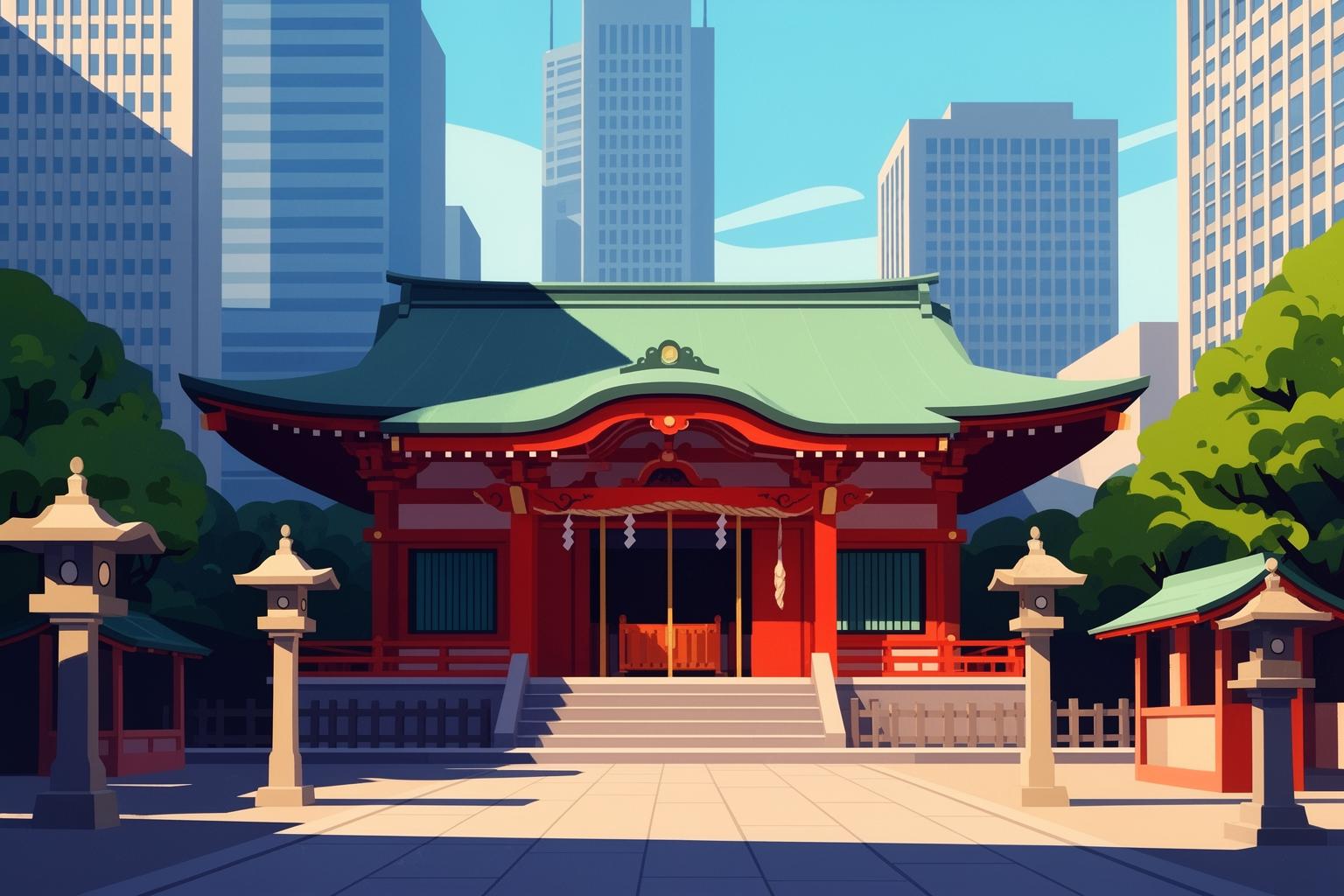
Approaching Ohatsu Tenjin is an experience in itself, offering a lesson in urban exploration. You might pass by the entrance to Ohatsu Tenjin Dori Shotengai—the covered shopping arcade that forms its contemporary approach—a dozen times without taking notice. It seems like just another one of Umeda’s many bustling commercial and dining thoroughfares. But if you venture down this route, beyond the glowing red lanterns of izakayas and the tempting scents of grilled meats, the atmosphere begins to transform. The arcade opens onto a small plaza, where a stone torii gate stands—a silent, solemn guardian marking the boundary between the mundane world of commerce and the sacred realm of memory.
Upon entering, a profound stillness immediately envelops you. The city’s roar, announcements from nearby train stations, and the general buzz of a metropolis of millions all fade away, muffled by an unseen veil. Here, the primary sounds are the rustling of camphor leaves in a gentle breeze, the soft clinking of wooden ema plaques brushing against one another, and the quiet footsteps of visitors on the stone paths. The air, heavy with the scent of aged wood and purifying incense, feels cooler and more serene. This is a tranquil haven carved from urban chaos, a place where time itself seems to slow its relentless pace. The shrine is modest in size—an intimate space enclosed on all sides by stark concrete and glass walls of modern buildings. Yet this very enclosure heightens its impact. It feels less like a public monument and more like a treasured secret, a cherished memory embraced by the city that surrounds it. The main hall, or honden, exemplifies traditional shrine architecture with its sloping tiled roof and clean wooden lines, lovingly rebuilt after the original was lost to the devastation of war. Stone lanterns, adorned with soft green moss and the patina of age, line the paths—silent witnesses to centuries of whispered prayers and shed tears. This place does not overwhelm with its size, but with the profound depth of emotion it holds.
The Heart-Wrenching Ballad of Ohatsu and Tokubei
To understand Tsuyunoten Shrine is to grasp the story of Ohatsu and Tokubei, a tragedy so powerful it has echoed through Japanese culture for over three centuries. Their tale was not one of nobility or samurai, but of ordinary people from the merchant class in Genroku-era Osaka—a world of lively commerce, strict social codes, and emerging urban culture.
Ohatsu was a courtesan, a yujo, at the Tenmaya teahouse in the Sonezaki Shinchi pleasure district. While her profession might carry stigma in Western views, at that time she was regarded as a figure of culture and elegance, admired for her beauty, intelligence, and artistic skills. Bound by contract, her life was not entirely her own, yet her heart belonged to Tokubei.
Tokubei worked as an apprentice clerk in his uncle’s soy sauce business in Uchimoto-machi. Honest and diligent but somewhat naive, he was a young man navigating the intricate social and financial pressures of his environment. He and Ohatsu shared a deep, genuine love that defied the transactional world she lived in. They pledged themselves to each other, dreaming of a future where Tokubei could establish himself and perhaps, against all odds, redeem Ohatsu from her contract.
Their troubles began, as they so often do, with money and family obligations. Tokubei’s uncle, his guardian, had arranged a marriage for him to the niece of a wealthy business partner. This strategic match promised a generous dowry to secure Tokubei’s future. But for Tokubei, a future without Ohatsu was no future at all. He refused the arrangement outright, an act of defiance that deeply embarrassed and angered his uncle. Feeling his authority challenged and his business ties threatened, the uncle demanded the immediate return of the dowry advance.
With no resources of his own, Tokubei was in a desperate situation. His stepmother, moved by pity, secretly gathered the required sum and handed it to him. Tokubei’s honor and future now depended on returning this money. At this critical moment, his friend Kuheiji, an oil merchant with slippery words and no conscience, appeared. Kuheiji pleaded for a short-term loan, spinning a story of his own financial emergency and swearing on his life to repay it in days. Trusting his friend, Tokubei lent him the entire sum.
The betrayal was swift and absolute. When repayment was due, Kuheiji not only refused to return the money but publicly denied ever borrowing it. A desperate Tokubei confronted him at Ikudama Shrine, only for Kuheiji, with the aid of accomplices, to accuse Tokubei of extortion and deceit. They beat him, humiliated him before a crowd, and left him stripped of his money, reputation, and honor. In the rigid merchant society of Osaka, a man’s word and reputation were everything; without them, he was nothing.
Broken and contemplating suicide, Tokubei went to the Sonezaki district for one last secret glimpse of Ohatsu. He slipped into the Tenmaya teahouse and hid beneath the long hem of her kimono as she entertained clients. By cruel fate, one client was Kuheiji, boasting loudly about his clever scheme and triumph over the foolish Tokubei, slandering his name as a petty criminal. Hidden beneath her robes, Tokubei trembled with rage and despair. But Ohatsu, hearing the truth of his ruin, felt not shame but profound loyalty. In a moment charged with tension and intimacy, she silently conveyed her unwavering faith. As Kuheiji ranted, she tapped Tokubei’s foot beneath her kimono—a secret sign that she believed him and that his fate was hers as well. She then declared to her guests that she was ready to die—a statement they took as jest but which Tokubei understood as a solemn vow.
That night, the lovers fled into darkness. They knew no path forward existed for them in this life. Tokubei’s name was irreparably tarnished, and Ohatsu faced a lifetime of servitude without him. Their love, confronted by insurmountable social and financial barriers, was impossible. They resolved to unite not in this world, but the next. This act, known as shinju or love suicide, was seen as the ultimate proof of romantic purity—a way to affirm their bond and achieve spiritual union in paradise. In the predawn hours of May 22, 1703, beneath a twin pine tree in the dark woods of Sonezaki at a small shrine dedicated to the heavenly god, they bound themselves together and ended their lives. What was once a minor footnote in the city’s daily chronicles was destined to become a legend.
Chikamatsu Monzaemon: The Shakespeare of Japan
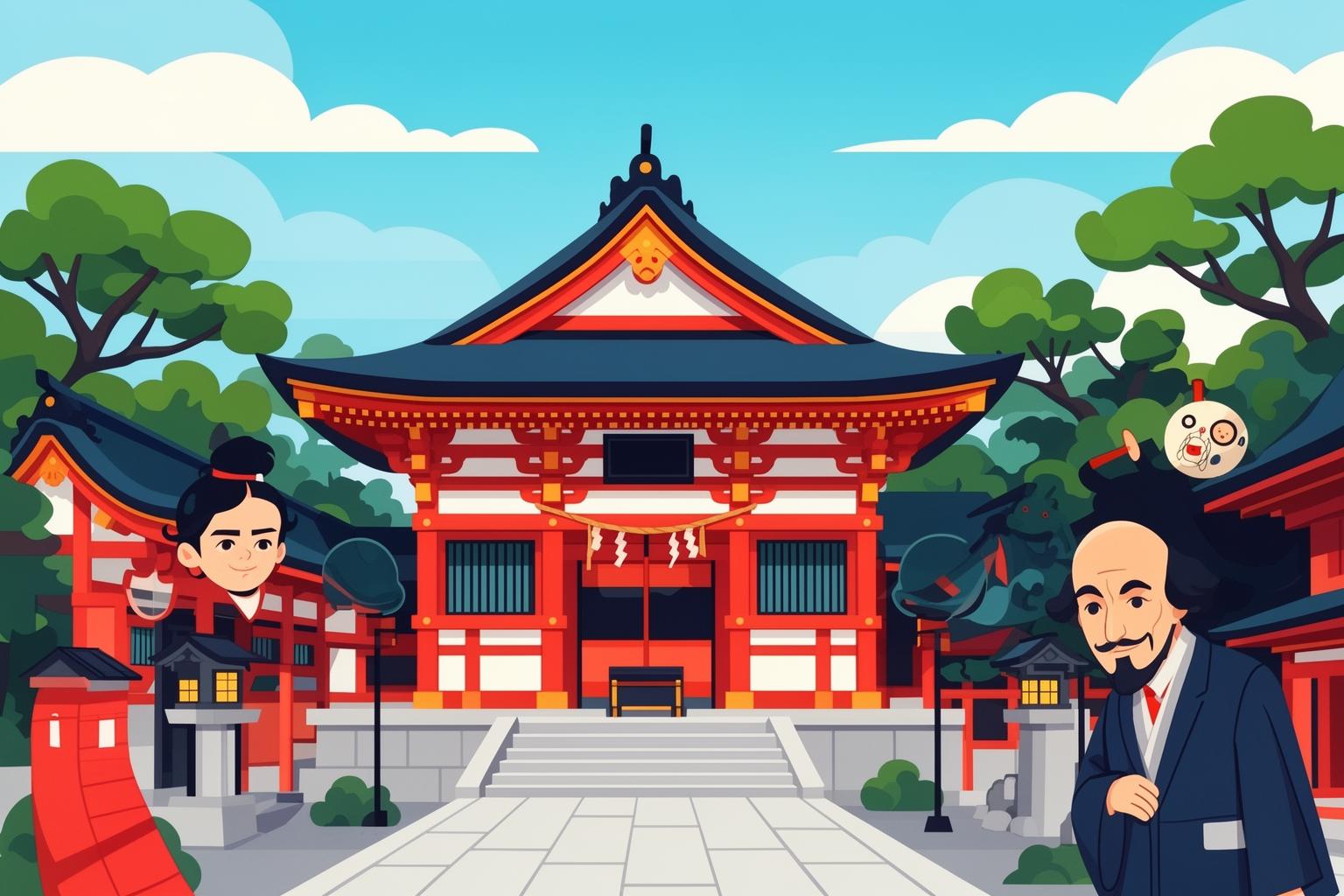
The real-life tragedy of Ohatsu and Tokubei might have been forgotten—a mere piece of local gossip fading with time—were it not for the genius of Chikamatsu Monzaemon. Often hailed as the Shakespeare of Japan, Chikamatsu was the foremost playwright of his era and a master of both Kabuki and Bunraku puppet theaters. Living and working in Osaka, he possessed a remarkable ability to tap into the emotional heart of his city and its people. When news of the Sonezaki love suicide emerged, Chikamatsu recognized in it a powerful drama that reflected the central conflicts of his time.
He quickly penned a Bunraku puppet play titled Sonezaki Shinju (The Love Suicides at Sonezaki), which premiered just weeks after the actual event. The play became a sensation, revolutionizing Japanese theater by shifting focus away from grand historical epics about samurai and warlords toward the lives, passions, and moral dilemmas of the common townsfolk—the chonin. This new genre was called sewamono, or domestic plays. Chikamatsu’s work examined the tension between giri, the web of social obligations, duties, and responsibilities binding individuals to their family and community, and ninjo, the uncontrollable force of personal feelings and human emotion. The tragedy of Ohatsu and Tokubei perfectly embodied this theme, as they were destroyed by the clash between their ninjo (their love for each other) and the giri demanding Tokubei honor his family’s arrangement and protect his reputation.
Chikamatsu’s poetic and deeply empathetic portrayal of the lovers elevated them from anonymous victims to cultural icons. His lines, rich with poignant imagery and emotional depth, gave voice to their despair and unwavering devotion. The play’s final scene, the michiyuki or journey sequence, where the lovers walk to their ultimate destination, is regarded as a masterpiece of Japanese literature. It is a lyrical, heartbreaking passage that mourns their brief lives while celebrating the eternal nature of their bond. The play was so popular it sparked a wave of copycat love suicides, prompting authorities to temporarily ban its performance. Yet its legacy was secured. The forest of Sonezaki became a pilgrimage site, and the small, unassuming shrine within it became forever known as Ohatsu Tenjin.
From Forest Grove to Urban Oasis: The Evolution of Ohatsu Tenjin
Long before Ohatsu and Tokubei made their final vow, the shrine was known as Tsuyunoten Shrine. Its origins are ancient, dating back roughly 1,300 years. The name, meaning “Dew of Heaven Shrine,” is believed to come from a poem by the 9th-century scholar and statesman Sugawara no Michizane. While traveling from Kyoto to his exile in Dazaifu, he paused at this spot and, moved by the beauty of the morning dew, composed a verse: “What I have to part with you is my life, which is like dew, I am vanishing into the yonder sky.” After his death, Sugawara no Michizane was deified as Tenjin, the god of scholarship and learning, and this shrine became one of many throughout Japan dedicated to his spirit.
For centuries, it was mainly a place where students prayed for success in their exams and scholars sought divine inspiration. However, the phenomenal success of Chikamatsu’s play forever altered its identity. The story of Sonezaki Shinju was so compelling that it completely eclipsed the shrine’s original history in the popular imagination. Pilgrims began arriving not to pray for academic success, but for luck in love. They came to honor the memory of the tragic couple, whose devotion had been sanctified by art and popular acclaim. The shrine became inseparably linked with Ohatsu, and the name Ohatsu Tenjin became its common title, a name that endures today. The twin pine tree where they died became a revered symbol, and although the original tree no longer exists, its spirit is venerated. The shrine, like the city surrounding it, has shown remarkable resilience. It was completely destroyed during the firebombings of Osaka in World War II but was carefully rebuilt by its devoted followers after the war, ensuring that both the story and the sacred space honoring it would endure.
A Pilgrim’s Guide to Tsuyunoten Shrine Today
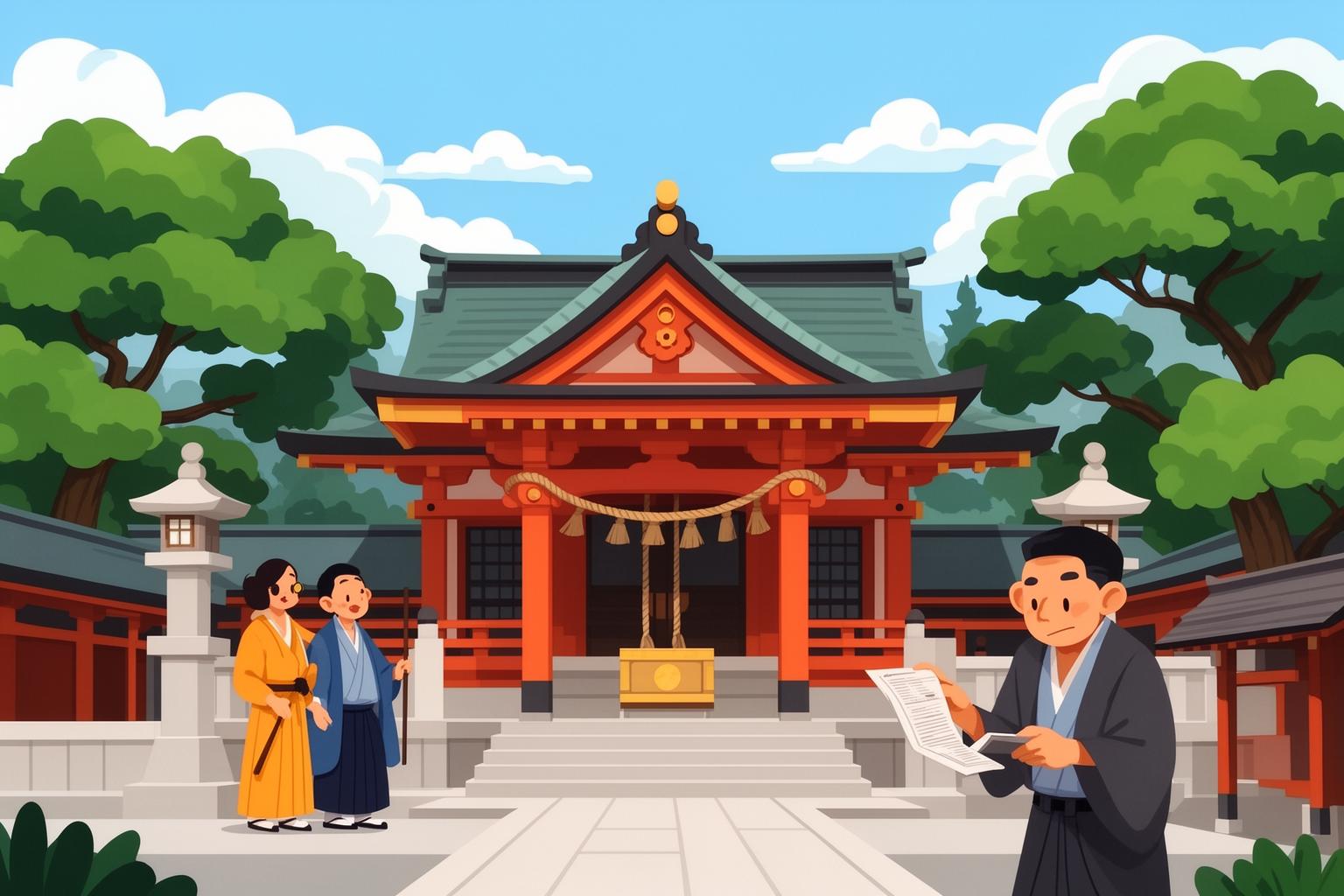
A visit to Ohatsu Tenjin today offers a multifaceted experience, combining solemn remembrance with hopeful prayer. As you wander the compact grounds, several notable features draw your attention, each enriching the tale being told. In a small courtyard stands a striking bronze statue of Ohatsu and Tokubei, capturing them on their final journey, their expressions a blend of sorrow, determination, and deep affection. Ohatsu leads gently, guiding a distressed Tokubei, whose hand rests on the sword that will end their earthly suffering. Their robes appear to flow with the night breeze, and the artist has imbued the cold metal with a vivid sense of motion and feeling. This is where the story feels most immediate and profoundly human.
Throughout the shrine, thousands of ema—small wooden plaques for visitors’ wishes—are displayed. At Ohatsu Tenjin, many are heart-shaped or adorned with beautiful illustrations of the two lovers. Reading the messages is a touching experience, filled with the hopes and concerns of modern love: prayers for finding a partner, healing broken relationships, or enjoying a long and happy marriage. This serves as a powerful reminder that although the world has changed drastically since 1703, the essential human longing for connection and devotion endures.
For those seeking guidance, the shrine offers special omikuji—paper fortunes—focused specifically on love and relationships. Visitors can also approach the main hall to offer a prayer. The proper etiquette is simple and respectful: bow once, toss a coin into the offering box (a five-yen coin is considered lucky since its name, go-en, is a homophone for good fortune or fate), ring the bell to announce your presence to the gods, bow twice deeply, clap your hands twice to signal your prayer, offer your prayer silently from the heart, and then bow once more. While the shrine is well known as a destination for lovers, it remains first and foremost a functioning Shinto shrine, a home to the kami, and this respectful behavior is greatly valued. Be sure not to overlook smaller details, such as the Mizukake Jizo statues, where pouring water over the figures is believed to grant blessings, or the smaller sub-shrines dedicated to gods of commerce and beauty, reflecting the diverse needs of the community that supports this sacred site.
The Sonezaki Neighborhood: Then and Now
The shrine does not stand isolated; it is intricately intertwined with the life of its neighborhood. The Ohatsu Tenjin Dori Shotengai, the covered arcade leading to the shrine, is a vibrant, bustling reflection of Osaka’s daily rhythm. During the day, it serves as a convenient passage for locals, while by night it blossoms into a dazzling entertainment hub, with hundreds of restaurants, pubs, and cozy, atmospheric bars coming alive. The air fills with laughter, the clinking of glasses, and the sizzling sound of food on the grill. This lively, indulgent energy creates a striking contrast to the solemn tale enshrined just steps away.
One might see this contemporary scene as a distant echo of the Edo-period pleasure quarters where Ohatsu lived and worked. The world of teahouses, entertainers, and their guests was a vital part of Osaka’s urban culture. To fully appreciate your visit, embrace this duality. Spend a quiet, reflective half-hour within the shrine grounds, pondering the story of Ohatsu and Tokubei. Then, step back into the arcade and dive into the present moment. Find a small eatery and savor some of Osaka’s renowned dishes—perhaps savory okonomiyaki or octopus-filled takoyaki. This blend of the sacred and the secular, the past and the present, captures the essence of modern Osaka. It is a city that honors its history while rapidly moving toward the future, and nowhere is this more evident than in the streets around Ohatsu Tenjin.
Practical Guidance for Your Journey
Discovering Ohatsu Tenjin can feel like a small adventure. It is situated in the heart of Umeda, one of the world’s most intricate and bewildering urban centers. The shrine is about a 10-minute walk from major hubs such as JR Osaka Station, Hankyu Umeda Station, and Higashi-Umeda Station on the subway line. The easiest route is to head toward Ohatsu Tenjin Dori Shotengai; the shrine is located just off this main shopping street. Don’t hesitate to use a map app on your phone, but also embrace the delight of getting slightly lost in the maze of nearby alleys, where some of the area’s most interesting small shops and eateries await.
The shrine grounds are technically open 24 hours a day, and visiting late at night—when the lanterns are glowing and the crowds have dispersed—can offer a truly atmospheric experience. However, the shrine office, where you can purchase amulets, ema, and receive fortunes, usually operates from around 9:00 AM to 6:00 PM. For a first visit, a weekday morning is ideal. The light is gentle, the atmosphere tranquil, and you’ll have space to absorb the spirit and history of the place without the distraction of crowds.
My most important advice for any first-time visitor is to acquaint yourself with the story of Sonezaki Shinju before you go. Reading a brief summary of the play, or even this article, will profoundly enrich your experience. Without the story, Ohatsu Tenjin is a charming but modest urban shrine. With the story, every stone, lantern, and carved wooden beam takes on deep meaning. The bronze statue transforms into a heartbreaking scene, the heart-shaped ema resonate as echoes of a 300-year-old vow, and the entire shrine becomes a stage for one of the most powerful dramas of human emotion ever told. Understanding the narrative allows you to look beyond the physical and connect with the soul of the place.
As you leave the serene grounds of Ohatsu Tenjin and step back into the brilliant chaos of Umeda, the story lingers with you. It stands as a remarkable testament to the power of art and the endurance of love that this small plot of land continues to shine as a beacon for hearts in the modern world. The shrine is not just a memorial to a tragedy; it is a celebration of a devotion so profound that it became immortal. It reminds us that even in the busiest cities and most complex societies, the simple, powerful stories of the human heart are the true landmarks that endure, whispering their timeless truths to all who are willing to listen.