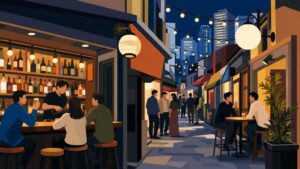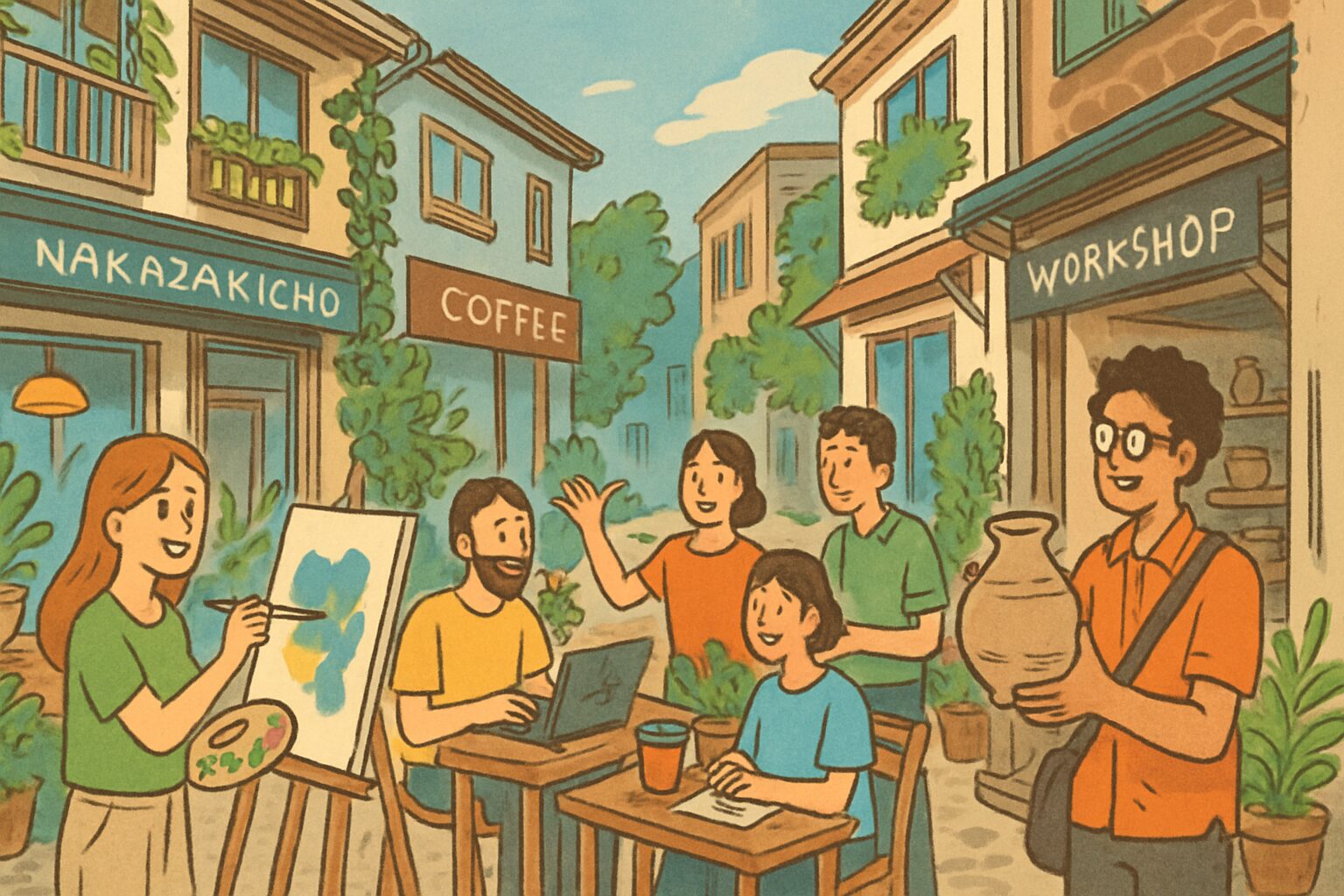
In the sprawling urban tapestry of Osaka, a city that pulses with an electric, get-down-to-business energy, there exists a pocket of stillness, a neighborhood that hums on a different frequency. Tucked away, just a ten-minute walk yet a world apart from the glittering skyscrapers and frantic pace of Umeda, lies Nakazakicho. This isn’t a district of grand attractions or neon-drenched boulevards. Instead, it’s a labyrinth of narrow alleyways, a living museum of pre-war wooden houses, and, most importantly, the beating heart of Osaka’s independent creative scene. For the foreigner living in this dynamic city, Nakazakicho offers something more precious than sightseeing; it offers a chance at connection, a place to find your tribe. It’s where the city’s artists, writers, designers, and dreamers congregate, not in formal galleries or exclusive clubs, but in the quiet, unassuming intimacy of its countless cafes, vintage shops, and tiny galleries. This is a guide not just to seeing Nakazakicho, but to becoming a part of its delicate, vibrant ecosystem. It’s about transforming from a visitor into a regular, from an observer into a friend, and discovering that in the quietest corners of Osaka, the most meaningful conversations are waiting to unfold.
While Nakazakicho offers a serene escape, the nearby bustling hub of Umeda provides a perfect contrast for those seeking a dynamic co-working environment.
The Soul of a Bygone Era: Understanding the Nakazakicho Vibe
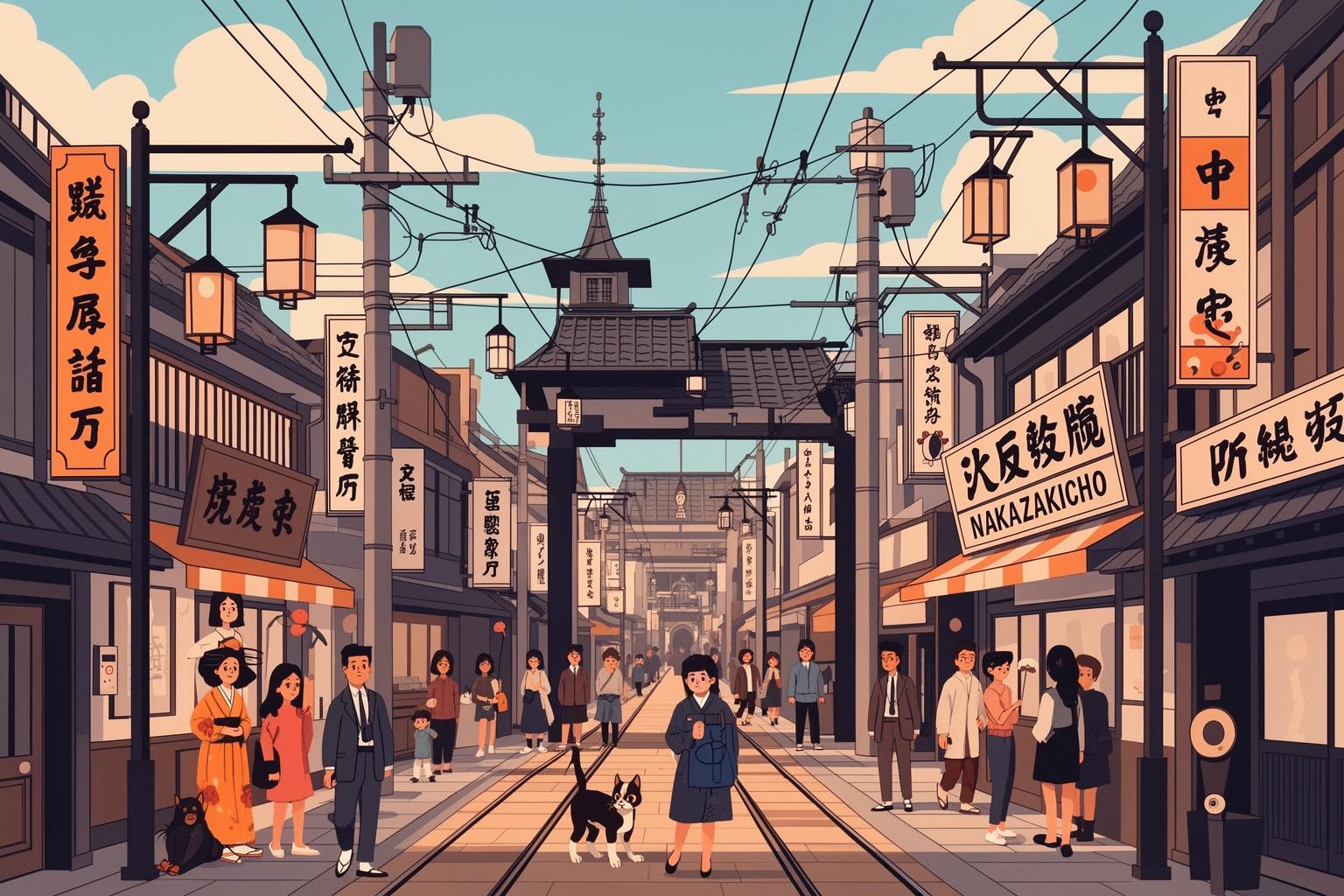
To truly connect with Nakazakicho, you must first grasp its soul. As you leave the main road and enter its maze of lanes, the city’s roar softens into a gentle murmur. The air itself seems to shift, thickening with the aromas of roasted coffee, aged wood, and blooming potted plants that spill over the doorways. This is one of the rare spots in central Osaka that miraculously survived the devastating air raids of World War II. While the surrounding area was demolished and rebuilt into a modernist cityscape, Nakazakicho endured, a time capsule preserving Showa-era architecture and a slower pace of life. The buildings, called nagaya, are long, two-story wooden row houses, their weathered facades marked by decades of sun and rain. They lean toward one another like old friends, sharing secrets during quiet afternoons. Overhead, wires hang gracefully, forming a canopy that filters sunlight and casts intricate shadows on the worn pavement below.
This architectural preservation forms the foundation of the neighborhood’s identity. It created a space where rents stayed affordable, drawing students, artists, and entrepreneurs who saw promise in these aging structures. Rather than demolishing them, they carefully restored the original wooden beams, lattice windows, and tiled roofs, while infusing the interiors with their own creative touches. The outcome is a strong sense of authenticity. Nothing here feels fabricated or corporate. Every business reflects the personality and passion of its owner. This is the essential first step in making a connection. You’re not simply entering a commercial place; you’re stepping into someone’s world. The atmosphere invites you to slow down and appreciate the small details: a hand-painted sign, an eccentric window display, a cat napping on a sunny stoop. This is a place that rewards curiosity and observation—key skills for forging genuine relationships. The vibe is distinctly bohemian but free of pretense. It’s a community grounded in a shared love for handmade, repurposed, and thoughtfully curated items. It stands as a quiet rebellion against mass production, a sanctuary where individuality is not only accepted but celebrated.
The Cafe as a Community Salon: Brewing More Than Just Coffee
The cafe serves as the heart of social life in Nakazakicho. These are not ordinary chain coffee shops aimed at quick transactions and fleeting visitors. Instead, cafes here resemble the literary salons of historic Paris—they act as neighborhood living rooms, idea incubators, and neutral spaces where strangers can gradually become acquaintances. The key is to recognize the different cafe archetypes and understand how to navigate their distinct social customs. Your journey to finding your community will likely begin—and continue—over many cups of coffee, tea, or whichever brew appeals to you.
First, there is the minimalist, third-wave coffee roaster. These spots are often run by dedicated artisans who treat coffee with the care and respect of a master winemaker. The interiors are clean, bright, and uncluttered, with the main focus on the impressive espresso machine or the lineup of pour-over drippers. Here, the coffee itself acts as the conversation starter. The baristas, often the owners, are usually eager to discuss the beans’ origins, flavor notes, and roasting philosophy. Your first step is simple: show genuine curiosity. Instead of ordering just a latte, ask for a recommendation or what they’re excited to brew today. This small gesture signals that you’re not simply there for caffeine but to appreciate their craft. Over time, as you become a familiar face, these conversations deepen. You’ll learn their names, they’ll know yours, and soon you may be introduced to other regulars who share your appreciation for a perfectly crafted espresso shot. These cafes tend to draw those who value precision, craft, and quality—designers, architects, photographers, and writers who appreciate the clean aesthetic and calm focus.
Then, there are the cluttered, antique-filled kissaten. These are the soulful elders of the cafe scene, spaces that feel like stepping into your grandmother’s attic—if your grandmother had impeccable, eclectic taste. The air is rich with the scent of dark-roast coffee and old books. Walls are adorned with mismatched clocks, vintage posters, and shelves brimming with curiosities. The owner, or “Master,” often remains a steady presence behind the counter, having likely served for decades. The atmosphere is cozy, intimate, and deeply nostalgic. Here, patience is key. These are not spaces for loud conversation but for quiet reflection. Bring a book or journal. Order a slice of homemade cake alongside your siphon coffee and simply inhabit the space. Regulars at a kissaten tend to be long-time locals, artists, and academics who treasure the calm. Connection happens gradually—it might begin with a simple nod to the Master upon entering and leaving. After a few visits, a soft “good afternoon” may follow. Eventually, you might strike up a conversation with another regular about a book or a piece of art on the wall. The kissaten teaches the Japanese art of presence—building relationships not through grand gestures but through steady, quiet companionship.
Finally, there are gallery-cafes and community-centered spaces. These are often the most direct way to meet other creatives. These hybrid venues deliberately aim to nurture community. One wall might showcase a rotating exhibition featuring a local artist’s work, while a corner displays zines and handmade crafts for sale. They frequently host small events—live acoustic performances, poetry readings, art workshops, or language exchanges. The key here is to participate. Check their social media or flyers near the entrance for upcoming events. Attending a bookbinding workshop or a small concert is an excellent, low-pressure way to meet people. You’ll already share a common interest. The owners of these cafes are natural connectors who enjoy bringing people together and often facilitate introductions. Let them know you’re new to Osaka and eager to meet other creatives. They will almost certainly guide you, perhaps introducing you to the artist on the wall or another regular who’s a graphic designer. These spaces are lively and welcoming, attracting a diverse, international crowd, making them an ideal starting point for any newcomer feeling a bit lost in the big city.
The Narrative of Shops: Finding Connection Through Curation
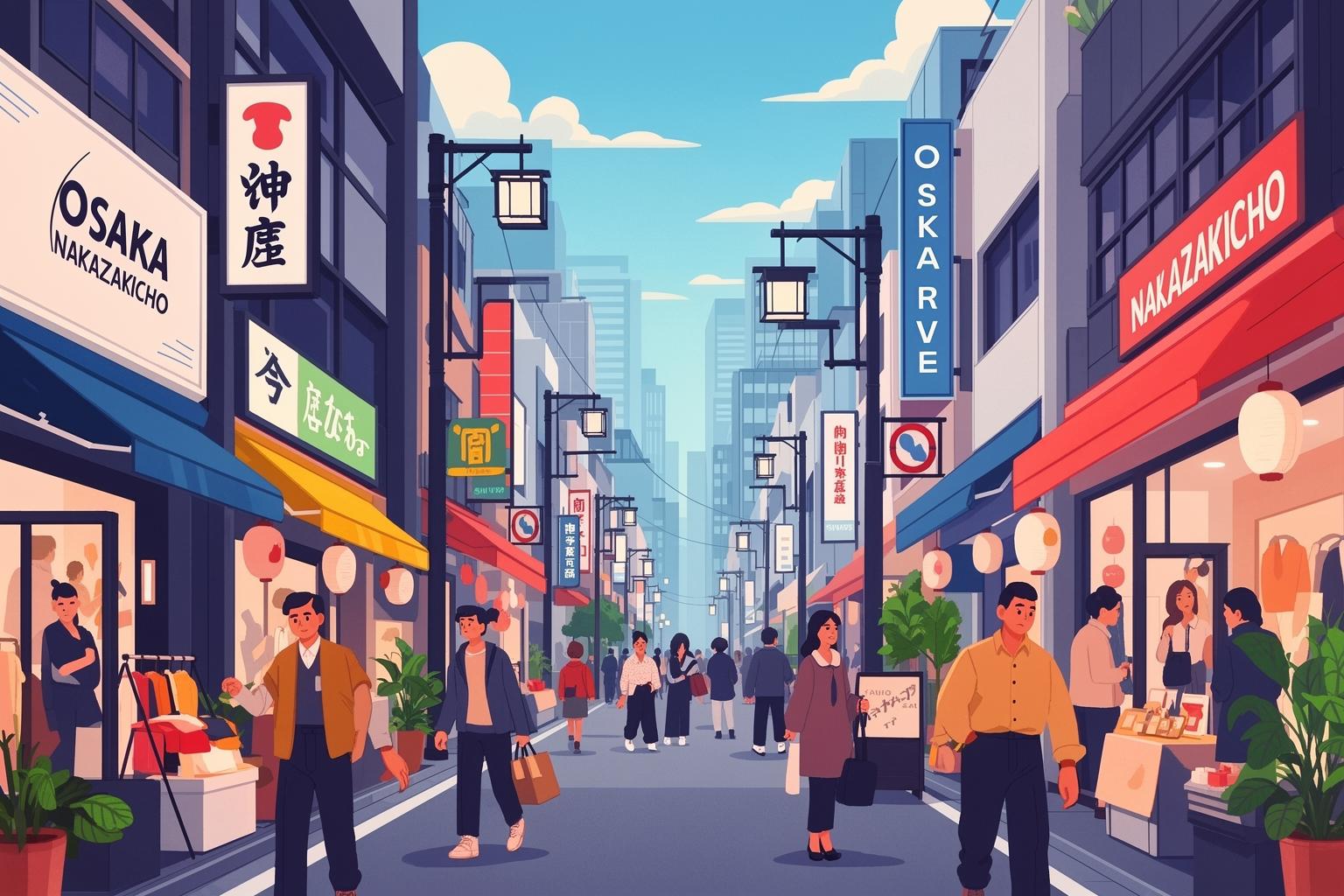
Beyond the cafes, the shops of Nakazakicho form another essential thread in the social fabric of the area. Like the cafes, these are far from anonymous retail spaces. They are deeply personal, carefully curated environments that tell a story—the story of the owner’s passions and aesthetic. Exploring these shops means more than just browsing items; it’s learning a new language of connection, where shared taste serves as the opening line of conversation. Discovering a shop that aligns with your personal style feels like finding a signpost pointing you toward your community.
The vintage clothing stores serve as a prime example. Nakazakicho is celebrated for its collection of high-quality, unique second-hand and vintage apparel. Each store boasts its own distinct character. One might specialize in rugged American workwear, another in elegant European dresses from the 1960s, and yet another in quirky, remade Japanese garments. The owners are passionate experts, often possessing encyclopedic knowledge of fashion history. Simply admiring a piece can spark an engaging discussion about its origin, fabric, or the era it belongs to. Don’t hesitate to ask questions. Saying things like, “This fabric is beautiful—what is it?” or “I love the cut of this jacket; which decade might it be from?” can open a doorway to conversation. These exchanges reveal a shared enthusiasm. You’ll notice that other customers are there for the same reason—a love for items with history and character. Complimenting someone on a piece they’re trying on naturally invites friendly dialogue. In these spaces, your clothes serve as an introduction, visually representing your tastes and interests and attracting kindred spirits.
Then there are the zakka shops. Zakka is a distinctly Japanese concept that roughly translates to “miscellaneous goods,” yet that definition hardly captures its essence. Zakka encompasses anything that enhances your home and life—from handcrafted ceramics and stationery to distinctive kitchen tools and textiles. The zakka shops in Nakazakicho are treasure troves filled with beautiful, functional, and often whimsical items. Many feature works by local artisans, offering a perfect chance for connection. When you pick up a hand-thrown mug, you can ask the shopkeeper about the artist behind it. They often have a personal relationship with the maker and can share their story. This transforms a simple purchase into a meaningful gesture supporting the local creative community. These shops attract those who appreciate craftsmanship, slow living, and the beauty found in everyday objects. Surrounded by potential friends who share this philosophy, striking up a conversation is as easy as commenting on a lovely piece of pottery or inquiring about which brand of Japanese incense is most relaxing. It’s about building community through a mutual appreciation for the small, beautiful details of life.
Don’t overlook the tiny, independent art galleries and bookstores tucked throughout the alleys. Though they may seem intimidating, they are incredibly welcoming. Unlike large, formal museums, these galleries offer intimate spaces where you can often meet the artist during their exhibition. Attending an opening reception is a golden opportunity—everyone is there to celebrate the artist and is in a social mood. Expressing your admiration for a piece to the artist or gallery owner is all it takes to be invited into the conversation. The bookstores are equally enchanting, often highly specialized with focuses on art books, photography collections, or obscure literature. Simply being in such a store signals a shared intellectual curiosity with others inside. Ask the owner for a recommendation based on a book you love, or comment on the cover of a book someone else is browsing. These are spaces designed for discovery—both of new ideas and new connections.
A Practical Guide to Immersion: Mindset and Logistics
Knowing where to go is only half the challenge; adopting the right mindset is essential for transforming these encounters into true friendships. The culture of making friends in Japan, particularly outside structured settings like work or school, often feels different from what many Westerners are accustomed to. It tends to be a slower, more gradual process based on consistency and mutual respect. Nakazakicho serves as an ideal place to practice this art of slow-building connections.
First and foremost, leave behind the tourist mentality. Don’t try to “do” Nakazakicho in a single afternoon. Think of it as a place to live in, not just a place to see. The aim isn’t to check off a list of cafes and shops but to discover one or two that genuinely resonate with you and become a regular there. Pick a cafe and make it your spot. Visit it around the same time a couple of times each week. Let the staff and other regulars become familiar with your face. This steady presence creates a quiet familiarity that forms the foundation of trust and friendship in Japan. They will begin to recognize you, and the barrier of being a stranger will gradually fade. Bring a book, your laptop, or a sketchbook. Be comfortable spending time alone while remaining open and approachable. Avoid using headphones, which are a universal “do not disturb” sign. Make eye contact and offer a small smile or nod to people you know.
In terms of logistics, Nakazakicho is very accessible. It is located just east of the main Osaka-Umeda station complex and can be reached on foot within about 10-15 minutes, offering a vivid experience of the transition from the ultra-modern city to a quiet, old-world neighborhood. Alternatively, the nearest subway station is Nakazakicho Station on the Tanimachi Line, which drops you right in the heart of the area. Keep in mind that this neighborhood reflects an independent spirit, including regarding business hours. Many shops and cafes close one or two days a week (often Tuesdays or Wednesdays), and their hours can be somewhat unusual. Checking their Instagram or website before you go is wise, though part of the charm lies in wandering and discovering what’s open. Weekdays tend to be quieter and better suited for intimate conversations, while weekends are busier and more lively, offering chances for spontaneous encounters.
One of the most valuable tips is to get lost. The best parts of Nakazakicho aren’t on the main street but down the small, nameless alleys branching off. Be adventurous and explore. Let your curiosity lead you. Peek into an alley that catches your eye; you might discover a hidden gallery, a tiny coffee stand operating out of a window, or a lovely community garden. This spirit of exploration defines the neighborhood. Also, carry some cash. While many places accept credit cards, some smaller, family-run businesses remain cash-only. Paying with cash can also be a quicker, more personal transaction, keeping the positive energy flowing. Lastly, remember that this is a residential area. People live above these shops and in nearby houses. Keep your voice low, respect private property, and move gently through the neighborhood. This respect is noticed and appreciated by locals and shows that you understand and value their community.
Your Invitation to Belong
Nakazakicho is more than just a charming neighborhood; it is a living, breathing entity fueled by the passion and creativity of those who have chosen to call it home and workplace. It serves as a testament to the idea that community is formed not in vast plazas or grand institutions, but through the small, everyday moments shared over a counter, in a cozy chair, or while admiring a piece of art. For foreigners seeking a sense of belonging in Osaka, this neighborhood offers a unique and meaningful opportunity. It encourages you to slow down, observe, listen, and engage. Finding your community here isn’t about a dramatic, cinematic moment of instant friendship; it’s about the quiet accumulation of familiar faces, shared smiles, and conversations that begin with coffee and evolve into something far more significant. It’s about discovering that one vintage shop that feels like your personal closet, that one café that feels like a second living room, and that one gallery that showcases art speaking directly to your soul. So go ahead, wander its streets with an open heart and a curious mind. The community you seek is already here, waiting for you to pull up a chair and join the conversation. In Nakazakicho, you’ll realize that making friends is an art form, and this beautiful, timeless neighborhood is the perfect studio to practice it.