They call it the Umeda Dungeon. A sprawling, subterranean labyrinth of shops, tunnels, and train lines that stitches together half a dozen different stations all claiming the name “Umeda.” For the newly arrived digital nomad, this concrete beast is your first, and most formidable, challenge. It’s a metaphor for Osaka itself: vast, chaotic, unapologetically commercial, and utterly indifferent to your confusion. You’re looking for a simple café, a place to plug in your laptop and wrestle with a deadline. But in Umeda, you’re not just looking for a café; you’re searching for a pocket of sanity, a temporary truce with the city’s relentless energy. This isn’t Tokyo, where sleek, minimalist cafes designed for solitary focus are a dime a dozen. This is Osaka. Here, a café’s value is measured in practicality, tolerance, and a fair exchange. You’re not paying for artisanal foam art; you’re renting a piece of real estate, and the currency is coffee. Finding the right spot is more than a logistical problem—it’s your first lesson in understanding the rhythm of Osaka’s daily life, a city built on commerce, common sense, and the unspoken art of minding your own business while being surrounded by a million people doing the same.
Once you’ve found your ground-level sanctuary, consider how the city’s character shifts when you ascend to explore Umeda’s vibrant rooftop bar scene.
The Unspoken Contract: What “Work-Friendly” Really Means in Osaka

Before you even open your laptop, you need to adjust your expectations. In Tokyo, a “work-friendly” café usually means a carefully crafted experience. It’s quiet, the background music is subtle, and the space is designed to provide a personal bubble of focus. There’s an unspoken agreement that this is a place for quiet productivity. In Osaka, the meaning is much more practical and, frankly, more straightforward. A café is “work-friendly” if they allow you to stay for more than an hour without giving you a dirty look. That’s all. The basis of this understanding isn’t ambiance; it’s shobai, the spirit of business that runs through the city’s veins.
This is a transaction. You buy a drink, you get to use the table. The unwritten contract sets the terms. A single ¥500 coffee doesn’t grant you a four-hour lease on a prime window seat during lunchtime. That’s bad business. An Osakan business owner, even a chain café manager, values a fair deal. If you stay for two hours, you should probably be on your second drink. If you need to plug in and use their electricity, ordering a pastry or sandwich alongside your coffee shows good faith. It’s not about strict rules; it’s about a feeling, a sense of balance. You’re not being bothersome if you’re a paying customer who understands this flow of commerce.
This leads to a key difference you’ll notice immediately: noise. Osakans are not quiet. The city hums. Cafés are filled with the clatter of dishes, the hiss of espresso machines, and lively chatter. Groups of stylishly dressed women laugh loudly over cake sets. Salarymen sip their iced coffee noisily while debriefing meetings. This isn’t considered disruptive; it’s the sound of life. Foreigners used to the library-like silence of Tokyo workspaces often find this jarring. But in Osaka, the expectation isn’t that the world will quiet down for you. The expectation is that you put on your headphones and carry on. It’s a mindset of practical adaptation rather than enforced silence. Your ability to work here depends on your skill to filter out noise, to create your own bubble amid a gentle storm. This is the city’s first gift to you: learning to find focus in the chaos.
Navigating the Tiers: From Department Store Havens to Underground Grinders
Umeda is not just a single neighborhood; it is a layered collection of ecosystems stacked above and below each other. Your choice of café will largely depend on which ecosystem you’re willing to enter. Each possesses its own rhythm, clientele, and set of unwritten rules.
The Elevated Escapes: Department Store & High-Rise Cafes
Located on the upper floors of grand department stores such as Hankyu, Hanshin, and Daimaru, or nestled within the gleaming towers of Grand Front Osaka, these premium cafes offer a sanctuary of relative calm—though at a cost, not just on the menu.
Characteristics
- The Vibe: These cafes are cleaner, calmer, and more spacious. Their clientele tends to be older, wealthier, and predominantly female, coming for leisurely afternoon tea or a break from upscale shopping. Service is impeccable, almost formal—you’re not just a customer, but a guest. The atmosphere exudes refined relaxation, a stark contrast to the hectic commuter crush thirty floors below. You’ll notice fewer laptops and more shopping bags.
- The Unspoken Contract: While the coffee might cost ¥900, you’re paying for the view, plush seating, and the luxury of not being rushed. However, this doesn’t mean you can lounge all day. The unspoken rule demands decorum—you’re expected to behave like other patrons: no loud typing, sprawling cords, or conference calls. A stay of about two hours with a coffee and a slice of pricier cake is generally acceptable. Stay longer, and the polite, smiling staff may offer you more water with a gentle attentiveness that feels less like service and more like a subtle hint.
- Practicalities: Power outlets are rare treasures. These cafes are designed for conversation and relaxation, not work. You might find one or two outlets along a wall if you’re lucky. The Wi-Fi is usually stable, provided by the building. Tables tend to be small—sized for a cup and saucer, not a laptop and notebook—so arrive fully charged and with a clear, short-term plan.
Notable Examples
Brooklyn Roasting Company (Grand Front Osaka): Offering a modern, work-friendly vibe unlike traditional department store tearooms, this spot sports a New York loft aesthetic familiar to Western nomads. Although busy, its larger tables and casual atmosphere make it suitable for a couple of hours. The coffee is excellent, a definite step above chains. The trade-off is the crowd; seats with outlets are a matter of luck and timing. It represents Umeda’s modern, international face, where Osaka’s merchant spirit meets global trends.
Café & Brasserie Aux Bacchanales (Grand Front Osaka): This Parisian-style bistro feels worlds away from Japan. While not explicitly a co-working space, its outdoor terrace and somewhat larger indoor tables can work, especially during off-peak hours. Working here is a statement: you prioritize atmosphere over pure function. The Osakan practicality remains—you won’t be bothered if you order steadily, but you are clearly a temporary guest in a space designed for dining and socializing. It’s a small luxury: feeling a bit fancy while sending a few emails.
The Workhorses: Chain Cafes in the Trenches
These chain cafes form the functional, reliable backbone of Umeda’s remote work scene. Starbucks, Tully’s, Doutor, and others are essential, but their location within Umeda’s maze makes all the difference.
Characteristics
- The Vibe: Atmospheres vary from chaotic transit hubs to surprisingly quiet student study areas. A Starbucks near a major station entrance buzzes with relentless activity and scarce seats, while a Tully’s tucked away in a basement corridor of Whity Umeda shopping arcade might offer unexpected calm. Osakans use these chains with clear purpose: a quick caffeine fix before meetings, a 30-minute break between trains, or a spot to study. Your task is to find the place that suits your intent.
- The Unspoken Contract: The rules are simple: buy a drink, stay awhile. “Awhile” depends on how busy the café is. When there are lines and people circling for seats, social etiquette calls for packing up once your drink is finished. If the café is half-empty, longer stays are welcome. Ordering a second item after two hours is the usual way to extend your time. This reflects a culture of fair exchange—unspoken but widely understood.
- Practicalities: Here you’ll find the densest concentration of power outlets, especially at counter seats along walls—highly coveted in the digital nomad community. Wi-Fi is generally reliable, though it can slow during peak hours when many students stream videos. The biggest challenge is securing a seat. You’ll witness the practice of “datoru” (from “datsu toru”—to take a seat), where patrons leave bags or notebooks to claim seats before ordering. It’s a pragmatic, distinctly Osaka way to stake your claim.
Notable Examples
Starbucks (Umeda Sky Building): A destination once more for its view and iconic architecture than as a workspace. Weekday mornings can be surprisingly quiet, offering a spectacular place to work, but tourist visits quickly change the atmosphere. This location provides insight into the city’s rhythms beyond the daily commute—tourist seasons, public holidays, and flow of non-locals.
Tully’s Coffee (Hankyu Sanbangai): Nestled deep within the sprawling Sanbangai shopping complex linked to Hankyu Umeda Station, this Tully’s exemplifies a workhorse cafe. Often busy but spacious, with a good number of counter seats with outlets, its patrons include shoppers, students, and office workers. The noise level is a steady, manageable hum. Working here feels like plugging into Umeda’s circulatory system—not peaceful, but deeply functional.
Doutor Coffee (Osaka Ekimae Dai-ichi Building): The Ekimae buildings, a complex of aging office and retail spaces south of JR Osaka Station, have a nostalgic, 1970s feel reflected in their cafes. This Doutor serves salarymen on smoke breaks (some still have smoking sections) and people waiting for appointments. Less trendy and less crowded than other chains, it offers an authentic slice of Osaka’s work culture. Its utility means you can often find a seat and work undisturbed for hours.
The Hidden Gems: Independent and Specialty Cafes
Finding an independent café in Umeda’s hyper-commercial core is like spotting a wildflower growing through a crack in the pavement—rare and precious. While not typically designed for work, some can accommodate if approached with the right spirit.
Characteristics
- The Vibe: These cafes have personality, run by owners rather than corporations. Décor is unique, music carefully chosen, and coffee often far superior. Regulars—locals and nearby office workers—create an intimate, club-like atmosphere. As a foreigner with a laptop, you’ll stand out.
- The Unspoken Contract: The transactional nature here is softer but more delicate. You are partaking in someone’s passion project. The expectation is to come primarily to enjoy the coffee or food. Setting up a full mobile office is usually a faux pas. This is a place for light work—an hour of writing or responding to emails. The owner’s attitude matters; some welcome quiet customers in slow afternoons, others see their space as off-limits to free offices. The best strategy is to become a regular—be friendly, praise the coffee, and mind your footprint. Don’t just be a customer; be a patron.
- Practicalities: Power outlets are scarce or nonexistent, and Wi-Fi is unreliable or unavailable. Tables are small. This is not the place for marathon video editing sessions, but rather for focused, analog-style bursts of work fueled by excellent coffee.
Notable Examples
Whitey Umeda’s Izakaya-turned-Cafe: Deep in an underground mall, some places operate as izakayas (Japanese pubs) by night but function as kissaten (traditional coffee shops) by day. One such spot is Toretate-Ichiba. It’s not the kind of place featured in digital nomad blogs. Small tables, dim lighting, old-school décor… yet from morning to late afternoon, it’s filled with older Osakans reading newspapers and salarymen holding quiet meetings. They serve simple coffee sets and, since their business peaks at night, daytime patrons are generally welcomed. Working here feels like uncovering a glitch in the matrix—a pocket of Showa-era calm amid Umeda’s gleaming modernity—a lesson in Osakans’ practical use of space.
Ueshima Coffee House (various locations): Though technically a chain, Ueshima (UCC) occupies a unique niche. Modeled after old-school kissaten culture, the coffee is siphon-brewed, seating often plush velvet booths, and the atmosphere is more relaxed and mature than Starbucks. Signature copper mugs and rich dark-roast coffee evoke nostalgia. The lighting is typically low, creating a cozy, den-like feel. They generally tolerate longer stays, and their clientele is mostly older shoppers and businesspeople, producing a quiet, studious hum. It strikes a perfect balance between the soulless efficiency of major chains and the uncertainty of true independents.
The Osaka Mindset vs. The Tokyo Method
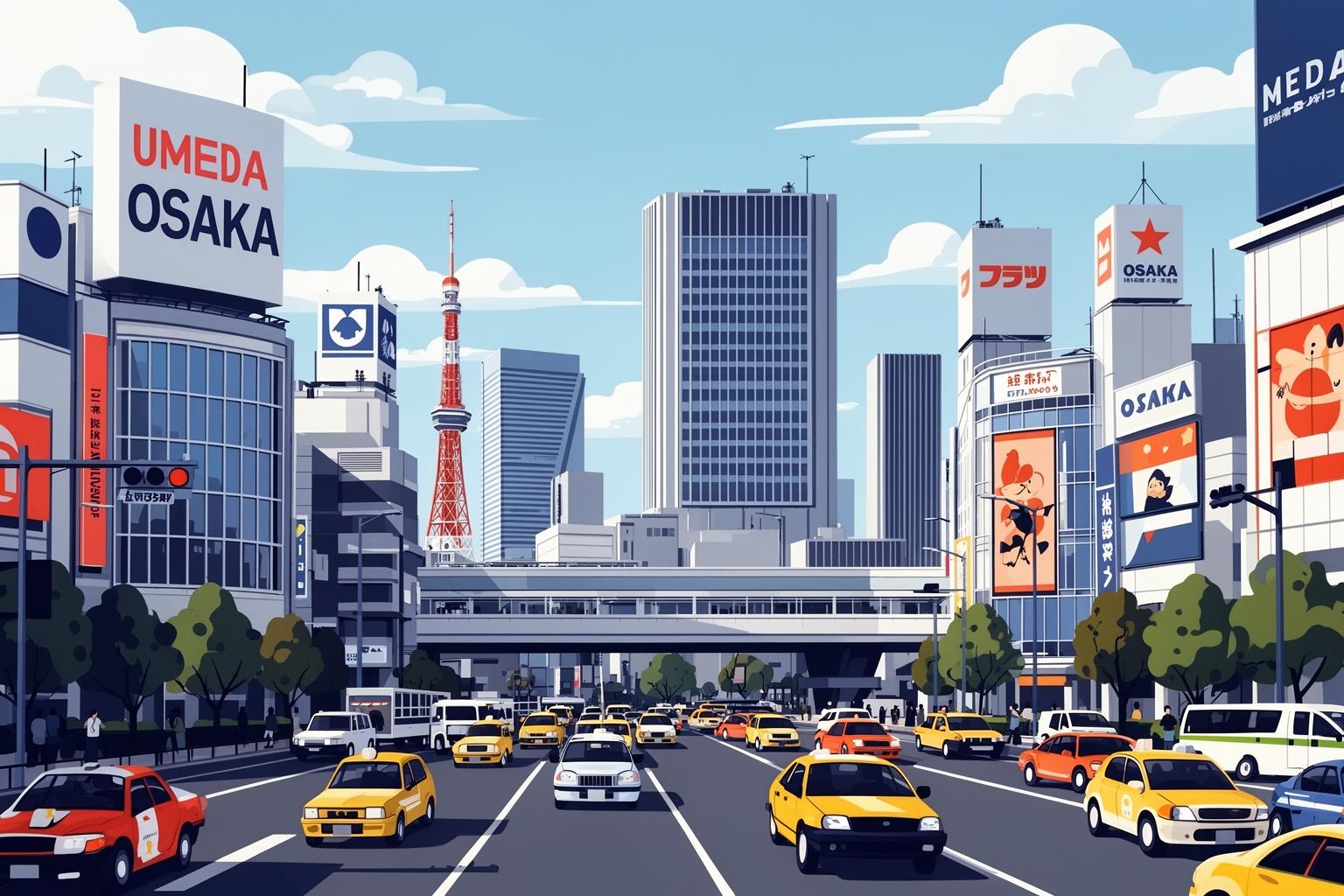
The difference in café work culture between Osaka and Tokyo perfectly mirrors the broader cultural divide between the two cities. In Tokyo, there is a strong focus on specialization and purpose-built environments. You find cafés designed for studying, others for socializing, and dedicated coworking spaces for working. Each setting has a distinct function and a set of expected behaviors. The rules are unspoken but strict. Silence is highly valued. Individuality is expressed through quiet, concentrated work.
Osaka, on the other hand, is strikingly different. It’s a city of merchants rather than bureaucrats. Its guiding principle is pragmatism rather than protocol. An Osakan sees a café as a versatile tool. It serves as a meeting place, a spot for a sales pitch, a break, a study area, a date venue, and yes, a makeshift office. The notion of needing a specially designed, silent space to be productive seems inefficient and somewhat pretentious. Why pay extra for a coworking space when a ¥500 coffee at Tully’s will suffice? This outlook results in café environments that are noisy, lively, and occasionally chaotic, which can be unsettling to outsiders.
There is a charming lack of pretension in this approach. Osakans excel at carving out their own space within a crowd. Their social awareness leans less towards rigid silence and more toward a shared understanding of coexistence. As long as you’re not actively disturbing others—taking loud calls or playing videos without headphones—you’re accepted. The background noise remains just that: background. It’s the sound of commerce and life in motion. This can be incredibly liberating. You don’t have to worry about your keyboard clicks being too loud, nor do you feel the pressure of others silently judging your productivity. You’re simply another person accomplishing tasks in a city that never stops moving. It’s an environment that encourages adaptability and a resilient kind of focus, a valuable skill for any digital nomad.
A Nomad’s Etiquette: How to Not Be That Foreigner
Blending into the Umeda café scene is an art form. It requires reading the atmosphere and respecting the unspoken rules. Here are a few key guidelines to remember.
The Seat Scramble: During busy times (12:00-14:00 and after 17:00), finding a seat becomes a battle. The local habit of reserving a seat with a personal belonging before ordering is typical but can come across as aggressive. A more courteous approach is for one person in your group to wait while another places the order, or simply opt for takeout if it’s too crowded. Never, under any circumstances, ask someone to share a table unless it’s a large communal one. Respect for personal space remains crucial, even in a packed room.
The Power Outlet Lottery: If you require an outlet, your choices are limited, mostly to counter seats. These spots are highly coveted. If you manage to get one, don’t monopolize it all day. Staying for more than three hours is generally considered impolite. If you don’t need power, take a regular table and leave outlet seats for those who do. This small gesture of consideration helps maintain a smooth café environment.
The Volume Control: Headphones are a necessity, not an option. This applies to listening to music or podcasts, as well as conference calls. Taking a Zoom call inside a Japanese café is a significant cultural faux pas. It’s viewed as intrusive and disrespectful to others. If you must take a call, step outside. The same applies to keyboard noise; while ambient noise levels may be high, the sharp clacking of a mechanical keyboard can cut through it. Be considerate about your typing volume.
The Art of the Re-Up: As mentioned, the heart of the unspoken understanding is ongoing transactions. A good guideline is placing one order every two hours. It doesn’t have to be another pricey latte; a small pastry, juice, or a regular coffee will do. This signals to the staff that you recognize and appreciate their space. It transforms you from a mere loiterer into a valued, long-term customer.
Ultimately, finding your favorite café in Umeda is a journey of exploration. It’s about more than just Wi-Fi speed and outlet availability. It’s about discovering the spot where the city’s rhythm blends with your own. You may find that the energetic chaos of a Starbucks near the station sparks your creativity, or that the quiet, nostalgic calm of an old kissaten helps you concentrate. Each café offers a glimpse into the city’s soul—its practicality, energy, hidden pockets of calm, and steadfast belief in fair, honest transactions. Dive into the bustling scene, embrace the noise, and find your corner to get work done. In doing so, you won’t just find a great café; you’ll find your place within the vibrant, buzzing, brilliant chaos of Osaka.