Step off the train at Umeda, and the first thing that hits you isn’t a sight, it’s a sound. A symphony of organized chaos. It’s the rhythmic clack of a million heels on polished floors, the crescendo of train announcements from four different companies at once, the low hum of a city that never just walks—it hustles. This isn’t the silent, orderly march of Tokyo’s Marunouchi. This is Osaka’s corporate heart, and it beats to a different, much faster drum. Umeda is more than a collection of gleaming skyscrapers and department stores; it’s a mindset. It’s a sprawling, multi-layered ecosystem where business gets done with a speed and directness that can feel both refreshing and utterly bewildering to an outsider. Forget what you think you know about Japanese business culture, the hushed tones and the layers of unspoken meaning. Here in Umeda, the rules are written in a different dialect. This guide is your key to decoding that dialect, a roadmap to navigating the professional currents and personal eddies of Osaka’s premier business district. We’re going beyond the office walls to explore the real texture of daily life for a foreign professional here—from surviving the morning commute through the station’s legendary labyrinth to finding your go-to spot for a post-work beer where the conversation is as real as the tempura is crispy. This is your primer for thriving, not just surviving, in the concrete canyons of Umeda.
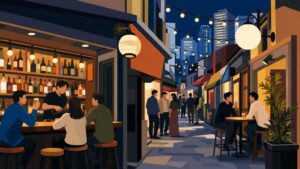
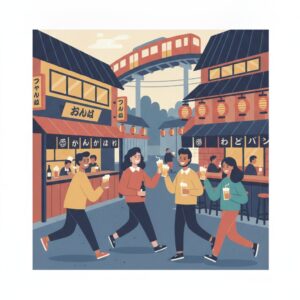
To truly understand the city’s rhythm, venture beyond the skyscrapers and experience the authentic nightlife in the labyrinthine alleys of Tenma.
The Umeda Mindset: More Than Just a Concrete Jungle
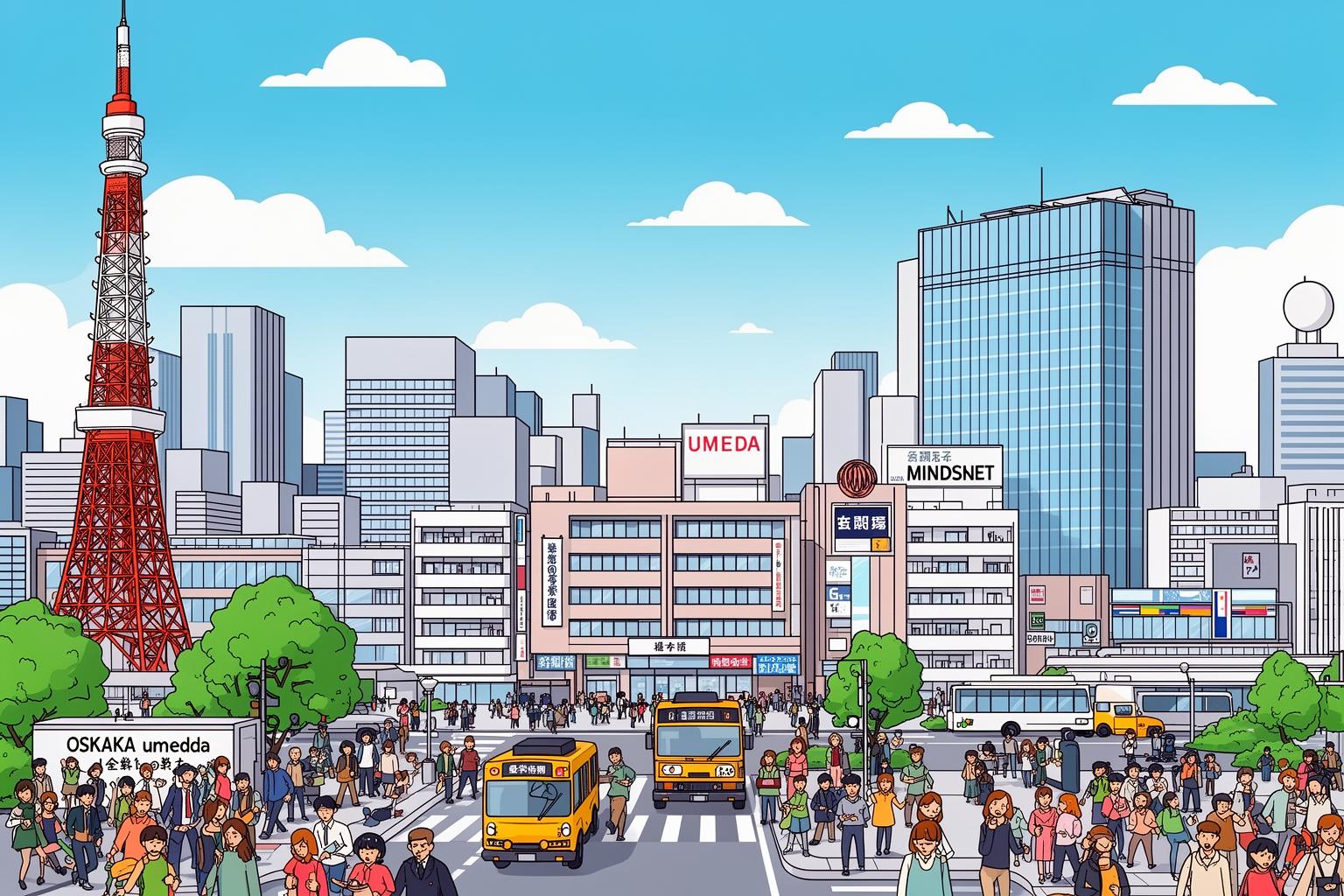
To grasp how to work in Umeda, you must first understand the city’s spirit. Osaka was founded by merchants, not samurai. For centuries, it served as Japan’s commercial powerhouse, the hub where rice was traded and fortunes were made. This pragmatic, straightforward, results-driven attitude is ingrained in Umeda’s corporate culture. It’s a place that values good ideas and profitable outcomes far more than pedigree or blind loyalty to tradition. This fundamental difference often causes confusion for those used to Tokyo’s more hierarchical and process-oriented environment. Here, the shortest path between two points is a straight line, and people respect you for drawing it clearly.
Speed, Efficiency, and the “Chau-chau” Culture
Umeda moves at an unrelenting pace. People don’t wander aimlessly; they have a clear destination and move with intent. This attitude carries over directly into the workplace. Meetings tend to be shorter and more focused. The extensive groundwork and consensus-building known as nemawashi still happens but is often compressed. The objective is to reach a decision, not to endlessly debate procedures.
This creates a communication style that can feel startling. In Osaka, you’ll frequently hear the word “chau,” or its more emphatic form “chau-chau.” It means “no,” “that’s not right,” or “you’re mistaken.” In a Tokyo office, such blunt refusal would be almost unthinkable, usually softened with phrases like “we will consider that point” or “that’s a challenging perspective.” But in Osaka, it’s not intended to be rude. It’s a tool of efficiency—a way of saying, “Let’s not waste time down this road; let’s find the right one quickly, together.” For foreigners, learning not to take this directness personally is the first major challenge. It’s not a personal attack; it’s a collaborative effort to cut through excess and get to the heart of the matter. Once embraced, it clears up ambiguity and lets everyone know exactly where they stand.
The Merchant’s Soul: Pragmatism Over Prestige
To understand business in Umeda, think like a shopkeeper, not a CEO. The key question behind every decision is: “Mokarimakka?”—a classic Kansai expression asking, “Are we making money?” This isn’t about greed; it’s about practicality. A project, idea, or partnership must make sound financial and logical sense. The grand vision takes a back seat to tangible results.
This merchant mindset encourages a surprisingly flat hierarchy in many companies. A brilliant, cost-saving idea from a junior employee can gain traction more quickly than in a rigid corporate structure because the merit of the idea—its practicality and profit potential—outweighs the proposer’s rank. This stands in sharp contrast to the often top-down decision-making process common at many Tokyo headquarters. In Umeda, a well-reasoned argument based on numbers and common sense can sway even the highest executives.
Another aspect of this culture is nekiri, or price negotiation. While you won’t be haggling over office supplies, this mindset permeates business dealings. Everyone seeks good value. Suppliers are expected to be competitive, partners to pull their weight, and employees to be resourceful. It’s a culture that respects thrift and ingenuity and despises waste. This pragmatism powers Umeda—a constant, calculated balancing of risk and reward that keeps the city’s commercial heart beating strong.
Decoding the Daily Grind: An Expat’s Umeda Workday
Gaining a theoretical understanding of a culture is one thing; living it day after day is quite another. The rhythm of a workday in Umeda is both a physical and mental experience, filled with challenges and rewards that shape life in this urban center. From the moment your alarm rings to the last train home, you are immersed in a uniquely Osakan professional environment.
The Commute: Navigating the Umeda Dungeon
Calling Umeda a “station” barely scratches the surface. It’s an underground city, a vast maze of interconnected terminals for JR, Hankyu, Hanshin, and three subway lines. Locals lovingly dub it the “Umeda Dungeon” for good reason. For newcomers, it’s a nightmare. For veteran commuters, it’s a complex but manageable network.
The secret to survival is not memorizing the entire layout but mastering your specific route. Identify your train platform, favorite escalator, and the exit that leads closest to your office building. Commit this path to muscle memory. The flow of human traffic here is unlike Tokyo’s quiet, synchronized shuffle. It’s more chaotic, louder, and energized, demanding active navigation rather than passive drifting. You must be proactive, find your gap, and move with the flow. The underground passages—Whity Umeda, Diamor Osaka—are invaluable allies, climate-controlled thoroughfares that protect you from the stifling summer humidity and harsh winter winds. Navigating by landmarks is key. Learn to orient yourself using the Hanshin Department Store’s snack stands, the red whale sculpture in Hankyu concourse, or the captivating water clock in Osaka Station City’s atrium. These serve as anchors amid constant motion.
Office Culture: Where Kansai-ben Meets Keigo
Within the office, you’ll exist in a fascinating linguistic duality. The standard language is, naturally, polite Japanese with its intricate honorific system (keigo). Emails, formal reports, and presentations all conform to these strict conventions. However, once meetings end or you chat casually by the coffee machine, the formal mask can slip. Bits of Kansai dialect pepper the conversation. A boss might soften a request with “-hen” instead of “-masen,” or a coworker might exclaim “Akan!” (“No way!”) when something goes awry. These moments are meaningful signals—small invitations to a more informal, personal mode of communication and signs that you’re being welcomed into the group.
Humor plays a crucial social role. The comedic duo routine of boke (the fool) and tsukkomi (the straight man) is not just TV fare; it shapes everyday dialogue. Someone makes a slightly absurd comment (boke), and another—perhaps you—responds with a witty retort (tsukkomi). Joining in this banter, or at least understanding it, is essential to being seen as nori ga ii—a good sport who’s easy to get along with. While this may feel unprofessional to foreigners, in Osaka it’s a vital team-bonding tool that breaks down hierarchical walls. Teams that laugh together tend to work together well.
Lunch Break Realities: Quick, Cheap, and Delicious
Lunch in Umeda is a lesson in efficiency. Though department store restaurants offer upscale options for client meetings, the everyday office worker’s lunch is a different matter. The aim is a satisfying, tasty meal, served quickly and affordably. The basements of the Osaka Ekimae Dai-ichi through Dai-yon Buildings are legendary. These somewhat worn yet sprawling underground malls are a haven for salaryman cuisine. You can find everything from curry to ramen to tonkatsu, with most teishoku (set meals) priced well under 1,000 yen.
Another popular choice is the tachigui, or standing-only restaurant. Nestled under train tracks or in narrow station corridors, these small spots serve lightning-fast udon or soba. You purchase a ticket from a machine, hand it to the staff, and your meal arrives in under a minute. You slurp it standing shoulder-to-shoulder with fellow office workers and are out the door in ten minutes. This culture emphasizes quick refueling, not lingering. It’s a functional, solitary, yet deeply satisfying ritual that powers the Umeda workforce through the afternoon.
Life After Five: Decompressing in and around Umeda
The workday in Umeda is intense, but the release valve after 5 PM is equally powerful. The district shifts from a corporate center into an extensive entertainment zone, offering a wide array of ways to relax, connect, and let off steam. How you spend your evening reveals much about your role in the city’s social fabric. This is where professional bonds are strengthened and where you find your own personal refuge from workplace pressures.
The Izakaya Hierarchy: From Corporate Chains to Gritty Alleyways
Drinking with colleagues, or nomikai, is a fundamental part of Japanese work culture, and Umeda provides a tiered selection of venues for this tradition. At the top are the large, modern izakayas in shiny new buildings like Grand Front Osaka or LUCUA. These establishments are clean, spacious, and offer consistent menus. They are the preferred choice for large, formal company gatherings or entertaining important clients where a polished atmosphere is essential. The vibe remains professional, even when relaxed.
To discover the true heart of Osaka’s nightlife, though, you need to go deeper. The Hankyu Higashidori Shotengai is a long, covered arcade branching into a web of narrow alleys filled with small, often gritty but lively bars and eateries. Here, real bonding takes place. It’s louder, smokier, and far more intimate. Social hierarchies break down quickly. After a few highballs, you might be engaged in a deep conversation with your section chief about his fishing hobby or a shared favorite band.
Even further down the rung are the tachinomi, or standing bars, found in the corridors of the Ekimae buildings or beneath the JR train tracks. These straightforward spots invite you to rub elbows with strangers, order drinks and small dishes directly from the counter, while your bill is tracked with a marker on the table. This is the most egalitarian form of socializing, where a construction worker, a salaryman, and a foreign IT consultant can all share a laugh over an inexpensive beer. Mastering the art of the nomikai means knowing which type of venue fits each occasion and feeling at ease in all of them.
Beyond the Drink: Finding Your Third Place
Life in Umeda isn’t just about work and drinking. Discovering a “third place”—somewhere that is neither home nor office—is vital for maintaining sanity. For many, this sanctuary takes the shape of Umeda’s sprawling bookstores. Maruzen & Junkudo in Chayamachi and Kinokuniya in Grand Front Osaka are multi-level temples of literature, manga, and magazines. You can lose yourself for hours browsing new releases or foreign language titles, enjoying a quiet, intellectual break from the city’s sensory rush.
The area is also a cultural hub. The Umeda Arts Theater stages major productions and musicals, while several cinemas, including the expansive Toho Cinemas complex, provide blockbusters escapes. For a different kind of experience, wandering through the food basements (depachika) of the Hankyu, Hanshin, or Daimaru department stores offers a dazzling, meticulously curated world of gourmet foods, intricate sweets, and artisanal goods.
In recent years, a wave of specialty coffee shops has cropped up in the quieter streets on Umeda’s outskirts. These cafes stand in stark contrast to chain outlets, serving carefully crafted coffee in calm, thoughtfully designed spaces. They’re perfect for a weekend afternoon of reading or a peaceful moment of reflection before returning to the bustle.
Escaping the Center: Neighborhoods on Umeda’s Doorstep
Few people actually live in Umeda’s commercial core. The real charm lies in the surrounding neighborhoods, each offering a distinct lifestyle just a short walk or train ride away. Finding the right one is essential for a balanced life.
Nakazakicho, just a 15-minute walk east, feels like stepping back in time. This quiet residential area survived wartime bombings, leaving a network of narrow streets and old wooden row houses (nagaya). Today, these buildings house quirky vintage shops, independent galleries, and cozy, intimate cafes. It’s a bohemian enclave, a peaceful village slowing down the pace and providing a perfect counterbalance to Umeda’s corporate shine. It’s an ideal neighborhood for creatives, freelancers, or anyone seeking a sense of history and community.
A little farther east is Tenma. Anchored by the Tenjinbashisuji Shotengai—the longest covered shopping street in Japan—this area embodies Osaka’s down-to-earth, unpretentious spirit. It’s lined with everything from traditional pickle shops and bargain clothing stores to lively sushi joints and pachinko parlors. The vicinity of Tenma Station is a food lover’s paradise, a dense cluster of affordable, high-quality izakayas and eateries always bustling with locals. It’s vibrant, slightly chaotic, and offers exceptional value, making it a favorite for young professionals.
Just south of Umeda lies Fukushima, a neighborhood transformed into one of Osaka’s hottest gourmet hotspots. Though still more affordable than central Umeda, it boasts a slightly more refined, grown-up atmosphere compared to Tenma. The streets near Fukushima Station are full of innovative dining options, from Michelin-starred restaurants to tiny specialty bars focused on sake or natural wine. It’s a neighborhood for those who appreciate excellent food and a sophisticated yet laid-back nightlife. With convenient access to Umeda, it blends residential comfort with urban excitement perfectly.
The Osaka vs. Tokyo Dynamic in the Workplace
For any foreigner working in Japan, comparing Osaka and Tokyo becomes unavoidable. In the corporate world, these distinctions go beyond mere local flavor; they significantly affect communication, decision-making, and relationship-building. Grasping this dynamic is crucial for successfully managing your career in Umeda.
Communication Styles: Directness vs. Strategic Ambiguity
The most notable difference is in communication. As noted, Osaka’s business culture values directness. A straightforward “yes” or a clear “no” is favored over an ambiguous, non-committal response. People say what they mean and expect you to do the same. This can result in faster progress and a clearer understanding of a project’s status.
Conversely, Tokyo’s communication style tends to be more indirect and nuanced. The skill of reading the air (kuuki wo yomu) is essential. A phrase like “That will be difficult” (sore wa muzukashii desu ne) often serves as a polite but firm refusal. Extended silence in a meeting might indicate strong disagreement rather than reflection. This reliance on unspoken signals and strategic ambiguity aims to preserve harmony (wa) and avoid direct conflict. For foreigners, Tokyo’s communication style can be a minefield of potential misunderstandings, while Osaka’s bluntness, though initially striking, is usually easier to interpret correctly. A “maybe” in an Osaka meeting typically means “show me the numbers and I’ll consider it,” but in Tokyo, it might mean anything from “yes, but I need to check with my boss” to “absolutely not, and I’m surprised you even asked.”
Building Relationships: Formality vs. Personal Connection
Both cities prioritize relationships, but in different ways. In Tokyo’s corporate environment, relationships are often formal and develop gradually through a series of structured interactions. Respect for hierarchy and loyalty to the company form the basis of these connections. The divide between work and private life is usually clear.
In Osaka, however, that line blurs much sooner. Osakans prefer doing business with people they know and like on a personal level. Building rapport is more rapid and intimate, often happening over lively dinners, shared jokes, and conversations that extend well beyond work topics. They want to learn about your family, hobbies, and your views on the Hanshin Tigers baseball team. Being omoshiroi — interesting and funny — is highly prized, as it demonstrates you are a human being, not just a corporate robot. This focus on personal connection means that once you’re “in,” you’re truly accepted. The loyalty formed extends beyond the company to the individuals themselves, creating stronger and more resilient business partnerships.
Cost of Living and Quality of Life
On a practical level, the differences are striking. Although salaries for equivalent corporate positions in Osaka may be 10-20% lower than those in Tokyo, the cost of living is substantially cheaper. Rent for an apartment of similar size and quality can be 30-50% less. Dining out, having a drink, and even daily groceries are more affordable. This financial reality greatly influences quality of life. The pressure to work excessive hours just to cover basic expenses is less intense. Disposable income stretches further, allowing for more travel, hobbies, and savings.
Moreover, the city’s size enhances work-life balance. While Umeda is a major urban area, it is more compact than the sprawling expanse of Tokyo. Commutes tend to be shorter. Getting out of the city is easier, with the mountains of Kobe and Nara, and the beaches of Wakayama all reachable by a reasonably short train ride. This access to nature and varied environments offers a vital psychological break that can be harder to come by in Tokyo’s vast metropolis. For many expats, the mix of a vibrant urban work life with a more manageable and affordable personal life makes Osaka a more sustainable choice in the long run.
Practical Survival Tips for the Umeda Professional
Thriving in Umeda demands a set of practical skills that extend beyond language proficiency or job performance. It involves learning the unspoken rules, mastering the surroundings, and presenting yourself in a manner that aligns with the local culture.
Mastering the Maze: Your Umeda Station Survival Guide
As noted, the Umeda/Osaka station complex is a formidable challenge. Here’s a straightforward, actionable plan to conquer it. First, on your initial weekend, spend a few hours simply walking. Move from your main train line’s gate to your office exit without any pressure. Repeat this five times. Then, do the same journey in reverse. Second, choose your landmarks and rely on them. Whether it’s a particular convenience store, a bakery, or a large digital screen, use these as visual markers. Third, recognize that each train company (JR, Hankyu, Hanshin) has its unique atmosphere, architecture, and signage. Being able to identify which zone you’re in is a key step toward getting oriented. Lastly, don’t hesitate to ask for help—but be precise. Instead of asking for “the subway,” ask for the “Midosuji Line.” People are usually happy to guide you if you give them a clear point of reference.
Dress Code: Business Casual with Personal Flair
The classic Japanese business suit is the standard attire in Umeda, but there are subtle differences. Compared to Tokyo’s sea of navy and charcoal, you’ll notice a bit more variety and individual expression in Osaka. Slightly patterned ties, light-colored suits in summer, or a stylish pair of shoes are more common. The goal is to look sharp and well put-together, but not overly conformist. Tasteful individuality is appreciated.
During summer, the government’s “Cool Biz” campaign is eagerly adopted. From May through October, ties and jackets are often set aside in the office. This isn’t just a recommendation; it’s necessary given Osaka’s intense humidity. Wearing a full suit in August will mark you as either a tourist or someone unfamiliar with local climate norms. The best approach is to observe what your supervisors and colleagues wear and match that, perhaps adding a small personal touch.
Networking, the Osaka Way
Building a professional network in Umeda is an active and social process. While there are official industry events and seminars, the most meaningful relationships are formed in more informal settings. The cardinal rule is: never decline a nomikai invitation, especially during your first six months. This is where you transition from “the new foreigner” to “Kenji from marketing.” It’s where you catch office gossip, learn about new projects, and reveal your personable side.
Always carry your business cards (meishi). Keep them with you even on weekends—you never know when you might meet someone at a small bar in Tenma or a café in Nakazakicho. Exchanging meishi is an essential ritual. Present your card with both hands and receive others’ cards the same way. Take a moment to study the card before carefully placing it in a card case—never in your pocket. Finally, be ready to talk about yourself. Osakans are curious and will ask where you’re from, what you enjoy about Japan, and your impressions of their city. Having a few friendly, engaging responses prepared is a simple but powerful way to make a great first impression and foster the personal connections that truly matter in Osaka’s business culture.