So you’ve moved to Osaka. You found the perfect apartment, you’ve mastered the train lines from Umeda to Namba, and you can finally order takoyaki without pointing. You’re settling in. Then, one day, you find a crisp, formal-looking envelope in your mailbox. It’s not a bill, it’s not junk mail. It’s an invitation, of sorts. An invitation to join the local chonaikai, the neighborhood association. It comes with a fee, a list of duties, and a palpable sense of expectation. Your Japanese neighbor mentions it in passing, “You’ll be joining, of course?” It doesn’t feel like a question. Suddenly, this city that felt so wide open and free has presented you with a very local, very mandatory-feeling structure. What is this organization? Is participation truly required? And what does it say about the real, day-to-day social fabric of Osaka? This isn’t something you’ll find in a travel guide. This is the bedrock of community life, a system that can be baffling, frustrating, but also unexpectedly rewarding for a foreign resident trying to understand what it really means to live here.
This is where the glossy image of Japan crashes into the reality of community obligations. The chonaikai is a hyper-local governing body, a remnant of a much older social structure that still holds immense sway in the daily lives of millions. It’s the group that organizes the summer festival, manages the local garbage collection point, and distributes emergency information during a typhoon. And in Osaka, a city built on the shoulders of merchants and tight-knit communities, the chonaikai takes on a particularly distinct flavor. It’s less about quiet, harmonious consensus and more about pragmatic, often blunt, cooperation. Understanding how to navigate this system is more than just a practical skill; it’s a masterclass in the Osakan mindset—direct, community-oriented, and always, always concerned with value for money. Forget what you think you know about Japanese social etiquette for a moment. We’re diving deep into the world of mandatory volunteering, rotating duties, and the subtle art of belonging in an Osaka neighborhood.
Understanding these unspoken rules can be as crucial as learning the local dialect, such as the unique phrases of Osaka’s love and laughter language.
Deconstructing the Chonaikai: What It Is and What It Isn’t
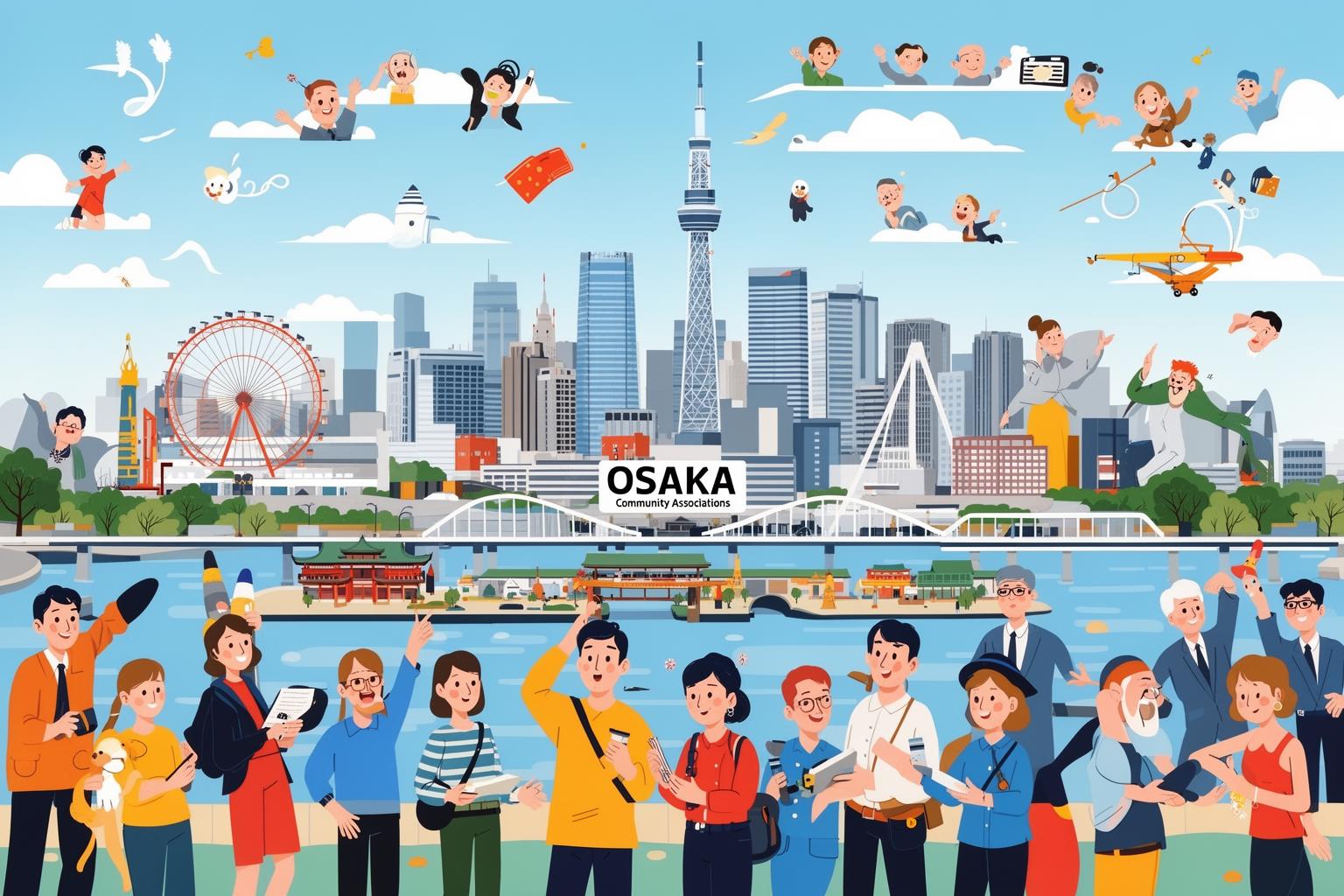
Let’s first clarify the definition. A chonaikai or jichikai is a voluntary neighborhood association. The essential point here is “voluntary.” Legally, no one can force you to join, nor can you be fined or arrested for refusing. This is the clear-cut, official reality. However, ignoring this fact is necessary, because the real situation on the ground is much more complex and nuanced. Social pressure to participate can be intense, especially in traditional neighborhoods filled with single-family homes rather than modern apartment buildings. Joining is often presented as a fundamental duty of residents, a basic expectation for anyone wishing to be recognized as part of the community. In many rental contracts, you might even find a clause requiring tenants to take part in the local chonaikai, which blurs the distinction between recommendation and obligation.
So, what does this group actually do? Think of it as the smallest, most detailed level of civil administration. They are the caretakers of their immediate surroundings. Their responsibilities are unexpectedly extensive and deeply embedded in everyday life. They maintain streetlights, organize neighborhood safety patrols, and manage the local community center. They set up tents for the summer matsuri, pound mochi for New Year’s celebrations, and conduct emergency drills in preparation for earthquakes. Importantly, they also oversee the garbage collection points. In a country with an almost religious commitment to proper waste disposal, this role gives the chonaikai significant influence and importance. If you want your trash picked up without issue, you need to stay on good terms with those managing the process. This isn’t a government-run service; it’s operated by the community, and your participation is your contribution to that service.
This system originates from a pre-modern era, specifically the Edo period’s gonin-gumi system, which organized households into groups of five for mutual responsibility and monitoring. While its purpose has changed over time, the fundamental idea of collective responsibility remains. After World War II, the government leveraged these organizations to spread information and manage civil life. Today, they act as a crucial link between city government and individual residents. The ward office doesn’t communicate with every person directly; instead, it contacts the chonaikai, which then disseminates information through newsletters and a shared clipboard called a kairanban. It’s an analog method in a digital age, but it works remarkably well, especially for reaching elderly residents who may not use the internet. Understanding this history is essential to appreciating why the chonaikai is more than just a social group; it’s a semi-official part of the civic apparatus.
The Osaka Difference: Pragmatism Over Polish
How does this specifically play out in Osaka? This is where it gets interesting. If you’ve lived in Tokyo, you might be familiar with neighborhood associations that operate with a certain cool, formal distance. Rules are written down, procedures followed, and meetings tend to be quiet, with consensus reached through minimal debate. It’s orderly, predictable, and can feel somewhat impersonal. Osaka, however, is different. The merchant spirit of the city permeates everything, including the chonaikai.
Meetings in Osaka can be loud and argumentative. People aren’t afraid to ask tough questions, especially regarding money. The chonaikai fee, usually a few hundred to a few thousand yen per month, is treated with the same seriousness as a corporate budget. The treasurer’s report is more than a formality—it’s closely examined. “Why did we spend so much on paper for festival flyers? Can’t we find a better deal?” “This quote for repairing the community hall roof seems high. Did we get a second opinion?” Such scrutiny isn’t seen as rude or disruptive; it’s considered responsible. Osakans have a deep-rooted aversion to waste (mottainai) and a strong desire to get tangible value for their money. They pay their dues and expect the organization to be run efficiently and transparently. This can be surprising to foreigners who associate Japanese culture with conflict avoidance. In Osaka, direct, pragmatic debate signals active engagement.
This pragmatism also extends to problem-solving. While a Tokyo association might form a committee to study an issue, an Osaka chonaikai is more likely to have a few influential members hash out a practical solution immediately. There’s a get-it-done mindset that prioritizes results over process. This can also mean that rules are sometimes viewed as flexible guidelines. If common sense calls for an exception, it’s more likely to be granted in Osaka—provided a good case is made. The communication style is also much more direct. Instead of subtle hints, if you’re sorting your garbage incorrectly, you won’t receive a polite, anonymous note. You’ll likely get a direct, face-to-face correction from the person in charge of the garbage station, who will show you exactly what you did wrong. This isn’t meant to be malicious; it’s meant to be efficient. They see a problem, fix it, and move on. Outsiders often misunderstand this bluntness as rudeness, but for Osakans, it’s simply the quickest way to maintain community standards.
The All-Important Question of Money
Let’s follow the money, because in Osaka, that’s always the heart of the matter. When you hand over your monthly fee, where does it actually go? This is no secret and is a constant topic of discussion. The funds are the lifeblood of all community activities, and how they’re allocated reflects the neighborhood’s priorities.
A significant portion often goes toward maintaining community property. This includes electricity for streetlights not covered by the city, cleaning supplies for the garbage station, and upkeep of the local park or community hall. It’s the unglamorous but essential work of keeping the neighborhood safe and clean. Another major expense is festivals and events, covering everything from renting equipment for the summer festival, buying ingredients for New Year’s mochi pounding, to purchasing small gifts for children and the elderly during holidays. These events are seen as the social glue that holds the community together, providing a tangible return on the investment of time and money.
Then there are disaster preparedness funds, which is a huge selling point for the chonaikai, especially in an earthquake-prone country. Part of the fees is used to stock an emergency supply shed with water, hardtack biscuits, portable toilets, blankets, and tools. After the devastating 1995 Great Hanshin Earthquake, the importance of this hyper-local response network became deeply ingrained in the collective consciousness. The chonaikai is the first line of defense—the people who check on neighbors and share resources before official help arrives. For many, this peace of mind alone justifies the monthly fee. Finally, there are administrative costs: printing newsletters, paying small stipends to association leaders, and occasionally making donations to the local Shinto shrine, often seen as the community’s spiritual heart. In Osaka, you can be sure every one of these expenses is debated, justified, and accounted for with a level of detail that would impress a corporate accountant.
The dreaded Toban: Your Turn in the Rotation
Perhaps the single greatest source of anxiety for new residents, both Japanese and foreign, is the toban system. This is the rotating duty roster that ensures all necessary tasks are completed by distributing them among the member households. Your turn will eventually come, and when it does, you’re expected to fulfill your duties. This is at the heart of the association’s “participation” component, where the commitment of time and effort becomes very tangible.
What does serving on toban duty actually involve? The specific responsibilities vary by neighborhood but generally fall into a few main categories. The most common duty is collections and distributions. This involves going door-to-door to collect the monthly chonaikai fees from your assigned block of houses. It also means acting as the distribution point for the kairanban, the circulating clipboard containing community announcements. You’ll be responsible for reading it, stamping it with your seal to confirm you’ve seen it, and passing it along to the next house. Additionally, you’ll distribute the monthly newsletter, city notices, and flyers for upcoming events.
Another significant role is event support. During festivals, you’ll join the setup and cleanup teams. You may be asked to staff a food stall, direct traffic, or manage a children’s game. On neighborhood-wide cleanup days, you’re expected to participate, rake in hand, helping to sweep streets and pull weeds. Then there’s the major responsibility of managing the garbage station. In many neighborhoods, the toban is charged with unlocking the garbage cage in the morning, ensuring proper sorting, and cleaning the area after collection. This might involve untangling nets, shooing away crows, and occasionally opening improperly disposed bags to identify the owner for a “gentle re-education.” It’s not glamorous work, but it’s viewed as an essential service.
The Social Calculus of Refusal
Can you say no? Technically, yes. But the social repercussions can be serious. Declining toban duty is not taken lightly. In a close-knit community, it can label you as someone unwilling to contribute—a person who enjoys the benefits of the community, such as clean streets and safety, without taking part in the effort. In Osaka, the response will likely be a blunt, “Why not?” and you’ll be expected to provide a solid reason. “I’m too busy” usually isn’t accepted, since everyone is busy. Valid excuses might include frequent work travel, caring for a sick relative, or having a newborn. Even then, there’s an expectation you’ll find another way to contribute, perhaps through a larger financial donation or by taking on tasks you can do from home.
For foreign residents, the language barrier can be both a challenge and, at times, a temporary shield. Claiming ignorance or limited Japanese might earn you a pass during your first year, but it won’t serve as a long-term solution. A more proactive approach is often better received. This is where Osakan pragmatism can work in your favor. If you approach the chonaikai leader and explain your situation honestly and directly—“My Japanese isn’t good enough for fee collection, but I’m strong and willing to help with physical festival setup”—you’re likely to be met with understanding. They value straightforwardness and a willingness to contribute in some way. What they don’t appreciate is avoidance or silence. Ignoring the request will be viewed far more negatively than engaging in open negotiation. The worst thing you can do is simply not show up. That will be remembered. It’s a delicate balance, managing the demands of contemporary life alongside the expectations of a system designed for a different era.
The Unseen Benefits: Why It’s Not All Bad
With all the discussion about duties and social pressure, it’s easy to view the chonaikai as an entirely negative experience. However, that would be a serious oversimplification. Despite its frustrations, the system offers real, tangible benefits that often go unnoticed until they are needed. The most important, as mentioned, is disaster preparedness. When a typhoon approaches Osaka, the chonaikai serves as the network that spreads evacuation warnings and information about local shelters. When the ground shakes, they maintain a list of elderly residents living alone who require checking on. This is not theoretical; it’s a proven system that saves lives. In the chaotic aftermath of a disaster, having a group of neighbors you know, who have plans and resources, is an invaluable asset.
The social benefits are also considerable, particularly for those looking to establish roots. For families with children, the chonaikai provides an immediate social network. Local festivals, children’s parties, and safety patrols create a village-like environment where kids grow up familiar with their neighbors and parents support each other. It nurtures a sense of safety and belonging that is difficult to achieve in the anonymity of a big city. Even for singles or couples, it offers a way to connect with the community beyond casual encounters at the convenience store. You learn your neighbors’ names. You have people who will notice if your mail starts to pile up. It creates a subtle, ongoing sense of security that comes from being known.
Moreover, the chonaikai is your channel to local information unavailable elsewhere. The newsletter informs you about a new bakery opening nearby, a planned power outage, or a recent series of bicycle thefts. It’s hyper-local knowledge that smooths daily life and connects you to the unique rhythm of your part of the city. Participation, even minimally, shows your neighbors that you care about the community. This can yield many small rewards. The elderly woman next door might share some of her garden vegetables with you. The man down the street who runs a hardware store may offer advice on a home repair. These small acts of kindness are the currency of a healthy community, and the chonaikai, despite its flaws, is the engine that drives it.
Navigating the Labyrinth: A Practical Guide for Foreigners
So, you’ve decided to get involved. How can you do so without committing a series of cultural blunders? The key is to be proactive, humble, and straightforward—a combination that works well in Osaka.
First Steps: Gathering Information
When you first move in, inquire about the chonaikai. Your real estate agent is a good initial contact. Ask about the fee, typical responsibilities, and the general level of activity. In some modern apartment buildings, especially high-rises in Umeda or Namba, there might not be a traditional chonaikai. Instead, a building management association handles similar tasks (such as cleaning and maintenance) but places less emphasis on social events. In older, low-rise neighborhoods, participation is much more expected. Introduce yourself to your immediate neighbors and the designated chonaikai representative for your block (hancho). A small gift, like a box of cookies or a towel, is a traditional gesture when making introductions. This simple act helps establish goodwill from the very start.
The Language Barrier: Your Biggest Challenge
Let’s be honest: this is the biggest hurdle. All communication will be in Japanese. Newsletters will be dense with text and official jargon. Meetings will proceed at a rapid, natural pace. Don’t expect any English support. This is where being strategic is important. Use translation apps like Google Lens to grasp the meaning of written materials. If you have a Japanese friend or colleague, ask them to help you interpret important documents. When it comes to meetings or your toban duty, it’s essential to be upfront about your language limitations. A phrase like, “Sumimasen, watashi wa mada nihongo ga heta desu ga, dekiru koto wa isshokenmei ganbarimasu” (I’m sorry, my Japanese is still not very good, but I will do my best) goes a long way. It shows humility and willingness to try. People are generally patient and willing to help if they see you’re making an effort.
Navigating Your Toban Duty
When it’s your turn for toban, don’t panic. First, make sure you clearly understand your duties. Ask the previous person on the roster to guide you through the tasks. Obtain a list of the houses you are responsible for. When collecting fees, a simple, polite approach works best. If you can’t handle a long conversation, a smile and a clear phrase like “Chonaikaihi, onegaishimasu” (The neighborhood association fee, please) will suffice. Keep a small notebook to track who has paid. For distributing the kairanban, the process is straightforward: accept it from one neighbor, stamp it, and deliver it to the next. The most important thing is to be dependable and not break the chain. If you will be away, inform your neighbors or the hancho in advance so they can arrange alternatives. Communication is crucial. The pragmatic Osakan will forgive many things, but not someone who disrupts the system due to carelessness or poor communication.
To Join or Not to Join: The Final Consideration
In the end, the choice is yours. If you are a short-term resident, a student in a dormitory, or living in a modern high-rise with frequent turnover, you can likely opt out with minimal social friction. Participation expectations are much lower in these transient settings. However, if you plan to stay in Osaka long-term, especially in a residential neighborhood with a family, the situation changes. Joining the chonaikai is an investment in your social integration. It signals that you view yourself as part of the community, not just a temporary resident. The initial discomfort and time commitment can pay off over time through a deeper sense of belonging, a stronger support network, and a richer understanding of the city you call home. It’s a trade-off: you give up some time and independence in exchange for the benefits and security of the collective. In the pragmatic, interdependent world of Osaka, it’s a deal many people—even in the 21st century—are still willing to make.