When you first touch down in Osaka, your senses get a workout. The city hits you with a wall of sound, a blast of sizzling street food, and a visual riot of neon that screams, “We are not Tokyo.” It’s loud, it’s a little gritty, and it’s unapologetically alive. But after the initial shock of Dotonbori’s flashing signs and the sheer human density of Umeda Station, you start looking for the city’s real pulse. You want to know where the actual rhythm of daily life unfolds, far from the tourist tracks. That’s when you find the shotengai, the neighborhood shopping arcade. And let me tell you, your first time in a real, workaday shotengai is a whole different kind of sensory overload.
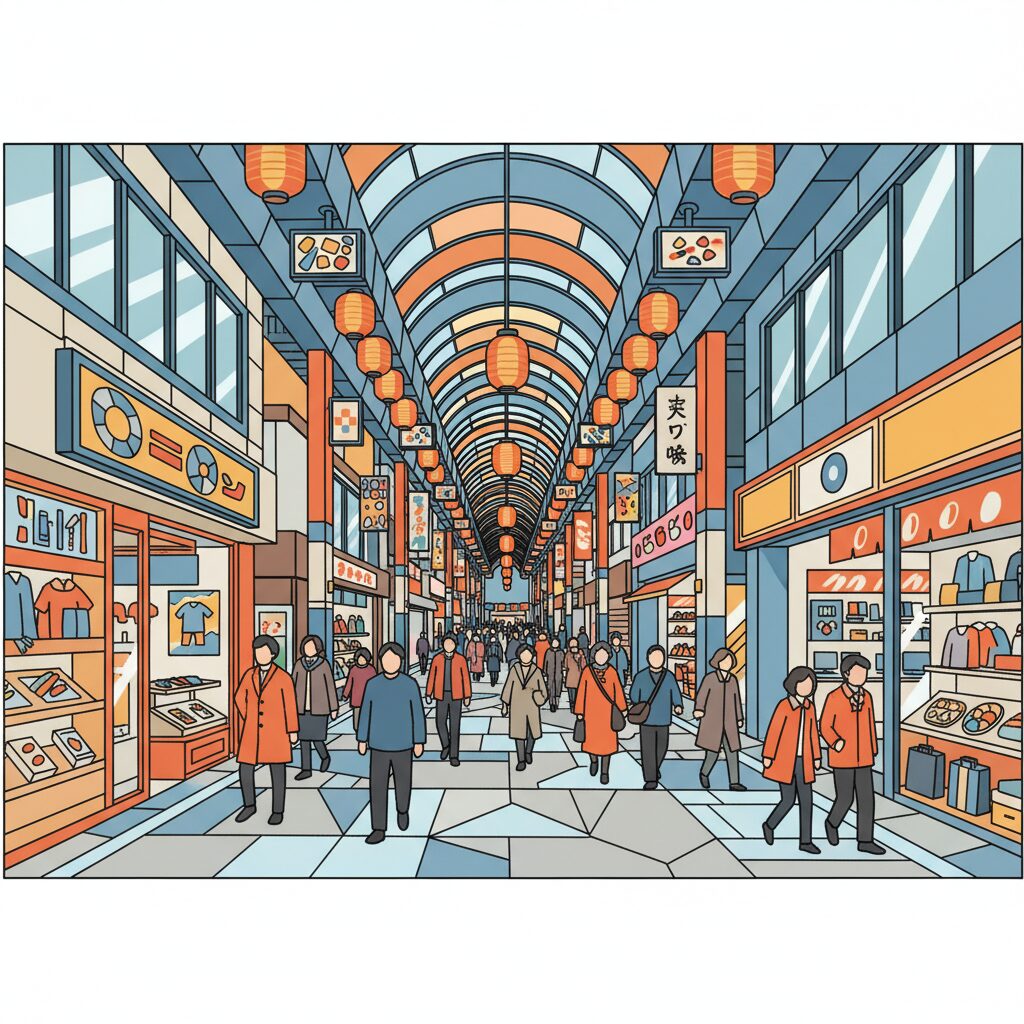
My first encounter wasn’t with Tenjinbashisuji, the famously long and polished arcade that rightfully gets its share of attention. It was a smaller, nameless artery off a minor train station, a covered street that felt less like a shopping destination and more like a time capsule. The air was thick with the smell of pickled daikon, grilled fish, and something sweet and savory I later identified as dashi simmering in a tiny udon shop. Fluorescent lights hummed overhead, casting a flat, honest glow on worn linoleum floors. Instead of piped-in pop music, the soundtrack was a cacophony of bicycle bells, the rhythmic chop-chop-chop from a butcher’s block, and the gravelly voices of shopkeepers calling out greetings. It wasn’t pretty. It wasn’t sleek. And it was utterly captivating. It felt like I’d stumbled from the public street into a massive, semi-private hallway connecting hundreds of homes. In a way, I had. Because in Osaka, a shotengai is so much more than a place to buy your groceries. It’s the city’s living room, its social switchboard, and the most authentic theater of Osakan culture you’ll ever find.
To truly understand this unique shotengai way of life, you need to learn its unspoken rules and rhythms.
The Unspoken Language of Commerce
Across much of the world, shopping has been reduced to a quiet, efficient, and largely impersonal routine. You enter a brightly lit supermarket, fill your cart, scan your items at a self-checkout, and leave without speaking to a single person. It’s a system designed for speed and convenience. The Osaka shotengai follows a completely different approach. Here, the transaction serves merely as a pretext for interaction. Commerce is conversation, and exchanging money takes a backseat to exchanging words, energy, and mutual recognition.
More Than Just a Transaction
Step up to a fishmonger in places like Kuromon Ichiba—or better yet, a smaller arcade in Tenma or Nakazakicho. You don’t simply point at a piece of salmon and grunt. The whole process is a dialogue. The vendor, a man whose hands have likely handled more fish than you’ve ever seen, will look you in the eye and open a conversation. “What’re you making tonight?” he asks in his thick Kansai dialect. You mention you’re thinking of grilling it. He nods and points to another cut. “This one’s better for grilling. More fat. Just put a little salt on it, that’s all it needs. Don’t you dare use soy sauce on this.” He’s not just a seller; he’s a consultant, a chef, a gatekeeper of quality. The purchase comes with a bonus: an expert-level cooking lesson.
This marks a fundamental difference between Osaka and Tokyo. In Tokyo, service is impeccable—polite, precise, flawless. But it often feels like it’s performed behind a glass pane. There’s a professional distance, a respect for personal space that, in its own way, creates separation. In an Osaka shotengai, that pane of glass is broken. Shopkeepers get involved in your business. They have opinions and want to engage. They’re not merely serving a customer; they’re nurturing a relationship. The few extra yen you pay for your fish is the price of that relationship, and for most Osakans, it’s a bargain.
The Art of the “Maido”
Listen carefully as you wander an arcade. You’ll hear a single word echoing off the walls, a continuous, rhythmic refrain forming the auditory foundation of the place. “Maido!” A fruit vendor shouts it to a woman passing by on a bicycle. “Maido!” The tofu maker calls to a customer leaving his shop. “Maido, maido!” A butcher says while hanging up the phone. Literally translated, it means something like “every time,” shorthand for “thank you for your continued patronage.” But its true meaning is much more fluid and vital. It’s “hello,” “thanks,” “see you around,” and “I see you.”
“Maido” is the verbal glue that binds the shotengai community. It acknowledges presence and reinforces relationships. It’s a simple, low-effort, high-impact way to maintain the social fabric. When you become a regular, the owner’s “Irasshaimase” (Welcome) eventually warms into a heartfelt “Maido!” It’s a subtle promotion—from faceless consumer to recognized member of the tribe. This continual, casual reaffirmation of connection embodies the Osakan mindset. Relationships aren’t crafted through grand gestures but through the daily accumulation of small acknowledgments, and “Maido” is the sound a strong community makes.
Haggling, Discounts, and “Omake” Culture
Many foreigners mistakenly believe haggling is a major taboo in Japan. In a high-end Ginza department store, this is true. But in an Osaka shotengai, the rules are more relaxed. This isn’t aggressive, high-stakes bargaining as you might find elsewhere in Asia. It’s a playful dance, part of the communication. Especially near closing time, when the vegetable seller wants to clear some spinach piles, a bit of friendly negotiation is often welcome. It’s less about saving a few yen and more about enjoying the interaction. It’s another way to connect.
Even more central to the shotengai economy is omake, the practice of giving a little extra. You buy five croquettes, and the lady at the counter tosses in a sixth for free. You request 200 grams of minced pork, and the butcher gives you 220 but charges for 200. The vegetable vendor adds a handful of green onions to your bag alongside your daikon radish. This isn’t a calculated business tactic from an MBA playbook. It’s a gesture of goodwill, a spontaneous act of appreciation. It means, “I see you, I value you, and here’s a little something to show it.” That extra potato or free croquette forges a bond far stronger than any loyalty card or points system could. It’s a transaction lubricated by generosity—the very soul of Osaka’s merchants.
The Shotengai as a Social Safety Net
In the vast anonymity of a modern city, it’s easy to feel invisible. People can live in apartment buildings for years without ever learning the names of their neighbors. While we are more digitally connected than ever, we often remain physically isolated. The shotengai offers a powerful, analog remedy to this contemporary issue. It acts as a de facto community center and an informal social safety net, sustained by the countless daily interactions that take place beneath its roof.
Everybody Knows Your Name
Shopkeepers in a neighborhood shotengai are more than mere vendors; they serve as the eyes and ears of the community. They are the unofficial guardians of the neighborhood’s rhythm. They know which children should be in school, which elderly residents live alone, and who has been feeling unwell lately. They observe the subtle changes in daily routines that no security camera or algorithm could ever detect.
This is not just a charming, nostalgic idea—it has real-world impact. There are many stories of an obaa-chan (grandma) who buys her daily block of tofu at the same time every day. One day, she fails to appear. The tofu-ya owner, after a few hours, grows concerned. Knowing where she lives, he goes to her apartment to check on her, discovering she has fallen and cannot get up. He calls an ambulance. The shotengai saved her life. This hyper-local awareness system emerges naturally from a community built on face-to-face commerce. When your pharmacist, butcher, and baker all know your name and habits, you become part of a network of care. You are seen. That feeling of being noticed is a profound form of security that a sterile, efficient supermarket simply cannot provide.
A Stage for Daily Life
Stroll through a shotengai in the late afternoon, around 3 p.m., and it transforms into a lively social hub. You’ll find groups of schoolchildren, freshly released from their classrooms, spending their pocket money on 100-yen takoyaki or warm croquettes. They aren’t just customers; they are integral to the ecosystem. Shop owners tease them, ask about their exams, and gently shoo them away if they get too rowdy. It’s a multi-generational space where various streams of life intersect.
Pairs of older women, arm in arm, do their daily shopping at a relaxed pace. Shopping here is merely a framework for the real activity: sharing gossip, exchanging news, and simply enjoying each other’s company. The arcade serves as their public square, a place to see and be seen, to connect with peers without any formal arrangement. The benches, though few, are prized spots for people-watching and conversation. A foreigner’s mistake is to view this place as just a market—that’s like calling a pub merely a place to buy drinks. No, the shotengai is a stage where the small, unscripted dramas of daily life unfold. It’s a living, breathing organism, with the people as its lifeblood.
The Architecture of Community: Why the Arcade Matters
The physical form of the shotengai is intrinsically linked to its social function. The design of these covered streets—a straightforward concept—has a deep influence on the psychology and behavior of those within them. It creates a distinctive setting that is neither entirely indoors nor fully outdoors, a threshold space that fosters a unique type of social interaction.
The Roof as an Embrace
From a practical standpoint, the arcade roof is a brilliant solution in a city like Osaka. It provides shelter from the oppressive, humid summer heat and offers a dry walkway during the persistent rainy season or sudden typhoons. This weatherproof accessibility is essential. It ensures that the shotengai remains “open” and functional as a gathering place despite any weather conditions. Life doesn’t halt because of the elements; it simply continues beneath the roof.
Yet, the psychological impact is even more profound. The roof creates a sense of enclosure, fostering a shared, protected space. It muffles the noise of the outside city and draws your focus to the human-scale activities inside. It acts as a vast communal corridor that feels cozy despite its length. You are shielded not only from the weather but also from the anonymous chaos of the broader city. This architectural embrace cultivates a feeling of belonging and collective identity. Everyone under the roof is part of the same temporary village, defined by the structure itself. It transforms the simple act of walking down the street into a communal experience.
A Sensory Overload with a Purpose
Contemporary retail design often emphasizes minimalism, clean lines, and carefully crafted sensory experiences aimed at encouraging purchases. The shotengai represents the complete opposite. It is a vibrant, unapologetic assault on the senses, and this chaos is intentional—it’s the essence of its design.
Close your eyes and listen. You hear the sizzle as a tempura shop fries fresh shrimp. The deep, booming voice of a fruit vendor advertises irresistibly sweet melons. The tinny jingle of a shop’s theme song plays on an endless loop. Now open your eyes and breathe in. The air is a rich blend of aromas: the smoky sweetness of grilled eel, the sharp tang of freshly pickled vegetables from a wooden barrel, the warm scent of baking bread, and the briny freshness of sea air from the fishmonger’s ice. Visually, the scene is just as layered. Handwritten signs boldly list prices in thick black ink alongside colorful flags, faded plastic cherry blossoms, and merchandise spilling into the walkway. This isn’t the sterile order of a department store; it’s a lively, living ecosystem where every sign, scent, and sound tells the story of an independent business, a family, a history. This beautiful disorder reflects Osaka itself: practical, unpretentious, and teeming with life.
Navigating the Social Code: A Guide for the Gaijin
For a foreigner, entering this deeply rooted social world can be daunting. The rules are unwritten, the language is quick and informal, and the social dynamics are intricate. It’s easy to feel like an outsider, silently watching a lively community of insiders. Yet, breaking through that barrier is not only achievable but also highly rewarding. It simply requires a slight shift in mindset—from being a consumer to becoming a participant.
Don’t Be a Ghost
The biggest error you can make in a shotengai is treating it like a supermarket. Don’t act like a ghost who drifts silently through the aisles, avoids eye contact, and only speaks to state a quantity. While such behavior may be typical in other retail settings, here it can come across as cold or uninterested. The first step is simple: engage your senses and the people around you. Make eye contact with shopkeepers. Offer a smile. A simple “Konnichiwa” goes a long way. When you make a purchase, say “Arigato gozaimasu” and nod slightly.
The next step is to become a joren, a regular customer. This is the ultimate aim. Don’t just buy your vegetables from whichever stand you find each week. Choose one. Keep going back to it every time. At first, you’re just a customer, but soon the owner will begin to recognize you. They might ask where you’re from or recall what you bought last time. This marks the start of a genuine shotengai relationship. The reward for this loyalty is great. You’re no longer simply a source of income; you become a person. They’ll offer you the best produce, share tips, and greet you warmly. You’ll have earned your “Maido.”
The Language of Loyalty
You’ll often notice an Osakan walking past a perfectly fine butcher shop, continuing another fifty meters down the arcade to buy from a nearly identical one. For a foreigner focused on efficiency, this might seem strange. Is the meat on the second shop’s counter really that much better? Probably not. The difference isn’t in the product but in the relationship. That person shops at their butcher. Maybe their parents did too. Maybe the owner’s child goes to the same class as theirs. The reason is loyalty—a silent agreement built over years, or even generations.
This insight is key to understanding the Osakan mindset. Though they’re known for their practicality and business acumen, many decisions are driven by social capital rather than pure economics. Maintaining a bond with a trusted butcher matters more than saving a few yen or a few steps. This can be a challenge for outsiders. We’re often taught to search for the best deal or highest-rated product. In the shotengai, the “best” product usually comes from the person you have the strongest connection with. Loyalty is its own currency and is spent with care.
When “Friendly” Feels Forward
Everyone says Osakans are friendly. It’s the city’s top cliché. But “friendly” here doesn’t mean the same as it might elsewhere. It’s not the reserved, gentle politeness you may expect in other parts of Japan. Osakan friendliness is lively, straightforward, and can sometimes strike as downright nosy. It’s like a contact sport. A shopkeeper might bluntly say, “Nihongo jouzu ya na! Doko de benkyou shitan?” (Your Japanese is great! Where did you study?). Or comment on your shopping: “Just buying for one? Sabishii na!” (Lonely, huh?).
For those used to polite distance, this directness can feel intrusive or even rude. But the key is to understand the intention. This bluntness isn’t meant to offend—it’s an effort to break down the social barrier between strangers and acquaintances. It’s an invitation. They’re searching for a way to start a genuine conversation. In Tokyo, politeness can sometimes resemble a beautiful but impenetrable wall. In Osaka, this forwardness is a door thrown wide open. The right response isn’t to pull back but to engage in banter. Laugh and reply, “Yeah, I’m lonely, so give me an extra croquette!” Learning to play this game of casual, direct banter is essential to unlocking the city and truly feeling part of it.
The Future of the Past: Are Shotengai Dying?
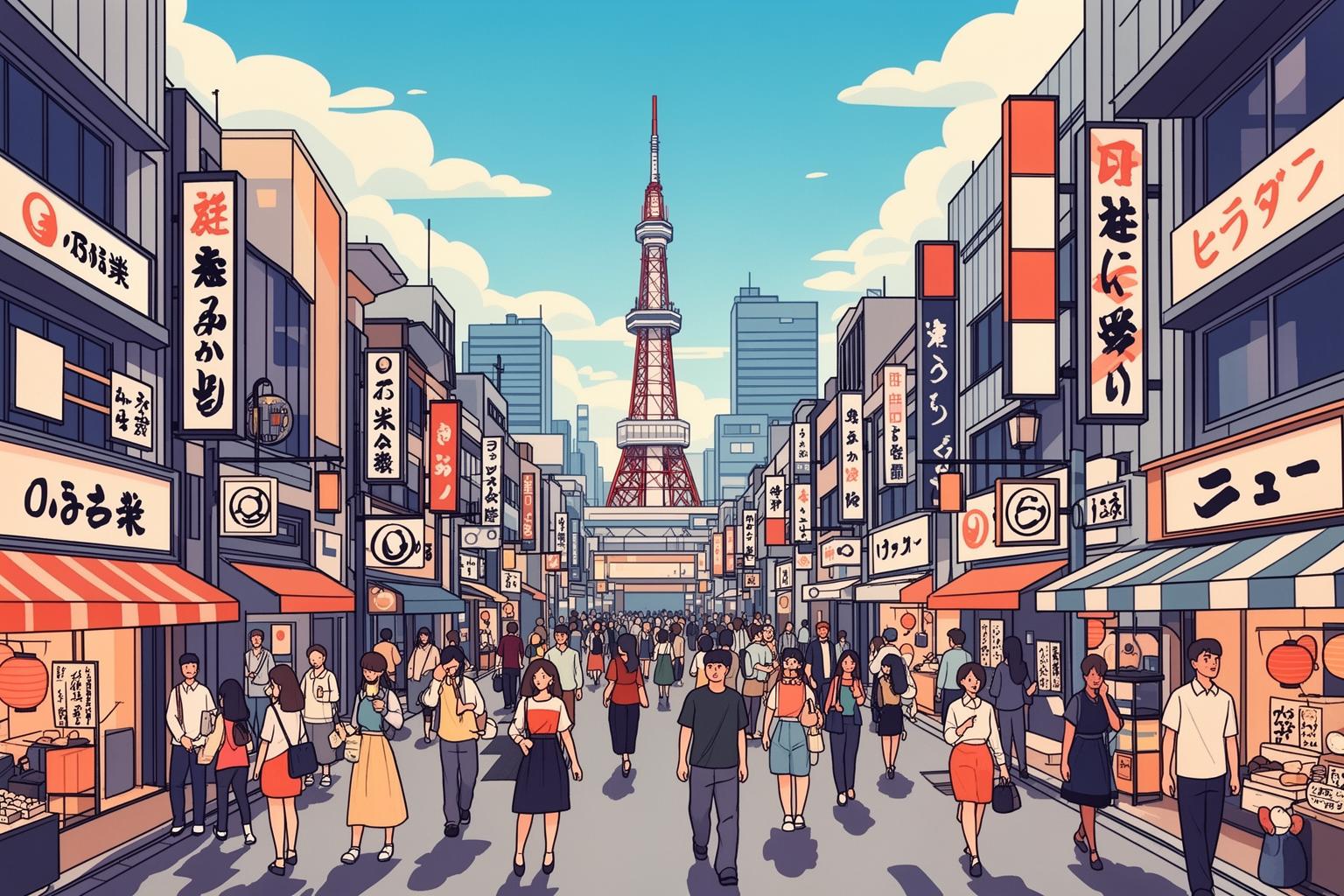
It would be misleading to depict the shotengai as a universally thriving institution without acknowledging the significant challenges it faces. In an era dominated by 24-hour convenience stores, enormous Aeon shopping malls, and the one-click convenience of Amazon, the traditional neighborhood arcade can seem like a relic of the past. Walking through some of the smaller, more isolated shotengai reveals the truth: rusted, permanently closed shutters on about a third of the storefronts stand as a testament to a community in decline.
The Threat of the Supermarket and the Shopping Mall
The pressures are overwhelming. A modern supermarket offers a wide selection, consistent quality, and the ease of one-stop shopping. An air-conditioned shopping mall provides entertainment, dining options, and a multitude of retail stores all under a single roof. In contrast, the shotengai can feel outdated. Its infrastructure may be worn, the hours inconvenient, and you often have to visit multiple shops to gather everything needed for dinner. For busy young families, the efficiency of the supermarket is hard to resist. Meanwhile, the older generation of shopkeepers is retiring, and their children, frequently seeking more modern or stable careers, are not taking over the family business. This slow-moving crisis means not every shotengai will survive.
A New Generation’s Shotengai
Yet the story continues. In many areas, a fascinating process of transformation and rejuvenation is occurring. The shotengai is demonstrating surprising resilience. In neighborhoods like Karahori or Nakazakicho, a new generation of entrepreneurs is revitalizing these old arcades. They appreciate the value of the existing community and its unique atmosphere. A trendy, minimalist third-wave coffee shop opens next to a 70-year-old store selling seaweed and dried fish. A craft beer bar with numerous taps sets up across from a family-run fruit stand. An artisanal bakery offering sourdough and croissants shares space with a traditional tofu maker.
This blend of old and new creates a vibrant, multi-generational energy uniquely Osakan. The city excels at layering its history rather than erasing it. The new businesses attract younger patrons, who in turn discover the charm and quality of the traditional shops. The longtime shopkeepers gain new customers, while the young entrepreneurs benefit from a built-in community. This symbiotic relationship keeps the arcade relevant and thriving, preserving its essence while modernizing its offerings.
Why They Endure: The Human Algorithm
So why, despite overwhelming modern competition, do these places persist? They survive because they provide something technology and corporate retail cannot replicate: genuine, unscripted, meaningful human connection. The shotengai operates on what might be called a “human algorithm.” It is an organic network built on memory, observation, and conversation.
The butcher’s human algorithm recalls your preference for leaner cuts of pork for ginger stir-fry. The fishmonger’s algorithm knows your children love salmon and sets aside the best piece if he expects you. The vegetable seller’s algorithm remembers you asking about seasonal bamboo shoots last week and calls out when the season’s first batch arrives. This level of personalized service isn’t a programmed feature; it naturally emerges from a community built on relationships.
This is the irreducible core of the shotengai, and it lies at the heart of Osaka’s character. This is a city built by merchants, one that has always understood business is ultimately about people. For anyone wanting to truly grasp what makes Osaka unique and vibrant, my advice is simple: forget the tourist maps for an afternoon. Find the nearest shotengai, and just walk. Listen. Observe. Buy a croquette. Try to strike up a conversation. In these covered streets, in the rhythm of the daily “Maido,” you will find the real, beating heart of this magnificent, messy, deeply human city.