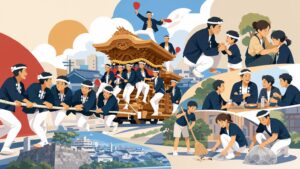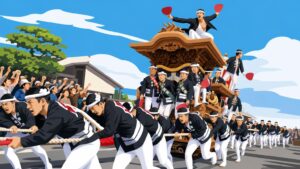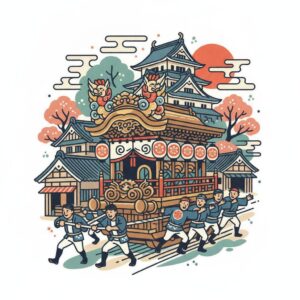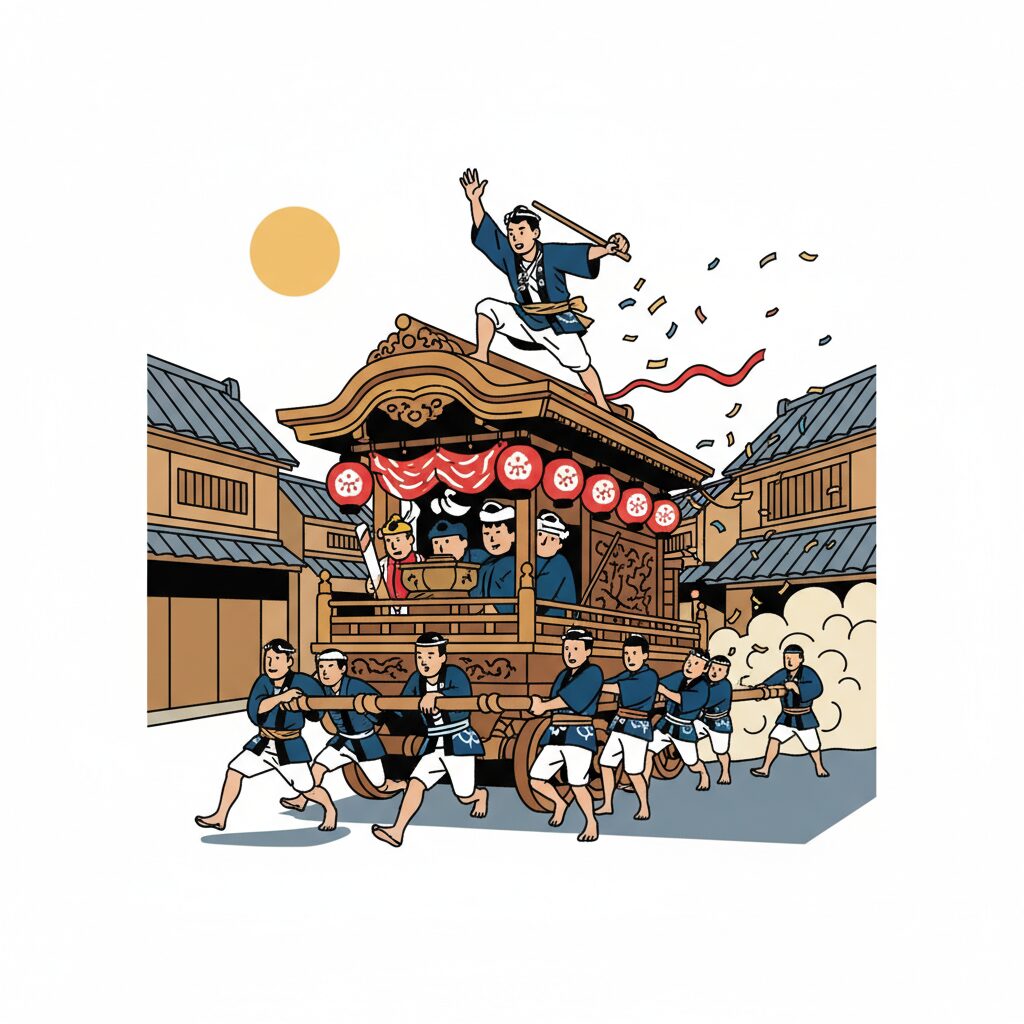
Drop the name Kishiwada in any conversation about Osaka, and you get one reaction. A sharp intake of breath. A knowing grin. A story about that one time they saw a Danjiri float, a four-ton wooden behemoth, scream around a corner at full speed, a carpenter-acrobat dancing on its roof. Kishiwada is the Danjiri Matsuri. The festival is the town. It’s a brand, a reputation carved from wood, sweat, and a healthy dose of what outsiders might call insanity. It’s Osaka’s raw, untamed spirit distilled into two chaotic days in September.
But what about the other 363 days? What happens when the floats are rolled back into their garages, the last paper lantern is taken down, and the roar of the crowd fades into the salty sea breeze? Does Kishiwada just… go to sleep? This was the question that pulled me south from the neon glow of Namba, down the Nankai Line, on a quiet weekend in late spring. I wasn’t chasing the ghost of the festival; I was looking for its soul. I wanted to understand the operating system of a town that stakes its entire identity on a single, explosive tradition. Because understanding Kishiwada, I suspected, was a shortcut to understanding a fundamental truth about Osaka itself: your neighborhood isn’t just your address. It’s your tribe. It’s your team. It’s the core of who you are. And in a city of fiercely local villages pretending to be one metropolis, Kishiwada is the capital.
This isn’t a guide on what to see. It’s a field report on what to feel. We’re peeling back the tourist-friendly veneer of castles and museums to look at the wiring underneath. We’re exploring how a shared, high-stakes ritual shapes everything from the layout of the streets to the cadence of the local dialect. This is a deep dive into the neighborhood identity of an Osaka town, a concept that feels worlds away from the anonymous, transient energy of Tokyo. It’s an attempt to answer the question for anyone thinking of making a life here: what does it really mean to belong in Osaka? The answer, I found, isn’t in the city center. It’s tucked away in the quiet, proud streets of this southern coastal town.
To truly understand the daily rhythm of this town beyond its famous festival, consider how its community spirit even permeates local shopping, as explored in this piece on finding the real Osaka in a Kishiwada outlet mall.
The Ghost of the Festival: How Danjiri Shapes Life Year-Round

Walking away from Kishiwada Station, you quickly leave behind the typical Japanese commuter town scenery. The wide boulevards give way to something older, tighter, and more intimate. This is where the true town begins, and the first thing that strikes you is the silence. It’s a heavy quiet, thick with anticipation. It feels less like peace and more like a held breath. The streets themselves seem to be dreaming of September.
The Echo in the Streets
The old town, known as Kishiwada Honmachi, isn’t laid out on a grid. It’s a maze of narrow lanes that twist and turn, designed not for cars but for the Danjiri. The corners of the buildings tell their story. They aren’t sharp ninety-degree angles but are worn smooth, rounded by the controlled chaos of the yarimawashi, the festival’s signature high-speed cornering technique. A local man, noticing me staring at one particularly battered corner, chuckled. “That’s our history book,” he said, nodding towards it. “Every scrape has a story. Some good, some not so good.” The city’s architecture testifies to its primary function: serving as a racetrack for its sacred wooden gods.
This is a fundamental contrast to a city like Tokyo. There, streets serve for movement, commerce, and efficient transit from Point A to Point B. Here, the streets are a stage. The houses face outward not to private gardens, but to the public drama. Many older homes feature slatted wooden facades, koshi, designed both to watch and be watched. During the festival, these are the best seats. For the rest of the year, they stand as a constant reminder of the town’s shared purpose.
Every few blocks, you encounter a machiai. These are neighborhood headquarters, the clubhouses for each of the town’s Danjiri groups. They aren’t grand buildings—mostly simple, garage-like, shuttered and quiet on a Saturday afternoon. But behind those metal doors lies a Danjiri float, a masterpiece of woodcarving and engineering, waiting. A small plaque above the door names the neighborhood team: Miyamoto-chō, Nakamachi, Ōtemon. These aren’t just names; they are declarations of loyalty. These structures are the nerve centers, the hearts of each urban tribe. Even at rest, they emanate a palpable presence, a coiled energy that changes the atmosphere around them, making it charged.
The Calendar of the Soul
As afternoon wore on, a faint sound began to drift through the quiet lanes: Kon-kon-chikichin, kon-kon-chikichin. The rhythmic beat of a drum and the high-pitched clang of a bell. I followed the sound to a small park where a group of boys, no older than ten, were running in formation. They weren’t merely jogging; they were practicing. Their feet struck the ground in unison, their bodies swaying with practiced rhythm, mimicking the motion of pulling the massive ropes of the Danjiri. Nearby, an older man sat on a bench, tapping out the beat on a small practice drum.
This is when it becomes clear that the local calendar pays little attention to January or July. The year in Kishiwada is measured by how close it is to the festival. Spring is for preliminary meetings and conditioning. Summer is for intense practice, for musicians perfecting rhythms, and for teams drilling their yarimawashi moves. Autumn is the festival itself, followed by a short period of celebration and rest. Winter is for repairs, when master carpenters tend to the wooden floats, and the cycle of fundraising and planning begins anew.
This isn’t just a hobby or a weekend activity. It’s a parallel curriculum running alongside school and work. A young man I spoke to, who worked in an Osaka City office, said he used most of his paid vacation days for festival duties. “My boss in Osaka doesn’t get it,” he laughed. “He asks why I need so much time off in September. I tell him, ‘It’s not a choice. It’s who I am.’” Identity is inherited here. You are born into a chō, a particular neighborhood, and from that moment, your role in this grand drama is essentially assigned. You start as a kid pulling ropes, advance to a position on the float if you have skill and courage, and eventually become one of the elders directing strategy from the sidelines. This lifelong apprenticeship in local tradition creates a bond almost impossible for outsiders to grasp. It’s the source of the fierce, granular pride that defines much of Osaka. It’s not about being from “Osaka”; it’s about being from your neighborhood.
Neighborhood as Identity: The Unspoken Code of Belonging
Beyond the Castle Walls: Daily Life in the Shadow of History
What Foreigners (and even Tokyoites) Misunderstand
The Takeaway: Kishiwada as a Microcosm of Osaka