Someone from Tokyo once asked me, “Where do you go to see the real Osaka?” They were expecting me to say Dotonbori, with its giant crab signs and seas of tourists, or maybe the towering Osaka Castle. I just smiled and said, “You don’t go see it. You go live it. You go to a place like Tengachaya.” The name itself is a classic Osaka contradiction. It translates to “Teahouse Under Heaven,” a name bestowed by the 16th-century warlord Toyotomi Hideyoshi, who supposedly sipped tea here. The name conjures images of serene gardens and elegant ceremonies. The reality? It’s a gritty, noisy, relentlessly practical hub in southern Osaka, a place where train lines screech, shopkeepers holler, and the air smells of dashi broth and cheap cigarettes. And that, right there, is the first lesson about Osaka: the grand name often belies a down-to-earth, unpretentious reality. This city doesn’t put on airs. Tengachaya isn’t a destination on a travel brochure. It’s a crossroads. The Nankai Line rushes commuters to the financial districts of Namba or out to Kansai International Airport. The Sakaisuji subway line pulls people north, deep into the city’s core. It’s a place of transit, a blur through a train window for most. But if you get off the train and walk straight into the shotengai, the covered shopping arcade, you’re stepping into a living museum of Osaka’s soul. It’s here, in the daily grind, that you can decode the city’s true character, a character so different from the polished, reserved face of Tokyo. This isn’t about sightseeing; it’s about understanding the rhythm, the noise, and the unspoken rules of everyday life in a city that truly moves to its own beat.
To truly appreciate this rhythm, you need to understand the shotengai as more than just a shopping street—it’s the very heart of the local economy and community.
The Shotengai Symphony: A Masterclass in Osaka Pragmatism
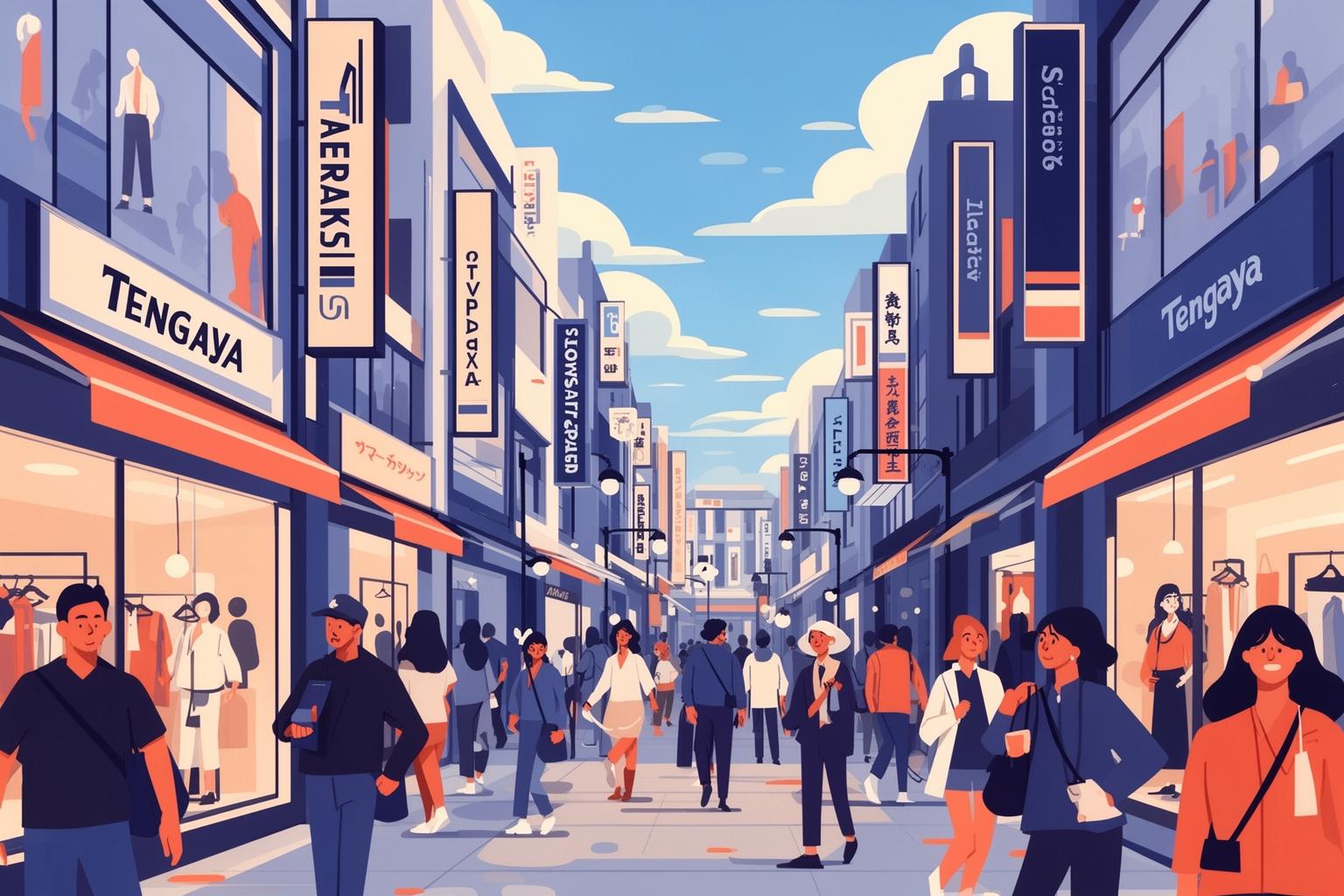
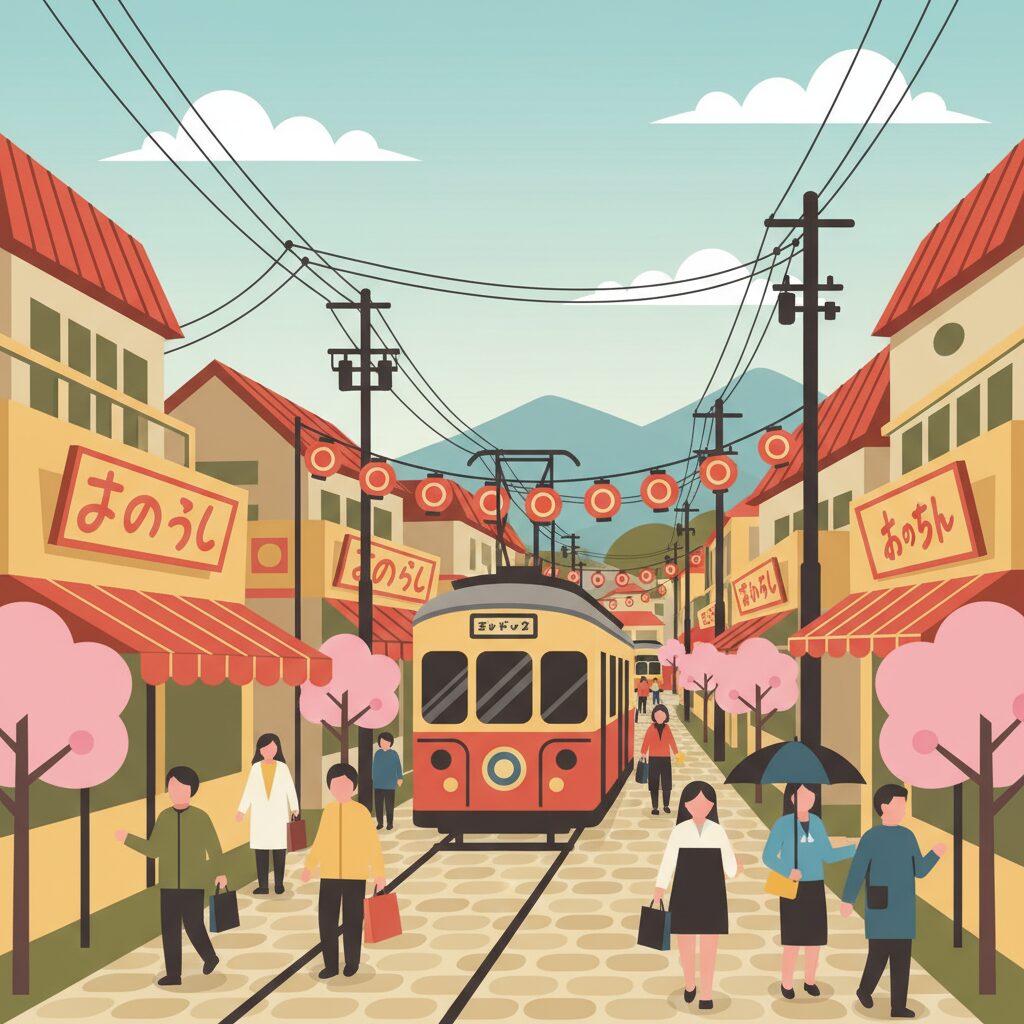
The moment you enter the Tengachaya Shotengai, your senses are immediately jolted. Unlike the carefully curated and visually polished Tokyo shopping streets, this place is a chaotic, lively, and wholly practical ecosystem. Here, the fundamental Osaka value of jitsu (substance) clearly overrides katachi (form). The signage is a haphazard blend of handwritten cardboard, weathered plastic, and flickering fluorescent lights. The displays aren’t designed by visual merchandisers; instead, they’re heaped high to shout “value.” A pile of daikon radishes sits beside a box of instant noodles, which neighbors a rack of inexpensive socks. It may lack visual harmony, but it makes perfect economic sense: everything is about moving goods quickly and cheaply.
The Soundtrack of Commerce
Listen carefully. The soundtrack of the shotengai contrasts sharply with the quiet, polite ambiance of a Tokyo department store. Here, noise is business itself. You hear the steady thump-thump-thump of a butcher chopping meat, the sharp sizzle of oil as a tempura vendor fries vegetables for the evening crowd, and the constant, overlapping calls of shopkeepers. “Yasui de! Yasui de!” (“It’s cheap! It’s cheap!”) shouts the man at the fruit stand, his voice hoarse from years of repetition. “Maido! Oki ni!” echoes from every doorway. “Maido” is the classic Osaka business greeting, meaning something like “Welcome, as always,” a recognition of an ongoing bond. It’s a verbal handshake saying, “I see you, you’re one of my people.” “Oki ni” is a warm, almost affectionate thank you. These aren’t mere pleasantries; they are the fibers that bind the community together. They affirm a world where commerce is not anonymous or purely transactional but personal and relational.
Where a Croquette Is Never Just a Croquette
Consider a typical exchange. You stop at a small, family-run butcher shop with sawdust on the floor and a glass case displaying everything from thinly sliced pork for shabu-shabu to golden-fried korokke (croquettes). An obachan, a grandmotherly figure, wipes her hands on her apron and warmly greets you with “Maido!” You point to the potato croquettes. “Korokke, mittsu kudasai” (“Three croquettes, please”). As she bags them, she doesn’t stay silent. She might say, “Kyou wa atsui naa” (“It’s hot today, isn’t it?”) or “Gohan mada?” (“Haven’t had dinner yet?”). This is an invitation. Your reply matters. A simple “Sou desu ne” (“Yes, it is”) works, but a more engaged response like “Atsui kara, biru ga nomitai desu wa” (“It’s so hot, I want a beer”) will earn you a laugh and a connection. As she hands over the bag, she might say, “Kore, omake” (“This is a little extra”), and you’ll discover four croquettes instead of three. This is omake culture. It’s not a discount but a gesture, a recognition of your role in the community. You’re not just a customer; you’re a neighbor. This small, seemingly trivial act is the lifeblood of Osaka’s local economy. It’s a system rooted in relationships, not just price tags. In Tokyo, the interaction would be quiet, efficient, and exact. Three croquettes, precisely. Here, the exchange is messy, human, and generous.
Navigating the Social Labyrinth: Unspoken Rules and Direct Lines
For many foreigners used to Tokyo’s polite and non-intrusive social norms, Osaka’s social environment can feel like a minefield. The key difference lies in the concept of personal space, both physical and conversational. In Tokyo, people build walls. In Osaka, they actively try to tear them down.
The Friendly Intrusion
When standing in line at a supermarket in Tengachaya, the person behind you will often peek into your basket. They might say, “Ah, kyou wa nabe ka? Ee na!” (“Oh, having hot pot tonight? Nice!”). At first, I was surprised by this; it felt intrusive. But I quickly realized it’s not about judgment; it’s about connection. It’s a conversational opener, an attempt to create common ground through the shared experience of grocery shopping. Silence between strangers is frequently perceived as cold or unfriendly. Osakans prefer risking a slightly awkward exchange over standing in a void of quiet politeness. This difference causes a major misunderstanding. Foreigners, and even people from other regions of Japan, often view this directness as rude or nosy. However, in Osaka, ignoring the person next to you is considered the real rudeness. The culture leans toward engagement rather than distance.
The Language of Laughter and Logic
The Osaka dialect, or Osaka-ben, reflects this mentality. It is quicker, more direct, and often sounds more emotional than standard Japanese. A good example is the phrase “Nande ya nen!” which roughly means “Why the heck!?” or “You’ve got to be kidding me!” It serves as a punchline, an expression of surprise, or a friendly rebuttal. This phrase is a conversational tool that instantly breaks formality and invites playful back-and-forth. The entire culture of tsukkomi (the straight man in a comedy duo who points out absurdities) permeates everyday speech. If you say something a bit silly, expect to be called out with a laugh. This is not an insult but a sign of affection—they’re joking with you. Another famous example is “chau chau.” If you mistakenly point to a dog and ask if it’s a Chow Chow, an Osakan might respond, “Chau chau! Are wa chau chau chau n chau?” (“No, no! That’s not a Chow Chow, is it?”). This phrase is a playful tongue-twister, finding humor and joy in the correction itself. This differs fundamentally from the Tokyo style, where correcting someone, especially a stranger, is done with great caution and politeness, if at all. In Osaka, directness combined with humor is the favored way to communicate.
Living in the Shadow of the Bubble: Showa Nostalgia as a Way of Life
Strolling through the backstreets of Tengachaya feels like entering a time warp. The neighborhood seems forever bathed in the sepia hues of the Showa Era (1926-1989). This isn’t a carefully crafted retro theme park; rather, it reflects a deeply rooted cultural mindset. While Tokyo is caught in a constant cycle of demolition and reconstruction, relentlessly pursuing the new and modern, much of Osaka—and Tengachaya in particular—follows a straightforward principle: if it ain’t broke, don’t fix it.
The Aesthetics of Pragmatism
Take a look at the buildings. You’ll notice low-rise apartment blocks with exterior corridors, clad in aging yet functional tiles. You’ll come across numerous kissaten, the traditional Japanese coffee shops, with their dark wood interiors, red vinyl booths, and the soft bubbling of siphon coffee makers. These establishments haven’t changed in forty years because there’s no need to. The coffee tastes great, the seats remain comfortable, and the regulars have their favorite spots. Why change it? This reluctance toward superficial renovations is pure Osaka pragmatism. Money is only spent on aesthetics when it serves a practical purpose. A Tokyo developer would see these old buildings as prime real estate for sleek new condo towers, while an Osaka landlord sees a structure that still offers shelter and earns rent. The goal isn’t to be the most visually striking, but the most functional and economical. This fosters a cityscape that feels lived-in, worn, and genuine—a sharp contrast to Tokyo’s often sterile and perpetually shifting appearance.
The Sento: A Community’s Living Room
The continued existence of the local sento, or public bathhouse, is another tribute to this Showa-era spirit. Across much of Japan, sentos are disappearing, replaced by private baths in modern apartments. Yet in neighborhoods like Tengachaya, they continue as essential community spaces. Entering one is a full sensory experience: the steam, the sound of water splashing on tile, and the murmur of neighbors exchanging local gossip while soaking in the steaming hot baths. Here, social and generational barriers fade away. An elderly man with elaborate tattoos might casually converse with a young university student. It’s a place where people literally strip down both physically and socially. This shared space reinforces a collective identity—a concept that feels increasingly rare in the individualistic, privacy-focused lifestyle of contemporary megacities like Tokyo. The sento survives here because it offers more than a place to get clean; it sustains the social fabric of the neighborhood.
The Tengachaya Crossroads: A Convergence of Realities
Tengachaya is fundamentally a junction—not only for train lines but also for people and different realities. The demographics represent a genuine cross-section of urban Japan, something not often seen in more polished residential neighborhoods. Here, elderly residents have lived their entire lives in the same wooden houses, their daily routines synchronized with the opening of the shotengai. Young families are attracted by rents that are only a fraction of those in northern Osaka or Tokyo. Blue-collar workers, students, and a notable number of foreigners have found its unbeatable combination of affordability and convenience appealing.
Gritty, Not Dangerous
Discussing Tengachaya inevitably involves its location. It lies just north of Nishinari, a district frequently sensationalized as one of the most deprived areas in Japan. This closeness imparts a certain grit and rawness to Tengachaya that may intimidate newcomers. You’ll observe day laborers, street-side drinking, and a general lack of polish, sharply contrasting Japan’s typically upscale image. However, it’s important to differentiate “gritty” from “dangerous.” Residents’ daily lives are overwhelmingly safe. The perceived danger often stems from discomfort with visible poverty and non-conformity. This proximity results in a neighborhood that is profoundly unpretentious and non-judgmental. Osaka has always been a city of merchants and workers, where people are valued for their hustle and resilience rather than their background. Tengachaya reflects that spirit today. No one here cares about your origins or your profession, so long as you’re a decent neighbor. This fosters a level of social freedom and acceptance that can be rare in the more stratified districts of Tokyo.
The Commuter’s Calculus
For many residents, both Japanese and foreign, the appeal boils down to a straightforward calculation of time and money. From Tengachaya Station, you can reach the neon-lit bustle of Namba in five minutes, the business hub of Umeda in fifteen, and Kansai Airport on a direct 40-minute train. This exceptional connectivity, combined with low living costs, makes Tengachaya a strategic choice for those seeking access to everything the city offers without the premium price of living in its core. The trade-off is evident: you exchange aesthetics and prestige for practicality and savings. You give up the quiet, leafy streets of a high-end suburb for the noisy, messy, vibrant energy of a working city. For many, that trade is more than worth it.
The Final Word: Is Tengachaya Your Osaka?
So, is Tengachaya a truly “good” place to live? That’s not the right question. The better question is, “What kind of Osaka experience are you seeking?” If your image of Japan revolves around tranquil temples, minimalist aesthetics, and calm, orderly public spaces, then Tengachaya may feel overwhelming. It doesn’t fit the common international stereotype of Japan. It’s loud, slightly chaotic, and its charm lies not in its looks but in its raw, unrefined humanity.
You should consider living here if you prioritize community over anonymity, depth over superficiality, and practicality over prestige. It’s for those who want to be part of a neighborhood’s daily rhythm, enjoy casual chats with the vegetable vendor, and aren’t bothered by some noise and grit. It’s a place for learners, observers, and anyone eager to understand Osaka’s working heart, not just its polished, showroom surface.
You might want to look elsewhere if you seek privacy, quiet, and the carefully curated perfection of a modern city. If the thought of a stranger commenting on your groceries makes you uneasy, or if you prefer brief, silent interactions with shopkeepers, the social dynamic here might feel exhausting.
Ultimately, choosing a place like Tengachaya means engaging with Osaka on its own terms. It’s a commitment to seeing the city as it truly is, not as you want it to be. This neighborhood rewards participation—the more you invest—a friendly greeting, some banter in broken Japanese, a willingness to laugh at yourself—the more you’ll gain. You won’t just be living in Osaka; you’ll be living like an Osakan, in a community that is unapologetically, stubbornly, and wonderfully itself.