Step into a business meeting in Tokyo, and you’ll feel the air charged with a quiet formality. Agendas are followed, hierarchies are observed, and communication flows through carefully constructed layers of politeness. It’s a well-oiled machine, predictable and precise. Now, step into that same meeting in Osaka. The agenda might be a loose suggestion. The first ten minutes could be a rapid-fire comedy routine about the Hanshin Tigers’ latest game, your boss’s new haircut, or the quality of the instant coffee. Someone might ask you, point-blank, if your company is actually making any money. The room is louder, the laughter is quicker, and the negotiation feels less like a corporate procedure and more like a high-stakes conversation over a dinner table. It’s not chaos; it’s commerce, the Osaka way. For a foreigner, this sudden shift from the Japan you read about in textbooks can be whiplash-inducing. You might wonder if you’re being taken seriously, if this is all a game, or if you’ve stumbled into a family reunion by mistake. But to truly grasp why a deal in Osaka is sealed with a laugh as often as a handshake, you have to understand that the modern office building is built on the foundation of an ancient marketplace. The ghosts of the merchants who made this city the economic engine of Japan still walk these halls, and their voices echo in every business decision, every negotiation tactic, and every boisterous “Maido!” (Thanks for your business!) you hear.
To feel this unique commercial spirit in its most authentic form, one need only visit a traditional shopping arcade (shotengai).
The Merchant’s DNA: The Bedrock of Osaka’s Identity
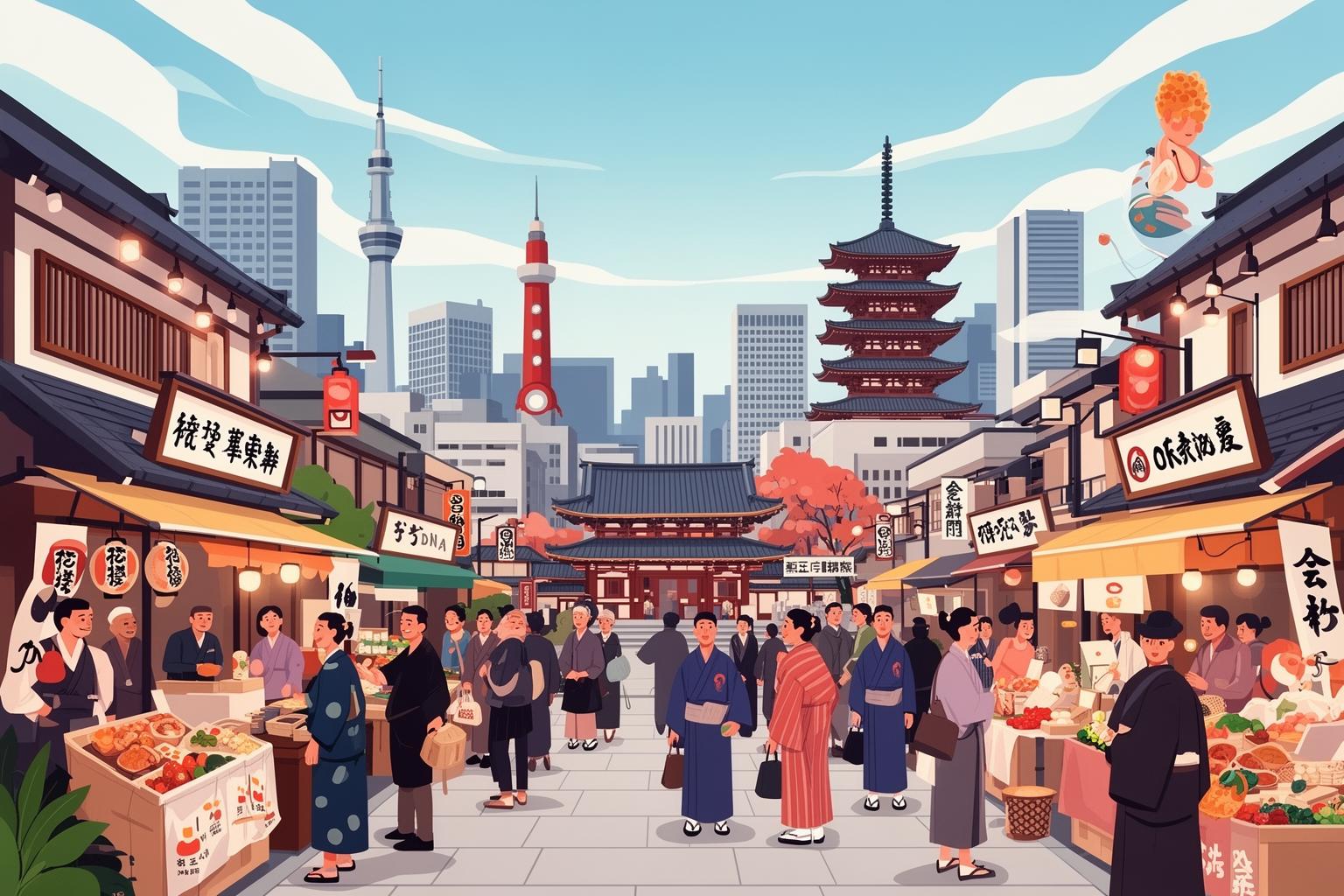
To truly understand Osaka‘s professional culture, you first need to unlearn a common assumption about Japan. The stoic, reserved, and hierarchy-focused image often portrayed is largely Tokyo-centric, shaped by its history as Edo, the seat of the samurai government. The samurai class prioritized honor, order, and unwavering loyalty to a feudal lord above all else, living in a world defined by strict structures and formal etiquette. Osaka, however, was founded on a very different philosophy. Known as the tenka no daidokoro, or “Nation’s Kitchen,” it was a city of akindo, or merchants. While samurai in Edo debated honor, Osaka’s merchants were busy calculating rice futures, inventing new financial instruments, and transporting goods nationwide. Their focus wasn’t on allegiance to a lord; it was on profitability, reliability, and keeping one’s word.
Samurai Rules vs. Merchant Realities
This fundamental divide created two distinct worlds of social and professional behavior. In the samurai world of Edo, flaunting wealth was considered improper, and openly discussing money was seen as vulgar. Status was the primary social currency. In contrast, Osaka’s merchant world measured skill and societal contribution directly through wealth. Discussing money wasn’t just acceptable — it was necessary. The famous Osaka greeting, “Mokkari makka?” meaning “Are you making a profit?” perfectly captures this spirit. A Tokyo businessperson might find it blunt or even rude, but in Osaka, it signals camaraderie. It’s a way of saying, “We’re in this together. We’re both working hard. How’s your hustle going?” It reflects the shared understanding that prosperity is the goal, with no shame in admitting it. This isn’t about greed; it’s a pragmatic acknowledgment of what sustains the city and its companies. This merchant mindset values practicality over protocol, results over rank, and human connections over strict formalities. This is the key to making sense of many puzzling or surprising interactions in an Osaka workplace.
The Philosophy of Shobai: Business as a Human Endeavor
In Osaka, business is called shobai, a term that conveys much more than mere commerce. It suggests a craft, an art form. It’s about more than transactions; it’s about cultivating a sustainable network of relationships. A good akindo knew that sacrificing long-term trust for short-term gain was foolish. Reputation was everything. Trust from suppliers, customers, and even competitors was essential. This philosophy persists today. Osaka companies might spend what seems like an excessive amount of time on zatsudan (small talk) before getting to business. They’ll inquire about your family, your travels, and your opinions on local food. This isn’t wasted time; it’s a way for them to evaluate you as a person. Are you trustworthy? Someone they’d want to collaborate with over the long haul? They’re laying the foundation for the relationship before negotiating the deal. In Tokyo, a company’s name might carry enough weight, but in Osaka, the strength of your character is equally vital.
The Art of the Deal: Communication in the Boardroom
The merchant spirit truly comes alive when it’s time to negotiate. An Osaka negotiation, or nego, is a fluid, dynamic, and deeply human process. It’s a dance in which logic, emotion, humor, and a healthy dose of theatricality all come together. Foreigners used to a Western-style, data-driven approach or a formal, reserved Tokyo-style process may find this disorienting. However, if you understand the underlying principles, you can come to appreciate its rhythm.
Negotiation as a Conversation, Not a Conflict
In many cultures, negotiation is viewed as an adversarial process where one side wins and the other loses. In Osaka, it’s often seen as a collaborative effort to find a point where everyone feels they’ve secured a good deal. The goal is a win-win outcome, since today’s counterparty could be an essential partner tomorrow. This explains why the process is so conversational. They want to understand your needs, your constraints, and your perspective, while being extremely direct about their own. An Osaka negotiator won’t hesitate to say, “That price is way too high. Honestly, we can’t make it work at that level. Our budget is X.” This isn’t a power move; it’s an act of transparency meant to accelerate the process. They are putting their cards on the table and inviting you to do the same. In contrast, a more indirect style might involve days of subtle hints and polite evasions before revealing the actual figures. Osakans see that as a waste of everyone’s precious time.
The Ritual of “Chotto Makete”: More Than Just a Discount
The phrase “Chotto makete kureru?” (“Can you knock a little off the price?”) is almost a mantra in Osaka, heard everywhere from the Kuromon Market to corporate boardrooms. To an outsider, this constant haggling might appear cheap or disrespectful of the quoted price. But that overlooks its cultural significance. Asking for a discount is a form of engagement. It signals that you are serious about buying but also a savvy, value-conscious partner. Offering a small discount, even a symbolic one, is a gesture of goodwill. It says, “I value this relationship, and I’m willing to be flexible to make it work.” This small ritual helps solidify the partnership. Flatly refusing to budge on price, even if it’s perfectly fair, can come across as inflexible and uncooperative. The key is to see this not as an attack on your pricing but as an invitation to join a collaborative ritual. Often, the final price matters less than the process of reaching it together.
The Power of “Honma ni?”: Playful Skepticism as a Truth Serum
When you present your pitch, don’t be surprised if you’re met with a challenging, “Honma ni?” (“Really? Seriously?”) or “Sore de moukaru no?” (“Can you even make money with that?”). This isn’t cynical disbelief. It’s a tool. A friendly, almost playful way of pressure-testing your claims. They want you to go beyond the polished sales pitch and share the real story. They seek to see your confidence, conviction, and command of the facts. A well-reasoned, passionate defense in the face of this skepticism earns far more respect than a flawless but sterile presentation. They are testing the person as much as the product. Can you think on your feet? Do you truly believe in what you’re selling? Responding with a confident laugh and a detailed explanation is the right approach. Becoming defensive or flustered signals weakness.
The Office Atmosphere: Where Comedy is a Serious Business Tool
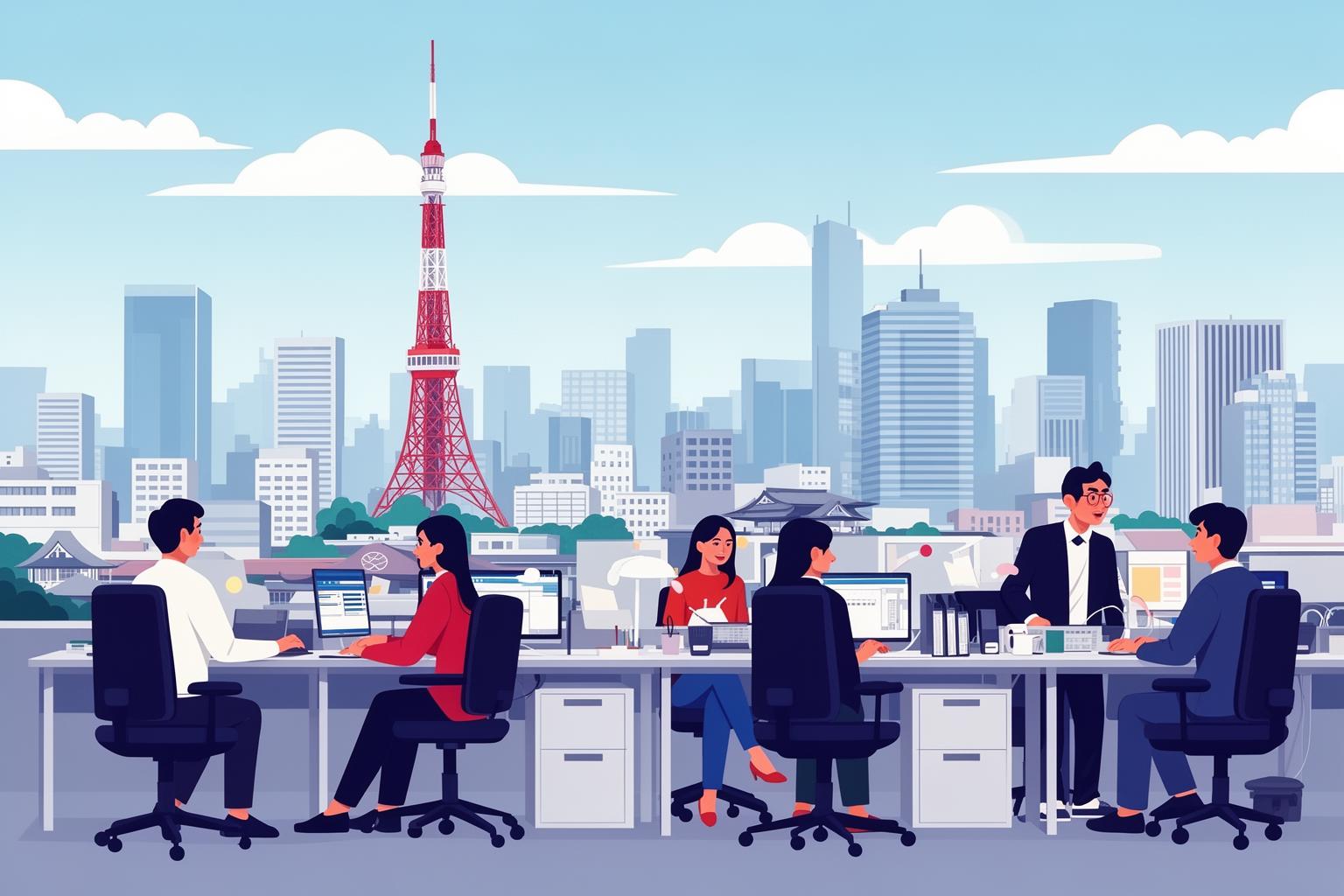
Daily communication within an Osaka office contrasts sharply with the quiet formality typical of a Tokyo corporation. The atmosphere buzzes with banter, jokes, and the unique cadence of the Osaka dialect. This behavior doesn’t signal unprofessionalism; rather, it fuels collaboration and serves as an essential tool for navigating workplace relationships.
Humor as a Social Lubricant
In Osaka, humor is a sophisticated communication skill used to establish rapport, provide feedback, ease tension, and inspire the team. Self-deprecation holds special value. A manager might openly joke about a mistake they made, making them more approachable while fostering an environment where subordinates feel safe admitting their own errors without fear of punishment. The classic boke (funny fool) and tsukkomi (straight man) routine from Manzai comedy is enacted on a smaller scale dozens of times daily. Someone will say something slightly foolish (the boke), and a colleague will promptly respond with a witty comeback or a gentle tap on the arm (the tsukkomi). This rapid-fire, playful exchange fosters strong camaraderie, maintains high energy, and strengthens interpersonal connections in ways formal meetings cannot. For outsiders, the key is not to take it personally. Being the subject of a friendly joke indicates inclusion—you’re part of the group.
The Frankness of Osaka-ben
The Osaka dialect, Osaka-ben, is naturally more direct and expressive than standard Japanese. Terms like akan (“no good” or “won’t work”) and eeyan (“that’s great!” or “let’s do it!”) are delivered with a bluntness that may surprise newcomers. If an idea is flawed, a colleague will straightforwardly say, “Sore wa akan wa.” (“That just won’t work.”) There are no layers of polite ambiguity. This bluntness is not meant to be rude; from their viewpoint, it reflects respect and efficiency. Why waste time allowing someone to pursue a bad idea out of misplaced politeness? Being honest upfront enables everyone to pivot quickly toward a better solution. This directness applies to praise as well, which is often loud and enthusiastic. This emotional openness helps clarify where you stand, easing the anxiety caused by interpreting subtle, unspoken signals common in other regions of Japan.
Navigating Common Cultural Misunderstandings
The distinct business culture of Osaka, though efficient and dynamic, can present numerous misunderstandings for newcomers. What locals perceive as friendly and efficient may be seen as rude, aggressive, or unprofessional by outsiders. Acknowledging these potential points of friction is the first step toward managing them effectively.
Directness Does Not Equal Disrespect
This is an essential lesson to grasp. When your Osaka counterpart interrupts you with a question, challenges your data immediately, or bluntly says “no,” your initial reaction might be to take offense. It may feel like a challenge to your competence. However, you need to shift your perspective. This behavior is not disrespect; it is engagement. A quiet, nodding audience may seem polite but could also indicate disinterest. An Osaka businessperson who fires questions at you is actively processing the information and trying to find practical solutions. They respect your time by addressing the core issues directly. For them, ambiguity and vagueness are the real disrespect, as they waste everyone’s time. So when you face this directness, respond with confident, well-prepared answers, viewing it as a sign that you are being taken seriously.
Frugality is a Strength, Not a Weakness
Osakans are often labeled as kechi (stingy or cheap), but this is a misunderstanding of a fundamental cultural value: maximizing the value of every yen spent. It’s not about being cheap but rather about being smart and resourceful. In a business setting, this translates into a strong focus on cost-effectiveness. They will carefully evaluate every part of a proposal to eliminate waste. They want to know exactly what they are getting for their money and expect a high return on investment. This can feel intense, but if you can demonstrate that your product or service offers exceptional value, you will gain their loyalty. They are not seeking the cheapest option—they want the smartest option. Tailor your proposals to highlight efficiency, long-term value, and return on investment, and you will resonate with them.
Banter is a Sign of Inclusion
For those from more reserved cultures, the constant teasing, joking, and light-hearted curiosity about your personal life can seem intrusive. You might wonder why a colleague comments on your lunch or makes jokes about your weekend. This is typical Osaka team-building: breaking down formal barriers and fostering a familial, close-knit environment. Silence and formality are often read as coldness or a lack of willingness to be part of the team. A true problem arises when the jokes stop. If your colleagues treat you with quiet, formal politeness, it might mean you haven’t yet been embraced by the inner circle. The best way to respond is to engage actively—learn to laugh at yourself and don’t hesitate to gently tease back. This shows you understand the social dynamics and enjoy being part of the group.
Succeeding in the Merchant City: A Practical Guide
Thriving in Osaka’s professional landscape is not about changing your identity. It’s about learning the local playbook and adjusting your communication style for greater effectiveness. This means being a bit more open, offering a quicker smile, and adopting a far more direct approach than you might be accustomed to.
Master the Art of the Warm-Up
Never jump straight into business. The opening few minutes of any interaction are critical for setting a positive tone. Use this time to build rapport. Ask about their company, reference a recent news event, or share a brief, lighthearted story about your experience in Osaka. This isn’t mere small talk; it’s a crucial part of the business process. It demonstrates that you regard them as a person, not just a deal. Establishing this personal connection first will make the negotiation that follows much smoother and more collaborative.
Develop a Thicker Skin and a Quicker Wit
To succeed in Osaka, resilience is key. Don’t take direct questions or playful teasing personally. See these moments as signs of engagement and inclusion. Simultaneously, hone your ability to join in the banter. You don’t need to be a comedian, but responding to a joke with a laugh and a quick comeback will earn significant respect. Self-deprecating humor is your strongest asset. Being able to laugh at yourself showcases confidence and humility, both highly valued traits.
Always Be Ready to Justify Your Value
Enter negotiations with your numbers memorized. Expect every detail to be scrutinized. However, don’t merely defend your price—demonstrate your value. Explain how your product or service will save money, boost efficiency, or increase profit. Use solid data and real-world examples. Show that you understand the deal from their perspective and are providing a solution that is not just good, but smart. Be ready to be flexible, too. Keep a small, symbolic discount handy to offer as a goodwill gesture to close the deal. This signals your grasp of the negotiation dance.
Living and working in Osaka is an immersive education in a unique side of Japanese culture—pragmatic, fast-paced, and deeply human. It’s a city that values honesty, wit, and a good sense of humor. It can be challenging and loud, but never dull. Once you tune into the merchant’s rhythm in every conversation, you won’t just succeed in business—you’ll begin to understand the very essence of this remarkable city.