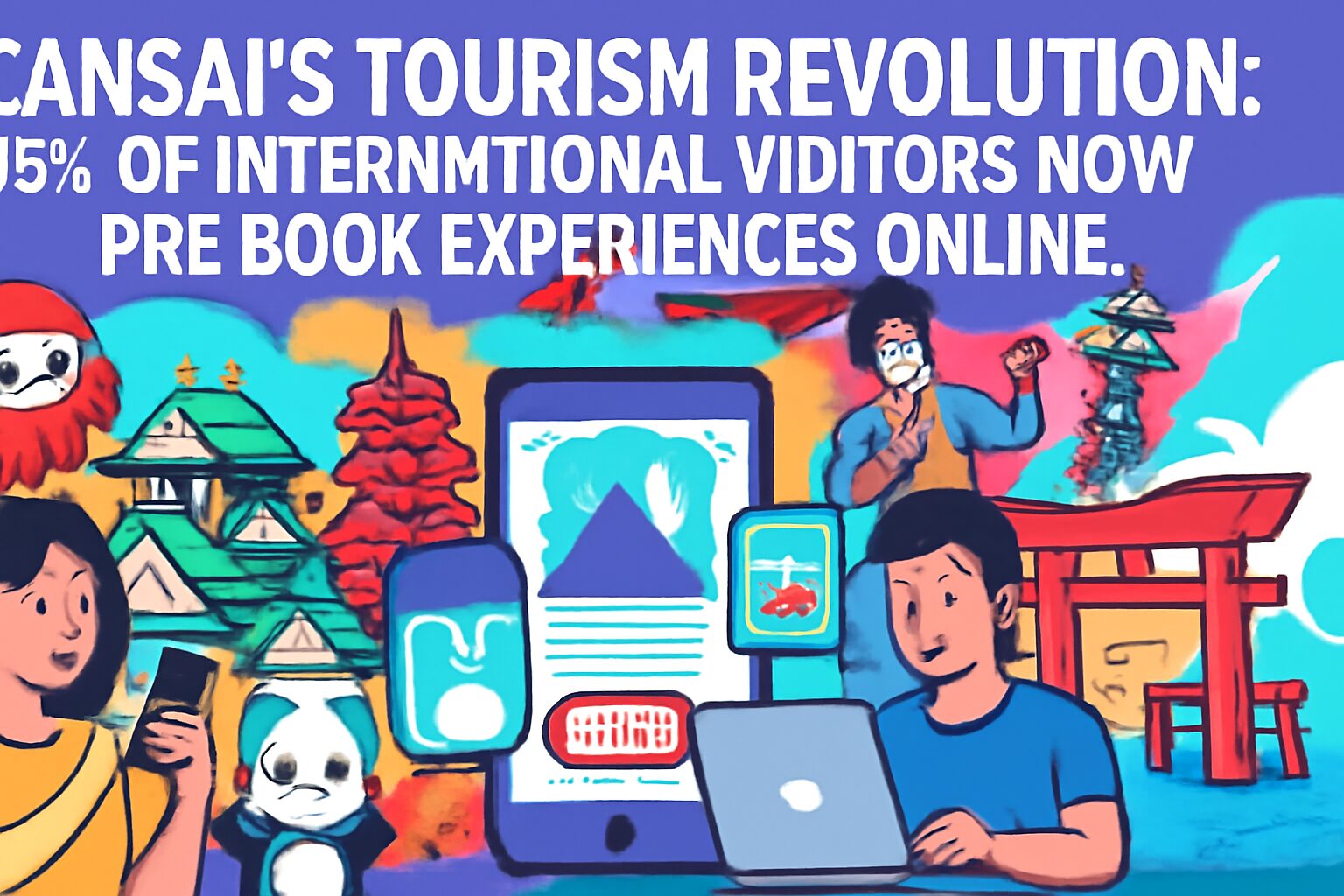
A landmark survey conducted at Kansai International Airport has unveiled a fundamental transformation in how international travelers experience Western Japan. The data reveals that nearly half of all visitors—a significant 45%—are now booking local tours, activities, and experiences online before they even land. This digital-first approach signals a major shift away from spontaneous, on-the-ground decision-making and places Online Travel Agencies (OTAs) at the very heart of the region’s tourism economy.
The Dominance of Digital Platforms
The survey’s findings leave no room for doubt: the digital marketplace is the new frontier for tourism in Kansai. Among travelers who purchase paid activities, a single platform, Klook, holds a commanding 42.1% market share. This dominance underscores the immense influence that major OTAs wield in shaping what tourists see, do, and spend.
For today’s travelers, the convenience of browsing, comparing, and booking experiences in their native language from their home country is a powerful draw. Platforms like Klook, Viator, and GetYourGuide offer a curated selection of activities, from tickets to Universal Studios Japan to traditional cooking classes in Kyoto, complete with user reviews and instant confirmations. This pre-planning behavior is not just about convenience; it’s a strategy to secure spots for popular attractions and manage travel budgets effectively in a region recovering rapidly to pre-pandemic tourism levels.
Behind the Trend: Why Pre-Booking is the New Normal
This shift to online pre-booking is not an overnight phenomenon but the result of several converging factors. The post-pandemic travel boom has led to increased demand for popular attractions, making “sold out” a common reality for those who wait to book in person. Travelers are more eager than ever to avoid disappointment and guarantee their itineraries.
Furthermore, the ubiquity of smartphones has empowered tourists to plan on the go, but the core planning phase is increasingly happening weeks or even months in advance. The peace of mind that comes with a pre-planned itinerary allows visitors to immerse themselves in the culture upon arrival, rather than spending precious vacation time navigating booking logistics in a foreign language. The digital ecosystem of QR code tickets and e-vouchers has made the entire process seamless, from booking to entry.
Implications for Kansai’s Tourism Businesses
This trend presents both a massive opportunity and a critical challenge for local tourism operators in Osaka, Kyoto, Kobe, and the surrounding areas.
The Imperative of a Digital Presence
For local businesses, from small tour guides to large-scale attractions, a strong online presence is no longer optional—it’s essential for survival. Visibility on major OTA platforms is crucial for reaching a global audience. Businesses that fail to adapt risk becoming invisible to the nearly 50% of travelers who make their decisions before arriving.
The Future is Data-Driven
OTAs provide a wealth of data on what’s popular, when people are booking, and where they are coming from. Savvy operators can leverage this information to tailor their offerings, optimize pricing, and develop new experiences that meet the evolving demands of the modern traveler. This data-driven approach will separate the thriving businesses from the struggling ones in Kansai’s competitive market.
Looking Ahead: The Future of Travel in Kansai
The trend towards pre-booking is set to accelerate. We can expect to see further integration of technology in the travel experience. AI-powered recommendations will likely offer travelers increasingly personalized itineraries, while competition among OTAs may lead to more diverse and unique local offerings being brought online.
For travelers planning a trip to Kansai, the message is clear: book in advance. To secure your spot at that coveted restaurant, skip the line at a popular temple, or join an intimate guided tour of Osaka’s backstreets, planning ahead is your best strategy. For the region’s tourism industry, this digital revolution is a call to action to embrace technology, partner with online platforms, and continue to innovate in order to capture the hearts—and itineraries—of visitors from around the world.