
The first time you hear it, really hear it, it hits you like a splash of cold water. You’re standing in a crowded Shinsaibashi shotengai, the air thick with the smell of takoyaki and the percussive clang of a pachinko parlor. Someone next to you, maybe a friend, maybe a total stranger, lets it fly. A sharp, almost percussive burst of sound aimed at a friend wearing a truly questionable fashion choice, or maybe just at a pigeon that stole a crumb with too much swagger. “Nande ya nen!” It’s loud. It’s fast. And if you’re coming from the carefully modulated, indirect world of standard Japanese, your first thought is probably, “Who’s angry? What just happened?” You brace for a fight that never comes. Instead, the target of the phrase laughs, a big, open-throated laugh, and fires back a retort. The tension you imagined evaporates, replaced by a current of shared amusement. This is your introduction to one of the most misunderstood, and most vital, phrases in the Osaka dialect. It’s more than a simple “Why?” and it’s certainly not just a cheap laugh line from a manzai comedy routine. “Nande ya nen” is a social tool, a cultural password, and a key that unlocks the entire operating system of Osaka’s frank, funny, and fiercely human approach to daily life. Forget what you’ve seen on television. To live in Osaka is to learn the music of this phrase, to understand its many shades of meaning, and to recognize it not as an attack, but as an invitation to connect, to be real, and to share a laugh about the sheer absurdity of it all.
Understanding how “nande ya nen” functions as a social cue invites you to further explore Osaka’s distinctive interpersonal dynamics through the Tachibanashi tradition, which deciphers the city’s unspoken cultural connections.
The Anatomy of ‘Nande ya nen’

To truly understand what’s happening, you need to break the phrase down and detach it from its textbook translations. It’s a linguistic chameleon, adopting a new identity with every subtle change in tone, context, and delivery. It exists in the moment, quite unlike the static, predictable phrases you practiced in your Japanese class.
Beyond the Literal Translation
On paper, “Nande ya nen” translates roughly to “Why is that?” or a stronger “What the heck?” It’s the Osaka-ben counterpart to the standard Japanese “Naze desu ka?” or “Doushite desu ka?” But that’s like saying a trumpet and a gentle flute play the same note. The feeling, the impact, and the whole purpose differ. “Naze desu ka?” is a sincere question—a tool for seeking information. You use it when you don’t understand the train schedule or the instructions for assembling a Muji product. It’s calm, respectful, and expects a logical answer.
“Nande ya nen,” however, is rarely a mere request for information. It’s a reaction. An exclamation. It’s the verbal equivalent of a slap on the back, a dramatic facepalm, or exaggerated throwing up of the hands in disbelief. It’s not looking for a reason; it’s making a statement about the situation. The phrase has a distinct rhythm, a punchy cadence absent in standard Japanese. The emphatic “ya nen!” at the end gives it a definitive, grounded feel. It doesn’t ask—it declares. It’s a full stop on a moment of absurdity, and that difference is everything.
Tone is Everything: From Playful Jab to Genuine Disbelief
The true meaning of “Nande ya nen” lies in its delivery. The same three words can express a wide range of emotions, and learning to interpret the tone is a vital survival skill for navigating social life in Osaka. Think of it as a communication multi-tool.
First is the most common use: the playful jab. Your friend arrives in Namba wearing a shirt with a strange English phrase like “Happy Goat Life.” A typical Tokyo reaction might be to ignore it or offer a polite compliment. The Osaka reaction is an immediate, sharp but smiling “Nande ya nen! Sono shatsu!” (“What the heck! That shirt!”). This isn’t an insult. It shows affection. It means “I see you, I’m comfortable enough to call out this ridiculous thing, and I invite you to laugh about it with me.” It opens the door to banter.
Next is the tone of genuine, frustrated disbelief. At Umeda Station, staring at the departure board, your train is delayed—no typhoon, no earthquake, just delayed. A salaryman nearby might sigh, glance at the board, and mutter a low, gravelly “Nande ya nen…” to himself. He’s not asking station staff for an explanation. He’s performing a small, personal exorcism of his frustration—a shared moment of suffering with anyone within earshot. It’s a pressure-release valve for the minor annoyances of city life.
Finally, there’s the role of “Nande ya nen” as the quintessential line of the tsukkomi. Japanese comedy, especially manzai from Osaka, depends on the dynamic between the boke (the silly, air-headed one who says something absurd) and the tsukkomi (the sharp, grounded one who calls them out). “Nande ya nen!” is the tsukkomi’s signature weapon. This dynamic isn’t limited to the stage; it’s the basic rhythm of everyday conversation in Osaka. Someone deliberately says something a bit silly or exaggerated—the boke—to give their friend the chance to respond with a perfectly timed “Nande ya nen!”—the tsukkomi. It’s a conversational game of catch, and the phrase is the ball. Even as a listener, joining in means participating in a core social ritual of the city.
Osaka’s Communication Style: Directness as a Form of Intimacy
Understanding “Nande ya nen” is the initial step to grasping the fundamental difference in communication philosophy between Osaka and other regions of Japan, especially Tokyo. It reflects a deep-rooted preference for directness over subtlety, and for emotional honesty over polite ambiguity. In Osaka, this directness is not perceived as rudeness; rather, it is a sign of trust.
The Tokyo Contrast: Tatemae vs. Honne
Throughout much of Japan, social interactions are shaped by the ideas of tatemae and honne. Tatemae refers to the public facade—the polite, often indirect expressions used to preserve social harmony. Honne represents genuine feelings, typically shared only with close confidants or kept private. Tokyo, as the nation’s political and corporate hub, often embodies tatemae. Conversations there can be a delicate interplay of reading between the lines, paying attention to what remains unsaid.
Osaka, on the other hand, is known for openly displaying its honne. The city’s merchant history valued quick, straightforward negotiation. Ambiguity had no place when closing a deal. That spirit endures today. A phrase like “Nande ya nen” cuts straight through tatemae. It demands the real story, the true feeling. If you propose a weekend plan and your Osaka friend thinks it’s a bad idea, they’re unlikely to respond with, “That’s an interesting suggestion; perhaps we could consider other options.” Instead, they might simply say, “Eh? Why would we do that? Nande ya nen!” While it may sound blunt initially, you soon realize this directness is a gift. It ensures you always know where you stand—no guesswork required. This honesty serves as a faster route to genuine connection.
Humor as a Social Lubricant
In Osaka, humor is more than just amusement; it’s the lubricant that keeps social interactions flowing smoothly. Sharing a laugh is the most valued currency. Making others laugh signals goodwill, and being able to take a joke shows good sportsmanship. The city operates on a constant, low-key hum of playful banter, with “Nande ya nen” playing a central role.
This phrase can defuse tension, break the ice with strangers, or transform a mundane encounter into a memorable human moment. Picture yourself buying vegetables at Kuromon Ichiba, fumbling with your coins, dropping a few. In a more reserved atmosphere, the vendor might patiently wait or look away to spare you embarrassment. The Osaka shopkeeper is more likely to laugh and say, “Nande ya nen! Can’t handle your money?” with a playful glint in their eyes. They’re not mocking you; humor is being used to turn the awkward moment into a shared, lighthearted experience. By inviting you to laugh at the slip-up, they’re saying, “It’s okay, we’re all human here.” This approach makes the city feel welcoming and less intimidating, turning every interaction into a small performance, a spark of fun.
What Foreigners Often Get Wrong
Within this context, misunderstandings are common. The biggest mistake is hearing the loud, rapid-fire “Nande ya nen” and interpreting it as true anger or hostility. For many Westerners and even Japanese from other regions, a raised voice in public suggests conflict. But in Osaka, it often signals engagement and passion. The key is to look beyond the volume and notice the body language: the smile, the laughing eyes, the relaxed posture. It’s almost never as serious as it sounds.
Another frequent error is attempting to use the phrase prematurely. Inspired by its fun and warmth, newcomers may want to try it out themselves. However, wielding “Nande ya nen” effectively requires a nuanced grasp of timing, relationships, and context. Using it with the wrong person—such as a superior—or at the wrong moment can come off as disrespectful or simply odd. The best advice for foreigners is to become students first: listen, observe, and feel the rhythm of Osaka’s conversations. Appreciate the phrase as a listener before trying to use it as a speaker. Its power lies in authenticity, which cannot be faked.
‘Nande ya nen’ in the Wild: A Guide to Daily Encounters
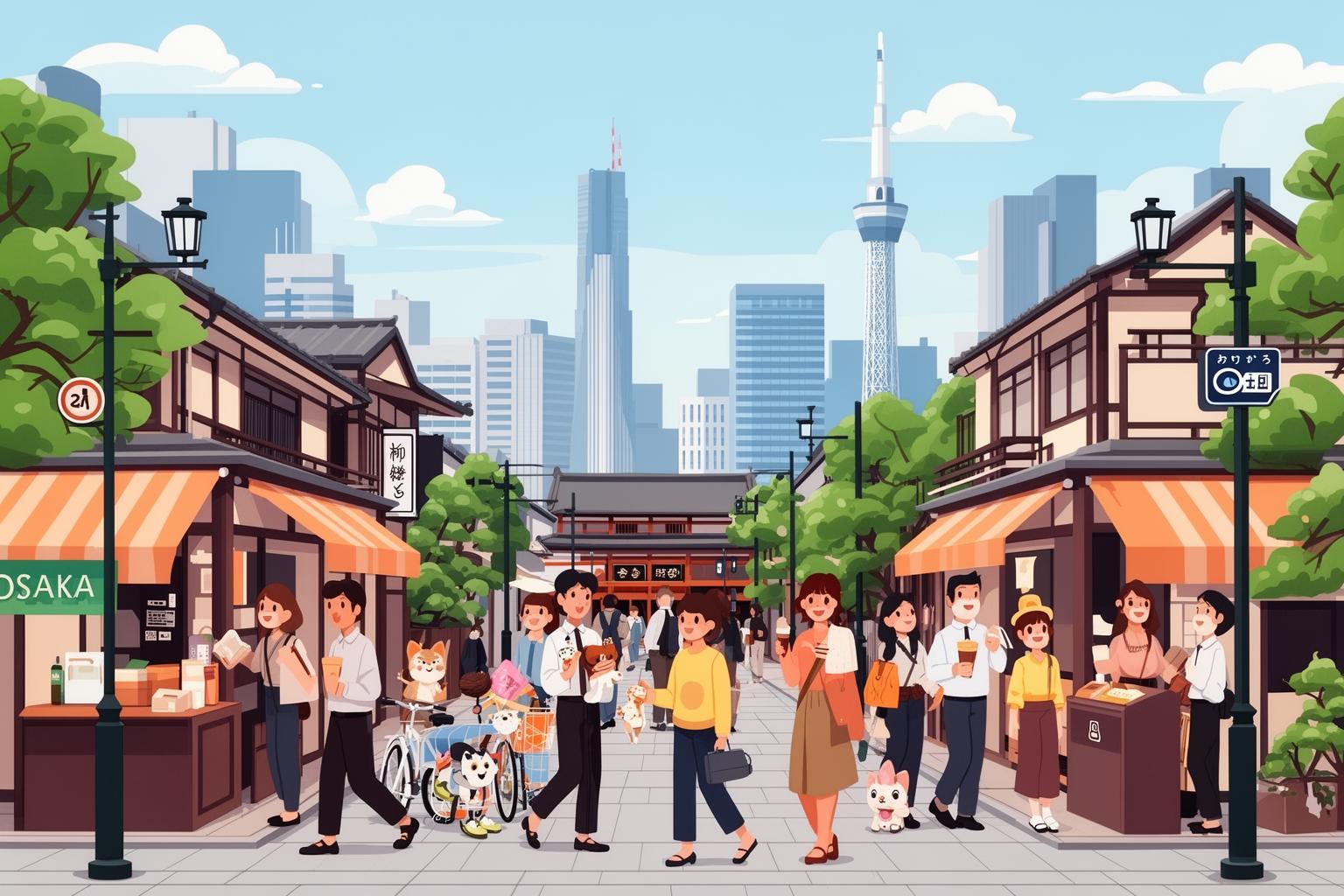
Once you begin to listen for it, you’ll hear “Nande ya nen” everywhere. It’s the city’s unofficial soundtrack, resonating in supermarkets, on train platforms, and in late-night izakayas. It’s in these ordinary, everyday moments that the true spirit of Osaka reveals itself.
At the Supermarket and Shotengai
The local shopping arcade, or shotengai, is a natural stage for the phrase. Imagine an obachan (a middle-aged or elderly woman) picking up a daikon radish. She examines it, feels its weight, then glances at the price sticker. Her eyes widen. “HYAKU-EN?! Nande ya nen!” she exclaims to no one in particular. She isn’t arguing with the staff; she’s voicing a shared sentiment, a theatrical protest against rising costs that anyone else in the vegetable aisle can relate to. It’s a public expression of a private thought, a way of saying, “Aren’t we all stuck in this absurd situation together?”
Or picture the friendly butcher who notices you staring cluelessly at the different cuts of pork. He leans over the counter and says, “You’re making tonkatsu? Not with that piece, no way. Nande ya nen! You need this one, the one with more fat.” This isn’t a critique of your cooking skills. It’s a straightforward, genuinely helpful tip. He skips polite formalities to give you the advice you really need, treating you with a kind of frankness usually reserved for family. This is Osaka-style customer service: fewer bows, more honest guidance.
With Friends and Colleagues
Among friends, “Nande ya nen” is the conversational glue. It’s a constant exchange keeping the energy lively. You might be telling a weekend story, slightly stretching a detail for effect. Before you finish, your friend jumps in with a sharp “Nande ya nen!” calling you out on your exaggeration. This isn’t disbelief; it shows they’re listening closely, engaging with your tale, playing their part in the conversational dance. It encourages you to be a sharper, funnier storyteller.
Even at work, beneath the veneer of professionalism, the spirit of “Nande ya nen” thrives among trusted colleagues. When your boss assigns an impossible deadline, you might wait until they’re out of earshot and then turn to your coworker with a quiet, exasperated, “Nande ya nen…” It’s a gesture of solidarity, a shared recognition of the absurdity. It fosters camaraderie in the daily grind, turning stress into a small moment of connection.
Navigating the Urban Landscape
The city itself constantly fuels the “Nande ya nen” spirit. You’re waiting to cross the street in Tennoji, and you spot a man cycling with a towering, wobbly stack of boxes. The woman beside you catches your eye, shakes her head slightly, and murmurs “Nande ya nen.” It’s a brief, perfect connection with a stranger. You’ve both witnessed the same small, absurd urban scene, and this shared exclamation confirms your shared experience. You smile, the light changes, and you walk on, but for a moment, you weren’t strangers.
Embracing the Spirit of ‘Nande ya nen’
For anyone looking to establish a life in Osaka, the lesson of “Nande ya nen” isn’t simply about memorizing a new slang term. You don’t need to become fluent in the Osaka dialect to thrive here. The true objective is to grasp and embrace the mindset the phrase embodies. It represents a philosophy of engagement, straightforwardness, and finding joy in the lively dynamics of human interaction.
It’s Not About Speaking the Dialect, It’s About Understanding the Mindset
Living in Osaka means learning to be a bit less reserved. It’s about appreciating when someone skips polite pretense to offer you an honest opinion. It’s about recognizing that a loud, boisterous conversation in a restaurant isn’t an argument, but a sign that people are fully enjoying each other’s company. It means being prepared for a shopkeeper to strike up a conversation, for a stranger to comment on the weather, and for your friends to mercilessly, yet affectionately, tease your new shoes. It’s about accepting that communication here is a contact sport, where the aim isn’t to avoid collision but to relish the game.
Don’t stress about trying to use the phrase yourself. Instead, focus on capturing its spirit. Be a little more direct in your communication. Allow yourself to express genuine reactions. Learn to both dish out and take a joke. When you stop being startled by the directness and begin to see it as a form of warmth and efficiency, the entire city will start to open up to you in a fresh way.
A City That Talks Back
In the end, “Nande ya nen” is the voice of a city that refuses to be quiet or passive. Tokyo may show a polished, calm facade, but Osaka welcomes you with a loud, questioning, and laughing voice. It’s a city that engages with you, challenges you, and invites you into its ongoing, chaotic, and hilarious conversation. The constant refrain of “Nande ya nen” echoing through its streets reminds you that this is a place where people are paying attention—to fish prices, to their friend’s haircut, to the absurdities of the world around them. It is a city that is unapologetically and relentlessly present.
To live here is to learn that rhythm. To realize that behind that blunt, funny, and sometimes perplexing phrase lies a deep desire for connection. It’s a punchline, a complaint, a question, and a verbal hug all rolled into one. It’s the sound of Osaka itself: a little loud, a whole lot of fun, and always, always genuine.