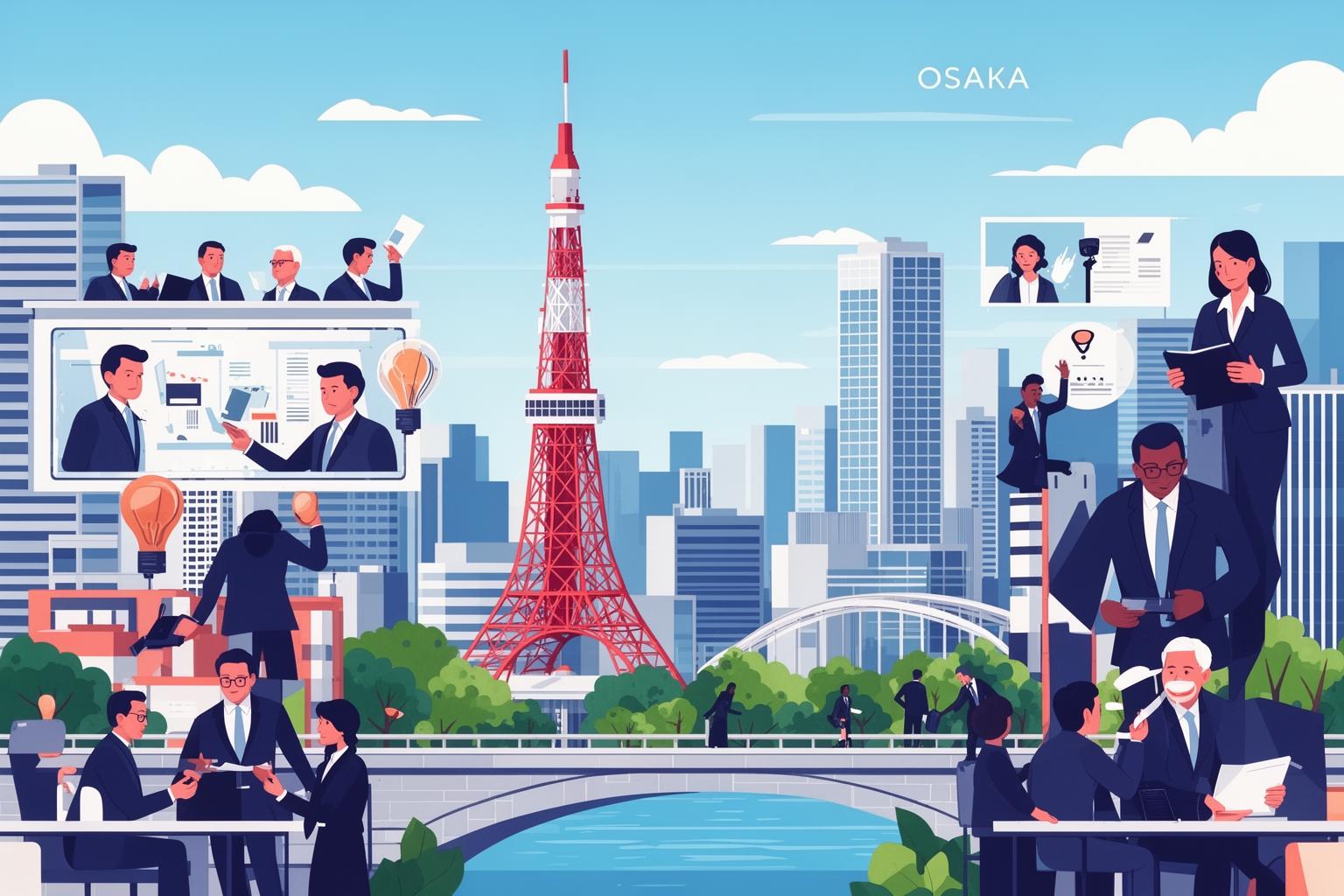
Walk into a business meeting in Tokyo, and you’ll feel the air itself is wearing a suit. The silence is measured, the bows are deep, and the exchange of business cards is a ceremony of crisp, choreographed precision. You might spend an hour dancing around a topic, speaking in layers of politeness, and leave with a vague promise to “consider the matter internally.” Now, walk into that same meeting in Osaka. Before you’ve even sat down, someone might have already commented on your tie, asked where you’re from, and declared the initial price you just offered is, frankly, a bit mad. The air isn’t silent; it buzzes with a frank, energetic hum. The person across the table isn’t a stoic corporate warrior; they’re a person, and they want to know if you’re a person they can do business with. This isn’t rudeness. This isn’t chaos. This is shobai, the art of business, and you’re in its spiritual home. For foreigners trying to navigate daily life and work in Osaka, this shift can be jarring. It feels like all the rules you learned about Japanese business etiquette were written for a different country. In a way, they were. Osaka doesn’t operate on Tokyo’s frequency. It moves to a different beat—a rhythm set centuries ago by merchants, traders, and artisans who built this city on wit, grit, and the strength of a handshake. To understand how to work, negotiate, and build relationships here, you have to forget the sterile boardroom and learn the steps to the merchant’s dance. It’s a dance of direct talk, deep relationships, and a shared understanding that at the end of the day, we’re all here to make a living, so we might as well do it with a bit of heart.
For those eager to transcend the conventional boardroom experience, exploring the unique art of maido greetings offers a deeper insight into Osaka’s vibrant, personable approach to business.
“Shobai” – More Than Just Business, It’s a Way of Life
To truly understand Osaka, you must first realize that business, or shobai, is not simply an economic sector; it is the city’s cultural essence. Historically called tenka no daidokoro, or “the nation’s kitchen,” Osaka served as Japan’s warehouse during the Edo period. Rice, sake, cotton, and goods from all corners of the archipelago passed through its ports and were traded in its markets. This history gave rise to a distinct type of person: the akindo, the merchant. The akindo spirit is a philosophy that influences every facet of life here, shaping the ways people interact, communicate, and perceive the world around them.
The Spirit of the “Akindo”
Being an akindo was never solely about making money. It was about being sharp, pragmatic, and fundamentally human. It meant understanding value, not just price. An akindo takes pride in their ability to read people, build trust, and create deals that benefit everyone involved—the concept of sanpo yoshi, or “three-way satisfaction,” where the deal benefits the seller, the buyer, and society. This mindset remains vibrant today. You see it in the shopkeeper at the Tenjinbashisuji Shopping Arcade who remembers your name and throws in an extra croquette for free. You see it in the corporate executive who spends the first twenty minutes of a meeting asking about your family and your thoughts on the city. They aren’t just making small talk; they are assessing you, trying to understand your character. Are you reliable? Are you fair? Are you someone with whom they can build a lasting relationship? In Osaka, your balance sheet matters, but your reputation is your greatest asset. The akindo spirit embodies the belief that good business is founded on good relationships, and that strong partnerships will always yield more profit over time than a single, cutthroat deal.
“Mokkari-makka?” – The Greeting That’s Not About Your Money
Nowhere is this commercial spirit clearer than in the city’s signature greeting: “Mokkari-makka?” which literally means, “Are you making a profit?” A foreigner might freeze at this, thinking it’s a deeply intrusive question about their finances. But it has nothing to do with your bank account. It’s Osaka’s version of “How’s it going?” or “How’s life treating you?” The standard cheerful response is “Bochi-bochi denna,” meaning “So-so” or “Can’t complain.” This exchange acts as a cultural handshake. It’s a quick, friendly acknowledgment that you both exist in a world where making a living matters. It’s a way of saying, “I see you, I respect your hustle, and I wish you well.” It instantly sets a common ground rooted in the shared reality of work and commerce. In Tokyo, a formal “Osewa ni natte orimasu” (“Thank you for your support”) conveys polite distance and obligation. In Osaka, “Mokkari-makka?” sets a tone of shared humanity and mutual interest. It breaks down barriers, signaling that you’re about to engage in a conversation between two people, not two faceless corporate entities.
The Art of the Deal: Osaka Negotiation Style
Negotiating in Osaka is a high-contact sport conducted with a smile. It is faster, more direct, and more personal than the negotiations typically seen in Tokyo. The aim isn’t simply to sign a contract, but to create a partnership. This calls for a completely different approach—one that prioritizes straightforward communication and mutual understanding over formal procedures.
“Honesty” That Feels Brutally Direct
Japanese culture is well known for the concepts of honne (true feelings) and tatemae (public facade). While this dynamic is present throughout Japan, Osaka leans heavily toward honne. Businesspeople there view ambiguity as a waste of time—time being money, after all. This can be surprising. A Tokyo counterpart, if they dislike a proposal, might say, “This is a very interesting perspective. We will take it back and discuss it with the team,” which often politely means no. An Osaka counterpart, however, is more likely to look you in the eye and say, “The price is too high. Our budget is X. Can you get closer to that? If not, this won’t work.” This isn’t an attack; it’s a sign of respect. They respect you and your time enough to be honest. They are inviting you into a genuine negotiation, not a display of politeness. They expect the same directness in return. Being transparent about your limits and expectations is regarded as a strength, not a weakness. The sooner the real issues are on the table, the sooner both parties can collaborate on a solution.
“Naniwa no A-un no Kokyu”: The Rhythm of Mutual Understanding
The ultimate aim in an Osaka negotiation is to reach A-un no Kokyu, a phrase describing the perfect, unspoken harmony between two parties, like the two guardian statues at a temple entrance—one with its mouth open (A) and the other closed (Un). It symbolizes a deep, intuitive understanding. This level of synchronicity cannot be achieved through emails alone. It must be cultivated person to person. This is why the pre-negotiation phase is so vital. It includes dinners, drinks, and long conversations unrelated to business. This isn’t just socializing; it’s information gathering. They want to see how you behave outside the office: Do you treat restaurant staff well? Can you hold your liquor? Are you a good storyteller? They are creating a personal profile of you. Trust built over a shared plate of okonomiyaki and a few highballs often seals the deal. The contract then serves as the formal record of an agreement already made on a human level.
The Value of “Omake” – The Little Extra
Walk through any market in Osaka, and you’ll experience the culture of omake. Buy three apples, and the vendor might add a fourth for free. This isn’t merely a sales tactic; it’s a gesture of goodwill, a way to express thanks and foster loyalty. This philosophy extends to the corporate world. In a B2B deal, omake might not be a free apple, but it holds the same significance. It could be a small discount on the final invoice, complimentary training for the new software you purchased, or an extended warranty by six months. These gestures are symbolic. They signify a willingness to be flexible and a commitment to the relationship beyond the contract’s terms. It’s the final, essential step in the merchant’s dance, turning a simple transaction into the start of a long-term partnership. It sends the message, “We’re not just your supplier; we’re on your team.”
Work Relationships: Closer, Louder, and More Human
The pragmatic, relationship-first approach naturally carries over into the office environment. A workplace in Osaka often feels fundamentally distinct from those in other parts of Japan. It’s less focused on quiet, individual concentration and more on a lively, collaborative, and sometimes chaotic group effort.
The Blurring Lines Between Colleague and Friend
In many Tokyo offices, a strict hierarchy is upheld. Superiors are addressed by their titles, and personal conversations are usually kept to a minimum during working hours. The Osaka office, however, often operates as a completely different ecosystem. The energy is higher, the laughter louder, and the boundaries between professional and personal relationships are warmly blurred. Your boss is more likely to be called by their name with a “-san” suffix rather than a formal title. They’ll ask about your weekend and genuinely listen to your response. They might know your partner’s name or that you’re a big fan of the Hanshin Tigers. This familiarity fosters a strong sense of camaraderie. People are not merely cogs in a machine; they’re members of a team, almost like family. The after-work drinking gathering, or nominication, feels less like an obligatory corporate routine and more like a heartfelt meeting of friends. This closeness nurtures loyalty and a collaborative spirit that can be extremely powerful.
“Nande ya nen!” – Humor as a Business Tool
Osaka is widely recognized as Japan’s comedy capital, and humor is not just reserved for the stage; it plays a crucial role in workplace communication. The classic Osaka comedic interplay of boke (the funny fool) and tsukkomi (the sharp straight man) is a common feature in daily office interactions. A well-timed tsukkomi—such as the classic phrase “Nande ya nen!” (“Why the heck!” or “Are you kidding me!”)—can help ease tension, highlight a mistake without causing embarrassment, or simply build rapport. If a colleague presents a slide with a glaring typo, a Tokyo manager might address it privately later to avoid shame. An Osaka manager might point it out with a laugh in front of everyone, saying, “Sato-san, did you write this before your morning coffee?” Everyone, including Sato-san, chuckles, the mistake is acknowledged, and the team moves on without any awkwardness. To an outsider, this might seem surprisingly blunt. But it’s usually conveyed with a tone of affection. It’s a way of communicating directly and efficiently while strengthening the group’s bonds. It says, “You made a mistake, but you’re still one of us.”
What Foreigners Often Misunderstand
Navigating Osaka’s distinctive culture can be a minefield of misunderstandings for those unfamiliar with it. What might appear as aggression could actually be efficiency, and what may seem like prying might be an attempt to build a connection. Understanding these signals is essential for thriving here.
Mistaking Directness for Aggression
One of the biggest challenges for many foreigners is the straightforward, no-nonsense negotiation style. After being accustomed to the indirect nature of typical Japanese communication, the Osakan way can feel confrontational. However, it is not; rather, it is an invitation to engage in a genuine conversation. When a potential partner immediately dismisses your first offer, they are not being insulting. Instead, they are clearing away formalities to focus on finding a mutually acceptable solution. The right response is not to take offense but to match their directness with your own. Respond with a thoughtful counter-offer, support your position with logic and data, and demonstrate that you are a serious partner who has come prepared. This approach will earn their respect far more effectively than polite deference.
Confusing Personal Questions with Prying
“Are you married?” “Do you have children?” “Why did you come to Japan?” Such questions from a business contact might feel overly personal or inappropriate in a Western context. In Osaka, however, these are the building blocks of a relationship. Your counterpart wants to see you as a whole person, not just a job title. They are seeking common ground. Sharing small personal details is not a weakness; it is an investment in trust. By opening up slightly, you show interest in building a relationship, not merely conducting a transaction. This personal connection is the foundation of A-un no Kokyu. Without it, you will always be kept at a distance.
The Illusion of “Anything Goes”
The relaxed atmosphere, jokes, and frank communication can lead some foreigners to believe that Osaka is a place where rules don’t matter. This is a risky misconception. While the style may be more casual, the substance of Japanese business ethics remains as strong here as anywhere else, if not stronger. Punctuality is non-negotiable. Your word is your bond. A promise made over drinks is as binding as a contract clause. The casualness is a privilege earned through trust. If you prove to be unreliable, dishonest, or disrespectful, the friendly, jovial merchant will vanish, replaced by a cold businessperson who will never collaborate with you again. The informal culture is not an excuse for unprofessionalism; it is simply a different way of expressing it.
Thriving in Osaka’s Business World: A Practical Guide
Adapting to the merchant’s dance isn’t about changing who you are, but about mastering the local steps. With the right mindset, you can not only survive but also genuinely thrive in Osaka’s vibrant environment.
Build Relationships Before Discussing Numbers
Resist the temptation to dive straight into the agenda. Invest time in the pre-meeting. Accept invitations for coffee or lunch. Begin conversations by asking about them, their company, and their city. Show sincere curiosity. This initial time spent is the most valuable effort you will make, laying the foundation for everything that follows.
Be Ready to Haggle (Respectfully)
Never assume the first price given is final. Bargaining is not only accepted; it is expected. It demonstrates your engagement and understanding of the process. However, this isn’t a free-for-all. Your counteroffer should be reasonable and justifiable. Lowballing or being unnecessarily difficult will brand you as inexperienced. The aim is a win-win, not total conquest. Respect their need to turn a profit, just as you advocate for your own.
Cultivate a Sense of Humor
You don’t need to become a stand-up comedian, but embracing and engaging with local humor can open many doors. Learn to laugh at yourself. If someone gently jokes at your expense, smile and go along with it. It often signals acceptance. A shared laugh can build more trust in thirty seconds than an hour of formal presentations.
Your Word is Your Bond
Above all, be dependable. In a culture where relationships are the primary currency, your reputation for integrity is invaluable. Do what you say you will do. Meet your deadlines. Keep your promises. If you make a commitment, follow through. This is the cornerstone of trust on which every successful business relationship in Osaka is founded. When you prove your word is solid, you will gain lifelong partners.
The Enduring Merchant’s Heartbeat
Osaka’s work culture is not unusual; it is a direct, living continuation of its proud history as a city of merchants. This culture was shaped in lively markets, not quiet boardrooms. To outsiders, it may seem loud, abrupt, and somewhat intimidating, but beneath the surface lies a sound logic based on practicality, efficiency, and a deep respect for human connection. The directness seeks clarity. The humor serves as a tool for resilience. The emphasis on personal relationships reflects a belief that lasting value is created between people, not corporations. To thrive here, you must learn to attune yourself to the city’s distinctive rhythm. It’s the quick-paced cadence of a shopkeeper, the hearty laugh of a colleague, the silent understanding in a successful negotiation. It is the enduring heartbeat of the akindo. Once you feel that pulse and move with its flow, you will realize that you are not merely doing business in Osaka; you are becoming part of its vibrant, ongoing dance.