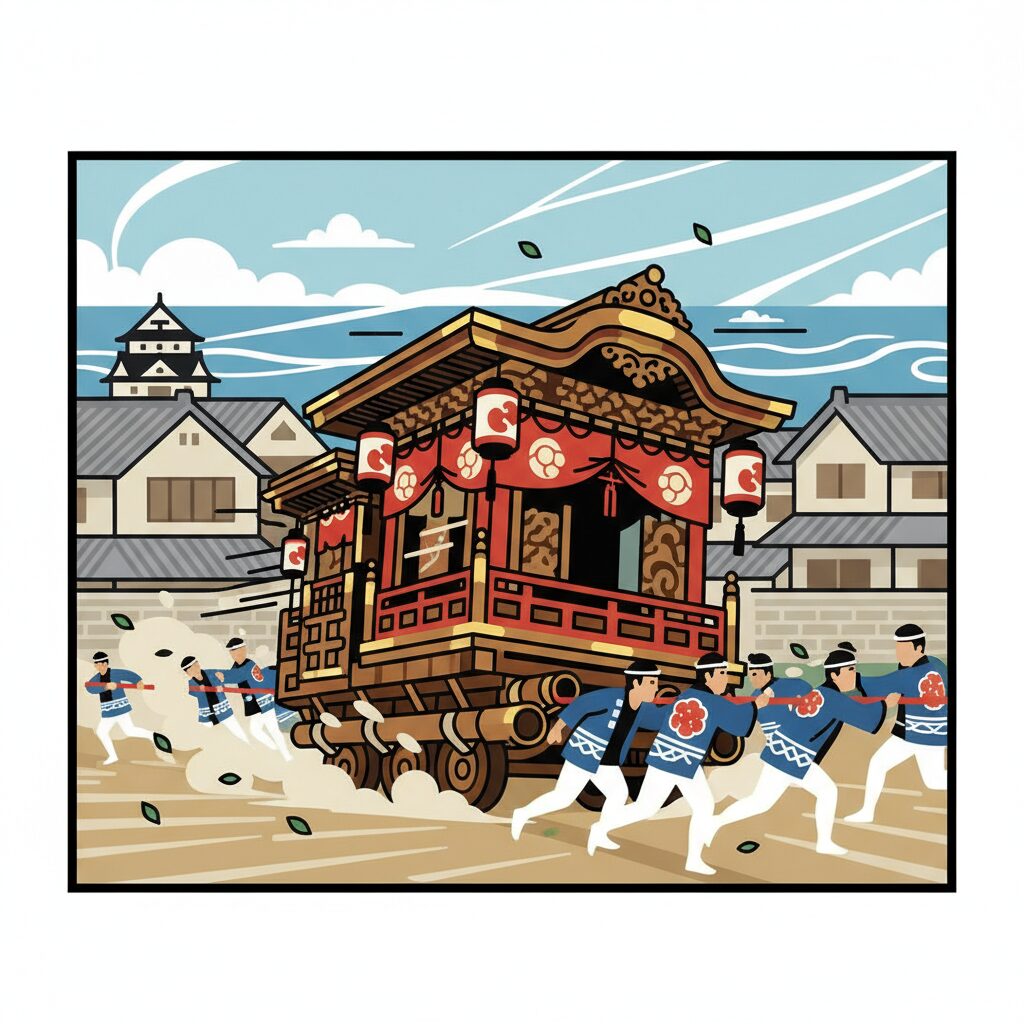
The first time you hear it, you don’t really understand. It’s a sound that doesn’t compute in a modern Japanese city. It’s not the polite chime of a train station or the tinny jingle of a supermarket. It’s a deep, seismic rumble, the sound of tons of wood and muscle and history thundering down a narrow street. Then you see it. A four-ton, intricately carved wooden float, a danjiri, careening towards a 90-degree corner at a full sprint. On its roof, a man, the daikugata, leaps and dances, balancing precariously against the violent G-forces. Hundreds of men, drenched in sweat, their faces a mask of pure, primal effort, haul on two massive ropes, their unified shouts cutting through the roar of the wooden wheels on asphalt. The air crackles with a tension that feels both celebratory and genuinely dangerous. This is the Kishiwada Danjiri Matsuri, and for most people—including many Osakans—it’s the most thrilling, terrifying, and spectacular show on earth. But here lies the fundamental truth, the one that unlocks a deeper understanding of Osaka’s soul. For the thousands of us lining the streets, phones held high, it’s a spectacle. For the men pulling the ropes and dancing on the roof, it is the absolute center of their universe. It’s not a hobby they chose; it’s an identity they inherited, a commitment that defines their lives from childhood to old age. And the uncrossable gap between being a spectator and being a participant tells you more about community, duty, and the fierce, local pride of Osaka than any guidebook ever could.
The vibrant energy of the Danjiri parade resonates beyond the streets, inspiring many Osaka residents to embrace a lifestyle centered on value over price in every aspect of their daily lives.
A Tale of Two Cities: The Watchers and the Pullers
On festival days in September, the city of Kishiwada divides into two distinct groups. First, there are the watchers. We arrive by train, elbowing for space, craning our necks to catch a better view. We are families from nearby Osaka suburbs, tourists from Tokyo wielding expensive cameras, and foreigners like me, completely captivated by the raw power before us. Our experience is pure sensory overload. The rhythmic chanting, the aroma of festival treats—takoyaki and grilled squid—blended with the scent of sweat and wood, and the heart-stopping moment when a float rounds a corner, almost toppling. For us, it’s an unforgettable day out, a story to share with friends back home. We consume the festival’s energy. We admire the courage, gasp at near disasters, and then return home.
Then there are the pullers. They are not performing for us. In the heat of the moment, spectators are just a blurred, colorful barrier to avoid. Their focus is on the men ahead, the rope in their hands, signals from the leaders, and the pride of their neighborhood, their chō. You cannot simply choose to join them. You don’t sign up online or show up for practice. You are born into a chō. Your father pulled these ropes, and his father before him. The happi coat you wear displays your neighborhood’s crest, a symbol of belonging far deeper than a company ID or university affiliation. This isn’t a club; it’s a lineage. From birth, you are part of the team. The division is absolute. A boy from the Kankō-dori neighborhood will never, ever pull the rope for the rival Numa-chō team. The rivalry is intense, real, and central to the festival’s drama. This hyper-local identity often surprises those used to the broader, more anonymous urban life of a city like Tokyo. In Kishiwada, your street defines you.
More Than a Hobby: A Bloodline and a Bruise-line
To describe participation in the Danjiri Matsuri as just a hobby fundamentally underestimates its significance. It demands a full-body, full-time, lifelong dedication that shapes a man’s entire life. The journey starts in early childhood. You’ll see toddlers dressed in tiny happi coats, perched on their fathers’ shoulders. School-aged boys run alongside the main float, pulling smaller practice danjiri, learning the chants, and absorbing the culture deeply. They grow up watching the older men, idolizing the daikugata who dances on the roof like a fearless deity. Every boy born in Kishiwada understands the hierarchy and dreams of his place within it.
As they mature, the commitment deepens. The festival’s two days in September serve as the dramatic climax to a year of relentless preparation. Countless meetings are held to plan logistics and strategy. Fundraising is ongoing, as maintaining these magnificent floats—some centuries-old masterpieces of art—is an enormous expense borne by the community. Physical training is crucial. Weeks before the festival, the evenings in Kishiwada resonate with practice runs, men refining their strength and teamwork to a razor’s edge. This demands great personal sacrifice. Men take vacation days, sometimes unpaid, from their jobs. They miss family dinners. They spend their own money on the effort. And they accept the real risk of injury. Each year, bones break, bodies are crushed, and sometimes, tragically, lives are lost. This harsh reality is never far from mind. This isn’t a sanitized cultural display; it’s a living, breathing, and bleeding tradition. The bruises and scars earned aren’t seen as failures but as badges of honor, proof of one’s dedication to the chō.
The Unspoken Rules of Raw Power
The festival’s most thrilling moment is the yarimawashi, the high-speed corner turn. It is a remarkable display of physics, skill, and sheer courage. The four-ton float, lacking modern steering or brakes, must be pivoted around a corner while moving near top speed. This is accomplished through complex coordination of levers wedged under the front wheels, the immense pulling force of the men on the ropes, and the guidance of the man at the rear, who steers like a ship’s rudder. If timing is off by even a fraction of a second, or if the pull is too weak or too strong, the danjiri can crash into a building or overturn, dragging dozens of men down with it.
This very danger is what makes the festival so revered. In Osaka, there is an unspoken appreciation for things that are raw, unpolished, and intensely authentic. The Danjiri is the ultimate embodiment of this spirit. There are no safety nets. No compromises have been made to soften it for a global audience. Its essence lies in its risk. This contrasts sharply with the often meticulously curated and controlled environments found elsewhere in Japan. It stands as a powerful declaration of local identity: “This is who we are. It’s wild, it’s dangerous, and it’s ours.” Within the teams, this high-stakes environment is regulated by a strict, unspoken hierarchy. The older, more seasoned members—the senpai—command absolute respect. Their word is law. The younger members—the kōhai—learn by observing, listening, and obeying precisely. This system of seniority, a cornerstone of traditional Japanese society, is displayed here in its most intense form.
The Echo in Daily Life: How Danjiri Shapes a City
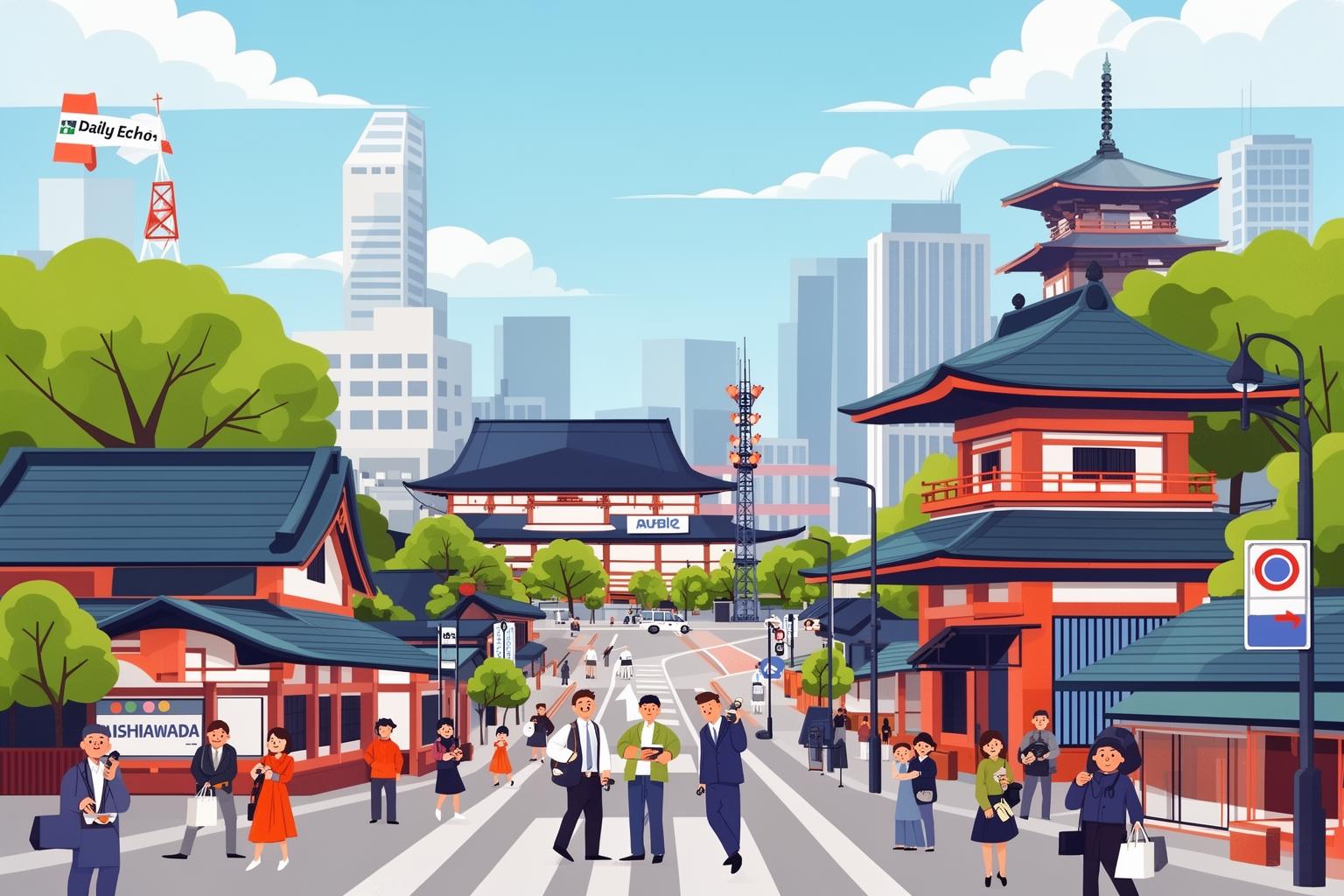
The spirit of the Danjiri doesn’t disappear once the last float is returned to its storehouse. It permeates every facet of daily life in Kishiwada and the surrounding Senshū region. Local businesses proudly showcase their connection to their neighborhood float. Hiring decisions can be influenced by a candidate’s Danjiri ties, which are seen as indicators of discipline and community dedication. A man’s social standing in the town is closely tied to his role and reputation within his Danjiri group.
This fosters intriguing social dynamics that may be confusing to outsiders. A young man rising within his Danjiri team—perhaps a skilled carpenter responsible for the float’s upkeep—might earn more respect in the community than an older office manager with a less critical position. During the festival season, these traditional hierarchies can temporarily override professional ones from the outside world. Your factory boss might be taking orders from you during an evening practice because you are his senpai in the Danjiri hierarchy. This vividly illustrates how community and tradition continue to be powerful organizing forces in parts of Osaka, often outweighing modern measures like salary or job title. It serves as a reminder that beneath the surface of contemporary urban Japan, deeper, tribal loyalties still wield immense influence.
What This Tells You About Osaka
The Kishiwada Danjiri Matsuri stands out as an extreme festival even by Japanese standards. Yet, its core values serve as a lens for understanding the Osaka mindset. Firstly, it represents a preference for passion over perfection. Here, there is a belief that raw, unrestrained energy—even if somewhat messy or chaotic—is more valuable than a flawless, sterile performance. It’s about expressing your heart and fighting spirit. Secondly, it emphasizes the strength of hyper-local identity. While people in Tokyo might associate themselves with their company, university, or a large ward like Shinjuku, identity in Osaka can be intensely specific, tied to a particular neighborhood or even a single street. This is the source of the famous Osakan friendliness—not a mere superficial courtesy but a profound sense of communal belonging and mutual responsibility. You look out for your own.
Lastly, it helps explain the noticeable difference in energy between Osaka and Tokyo. Tokyo often feels like a city of driven individuals, a sleek machine focused on efficiency and professionalism. Osaka, especially in southern districts like Kishiwada, feels like a network of passionate, interconnected communities. It may be louder, more chaotic, and less concerned with appearances, but it is held together by a powerful social bond forged through shared struggle and ecstatic, collective celebration. It’s a city unafraid to show its strength, sweat, and soul.
So, Should You Go Watch?
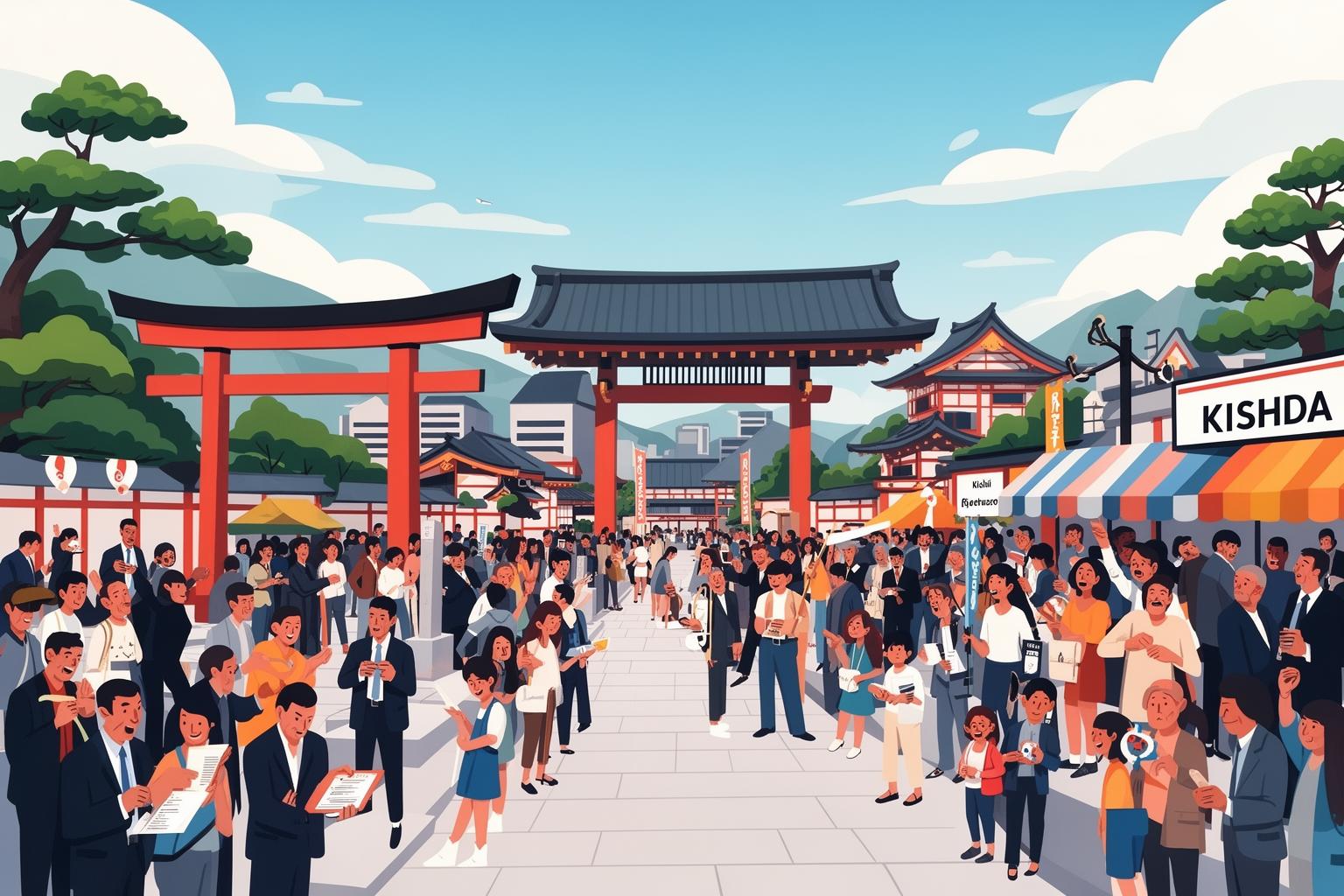
Absolutely. Experiencing the Kishiwada Danjiri Matsuri is truly unforgettable. But approach it with a fresh perspective. Don’t view it as a parade or a performance meant for your amusement. Instead, recognize it for what it truly is: a sacred, deeply personal expression of a community’s identity, history, and pride. Observe the faces of the men—notice the exhaustion, the pain, the fear, and above all, the sheer ecstasy. Realize that the invisible line separating you on the sidewalk from them on the ropes is the defining aspect of the event. They are not performers on a stage; they are men carrying out a lifelong duty, upholding a tradition steeped in the blood, sweat, and tears of their ancestors. When you see it this way, you’re no longer merely watching a festival—you’re witnessing the heart of Kishiwada and, by extension, a raw and powerful piece of Osaka’s soul.