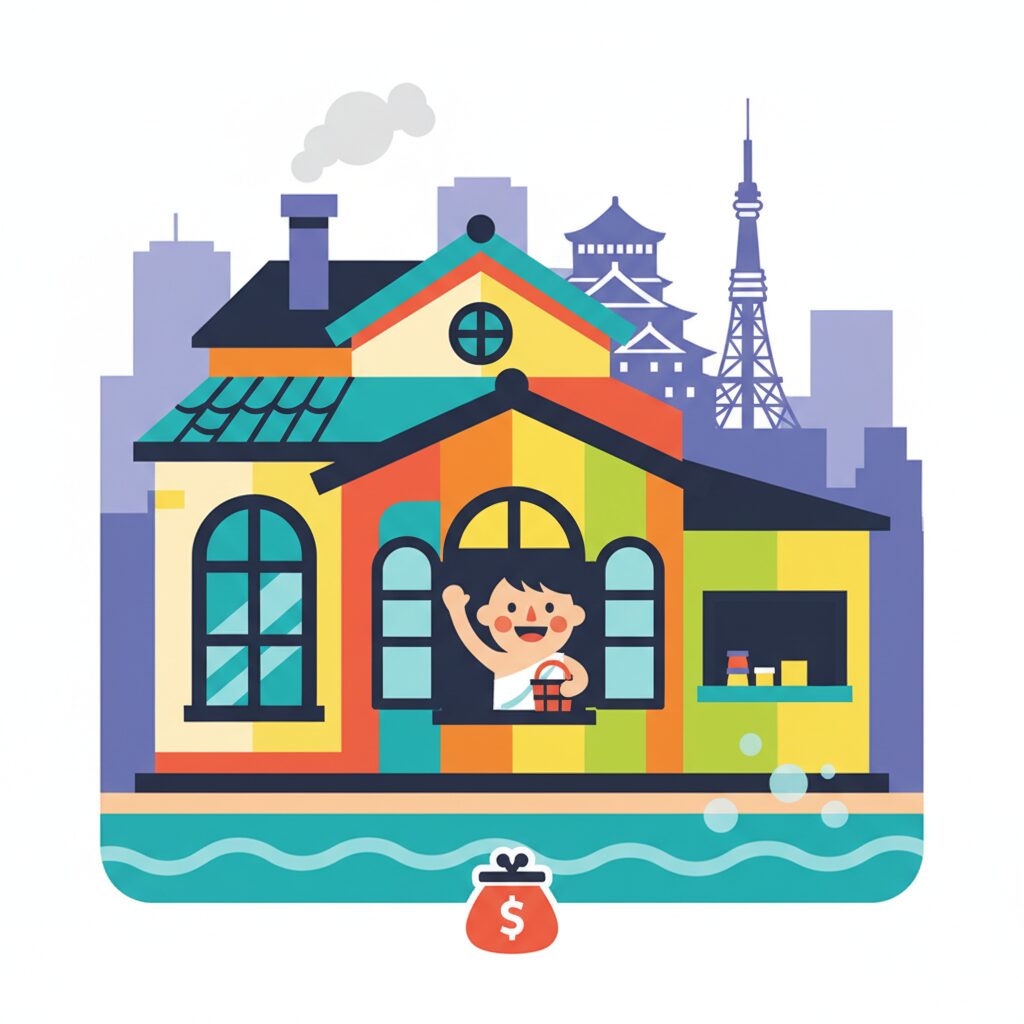
When you first move to Osaka, you’re hit with a wave of new expenses. There’s the key money for your apartment, the city taxes you didn’t know about, and the siren song of a million takoyaki stands calling your name. You start looking for ways to unwind, to decompress from the sensory overload of city life. Maybe you check the price of a gym membership and your wallet audibly weeps. You see ads for pristine, beautiful spas and onsen resorts that look like a movie set and cost just as much. You think to yourself, “Is relaxation a luxury I can’t afford here?” But then, tucked away on a quiet side street, you spot it: a tall, slender chimney rising above the tiled rooftops, a soft-lit lantern, and a simple blue curtain hanging in a doorway, marked with a single, elegant hiragana character: ゆ (yu). This is the entrance to your neighborhood sentō, Osaka’s answer to the high-cost spa. It’s a public bath, a community hub, and a cornerstone of a truly local, budget-conscious lifestyle. This isn’t the postcard-perfect hot spring experience you see in travel guides. This is something far more essential, more deeply woven into the city’s pragmatic soul. It’s a place where social barriers dissolve in the steam, and for the price of two cups of convenience store coffee, you can soak away the stresses of the day alongside your neighbors. It’s the ultimate life hack for living well in Osaka without breaking the bank.
In addition to the cost-effective serenity of the sentō, you might also find that immersing yourself in local traditions like the Kishiwada Danjiri festival further enriches your Osaka experience.
Sentō is Not Onsen: Decoding Osaka’s Public Bathing Culture
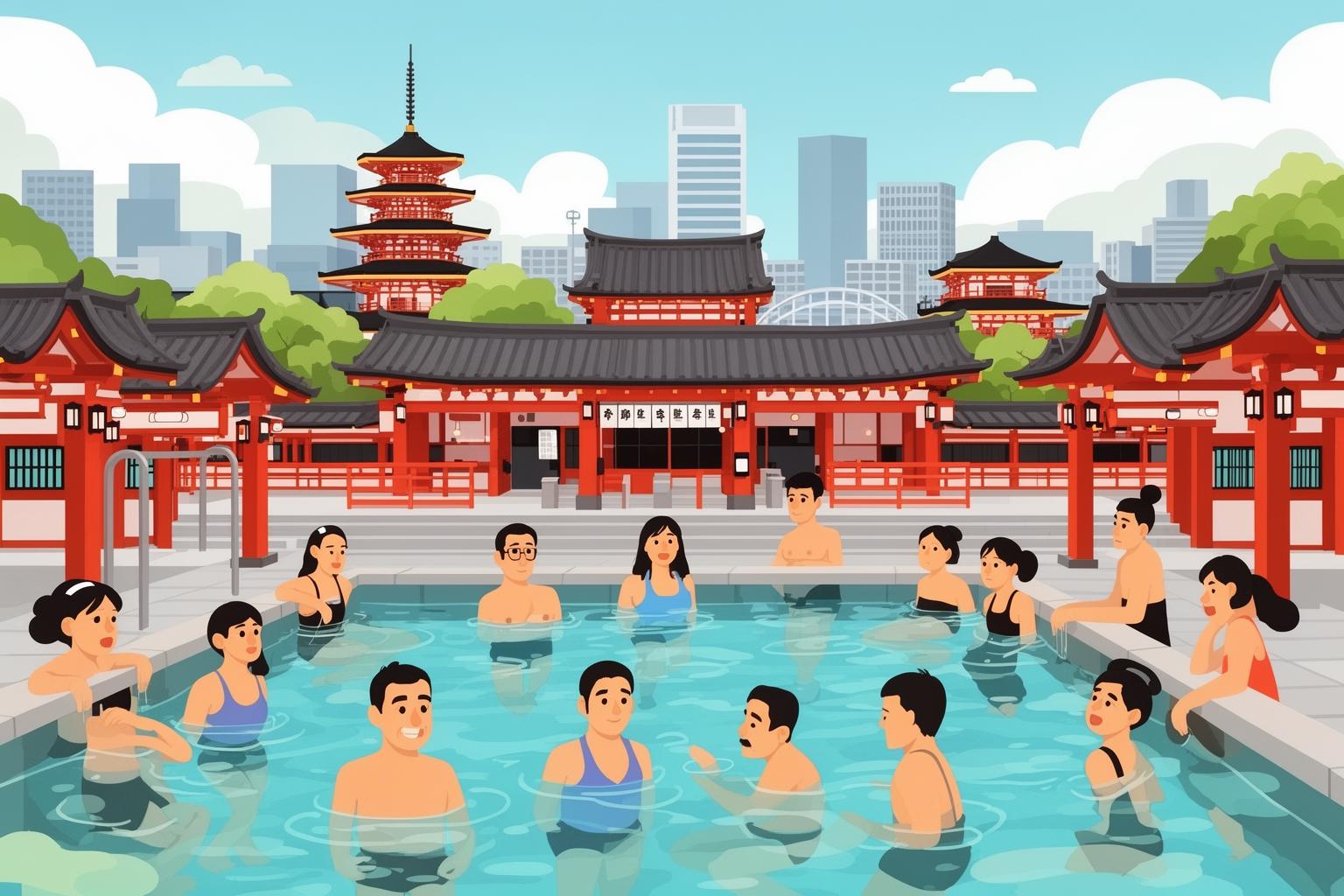
First, let’s clear up a common misconception for newcomers. In Japan, not all hot water is the same. You’ve probably heard of onsen, the natural hot springs renowned for their mineral qualities and often located in picturesque mountain or coastal towns. Onsen are destinations—places you visit for a vacation. A sentō, in contrast, is functional. It’s the local public bathhouse, where the water is generally just heated tap water. Although some upscale sentō offer special mineral baths or carbonated pools, their core purpose differs. They are nearby, practical, and designed for everyday use.
The Role of the Neighborhood Bath
Understanding the history of the sentō is essential to grasping its role in contemporary city life. For much of the 20th century, many urban homes, especially in places like Osaka, were built without private bathrooms, or at least without proper bathtubs. The sentō wasn’t a luxury; it was a necessity—a place to wash. This purely practical origin still shapes the atmosphere today. Don’t expect soothing flute music or minimalist Zen decor—instead, you’ll find bright fluorescent lights in the changing room, voices echoing off tiled walls, the clatter of plastic stools on wet floors, and children laughing and splashing. It’s not a place for silent reflection; it is a lively, sometimes noisy, part of the neighborhood’s fabric. This straightforward, utilitarian approach is deeply Osakan. It’s a city that values function over aesthetics, and the sentō exemplifies that philosophy perfectly.
The “Bare All” Mentality: Beyond Just Nudity
Now, let’s confront the obvious: nudity. For many from Western cultures, the idea of bathing with strangers is the biggest hurdle. But to truly understand the sentō, you need to reconsider what that nudity signifies. It’s not about showing off; it’s about equality. The moment you undress and store your clothes in a locker, you also leave behind your social status. Inside the bath area, there is no CEO, no part-time student, no foreigner, no local—just human bodies, equal in their desire for warmth and cleanliness. Titles, wealth, and worldly concerns are shed along with your socks. This act of undressing creates a powerful social equalizer, a space of shared vulnerability. It reflects the straightforward, unpretentious nature of Osaka’s people. In a city known for disliking pretension, the sentō stands as the ultimate display of the “what you see is what you get” attitude. It is a physical embodiment of a culture that values honesty and directness over formalities.
Osaka’s Sentō Scene vs. The Rest of Japan
Though sentō are found throughout Japan, the experience in Osaka carries its own unique character. The city’s distinctive culture of commerce, communication, and community influences how people engage with these shared spaces. Visiting a public bath here can feel markedly different from a similar visit in the more reserved capital, Tokyo.
A Center for Conversation, Not Quiet Reflection
In a Tokyo sentō, you might encounter an environment of silent, individual reverence for the water. People usually keep to themselves, soaking quietly and respecting personal boundaries, even in a communal setting. In Osaka, the scenario is quite the opposite. The sentō serves as a social gathering spot, a kōryū no ba—a place meant for exchange and interaction. Don’t be surprised if an elderly woman starts chatting about the weather while you wash, or if someone in the sauna offers you unsolicited tips on coping with the summer heat. Far from being intrusive, this friendliness is a hallmark of Osaka’s culture, where public and private interactions blend seamlessly. Osakans are naturally curious and talkative, believing in the community-building power of casual conversation. The sentō acts as an extension of the living room, a neighborhood hub for catching up.
“Maido!” at the Reception
The greeting you receive sets the mood. Upon entering, you won’t be met with the formal, standardized “Irasshaimase” (Welcome). Instead, the attendant at the bandai—the raised platform desk that acts as the sentō’s command center—will likely greet you with a hearty “Maido!” This phrase, meaning “every time,” is a traditional merchant’s greeting used to thank regular customers. It immediately creates a different kind of connection. You’re not merely a customer; you’re a valued regular, part of the establishment’s extended family. The bandai is often staffed by the owner, an older individual who has likely managed the bathhouse for decades. They know the regular patrons by name, whose children just started school, and serve as the community’s gatekeepers. This simple salutation reflects Osaka’s merchant heritage, where personal ties and loyalty are essential to daily life.
The Unwritten Etiquette of the Bath
Though the atmosphere is casual, there are strict rules of etiquette centered on communal respect. This is where the Japanese principle of omoiyari, or thoughtful consideration for others, becomes vital. The foremost rule: you must wash your entire body thoroughly with soap before entering the tubs. The baths are meant for soaking and relaxation, not for cleaning. Rows of washing stations with stools and faucets are provided for this purpose. The second rule: your small wash towel should never touch the bathwater; it’s usually placed on the head or set aside. The third rule is common sense: no splashing, no swimming, and no loud or disruptive behavior. These guidelines keep the water clean and preserve a pleasant atmosphere for all. In Osaka, failing to follow these rules usually results not in cold stares but in a direct yet kindly verbal reminder from another bather. This approach is quintessentially Osakan: straightforward, efficient, and focused on maintaining the smooth functioning of the communal experience.
The Sentō as a Financial and Wellness Strategy
For many locals, incorporating the neighborhood sentō into their weekly routine goes beyond culture or community; it’s a smart financial and wellness choice. It perfectly illustrates the Osakan passion for “cos-pa,” or cost performance.
Beyond the Basic Bath: The Cost-Performance Ratio
Let’s analyze the value. The standard adult admission fee for a sentō in Osaka Prefecture is legally fixed, currently just under 500 yen. For this modest price, you gain access to a full range of facilities. Most sentō include several tubs with different temperatures, ranging from very hot to lukewarm. Common features include a jet bath (jetto-buro) for muscle massage, a subtly buzzing electric bath (denki-buro) that passes a mild current through the water, and a cold plunge pool (mizu-buro). A sauna is typically part of the base price, unlike in some other areas where it incurs an extra charge. Compared to a gym membership with similar amenities (often ¥10,000 per month) or a single visit to a modern “super sentō” (¥800 to ¥1,500), the value is remarkable. Additionally, many locals calculate that a long, hot soak at the sentō during winter costs less than heating their home bathtub with gas. This is the practical merchant mindset: maximizing comfort and benefit while minimizing expenses.
The Post-Bath Ritual: The Social Cool-Down
The experience doesn’t conclude once you’re dried off. The changing room and lobby, called the datsuijo, play a crucial role in the ritual. This is the cool-down area, a social space where the bath’s community vibe persists. You’ll find elderly men in yukata robes fanning themselves while watching a Hanshin Tigers baseball game on an old television. Parents often share a classic glass bottle of fruit milk with their children, bought from a retro-style fridge. Vending machines stocked with everything from sports drinks to coffee milk and beer are also available. This area acts as a “third place”—an essential social space distinct from home and work pressures. It’s where people unwind, catch up on neighborhood chatter, and gradually reenter daily life. It’s a low-cost, low-commitment social club that offers an effective remedy to the potential loneliness of urban living.
Finding Your Neighborhood Gem: A Practical Guide
Thinking of giving it a shot? The charm of the sentō lies in its ubiquity. You don’t need a special guide to discover the “best” one—the best is likely the one just a five-minute walk from your apartment.
What to Bring and What to Expect
You can arrive with nothing but cash, as most sentō rent or sell everything you need. But to experience it like a regular, you’ll want your own “sentō set.” This usually includes a small towel for washing, a large towel for drying, and your preferred soap and shampoo. Many people carry these items in a small plastic basket. Once inside, you’ll purchase a ticket from a vending machine or pay the attendant at the bandai. You’ll then head to the gender-separated changing room (男 for male, 女 for female). Find an empty locker, store your belongings, and take the key, which typically hangs on a waterproof wristband. The only things you bring into the bathing area are your small wash towel and toiletries. A quick note on tattoos: while many onsen and fitness clubs still enforce strict “no tattoos” policies, neighborhood sentō tend to be much more lenient. Because they serve a local, regular crowd, they are generally more accepting. Policies vary by location, but the general rule is that if you are respectful, you’re unlikely to encounter any issues. This makes the sentō one of the most accessible bathing experiences for tattooed foreigners.
How to Spot a Good Sentō
Look for classic architectural clues. The most obvious is the tall chimney, a holdover from the days of wood- or coal-fired boilers. Spot the traditional noren curtain over the entrance, often displaying the ゆ symbol or the sentō’s name. A dozen weathered bicycles parked out front are always a positive sign—it means the place is a cherished local institution. Many of the best sentō aren’t located on busy commercial streets but are tucked away in residential alleys, their entrances flush with the surrounding houses. The goal isn’t to undertake a pilgrimage to a famous sentō. The true experience comes from becoming a regular at your neighborhood spot. It’s about being recognized by the owner and other patrons. It’s about turning the anonymity of the city into the warmth of a village.
The Sentō Spirit: What It Teaches You About Osaka
Embracing the sentō is more than simply a way to get clean or save money. It’s a method to absorb the core values of Osaka. It serves as a weekly lesson in community, practicality, and the beauty of the unvarnished real.
Community in an Age of Isolation
Living abroad in a vast metropolis can be a lonely experience. The sentō offers a powerful, natural way to build connections. It’s a space that encourages low-stakes, casual interactions. You begin by recognizing familiar faces. That evolves into a silent nod of acknowledgment. Eventually, that nod might lead to a brief chat about the weather or the quality of the bathwater. Before long, you’re no longer an anonymous foreigner; you’re a neighbor. This is the truth behind the cliché that “Osaka people are friendly.” Their friendliness isn’t an abstract trait; it’s a learned skill, cultivated in communal spaces like the sentō, the local shopping arcade, and the corner bar. It’s grounded in shared, repeated experiences.
The Beauty of the Unpolished
Lastly, the sentō teaches you to appreciate an aesthetic uniquely Osakan. Many of these bathhouses are old. The tiles may be cracked, the paint peeling, and the lockers from the Showa era. You might spot a grand, if somewhat faded, mural of Mount Fuji painted above the main bath—a classic sentō feature. These places aren’t sleek, modern, or Instagrammable. They stand as a testament to an era when function and durability were prized above all else. They are perfectly imperfect. And that, at its core, is the spirit of Osaka. It’s a city that doesn’t fixate on a polished exterior. It values utility, history, and human connection. It has a soul that is warm, practical, and deeply communal. The sentō isn’t just a place to bathe; it’s a place where you can soak in the very essence of the city, one 500-yen coin at a time.